Eliza Jane Campbell (née Brooks)
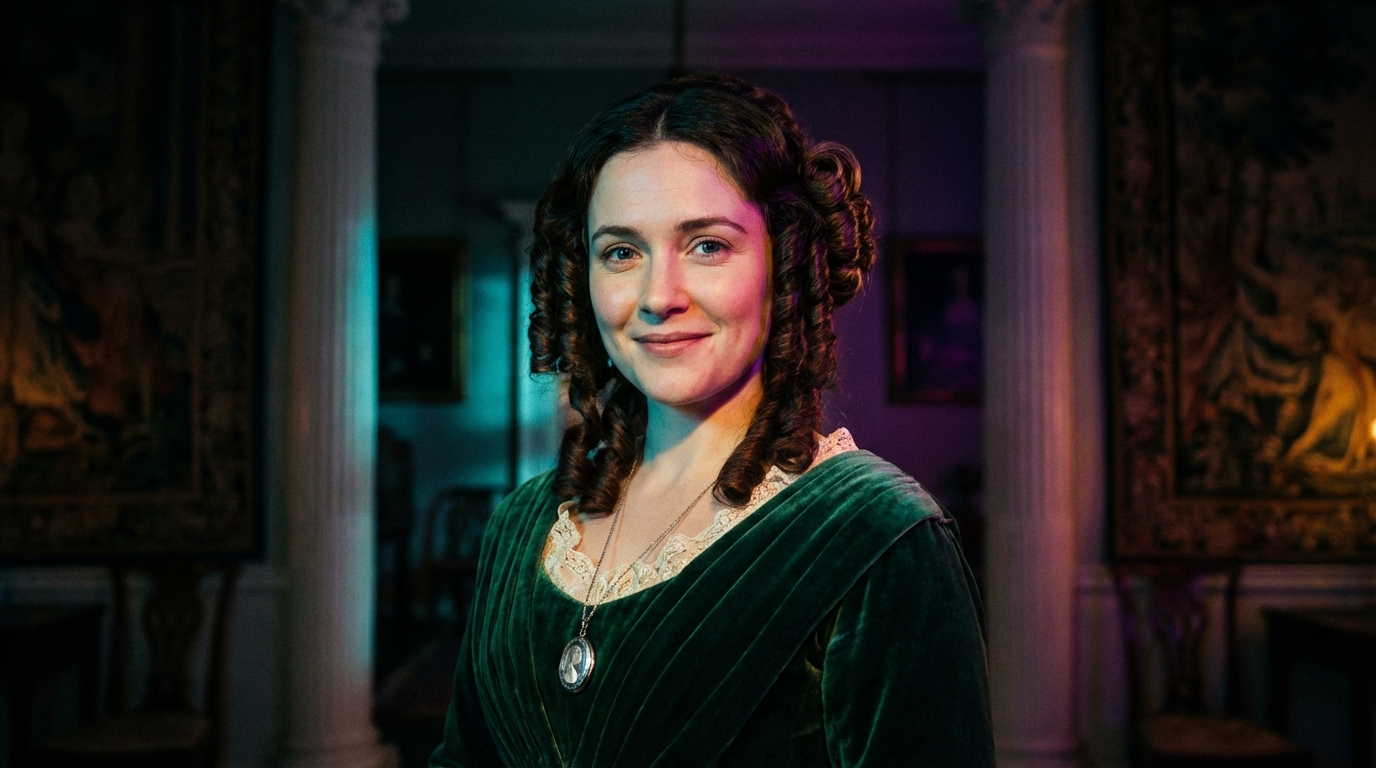
Eliza Jane Campbell, born in Bath in 1799, embodied the Georgian city's fusion of artistic refinement and social conscience. The talented watercolourist and devoted philanthropist co-founded The Haven Home for Children in Hobart, transforming colonial Tasmania's approach to orphaned children. Through her marriage to solicitor John William Campbell and her enduring friendship with Madelyn Jeffries, she created institutions that outlasted her lifetime, leaving a legacy of compassion, creativity, and service that defined her eighty-four years.
A Bath Upbringing
Eliza Jane Brooks entered the world on 22 March 1799 in the elegant city of Bath, Somerset, a place where Roman heritage met Georgian refinement, where honey-coloured stone crescents curved gracefully around hillsides, and where intellectual discourse flourished alongside artistic expression. Her father, George Brooks, had established himself as a prosperous wool merchant, building a thriving enterprise through careful cultivation of trade relationships across England's western counties. Her mother, Harriet Brooks née Thornton, brought to the union not merely her own merchant family's connections but a deep commitment to charitable endeavours that would profoundly shape her youngest daughter's character.
The Brooks residence stood in one of Bath's respectable neighbourhoods—not amongst the grandest crescents where aristocracy maintained their fashionable residences, but in a comfortable terrace that signified successful mercantile status. The house reflected George's position: prosperous without ostentation, elegant without excess. Within these walls, Eliza grew up surrounded by the rhythms of commerce and the discourse of social responsibility, absorbing lessons that would prove foundational to her later life.
As the youngest of three children, Eliza enjoyed certain advantages her older siblings had helped secure. George's business had matured into comfortable prosperity by the time of her birth, providing resources for the education and accomplishments expected of a merchant's daughter. Yet unlike many families who viewed daughters' education as merely preparation for advantageous marriage, the Brooks household valued learning for its own sake. Harriet, herself well-read and articulate, ensured her daughter received instruction that extended beyond the usual feminine accomplishments.
The Bath of Eliza's childhood hummed with cultural vitality. The Assembly Rooms hosted regular gatherings where Bath's society mingled, exchanged ideas, and conducted the social rituals that governed their world. The theatre presented performances that drew audiences from across the region. Literary circles met to discuss the latest publications, whilst artistic societies gathered to appreciate and create works that celebrated Bath's incomparable beauty. This environment—where culture mattered, where ideas circulated, where social responsibility commanded respect—formed the atmosphere in which young Eliza's sensibilities developed.
Bath Abbey's bells marked the hours of Eliza's days, their peal echoing across the city's elegant streets. She walked with her mother through the Royal Crescent, observing how prosperity and refined taste could manifest in architectural form. The River Avon flowed through the city's heart, connecting Bath to the wider world of commerce that sustained families like the Brooks. And everywhere, the distinctive Bath stone glowed golden in sunlight, creating a visual harmony that would forever influence Eliza's aesthetic sensibilities.
Harriet's charitable activities provided Eliza with early exposure to philanthropy's practical realities. She accompanied her mother on visits to families fallen on difficult circumstances, witnessed the distribution of food and clothing to those in need, and absorbed the lesson that privilege carried obligations. Harriet belonged to several charitable societies that addressed Bath's less fortunate residents' needs, and she involved her daughter in these endeavours from an early age. For Eliza, charity was not abstract benevolence but concrete action, requiring organisation, resources, and genuine compassion for those suffering hardship.
Education and Artistic Development
Eliza's formal education commenced at Miss Haversham's Academy for Young Ladies, one of Bath's more progressive institutions for female education. The academy, housed in a graceful Georgian building near the Royal Crescent, enjoyed an excellent reputation amongst Bath's merchant and professional families. Miss Haversham herself had studied with noted educators and brought to her school a conviction that young women deserved intellectual challenge alongside the traditional accomplishments.
The curriculum at Miss Haversham's extended beyond needlework and deportment to include serious instruction in literature, history, geography, and mathematics. Eliza proved an attentive student, demonstrating particular aptitude for literature and history. She read widely—not merely the approved novels deemed suitable for young ladies, but historical works, travel narratives, and essays on social questions that expanded her understanding of the world beyond Bath's elegant streets.
Yet it was in the fine arts that Eliza truly excelled. The academy employed Mr Edmund Fairweather, a talented artist who had exhibited at the Royal Academy, to instruct the young ladies in drawing and painting. Under his tutelage, Eliza discovered a passion and facility for watercolour that would become lifelong. Mr Fairweather recognised her genuine talent, encouraging her to move beyond mere copying of approved subjects to develop her own artistic voice.
Watercolour suited both Eliza's temperament and the practical circumstances of a young woman's artistic practice. The medium required no elaborate studio setup, could be pursued in domestic spaces, and produced works appropriate for display in respectable homes. But Eliza approached watercolour with a seriousness that transcended its reputation as an acceptable feminine accomplishment. She studied technique with dedicated attention, experimented with colour harmonies, and developed skills in capturing light and atmosphere that marked her work as genuinely accomplished rather than merely competent amateur production.
Bath's surrounding landscape provided inexhaustible subjects for artistic exploration. Eliza sketched in the Royal Victoria Park, capturing the play of light on the park's trees and paths. She painted the River Avon at different times of day, learning to render water's movement and reflective qualities. The city's architectural beauties—the Circus, the Royal Crescent, Pulteney Bridge—challenged her to translate Bath stone's distinctive colour and texture into watercolour washes. These studies, preserved in sketchbooks that would eventually journey to Tasmania, documented not merely Bath's physical beauty but Eliza's developing artistic vision.
Her education also included music, French, and the social graces required of a young woman who would move in polite society. She learned to play the pianoforte with creditable skill, to converse in French with reasonable fluency, and to conduct herself in social situations with appropriate grace. Yet these accomplishments never displaced her deeper interests in art, literature, and social questions. The Brooks household encouraged intellectual curiosity alongside social polish, creating a balance that would serve Eliza well in her future colonial life.
Courtship and Marriage
John William Campbell entered Eliza's life during the winter of 1816, introduced through the interconnected web of professional and social relationships that bound Bath's respectable classes. John, then twenty-four years old, had recently qualified as a solicitor and was establishing his practice in London. His family, whilst not aristocratic, possessed distinguished lineage and comfortable means. His visit to Bath combined business—consultations with provincial clients—with social obligations to family connections in the city.
Their meeting occurred at a musical evening hosted by mutual acquaintances, one of those gatherings where Bath's professional and mercantile families mingled in carefully orchestrated sociability. John's eye fell upon Eliza as she performed at the pianoforte, and he arranged an introduction through their hostess. Their conversation revealed shared interests in literature and social questions, creating immediate rapport that transcended mere social pleasantness.
John's courtship proceeded with the deliberate propriety expected of a young solicitor conscious of his professional reputation. He called upon the Brooks household at appropriate intervals, engaging George in discussions of legal and commercial matters whilst paying respectful attention to Harriet and Eliza. He and Eliza walked in the Royal Victoria Park under Harriet's watchful chaperonage, their conversations ranging across books they had read, places they hoped to visit, and ideas they were forming about life's possibilities.
The five-year age difference concerned neither family particularly—such gaps fell well within accepted norms for respectable matches. George investigated John's circumstances with a merchant's thoroughness, receiving satisfactory assurances about the young solicitor's prospects and character. John's family made reciprocal inquiries about the Brooks family, finding them respectable if not distinguished, prosperous if not wealthy, well-regarded within Bath's commercial community.
Eliza found herself genuinely attracted to John. His intelligence impressed her, his ambition seemed admirable rather than excessive, and his evident respect for her opinions suggested a partnership based on mutual regard rather than mere conventional hierarchy. He showed interest in her paintings, discussed books with genuine engagement, and demonstrated the steady character that promised reliable partnership. When he proposed in the spring of 1817, she accepted with confidence that their marriage would provide scope for both security and personal fulfilment.
Their wedding on 15 June 1817 united two respectable families in a ceremony befitting their station. The service took place at Bath Abbey, the ancient church's soaring Gothic arches providing magnificent backdrop for the occasion. Eliza wore a gown of pale silk, elegant without excessive ornament, her dark hair dressed in the current fashion. John appeared in formal attire, his bearing dignified and his expression conveying satisfaction at securing such a bride. The wedding breakfast, held at the Brooks residence, brought together family and friends to celebrate the union and wish the couple prosperity and happiness.
The Decision to Emigrate
The early years of marriage found Eliza adjusting to London life with mixed feelings. John's legal practice occupied chambers in one of the Inns of Court, and they maintained a modest but comfortable residence in a respectable neighbourhood. London offered cultural advantages—theatres, galleries, musical performances—that Eliza appreciated, yet the city's scale and dirt contrasted unpleasantly with Bath's elegant compactness. She made efforts to establish herself in local society, to cultivate friendships with other solicitors' wives, but found herself occasionally homesick for the familiar rhythms of Bath life.
The birth of their first child, Edward, on 3 April 1822, brought Eliza the profound joy of motherhood whilst simultaneously increasing her domestic responsibilities. She approached child-rearing with the same thoughtful attention she brought to other endeavours, reading the latest works on infant care and child development, consulting with experienced mothers, and trusting her own instincts about her son's needs. John proved an attentive father within the constraints of his professional obligations, pleased to have secured the male heir that represented family continuity.
It was during these early London years that John began discussing the possibility of colonial emigration. The idea emerged gradually through conversations with colonial solicitors who had returned to London on business. They spoke of opportunities in Van Diemen's Land—a growing colony hungry for professional services, where a capable solicitor might establish himself far more rapidly than in London's crowded legal marketplace. The prospect appealed to John's ambition whilst also addressing a certain restlessness he felt about the predictable trajectory of his London practice.
Eliza received the proposal with complex feelings. The adventure appealed to something in her character—the same curiosity that had driven her artistic explorations and intellectual interests. Yet emigration meant severing ties with family, abandoning the familiar for the unknown, and facing challenges she could barely imagine. The distance was too vast, the journey too expensive and dangerous, for casual returns to England. This would be permanent exile, a complete transformation of life's circumstances.
Extended discussions filled the winter of 1819. John painted Tasmania in optimistic colours—a land of opportunity where social advancement might proceed more rapidly than in England's rigid hierarchies, where natural beauty would provide inexhaustible subjects for Eliza's artistic practice, where their children might grow up amidst new possibilities. Eliza raised practical questions: What about their families? How would they manage the voyage with a young child? What society would they find in the colony? John addressed each concern with characteristic methodical thinking, building a case for emigration that gradually overcame her reservations.
George and Harriet received the news with parental resignation. They recognised that opposition would prove futile once John and Eliza had decided, yet they grieved the approaching separation from their youngest daughter and grandson. Harriet wept during their final weeks together, conscious that she might never see Eliza again, that Edward would grow up a stranger to his English grandparents. George, more pragmatic, ensured Eliza received a substantial dowry increase to support their colonial establishment, and he provided letters of introduction to merchants with Tasmania connections.
The Journey to Van Diemen's Land
On 1 July 1820, the Campbell family boarded the Lady Charlotte at London docks for the long voyage to Hobart Town. Eliza stood at the rail watching England recede, holding two-year-old Edward as he pointed at passing ships, conscious that she was leaving behind everything familiar for an unknown future. The ship carried a mixed company of passengers—free settlers like themselves, government officials posted to the colony, a few military officers, and below decks, convicts bound for transportation.
The voyage tested every member of the Campbell family. Confined aboard ship for months, they endured the tedium of endless ocean, the terror of storms, the constant proximity to strangers, and the physical discomforts of maritime life. Eliza suffered from seasickness during the early weeks, struggling to care for Edward whilst battling nausea. The ship's cramped quarters offered little privacy, and the class distinctions that governed shipboard life created a society in miniature, complete with hierarchies, gossip, and occasional conflicts.
Yet Eliza proved resilient, adapting to circumstances with practical grace. She established routines for Edward's care and education, teaching him letters and numbers, reading to him from the limited books they had brought. She made tentative friendships with other genteel female passengers, exchanging recipes and child-rearing advice, sharing concerns about their colonial future. And she sketched—capturing the endless variations of sea and sky, the ship's rigging, her fellow passengers. These sketches, preserved in her travelling portfolio, documented the transformation from English certainty to colonial possibility.
John spent much of the voyage reviewing legal texts and colonial regulations, preparing himself for practice under Van Diemen's Land's legal system. He cultivated connections with other passengers who might prove useful in establishing his colonial practice, discussing business prospects and exchange of services. His methodical approach to their approaching new life provided reassurance even as Eliza recognised that no amount of preparation could truly anticipate what awaited them.
The Lady Charlotte encountered generally favourable sailing conditions, though several storms tested the crew's skill and the passengers' nerves. During the worst tempest, with the ship pitching violently and water cascading across the decks, Eliza clung to Edward in their cabin, terrified yet forcing herself to remain calm for her son's sake. When the storm finally passed and they emerged to assess the damage, she felt both relief at survival and a certain pride in her own fortitude.
Arrival and Establishment in Hobart
When the Lady Charlotte finally sailed into Hobart Town on 18 October 1820, Eliza's first sight of Van Diemen's Land struck her with its wild beauty. The settlement clung to the shore beneath Mount Wellington's looming presence, whilst the surrounding bush sprawled in untamed profusion. This was emphatically not Bath—no elegant crescents, no cultivated parks, no centuries of architectural refinement. Yet the natural landscape possessed a dramatic magnificence that immediately captivated her artistic sensibilities.
The town itself presented a curious mixture of aspiration and reality. Some buildings displayed genuine architectural ambition, their Georgian proportions asserting English civilisation's triumph over colonial wilderness. Others remained crude structures that acknowledged the settlement's recent establishment and ongoing struggles. Convicts laboured in road gangs under military supervision, a jarring reminder that Tasmania functioned as penal colony alongside free settlement. The harbour bustled with ships bearing goods and passengers, connecting this distant outpost to the wider British Empire.
John had arranged lodgings prior to their arrival—modest rooms that would serve until they could establish more permanent residence. The accommodation shocked Eliza with its primitive conditions after their comfortable London home, yet she refused to indulge in useless complaint. Instead, she set about making the rooms habitable, applying the same organisational skills that had served her in managing her London household. Within days, their belongings had been arranged to maximum efficiency, and the space bore some semblance of civilised domesticity.
John's legal practice commenced almost immediately, colonial society's hunger for competent legal services ensuring steady work. He rented chambers in town and began building the client relationships essential to professional success. The legal matters he handled—property disputes, debt collection, conveyancing, estate administration—provided intimate knowledge of colonial society's workings. He quickly established himself as reliable and skilled, his London training giving him advantages over less educated colonial practitioners.
Eliza, meanwhile, confronted the challenge of establishing herself within Hobart's small but complex society. Colonial Tasmania possessed distinct social hierarchies—government officials and military officers at the apex, free settlers and successful merchants forming a middle tier, emancipated convicts occupying a precarious lower position, and the convict population itself existing outside respectable society. As the wife of a solicitor, Eliza could claim genteel status, yet her position required careful navigation through social relationships fraught with fine distinctions and potential missteps.
The birth of their daughter Mary on 12 March 1824 brought both joy and increased domestic responsibilities. Colonial Tasmania lacked the network of support Eliza might have accessed in England—no family nearby to assist, limited availability of trained nurses and domestic help, and medical care that fell well short of London standards. Yet she managed with characteristic resourcefulness, hiring convict servants whom she treated firmly but fairly, and developing friendships with other genteel women who shared advice about child-rearing in colonial conditions.
The Artistic Life
Despite domestic obligations and the challenges of colonial establishment, Eliza maintained her artistic practice with determined consistency. Tasmania's landscape provided subjects utterly unlike anything she had painted in Bath. The bush's wild profusion, Mount Wellington's dramatic presence, the harbour's activities, the unique light that seemed both harsher and clearer than England's soft illumination—all challenged her to adapt her techniques and expand her artistic range.
She established a workspace in their modest home, positioning her painting table near a window that captured optimal natural light. Her watercolour supplies had survived the voyage intact, though colonial conditions made securing additional materials challenging. Pigments had to be ordered from Sydney or London at considerable expense and delay. Paper suitable for watercolour proved difficult to obtain. Yet these constraints merely sharpened her resourcefulness—she learned to maximise each sheet of paper, to extend pigments' usefulness, and to adapt her practice to available resources.
Her subjects evolved to embrace Tasmania's distinctive character. She painted the Derwent River at various times of day, learning to capture its particular colour and the play of light on its waters. She sketched the bush—its peculiar trees with their hanging bark, the understory's tangled complexity, the unique quality of filtered light. She documented Hobart's architectural development, recording buildings as they rose from the ground, transforming the settlement from rough outpost to proper town. And she painted portraits—genteel families commissioning works to commemorate weddings, births, and significant occasions.
Her artistic practice attracted notice within Hobart's small society. Other genteel women, many of whom maintained their own amateur artistic pursuits, recognised Eliza's superior skill. Commissions followed—not merely portraits but also views of estates, commemorative pieces marking significant events, and decorative works to enhance colonial homes. These commissions provided both modest income and social capital, establishing Eliza as someone whose talents transcended mere amateur accomplishment.
In 1827, Eliza became a founding member of the Hobart Art Society, a organisation dedicated to promoting artistic appreciation within the colony. The society organised exhibitions displaying members' works and occasional pieces sent from Sydney or London. It hosted discussions about artistic principles and techniques, providing intellectual stimulation often scarce in colonial society. And it served social functions, bringing together people who valued cultural refinement amidst Tasmania's frontier conditions.
Eliza's involvement with the Art Society extended beyond merely displaying her own works. She mentored younger artists—both genteel women seeking to develop their accomplishments and talented individuals from less privileged backgrounds whom she believed deserved encouragement. Her teaching combined technical instruction with philosophical discussions about art's purposes and meanings. She believed art could serve not merely decorative functions but also documentary and educational purposes, capturing Tasmania's distinctive character for future generations.
Her paintings won accolades at Art Society exhibitions, earning praise for their technical accomplishment and their sensitive rendering of Tasmanian subjects. Colonial newspapers, hungry for cultural news to report, reviewed exhibitions and singled out particular works for comment. Eliza's watercolours frequently received notice, critics praising her delicate touch, her subtle colour harmonies, and her ability to capture the distinctive quality of Tasmanian light. These acknowledgements, whilst modest by London standards, represented significant recognition within colonial context.
The Friendship with Madelyn Jeffries
Eliza first met Madelyn Elizabeth Jeffries in 1823, an encounter that would develop into the most significant friendship of both women's lives. The introduction occurred at a charitable society meeting—one of those gatherings where Hobart's genteel women assembled to organise relief for the colony's unfortunate. Madelyn, recently widowed under scandalous circumstances, attended despite the whispers that followed her. Eliza, new enough to the colony to lack complete awareness of the gossip, approached Madelyn with genuine friendliness rather than suspicious reserve.
Their conversation revealed immediate rapport. Both women possessed intelligence that chafed at the limited outlets colonial society provided. Both combined practical capabilities with idealistic impulses towards social betterment. And both understood, in ways they would only gradually articulate, that colonial society's constraints created opportunities for women willing to challenge conventional limitations. Where English society might have kept them in their separate spheres—Eliza the solicitor's genteel wife, Madelyn the scandalous widow—colonial Tasmania's smaller scale and rougher edges permitted unlikely friendships.
The friendship deepened through regular interactions at charitable meetings and social events. Eliza recognised Madelyn's formidable intelligence and growing business acumen, qualities that inspired respect rather than the suspicion many colonial ladies directed towards women who operated in masculine commercial spheres. Madelyn appreciated Eliza's artistic talents and genuine compassion, seeing in her a kindred spirit who understood that privilege carried obligations towards society's vulnerable members.
Their discussions ranged across subjects that would have raised eyebrows in more conventional company. They debated charitable work's proper organisation, whether direct relief or institutional approaches better served the indigent. They discussed literature—both the approved novels and more controversial works touching on social questions. They shared concerns about child-rearing in colonial conditions and strategies for ensuring their children received proper education. And they confided personal concerns with a frankness that testified to genuine trust between them.
The birth of Eliza's third child, Clara, on 8 September 1827, brought Madelyn to the Campbell household as supportive friend through the difficult lying-in period. Colonial childbirth carried significant risks, medical care remained primitive by English standards, and the social isolation many colonial women experienced made each birth potentially dangerous. Madelyn's presence—her practical assistance, her encouragement during labour, her help with the other children afterwards—demonstrated friendship's concrete value in colonial circumstances.
Founding The Haven Home for Children
The genesis of The Haven Home for Children emerged from conversations between Eliza and Madelyn during 1824 and early 1825. Both women had observed Hobart's growing population of orphaned and abandoned children—offspring of convicts, children of settlers felled by disease or accident, foundlings left at churches or charitable institutions. The colony's existing provisions for these unfortunate children proved woefully inadequate. Some languished in the Orphan School, an overcrowded institution that provided minimal care. Others survived on Hobart's streets through begging, theft, or worse.
The idea of establishing a proper orphanage—an institution that would provide not merely shelter but genuine nurture, education, and preparation for respectable adult lives—took shape through these discussions. Both women understood that such an institution would require substantial resources, sustained commitment, and careful organisation. Yet they also recognised that their combined strengths made the project feasible. Madelyn could provide financial resources and business management expertise. Eliza could contribute artistic sensibilities that would create a nurturing environment and connections within charitable circles that might secure additional support.
They began planning with characteristic thoroughness. They investigated successful orphanages in England through correspondence with charitable societies, gathering information about organisational structures, educational programmes, and funding mechanisms. They consulted with Hobart's clergy, securing endorsements that would lend moral authority to their project. They approached potential donors—successful merchants, government officials, and other members of colonial society who might be persuaded to support orphaned children's welfare.
The acquisition of Rosehill estate as the orphanage's location represented a significant breakthrough. The property, a former private estate that had fallen into disrepair following its owner's death, possessed substantial buildings and extensive grounds on Hobart's outskirts. A local benefactor, impressed by Eliza and Madelyn's vision and their evident capability, donated the property for the orphanage's use. The generous gift provided physical infrastructure that would have otherwise required prohibitive financial outlay.
Transforming Rosehill from deteriorated estate to functioning orphanage required months of intensive effort. Eliza threw herself into the work with passionate commitment. She supervised renovation works, ensuring rooms received proper preparation for children's habitation. She designed dormitories that would provide security whilst avoiding institutional bleakness. She planned common areas where children could gather for lessons, meals, and recreation. Her artistic eye influenced every decision—colour schemes that created warmth, window treatments that admitted light whilst providing privacy, arrangements that balanced order with comfort.
Furnishing and equipping the orphanage required both financial resources and creative resourcefulness. Some items—beds, tables, basic furniture—could be purchased new from Hobart merchants. Others required adaptation from donated goods or construction by local craftsmen. Eliza coordinated this massive procurement effort, maintaining careful records of expenditures and donations, ensuring every pound was spent to maximum effect. The task demanded organisational skills she had never previously exercised at such scale, yet she proved equal to the challenge.
Staffing the orphanage with qualified personnel presented particular difficulties in colonial conditions where educated, reliable individuals commanded premium wages. Eliza and Madelyn interviewed numerous candidates for key positions, seeking people who combined competence with genuine compassion for children. Mrs Abigail Harrington, engaged as headmistress, brought experience from English charity schools and immediately impressed with her firm but kind approach. Mr Josiah Byrne, hired as caretaker, demonstrated practical skills alongside evident affection for children that belied his gruff exterior.
The Haven Home for Children officially opened on 25 November 1825, a date that marked the culmination of months of planning and effort. The opening ceremony drew substantial attendance from Hobart's society—government officials, clergy, charitable ladies, merchants who had contributed to the project. Eliza delivered a speech that moved many listeners, speaking of giving vulnerable children the security and opportunities that fortunate children like her own received by birthright. Her evident sincerity and the visible results of her and Madelyn's work won widespread approval, transforming the orphanage from controversial project to celebrated charitable achievement.
The Haven's Early Years
The orphanage's first residents—twelve children ranging from infants to early teenagers—arrived within days of the opening ceremony. Each child brought a history of loss and hardship that would have devastated many adults. Some had watched parents die from disease or accident. Others had been abandoned by parents unable to care for them. A few bore the particular stigma of convict parentage, inheriting social disadvantage before they could even understand what it meant. Welcoming these damaged, frightened children and transforming them into thriving individuals represented The Haven's central challenge.
Eliza involved herself intimately in the orphanage's daily operations, visiting regularly and maintaining close oversight of its programmes. She worked with Mrs Harrington to develop educational curriculum that extended beyond mere literacy to include practical skills, arts appreciation, and moral instruction. Children learned to read and write, to cipher basic mathematics, to understand geography and history. But they also received instruction in gardening, simple carpentry, needlework, and domestic management—skills that would enable future self-sufficiency.
The artistic education Eliza provided represented The Haven's distinctive feature. She believed that exposure to beauty and opportunities for creative expression could help children heal from traumatic experiences. She taught drawing and painting to those who showed interest or aptitude, providing materials and instruction that would have been unthinkable in most orphanages. Some children proved genuinely talented, and Eliza encouraged their development with the same seriousness she brought to mentoring genteel amateur artists.
Music featured prominently in The Haven's routine. Eliza arranged for music instruction—simple hymns initially, but expanding to include folk songs and rounds that allowed children to experience the joy of harmonious singing. She donated her own pianoforte to the orphanage, enabling more sophisticated musical education for children who demonstrated ability. These musical experiences provided both education and emotional outlet, giving children means to express feelings they might lack words to articulate.
The orphanage's physical environment reflected Eliza's conviction that surroundings influenced character development. Gardens surrounded the buildings—not merely vegetable plots for practical food production, but also flower beds that provided beauty and opportunities for children to nurture living things. Interior spaces featured children's artwork on walls, creating sense of ownership and pride. Common areas included comfortable seating where children could gather for reading or conversation, rather than the hard benches typical of institutional settings.
Discipline at The Haven balanced necessary order with compassion for children who had experienced significant trauma. Mrs Harrington maintained clear expectations for behaviour and learning, but punishments remained moderate and always explained rather than arbitrarily imposed. Children who struggled received additional attention rather than harsh correction. The approach recognised that many behavioural difficulties stemmed from past traumas rather than inherent moral deficiency—a progressive understanding for the era.
Eliza's relationship with the children combined maternal warmth with appropriate boundaries. She learned each child's name and circumstances, celebrating birthdays and acknowledging individual achievements. Yet she maintained sufficient professional distance to avoid unhealthy dependencies. Children addressed her as "Mrs Campbell" rather than any familial term, understanding she occupied role of benefactor rather than mother-substitute. This careful balance allowed her to provide genuine care whilst respecting the children's need to form appropriate attachments with staff who would remain consistently present.
Balancing Family and Philanthropy
Managing intensive involvement with The Haven alongside her own family responsibilities required careful time management and firm priorities. Eliza remained devoted mother to Edward, Mary, and Clara, ensuring they received the attention and guidance they deserved. Yet she also modelled for them the principle that privilege carried obligations towards broader society. Her children accompanied her on orphanage visits, helped with charitable projects appropriate to their ages, and absorbed lessons about compassion and service through observation of their mother's example.
John supported his wife's philanthropic work, though perhaps with less passionate engagement than Eliza might have wished. He contributed financially to The Haven's operation, provided legal services without charge when the orphanage faced complex matters, and attended public events marking institutional milestones. Yet the orphanage remained fundamentally Eliza's project—her vision, her commitment, her achievement. John's support enabled her work without constraining it, a arrangement that suited both partners.
The demands on Eliza's time and energy occasionally created tensions within the Campbell household. Servants sometimes grumbled about her extended absences on orphanage business. John occasionally expressed concern that she was overtaxing herself with excessive commitments. Her children competed with orphaned children for her attention, not always gracefully accepting that their mother's care extended beyond the family circle. Yet Eliza navigated these conflicts with diplomatic skill, ensuring her family felt valued whilst maintaining her broader charitable commitments.
Her artistic practice continued alongside orphanage work and family responsibilities, though necessarily with reduced intensity. She painted when time permitted—early mornings before the household stirred, occasional afternoons when no pressing obligations demanded attention, or during family holidays to Tasmania's countryside. The paintings from these years documented both her family's life and the broader Tasmanian landscape she had grown to love. Though she produced fewer works than during her earlier colonial years, their quality remained high, reflecting artistic maturity that deepened despite limited time for practice.
The Partnership with Madelyn
The collaboration between Eliza and Madelyn in managing The Haven developed into exemplary partnership. Their complementary strengths created effective division of labour. Madelyn handled financial management, fundraising, and relationships with donors and government officials. Eliza oversaw educational programmes, staff supervision, and the orphanage's day-to-day operations. Both made major decisions jointly, respecting each other's expertise whilst maintaining unified vision for the institution's direction.
Their friendship deepened through shared labour on The Haven's behalf. They spent countless hours together—planning improvements, solving problems, discussing individual children's needs, and strategising about the orphanage's future. These interactions occurred against the backdrop of their own evolving life circumstances. Madelyn faced ongoing challenges managing her late husband's business empire whilst combating persistent rumours about William's disappearance. Eliza balanced growing family with increasing philanthropic commitments. Each provided the other with support that extended beyond The Haven to encompass their broader lives.
The friendship also weathered tensions that might have fractured less solid relationships. They occasionally disagreed about orphanage policies—Madelyn favouring more structured approaches whilst Eliza advocated for greater flexibility. They competed, perhaps more than either fully acknowledged, for recognition as The Haven's primary architect. And they navigated the complexities that arose when two strong-willed women collaborated on projects requiring sustained cooperation. Yet their shared commitment to the orphanage's mission and genuine respect for each other's contributions enabled them to work through conflicts without permanent damage to their relationship.
Colonial society observed the Jeffries-Campbell friendship with mixed reactions. Some admired their complementary partnership and the institution they had created. Others whispered that the friendship was peculiar—two women of different social standing and temperaments maintaining such close connection seemed to violate expected patterns. A few cynically suggested that Eliza's association with the somewhat scandalous Madelyn reflected poorly on her own character. Yet Eliza remained unmoved by such gossip, valuing her friendship with Madelyn too highly to sacrifice it for social approval from people whose opinions she did not particularly respect.
Personal Loss and Continued Service
The death of John William Campbell on 3 December 1855 devastated Eliza, ending thirty-eight years of marriage that had, despite occasional tensions, provided stable foundation for her life. John's final illness—a lingering decline from consumption—allowed time for farewells yet also prolonged the agony of watching him fade. During his last weeks, Eliza remained constantly at his bedside, reading to him from favourite books, reminiscing about their shared life, and offering what comfort she could as death approached. His passing at age sixty-three left her widowed at fifty-six, facing an uncertain future without the partner who had shared her colonial adventure.
Grief might have overwhelmed lesser individuals, but Eliza possessed resilience forged through decades of colonial life's challenges. After appropriate mourning period, she returned to her obligations with renewed determination. If anything, John's death intensified her commitment to The Haven, channelling grief's energy into service that provided both purpose and distraction. The orphanage needed her, and she needed the orphanage—a relationship of mutual sustenance that carried her through sorrow's worst depths.
Her children, now adults with their own families, provided support whilst also navigating their own grief. Edward, established in his legal practice, handled his father's estate affairs with professional competence whilst struggling with personal loss. Mary, married to a Hobart merchant, offered domestic comfort and companionship during the difficult months following John's death. Clara, pursuing her own educational and philanthropic interests, shared her mother's commitment to meaningful service as tribute to their father's memory. The family's mutual support demonstrated the values John and Eliza had instilled—that personal sorrow should not prevent continued service to broader community.
Eliza's friendship with Madelyn proved particularly valuable during this period. Madelyn, herself widowed decades earlier under far more traumatic circumstances, understood grief's complexities from personal experience. She provided practical assistance—managing details when Eliza felt overwhelmed, ensuring orphanage operations continued smoothly, simply being present when companionship mattered more than words. Their friendship, tested by this crisis, emerged strengthened, demonstrating the bonds that endure beyond life's vicissitudes.
Later Years and Artistic Legacy
Eliza's later years witnessed both personal contentment and broader recognition for her life's work. The Haven Home for Children, thriving under continued joint stewardship with Madelyn, had established itself as colonial Tasmania's premier charitable institution. Hundreds of children had passed through its doors, emerging to lead productive lives that testified to the institution's effectiveness. The orphanage's reputation extended beyond Tasmania—charitable societies in other colonies corresponded with The Haven's managers, seeking advice about establishing similar institutions.
Her artistic practice, pursued with renewed intensity after John's death, reached its mature phase. The paintings from these years demonstrated technical mastery allied with profound emotional depth. She continued documenting Tasmania's landscape, but her later works transcended mere documentary function to achieve genuine aesthetic power. Gallery exhibitions of her work drew increasingly appreciative audiences, and collectors began acquiring her paintings—not merely as decorative objects but as significant artistic achievements worthy of preservation.
In 1870, the Hobart Art Society honoured Eliza with lifetime membership and special recognition for her contributions to Tasmanian artistic life. The ceremony, attended by artists, patrons, and cultural figures from across the colony, celebrated not merely her own paintings but her decades of mentoring younger artists and promoting artistic appreciation. Eliza, aged seventy-one and somewhat frail, delivered brief remarks expressing gratitude whilst characteristically deflecting attention towards others whose contributions she deemed equally worthy of recognition.
The establishment of the Eliza Campbell Art Scholarship in 1875 ensured her legacy would extend beyond her own lifetime. The scholarship, funded initially by donations from grateful students and admirers, provided financial support for talented young Tasmanian artists pursuing advanced training. The first recipient, a young woman of limited means but exceptional talent, received funding to study in Melbourne under established artists—an opportunity that transformed her life. Subsequent recipients similarly benefited from chances they could never have accessed without the scholarship's support.
Eliza's relationship with her grandchildren brought particular joy during her final years. She delighted in sharing with them the stories, skills, and values she had accumulated across eight decades. Grandchildren learned to paint under her gentle instruction, absorbing technical skills alongside broader lessons about beauty's importance and art's capacity to communicate what words could not express. She read to them from beloved books, shared memories of Bath and the long voyage to Tasmania, and modelled through her continued service the principle that life's meaning derived from contribution to others' welfare.
Her friendship with Madelyn remained central until the very end. The two women, having shared so many decades of labour on The Haven's behalf, could communicate with the shorthand of long intimacy. They discussed the orphanage's future, planned improvements and expansions, mentored younger women joining the philanthropic work, and reminisced about their shared experiences. When Madelyn herself passed away in 1867, Eliza grieved the loss of her closest friend whilst taking comfort that Madelyn had lived to see The Haven thoroughly established and their joint vision vindicated.
Final Days and Enduring Legacy
Eliza Jane Campbell's health declined gradually through the early 1880s. Age's inevitable deterioration limited her mobility and sapped her strength, though her mind remained clear and her interest in the world undiminished. She continued painting when able, producing works that reflected a lifetime's accumulated wisdom about light, colour, and composition. She maintained correspondence with friends and former students, her letters demonstrating wit and engagement that belied physical frailty. And she continued advising The Haven's management, attending board meetings when health permitted and contributing insight born from decades of intimate involvement.
Her final public appearance occurred at The Haven's sixtieth anniversary celebration in November 1882. Eliza, aged eighty-three and visibly frail, attended in a Bath chair, but her spirit remained undimmed. When called upon to speak, she rose with assistance and delivered brief remarks that moved many listeners to tears. She spoke of the children whose lives had been transformed by The Haven's care, of the collaborative efforts that had sustained the institution through six decades, and of her gratitude for the opportunity to contribute to work larger than any individual. Her voice wavered but carried clearly, her words chosen with characteristic care to honour all who had contributed whilst avoiding excessive self-credit.
Eliza passed away peacefully on 14 October 1883 at her Hobart residence, surrounded by family. Death came gently in the early morning hours, releasing her from age's accumulated burdens without prolonged suffering. She was eighty-four years old, having lived long enough to witness The Haven's enduring success and to secure her own artistic legacy. Her children, present at her bedside, took comfort that she had died as she had lived—with dignity, surrounded by love, and confident her life had served purposes worth serving.
The funeral, held at St David's Cathedral, drew substantial attendance from across Tasmania. Government officials, artists, philanthropists, and ordinary citizens who had been touched by Eliza's life joined her family in mourning and celebration. The service honoured her multifaceted legacy—artist, philanthropist, mother, friend, and pioneer of charitable institutional reform. Testimonials spoke of her compassion, creativity, determination, and grace—qualities that had defined her character and shaped her contributions to colonial society.
She was laid to rest in the Campbell family plot, her grave marked by a simple but elegant memorial befitting her character. The inscription recorded basic biographical facts whilst allowing her life's work to speak for itself: "Eliza Jane Campbell, née Brooks, 1799-1883. Artist, Philanthropist, Friend to the Friendless." Those few words, chosen by her family, captured essential truths about how she had spent her eighty-four years and what she had valued most highly.
The legacy Eliza left extended far beyond her lifetime. The Haven Home for Children continued thriving well into the twentieth century, adapting to changing social conditions whilst maintaining the founding vision she and Madelyn had articulated. Thousands of children benefited from the institution they had created, receiving care and education that transformed their life prospects. The Eliza Campbell Art Scholarship continued supporting young Tasmanian artists, enabling talents that might otherwise have remained undeveloped. And her paintings, preserved in galleries and private collections, documented Tasmania's landscape whilst demonstrating the aesthetic sensibility she had brought to her adopted homeland.
Eliza Jane Campbell's life demonstrated how one individual, operating within colonial society's constraints, could nonetheless effect meaningful change through sustained commitment to worthy purposes. She proved that artistic sensibility and practical philanthropy were not opposing impulses but complementary aspects of civilised existence. She showed that friendship between equals could accomplish more than hierarchical charitable distribution. And she modelled how privileged individuals might honour their advantages not through guilt but through service that improved others' circumstances whilst enriching their own lives with purpose beyond mere personal comfort.
From the Georgian elegance of Bath to the raw beauty of colonial Tasmania, from accomplished amateur artist to respected figure in Australian cultural history, from comfortable merchant's daughter to pioneering philanthropist, Eliza's journey encompassed transformations she could never have imagined during her youth. Yet throughout that remarkable trajectory, certain qualities remained constant—compassion for the vulnerable, appreciation for beauty in all its forms, commitment to education's transformative power, and belief that individual actions could contribute to collective improvement. These convictions, shaped by her Bath upbringing and tested through colonial challenges, defined the legacy she left for generations who would follow.







