
Edward Fitzsimmons
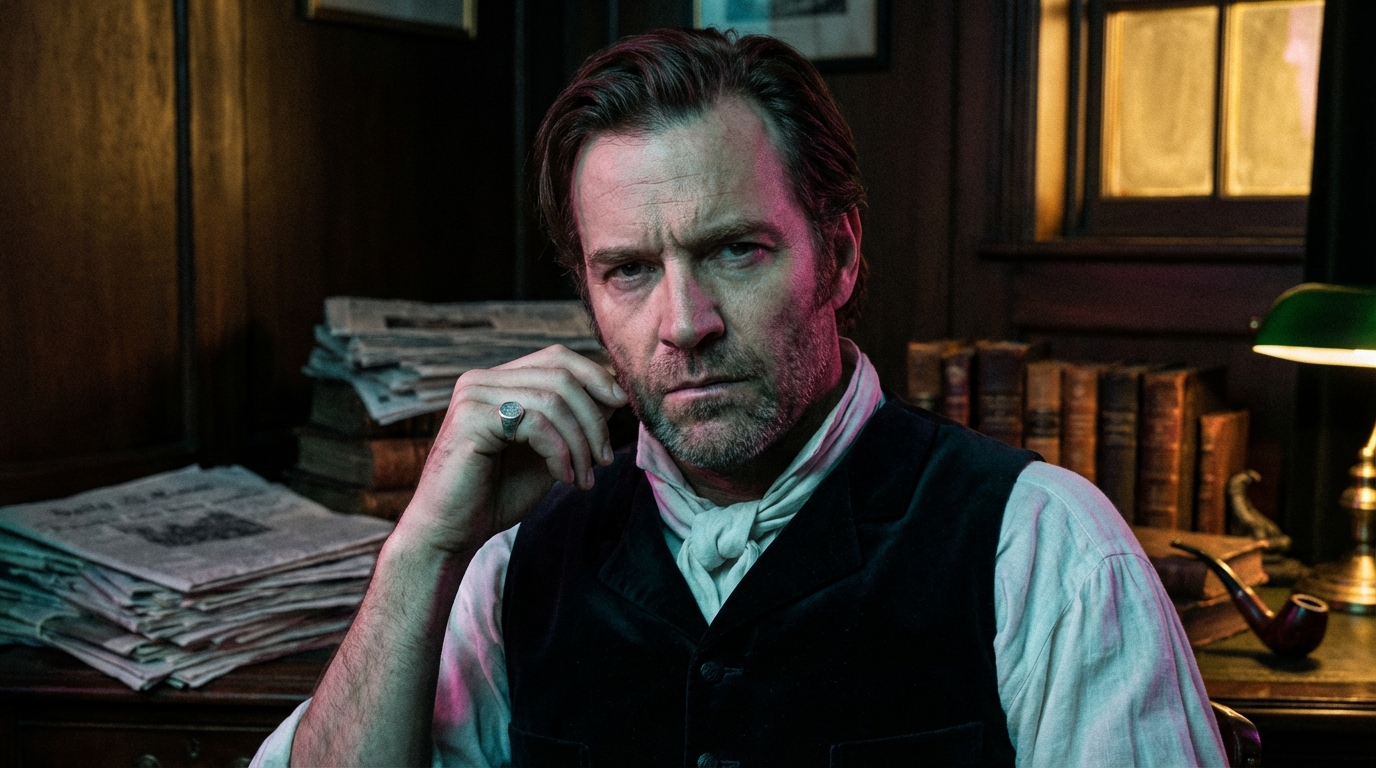
Edward Fitzsimmons, born 10 October 1785 in Dublin, brought Trinity College eloquence and Irish reformist fire to Van Diemen's Land, where he co-founded the Van Diemen's Gazette in 1820. His fearless editorials and investigative journalism—particularly his relentless pursuit of truth in William Jeffries Sr.'s mysterious disappearance—established Tasmania's press as legitimate force for accountability. A man of sharp wit, incisive intellect, and unwavering principle, Fitzsimmons transformed colonial journalism from government mouthpiece into civic conscience before his death in 1858.
Dublin Formation and Revolutionary Atmosphere
Edward Fitzsimmons entered the world on 10 October 1785 in Dublin, a city seething with political tension barely seven years after American independence and four years before the French Revolution would electrify European imaginations. His birth occurred in the comfortable townhouse on Merrion Square where his father Patrick practised law, representing clients whose cases frequently involved the complex navigation between British authority and Irish self-determination. Patrick Fitzsimmons, recognised throughout Dublin's legal community for courtroom eloquence that could sway juries despite weak evidence, instilled in his children the conviction that words possessed power to alter reality itself.
Edward's mother, Brigid Fitzsimmons née O'Connor, brought to the household a perspective shaped by watching her own father's merchant business navigate the restrictions that British trade policies imposed upon Irish commerce. Whilst Patrick could articulate grand principles in courtroom speeches, Brigid understood the practical mechanics of power—how regulations written in London determined which Dublin families prospered and which struggled, how connections mattered as much as ability, how survival sometimes required public conformity masking private resistance. Her management of the household with efficiency that ensured comfort despite Patrick's irregular income taught Edward lessons about the gap between appearance and reality, about performing respectability whilst harbouring scepticism toward the systems that demanded such performance.
As the second of four children, Edward occupied a position that freed him from both the pressure of eldest son expectations and the invisibility of youngest child status. His older brother Thomas would inherit their father's practice; his younger siblings Mary and James would make advantageous matches or follow conventional paths. Edward, however, could afford to be difficult, to ask uncomfortable questions, to pursue interests that seemed impractical. His voracious reading—history, philosophy, political tracts both legitimate and seditious—marked him as the family intellectual, a designation that carried both pride and concern in a household aware that too much visibility in the wrong circles could prove dangerous.
The Dublin of Edward's youth existed as a city of profound contradictions. Elegant Georgian architecture coexisted with desperate poverty; Trinity College's enlightenment learning existed alongside brutal public hangings; sophisticated salons discussing French philosophy operated whilst government informers infiltrated revolutionary societies. This atmosphere, where every conversation carried potential political weight, where loyalty oaths concealed actual sympathies, where power's arbitrary exercise generated perpetual resentment—all shaped Edward's developing worldview, teaching him that authority required constant scrutiny and that official pronouncements deserved profound scepticism.
Patrick frequently brought young Edward to court, positioning him where he could observe proceedings that revealed how law operated as theatre as much as justice. The boy watched his father transform weak cases through rhetorical brilliance, observed judges whose decisions reflected political considerations more than legal principle, witnessed how the same crime received vastly different treatment depending upon the defendant's status and connections. These observations planted seeds of conviction that would flower in Van Diemen's Land: that power unchecked inevitably became power abused, that without public scrutiny authority would serve itself rather than justice, that societies required institutions dedicated to exposing rather than concealing uncomfortable truths.
Trinity College and Intellectual Awakening
Edward's matriculation at Trinity College Dublin in 1803 coincided with a period when the institution embodied Ireland's contradictions particularly acutely. Founded by Elizabeth I to advance Protestant learning, Trinity nonetheless attracted Catholic students whose families could afford the costs and accept the compromises required. The college's libraries held Enlightenment texts celebrating reason and individual liberty whilst its administration served a Crown that denied Irish Catholics basic political rights. This environment, where theoretical freedoms coexisted with practical constraints, where brilliant minds analysed injustice they could not openly challenge—all intensified Edward's conviction that words mattered precisely because action remained constrained.
His academic focus on literature, law, and classics provided tools for the work he would eventually pursue. Classical rhetoric taught him how language could be wielded as weapon or shield; legal studies revealed how statutes operated as instruments of power disguised as neutral principles; literature demonstrated how narrative shaped perception as powerfully as facts shaped outcomes. Yet perhaps more significant than formal curriculum were the informal debates in students' rooms, where Irish grievances could be voiced more freely than in public spaces perpetually monitored by authorities alert to sedition.
Edward's contributions to student publications marked him as someone whose talents extended beyond academic competence to include genuine gift for prose that clarified rather than obscured, that cut through euphemism to expose realities officials preferred hidden. His essays on government corruption, on the mechanisms through which public resources enriched private individuals, on the gap between proclaimed principles and actual practices—all demonstrated uncommon courage for a student whose family's position depended partly upon not offending powerful interests. That Patrick tolerated and even quietly encouraged this work suggested both his pride in Edward's abilities and his conviction that his son possessed talents worth protecting even if they generated occasional difficulties.
The years 1803 through 1807 saw Edward transform from promising student into someone whose future trajectory clearly led toward journalism rather than conventional legal practice. His graduation with honours in 1807 satisfied family expectations whilst his immediate decision to seek newspaper work rather than join his father's practice signalled that he intended pursuing conviction over comfort. Patrick, understanding that attempting to redirect Edward's ambitions would prove futile, instead used his connections to secure Edward's position at a prominent Dublin newspaper where talent might flourish under appropriate supervision.
Dublin Journalism and Growing Reputation
Edward's employment with the Freeman's Journal beginning in 1810 provided his first sustained opportunity to practice the journalism that would define his life's work. The Journal, whilst officially maintaining proper loyalty to Crown authorities, possessed a reputation for pushing boundaries in ways that made officials uncomfortable whilst stopping just short of actionable sedition. This delicate balancing act—exposing corruption without quite crossing into treason, criticising policy without openly calling for rebellion—required skills Edward developed rapidly, learning which truths could be stated directly and which required implication, which officials would tolerate scrutiny and which would respond with prosecution.
His editorials on government contracting irregularities, on nepotism in official appointments, on the gap between public expenditure and visible improvements—all gained attention across Dublin's reading public and beyond. Edward wrote with clarity that made complex financial manipulation comprehensible to ordinary readers, with specificity that made vague accusations into documented charges, with rhetorical power that transformed dry recitation of facts into compelling narrative. His work attracted both praise from those who valued accountability and enmity from those who preferred their activities remained unexamined.
The political context of these years—Britain at war with Napoleon, Ireland contained through mixture of conciliation and coercion, perpetual tension between order and uprising—meant that journalism operated under constraints both official and unofficial. Editors understood which topics would trigger prosecution; publishers knew which criticisms would result in lost government printing contracts; journalists recognised which exposés would generate threats more direct than legal action. Yet Edward, with the confidence of youth and the protection of Patrick's legal expertise when needed, pushed further than most contemporaries, believing that a press that censored itself voluntarily had already surrendered its fundamental purpose.
His marriage to Catherine O'Sullivan in 1815 brought personal happiness alongside practical partnership. Catherine, daughter of a merchant whose business depended upon navigating the same complex political-commercial networks that Edward's journalism exposed, understood the precariousness of their position. Yet she shared Edward's convictions sufficiently to accept the risks, recognising that a life of comfortable compromise would ultimately satisfy neither of them. Their children—Patrick born in 1816, Margaret in 1818—provided Edward with stakes beyond ideology, with responsibilities that made his commitment to principle simultaneously more complicated and more urgent.
The Decision to Emigrate
By 1819, Edward confronted realities that made continued residence in Ireland increasingly untenable. His journalism had accumulated enemies whose patience was exhausting, whose threats were becoming less subtle. Several colleagues had faced prosecution or worse; one editor he admired was beaten badly enough to require months of recovery, the assault clearly intended as warning to others. Patrick, whilst proud of his son's work, worried increasingly about consequences not just for Edward but for the entire family whose position his activities jeopardised.
The opportunity to emigrate to Van Diemen's Land came through the networks that sustained Irish communities across the expanding British Empire. Contacts suggested that the fledgling colony needed skilled professionals, that its nascent press could benefit from someone with Edward's talents, that distance from Dublin might allow work impossible at home. The decision to uproot his family—Catherine, young Patrick, infant Margaret—and sail to the world's edge represented calculation that freedom to pursue conviction outweighed security within familiar confines.
The voyage aboard the Hibernia, departing Dublin in August 1819, required four months of conditions that tested every passenger's resolve. Edward utilised the enforced idleness to read extensively about Van Diemen's Land, learning what he could about the colony's governance, economy, and social structure. What he discovered suggested a society even more constrained than Ireland—a penal settlement where authority operated with minimal oversight, where the press existed primarily to publish government proclamations, where challenging officialdom could result in consequences more severe than Dublin's legal harassment. Yet Edward perceived opportunity precisely in this absence: where no independent press existed, establishing one could matter profoundly.
Founding the Van Diemen's Gazette
The fortuitous meeting with Henry Dowling during the voyage transformed Edward's vague intentions into concrete possibility. Dowling, carrying printing equipment and similar convictions about journalism's purpose, recognised in Edward a partner whose editorial vision could complement his technical expertise. By the time the Hibernia anchored in the Derwent River in December 1819, the two men had sketched plans for a newspaper that would serve Van Diemen's Land's scattered population whilst maintaining independence from government control—an ambition that seemed simultaneously essential and impossible in a colony where authority brooked little opposition.
The launch of the Van Diemen's Gazette on 5 January 1820 marked the beginning of an enterprise that would define Tasmanian journalism for decades. From the outset, Edward's editorial philosophy reflected lessons learned in Dublin: that courage without prudence invited destruction, that effective criticism required documentation rather than rhetoric alone, that maintaining reader trust demanded accuracy even when sensationalism would attract more attention. His first editorial, stating the Gazette's commitment to truth whilst acknowledging appropriate respect for legitimate authority, walked the precise line necessary for survival—declaring principles without quite challenging power in ways that would provoke immediate suppression.
The early issues established patterns that would persist throughout Edward's tenure. Front-page coverage combined shipping news, agricultural reports, and criminal proceedings with occasional editorials addressing matters of public concern. Edward's prose, honed in Dublin's competitive newspaper environment, brought sophistication unusual in colonial publications—references to classical literature, invocations of British constitutional principles, arguments grounded in precedent and logic rather than mere assertion. His readership, whilst initially small, included the colony's educated elite whose influence exceeded their numbers.
The Jeffries Investigation and Editorial Courage
The mysterious disappearance of William Jeffries Sr. in August 1821 provided Edward with the story that would cement both his reputation and the Gazette's. When other colonial publications offered brief notices treating the matter as likely accident or business dispute, Edward recognised immediately that the circumstances warranted serious investigation. His decision to pursue the story despite Jeffries's prominence, despite official reluctance to encourage scrutiny, despite potential commercial consequences—all demonstrated the principles he had articulated in that first editorial eighteen months earlier.
The Gazette's 13 August edition appeared just four days after Jeffries vanished, its front-page article already asking questions authorities preferred unexamined. Edward's prose combined measured tone with pointed enquiry: why had a colonial inspection preceded the disappearance? What explained the mysterious lights multiple witnesses reported? Why did officials seem curiously disinterested in investigating a prominent businessman's vanishing? The article stopped carefully short of accusations whilst making clear that simple acceptance of official explanations would constitute journalistic abdication.
Subsequent coverage demonstrated Edward's investigative methods. Rather than relying solely on official sources, he interviewed witnesses directly—servants from Jeffries Manor, neighbours who had observed unusual activity, Rita Larkin with her extraordinary telescope observations. He examined maritime records, property transactions, financial ledgers from the Colonial Bank. He corresponded with contacts in Sydney and London seeking information about Jeffries's business dealings. This systematic approach, treating journalism as something closer to legal investigation than mere reporting, set standards that influenced generations of Tasmanian journalists.
The 6 September edition's publication of Rita Larkin's letter describing lights and speculating about extraterrestrial involvement represented editorial courage of a different sort. Edward understood that printing such material invited ridicule, that critics would seize upon it as evidence of the Gazette's lack of serious judgment. Yet he also believed that suppressing witness testimony simply because it seemed improbable constituted its own form of censorship. His accompanying editorial note—presenting Rita's claims without endorsing them, allowing readers to form their own conclusions—demonstrated sophistication about journalism's responsibilities that transcended simple sensationalism.
The investigation's personal cost should not be minimised. Powerful figures objected to Edward's continued scrutiny of the matter, suggesting through various channels that persistence might generate consequences. Advertising revenue declined as businesses associated with Jeffries withdrew support. Yet Edward persisted, understanding that retreating would signal that the Gazette's principles extended only as far as commercial convenience permitted. His refusal to relent established precedent that would define the newspaper's character for its remaining decades.
The Jeffries Investment and Editorial Independence
When Madelyn Jeffries approached the Gazette in 1832 with her investment proposal, Edward confronted perhaps his greatest test of principle. The widow of the man whose disappearance he had investigated so relentlessly now offered capital that could rescue the newspaper from financial difficulties threatening its survival. The situation's irony was not lost on Edward—accepting money from the Jeffries family whilst maintaining editorial independence seemed almost impossible, yet refusing might mean the Gazette's closure.
His decision to accept the investment whilst insisting on contractual protections for editorial autonomy reflected mature understanding that absolute positions often served vanity more than actual principle. He negotiated terms ensuring that Madelyn's ownership stake granted her no authority over content decisions, that editorial direction remained entirely with him and Dowling. Whether Madelyn's motivations were purely financial or reflected more complex calculations about influence and image rehabilitation remained uncertain, yet Edward's insistence on formal protections suggested he trusted agreements more than assumptions.
The years following the investment validated Edward's approach. The Gazette's improved equipment and expanded circulation allowed more ambitious journalism whilst editorial content continued reflecting Edward's convictions rather than ownership interests. His willingness to criticise policies and expose wrongdoing that implicated powerful figures—including occasionally those with Jeffries connections—demonstrated that the feared compromise had not occurred. The arrangement, whilst never entirely comfortable, proved that principle and pragmatism need not be mutually exclusive if boundaries were properly established and maintained.
Later Years and Evolving Vision
As Edward aged through the 1840s and 1850s, his journalism evolved whilst maintaining core commitments. The colony's transformation from penal settlement toward free society altered the context in which the Gazette operated, requiring adaptation to changing readership and different challenges to authority. Edward's editorials addressed transportation's cessation, constitutional reform, the emergence of responsible government—topics demanding different approaches than simple exposure of official corruption had required in the Gazette's early years.
His mentoring of younger journalists, particularly his protégé Samuel Greaves who would eventually succeed him as editor, revealed Edward's understanding that institutions outlive individuals only through deliberate cultivation of successors who understand not just methods but underlying principles. He insisted that Greaves accompany him on investigations, observe interviews, participate in editorial discussions about what could and should be published. This investment in next generations ensured that Edward's vision would survive his eventual departure.
His interests outside journalism—his piano playing that provided refuge from professional pressures, his gardening that offered tangible evidence of growth in contrast to journalism's often frustrating battles against recalcitrant power, his correspondence with European scholars about Tasmania's unique natural history—all revealed a man whose identity extended beyond single-minded professional focus. Catherine's support throughout these years, her management of household and family that enabled his work, her intellectual partnership that made him better than he would have been alone—all deserve recognition as essential to Edward's achievements.
His children's paths suggested that his values had taken root. Patrick, practising law with the same commitment to justice that had marked his grandfather, demonstrated that professional success and ethical principle need not conflict. Margaret, pursuing education and women's rights advocacy in an era when such work remained controversial, showed that courage to challenge convention could be inherited as well as taught.
Final Chapter and Enduring Legacy
Edward Fitzsimmons died on 15 June 1858, at age seventy-two, surrounded by family in the Hobart home where he had lived for nearly four decades. His passing occasioned widespread recognition across Tasmania—official proclamations acknowledging his contributions to colonial journalism, editorials in competing publications praising his integrity and influence, public gatherings honouring a man who had shaped Tasmania's civic culture as profoundly as any politician or merchant.
The funeral, conducted at St David's Cathedral before proceeding to the cemetery overlooking the Derwent River, attracted hundreds including officials whose policies Edward had criticised, businessmen whose practices he had exposed, ordinary citizens who had never met him but whose lives his journalism had touched. The diversity of mourners testified to respect that transcended agreement—even those who had opposed Edward's positions recognised that his commitment to principle elevated public discourse in ways that benefited the entire community.
The Van Diemen's Gazette continued for nearly a century after Edward's death, eventually closing in 1951 after 131 years of publication. Yet throughout that long existence, the newspaper remained shaped by principles Edward had established—that journalism existed to scrutinise power rather than serve it, that truth mattered more than commercial advantage, that readers deserved respect sufficient to be trusted with uncomfortable realities. When later generations of Tasmanian journalists invoked the Gazette's legacy, they ultimately invoked Edward's vision of what colonial and later Australian press should aspire to achieve.







