Doris (Merchant Brig)
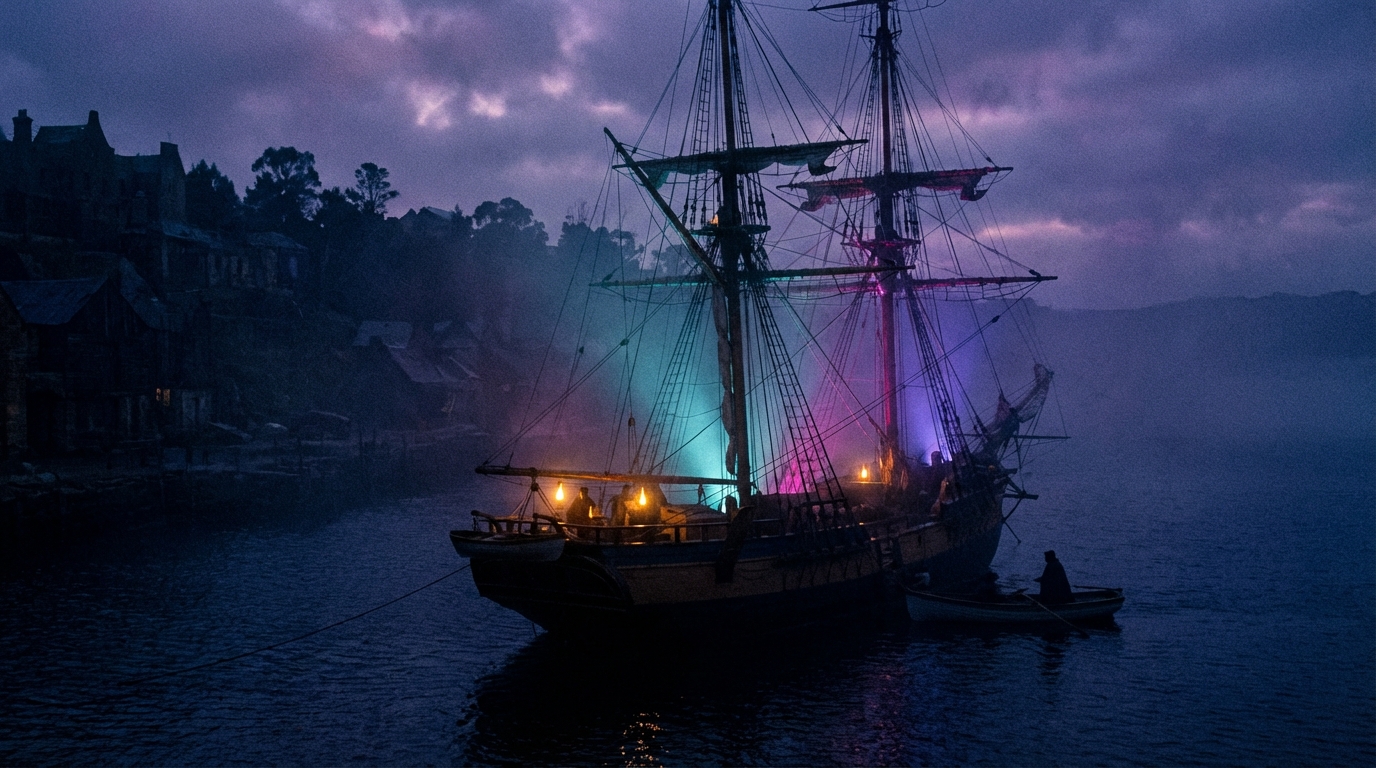
The Doris was a colonial merchant brig operating the coastal routes between Sydney and Van Diemen's Land in the early nineteenth century. Built in the Whitby shipyards of North Yorkshire around 1805, she was a sturdy two-masted vessel of approximately 180 tons, designed for the demanding conditions of southern ocean trade. On 3rd March 1815, the Doris departed Sydney Cove carrying passengers, correspondence, and cargo bound for Sullivan's Cove in Hobart Town. Among her passengers was William Jeffries, a recently freed convict carrying letters of introduction from the Sydney merchant Reginald Donnelly. The voyage marked the beginning of Jeffries' new life in Van Diemen's Land, where he would eventually rise to become one of the colony's most prominent—and ultimately most mysterious—figures.
Construction and Design
The Doris was built in the Whitby shipyards of North Yorkshire around 1805, one of countless sturdy brigs constructed in that renowned shipbuilding town during the Napoleonic era. Whitby had long been famous for producing vessels suited to demanding conditions—Captain Cook's Endeavour had been a Whitby collier—and the Doris continued this tradition of practical, seaworthy construction.
Her design reflected the requirements of merchant shipping in colonial waters: a two-masted, square-rigged brig of approximately 180 tons burden, compact enough to navigate the variable depths of colonial harbours whilst robust enough to handle the notoriously treacherous conditions of Bass Strait. Her hull was carvel-built from Baltic oak, her copper sheathing protecting against the marine growth that plagued vessels in warmer waters. She measured approximately 85 feet in length, with a beam of 24 feet and a draught of 11 feet when fully laden.
The Doris carried a crew of twelve men under normal circumstances: a captain, first mate, boatswain, carpenter, cook, and seven able seamen. Her cargo holds could accommodate roughly 150 tons of goods, though the exact capacity varied depending on the nature of the cargo; bulky items like wool bales required more space per ton than denser goods like timber or provisions. Passenger accommodation was limited to a handful of small cabins in the stern, reserved for those willing to pay premium fares for privacy and marginally better conditions.
Colonial Service
By 1812, the Doris had made her way to the Australian colonies, joining the growing fleet of merchant vessels that serviced the burgeoning trade routes between Sydney, Hobart Town, and the smaller settlements dotting the coastline. Her owner, the Sydney-based firm of Henderson & Marsh, employed her primarily on the coastal run—carrying wool, wheat, and timber northward to Sydney, and returning with manufactured goods, provisions, and passengers bound for Van Diemen's Land.
The vessel's captain during this period was Edward Blackwood, a competent mariner of approximately forty years who had spent two decades in colonial waters. Under his command, the Doris developed a reputation for reliability rather than speed, completing her voyages with a steady dependability that merchants and passengers alike came to appreciate. Her crew knew the southern waters intimately, having navigated them through storms, calms, and everything between.
The coastal trade was not without its dangers. Bass Strait, separating Van Diemen's Land from the mainland, was notorious for sudden squalls, strong currents, and rocky coastlines that had claimed scores of vessels. The Doris navigated these hazards successfully for years, her experienced crew and sturdy construction proving equal to conditions that defeated lesser vessels and less capable mariners.
The March 1815 Voyage
On 3rd March 1815, the Doris departed Sydney Cove on what would prove to be one of her more historically significant voyages. Her cargo manifest listed the usual assortment of colonial goods: bolts of cloth, barrels of flour, tools and hardware, correspondence pouches for the colonial administration, and sundry items ordered by Hobart Town merchants. Her passenger manifest included government officials returning to their posts, settlers seeking opportunities in the southern colony, and a handful of recently freed convicts carrying their hopes and meagre possessions toward fresh beginnings.
Among this latter group was William Jeffries, a thirty-year-old man who had completed his seven-year sentence and earned his certificate of freedom just weeks earlier. Jeffries carried letters of introduction from Reginald Donnelly, one of Sydney's most respected merchants, recommending him to Samuel Hartley of Hobart Town. These letters, along with a silver pocket watch engraved with a private inscription, represented the sum total of his prospects in the new colony.
The voyage south took fourteen days, the Doris making steady progress down the coast before rounding the southeastern tip of the continent and entering the Derwent estuary. The passage through Bass Strait proved uneventful—a mercy, given the strait's fearsome reputation for sudden squalls and treacherous currents. Captain Blackwood navigated the familiar waters with the assurance of long experience, his crew working the sails with the easy competence of men who had made this passage dozens of times before.
By mid-March, the familiar bulk of Mount Wellington had risen on the horizon, and the Doris was threading her way up the Derwent toward Sullivan's Cove. For William Jeffries, standing at the rail as Hobart Town emerged from the morning mist, the arrival marked more than the end of a voyage. It was the beginning of a transformation that would see him rise from penniless freedman to wealthy merchant within a decade.
Later Service and Fate
The Doris continued her colonial service for another twelve years following Jeffries' voyage, her timbers gradually succumbing to the relentless demands of southern ocean sailing. Captain Blackwood retired in 1819, replaced by a succession of masters who maintained the vessel's reputation for steady, reliable service even as her hull grew weaker and her rigging required ever more frequent repair.
By 1825, Henderson & Marsh determined that the cost of maintaining the aging brig had exceeded her earning potential. She was sold to a smaller concern that employed her in the less demanding waters around Sydney harbour, carrying cargo between the town and the settlements along the Parramatta and Hawkesbury rivers. This final chapter of her career lasted two years before she was deemed beyond economical repair.
The Doris was broken up in Sydney in 1827, her useful components salvaged for other vessels, her worn timbers destined for firewood or fill. No ceremony marked her passing; no record preserved the names of all who had sailed in her or the cargoes she had carried across thousands of miles of colonial waters. She was simply one of many vessels that had served the growing colonies, her story absorbed into the larger narrative of maritime history.
Yet her role in carrying William Jeffries to his destiny ensures that her name endures, a small but significant thread in the tapestry of Van Diemen's Land's formative years. In the ledgers of colonial commerce and the memories of those who knew her, the Doris remains what she always was: a sturdy, reliable vessel that carried men and goods through dangerous waters to whatever fates awaited them on distant shores.







