Dawn Elizabeth Clift (née Parker)
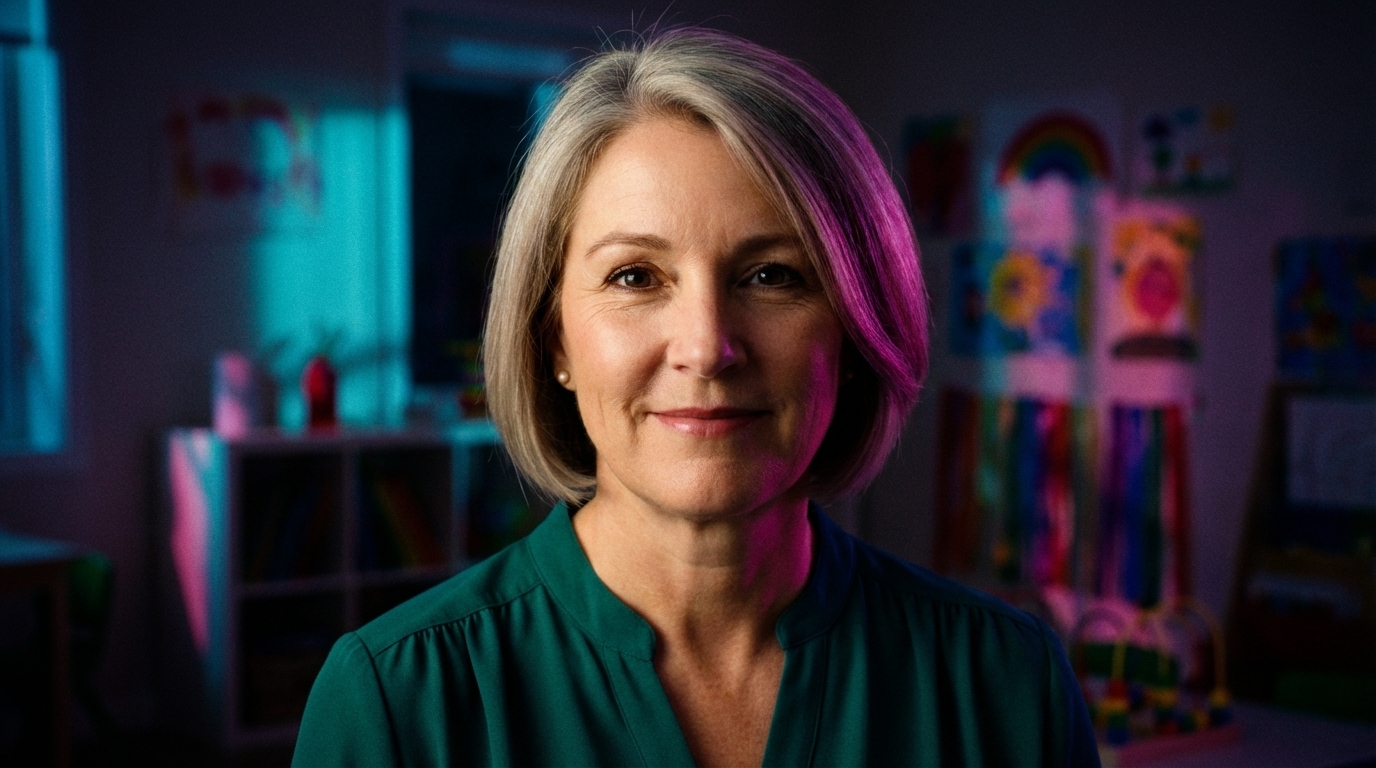
Dawn Elizabeth Clift (née Parker), born 8 May 1960 in Broken Hill, New South Wales, devoted her life to nurturing young minds and strengthening family bonds. A preschool teacher whose vibrant personality transformed classrooms into sanctuaries of imagination, Dawn balanced professional dedication with fierce maternal devotion. Married to Greg Clift, mother to Claire and Amelia, grandmother to four, her legacy resides in countless lives touched by her warmth, determination, and unwavering belief in the transformative power of education.
Early Life and Family Background (1960–1978)
Dawn Elizabeth Parker entered the world on 8 May 1960 at the Broken Hill Base Hospital, the first child of Harold Robert Parker, a schoolteacher, and Evelyn Rose Parker (née Carter), a homemaker whose devotion to gardening transformed their modest property into an oasis of colour amidst the arid outback landscape. Born into Broken Hill's harsh beauty during a period when the legendary mining town still thrived on silver and zinc extraction, Dawn absorbed from infancy the defining qualities of resilience and community spirit that characterised generations of settlers determined to flourish in Australia's challenging interior.
The Parker household, though not wealthy, possessed the particular stability that came from Harold's respected position as an educator and Evelyn's competent household management. Harold brought home not just a steady income but a worldview that valued learning, curiosity, and the transformative potential of education—principles that would profoundly shape his eldest daughter's life trajectory. Evelyn, meanwhile, demonstrated through her magnificent garden that nurture and attention could coax beauty from the most inhospitable conditions, a lesson Dawn would later apply to countless young minds in her own classrooms.
As the eldest of three children, Dawn developed early the organisational skills and natural leadership that would define her adult character. She navigated the typical sibling dynamics with two younger brothers, learning to mediate disputes, orchestrate activities, and assume responsibilities that her parents increasingly delegated to their capable eldest child. This early training in household management and interpersonal dynamics prepared her remarkably well for both a teaching career and the complex choreography of family life.
The Broken Hill of Dawn's childhood operated according to rhythms dictated by mining shifts, union politics, and the community institutions—schools, churches, sporting clubs—that bound together families facing harsh environmental conditions and economic uncertainty. The Parker family participated actively in this communal life. Harold's teaching position connected them to educational circles, whilst Evelyn's involvement in church activities and community organisations ensured the children grew up embedded in social networks that would prove invaluable throughout Dawn's life.
Their home, with Evelyn's garden providing rare green respite from Broken Hill's omnipresent red dust, became Dawn's first classroom in practical domesticity. She helped her mother tend plants that shouldn't have survived in such conditions but thrived through diligent attention. This early education in nurturing growth—in understanding that flourishing required not just initial planting but consistent care, appropriate conditions, and patient persistence—would translate directly into Dawn's later approaches to teaching and parenting.
From Harold, Dawn inherited intellectual curiosity and appreciation for structured learning. She absorbed his belief that education represented the most reliable path to personal advancement and social contribution. Unlike some mining town children for whom school represented merely obligatory prelude to industrial labour, Dawn embraced academic challenges and developed a genuine love of learning that her father's encouragement reinforced.
During her years at Broken Hill High School (1972–1977), Dawn excelled both academically and socially. She possessed that particular combination of intellectual capability and social intelligence that made her a natural leader amongst peers. She organised school events, participated in student government, excelled in her studies, and earned a reputation as someone who could bring people together and make things happen—qualities that would serve her throughout life.
The school's emphasis on academic excellence and community service resonated deeply with Dawn's upbringing. She thrived in environments that valued both individual achievement and collective contribution, understanding instinctively that personal success existed not in isolation but within networks of mutual support and shared purpose. Her teachers recognised not just her academic abilities but her capacity to help others succeed, noting pedagogical instincts that suggested natural teaching talent.
Dawn's adolescence coincided with significant social changes sweeping through Australia in the 1970s—second-wave feminism, shifting attitudes towards women's roles, expanding educational and professional opportunities. Whilst Broken Hill's relative isolation meant these changes arrived somewhat attenuated, Dawn possessed sufficient awareness to recognise that her generation faced possibilities her mother's had not. She could pursue a professional career, could envision life beyond purely domestic roles, could imagine herself as an educated professional making contributions that extended beyond family boundaries.
Yet Dawn never rejected domestic skills or maternal ambitions. Rather, she sought to integrate professional accomplishment with family devotion, to demonstrate that women could excel in both spheres without abandoning either. This synthesis—refusing to choose between career and family, between personal ambition and maternal dedication—would characterise her entire adult life, though not without creating tensions and complications she couldn't always successfully navigate.
Education, Marriage, and Early Motherhood (1978–1986)
Following her graduation from Broken Hill High in 1977, Dawn pursued a diploma in early childhood education, inspired by her father's teaching career and her own emerging sense that working with young children represented her true calling. The training programmes available in regional Australia during the late 1970s emphasised practical skills alongside theoretical understanding, preparing teachers to work in resource-limited environments where creativity and adaptability mattered as much as formal pedagogical knowledge.
Dawn approached her training with characteristic determination and enthusiasm. She excelled at creating engaging learning environments, demonstrated natural ability to connect with young children, and showed particular talent for managing classroom dynamics—recognising when to provide structure and when to allow spontaneous exploration, understanding how to balance individual attention with group activities. Her instructors noted that she possessed not just competence but a genuine gift for early childhood education, the kind of intuitive understanding that distinguished merely adequate teachers from truly exceptional ones.
On a warm autumn day in 1978, eighteen-year-old Dawn married Gregory Alan Clift, a twenty-two-year-old automotive mechanic she'd known since their teenage years. Their courtship had developed with the particular intensity of small-town romance, where limited social options meant relationships either deepened quickly or didn't develop at all. Greg's steady reliability and practical competence attracted Dawn, whilst her vibrant warmth and social ease appealed to someone whose own emotional expression tended towards reserve.
Their marriage embodied the truth that opposites can attract productively when fundamental values align. Greg expressed love through acts of service—fixing broken things, building furniture, maintaining their home with patient precision. Dawn showed devotion through words, warmth, and active emotional engagement. He provided stability and a practical foundation; she created social connections and emotional vitality. He worked with his hands in his automotive garage; she worked with her heart in preschool classrooms. Their complementary strengths created a partnership that, whilst not without friction, ultimately functioned far better than either might have managed alone.
The couple purchased a modest home at 86 Wills Street in Broken Hill, not far from where both had grown up, establishing themselves as a young couple with promising futures. Dawn threw herself into transforming the house into a home, her organisational skills and eye for detail evident in every arranged room, every thoughtfully chosen piece of furniture (many built by Greg's capable hands), every colour and texture that spoke of warmth and welcome.
Dawn began her professional teaching career at a Broken Hill preschool in 1978, immediately distinguishing herself through creativity, patience, and genuine connection with children. She understood instinctively that early childhood education wasn't merely about imparting basic skills but about fostering confidence, curiosity, and a love of learning. Her classrooms became vibrant spaces filled with crafts, stories, songs, and activities that balanced educational objectives with the essential joy of play.
Parents and colleagues quickly recognised Dawn's exceptional abilities. She possessed a rare capacity to help even the most anxious or difficult children feel safe, valued, and capable of growth. She remembered each child's particular interests and challenges, adapting her approach to meet individual needs whilst maintaining cohesive classroom environments. She communicated effectively with parents, offering honest assessments whilst maintaining the encouragement essential for building family-school partnerships.
When Claire Elizabeth Clift arrived on 16 April 1982, Dawn transitioned into motherhood with the same determined competence she brought to teaching. Pregnancy and early motherhood required adjustments—maternity leave from teaching, the overwhelming exhaustion of new parenthood, the challenge of balancing professional identity with maternal role—but Dawn navigated these transitions with characteristic organisation and resolve.
Claire was expressive and physical from infancy, drawn to movement and music in ways that suggested an artistic temperament. Dawn recognised these qualities early, nurturing her daughter's creative spirit through dance classes, music exposure, and encouragement of artistic exploration. She attended every performance, volunteered at Claire's schools, ensured her daughter had opportunities to develop talents that lay outside Dawn's own primarily academic and organisational strengths.
Yet the mother-daughter relationship carried complexities from the start. Dawn and Claire shared intense personalities—both possessed fierce determination, strong wills, and emotional expressiveness that could either harmonise beautifully or clash spectacularly. Where Dawn offered guidance, Claire sometimes heard control. Where Claire sought independence, Dawn saw vulnerability needing protection. Their relationship became a delicate dance of mutual love and inevitable friction, recognition cutting both ways as each saw herself reflected in the other with all the beauty and challenge that entailed.
On 5 October 1986, Amelia Violet Clift's arrival brought different energy into the household. When Amelia entered the world that October day, Dawn's mothering journey deepened with profound intention. Four years after Claire's birth, Dawn approached this second chapter with seasoned wisdom yet fresh wonder. In Amelia, Dawn recognised echoes of her own practical nature—a kindred spirit who would appreciate structure and tradition, who shared her mother's pragmatic approach to life's challenges.
The sisters, separated by four years, developed distinct personalities that required different maternal approaches. Claire's artistic temperament and emotional expressiveness demanded nurturing of creative confidence and tolerance for spontaneity that didn't come naturally to Dawn's more structured nature. Amelia's pragmatism and clinical interests aligned more closely with Dawn's own worldview, creating easier communication and mutual understanding. Dawn loved both daughters fiercely, but the relationships differed in tone and ease, each presenting particular rewards and challenges.
Professional Career and Community Involvement (1986–2020)
Following Amelia's birth, Dawn returned to teaching, her professional identity too important to abandon even as motherhood claimed enormous energy and attention. She worked part-time initially, then full-time as the girls entered school, building a teaching career that spanned more than four decades and touched countless young lives in Broken Hill's educational community.
Dawn's professional trajectory reflected both talent and determination. She progressed from classroom teacher to senior teacher positions, eventually becoming assistant principal and finally, in her last years before retirement, principal of Broken Hill Public School—the very institution where her father had once taught and where she herself had absorbed the educational values that defined her life's work. This homecoming carried profound significance, representing not just career culmination but the completion of a circle spanning generations.
Her teaching philosophy emphasised the transformative power of play and imagination whilst maintaining high standards for developmental progress. Dawn believed passionately that early childhood education laid foundations for all subsequent learning, that children who felt safe, valued, and capable in their first educational experiences approached future challenges with confidence that served them throughout life. She created classroom environments that balanced structure with spontaneity, academic goals with emotional nurturing, individual attention with community-building.
Parents appreciated Dawn's clear communication, her honest assessments that never descended into harsh judgment, her ability to identify both strengths and areas needing support. Colleagues valued her leadership, her willingness to mentor newer teachers, her capacity to navigate the complex politics of educational institutions whilst maintaining focus on the core mission of serving children's needs. She participated actively in professional development, stayed current with evolving pedagogical research, and brought back new ideas that enriched her practice and that of colleagues who sought her guidance.
Dawn's community involvement extended beyond her professional role. She volunteered at local events, participated in church activities (the family's Anglicanism was more cultural than deeply devout, but provided social structure and community connection), organised school functions, and maintained the kind of active social calendar that kept her connected to networks spanning Broken Hill's diverse population. She possessed a particular talent for bringing people together, for identifying common interests that bridged differences, for creating occasions that strengthened communal bonds.
This social leadership came naturally to someone who understood instinctively how communities functioned, who recognised that small towns like Broken Hill thrived or struggled based on the strength of interpersonal connections and shared institutions. Dawn took seriously her role as a community builder, seeing it as an extension of her educational mission—healthy communities produced healthy children, strong social networks supported families facing challenges, collective effort achieved outcomes impossible through individual action alone.
Yet this very competence and drive sometimes created friction. Dawn's tendency to take control in situations could come across as domineering to those less comfortable with strong leadership. Her desire for things to be "just so", her difficulty delegating when she believed tasks wouldn't be completed to her standards, her occasional impatience with others' less organised approaches—these qualities, whilst contributing to her effectiveness, also generated tensions in both professional and personal relationships.
Family Life and Complex Relationships (1982–Present)
Throughout Dawn's adult life, her relationships with her husband and daughters remained central whilst evolving in response to changing circumstances and growing complexity. Her marriage to Greg, though fundamentally solid, required constant navigation of their different temperaments and communication styles. Their forty-year partnership embodied the dance of opposites attracting—her vibrant sociability flowing around his steady reserve like water finding its course.
Dawn sometimes found Greg's silence frustrating, interpreting his emotional reserve as a lack of engagement when he was simply expressing devotion through actions rather than words. She needed verbal affirmation, explicit discussion of feelings and plans, the kind of emotional processing that felt natural to her but overwhelming to someone whose internal life remained largely private. Greg, meanwhile, sometimes experienced Dawn's need for conversation as pressure, her emotional expressiveness as demand for responses he lacked vocabulary to provide.
Yet they learned over decades to read each other's unspoken languages. Dawn came to recognise when Greg needed solitude, when his quiet presence represented contentment rather than withdrawal. Greg understood when Dawn required reassurance through words rather than deeds, when her organisational energy masked underlying anxiety. Their marriage worked not because they were similar but because they developed mutual respect for their differences and appreciation for what each contributed to their shared life.
Dawn's relationship with Claire carried particular intensity born of their similar temperaments. Between mother and eldest daughter flowed a current of shared determination—both possessed fierce wills that could illuminate or ignite. Dawn nurtured Claire's creative spirit from childhood, attending every dance performance with proud eyes, supporting her ambitions even when artistic career paths seemed financially uncertain or geographically impractical. Yet their similar temperaments created inevitable friction. Where Dawn offered guidance, Claire sometimes heard attempts at control. Where Claire sought independence, Dawn saw risks her daughter seemed insufficiently aware of, vulnerabilities needing maternal protection.
The tensions escalated as Claire entered adulthood, established her own dance school, married Paul Smith, and built a life that diverged from paths Dawn might have chosen. Dawn disapproved of some of Paul's choices, worried about the financial instability of small business ownership in regional markets, fretted over the strains she sensed in Claire's marriage long before her daughter acknowledged them openly. Her attempts to help—offering advice, suggesting alternatives, providing practical assistance—sometimes felt to Claire like interference rather than support, creating cycles of conflict that both regretted yet couldn't entirely avoid.
With Amelia, Dawn enjoyed a more straightforward relationship built on shared pragmatism and mutual respect. Between mother and youngest daughter flowed understanding born of complementary temperaments—both valued structure, appreciated tradition, approached challenges with practical problem-solving rather than emotional processing. Dawn recognised early the practical strength in Amelia that would serve her well as a midwife, fostering independence whilst nurturing the compassionate nature that made her daughter effective in medical contexts requiring both technical competence and emotional sensitivity.
When Amelia moved to Townsville, Queensland, to pursue her career and eventually marry Daniel Drayton, Dawn experienced the particular loss mothers feel when children establish lives at distances that prevent daily contact. Yet their relationship adapted to separation, maintained through phone calls, visits, and eventually through Dawn's role as grandmother to Leif and Astrid—delighting in baking with her granddaughter, sharing gardening wisdom with her grandson, creating new traditions that bridged the miles between them.
Grandmotherhood and Later Years (2009–Present)
The arrival of grandchildren brought Dawn immense joy and a renewed sense of purpose. When Claire's children—Mack William Smith (born 12 October 2009) and Rose Abigail Smith (born 12 February 2012)—entered her life, Dawn discovered the particular pleasures of grandparenting: the love without primary responsibility, the ability to spoil without worry about long-term consequences, the delight of watching one's children navigate parenthood with its attendant challenges and satisfactions.
Dawn's nurturing essence permeated her interactions with Mack and Rose. She created spaces in her home where the children's imaginations could flourish amidst patient acceptance—where wobbling tables and bitten plastic apples represented childhood's fragile moments deserving protection rather than problems requiring correction. Her decades of teaching young children informed her grandmothering approach, as she balanced honesty with comfort, protection with truth-telling, the delicate calibration of what children could bear at different developmental stages.
When Amelia's children—Leif Drayton (born 18 September 2016) and Astrid Drayton (born 3 March 2019)—arrived, Dawn's visits to Townsville became highlights of her year. She baked with Astrid, shared her extensive gardening knowledge with Leif, and provided the kind of inter-generational connection that enriched everyone involved. These grandchildren, geographically distant, knew their grandmother through concentrated visits rather than daily proximity, but Dawn ensured the bonds remained strong through consistent communication and focused attention during their time together.
The catastrophic events of July 2018—when Claire's husband Paul disappeared, triggering a chain of circumstances that ultimately led to all contact being broken between Claire and her family—tested Dawn in ways nothing had prepared her for.







