David Robert Mitchell
Born in Launceston on 23 July 1970, David Robert Mitchell built a policing career defined by steady competence rather than spectacular achievement. His fifteen years with Tasmania Police, culminating in his role as Sergeant at Glenorchy Police Station, established a reputation for calm authority and reliable decision-making under pressure. Yet beneath the composed exterior that colleagues and community members observed lay a man increasingly aware that the career he had chosen had extracted costs his younger self could never have anticipated.
Early Life in the North
David Robert Mitchell entered the world on 23 July 1970 at the Launceston General Hospital, the only child of Robert James Mitchell, a shift supervisor at the Comalco aluminium smelter at Bell Bay, and Patricia Ellen Mitchell (née Donovan), a secretary at the Launceston City Council. The family resided in Ravenswood, a working-class suburb on the city's northern outskirts where modest fibro homes housed families whose breadwinners laboured in the industrial facilities that powered Tasmania's mid-century economy.
The Mitchell household operated on principles that Robert's own upbringing had established—hard work, self-reliance, modest expectations, and suspicion of those who sought advancement through means other than honest effort. Robert's shifts at the smelter followed a rotating pattern that shaped family life around industrial rhythms, his absences and presences governed by rosters rather than domestic preference. Patricia managed the household with quiet efficiency, her administrative skills finding expression in meticulous budgeting that stretched Robert's wages across mortgage payments, groceries, and the small luxuries that made working-class life bearable.
David's childhood was neither particularly happy nor notably unhappy—it was simply ordinary, shaped by the routines and constraints common to families of similar circumstances throughout northern Tasmania. He attended Ravenswood Primary School, where he performed adequately without distinction, his teachers noting a boy who completed assigned work reliably but rarely volunteered opinions or sought attention. The shyness that characterised his early years would gradually transform into the reserve that colleagues would later observe, the quiet watchfulness that some found reassuring and others found impenetrable.
The absence of siblings left David to navigate childhood largely alone, finding companionship among neighbourhood children whose friendships formed and dissolved according to the patterns of suburban proximity. He was neither leader nor outcast in these groups, occupying the middle ground that would characterise much of his subsequent life—present but not prominent, included but not central, participating without dominating. These early experiences established patterns of social engagement that would persist into adulthood: David Mitchell learned to function within groups without requiring their validation, to maintain distance whilst appearing present, to observe more than he revealed.
Robert's expectations for his son centred on practical achievement—steady employment, financial stability, the markers of working-class respectability that his own life had pursued. The idea that David might attend university never seriously arose; such aspirations belonged to different families in different suburbs. Instead, Robert emphasised trades, government employment, the secure positions that offered pension benefits and protection against the economic uncertainties that had marked his own father's generation.
Secondary Education and Uncertain Direction
The transition to Queechy High School in 1983 brought expanded horizons without fundamentally altering David's trajectory. The larger institution's diverse offerings provided opportunities he had previously lacked, whilst its anonymity allowed him to maintain the unobtrusive presence he had cultivated. He discovered aptitude for physical education and practical subjects, whilst struggling with the abstract demands of mathematics and the interpretive requirements of English literature.
Rugby league became his primary extracurricular engagement, the sport's combination of physical contact and structured teamwork suiting a temperament that preferred action over discussion. He was not talented enough to harbour ambitions of representative selection, but he was reliable—the player who showed up for training, followed coaching instructions, and performed his assigned role without complaint. These qualities, unremarkable individually, earned respect from coaches who valued consistency over brilliance.
The years at Queechy High passed without dramatic incident or transformative experience. David accumulated the credits required for graduation without discovering particular passion or direction. His careers counsellor, reviewing his academic record and aptitudes in 1987, suggested trades or government employment—recommendations that echoed Robert's expectations without expanding possibilities beyond them. The police service appeared on the list of potential employers, though at seventeen, David gave it no special consideration.
His completion of Year 12 in 1987 marked an ending without clear beginning. Unlike classmates who departed for university, apprenticeships, or positions they had long anticipated, David entered the workforce without specific destination. The following years would see him drift through various employments—factory work, retail, construction labouring—each position adequate without being fulfilling, each departure prompted by restlessness rather than ambition. The young man who emerged from this period possessed skills and experience but lacked the sense of purpose that transforms employment into vocation.
The Delayed Decision
The decision to pursue policing arrived late, crystallising in 1997 when David was already twenty-seven—older than typical academy entrants, his application representing career change rather than initial direction. The factors that finally motivated this choice resisted simple explanation. Partly it was the accumulation of dissatisfaction with aimless employment. Partly it was the desire for structure and purpose that factory floors and construction sites had failed to provide. And partly, though David rarely acknowledged this even to himself, it was the need to become someone whose presence mattered—whose authority derived from institutional role rather than personal qualities he had never been confident he possessed.
The application process tested commitment in ways his previous employments had not. Physical assessments revealed a body adequate for police work, though lacking the natural athleticism that some candidates demonstrated. Psychological evaluations identified no disqualifying factors whilst noting introversion that might require monitoring. Interviews assessed motivations that David articulated with workmanlike clarity rather than inspiring conviction. He was accepted—not as outstanding candidate but as acceptable one, his maturity and stability compensating for qualities he lacked.
The Tasmania Police Academy intake of early 1998 introduced David to an environment that suited him better than he might have predicted. The structured training, clear expectations, and hierarchical organisation provided frameworks within which his particular capabilities could function effectively. He was not the most physically capable recruit, nor the quickest to grasp legal complexities, but he was among the most consistent—completing every assigned task, meeting every standard, never excelling but never failing either.
His instructors noted a recruit who performed best when given clear direction and struggled when required to improvise. This assessment, accurate at the time, would prove both lasting characterisation and limitation. David Mitchell would become an officer who excelled at implementing protocols, managing established procedures, and maintaining order within defined parameters. Initiative, innovation, and adaptation to novel circumstances would remain challenges throughout his career—manageable weaknesses rather than career-ending deficiencies, but limitations nonetheless.
Early Career and the Steady Climb
Graduation in late 1998 and subsequent probationary posting to Launceston Division began David's operational career in familiar territory. The northern city's policing demands introduced him to the realities that academy training had only approximated—domestic disputes where both parties viewed police as enemies, alcohol-fuelled violence that erupted without warning, property crimes committed by people whose circumstances evoked sympathy even as their actions required response. The transition from simulated scenarios to actual incidents tested his composure in ways that revealed both strengths and vulnerabilities.
His capacity to remain calm under pressure emerged as genuine asset. Where some officers became agitated or aggressive when confrontations escalated, David maintained the measured demeanour that would become his professional hallmark. This calm was not feigned—it reflected a temperament genuinely untroubled by conflict, an emotional steadiness that others mistook for courage but that David understood as something closer to detachment. He did not feel the fear that others suppressed; he simply processed situations differently, observing and responding without the emotional engagement that created both connection and distress.
The years at Launceston established professional foundations whilst personal life remained largely static. He dated intermittently without forming lasting attachments, his reserve creating barriers that interested women eventually declined to scale. He maintained cordial relationships with colleagues without developing genuine friendships, his presence valued in professional contexts but rarely sought socially. The patterns established in childhood persisted—David Mitchell functioned effectively within groups whilst remaining fundamentally apart from them.
His confirmation as Constable and subsequent years of patrol duty accumulated experience without advancing rank. He was not ambitious in ways that drove some colleagues toward examination preparation and promotional competition. The sergeant's stripes that others pursued seemed to him burdens rather than achievements—additional responsibility without commensurate reward, authority he neither sought nor particularly wanted. This attitude, whilst protecting him from disappointment, also limited advancement possibilities that more driven officers seized.
Marriage and Its Complications
The relationship with Sandra Holloway, a nurse at Launceston General Hospital, developed through the unlikely intersection of professional proximity—officers and medical staff encountered each other repeatedly during emergency responses, building familiarity that sometimes developed into more substantial connection. Sandra, four years younger than David, possessed the warmth and social ease that he lacked, her extroversion initially complementing his reserve in ways that seemed promising.
Their marriage in 2002, conducted at a modest ceremony in Launceston with limited attendance from both families, represented David's first serious commitment beyond employment. The early years held genuine happiness—Sandra's energy drawing David into social engagements he would never have pursued independently, his stability providing grounding for her more volatile temperament. They purchased a small home in Newstead, began discussing children, and constructed the framework of conventional domestic life.
Yet the strains that would eventually erode the marriage were present from the beginning, visible to honest assessment even whilst hope obscured their implications. Sandra wanted emotional engagement that David struggled to provide—not from unwillingness but from incapacity he could never fully explain. His reserve, initially intriguing, became frustrating as years passed without the deepening intimacy she sought. His preference for silence over conversation, solitude over socialising, routine over spontaneity—these qualities, tolerable in courtship, grew oppressive within marriage's daily proximity.
Police work's demands compounded personal limitations. Shift patterns disrupted domestic routines, cancelled plans, and created absences that accumulated into emotional distance. The residue of difficult incidents—violence witnessed, deaths attended, human suffering absorbed—remained largely unshared, David's processing occurring internally rather than through the conversation Sandra needed. She learned to recognise the signs of bad shifts without being told their contents, her nursing experience providing framework for understanding trauma whilst her exclusion from his inner life created loneliness that companionship could not address.
The decision not to have children emerged gradually rather than through explicit choice. Sandra initially assumed postponement would yield to timing that never arrived. David's ambivalence—he neither strongly wanted nor strongly opposed parenthood—eventually became implicit refusal as years passed without action. The conversations grew less frequent, then ceased entirely, the subject joining other topics that their marriage could no longer safely address.
Transfer South and the Glenorchy Years
The 2008 transfer to Glenorchy Police Station represented both professional advancement and personal retreat. Promotion to Senior Constable accompanied the move, recognition of accumulated experience rather than exceptional achievement. But the transfer also created distance from a marriage that relocation could not repair—Sandra's refusal to abandon her Launceston nursing position, David's unwillingness to decline the posting, and mutual recognition that geographical separation might clarify what proximity had confused.
Glenorchy offered fresh context without fundamentally changing the man who arrived there. The station's blend of suburban, commercial, and industrial policing provided variety that prevented monotony, whilst the community's working-class character resonated with David's own background. He learned the suburb's geography, developed working relationships with colleagues, and established the routines that would structure the following decade.
The marriage survived in attenuated form—weekend visits when rosters permitted, telephone conversations that grew briefer as years passed, and the mutual pretence that distance was temporary whilst both understood its permanence. The formal divorce in 2012 simply acknowledged what had been true for years, the legal dissolution generating less emotional impact than might have been expected because the emotional dissolution had occurred long before. Sandra remarried within two years; David did not, and gave no indication that he ever would.
The promotion to Sergeant in 2013 came almost despite David's apparent indifference. Superior officers, recognising his reliability and the respect his calm authority commanded among junior officers, pushed him toward examination preparation he would not have pursued independently. The stripes, once acquired, validated qualities he had never fully valued in himself—the capacity to remain steady when circumstances escalated, to make decisions without excessive deliberation, to provide supervisory presence that reassured rather than intimidated.
The Supervisor's Burden
Sergeant David Mitchell's role at Glenorchy Police Station centred on shift supervision—managing the constables who responded to calls, allocating resources across competing demands, and providing the experienced oversight that operational policing required. The work suited his capabilities whilst exposing his limitations. He excelled at procedural management, resource coordination, and the calm direction that high-pressure situations demanded. He struggled with the mentorship dimensions that modern supervision increasingly emphasised—the emotional support, career guidance, and developmental conversations that younger officers expected from senior personnel.
His subordinates respected him without particularly liking him. The calm that served well during incidents created distance during quieter moments. Officers learned that Sergeant Mitchell would support them through operational challenges whilst remaining unavailable for personal concerns. They understood that his feedback would be accurate without being encouraging, his criticism fair without being constructive. He maintained professional relationships without fostering the connections that transformed colleagues into cohorts.
The younger officers who rotated through his supervision presented particular challenges. Michael Chen's systematic diligence reminded David of his own early career whilst highlighting the educational advantages his generation had lacked. Matilda Ferguson's natural warmth and community engagement demonstrated capabilities he had never possessed. Jasper Hawkins's easy rapport with colleagues and public illustrated social skills that remained foreign despite decades of observation. These officers succeeded in dimensions where David had merely survived, their careers unfolding along trajectories that his own limitations had foreclosed.
Yet his value to the station was genuine, even if its nature differed from what he might have wished. When incidents escalated, when pressure mounted, when clear direction was needed amid chaos, Sergeant Mitchell provided exactly the steady presence that operational policing required. The spike strip deployments he supervised, the traffic situations he managed, the critical incidents where his calm voice directed response—these moments validated a career that quieter periods sometimes caused him to question.
The Events of August 2018
The Berriedale incident of 2 August 2018 fell outside David's direct involvement but within his supervisory responsibility. Constables Ferguson and Hawkins—officers he had helped train, whose development he had overseen, whose capabilities he had assessed—responded to what appeared a routine call and emerged from circumstances no training could fully prepare them for. The discovery of Cody Jennings' remains, the fatal shooting of Kate Gibbons, the subsequent investigation's complexities—all occurred to officers under his nominal supervision.
The immediate aftermath demanded exactly the steady presence David could provide. He coordinated station response, ensured procedural compliance, and provided the supervisory stability that crisis required. But the subsequent months revealed dimensions of leadership where his limitations mattered. Ferguson and Hawkins needed emotional processing he could not facilitate, support he could not provide, guidance through psychological territory he had never learned to navigate. He recognised their struggles without knowing how to address them, observed their changes without possessing tools for intervention.
The mandatory debriefings and counselling sessions fell to others better equipped for such work. David attended what protocol required, provided what documentation demanded, and watched his officers struggle with trauma that his own emotional architecture could not fully comprehend. The guilt that accompanied this inadequacy—the knowledge that supervisory responsibility extended beyond operational direction into human dimensions he could not serve—added weight to burdens already accumulated across fifteen years.
Jasper Hawkins's particular struggle cut closest. The young officer who had killed Kate Gibbons carried a weight that David could observe but not share. The commendations Jasper received for procedural compliance seemed inadequate acknowledgment of the psychological cost extracted. David lacked words for conversations that might have helped, possessed no framework for supporting an officer whose trauma exceeded anything his own career had demanded. He did what he could—adjusted rosters to provide breathing room, ensured counselling access, maintained professional normalcy—whilst knowing that these gestures addressed symptoms rather than causes.
Physical Presence and the Mask of Authority
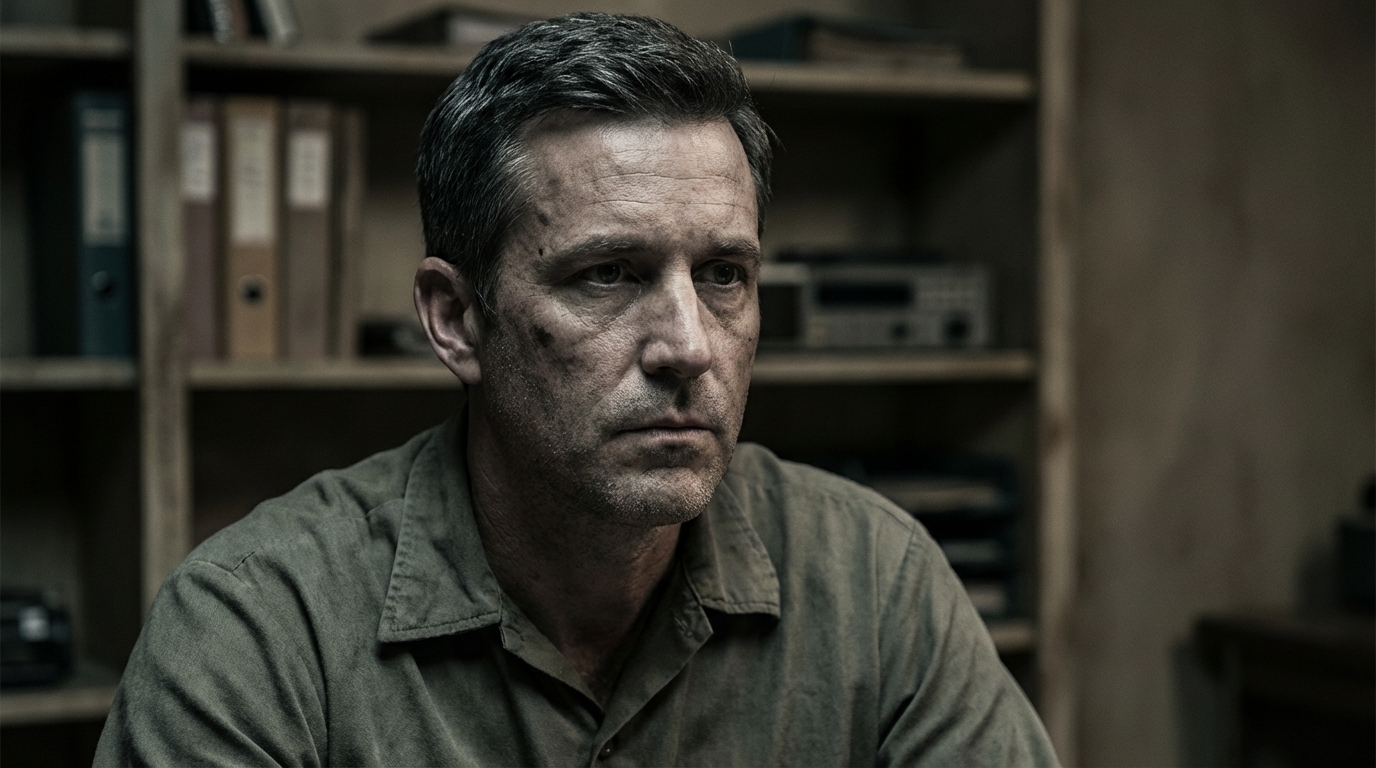
At six feet two inches, David Mitchell possessed the physical presence that uniform authority benefited from. His solid build, maintained through the minimum fitness requirements rather than genuine athletic commitment, projected capability even as advancing years gradually eroded it. The salt-and-pepper hair that had arrived prematurely in his early forties now dominated, closely cropped in the practical style that police work demanded. The square jawline and piercing blue eyes that colleagues noted created an impression of intensity and attention that served professional purposes regardless of what lay beneath.
The uniform he wore with apparent natural authority represented both identity and armour. Within its structure, David knew his role, his responsibilities, his place within institutional hierarchy. The man who struggled with civilian social interactions became, in uniform, someone whose presence carried weight independent of personal qualities. This transformation was neither conscious deception nor complete metamorphosis—it was simply the adaptation that institutional identity allowed, the self that emerged when external structure provided what internal resources lacked.
Those who observed David Mitchell at work saw the Sergeant—calm, competent, authoritative. Those who might have observed him outside work, had such observers existed, would have seen someone less defined—a man in his late forties living alone in a modest Glenorchy unit, his evenings occupied by television and occasional reading, his weekends structured around errands and household maintenance that consumed time without providing meaning. The two versions of David coexisted without fully connecting, the professional self functioning effectively whilst the private self merely persisted.
The Accumulating Weight
Fifteen years of policing had deposited psychological sediment that David rarely examined directly. The domestic violence scenes that recurred at familiar addresses, the bodies discovered in circumstances suggesting lonely deaths, the road accidents where arriving officers could only document tragedy rather than prevent it—these experiences accumulated without the processing that mental health professionals would recommend. David's emotional architecture, which protected him from acute distress during incidents, also prevented the integration that would have metabolised their impact over time.
He did not experience the dramatic symptoms that sent some officers to mandatory counselling. He slept adequately, functioned effectively, and maintained the operational capability his role required. The erosion was subtler—the gradual narrowing of emotional range, the increasing preference for routine over novelty, the difficulty imagining futures that differed substantially from present patterns. The man who had once, however vaguely, anticipated that life might offer more had gradually accepted that it would not.
The recognition that his career had plateaued arrived without drama. Sergeant represented his ceiling—the promotional examinations for Senior Sergeant demanded capabilities he did not possess, political navigation he could not perform, and ambition he could not summon. He would remain at current rank until retirement, the years ahead offering variation without advancement, experience without growth. This recognition was not bitter—David lacked the emotional investment that would have made disappointment painful. It was simply acknowledgment of limitation, acceptance of boundaries that his own choices and capacities had established.
His relationships with family had attenuated over years. Robert's death in 2011 had brought him north for the funeral, where he discovered how little remained to connect him to origins he had left behind. Patricia, now in her late seventies and requiring increasing support, remained in the Ravenswood house where David had grown up, her care coordinated by distant cousins whose lives had remained geographically proximate. He visited when conscience demanded, sent money when requested, and felt the guilt of inadequate filial attention without sufficient motivation to address it.







