Daniel Price
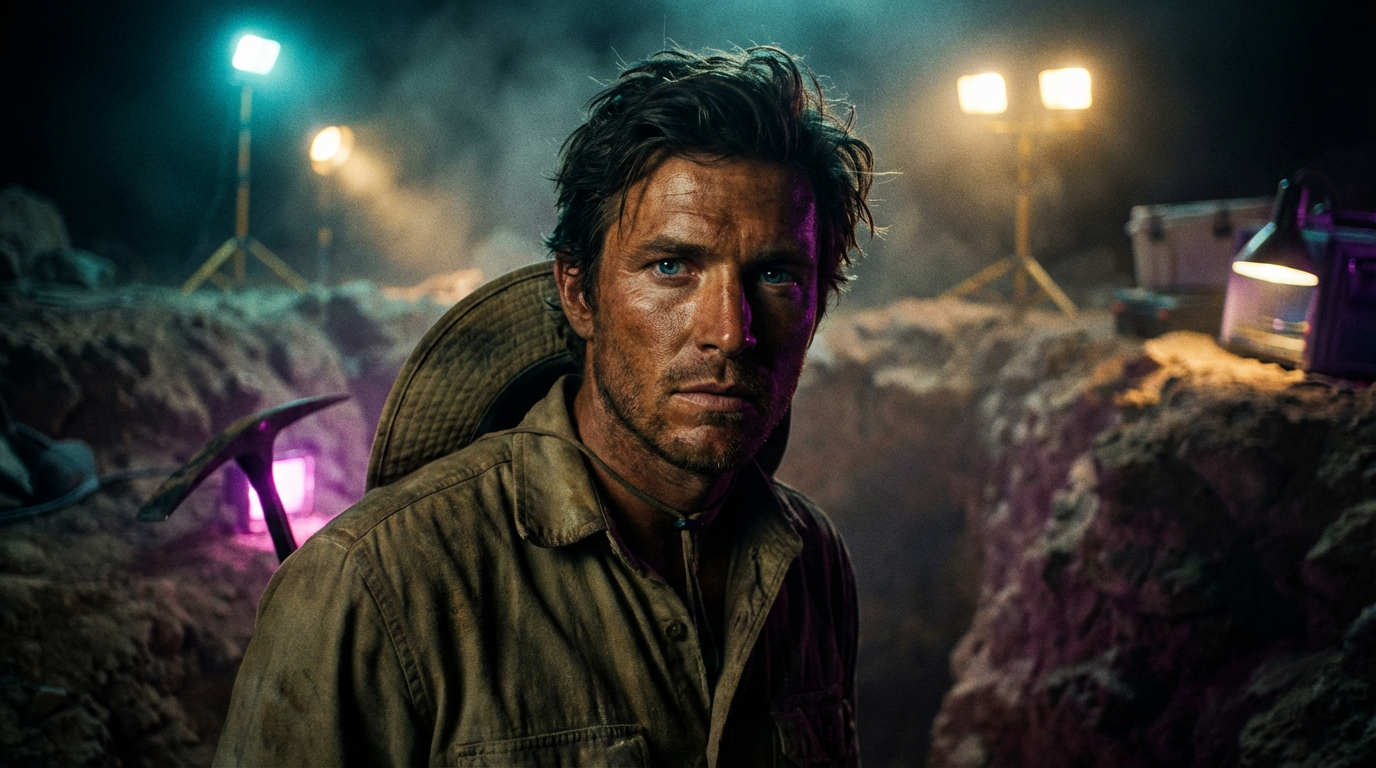
Daniel Price embodied the restless pursuit of hidden knowledge—a brilliant geological surveyor whose obsession with the Outback's buried secrets led him into mysteries he could never escape. Born into Brisbane's mining heritage on 9 June 1931, he spent thirty years chasing geological anomalies and lost histories before vanishing near the Simpson Desert in 1961, leaving behind only cryptic journal entries, a daughter he'd never meet, and questions that echo across generations.
Brisbane's Mining Son (1931–1947)
The infant arrived during Brisbane's transformation from provincial capital to modern city, born at the Mater Hospital in South Brisbane on the cool winter morning of 9 June 1931. His father Franklin Price, a thirty-three-year-old mining engineer, paced the corridor with the nervous energy that characterised his approach to everything—brilliant, restless, unable to remain still when motion offered possibility. His mother Lillian, daughter of a prospector who'd chased gold through Western Australia's harsh interior, endured labour with the stoic resilience that defined women raised in mining camps where complaint achieved nothing.
The Price household operated on patterns dictated by Franklin's work rather than conventional routine. The family moved constantly—from Brisbane to Mount Isa's copper fields, from Kalgoorlie's gold mines to Lightning Ridge's opal deposits, following contracts that promised fortune but delivered only subsistence wages and perpetual uncertainty. By the time Daniel turned ten, he'd attended six different schools across Queensland and Western Australia, never remaining anywhere long enough to establish friendships beyond the superficial bonds formed between transient mining families.
This itinerant childhood shaped Daniel's character profoundly. He learned early that places were temporary, that roots were illusions, that the only constant was the land itself—the geological formations that persisted whilst human settlements bloomed and withered. Franklin recognised his son's aptitude for reading landscapes, teaching him to identify mineral deposits through surface indicators, to interpret fault lines and sediment layers, to understand that the earth's surface concealed as much as it revealed.
The education was irregular but comprehensive. Daniel attended schools sporadically, his formal learning supplemented by Franklin's hands-on instruction in geology, surveying, and the practical mathematics required for fieldwork. He developed the ability to learn quickly, to absorb information from textbooks during brief stable periods, then apply that knowledge practically during the nomadic stretches when school was impossible. Teachers in the various institutions he attended noted his intelligence but also his disengagement—a boy whose attention was always partly elsewhere, as though the classroom walls couldn't contain his awareness of the broader landscape beyond.
Yet beneath the technical education lay something more troubling. Franklin's work increasingly involved projects that existed in legal grey areas—private surveys for investors whose names were never mentioned, excavations that seemed to avoid official oversight, expeditions into territories that mining companies had supposedly abandoned. Daniel, accompanying his father from age twelve onwards, witnessed meetings conducted in hushed tones, saw maps that didn't match official geological surveys, heard references to discoveries that "powerful interests" wanted suppressed.
The relationship between father and son was complex. Franklin loved Daniel fiercely but expressed that love through obsessive knowledge transfer, as though preparing his son for dangers he couldn't articulate. He taught Daniel to read coded messages in survey reports, to recognise when official accounts contradicted physical evidence, to trust direct observation over institutional narrative. "The earth doesn't lie, son," Franklin would say whilst examining core samples by lamplight. "People do. Governments do. Companies do. But the rocks—they tell the truth if you know how to listen."
This worldview cultivated in Daniel a fundamental distrust of authority combined with almost mystical faith in geological evidence. He learned to see conspiracies in inconsistent data, to interpret anomalies as deliberate concealment rather than natural variation. By his teenage years, he'd absorbed not just his father's technical expertise but also his paranoid epistemology—the conviction that significant discoveries were routinely suppressed, that certain areas were deliberately kept unexplored, that the official history of Australia's geological mapping was riddled with intentional omissions.
The family's financial situation remained precarious throughout Daniel's childhood. Franklin's contracts paid irregularly, and his tendency to abandon projects when he discovered "something that doesn't add up" meant periods of unemployment that strained the household. Lillian managed their limited resources with the same practical efficiency she'd learned from her prospector father, making cheap ingredients stretch impossibly far, repairing clothes until they disintegrated, maintaining dignity despite poverty. Yet she worried constantly about Franklin's increasingly erratic behaviour—his late-night journal writing, his cryptic conversations with questionable associates, his growing conviction that he was close to "understanding the pattern."
The Loss That Defined Everything (1947)
The telegram arrived at their Brisbane boarding house on 23 August 1947, delivered by a boy who accepted his penny tip and fled before the household's grief erupted. Franklin Price had been declared missing, presumed dead, somewhere in the Simpson Desert region. The circumstances were characteristically murky: he'd been conducting an "independent geological survey" for an unnamed investor, had established a base camp near the border between South Australia and the Northern Territory, and had failed to report for his scheduled supply pickup. Search parties found his camp abandoned—tent still standing, equipment scattered but undamaged, provisions adequate for another week. What they didn't find was Franklin himself, his journal (which colleagues confirmed he carried constantly), or any indication of which direction he'd travelled.
The official explanation—dehydration and disorientation leading to death somewhere in the surrounding desert—satisfied authorities but convinced no one who'd known Franklin. He was too experienced to die from simple navigational error, too paranoid about survival to leave camp inadequately prepared. His colleagues whispered alternative theories: that he'd discovered something significant and been silenced, that he'd staged his disappearance to escape debts or threats, that he'd found what he'd been searching for and chosen to vanish rather than share it.
For sixteen-year-old Daniel, his father's disappearance transformed abstract paranoia into concrete worldview. The mystery of what Franklin had been investigating, what he'd discovered, why he'd been in that particular location—these questions became the framework through which Daniel understood reality. He inherited not just his father's geological expertise but his conviction that significant truths were being actively concealed, that his father's fate was connected to knowledge too dangerous to acknowledge.
Lillian's response was more pragmatic. With her husband dead or vanished, she needed income immediately. She returned to her family connections in Brisbane, securing work as a housekeeper whilst Daniel finished his education. The grief was profound but expressed through silence rather than display—she'd married a man who chased horizons, and horizons had finally swallowed him. She forbade Daniel from following his father's investigative obsessions, insisting he pursue stable employment rather than risky fieldwork. Yet she couldn't prevent the inheritance of temperament, the genetic and learned tendency towards restless seeking that had defined both Franklin and her own prospector father.
University and Intellectual Formation (1949–1953)
Daniel's acceptance into the University of Queensland's geology programme in 1949 represented escape from Brisbane's suffocating domesticity. The scholarship—awarded based on examination results that revealed his exceptional spatial reasoning and analytical ability—allowed him to pursue formal credentials whilst maintaining independence from his mother's increasingly desperate attempts to anchor him to conventional life.
The university environment revealed both Daniel's strengths and his limitations. He excelled at subjects requiring pattern recognition across large datasets—structural geology, mineralogy, geophysical surveying. His ability to synthesise information from disparate sources, to identify anomalies that others dismissed as statistical noise, impressed professors who recognised genuine talent. Yet he struggled with academic culture's collaborative norms and institutional constraints. He questioned methodologies that seemed designed to confirm existing theories rather than challenge them, dismissed research that relied on official geological surveys he considered compromised.
Fellow students found Daniel brilliant but difficult. He'd monopolise seminars with elaborate theories connecting seemingly unrelated phenomena, then refuse to provide sources beyond vague references to "field observations" and "independent research." He maintained no close friendships, instead cultivating relationships with the university's marginal figures—the conspiracy-minded lecturer investigating government suppression of mining data, the retired surveyor who claimed to have witnessed impossible geological formations, the librarian who provided access to restricted archival materials.
The thesis Daniel submitted for his degree—an analysis of discrepancies between official geological maps and actual field observations in remote Queensland regions—was technically brilliant but institutionally problematic. His advisor, Professor Edmund Hayes, praised the rigorous methodology whilst noting that "Mr Price's tendency to interpret minor inconsistencies as evidence of deliberate falsification undermines what would otherwise be groundbreaking work." The thesis passed, earning Daniel his degree in November 1953, but the controversy ensured that academic positions remained unavailable despite his obvious capabilities.
This rejection suited Daniel perfectly. Academic constraints would have frustrated his need for independence and his conviction that important discoveries existed outside institutional frameworks. He wanted fieldwork, not faculty politics; direct observation, not peer review; freedom to pursue anomalies wherever they led, regardless of official boundaries or conventional interpretation.
The Freelance Years (1953–1956)
The decade following graduation established Daniel's pattern—brilliant work combined with professional unreliability, exceptional discoveries undermined by inability to maintain client relationships. He worked as a freelance geological surveyor, accepting contracts across remote Australia with various mining companies, exploration firms, and occasionally private investors whose motivations remained opaque.
His professional reputation was contradictory. Clients praised his ability to identify mineral deposits that others had missed, his innovative surveying techniques, his willingness to work in conditions that frightened less experienced surveyors. Yet they also noted his tendency to abandon projects midway through completion, his cryptic written reports that included unexplained observations about site "irregularities," his habit of pursuing tangential investigations without client authorisation.
The work took Daniel to Australia's most isolated regions—the Kimberley's rugged plateaus, the Pilbara's ancient rock formations, the Great Victoria Desert's endless horizons. He developed a reputation amongst other surveyors as someone uniquely comfortable in remote conditions, capable of enduring weeks alone with minimal supplies whilst conducting meticulous observations. Yet colleagues also whispered about his odd behaviours: the extensive personal notes he kept separate from official reports, his questions about historical expeditions to regions he was supposedly surveying for mineral content, his apparent interest in Indigenous stories about places where "the earth opens" or "the sky touches down."
The journal Daniel maintained throughout this period—a leather-bound book he carried constantly, writing in it by lamplight after each day's fieldwork—contained observations that blended rigorous geological data with increasingly speculative interpretations. He documented sites where magnetic readings behaved inconsistently, areas where rock formations seemed to defy conventional age-dating methods, locations that Indigenous informants insisted should be avoided. These observations accumulated into a personal theory that Daniel articulated only in fragments: that Australia's geological history contained chapters deliberately excised from official accounts, that certain landscapes harboured secrets dating to periods predating human habitation, that his father's disappearance connected to knowledge about these anomalous sites.
Financial success remained elusive. Daniel earned adequately when working but spent months between contracts, either pursuing independent investigations or simply unable to commit to new employment. He lived in cheap boarding houses, owned little beyond his surveying equipment and that perpetual journal, maintained no permanent address. Friends from university who'd secured stable positions would occasionally encounter him in Brisbane or Perth, noting how he'd aged prematurely—the sun-damaged skin, the perpetual squint from years in harsh light, the wiry build of someone who ate irregularly and exercised obsessively.
The Newcastle Interlude (Summer 1956)
The contract that brought Daniel to Newcastle in May 1956—a coastal sediment analysis for a maritime engineering firm—represented unusual work for someone specialised in remote surveys. He accepted it primarily for the change of location, tired of the interior's brutal climate and seeking temporary respite in a city where ocean breezes moderated Queensland's heat. The work was straightforward, requiring competence rather than brilliance, leaving him mental energy for his personal research.
Newcastle's harbour environment suited Daniel temporarily. He rented a modest room near the docks, spent his days collecting sediment samples and conducting routine analyses, his evenings at the library researching historical accounts of coastal disappearances and anomalous tidal patterns. The work's simplicity was almost meditative after years of chasing geological mysteries through hostile terrain.
The encounter with Brenda Harlow arrived with the mundane randomness that defines consequential meetings. A minor injury whilst working on the harbour's edge brought him to Royal Newcastle Hospital's emergency department in late June, where a nursing student with intelligent eyes and capable hands treated his laceration with efficient competence. The conversation that developed whilst she sutured his forearm revealed unexpected common ground—her fascination with how bodies maintain structural integrity against constant assault, his obsession with how landscapes preserve evidence of ancient trauma. They were both, in different ways, forensic investigators of systems under stress.
The relationship that evolved over the following weeks felt transgressive for Daniel—not the physical intimacy, which he'd experienced in various ports and mining towns, but the emotional vulnerability. Brenda's combination of scientific rationality and genuine warmth created space where Daniel could articulate thoughts he'd normally keep buried in his journal. They'd meet after her shifts, walking along the harbour whilst he explained geological time and she described cellular processes, both recognising in the other a kindred hunger for understanding beneath surface appearances.
Yet even as Daniel experienced genuine connection, some part of him remained fundamentally uncommitted. He never mentioned his father's disappearance, never revealed the true nature of his independent research, never suggested permanence beyond the contract's duration. When Brenda spoke of futures—her nursing career ambitions, possibilities of family, dreams of stability—Daniel would nod but redirect conversation to immediate topics. He recognised her deserving better than his perpetual transience but couldn't imagine transforming himself into someone capable of providing it.
The decision to leave Newcastle arrived not through deliberate choice but inevitable momentum. The contract concluded in late August, and Daniel had already accepted work in Lightning Ridge—a private survey for an investor interested in opal deposits but, Daniel suspected, really seeking confirmation of theories about subsurface anomalies in that region. He told Brenda vaguely about "work up north," promised to write (knowing he wouldn't), and departed on a morning when she was working a night shift, avoiding the farewell that would have required explanations he couldn't provide.
He never learned about the pregnancy, never knew that his brief Newcastle presence had created a daughter who would inherit his restless curiosity and fatal attraction to dangerous knowledge. Years later, before his own disappearance, Daniel would sometimes think about Brenda—wondering if she'd completed her nursing training, whether she'd found someone more reliable, if she ever thought about that strange summer when a surveyor with haunted eyes had briefly intersected her carefully planned life.
The Final Investigations (1957–1961)
The years following Newcastle marked Daniel's increasing immersion in theories that colleagues dismissed as obsessive. The work continued—sporadic contracts providing minimal income—but his real focus centred on personal investigations into sites he'd identified through cross-referencing historical accounts, Indigenous oral traditions, and anomalies in official geological surveys. He developed elaborate theories connecting his father's disappearance to a broader pattern of vanishings near certain geological formations, convinced that understanding one mystery would unlock others.
By 1959, Daniel had assembled extensive documentation suggesting that the Simpson Desert region contained features that didn't conform to conventional geological models. His notes referenced "magnetic irregularities," "inconsistent subsurface readings," and "deliberate gaps in official mapping" that, he believed, indicated something significant being concealed. He'd interviewed elderly prospectors who'd worked the region in earlier decades, documented their stories about "wrong places" where compasses failed and experienced surveyors became disoriented, compiled newspaper accounts of disappearances that official explanations attributed to natural causes despite suspicious circumstances.
The obsession isolated Daniel increasingly. Former colleagues stopped recommending him for contracts, recognising that his reliability had deteriorated beyond acceptable levels. His appearance became more haggard—malnutrition from inadequate eating, exhaustion from sleepless nights spent reviewing data, the cumulative physical toll of years spent in harsh environments without proper recovery. Friends who'd maintained contact gradually stopped trying, exhausted by conversations that circled endlessly around conspiracy theories and unprovable speculation.
Yet beneath the apparent deterioration, Daniel maintained methodical precision in his research. His journal entries from this period, whilst containing speculative theories, also documented rigorous observations and carefully reasoned arguments. He wasn't mad—or at least, his madness possessed its own internal logic and empirical foundation. The question was whether the patterns he identified existed in reality or only in his increasingly desperate need to make his father's death meaningful.
The Vanishing (1961)
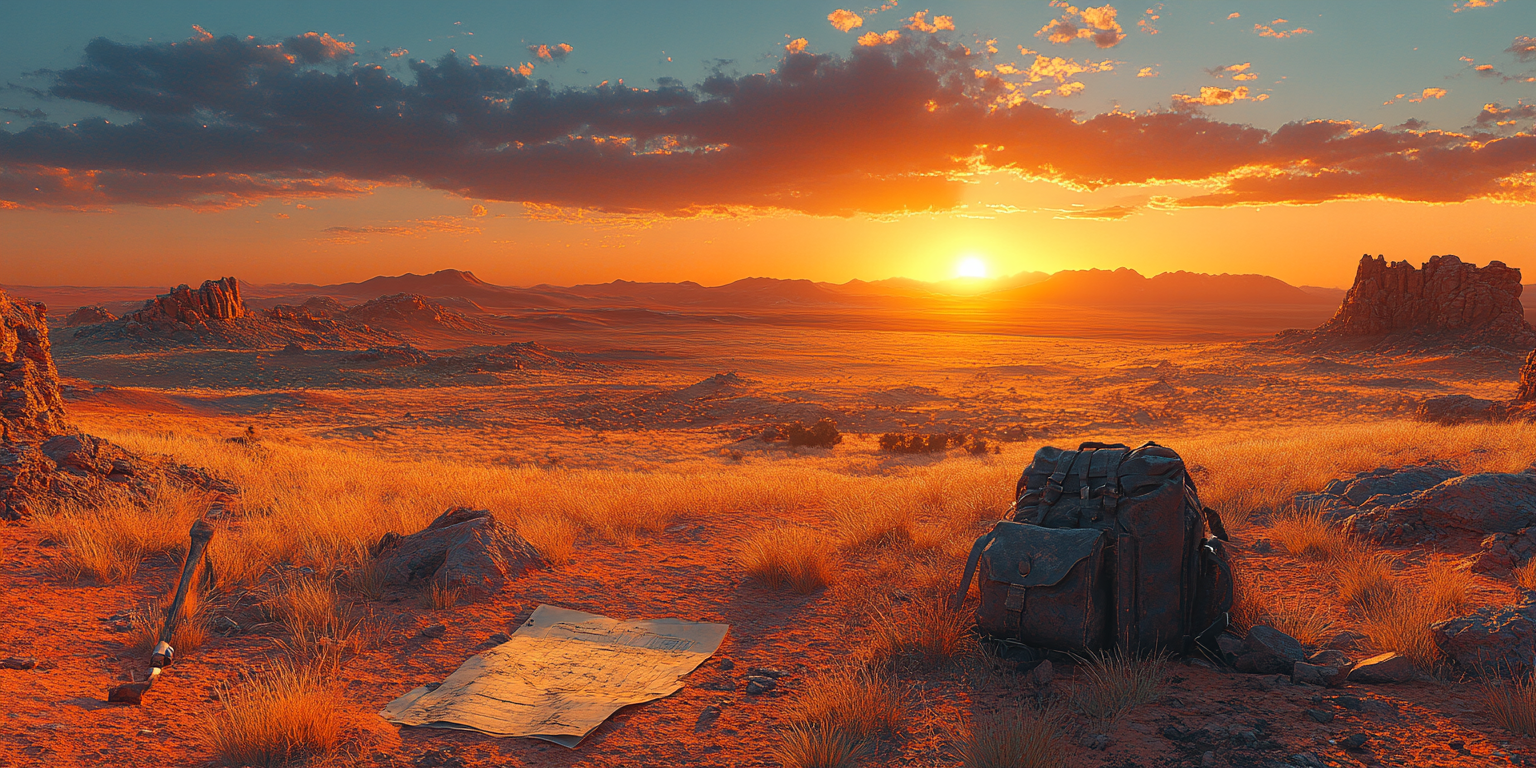
The final expedition departed in April 1961, funded by Daniel's savings and motivated purely by personal obsession. He'd identified a location in the Simpson Desert—approximately one hundred and twenty kilometres from where his father had disappeared—that his research suggested contained geological features impossible according to conventional understanding. He informed no one of his specific destination, filed no formal exploration plan, simply loaded his aging utility with equipment and supplies for a month-long investigation.
The last confirmed sighting placed Daniel at a remote fuel station on the edge of the desert on 18 April, where the attendant later recalled him as "seemed excited, like he was onto something big, kept checking maps and muttering about coordinates." From there, he drove into the desert's immensity and was never reliably seen again.
The discovery of his abandoned camp on 23 May triggered searches that found everything except Daniel himself. The camp was intact—tent properly erected, supplies inventoried and adequate, equipment maintained and functional. What was missing seemed deliberately selective: his surveying instruments were present, but his journal was gone. His clothing remained, but the maps he'd been carrying had vanished. The utility's keys were in the ignition, but Daniel's personal effects—photographs, documents, the leather satchel colleagues knew he carried constantly—had disappeared.
The official conclusion—death by exposure somewhere in the surrounding desert—seemed plausible but unsatisfying. Daniel was too experienced to wander unprepared into lethal conditions. The absence of his journal suggested either he'd had it with him when he died (meaning his body lay somewhere searchers hadn't reached) or someone had removed it after his disappearance. The latter possibility fed theories that Daniel had indeed discovered something significant and paid the same price as his father.
The Legacy of Absence
Daniel Price's disappearance created multiple mysteries that would resonate across decades. For the geological community, he became a cautionary tale about obsession's dangers—brilliant talent squandered through inability to maintain professional boundaries and personal stability. For conspiracy theorists, he became a martyr, proof that asking certain questions invited fatal consequences. For his mother Lillian, who outlived him by only months before dying of what friends called "broken heart disguised as pneumonia," he became another Price man claimed by the Australian interior's insatiable appetite.
For Sally Louise Harlow, whom Daniel never knew existed, he became the absent presence shaping her entire trajectory. The restless curiosity she inherited, the obsession with historical mysteries, the fatal attraction to investigating disappearances in remote landscapes—all echo the father she never met, as though genetic inheritance operated independently of direct contact. When Sally herself vanished near Silverton in 1988 whilst investigating patterns of historical disappearances eerily similar to those that consumed Daniel, the parallel became impossible to dismiss as coincidence.
The question of what Daniel Price discovered, if anything, remains unanswerable. His journal—which would presumably contain his final observations and conclusions—has never been recovered. The sites he identified as significant have been surveyed subsequently by conventional methods revealing nothing anomalous. Yet the absence of evidence isn't evidence of absence, and those who knew Daniel insist that whatever drove him into that final desert expedition was real to him, backed by years of meticulous research rather than mere delusion.







