Claire Elizabeth Smith (née Clift)
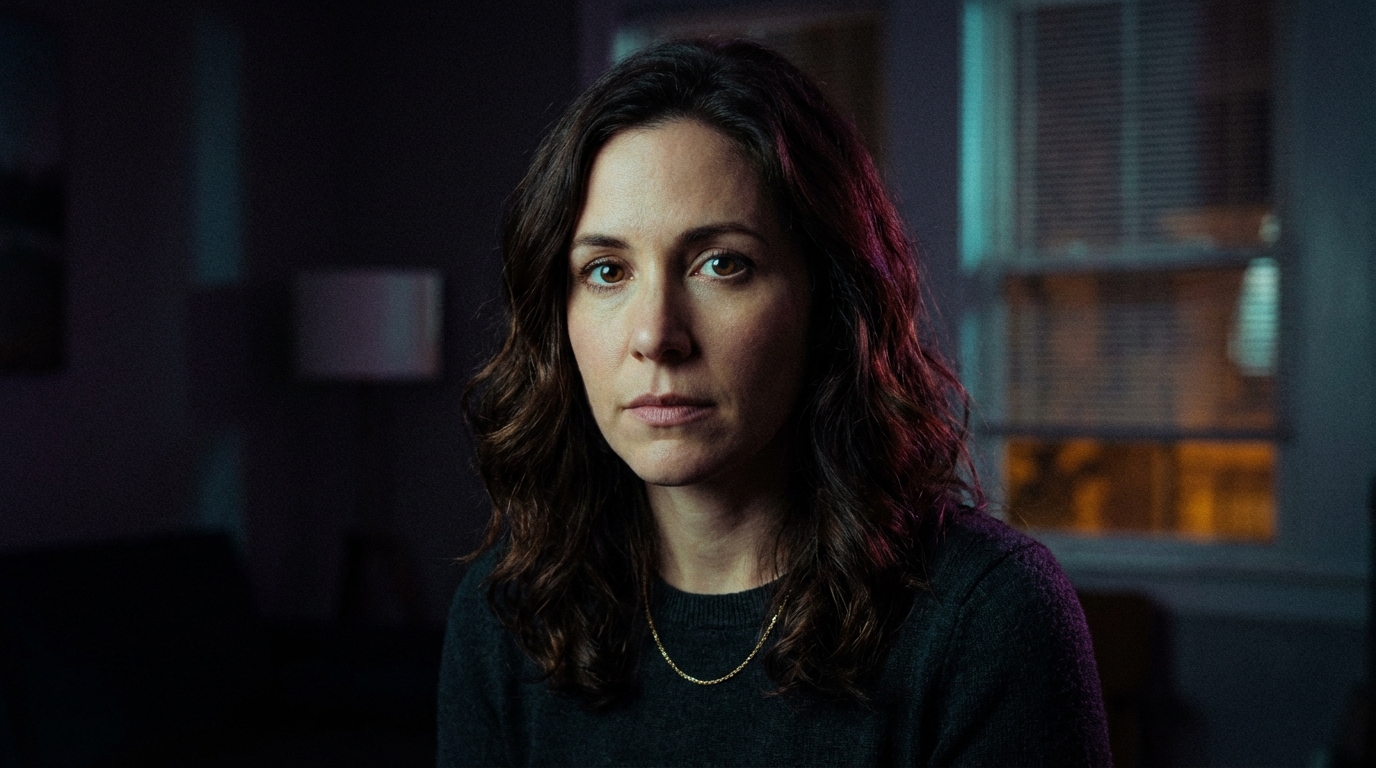
Claire Elizabeth Smith (née Clift), born 16 April 1982 in Broken Hill, New South Wales, is a dance and music teacher whose passion for movement and creative expression shaped her life's calling. Married to Paul Samuel Smith and mother to Mack and Rose, Claire's world of nurturing students and building family was shattered in 2018 when her husband's disappearance triggered events that would tear her family apart and ultimately claim her daughter's life.
Born into the Red Dust
Claire Elizabeth Clift entered the world on 16 April 1982 at the Broken Hill Base Hospital in far western New South Wales, the first child of Gregory Alan Clift and Dawn Elizabeth Clift (née Parker). Her arrival brought profound joy to her parents, who had built a solid working-class life in the remote mining town. Greg, an automotive mechanic with skilled hands and quiet dedication, and Dawn, a preschool teacher with boundless energy and organisational precision, welcomed their daughter into a household where practical competence met educational ambition.
The Broken Hill of Claire's childhood was a place of stark contrasts—brutal desert heat and biting winter cold, vast horizons and tight-knit community, industrial heritage and artistic aspiration. The town's distinctive character, shaped by generations of mining families and an unexpected artistic community drawn to the outback's dramatic landscapes, would profoundly influence Claire's development. Here, in this isolated corner of Australia where red earth met endless sky, she would learn both the resilience demanded by harsh conditions and the grace that transforms constraint into beauty.
The Clift household at 86 Wills Street operated with the rhythms typical of working families in regional Australia. Greg's automotive workshop provided steady income whilst Dawn's teaching position offered both financial security and social standing within the community. Their home was marked by orderliness and routine—meals at consistent times, household tasks distributed fairly, expectations clearly communicated. Dawn, whose own childhood had taught her the value of structure, ran the household with efficiency that sometimes bordered on rigidity, though always tempered by genuine warmth towards her children.
Claire's early years were characterised by the physical freedom particular to childhood in remote Australia. The Clift backyard, modest in size but treasured as private outdoor space in a desert town, became her first stage. She twirled amongst washing lines, leapt from veranda steps, discovered that her body could express emotions and ideas that words couldn't quite capture. Dawn noticed this natural physicality, this instinctive connection between music and movement, and recognised something worth nurturing.
When Claire was four years old, her sister Amelia Violet Clift arrived on 5 October 1986. The new baby disrupted household rhythms and required sharing parental attention that had previously been Claire's alone, yet the sisters would develop a bond characterised by both deep loyalty and fundamental differences in temperament. Where Claire was expressive and artistic, Amelia would grow to be pragmatic and clinical. Where Claire moved through the world with dancer's grace, Amelia would approach life with midwife's groundedness. The four-year age gap meant they occupied different developmental stages throughout childhood, yet their shared history in Broken Hill created connections that distance and difference couldn't entirely sever.
Family Tree Chart
The Dancer Emerges
Claire's passion for dance crystallised during her primary school years, when Dawn enrolled her in the limited classes available in Broken Hill. The mining town, despite its isolation, possessed a cultural life richer than its remote location might suggest—a legacy of both the artistic community that had been drawn to the area's dramatic landscapes and the working-class families who valued education and creative expression as paths beyond manual labour.
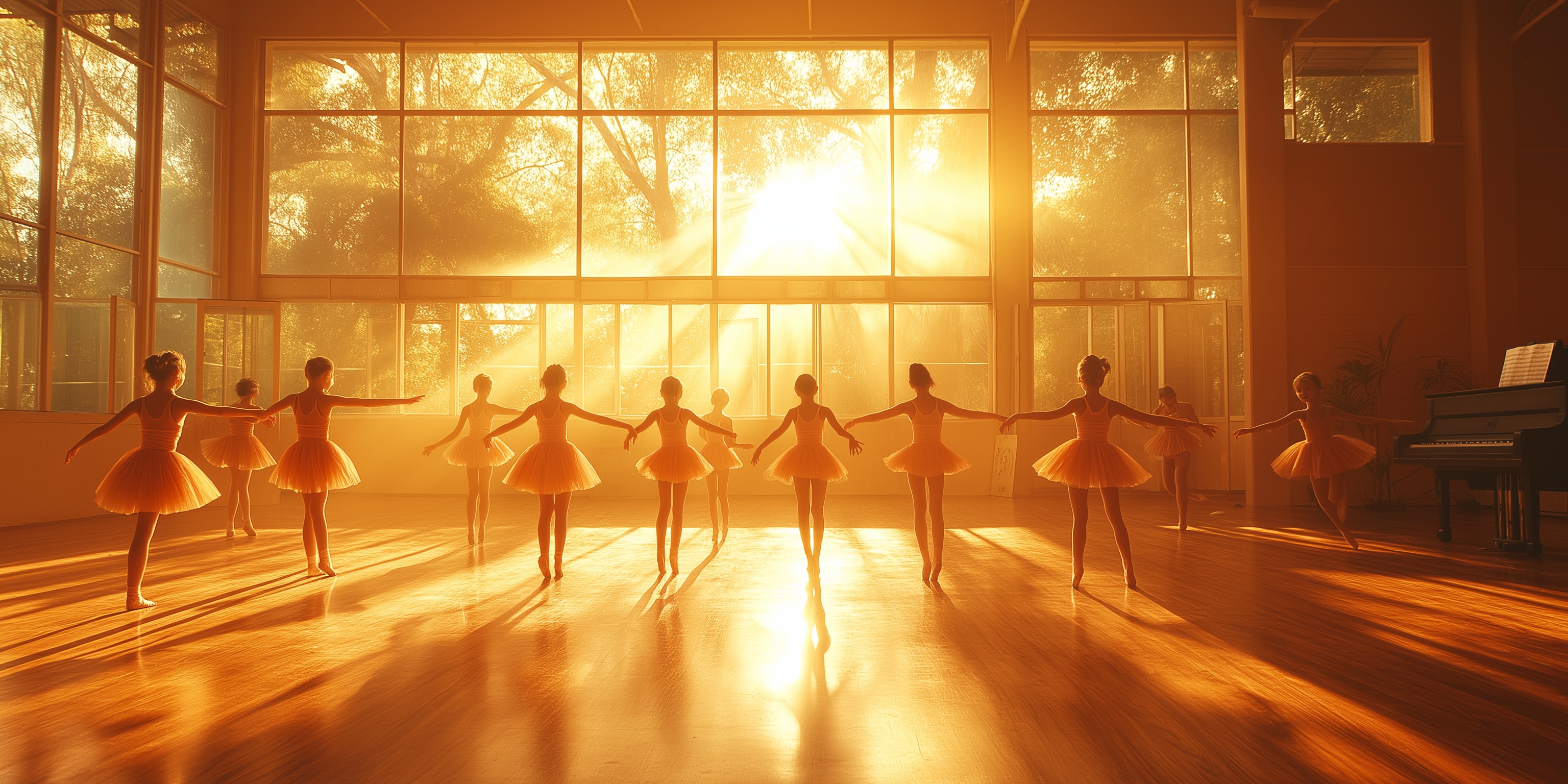
The dance classes available in Broken Hill during Claire's childhood were modest affairs—held in community halls, taught by instructors whose own training was often incomplete but whose dedication was absolute. Yet for Claire, these classes represented revelation. She discovered that the physical expression she'd explored instinctively in her backyard could be refined into technique, that movement had vocabulary and grammar, that dance existed as a language through which she could communicate complexity that words couldn't hold.
Claire approached dance with the seriousness particular to children who've found their calling early. She practised obsessively, turning the family lounge room into a studio, annoying Amelia with constant twirling and leaping, absorbing correction and criticism with fierce determination to improve. Greg built her a barre along one wall of her bedroom—a gesture of support from a practical man who understood that talent required infrastructure, even if the art form itself remained somewhat mysterious to him.
As Claire progressed through primary school, her talent became increasingly evident to instructors and fellow students alike. She moved with natural grace that suggested innate understanding of spatial relationships, musicality, and the emotional resonance of physical expression. Performance came easily to her—the nerves that paralysed some students transformed in Claire into heightened focus and expressive intensity. Local recitals and community events showcased her emerging abilities, with Dawn and Greg watching from audiences with the particular pride of parents witnessing their child excel.
Yet Claire's passion extended beyond personal ambition. Even as a child, she demonstrated instinct for teaching, helping younger students learn steps, explaining technique in terms they could grasp, creating encouragement and positive reinforcement that made others want to improve. Her instructors noticed this natural pedagogical ability, commenting to Dawn that Claire possessed not just performance talent but the rarer gift of being able to help others access their own potential.
When Claire began secondary school at Broken Hill High in 1995, she entered adolescence with clear sense of identity centred on dance and music. Her school years from Year 7 through Year 12 (1995-2000) were marked by balancing academic requirements with escalating commitment to artistic development. She participated in school productions and local performances, her name becoming increasingly associated with dance in the community. Teachers noted her focus and discipline—the countless hours of practice required for serious dance training had instilled work ethic that served her well academically, even when her true interests lay elsewhere.
The Limitations of Geography
By mid-adolescence, Claire confronted the central challenge facing talented young people in regional Australia: the tension between local roots and opportunities that existed elsewhere. Broken Hill, for all its cultural aspirations, couldn't provide the advanced training available in metropolitan centres. Sydney, Melbourne, even Adelaide offered dance schools and companies that could develop Claire's abilities far beyond what was possible in the remote mining town.
The dilemma was practical and emotional. Relocating for training would mean leaving family, abandoning the tight-knit community that had nurtured her development, and confronting the financial challenges of city living on a working-class budget. Greg and Dawn, though supportive of their daughter's ambitions, couldn't easily afford metropolitan accommodation and elite school fees. Claire herself, despite her talent and ambition, felt profound attachment to Broken Hill—this was home, these were her people, and the thought of leaving created anxiety that competed with her artistic aspirations.
The compromise Claire reached reflected both pragmatism and loyalty to place. Rather than relocating permanently, she pursued dance and music education through correspondence courses and intensive workshops—travelling to Adelaide or Sydney for concentrated periods of training during school holidays, then returning to Broken Hill to integrate what she'd learned. This hybrid approach, whilst less than ideal from a purely technical standpoint, instilled in Claire a particular determination. She would have to work harder than metropolitan students who had daily access to advanced instruction. She would have to be more disciplined, more focused, more committed to compensate for geographical isolation.
During her senior secondary years, Claire also began teaching younger students in Broken Hill, conducting classes in community halls and building a small but dedicated following. At seventeen and eighteen years old, she was already demonstrating the pedagogical instincts that would define her adult career—creating nurturing environments where students could explore movement without fear of judgment, developing age-appropriate curricula that balanced technical development with joy of expression, and building the kind of trust that encouraged children to take creative risks.
This early teaching experience proved formative. Claire discovered that she loved not just dancing but helping others access the same joy and self-expression she'd found through movement. The satisfaction of watching a struggling student finally master a difficult sequence, the delight of seeing shy children blossom into confident performers, the community-building that happened when people gathered to learn together—all of it resonated deeply with something in Claire's nature that extended beyond personal artistic ambition.
Paul Smith and the Promise of Partnership
During her secondary school years, Claire met Paul Samuel Smith, a fellow student at Broken Hill High whose family had relocated to the mining town in 1995 when Claire was in Year 9 and Paul was beginning Year 8. Paul had arrived from Adelaide with his father Noah, stepmother Greta, and rapidly expanding collection of half-siblings, the Smith family seeking fresh start in a smaller community after Noah's difficult divorce and remarriage.
The attraction between Claire and Paul developed with the intensity particular to teenage romance in small towns, where limited social options meant relationships either deepened quickly or didn't develop at all. They found in each other complementary partnerships—Claire's expressive physicality balanced Paul's more cerebral approach to music, her spontaneity complemented his carefulness, her social ease helped navigate situations where his shyness might have isolated him. Paul played piano with technical proficiency and emotional depth that impressed Claire, who appreciated music as essential component of dance. Claire's performances captivated Paul, who saw in her movement the physical manifestation of feelings he struggled to express directly.
Their courtship existed within the constraints of Paul's religious obligations and the expectations of his devoutly Mormon family. The Smith household operated according to strict religious principles that shaped every aspect of daily life, from dietary restrictions to entertainment choices to assumptions about appropriate behaviour between unmarried young people. Claire, whose own family's Anglicanism was more cultural than devout, found herself navigating religious structures and expectations that sometimes felt foreign or unnecessarily rigid. Yet Paul's obvious devotion—his consistent presence despite his family's demands, his genuine interest in Claire's ambitions, his support for her artistic development—made the religious complications seem surmountable.
The approaching inevitability of Paul's Mormon mission service cast a shadow over their teenage romance. This separation was non-negotiable—Paul would leave at nineteen for two years of proselytising work, during which communication with Claire would be severely limited and physical contact entirely prohibited. Their relationship thus carried knowledge of approaching interruption, deepening through awareness of its impending suspension. They made tentative plans for life after his return—marriage, family, building something permanent in Broken Hill where they both had roots.
When Paul departed for his mission at nineteen, Claire was eighteen and completing Year 12. The two-year separation proved more difficult than either had anticipated. Communication was restricted and carefully monitored, their relationship reduced to occasional letters that couldn't bridge the growing distance between daily experiences. Claire threw herself into her final year of secondary school and into expanding her dance teaching, using busyness as defence against loneliness and uncertainty about whether the relationship could survive such prolonged separation.
Paul returned in early 2001, formally having completed his mission service, having supposedly strengthened his faith, and ready to resume the life he'd left behind. Claire, now eighteen and having graduated from Broken Hill High, greeted his return with relief and joy. Yet subtle changes had occurred during his absence—he was more guarded, more burdened by something he couldn't or wouldn't articulate, whilst she had grown more independent and confident in her teaching abilities. They reconnected, relearning each other's rhythms, rebuilding intimacy that the mission had necessarily suspended.
Education and Entrepreneurship
Following her graduation from Broken Hill High in 2000, Claire faced decisions about her educational and professional future. Metropolitan dance training remained financially impractical for the Clift family, particularly with Amelia entering her teenage years and requiring her own educational investment. Yet Claire possessed clear vision of what she wanted to accomplish: establishing a proper dance school in Broken Hill that would provide the kind of comprehensive instruction currently unavailable in the region.
The compromise she reached reflected both pragmatic assessment of circumstances and deepening commitment to community. Claire pursued dance and music education through correspondence courses and intensive workshops, travelling periodically for concentrated training whilst maintaining her base in Broken Hill. This hybrid approach required extraordinary discipline—she effectively became her own teacher, translating distance learning materials into practical application, developing her technique through solo practice sessions that lacked the immediate feedback of in-person instruction, and supplementing correspondence work with whatever advanced training she could access during brief metropolitan visits.
Simultaneously, Claire expanded her teaching practice in Broken Hill. What had begun as casual classes for younger students evolved into something more structured and ambitious. She developed age-appropriate curricula spanning ballet fundamentals, contemporary dance, and musical theatre. She rented studio space in community facilities, created performance opportunities for her students, and built reputation for nurturing teaching style that balanced technical rigour with emotional support. Parents appreciated Claire's ability to help children blossom under her guidance, creating positive environments where students felt safe to take creative risks.
By her early twenties, Claire had established herself as Broken Hill's pre-eminent dance instructor, the person to whom parents brought children wanting dance education, to whom the community turned for cultural programming, and who represented artistic aspiration in a town primarily known for mining. Her success reflected not just technical competence but genuine gift for creating connection—with students who trusted her to guide their development, with parents who valued her professionalism, and with the broader community that saw in her work evidence that Broken Hill could nurture artistic excellence.
The financial rewards of teaching in a small regional market were modest, but Claire's ambitions were never primarily pecuniary. She loved the work itself—the daily satisfaction of helping students progress, the joy of watching shy children transform into confident performers, the community-building that happened when people gathered to learn together. The dance school she was building represented not just business but calling, the practical expression of her deepest values about the power of creative expression and the importance of nurturing human potential.
Marriage and the Performance of Happiness
Following Paul's completion of business studies in Sydney, he returned to Broken Hill to marry Claire, fulfilling plans they'd discussed since their teenage courtship. The wedding, conducted in accordance with Mormon custom though not in the temple due to Claire's non-Mormon status, represented the culmination of expectations that had been building for years. For Claire, marriage to Paul offered the promise of partnership with someone who shared artistic sensibility, understood creative ambition, and could provide the stable family structure within which she envisioned building her life.
The early years of their marriage looked, from the outside, like success. They purchased a home in Broken Hill not far from where both had grown up, establishing themselves as a young couple with promising futures. Claire's dance school was thriving, becoming a central institution in Broken Hill's cultural life and bringing in steady income whilst providing her with professional identity and purpose. Paul established business ventures that merged his entrepreneurial training with practical necessity, developing enterprises that appeared profitable enough to support their comfortable middle-class life.
They were active in the local Mormon community, attending services regularly, Paul occasionally performing piano for church functions, both presenting the image of a young couple building the kind of eternal family their faith celebrated. To those observing from outside, the Smith household represented success—attractive young couple, artistic talents, growing business, faithful church participation, the promise of children to complete the picture.
Yet beneath this carefully maintained surface, fractures existed from the start. Paul's relationship with Mormon faith had undergone quiet erosion during his mission and subsequent city experiences, creating internal dissonance that manifested as emotional distance Claire interpreted as personal rejection rather than spiritual crisis. His performance of faith had become exactly that—performance without conviction, duty without devotion, attendance because not attending would raise uncomfortable questions rather than because he believed.
Claire, whose own relationship with religion remained more cultural than deeply personal, sensed this distance without understanding its source. She felt Paul withdrawing in ways she couldn't name or address, his physical presence not translating into genuine emotional availability. Their communication developed patterns of careful avoidance—they discussed logistics, coordinated schedules, managed household practicalities, but the deeper conversations about satisfaction, authenticity, the gap between who they'd imagined becoming and who they actually were—these remained unspoken.
The tensions in their marriage were exacerbated by differences in temperament and life approach that teenage romance had obscured. Claire's expressive nature and emotional spontaneity clashed with Paul's increasing guardedness and need for control. Her comfort with vulnerability felt threatening to someone building entire life around careful performance. Her social ease and community connections highlighted his tendency towards isolation. The complementary qualities that had initially attracted them became sources of friction—she wanted openness he couldn't provide, he needed containment she found suffocating.
Motherhood
The arrival of Mack William Smith on 12 October 2009 transformed Claire's life, bringing the joy and purpose of motherhood to complement her professional identity as teacher and entrepreneur. Pregnancy and early motherhood required adjustments to her dance teaching schedule, but Claire navigated these transitions with characteristic determination. She taught classes through her second trimester, returned to modified teaching within weeks of delivery, and integrated Mack into the rhythms of the dance school—the baby often present in his carrier during classes, eventually toddling amongst older students who delighted in his presence.
Mack was curious and energetic, gravitating naturally to both his father's music and his mother's physicality. Claire loved watching him experiment with movement, banging enthusiastically on Paul's piano, attempting dance moves he observed in her studio. She encouraged his explorations whilst being careful not to force either dance or music upon a child who might develop entirely different passions. Her teaching experience had taught her the importance of nurturing children's natural interests rather than imposing parental ambitions.
When Rose Abigail Smith arrived on 12 February 2012, completing what Claire and Paul envisioned as their family, Claire experienced the particular delight of having a daughter. Rose was sunny and affectionate where Mack was intense and focused, bringing lightness to the household that balanced her brother's seriousness. Claire delighted in her daughter in ways that surprised her—Rose's natural grace, her responsiveness to music, her unselfconscious joy in movement all suggested that she might follow her mother's footsteps into dance, though Claire remained determined not to pressure such development.
Family life centred on music and dance, the Smith home filled with sounds of Paul's piano compositions whilst Claire choreographed movements, Mack and Rose performing with unselfconscious joy. In these moments, Claire could almost convince herself that she'd built something worthwhile, that the compromises and performances were justified by the family they'd created together. She threw herself into being the mother she'd imagined—present, nurturing, encouraging of her children's interests whilst providing the structure and security they needed to thrive.
Yet the tensions in her marriage with Claire continued to deepen. Their intimacy—both emotional and physical—became characterised by gaps and silences. They functioned well as co-parents and household managers, but the deeper connection that had initially drawn them together felt increasingly elusive. Paul threw himself into work, using business demands as refuge from uncomfortable questions about satisfaction and authenticity. Claire channelled her energies into the dance school and the children, finding in professional success and maternal role the validation that her marriage increasingly failed to provide.
Neither was happy, exactly, but both remained committed to maintaining the structure of their life together. Divorce represented failure too catastrophic to seriously contemplate—it would shatter the careful facade they'd constructed, require explanations neither could give, disrupt the children's stability, prove that they'd somehow inherited inability to sustain marriage that both had witnessed in their own families. So they continued, year after year, performing partnership whilst the genuine connection eroded beneath the surface.
The Fracture
By mid-2018, the Smith marriage existed in state of cold détente. Paul and Claire maintained household routines and co-parenting responsibilities whilst existing in separate emotional universes. Conversations occurred only about logistics—children's schedules, business matters, necessary household decisions. Deeper engagement had ceased entirely, both having learned that attempts at genuine communication led only to conflict or uncomfortable silence.
The argument that precipitated Paul's disappearance occurred on 23 July 2018, its specific content less important than what it represented: the complete breakdown of even superficial civility that had been holding their marriage together. Claire's frustration with Paul's emotional absence, his financial decisions, his unwillingness to engage meaningfully with family life erupted into accusations that Paul fled rather than confronted. His response—literally escaping through their bedroom window to avoid continued conflict—was both farcical and devastating, the physical manifestation of years of emotional retreat.
When Paul failed to return that evening, Claire's initial response was anger rather than concern. He'd run away before—not physically, but emotionally, retreating into work or silence when confronted with uncomfortable truths. Yet as hours became days, anger transformed into something more complex: worry mixed with resentment, fear complicated by rage, the growing recognition that something had fundamentally changed.
Claire contacted Paul's family in Adelaide, reaching Greta with inquiries that quickly escalated into accusations. Where was Paul? Was his family hiding him? What kind of man abandoned his wife and children without explanation? The conversations were tense and ultimately futile—Greta claimed ignorance about Paul's whereabouts, offered assistance that felt inadequate, and bore the brunt of Claire's fury about abandonment that wasn't technically her fault yet felt connected to the Smith family's patterns of dysfunction.
As days stretched into a week, Claire made the decision to relocate temporarily to Queensland with Mack and Rose. The children asked endless questions Claire couldn't answer. Where was Dad? When would he come back? Why had he left? She offered inadequate explanations about work and temporary situations, protecting them from knowledge she herself didn't fully possess.
The Brisbane School Bus Tragedy of 5 August 2018 would shatter what remained of Claire's world. Rose's abduction from a Queensland playground by Beatrix Cramer, acting on instructions from Paul, represented Claire's worst nightmare materialising—her child stolen, pulled through an impossible portal into a dimension that shouldn't exist. Claire's desperate attempt to follow, driving a commandeered motorhome through the Portal aperture with Mack, resulted in a catastrophic collision as vehicles materialised violently in Clivilius.
Claire's injuries from the crossing were severe—compound fractures, fractured ribs, traumatic brain injury that left her unconscious for days. When she finally regained consciousness in Bixbus's primitive medical facilities, she confronted reality that defied comprehension: she existed in another dimension, her body broken, her daughter traumatised by abduction, her son psychologically damaged, and her husband's choices revealed as directly responsible for the catastrophe that had destroyed their family.
The Breaking
The weeks between Claire's arrival in Clivilius and Rose's death represented a nightmare from which she couldn't wake. Her physical injuries healed slowly, each movement reminding her of the violence that had brought them to this impossible place. The medical care available in Bixbus, whilst competent within its limitations, couldn't adequately address the severity of her trauma. Pain management was primitive. Physical therapy non-existent. She existed in state of constant discomfort that exhausted her already depleted emotional resources.
The psychological devastation exceeded the physical trauma. Claire had to process that her husband had requested their children's abduction, that his choices had led directly to Rose being torn from a playground and pulled through an inter-dimensional portal, that the catastrophic crossing that had nearly killed Claire resulted from Paul's selfish prioritisation of his own needs over his family's safety. The rage she felt was absolute, yet it competed with the practical reality that they were trapped together in Clivilius, dependent on the community Paul was helping build, unable to escape either the dimension or each other.
Their marriage, already fractured before Clivilius, was effectively destroyed. Claire could barely look at Paul without grief and fury overwhelming her. The man she'd married, the father of her children, the person with whom she'd imagined building life—he'd become someone she barely recognised, someone whose decisions had shattered everything. Their interactions were minimal and charged with hostility barely contained by exhaustion and circumstances. They functioned as co-parents in the most minimal sense, coordinating about Mack and Rose's immediate needs whilst avoiding any deeper engagement that might trigger complete breakdown.
For Claire, caring for traumatised children whilst herself broken added layers of impossibility to already unbearable situation. Rose, confused and frightened, needed reassurance Claire could barely provide. Mack, emerging from the wreckage physically intact but psychologically damaged, withdrew into silence that worried Claire even as she lacked capacity to address it. She tried to create routines, maintain normalcy, protect them from the full horror of their circumstances—but how do you provide stability when your own foundation has crumbled completely?
Greta became essential support during this period, providing the practical care and emotional stability that neither Paul nor Claire could manage. She helped with the children, managed household tasks, created small moments of normality in circumstances that defied normal entirely. Yet even Greta's loving presence couldn't shield any of them from the reality that their world had fundamentally broken in ways that couldn't be repaired.
The Final Destruction
On 21 August 2018, Rose was killed by a stray bullet that crossed through the Portal during a new Guardian's transit. The circumstances were chaotic—violence on Earth coinciding with dimensional crossing, Rose breaking free from Greta's supervision at precisely the wrong moment, the convergence of impossible factors that resulted in a six-year-old's death.
For Claire, Rose's death represented the final destruction of everything. The daughter she'd carried, birthed, raised, delighted in—gone because of Paul's choices, because of incomprehensible circumstances, because of violence that had followed them from Earth to this impossible world. The grief was absolute, overwhelming, a wound so profound that survival itself became questionable. The physical injuries from the crossing would eventually heal, but the psychological trauma of losing Rose might prove insurmountable.
Claire's relationship with Paul dissolved entirely in the aftermath of Rose's death. Whatever fragments of connection had survived the crossing, whatever minimal cooperation they'd managed for the children's sake, whatever hope either had secretly harboured that they might eventually rebuild something—all of it ended in the dust where Rose fell. Claire blamed Paul absolutely and without reservation. He had requested the children's abduction. He had created the circumstances that brought them to Clivilius. He was responsible for Rose's death as surely as if he'd pulled the trigger himself.
Paul accepted this blame with silence that spoke volumes, unable to defend choices he himself recognised as catastrophically selfish and destructive. He cared for Claire through the acute stages of grief, maintaining minimal household functioning, but their marriage was beyond repair. They existed as separate beings sharing physical space, united only by shared trauma and the survival of one traumatised child who needed something neither parent could adequately provide.
Aftermath and Uncertain Future
The years following Rose's death remain shrouded in uncertainty regarding Claire's physical and psychological survival. The dance teacher who once filled rooms with joy and helped students blossom has been reduced to someone struggling simply to exist. The woman whose infectious laugh and warm smile drew people towards her now moves through Bixbus as a ghost of her former self, carrying grief too heavy for sustained life.
Whether Claire will ultimately survive—physically, psychologically, spiritually—remains unknown. The community that has formed around her provides what support it can, but there exist wounds that exceed healing capacity, losses that destroy essential aspects of self that cannot be reconstructed. She exists in liminal space between life and death, present but not fully alive, going through motions without genuine engagement with the world around her.







