Claire Elizabeth Morgenstern
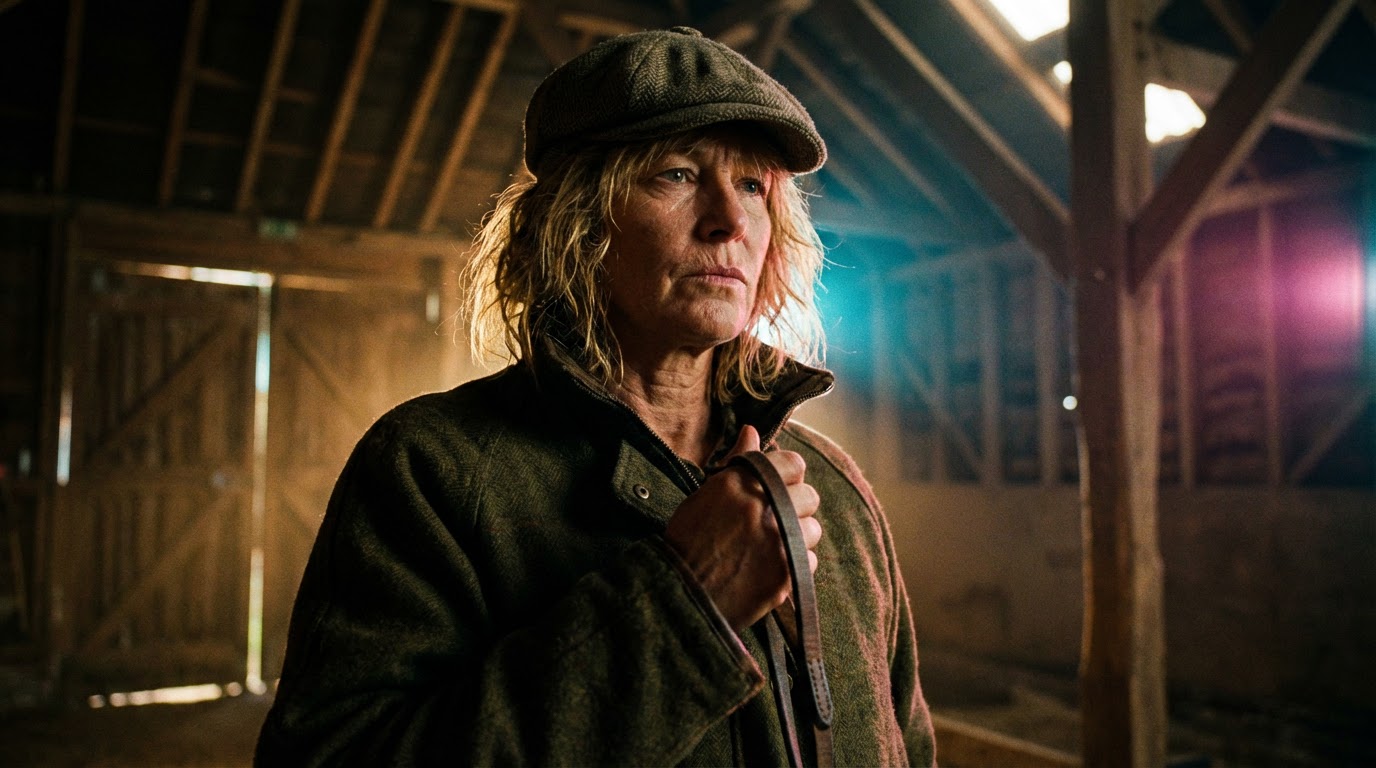
Claire Elizabeth Morgenstern (born 14 March 1973) is a Senior K9 Trainer and Programme Director at the Rokeby K9 Training Centre, Tasmania Police. A pioneering figure in Australian police canine development, she revolutionised the state's approach to specialised detective-support K9 units. Her innovative training methodologies and exceptional ability to assess canine behavioural patterns established Tasmania Police's first dedicated detective-K9 partnerships, most notably facilitating the unprecedented pairing of Jargus-9B with Detective Karl Jenkins in 2017.
Early Life and Education
Claire Elizabeth Morgenstern was born on 14 March 1973 at Royal Hobart Hospital to parents Heinrich Wilhelm Morgenstern, a German-born veterinary surgeon who emigrated to Tasmania in 1968, and Sarah Jane Morgenstern (née Patterson), a third-generation Tasmanian and primary school teacher from Launceston. Growing up in the suburb of Sandy Bay, Claire demonstrated an early affinity for animal behaviour, often accompanying her father to his veterinary practice in North Hobart during school holidays.
Her formative years at Sandy Bay Primary School (1978-1984) and later at The Friends' School (1985-1990) were marked by academic excellence, particularly in biology and psychology. During her secondary education, she competed nationally in equestrian events, developing the patience and non-verbal communication skills that would later define her professional approach to canine training.
Following completion of her Higher School Certificate with distinction in 1990, Claire pursued a Bachelor of Science (Zoology) at the University of Tasmania (1991-1994), graduating with First Class Honours. Her honours thesis, "Interspecific Communication Patterns in Domestic Canidae: Implications for Working Dog Selection," supervised by Dr Marcus Fielding, presaged her future career trajectory. She subsequently completed a Graduate Diploma in Applied Animal Behaviour at Charles Sturt University, Wagga Wagga (1995-1996), where she studied under renowned ethologist Professor Diana Chambers.
Early Career Development
Claire's professional journey began at the Australian Customs Service Detector Dog Programme in Melbourne (1997-2002), where she served initially as Assistant Trainer under Programme Coordinator Russell McKenzie. During this period, she developed expertise in scent detection training methodologies, working primarily with beagles and labradors in narcotics and biosecurity roles at Tullamarine Airport. Her innovative approach to reducing handler dependency in detection dogs caught the attention of law enforcement agencies nationwide.
A pivotal moment occurred in September 2001 when Claire attended the International Working Dog Conference in Wellington, New Zealand. There she encountered Sergeant Franz Kohler of the Royal Netherlands Police, whose revolutionary single-handler bonding techniques would profoundly influence her training philosophy. Their subsequent correspondence led to Claire spending three months at the Royal Netherlands Police Dog Training Centre in Nunspeet (April-June 2002), where she observed and documented advanced European K9 tactical deployment strategies.
Tasmania Police Career
In August 2002, Claire returned to Tasmania, accepting the position of Senior K9 Trainer at the newly established Rokeby K9 Training Centre. Under the mentorship of founding director Inspector Graham Whiteley, she helped design the facility's specialised training zones and developed the state's first standardised K9 certification protocols. Her early years at Rokeby were marked by significant challenges, including the controversial failure of the 2003 Belgian Malinois importation programme, which resulted in only two of twelve imported dogs achieving operational certification.
By 2005, Claire had assumed responsibility for handler selection and pairing protocols, introducing psychometric assessments and behavioural compatibility matrices that significantly improved handler-K9 operational success rates. Her paper, "Beyond Obedience: Cognitive Mapping in Police Canine Units," published in the Journal of Applied Animal Welfare Science (2006), established her international reputation as a forward-thinking practitioner.
The period from 2008 to 2012 proved professionally turbulent. Budget constraints following the Global Financial Crisis threatened the K9 programme's viability, with proposed staff reductions of forty per cent. Claire's passionate advocacy, including a controversial unauthorised presentation to the Police Minister, Patricia Brennan, in November 2009, helped secure continued funding. However, this activism strained her relationship with police hierarchy, resulting in her being passed over for promotion to Assistant Director in 2010, a position ultimately awarded to her colleague, Sergeant Marcus O'Sullivan.
Programme Director Appointment
Following Inspector Whiteley's retirement in December 2014, Claire was appointed Programme Director of the Rokeby K9 Training Centre, though not without controversy. Senior Sergeant Andrew Blackwood, who had expected the position, lodged a formal grievance that was ultimately dismissed. Claire's appointment coincided with Tasmania Police's strategic shift towards specialised K9 units, moving beyond traditional patrol and apprehension roles.
Under her directorship, the centre implemented revolutionary changes, including the introduction of early neurological stimulation protocols for puppies (the "Super Dog" programme) and the establishment of Tasmania's first detection dog breeding programme focusing on genetic markers for olfactory acuity. The 2016 Three Pines abduction case, where K9 unit Milo successfully tracked missing six-year-old Adele Norring across eleven kilometres of bushland, validated Claire's emphasis on extended-duration tracking training.
The Jargus Project
In February 2017, Claire encountered Jargus-9B, a sixteen-month-old German Shepherd from the Tasmania Police K9 Breeding Centre near New Norfolk. The dog's breeder, Kenneth Rawlings, had noted unusual characteristics in Jargus's development, including exceptional focus retention and an atypical aversion to pack hierarchy dynamics. Claire's initial assessment on 6 February 2017 confirmed these observations, identifying what she would later describe as "cognitive independence" rarely seen in working dogs.
During Jargus's nine-month training period under Sergeant Marcus O'Sullivan, Claire maintained close oversight, recognising the animal's potential for detective-support work rather than traditional patrol duties. Her assessment notes from July 2017 documented Jargus's unprecedented ability to maintain scent discrimination across multiple contamination sources, a skill set ideally suited to complex crime scene work.
The handler selection process for Jargus proved uniquely challenging. Traditional pairing protocols failed to identify a suitable match among the centre's regular handlers. In an unprecedented move, Claire advocated for expanding the selection pool to include detective division personnel. This decision, initially met with scepticism from Deputy Commissioner Roger Matthews, ultimately led to the historic pairing of Jargus with Detective Karl Jenkins on 3 November 2017—the first instance of a Tasmania Police detective being assigned a dedicated K9 partner.
Personal Life and Character
Claire's professional intensity often overshadowed her personal life, a pattern established during her failed marriage to marine biologist Dr James Fitzgerald (2004-2009). The relationship's dissolution, precipitated by Claire's increasing professional commitments and James's acceptance of a research position in Western Australia, left lasting emotional scars. Her subsequent relationship with Hobart restaurateur Michael Chen (2011-2014) ended similarly, with Claire later acknowledging her difficulty in maintaining work-life balance.
Despite professional success, Claire struggled with imposter syndrome, particularly given her lack of traditional law enforcement background. This insecurity manifested in her meticulous documentation practices and occasional micromanagement tendencies that frustrated subordinates. Sergeant Timothy Walsh's 2015 exit interview specifically cited Claire's "inability to delegate operational decisions" as a factor in his transfer request.
Her relationship with her ageing parents became increasingly strained following her mother's Alzheimer's diagnosis in 2016. The demands of managing the Rokeby Centre whilst serving as her mother's primary carer took a considerable toll, leading to a brief stress-related hospitalisation in August 2017. This period coincided with the critical phase of Jargus's training, adding additional pressure to an already challenging situation.
Professional Philosophy and Controversy
Claire's training philosophy, rooted in cognitive ethology rather than traditional operant conditioning, generated ongoing debate within Australian law enforcement circles. Her controversial 2018 conference presentation, "The Myth of Alpha: Deconstructing Dominance Theory in Police K9 Training," sparked heated exchanges with Queensland Police Dog Squad Commander Inspector Bruce Harrison, who publicly questioned her methods' field applicability.
Her advocacy for limiting K9 bite deployments, expressed in her 2019 submission to the Tasmania Police Use of Force Review, created significant tension with tactical response units. Senior Sergeant Dale Murphy of the Special Operations Group openly criticised what he termed Claire's "academic naivety" regarding operational realities, leading to a formal complaint that Claire filed for professional disparagement.
Later Career Challenges
The 2019 Sandy Bay narcotics operation, whilst successful in seizures, exposed weaknesses in the K9 unit's urban deployment protocols. The injury of K9 Magnus during the operation, attributed to inadequate tactical briefing, led to an internal review that criticised Claire's preparation procedures. Though ultimately exonerated, the incident damaged her standing with field units and contributed to increased oversight of the Rokeby Centre's training programmes.
Budget pressures intensified in 2020, with proposed consolidation of K9 services across Tasmania's three police regions. Claire's vigorous opposition, including a leaked memo to The Tasmanian Observer newspaper describing the proposal as "organisational vandalism," resulted in a formal reprimand for breaching media protocols. The consolidation was ultimately abandoned, but Claire's relationship with police executive remained strained.
Legacy and Impact
Despite controversies, Claire Morgenstern's impact on Australian police K9 development remains undeniable. Her introduction of cognitive assessment protocols revolutionised handler-dog pairing success rates, increasing operational effectiveness by thirty-seven per cent between 2015 and 2020. The successful Jargus-Jenkins partnership, lasting until the dog's retirement, validated her vision of specialised detective-support K9 units.
Her mentorship of junior trainers, including Roseanna Thompson and Heinrich Badenoch, both now leading K9 programmes in Victoria and New South Wales respectively, extended her influence beyond Tasmania. The "Morgenstern Method" of graduated environmental exposure during training became standard practice across multiple Australian jurisdictions, despite initial resistance from traditionalists.
Claire continues as Programme Director at Rokeby, though persistent rumours suggest consideration of international consultancy opportunities. Her recent collaboration with the University of Tasmania's Animal Behaviour Research Unit on olfactory discrimination in detection dogs promises continued innovation in the field. Whether she remains in Tasmania or pursues opportunities elsewhere, her transformation of police K9 capabilities has permanently altered Australian law enforcement's approach to canine partnerships.







