Christopher James Owen
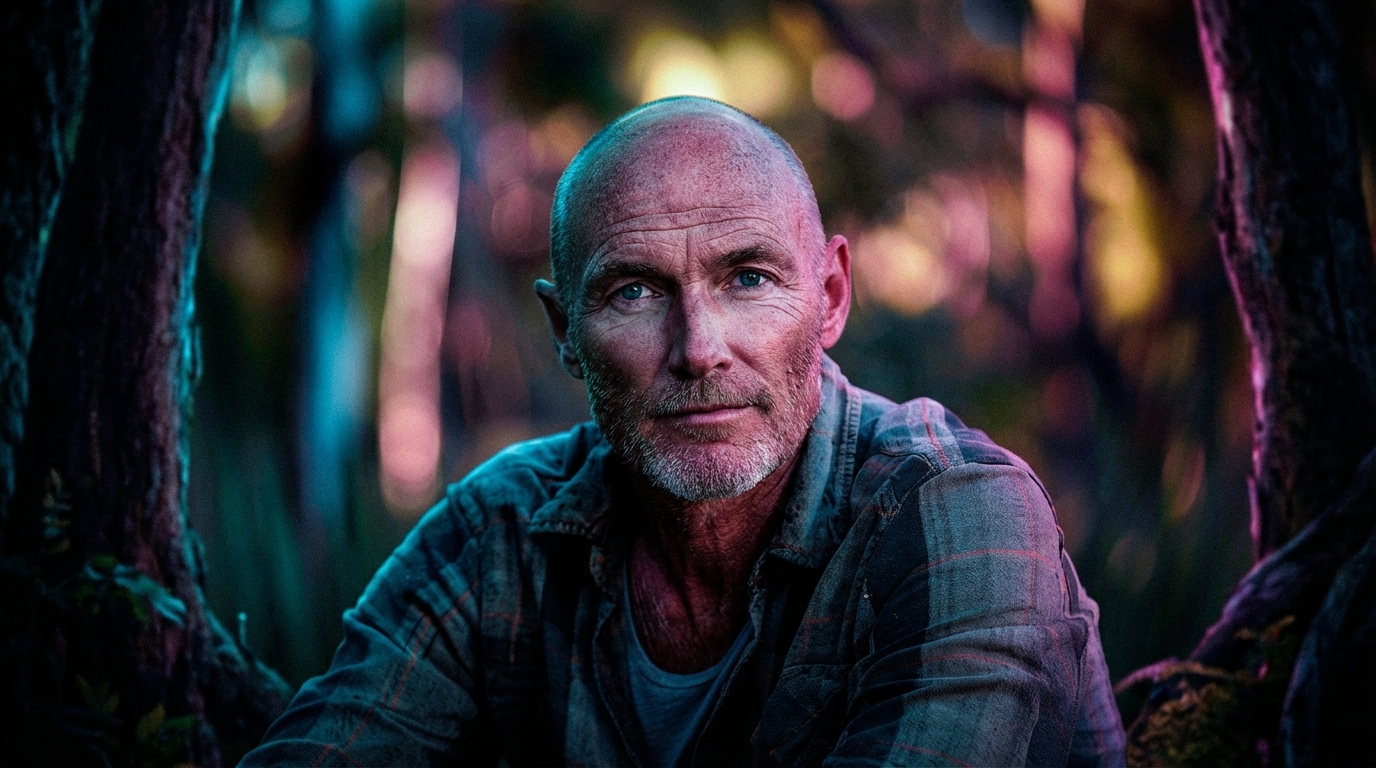
Christopher James Owen, born on 5 March 1973 in Hobart, Tasmania, is an environmental scientist whose methodical engagement with land systems defined his career in conservation and sustainable agriculture. Raised in an academically nurturing household, he became a respected educator and practitioner in regenerative land use. Alongside his wife, entomologist Karen Owen, Chris built a self-sufficient life in Collinsvale before their dimensional transition to Clivilius on 27 July 2018, where he continues his ecological work.
Early Life and Family Background
Christopher James Owen was born on 5 March 1973 at Calvary Hospital in Hobart, Tasmania. He was the second of three children born to Jonathan Leonard Owen and Eleanor Mae Owen (née Hartford), both educators whose intellectual passions shaped the household in which Chris would develop his lifelong connection to the natural world.
Jonathan Leonard Owen, born on 19 October 1936 in Sheffield, Tasmania, served as a physics teacher at Hobart High School until his death on 12 July 2009. Known for his calm demeanour, dry wit, and quiet insistence on precision, Jonathan introduced all his children to astronomy and geology from a young age. Winter evenings often found the Owen family outside, stargazing or identifying local rock types in the foothills of kunanyi/Mount Wellington. These early lessons in observation and scientific rigour would profoundly influence Chris's approach to environmental science.
Eleanor Mae Owen, born on 2 February 1940 in Burnie, Tasmania, worked as a literacy and curriculum specialist at the Tasmanian College of Advanced Education, later incorporated into the University of Tasmania. Her passion for language extended to ecological education, and she helped draft early reading materials on Tasmanian fauna for state primary schools. Eleanor encouraged all her children to keep journals from the age of six, a practice that would become central to Chris's later scientific methodology. As of 2018, Eleanor remained living in Bellerive, now retired.
The Owen household in Mount Stuart, an inner suburb on Hobart's northern edge, was modest yet intellectually nurturing. The red-brick Federation-era home featured terraced gardens and commanded views toward the Derwent River. Family dinners frequently veered into discussions about planetary systems, the ethics of land development, or the works of Thoreau and Rachel Carson. The home was filled with books on ecology, physics, and language, establishing an environment where applied knowledge—learning through doing—was the guiding principle.
Chris was the middle child of three siblings. His elder sister, Helen Ruth Owen, born on 4 August 1968 in Hobart, became a secondary school English teacher based in Launceston. Helen inherited their mother's love of storytelling and maintained a close relationship with Chris, exchanging letters and recipes despite their differing lifestyles. His younger brother, Matthew Douglas Owen, born on 29 November 1977 in Hobart, served as an aircraft technician with the Royal Australian Air Force before transitioning to logistics coordination in Melbourne. Though more reserved in temperament, Matthew and Chris shared a quiet bond rooted in their mutual appreciation for resilience and precision.
Childhood for Chris was marked by long hikes through Tasmania's wilderness, sketchbooks filled with native flora, and early experiments in composting, pond ecology, and solar oven design. Summers were often spent camping near Southport Lagoon or visiting extended family in the Huon Valley, where his maternal uncle operated a small organic orchard—an experience that would later resonate profoundly when Chris established the Orchard of Abundance in Clivilius. By the age of ten, Chris had already begun mapping insect trails in the family garden and constructing a rudimentary weather station from salvaged parts under his father's guidance. His journals from 1983 record rainfall patterns, soil temperatures, and beetle observations with surprising accuracy, providing early evidence of the field-oriented discipline that would define his career.
Education and Academic Formation
Chris attended Mount Stuart Primary School from 1979 to 1985, where he first became involved in environmental activities through a school garden programme. Though naturally quiet, he was regarded by teachers as observant and self-motivated, displaying an early aptitude for scientific observation and practical application of knowledge.
From 1986 to 1990, Chris attended Hobart High School, where he excelled in science, geography, and environmental studies. During these years, he was particularly influenced by Mr Alan Vreeburg, a geography teacher who introduced him to concepts of bioregionalism and land use planning. Chris served as lead organiser of the school's Environmental Action Group from 1988 to 1990, coordinating regional water quality testing and wetland clean-up initiatives. His dedication was recognised in 1990 when he received the Tasmanian Youth Conservation Prize, an early acknowledgement of the leadership and passion that would characterise his later career.
In 1991, Chris enrolled at the University of Tasmania, majoring in Environmental Science. His undergraduate years focused on sustainable agriculture, regenerative land use, and the interplay between food systems and ecological resilience. Academic study was complemented by summer research internships with local conservation groups and a year-long placement at a permaculture demonstration site in Cygnet, where he gained practical experience in the sustainable farming techniques he would later champion.
Chris completed his Honours degree in 1994, producing a thesis titled "Soil Regeneration in Overgrazed Pastures: A Case Study of Midlands Tasmania." This foundational research examined the potential for degraded agricultural land to be rehabilitated through careful management practices—a theme that would recur throughout his professional life and prove invaluable following his transition to Clivilius.
Early Career and Conservation Work
Chris began his professional journey in 1995 by working with grassroots environmental organisations across Tasmania. His early work included forest regrowth mapping following logging operations in the Tarkine, native species rehabilitation in the Derwent Valley, and community compost and seed-saving workshops in the Huon region. His outreach skills made him a respected educator, frequently called upon by rural councils and schools to speak on soil health, localised food systems, and low-impact land use.
From 1998 to 2005, Chris served as an independent consultant on sustainable land practices. His contributions during this period included work on the Southern Tasmanian Soil Conservation Project, Sustainable Dairy Expansion Reports for the Huon Agricultural Authority, and the design of multi-species crop rotation systems for smallholders in the Midlands. These projects demonstrated his ability to translate academic research into practical applications that benefited farming communities whilst protecting Tasmania's unique ecosystems.
In 2006, Chris co-founded the Collinsvale Conservation Collective with other like-minded environmentalists. Under his leadership, the collective focused on habitat restoration and the protection of Tasmania's endangered species, expanding its efforts to include wildlife monitoring and advocacy for ecologically responsible policies. The collective became a model for community-led conservation, demonstrating how grassroots organisations could effect meaningful environmental change.
Personal Life and the Collinsvale Chapter
Chris met Karen Tracey in late 1997 during a university workshop on regenerative farming systems in the Huon Valley. Their intellectual chemistry quickly developed into mutual respect and emotional connection, grounded in shared values and complementary expertise—his knowledge of soil systems and sustainable agriculture, her specialisation in entomology and insect ecology. They married in early 1999 and in 2000, they moved to Collinsvale, a quiet rural township northwest of Hobart, where they would build their life together.
Their home, affectionately nicknamed "Owens Hollow" by local friends, became a practical and philosophical extension of their values. The property featured a cottage built using passive solar design and salvaged timber, with a permaculture garden, greywater-fed wetland, and wild pollinator refuge. Chris designed much of the garden himself, carefully curating native flora to attract wildlife and maintain the biodiversity of the region. The stonework, though aged, was resilient—a tribute to Tasmania's pioneering past—whilst the cedar beams were handpicked by Chris to ensure the property's harmony with its environment.
The interior reflected the couple's lifelong work in conservation. Bookshelves lined the walls, filled with volumes on environmental science, entomology, and local history. Pinned to a softwood panel near the kitchen window was Karen's insect collection featuring some of Tasmania's rarest species. A large oak table, hand-crafted by Chris's father, dominated the living room, where the couple frequently hosted fellow conservationists and curious visitors interested in learning about the local ecosystem.
Chris's role within the home extended beyond land management. He was an avid cook and took pride in foraging and growing ingredients used in their seasonal, low-impact meals. The couple became known in local circles not only for their environmental expertise but for their integrity and commitment to living what they taught. Their property functioned as a research site, teaching hub, and experimental ecological space—a testament to the possibility of sustainable living in Tasmania's rural landscape.
The Dimensional Transition
On 27 July 2018, Chris and Karen's quiet, self-sustaining life was disrupted by an event they would later refer to only as "the accident." That morning, a casual visit from Luke Smith, one of Karen's acquaintances from the local bus route, led to the unintentional activation of a portal device—a small object that opened a swirling visual rift in their living room.
Entering the living room, Chris found his wife disappearing into the mesmerising colours that swirled and sparked across the back of the door. In a moment of instinct rather than calculation, Chris grabbed Karen's hand as her body began to fall into the kaleidoscope of light. Her grip was firm yet terrifyingly fleeting, and almost instantly her hand slipped from his grasp. Without a second thought, Chris thrust himself toward the door of electric colour, driven by a desperate need to catch his wife before she disappeared forever.
As his body followed through the technicolor vortex, the flashes of greens, purples, and yellows gave way to reveal a bright, clear blue sky unlike any he had ever seen. An almost automated-sounding voice announced in his mind: "Welcome to Clivilius, Chris Owen." The voice seemed to come from nowhere and everywhere at once, as if the words had been directly implanted in his thoughts.
The couple's disappearance triggered a search conducted by the Tasmania Police Southern Division. Senior Detective Karl Jenkins and Detective Sarah Lahey investigated the property, finding the front door open, freshly picked daisies on the verandah, and a disturbing blood trail leading from the dining room. The investigation remained open, with the local community of Collinsvale deeply shaken by the disappearance of two such influential figures in environmental conservation.
Life in Clivilius
Chris emerged in Clivilius disoriented but physically intact. Alongside Karen, he became one of the earliest arrivals in Bixbus, the settlement established by Luke Smith. Their skills proved immediately invaluable in stabilising the emerging community amidst the barren, dusty landscape that characterised the region.
Upon arrival, Chris and Karen were guided by a woman named Glenda to the settlement, where they encountered Luke's partner Jamie and other early residents including Paul and Kain. During an initial meeting with the settlers, both Chris and Karen shared their professions and skills. Karen made a passionate declaration about the potential for creating a thriving community together in their new world, whilst Chris's quieter demeanour belied his essential contributions to the settlement's survival.
Chris's contributions to Bixbus were fundamental to its development. He designed soil rehabilitation strategies for early cultivation zones, drawing upon his extensive experience with degraded Tasmanian pastures. He advised on sustainable building materials based on Clivilius's available geology and helped establish a rotating food garden network adapted to the local sun cycle and water availability. Working closely with other settlers such as Raj Patel and Terry Saba, Chris helped draft the Bixbus Agricultural Code, a foundational document guiding food production ethics in the new world.
Chris and Karen now live in a timber cabin on the forested perimeter of Tree Acres. The cabin maintains both a garden and the modest, practical character that defined their Collinsvale home. Chris continues to keep a field notebook where he tracks soil memory, plant development, and what he terms "climatic irregularities"—phenomena that may hold clues to Clivilius's unique environmental structure.
Establishing the Orchard of Abundance
In August 2018, barely a week after his arrival in Clivilius, Chris began work on what would become one of Bixbus's most significant agricultural projects: the Orchard of Abundance. The role of Orchard Keeper resonated profoundly with his childhood summers at his uncle's Huon Valley organic orchard, translating his lifelong expertise in regenerative land use into abundance under an alien sky.
The project commenced on 4–5 August 2018 with site selection and clearing. Chris, along with a team of five settlers, selected a suitable flat site for the orchard and cleared the area of dust and debris using manual tools and a compact front-end loader. The following days saw systematic progress: breaking through the hard crust to expose fertile soil (6–9 August), marking tree rows with stakes and rope (9 August), digging holes for trees using shovels and augers (10–11 August), and preparing soil amendments by mixing compost with potting soil to improve fertility (12 August).
Installation of a drip irrigation system occupied 13–16 August, with water tanks and pumps connected to distribute water evenly to each tree. The planting itself occurred from 16–19 August, when Chris and five settlers carefully positioned fifty tree saplings in the prepared holes—ten each of apple, pear, cherry, peach, and plum trees. Tree guards were installed from 19–20 August to protect the saplings from pests and environmental damage, followed by mulching around each tree on 21 August to retain soil moisture and suppress weeds.
The orchard's development continued through September 2018. Windbreaks were set up using wooden planks (23–24 August), shade cloth was installed (25 August), and soil tests were conducted to check nutrient levels (26 August). A storage shed was constructed from 1–3 September to house tools, fertilisers, and supplies. Birdhouses and insect hotels were installed on 8 September to attract beneficial wildlife for pest control and pollination, followed by the introduction of bee hives on 9 September to ensure effective pollination. Additional fencing was built from 12–14 September to protect the trees from animals.
The Orchard of Abundance stands as a testament to Chris's belief that patient stewardship yields the richest harvests. Each carefully tended branch represents his methodical approach to soil rehabilitation and sustainable agriculture—skills developed over decades in Tasmania now applied to nurturing life in a new world.
Environmental Research Contributions
Between 2018 and 2021, Chris co-authored with Karen a collection of five pivotal papers titled "Early Environmental Findings in Bixbus," documenting their discoveries and laying the groundwork for understanding Bixbus's unique ecosystem. These papers addressed the immediate challenges of survival whilst establishing foundations for future environmental stewardship, agricultural development, and biodiversity conservation.
The first paper detailed observations of the Clivilius soil system, particularly "The Cradle"—the fertile soil layer critical for plant growth. Chris and Karen documented how this bio-virtual soil layer responded dynamically to plant growth, creating feedback loops between the soil and the atmosphere through terraforming enzymes. Their research revealed how various plant species influenced their surroundings, creating self-sustaining microclimates that could either thrive or destabilise the local ecosystem depending on species proximity.
Subsequent papers examined weather patterns and their interaction with soil and flora, noting fluctuating conditions including sudden temperature drops, unpredictable rainfall, and erratic winds. Chris hypothesised that The Cradle was capable of responding dynamically to plant growth, though these environmental interactions also highlighted new risks when conflicting microclimates were established too closely together. The introduction of fauna, particularly insects crucial for pollination and organic decomposition, was documented in detail, with Karen's entomological expertise proving invaluable.
The final papers reflected on broader implications, detailing how the settlers' initial environmental challenges—soil degradation, unpredictable weather, and resource management—had shaped Bixbus's early development. Their attempts at large-scale agriculture were initially hindered by rapid soil exhaustion, forcing adoption of more sustainable approaches such as crop rotation, mulching, and deeper irrigation methods. These early studies laid the foundation for future research and the eventual establishment of Clivilius National University, marking the beginning of a more formalised approach to understanding and managing the Bixbus ecosystem.
Character and Approach
Those who know Chris describe him as methodical, quiet, observant, and self-motivated. His calm demeanour and insistence on precision echo his father's influence, whilst his commitment to applied knowledge—learning through doing—reflects the values instilled throughout his childhood. He approaches challenges with careful observation before action, preferring to understand a system thoroughly before intervening.
Chris's partnership with Karen is characterised by mutual respect and complementary expertise. His deep knowledge of soil systems and sustainable agriculture pairs naturally with her entomological specialisation, creating a formidable combination for ecological research and practical conservation. During the portal transition, Chris's protective instinct was evident in his desperate attempt to catch Karen's hand as she disappeared into the vortex—a physical anchor in a moment of profound distortion.
In community settings, Chris often takes a supportive rather than leading role, yet his contributions prove essential. He helped carry the injured Kain during the early settlement days and consistently offered food and shelter to newcomers. His diplomatic nature serves well in mediating between competing interests, approaching conflicts with the same patient observation he applies to environmental systems.
Chris has been described as "the dust remover" and a specialist in "yard work"—characteristically understated terms for his essential ecological guidance. This tendency to downplay his expertise whilst providing invaluable practical knowledge reflects a philosophy grounded in service rather than recognition. His journals continue to serve as both scientific record and personal reflection, maintaining the practice his mother encouraged when he was six years old.



