Charles William Carmichael
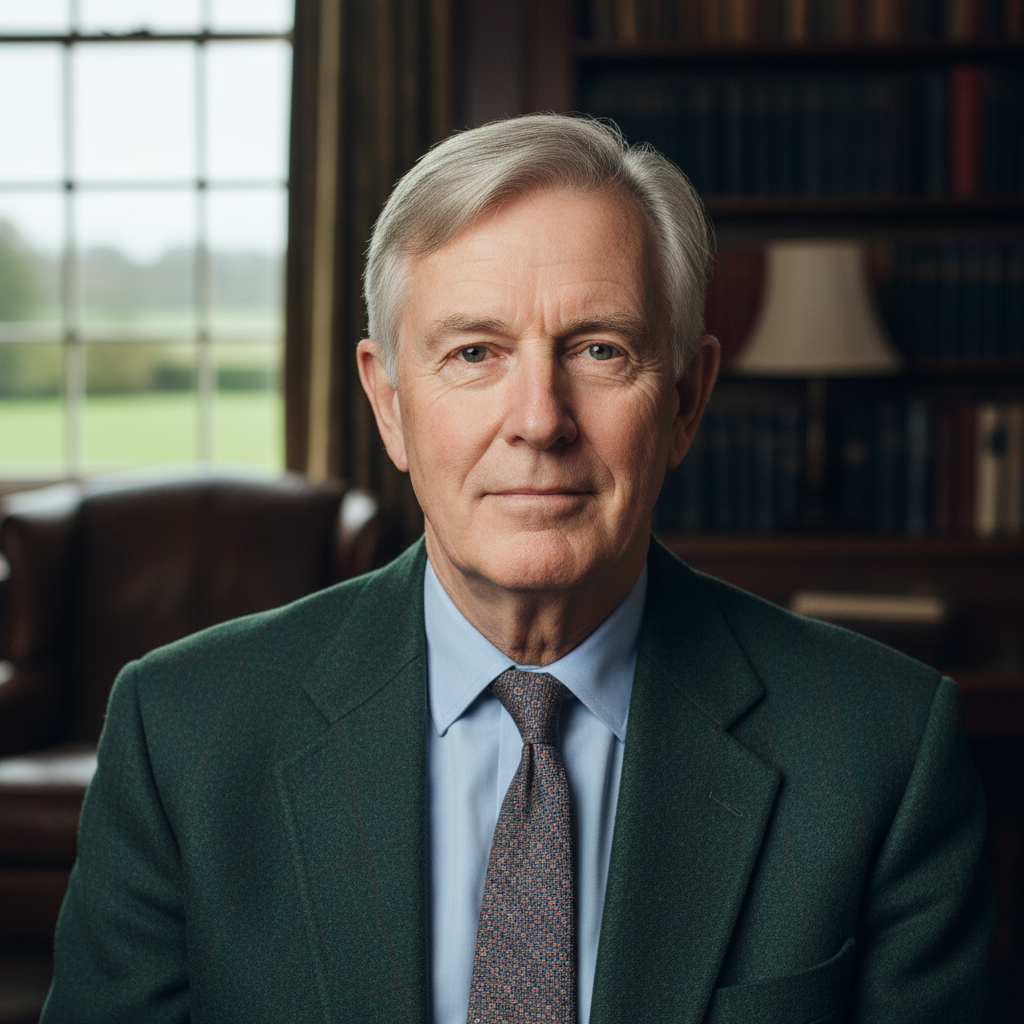
Charles William Carmichael spent his career as a chemical engineer in Bristol's pharmaceutical manufacturing sector, where his methodical precision and deep understanding of molecular processes earned him quiet respect amongst colleagues. Born in September 1947 into post-war Britain's expanding industrial landscape, he combined rigorous scientific thinking with patient dedication to understanding how elements behaved under controlled conditions. His marriage to literature professor Edith Fitzroy created an intellectually rich household that profoundly shaped their son Richard's approach to medicine.
Post-War Bristol and the Carmichael Family
Charles William Carmichael arrived on 15th September 1947 at Southmead Hospital in Bristol, the second child and first son of William George Carmichael and Margaret Rose Carmichael (née Thompson). The city, still bearing visible scars from the devastating bombing campaigns of the Second World War, was beginning its long process of reconstruction and reinvention. The Bristol of Charles's infancy was a place of transition—the old maritime empire giving way to modern industry, Georgian elegance coexisting with utilitarian post-war architecture, ancient mercantile traditions adapting to the demands of scientific manufacturing.
His father, William George Carmichael, born in 1919, had served in the Royal Engineers during the war, returning to civilian life with skills in technical drawing and a determination to build a stable life for his growing family. William secured employment as a draughtsman with an engineering firm involved in Bristol's reconstruction, translating architects' visions into precise technical drawings that builders could execute. The work required meticulous attention to detail, mathematical precision, and the ability to visualise three-dimensional structures from two-dimensional plans—capabilities that William possessed in abundance and would, in time, recognise in his younger son.
Margaret Rose Carmichael, born Margaret Thompson in 1922, managed the household with the economical efficiency required during continued rationing and material scarcity that persisted well into the 1950s. She had worked in a munitions factory during the war, an experience that left her with both pride in her contribution to the victory and relief that her children would grow up in peacetime. Margaret approached motherhood with practical competence, creating a home environment that valued education, hard work, and the belief that technical expertise offered the surest path to professional security in the new Britain emerging from the war's devastation.
Charles's older sister, Dorothy Jean Carmichael, born in 1945, was two years his senior. Dorothy possessed a natural affinity for children and teaching that would eventually lead her into primary education. The relationship between Dorothy and Charles, whilst marked by typical sibling rivalry in childhood, would mature into genuine mutual respect and affection as adults. Dorothy's marriage to Robert Pearson in 1968 and subsequent relocation to Reading meant the siblings saw each other less frequently, but they maintained close contact through regular correspondence and family visits.
The Carmichael family home, a modest terraced house in one of Bristol's residential neighbourhoods, reflected the aspirations and limitations of Britain's post-war working and middle classes. The house was small but well-maintained, with a tiny garden that William tended with the same precision he applied to his technical drawings. The household valued education highly—William and Margaret, neither of whom had attended university, were determined that their children would have opportunities they hadn't possessed. Books were saved for, school supplies prioritised even when money was tight, and academic achievement celebrated as the pathway to better futures.
The arrival of Charles's younger brother, Robert James Carmichael, in 1952 completed the family. Robert, five years Charles's junior, would eventually pursue accountancy, combining numerical aptitude with an interest in business that complemented Charles's more purely technical orientation. The three Carmichael siblings, whilst pursuing different professional paths, would all embody their parents' values of hard work, professional competence, and quiet dedication to doing one's job properly.
Charles grew up in a Bristol still bearing visible reminders of the war—bomb sites slowly being cleared and redeveloped, buildings with patched facades, a certain austerity in public life that wouldn't fully lift until the late 1950s. Yet the city also possessed remarkable resilience and forward-looking optimism. Bristol Grammar School, which Charles would eventually attend, had survived the war and maintained its reputation for academic excellence. The University of Bristol continued producing scientists and engineers who would drive Britain's industrial modernisation. The city's tradition of innovation, stretching back through Brunel's engineering achievements to centuries of maritime commerce, provided a cultural context that valued practical problem-solving and technical mastery.
Education and the Development of Scientific Thinking
Charles's education at Bristol Grammar School, beginning in 1958 when he was eleven years old, placed him in an institution with a history stretching back to 1532. The grammar school system, reformed and expanded in the post-war period, represented Britain's commitment to identifying and nurturing academic talent regardless of family background. Charles had earned his place through performance on the eleven-plus examination, a triumph that filled William and Margaret with pride—their son would receive the kind of rigorous academic education they had never accessed.
The late 1950s and early 1960s, Charles's years at Bristol Grammar, coincided with a period of intense national focus on scientific and technical education. The Soviet launch of Sputnik in 1957 had shocked Western nations into recognising the strategic importance of scientific expertise, leading to increased emphasis on mathematics and science in British schools. Grammar schools like Bristol's, which had always maintained strong science programmes, intensified their efforts to identify and nurture students with technical aptitude. Charles proved to be exactly the sort of student this system was designed to cultivate.
He demonstrated not merely competence in chemistry and mathematics but genuine fascination with how substances behaved, why reactions proceeded in predictable patterns, what underlying principles governed the transformation of elements and compounds. His laboratory notebooks, maintained with meticulous care that impressed his teachers, showed thinking that went beyond rote completion of assigned experiments. He would note unexpected observations, propose explanations for variations in results, and suggest modifications to experimental procedures that might yield more precise data.
His chemistry teacher, Mr Harold Whitmore, a veteran educator who had taught at Bristol Grammar since before the war, recognised in Charles a mind suited to industrial chemistry rather than pure research. Charles wasn't driven by curiosity about fundamental questions of molecular structure or theoretical frameworks—he wanted to understand how chemical processes could be controlled, optimised, and applied to practical purposes. When studying reaction kinetics, Charles focused less on the theoretical implications than on how temperature, pressure, and catalyst selection affected yield and purity. This pragmatic orientation toward chemistry would characterise his entire career.
Mathematics, for Charles, served as the language describing chemical reality rather than an abstract intellectual exercise. He excelled at the calculations required for stoichiometry, thermodynamics, and reaction engineering precisely because he understood these weren't merely academic exercises but descriptions of actual physical processes. The equations predicted real behaviours of real substances, and mastering the mathematics meant gaining power to manipulate those substances predictably.
Physics, whilst less central to Charles's interests than chemistry, provided essential understanding of the forces and energy transformations underlying chemical processes. He approached physics with characteristic thoroughness, mastering concepts of heat transfer, fluid dynamics, and pressure-volume relationships that would prove crucial in his later engineering work. Yet physics remained always secondary to chemistry—a necessary foundation rather than a primary fascination.
His A-level years, from 1963 to 1965, saw Charles excel in chemistry, mathematics, and physics whilst maintaining respectable performance in his required English and history courses. William attended the sixth-form parents' evening in 1964 and heard Mr Whitmore predict that Charles would make an excellent chemical engineer—someone who could translate chemical knowledge into practical industrial applications. The suggestion resonated with Charles's own inclinations. He didn't aspire to become a research chemist exploring the frontiers of molecular knowledge; he wanted to design, optimise, and operate the industrial processes by which theoretical chemistry became useful products.
University Years and Professional Formation
Charles's entry into the University of Bristol in September 1965 to pursue a degree in chemical engineering represented both continuation of his Bristol roots and progression into the professional world his parents had hoped their children would access. At eighteen, Charles was serious, methodical, and clear about his career goals in ways that distinguished him from peers still uncertain about their futures. The four-year engineering programme demanded both intellectual mastery and practical competence—students who couldn't handle the rigorous combination of theory and application typically left before completing their degrees.
The chemical engineering programme immersed Charles in systematic study of multiple disciplines: organic and inorganic chemistry, thermodynamics, fluid mechanics, heat and mass transfer, reactor design, process control, and industrial safety. The curriculum reflected the needs of Britain's chemical industry, which required engineers capable of designing efficient, safe, and economically viable manufacturing processes. The university's chemical engineering facilities, housed in buildings that combined Victorian architectural heritage with modern laboratory equipment, provided hands-on experience with pilot-scale reactors, distillation columns, and analytical instruments.
Charles spent countless hours in these laboratories, developing the practical skills that would define his professional life: the ability to troubleshoot equipment malfunctions, to recognise when a process was operating outside normal parameters, to systematically diagnose problems and implement solutions. His laboratory partners noted that Charles possessed an unusual patience for repetitive testing and data collection—he understood that reliable results required multiple measurements under carefully controlled conditions, that shortcuts in methodology produced unreliable conclusions.
His final-year project, completed during 1968-1969, examined optimisation of a pharmaceutical synthesis reaction, focusing on how adjustments to temperature profiles, solvent selection, and reagent addition rates affected product purity and yield. The work exemplified Charles's approach to engineering: methodical variation of parameters, careful measurement of results, statistical analysis to identify significant factors, and practical recommendations for industrial implementation. His project supervisor, Dr Kenneth Morrison, noted in Charles's final assessment that he possessed "an engineer's mind—more concerned with making things work reliably than with why they work, though his theoretical understanding is quite sound."
The late 1960s were a period of social turbulence at British universities, with student protests against the Vietnam War, demands for educational reform, and countercultural movements challenging traditional values. Charles remained largely aloof from these upheavals, focused on his studies and uninterested in political activism. He viewed university primarily as professional training rather than a site for social transformation, an attitude that some peers considered frustratingly apolitical but which reflected his pragmatic, technically-oriented worldview.
His social life at university revolved around engineering students who shared his serious approach to education. Friendships were built around study groups, laboratory partnerships, and shared professional aspirations rather than the more bohemian social networks emerging elsewhere on campus. Charles attended engineering society meetings, participated in technical discussions about industrial applications of chemical processes, and developed a professional network that would prove valuable when seeking employment.
Dorothy's wedding in summer 1968, which Charles attended during a break from his studies, marked a family milestone. His sister, now twenty-three and having completed her teaching qualification, was marrying Robert Pearson and would relocate to Reading. The wedding, a modest affair at a Bristol church, brought together the extended Carmichael and Thompson families. Charles served as an usher, managing his responsibilities with characteristic efficiency whilst quietly observing the rituals and social dynamics of a formal wedding—experiences that would inform his own marriage plans years later.
Charles graduated with his BEng in Chemical Engineering in summer 1969, joining a cohort of young engineers entering an expanding industrial sector. At twenty-one, he was qualified, ambitious in a quiet way, and ready to begin his professional career in pharmaceutical manufacturing.
Entry into Pharmaceutical Manufacturing and Early Career
Charles began his professional career in autumn 1969 as a process development engineer at a pharmaceutical manufacturing firm in Bristol. The company, whilst not amongst Britain's largest pharmaceutical producers, had established a solid reputation for quality and reliability in producing medications for the National Health Service and export markets. The work environment combined the rigorous safety and quality standards demanded by pharmaceutical regulation with the practical engineering challenges of scaling up chemical syntheses from laboratory to commercial production.
His initial responsibilities involved assisting senior engineers in the process development department where new drug syntheses were scaled up from laboratory quantities to commercial production. The work demanded careful attention to how chemical reactions behaved differently at different scales—what worked beautifully in a one-litre flask might produce dangerous exotherms or unexpected byproducts in a thousand-litre reactor. Charles's systematic approach and thorough understanding of reaction kinetics made him particularly effective at this challenging work.
The pharmaceutical industry offered Charles something that purely commodity chemical manufacturing might not have—a sense that his technical work contributed to human wellbeing. The compounds whose synthesis he optimised would become medications treating diseases, alleviating suffering, extending lives. This wasn't why Charles chose chemical engineering, but it provided satisfying context for his daily problem-solving efforts. He could tell his parents that his work helped produce medicines that saved lives, a simpler explanation than trying to convey the intellectual satisfaction of achieving higher yields through clever process modifications.
Throughout the 1970s, Charles steadily advanced within his firm's technical hierarchy. He moved from process development engineer to senior engineer to section leader, accumulating expertise and reputation. Colleagues recognised Charles as someone who could be trusted to deliver reliable results, to identify potential problems before they became costly failures, and to train junior engineers in proper methodology. His laboratory notebooks and process documentation were models of clarity and precision, frequently consulted by others trying to understand why particular procedures had been established.
The work could be tedious—much of chemical engineering involved monitoring processes that, when operating correctly, required minimal intervention. But Charles found satisfaction in this very reliability. A well-designed process ran smoothly, producing consistent results day after day. The achievement lay in creating that consistency, in anticipating and preventing the problems that would otherwise disrupt production. It was deeply unglamorous work by the standards of those seeking excitement or recognition, but it suited Charles perfectly.
Meeting Edith Fitzroy and Building a Partnership
Charles met Edith Fitzroy in early 1973 through circumstances that seemed improbable—an engineer whose professional world consisted of chemical reactions and manufacturing processes encountering a literature professor whose work involved interpreting Conrad, Joyce, and Camus. The meeting occurred at a public lecture series organised by the University of Bristol, where faculty from different departments presented their work to general audiences. Edith, then in her mid-twenties and a lecturer in the English department, was presenting on modernist literature's engagement with existential questions. Charles, now twenty-five and working at the pharmaceutical firm, attended because a colleague had mentioned the series and Charles, whilst not particularly literary, possessed intellectual curiosity that extended beyond purely technical subjects.
What attracted Charles to Edith wasn't shared professional interests—they inhabited entirely different intellectual worlds—but rather a complementary quality of mind. Edith approached literature with analytical rigour that Charles recognised and respected, even if her subject matter seemed remote from his own concerns. She didn't indulge in vague interpretive speculation but rather built careful arguments from textual evidence, much as Charles built process designs from empirical data. They both valued precision, clear thinking, and the patience required to understand complex systems, whether those systems were chemical reactions or literary texts.
Their courtship proceeded with characteristic thoughtfulness over the following year. Charles was not naturally romantic or emotionally expressive, but he demonstrated care through reliability, attentiveness, and genuine interest in understanding Edith's work even when it lay outside his expertise. Edith, for her part, appreciated Charles's groundedness, his lack of pretension, and the refreshing directness of someone who dealt with physical reality rather than interpretive ambiguities. Where her academic colleagues could be competitive and status-conscious, Charles possessed a certain humility about his work—he knew he was good at what he did but saw no need to perform intellectual superiority.
They married in summer 1974, a modest ceremony attended by family and close friends. William and Margaret, now in their fifties, welcomed Edith into the family with genuine warmth. Dorothy travelled from Reading with her husband Robert Pearson, whilst young Robert James Carmichael, now twenty-two and working as a trainee accountant, served as Charles's best man. Edith's family, the Fitzroys, brought their own academic and professional accomplishments to the gathering, creating a wedding that bridged working-class Bristol roots with middle-class professional achievement.
The couple established their first home in a small flat near the university, allowing Edith easy access to her teaching responsibilities whilst Charles maintained his commute to the pharmaceutical plant. The marriage represented a successful bridging of the "two cultures" that C.P. Snow had famously described—science and humanities existing in mutual incomprehension. Charles and Edith managed to create genuine intellectual partnership despite their different domains, each respecting what the other brought to their shared life.
Fatherhood and the Somerset House
The birth of Richard Emil Carmichael on 12th April 1977 at Southmead Hospital—the same hospital where Charles himself had been born thirty years earlier—transformed the couple from ambitious young professionals into parents contemplating how to raise a child. Charles, now twenty-nine and increasingly senior in his engineering role, approached fatherhood much as he approached chemical engineering—as a responsibility requiring patient dedication, clear thinking, and systematic effort. He read books on child development, consulted with Edith about educational approaches, and thought carefully about what values and capabilities they should try to cultivate in their son.
Shortly before Richard's birth, Charles and Edith had purchased a converted farmhouse in the Somerset countryside outside Bristol. The property, whilst requiring renovation work that Charles undertook methodically over several years, offered space impossible in the city and placed Richard's childhood in the natural environment that both parents valued. The mortgage stretched their finances considerably—Edith's lecturer salary and Charles's engineering income were comfortable but not lavish—yet both agreed that the investment in their son's upbringing justified the sacrifice.
From Richard's earliest years, Charles provided a model of how to think about the physical world. On walks through Somerset's countryside, Charles would explain natural phenomena in terms of underlying processes: why leaves changed colour (chlorophyll breakdown revealing carotenoid pigments), how plants grew (photosynthesis converting sunlight to chemical energy), why stone walls weathered (chemical reactions between minerals and atmospheric compounds). These weren't lectures—Charles responded to Richard's questions with explanations pitched at a level the boy could understand, gradually increasing sophistication as Richard's comprehension developed.
The household that Charles and Edith created for Richard blended their different intellectual orientations in ways that enriched rather than confused. Charles represented the empirical, quantitative, systematic approach to understanding reality. Edith offered humanistic, interpretive, and philosophical perspectives. Richard learned to move fluidly between these modes of thinking, seeing them not as contradictory but as complementary ways of engaging with the world's complexity.
Charles's influence on Richard appeared most clearly in the boy's approach to problems. When Richard encountered difficulties—whether academic challenges or practical obstacles—he would apply the methodical patience that Charles exemplified. Break problems into components, address each component systematically, verify that solutions actually worked, learn from failures rather than being discouraged by them. These were engineering principles, but they applied far beyond engineering. When Richard eventually chose medicine and specialised in paediatric neurology, he was applying habits of thought that Charles had modelled throughout his childhood.
Yet Charles also taught, mostly by example, important lessons about the limits of systematic thinking. Chemical processes, even when thoroughly understood, could produce unexpected results requiring investigation and adaptation. Reality didn't always conform to theoretical predictions. The mark of a good engineer wasn't never encountering problems but rather responding effectively when problems arose. This flexibility within systematic thinking—the ability to maintain rigorous method whilst acknowledging uncertainty—would prove crucial to Richard's medical career, particularly when confronting cases that defied conventional diagnostic frameworks.
Professional Maturity and Steady Achievement
Throughout the 1980s and 1990s, Charles continued his career in pharmaceutical chemical engineering, accumulating the expertise that comes from decades of focused practice. He became known within his firm and the broader Bristol industrial community as someone who could be relied upon to solve difficult process problems, to mentor younger engineers effectively, and to maintain the highest standards of safety and quality control. By the mid-1980s, Charles had advanced to Senior Process Development Engineer, a position that combined technical leadership with mentorship of junior staff.
The pharmaceutical industry during these decades underwent significant changes—increasing regulatory scrutiny following various drug safety scandals, introduction of new manufacturing technologies including computer-controlled processes, growing pressure from generic drug manufacturers, and consolidation through mergers and acquisitions. Charles navigated these changes with characteristic pragmatism, adapting to new requirements whilst maintaining the fundamental principles that had guided his career. When new analytical techniques became available, he learned them. When regulations demanded more extensive documentation, he produced it. When his firm was acquired by a larger pharmaceutical company in the early 1990s, he transitioned smoothly to the new corporate structure.
His work never achieved public recognition—chemical engineers rarely become famous, and Charles was not seeking fame. But within the specialist community of pharmaceutical manufacturing engineers, his contributions were noted and respected. Papers he co-authored on process optimisation appeared in technical journals read by other engineers facing similar challenges. Younger colleagues whom Charles had mentored went on to senior positions themselves, carrying forward the methodical approach and professional standards he had exemplified.
The satisfaction Charles found in his work derived less from external recognition than from intrinsic qualities of engineering practice done well. Designing a process that operated reliably year after year, preventing problems that less careful engineering would have allowed, producing medications whose consistent quality depended on his attention to detail—these accomplishments meant more to Charles than awards or promotions. He had chosen chemical engineering because he wanted to make things work properly, and he had spent his career doing exactly that.
Family life during these years provided essential grounding and satisfaction. Watching Richard progress through school, excel academically, and eventually choose medicine as his calling filled Charles with quiet pride. The Somerset house, its renovations now complete, had become a genuine family home where Richard's childhood unfolded with the stability and intellectual stimulation that Charles and Edith had worked to provide. Sunday walks through the countryside, discussions over dinner that ranged from chemical processes to literary themes, the calm routine of a household where both parents pursued meaningful work—these constituted Charles's actual life, far more significant than any professional achievements.
Dorothy's children—Charles's niece and nephew—provided connection to his sister's family in Reading, with regular visits maintaining sibling bonds despite geographic separation. Robert James, who had remained in Bristol and built a successful accountancy practice, became an increasingly close companion as both brothers matured. The three Carmichael siblings, whilst pursuing different professional paths, maintained the family cohesion that William and Margaret had fostered.
Later Years and Enduring Influence
Charles's transition into his sixties brought both professional culmination and personal challenges. He officially retired from pharmaceutical engineering in 2012 at age sixty-five, concluding a career spanning more than four decades. The retirement was bittersweet—Charles had genuinely enjoyed his work and would miss the intellectual satisfaction of solving process problems, but he also recognised that younger engineers with training in newer technologies were better equipped to lead the firm into its future. His retirement celebration, attended by colleagues spanning his entire career, testified to the respect he had earned through decades of competent, ethical, and thorough engineering practice.
Sadly, William George Carmichael had not lived to see his son's retirement. Charles's father had died in 1998 at age seventy-nine, his final years marked by declining health but also by the satisfaction of knowing that all three of his children had built stable, respectable professional lives. Margaret Rose Carmichael survived her husband by seven years, passing away in 2005 at age eighty-three. Charles, as executor of both estates, managed these family transitions with characteristic methodical care, ensuring that his parents' modest assets were properly distributed and their affairs concluded with dignity.
Retirement allowed Charles to pursue interests that career demands had necessarily constrained. He developed a more serious engagement with literature, reading the authors Edith had studied throughout her academic career and discussing them with her in ways that deepened his appreciation for what she had devoted her professional life to understanding. Edith, who had herself retired from the University of Bristol, found satisfaction in having Charles as a more constant companion and intellectual partner. Their conversations ranged more freely now that neither faced the immediate pressures of professional responsibilities.
By this time, Richard had established himself as a distinguished paediatric neurologist, first in London and then, from 2013, in Tasmania. Charles and Edith watched their son's career with deep satisfaction, recognising in Richard's work an integration of the complementary perspectives they had each offered. Richard's methodical investigation of complex neurological cases, his refusal to accept superficial explanations, his commitment to understanding how systems actually functioned—these were engineering virtues that had found expression in medical practice. Yet Richard's empathy, his attention to the human dimensions of illness, his willingness to grapple with existential questions raised by medical mysteries—these reflected Edith's humanistic influence.
The birth of Charles's grandchildren—Beatrice in 2012 and Thomas in 2015—provided new sources of joy and interest. Though geographic distance made regular visits impossible once Richard settled in Tasmania, video calls and annual trips allowed Charles to observe these children's development with the same quiet attentiveness he had brought to Richard's childhood. He noted with satisfaction how analytical thinking, curiosity about how things worked, and patient dedication to understanding seemed to be finding expression in yet another generation, transmitted not through genetic determinism but through the intellectual culture that he and Edith, and now Richard and Claire, had created.







