Charles Benjamin Worthington
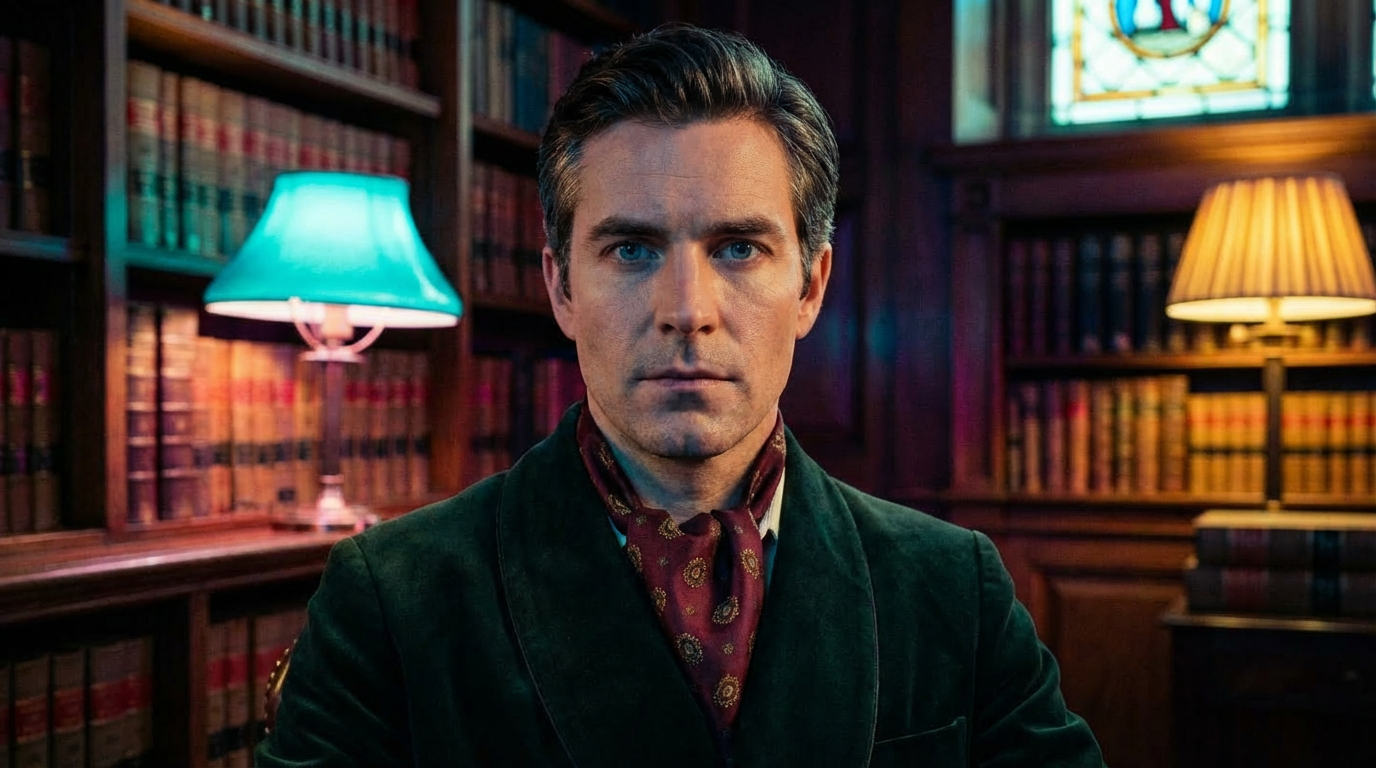
Charles Benjamin Worthington (1844–1910) was born in Hobart, Tasmania, the eldest son of Supreme Court judge Henry Thornton Worthington and Margaret Anne Whitehall. Educated in law and shaped by the pedagogical traditions of his uncle Erasmus Worthington at The Hutchins School, he built a distinguished legal career before marrying Madelyn Elizabeth Jeffries in 1865. Their partnership united two of colonial Tasmania's most prominent families, producing three children and decades of shared commitment to philanthropy, education, and public service.
Early Life and the Worthington Heritage (1844–1858)
Charles Benjamin Worthington was born on 5 May 1844 in Hobart, Tasmania, the eldest child of Henry Thornton Worthington and Margaret Anne Worthington (née Whitehall). His father, born in 1825, had studied law at the University of Melbourne before establishing himself as one of Hobart's most respected legal practitioners — a career that would culminate in his appointment to the Supreme Court of Tasmania in 1875. His mother, the daughter of a prominent Hobart merchant, brought her own family's commercial connections to a union that combined judicial authority with mercantile pragmatism.
The Worthington family occupied a distinctive position within colonial Tasmanian society, grounded less in wealth than in intellectual reputation and institutional influence. Charles's uncle, Erasmus Jonathan Worthington, served as a pioneering educator at The Hutchins School, the prestigious Anglican institution that shaped generations of Tasmania's colonial elite. Erasmus's wife, Eliza Worthington (née Thornton), was a respected midwife known for her herbal remedies and practical medical knowledge — a combination of pedagogical rigour and compassionate service that established the family's dual reputation for learning and community care. This inheritance of public duty and scholarly discipline would prove as formative for Charles as any formal curriculum.
Charles grew up in a household where legal discourse served as ambient conversation. His father discussed cases at the dinner table with a precision that taught the boy, long before he entered any classroom, that language carried consequences and that careless reasoning produced unjust outcomes. Margaret tempered her husband's intellectual austerity with warmth and social grace, maintaining a home that welcomed visitors from across Hobart's professional and charitable circles. The household's atmosphere — rigorous without being cold, principled without being rigid — cultivated in Charles a temperament that balanced analytical discipline with genuine human empathy.
His younger siblings, Elizabeth Mary and William Henry, arrived in 1847 and 1850 respectively, but Charles's position as eldest son carried particular weight in a family that valued professional achievement as the primary expression of masculine duty. His father expected him to enter the law, and Charles showed early aptitude for the structured reasoning and persuasive argument that legal practice demanded. Yet he was never merely a dutiful heir to his father's ambitions. He demonstrated a natural curiosity about people — their motivations, their difficulties, their capacity for both generosity and self-deception — that suggested a lawyer who would understand his clients as human beings rather than merely as cases.
Education and Legal Formation (1855–1865)
Charles's early education drew upon the pedagogical resources available within his own family. His uncle Erasmus's influence at The Hutchins School ensured that the boy received not only the standard curriculum of classics, mathematics, and divinity but also exposure to the progressive educational philosophy that Erasmus championed — an emphasis upon critical thinking, moral reasoning, and the cultivation of civic responsibility alongside academic excellence. Whether through direct tutelage or the broader atmosphere of intellectual expectation that pervaded the Worthington household, Charles absorbed the conviction that education existed not for personal advancement alone but as preparation for meaningful contribution to the wider community.
His formal legal training built upon these foundations. Following in his father's footsteps, Charles pursued the study of law with the thoroughness that Henry Thornton Worthington's example demanded and his own temperament naturally supplied. He proved a meticulous student, distinguished less by intellectual brilliance than by the painstaking attention to precedent, procedure, and logical structure that would later characterise his professional practice. His tutors noted a young man who prepared cases with exhaustive care, who anticipated counter-arguments before they were raised, and who expressed himself with a clarity that made complex legal principles accessible to lay listeners — a talent that would serve him well in courtrooms and committee rooms alike.
The colonial legal world Charles entered in the early 1860s was expanding rapidly. Tasmania's growing population, diversifying economy, and evolving land tenure arrangements generated legal work of increasing complexity, and young lawyers of genuine competence found ample opportunity to establish themselves. Charles's family connections — his father's judicial reputation, his uncle's educational standing, and his mother's merchant family network — provided him with introductions that accelerated his early career, but it was his own professional diligence that sustained the momentum. He quickly earned a reputation as a careful, fair-minded practitioner who prepared his briefs with scrupulous thoroughness and treated opposing counsel with courtesy that never compromised the vigour of his advocacy.
His approach to the law reflected his upbringing's twin emphases upon rigour and compassion. He excelled in commercial and property law, the bread and butter of colonial practice, but also accepted cases involving workers' rights and charitable institutions — matters that offered modest fees but aligned with the Worthington family's tradition of public service. Colleagues noted that Charles discussed legal principles with evident intellectual pleasure, treating the law as a living system whose capacity for justice depended upon the conscientiousness of its practitioners rather than merely the elegance of its statutes.
Marriage to Madelyn Elizabeth Jeffries (1865)
In 1865, at the age of twenty-one, Charles married Madelyn Elizabeth Jeffries, the eldest daughter of William Edward Jeffries Jr. and Ellen Amelia Jeffries (née Cross). The match united two families whose influence, whilst operating through different channels, complemented one another strategically. The Jeffries name carried associations with commercial power, agricultural wealth, and philanthropic ambition; the Worthington name represented judicial authority, educational distinction, and institutional respectability. Together, the families constituted a formidable convergence of the forces that shaped colonial Tasmania's social and economic landscape.
The courtship, conducted within the overlapping social circles that both families inhabited, revealed the genuine intellectual affinity beneath the strategic advantages of the match. Madelyn, an accomplished pianist whose cultural sensibility complemented her mother Ellen's philanthropic commitments, found in Charles a man whose legal mind operated with a methodical care that aligned with her own practical approach to charitable work. Charles, in turn, recognised in Madelyn a woman whose compassion was grounded not in sentimental impulse but in systematic analysis of the social conditions that produced suffering — an orientation that appealed to both his reformist instincts and his lawyer's preference for evidence over assumption.
Their wedding ceremony drew Hobart's prominent families in attendance, confirming the social significance of a union that elevated both surnames. The couple established their household in a grand residence in Hobart, where Madelyn set about creating an environment that deliberately echoed the intellectual vitality of both her mother's salons at Jeffries Manor and the Cross family's Battery Point gatherings. From the outset, the Worthington home became a venue for musical evenings, intellectual discussions, and the informal networking that sustained colonial Tasmania's charitable and cultural institutions. Charles's legal colleagues mingled with the Jeffries family's philanthropic associates, artists conversed with politicians, and Madelyn presided over these convergences with a practised ease that suggested she had spent her childhood preparing for precisely this role.
For Charles, marriage into the Jeffries family brought a proximity to wealth and social complexity quite different from the Worthington household's scholarly austerity. The Jeffries fortune, for all its current respectability, rested upon foundations that still attracted occasional speculation — the mysterious disappearance of William Thomas Jeffries Sr. in 1821 remained one of colonial Tasmania's most persistent unsolved mysteries. Charles, with a lawyer's appreciation for the weight of unresolved questions, understood that his wife's family carried burdens that their considerable assets could not entirely discharge. He approached this inherited complexity with discretion and sensitivity, offering legal counsel when requested whilst respecting the family's right to manage its own affairs.
Fatherhood and Professional Maturity (1867–1890)
Between 1867 and 1873, Charles and Madelyn had three children, each of whom reflected the combined influences of the Worthington and Jeffries households. Edward, their firstborn, arrived in 1867 and would eventually follow his father into the legal profession, carrying the Worthington tradition of judicial service into the next generation. Amelia, born in 1870, inherited the artistic sensibility that ran through the Jeffries women — her aunt Elizabeth's influence upon the child's aesthetic development complemented Madelyn's musical cultivation, producing a young woman who would pursue a career as a painter. Henry, the youngest, born in 1873, gravitated toward engineering, an inclination that aligned more closely with his uncle Thomas Jeffries's practical orientation than with the legal and artistic traditions that predominated in the immediate household.
Charles approached fatherhood with a conscientious attentiveness that distinguished him from many men of his class and generation. Where William Edward Jeffries Jr. had delegated much of his children's emotional formation to Ellen, retreating into his study to pursue business and private obsessions, Charles made deliberate efforts to be present in his children's daily lives. He supervised their early education, discussed their interests with genuine curiosity, and modelled through his own behaviour the principle that professional achievement and domestic engagement were not competing obligations but complementary expressions of the same underlying commitment to purposeful living. His legal colleagues occasionally noted, with gentle amusement, that Charles was as likely to discuss his children's school reports as his latest case briefs — a trait they found endearing if mildly eccentric.
His professional career matured steadily through the 1870s and 1880s, keeping pace with Tasmania's economic and institutional development. His expertise in commercial and property law made him a sought-after practitioner during a period of significant urban expansion and industrial growth, and his reputation for thoroughness and fairness attracted clients who valued dependable counsel over flamboyant advocacy. He appeared regularly before his own father's court — an arrangement that might have raised concerns about impropriety in a larger jurisdiction but was accepted in colonial Tasmania's small legal community as an unavoidable consequence of limited professional numbers, particularly given Charles's scrupulous care to present cases on their merits rather than relying upon any suggestion of familial advantage.
His father's death on 10 December 1890 marked the passing of the man who had shaped Charles's professional formation more profoundly than any other influence. Henry Thornton Worthington's tenure on the Supreme Court had been distinguished by several landmark decisions that shaped Tasmanian legal precedent, and his legacy of judicial impartiality and intellectual rigour represented a standard against which Charles measured his own practice throughout his career. The loss, coming when Charles was forty-six, deepened his already strong sense that professional competence carried moral obligations extending beyond the interests of any individual client.
Service to the Jeffries Family (1880–1910)
Charles's legal expertise proved particularly valuable during the turbulent decades that followed the death of his father-in-law, William Edward Jeffries Jr., on 18 August 1880. The equitable division of the Jeffries estate among five children, with Ellen serving as executor, required careful legal management to prevent the distribution from generating the destructive rivalries that William Jr. had sought to forestall. Charles provided counsel during these proceedings with the delicacy that family matters demanded and the precision that the estate's complexity required, ensuring that the settlement proceeded without the litigation that might have further damaged family relationships.
The deepening enmity between Madelyn's brothers — William III's growing obsession with their grandfather's disappearance set against Edwin's political machinations — placed Charles in the difficult position of legal adviser to a family whose internal divisions resisted resolution. He approached these tensions with characteristic discretion, offering guidance when consulted whilst avoiding the partisan alignments that might have compromised his usefulness as an honest broker. His temperament proved well suited to this mediating role — patient enough to listen to competing grievances, analytical enough to distinguish genuine concerns from self-serving complaints, and diplomatic enough to deliver unwelcome advice without provoking the defensiveness that candour sometimes triggers in those accustomed to having their judgement deferred to.
His relationship with Ellen Amelia Jeffries, his mother-in-law, deepened during this period into one of mutual respect and quiet reliance. Ellen's role as the family's moral centre demanded practical support that Charles was uniquely qualified to provide — legal oversight of the charitable foundations she administered, guidance on the estate management that her husband's death had complicated, and steady counsel during the personal losses that marked her later years. Ellen's death on 5 September 1898, at the age of seventy-three, removed from the Jeffries family the figure whose diplomatic persistence had held it together through decades of internal tension. Charles attended her funeral alongside Madelyn, conscious that the family dynamics his wife would now navigate had lost their most stabilising influence.
The death of William Jeffries III on 18 November 1905 — found slumped over his desk amid papers related to his grandfather's disappearance — confirmed the destructive pattern that had consumed two generations of Jeffries men. Charles assisted with the legal complexities of William III's divided estate, a process complicated by the specific instructions in the will that the family should continue investigating their great-grandfather's fate. His handling of these proceedings demonstrated the same blend of professional competence and personal sensitivity that had characterised his service to the family throughout four decades of marriage.
Philanthropy and Community Engagement
Charles's charitable commitments, whilst less conspicuous than those of the Jeffries women with whom he was allied by marriage, reflected the Worthington family's quiet tradition of public service. He served on the boards of several charitable organisations, bringing legal expertise to governance structures that benefited from professional rigour. His involvement with educational institutions — a natural extension of the Worthington family's pedagogical heritage — included support for scholarship programmes and advocacy for expanding access to legal education beyond the privileged circles that had traditionally dominated the profession.
His partnership with Madelyn in charitable work represented one of the marriage's most productive dimensions. Where Madelyn brought passionate conviction, strategic social connections, and the Jeffries family's financial resources to philanthropic endeavours, Charles contributed the legal and administrative frameworks that transformed good intentions into sustainable institutions. His assistance with the governance of the Hobart Women's Shelter, which Madelyn had helped establish in 1866, ensured that the organisation possessed the constitutional structures and financial accountability necessary for long-term survival. Similarly, his counsel on the Hobart Female Seminary's scholarship programmes helped design selection criteria and funding mechanisms that served disadvantaged students for decades.
This division of labour — Madelyn providing vision and energy, Charles providing structure and oversight — characterised their broader approach to public service. Neither spouse claimed credit for the other's contributions, and their combined effect was greater than either might have achieved independently. The model they established influenced their children's own approaches to community engagement, with Edward's later involvement in legal aid and Amelia's support for arts education reflecting the philanthropic habits absorbed during childhood in a household where service was treated as an assumed responsibility rather than an exceptional virtue.
Final Years and Death (1905–1910)
The last five years of Charles's life were shaped by the progressive narrowing that advancing age imposed upon a man who had spent decades in vigorous professional and community activity. His health, robust throughout most of his adult life, declined after the turn of the century, though his mental acuity remained undiminished. He continued to accept selected legal work, confining himself to advisory roles and consultations rather than the courtroom advocacy that had defined his earlier career. His colleagues sought his counsel with increasing frequency as his reputation for sound judgement ripened into the authority that only long experience could confer.
The death of his mother, Margaret Anne Worthington, in 1895 and his father a few years before had already severed his connections to the generation that had shaped him. The subsequent losses within the Jeffries family — Ellen in 1898, William III in 1905 — deepened his awareness of mortality's encroaching claims and strengthened his determination to ensure that Madelyn, who had borne these family losses with quiet resilience, received the companionship and practical support she needed during what he recognised might be their remaining years together.
Charles Benjamin Worthington died on 10 October 1910 in Hobart, at the age of sixty-six. His passing deprived Madelyn of the intellectual companion, strategic counsellor, and steady domestic presence that had sustained her through forty-five years of marriage. The partnership they had built — grounded in genuine mutual respect, shared commitment to public service, and complementary temperaments that enhanced one another's effectiveness — had served both families well across nearly half a century.
He was remembered by the legal profession as a practitioner of uncommon thoroughness and integrity, by the charitable institutions he had served as a governor of quiet competence and dependable counsel, and by his family as a father and husband whose consistent presence had provided the stability against which the Jeffries family's more dramatic upheavals could be measured. His children — Edward continuing in the law, Amelia pursuing her art, Henry contributing to Tasmania's infrastructure — carried forward the combined Worthington-Jeffries inheritance of professional excellence and community service that Charles and Madelyn had modelled throughout their shared life.







