Catherine Cabot (née Jennings)
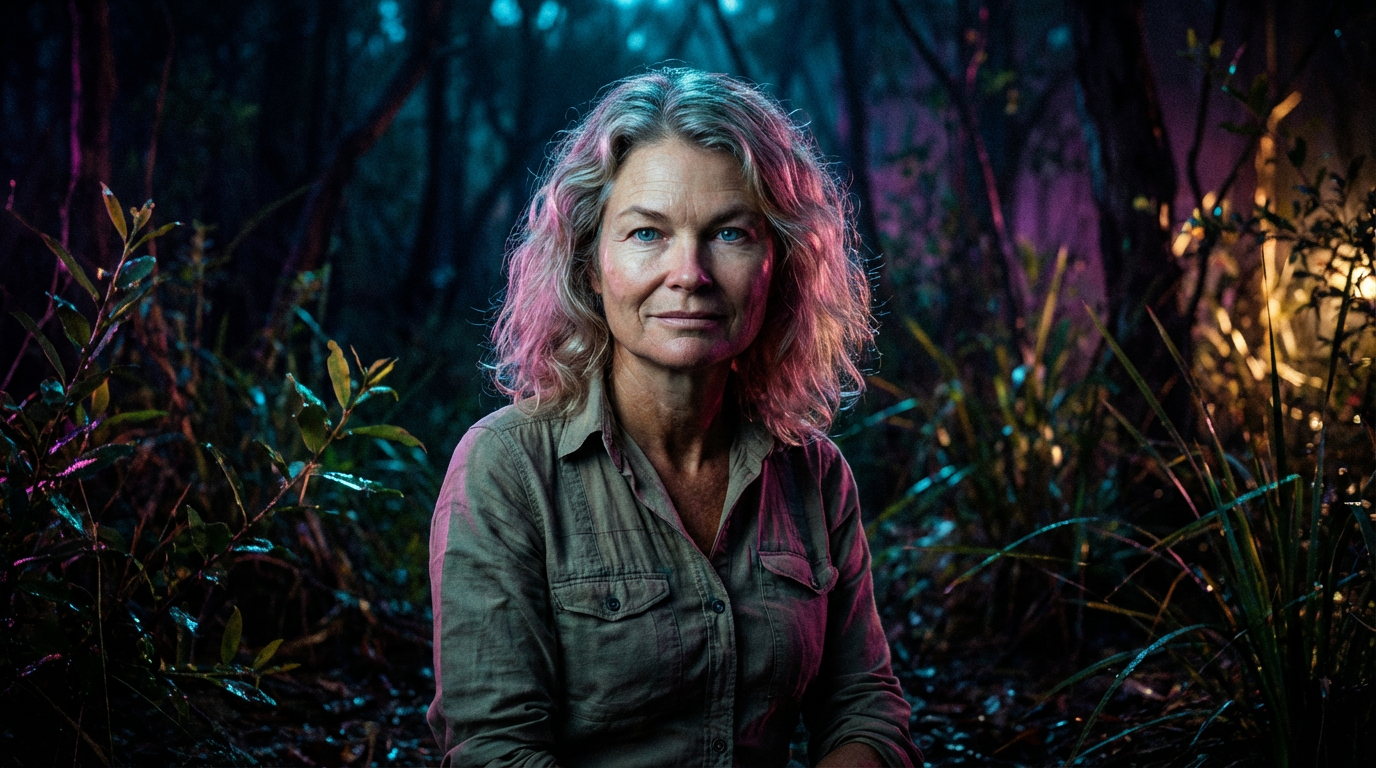
Catherine Jennings, born on 7 March 1973 at the Jennings Family Farmhouse in Gawler, South Australia, is the third of seven children born to Brian Edward Jennings and Patricia Anne Jennings (née O'Connor). A zoologist and conservationist whose passion for animals was forged in the paddocks and sheds of the family farm, she founded the Gawler Wildlife Haven in 2010 and raised two children with her husband, Jeremy Cabot.
An Unexpected Arrival
Catherine Jennings was born on 7 March 1973 at the Jennings Family Farmhouse on the outskirts of Gawler, South Australia, the third of seven children born to Brian Edward Jennings, a farmer and gifted mechanic, and Patricia Anne Jennings (née O'Connor), a former education student who had traded university life for the demanding rhythms of an agricultural household. The Jennings Family Farm, established in 1889 by Brian's paternal grandparents, William and Margaret Jennings, Irish immigrants from County Clare, sat approximately forty kilometres north of Adelaide on land that had been carved from scrubland bordering Stockwell's Scrub.
Catherine's arrival was itself the stuff of family legend. Patricia had expected to deliver at the Hutchinson Hospital in Gawler, as she had with her first two children, Cody Brian (born 1968) and Anne Elizabeth (born 1970). Instead, Catherine came early and fast, arriving at the farmhouse with the assistance of a retired midwife neighbour who happened to live down the road. Brian, whose calloused hands were far more accustomed to machinery than to the delicate business of childbirth, helped where he could and spent the rest of the evening in a state of quiet astonishment. The story was told and retold at family gatherings for decades—Patricia insisting that Brian had been more nervous than she was, Brian maintaining a dignified silence on the subject—and it became part of the foundational lore of a family that collected such stories the way other families collected photographs.
Catherine was followed by four more siblings: Janice Marie (born 1975), Kenneth Oliver (born 1978), Raymond (born 1980), and Tania (born 1982). The seven Jennings children grew up in a household characterised by organised chaos, long days of farm work, crowded mealtimes at the farmhouse table, and the particular brand of resilience that large rural families develop out of necessity. Catherine occupied the middle ground of the sibling hierarchy—old enough to remember Cody as a protective and occasionally bossy eldest brother, young enough to share a childhood world with Janice and the younger ones that Cody and Anne had largely outgrown by the time the younger four were running wild through the paddocks.
Creatures, Paddocks, and a Quiet Devotion
From her earliest years, Catherine displayed an affinity for animals that went beyond the usual fondness of a child raised on a working farm. Where her siblings treated the livestock as part of the background furniture of their lives—creatures to be fed, moved, sheared, and occasionally complained about—Catherine regarded them with a watchfulness that bordered on reverence. She appointed herself guardian of the farm's smaller inhabitants: the chickens, the rabbits, the feral cats that skulked around the hay shed, and the succession of injured birds and orphaned possums that she smuggled into the laundry in shoeboxes lined with torn-up flannelette.
Patricia, who possessed a sharp eye for her children's emerging temperaments, recognised Catherine's particular sensitivity early and encouraged it. She helped Catherine construct a makeshift rehabilitation pen behind the garden shed, fashioned from chicken wire and old fence posts, where injured birds could recover before being released. Brian, though less demonstrative in his encouragement, built Catherine a proper hutch for her rabbits when she was seven—a solid, unpretentious construction that reflected both his woodworking skill and his quiet understanding that his daughter's passion for animals was something to be nurtured rather than dismissed as childish whimsy.
Catherine's relationship with the natural world was not entirely sentimental. Growing up on a farm taught her the harder truths of animal husbandry: that creatures died, sometimes suddenly and without apparent reason; that predators took lambs; that droughts starved paddocks and the animals that depended on them. She learnt to bottle-feed orphaned lambs and to accept, with a sadness she never quite outgrew, that not all of them would survive. This dual education—tenderness tempered by pragmatism—would prove foundational to her later career in conservation, where the capacity to care deeply without being paralysed by loss was not merely useful but essential.
School Years and the Discovery of Biology
Catherine attended Gawler Primary School from 1979, where she quickly established herself as a bright, sociable child with an easy manner and a quick wit that endeared her to classmates and teachers alike. She was a competent student across most subjects, but it was in anything connected to the natural sciences that her attention truly ignited. She joined the school's gardening club with an enthusiasm that the supervising teacher, a patient woman named Mrs Aldridge, found both delightful and slightly exhausting, and she volunteered at the Gawler Animal Welfare League on Saturday mornings, arriving punctually at eight o'clock with a determination that belied her age.
The transition to Gawler High School in the mid-1980s sharpened Catherine's academic focus considerably. Biology became not merely a favourite subject but a vocation in embryo. She absorbed the discipline's vocabulary and frameworks with a fluency that suggested she had been waiting for someone to give her the language for things she had always understood instinctively. Her biology teacher, Mr David Keane, later recalled Catherine as the rare student who asked questions not to impress but because she genuinely needed to know—a quality he found far more promising than any examination result.
Beyond the classroom, Catherine threw herself into environmental activism with the earnestness characteristic of adolescents who have found their cause. She became an active member of the school's environmental club, organising roadside clean-ups along the approaches to Gawler and tree-planting initiatives in degraded areas along the North Para River. These were modest efforts, carried out with limited resources and the uneven commitment of teenage volunteers, but Catherine pursued them with a methodical energy that occasionally startled her more casually committed peers. Her dedication earned her several academic accolades, including a commendation for excellence in biology that she accepted with more embarrassment than pride, having never been entirely comfortable with public recognition.
The family dynamic shifted during Catherine's high school years in ways that left lasting impressions. In February 1986, when Catherine was twelve and approaching her thirteenth birthday, her brother Kenneth Oliver—a prodigiously gifted pianist who had been playing since the age of three—departed the farm to attend a prestigious music programme at the Sydney Conservatorium of Music. Kenneth, then eight years old, moved to Sydney to live with his maternal aunt and uncle, Margaret and Thomas O'Connor. The departure created an absence that the remaining children felt acutely, and for Catherine it reinforced an understanding, already forming, that the farm could not contain every talent or ambition. Some callings drew people away from the land, and loving them meant accepting the distance.
On 7 March 1988, Catherine's fifteenth birthday, her eldest brother Cody—then nineteen and carrying secrets the family could not have fathomed—organised a surprise party at the farmhouse that brought the scattered siblings together in a rare moment of uncomplicated joy. The memory of that evening, of laughter echoing through the rooms where she had been born, remained one of Catherine's most treasured possessions long after the family's circumstances had made such gatherings far more bittersweet affairs.
The University of Adelaide and a Scientific Foundation
Catherine graduated from Gawler High School at the end of 1990 with strong results in the sciences and a clear sense of direction. In 1991, she enrolled in a Bachelor of Science at the University of Adelaide, majoring in Zoology. The move to Adelaide, though modest in geographical terms—barely forty kilometres from the farm—represented a significant shift for a young woman whose life had been bounded by the paddocks, schoolrooms, and community organisations of Gawler.
University opened intellectual doors that Catherine walked through with undisguised eagerness. She was captivated by the breadth of zoological science—animal behaviour, ecology, evolutionary biology, conservation genetics—and found particular satisfaction in the discipline's integration of fieldwork and laboratory analysis. Her undergraduate research focused on the conservation of native Australian species, examining habitat fragmentation and its effects on small marsupial populations in the Mount Lofty Ranges. The work was rigorous if modest in scope, but it confirmed Catherine's conviction that her future lay in the intersection of science and animal welfare rather than in pure academia.
She was not, by her own later admission, a natural academic in the conventional sense. She found the theoretical components of her degree demanding and occasionally frustrating, lacking the abstract intellectual fluency that came more easily to some of her peers. Her strength lay in observation, patience, and the practical intelligence she had developed through years of hands-on animal care on the farm—qualities that translated powerfully into fieldwork and applied conservation but less readily into examination essays. She graduated in 1995 with a solid degree that reflected both her genuine expertise and the uneven terrain of her academic journey.
Adelaide Zoo and the Making of a Career
In 1995, Catherine secured a position as a zookeeper at the Adelaide Zoo, one of Australia's oldest zoological gardens, situated in the parklands north of the city centre. The role was entry-level—feeding schedules, enclosure maintenance, and the unglamorous daily labour of keeping captive animals healthy and stimulated—but Catherine embraced it with the same wholehearted commitment she had brought to every injured bird and orphaned possum on the farm.
Her competence was quickly apparent. Senior staff noted Catherine's calm temperament around animals, her instinct for reading behavioural cues that less experienced keepers missed, and her willingness to take on difficult or unpleasant tasks without complaint. She had a particular gift for working with stressed or traumatised animals, approaching them with a patience and quietness that seemed to communicate safety across the species barrier. Within a few years, she was promoted to a senior zookeeper position, with responsibility for the zoo's endangered species rehabilitation programmes.
Catherine's work at the zoo focused increasingly on the rehabilitation and conservation of threatened native species—a cause that sat at the intersection of her scientific training, her practical skills, and the deep emotional connection to Australian wildlife that had begun in the paddocks of the Jennings Family Farm. She worked with yellow-footed rock wallabies, southern hairy-nosed wombats, and a succession of raptors and waterbirds that arrived at the zoo injured, orphaned, or confiscated from illegal wildlife traders. The work was rewarding but emotionally taxing, requiring the same capacity to hold tenderness and pragmatism together that she had first developed as a child bottle-feeding lambs that might not survive the night.
Jeremy Cabot and the Building of a Partnership
It was at the Adelaide Zoo in 1998 that Catherine met Jeremy Cabot, a fellow zookeeper whose easygoing manner and dry sense of humour cut through the earnestness that Catherine sometimes brought to her work. Jeremy, a Queenslander who had drifted south after completing a wildlife management diploma in Brisbane, shared Catherine's passion for animal welfare and conservation but wore it more lightly, tempering his commitment with a self-deprecating wit that Catherine found both disarming and refreshing. He was the sort of man who could spend twelve hours dealing with a medical emergency involving a critically ill koala and then make the entire team laugh over cold takeaway in the break room afterwards.
Their courtship unfolded gradually, in the way of people who see each other daily and allow affection to accumulate through shared work and small kindnesses rather than through grand romantic declarations. Colleagues at the zoo had been quietly placing bets on how long it would take the two of them to acknowledge what everyone else could plainly see. Catherine and Jeremy married on 22 November 2001 in a ceremony held at the Jennings Family Farm, surrounded by the paddocks and eucalypts that had shaped Catherine's childhood. The wedding was a modest, warm affair—the kind of celebration that reflected the couple's shared preference for substance over spectacle.
The couple settled in a rented cottage in the Adelaide suburb of Prospect, close enough to the zoo for convenient commuting but far enough from the city centre to feel slightly removed from urban pressures. Their first child, Laura Catherine Cabot, was born on 14 May 2003 at the Women's and Children's Hospital in North Adelaide. Their son, Max Jeremy Cabot, followed on 9 September 2006, arriving with the same disregard for timing that had characterised his mother's own birth—Jeremy later joked that Catherine's family had a genetic predisposition towards inconvenient delivery schedules.
Catherine approached motherhood with characteristic dedication, juggling the demands of two young children with her professional responsibilities at the zoo. She and Jeremy divided parenting duties with the practical efficiency of two people accustomed to managing complex animal care rosters, though Catherine admitted privately that human infants were, in many respects, considerably more unpredictable than even the most temperamental zoo residents. She took Laura and Max on regular visits to the family farm, determined that her children should grow up with the same connection to land and animals that had shaped her own childhood, even if their primary home was suburban rather than rural.
The Death of Brian Jennings and Its Aftermath
On 18 November 1997, Catherine's father, Brian Jennings, suffered a massive heart attack whilst working on the farm and died at the age of fifty-two. Catherine was twenty-four, newly employed at the Adelaide Zoo, and the news reached her during a shift in the reptile house. She drove to Gawler in a state of numb disbelief, arriving at the farm to find her mother Patricia surrounded by neighbours and the terrible stillness that descends on a household when its anchor has been suddenly removed.
Brian's death devastated the family. The man whose steady hands had delivered Catherine into the world, who had built her first rabbit hutch and driven her to Saturday morning volunteer shifts at the animal shelter without complaint, was gone. The funeral at St Peter's Anglican Church drew the Gawler community in force. Cody, the eldest sibling, attended but left abruptly after the service—a bewildering departure that wounded Catherine, who had looked to her eldest brother for the kind of steadying presence their father had always provided.
In the years that followed, Patricia held the family together with the fierce determination that had characterised her entire married life. But her own health was deteriorating. Diagnosed with cancer in 2001, Patricia Anne Jennings died on 5 September 2002 at the age of fifty-five. For Catherine, the loss of both parents within five years opened a grief that expressed itself not in dramatic collapse but in a quiet intensification of the qualities they had nurtured in her—the patience, the dedication to care, the stubborn refusal to give up on fragile things. She carried their memory forward in the way she knew best: through work.
Shortly after Patricia's death, Cody sent a letter to his siblings expressing his love but instructing them not to search for him. The communication left Catherine confused and hurt, unable to reconcile the protective older brother she remembered with the distant, unreachable figure he had become. She kept the letter but rarely spoke of it, filing it alongside other unanswerable questions about a family that seemed to accumulate losses faster than it could process them.
The Gawler Wildlife Haven
In 2010, Catherine made the decision to leave the Adelaide Zoo and pursue a long-held ambition of establishing her own wildlife rehabilitation centre. The decision was not taken lightly—she had spent fifteen years at the zoo, building expertise and professional standing—but the pull towards independent conservation work, closer to the landscapes of her childhood, had grown too strong to resist.
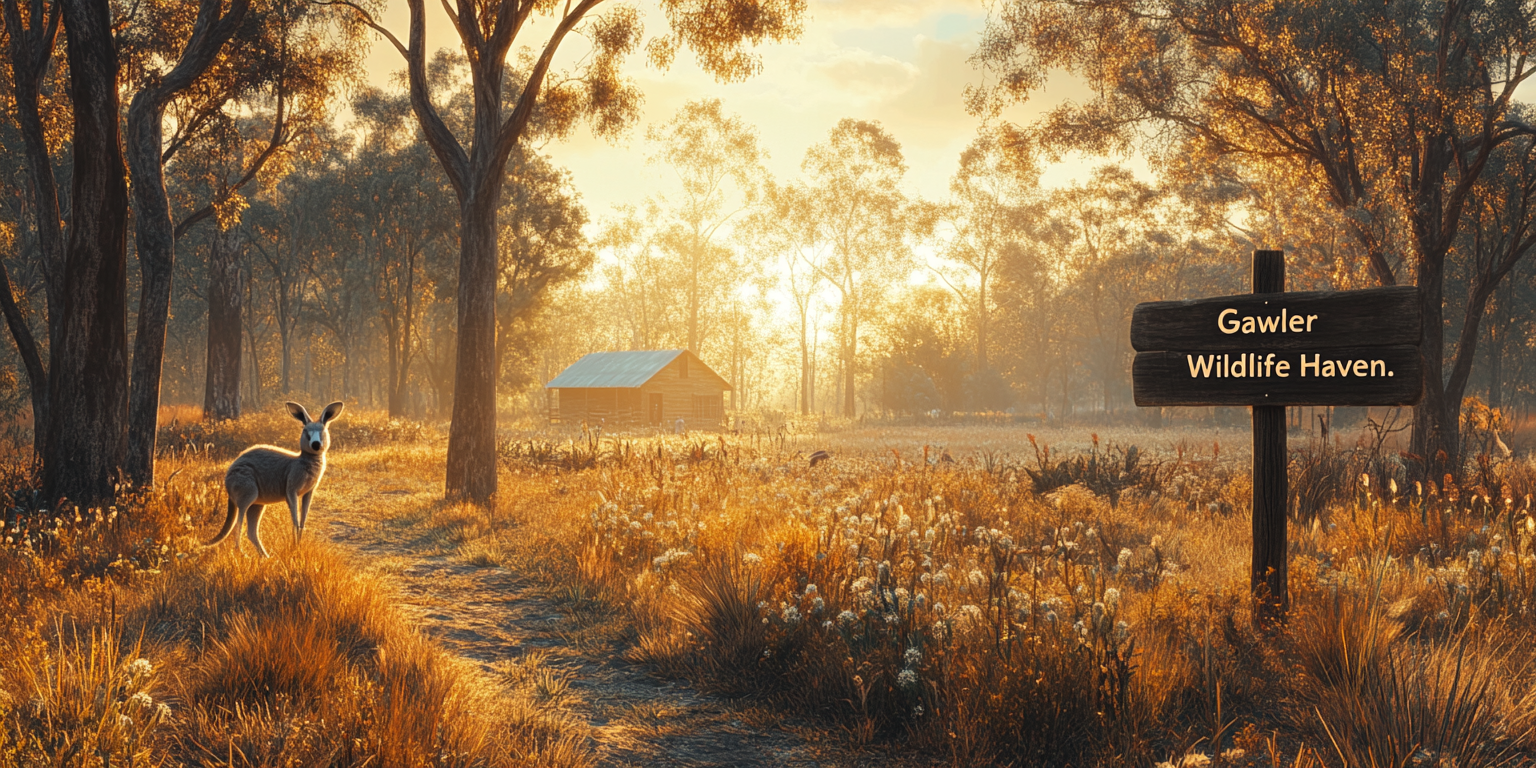
With financial support from Jeremy, practical assistance from her sister Anne on the farm, and a modest grant from a regional conservation trust, Catherine founded the Gawler Wildlife Haven on a five-acre property she and Jeremy purchased on the northern outskirts of Gawler, not far from the family farm. The sanctuary was dedicated to the rescue, rehabilitation, and release of injured and orphaned native animals—kangaroos, wombats, possums, echidnas, and a wide variety of birds that arrived in cardboard boxes and towel-lined crates from across the northern Adelaide Plains and the Barossa Valley.
The early years were gruelling. Catherine managed the Haven with a skeleton staff—herself, two part-time volunteers, and Jeremy on weekends—whilst simultaneously caring for Laura, then seven, and Max, four. She cleaned enclosures, administered medications, fielded calls from farmers who had found injured wildlife on their properties, and handled the relentless administrative demands of running a registered wildlife facility on a limited budget. There were nights when she fell asleep on the couch in the Haven's treatment room, a heat lamp warming a pouch of orphaned joeys beside her, too exhausted to drive the short distance home.
Gradually, the Haven found its footing. Word of mouth brought an increasing flow of animals and, crucially, volunteers—many of them local residents who had known the Jennings family for years and were drawn by Catherine's reputation for quiet competence and genuine compassion. She developed educational programmes for local schools, bringing children to the Haven to learn about native wildlife and the threats facing Australian ecosystems. The programmes proved popular and effective, and they aligned with Catherine's conviction, inherited from her mother, that education was the most durable foundation for lasting change.
Under Catherine's leadership, the Gawler Wildlife Haven grew into a respected institution within the South Australian conservation community. Her work attracted recognition from state and national conservation organisations, though Catherine accepted such accolades with the same discomfort she had shown as a school student receiving biology awards—genuinely pleased that the Haven's work was being noticed, genuinely uncomfortable with personal attention.
Loss Upon Loss
The years between 2018 and 2023 tested Catherine's resilience in ways that even a lifetime of managing fragile lives had not prepared her for. On 31 July 2018, her eldest brother Cody Jennings died at the age of forty-nine, in circumstances that were only partially revealed to the family. A memorial service held on 5 November 2018 at the Jennings Family Farm brought the surviving siblings together in shared grief, the presence of Detective Inspector Sienna Blackwood and officers from the Hobart Police Department hinting at complexities surrounding Cody's death that Catherine grasped only in fragments. She mourned the brother she had loved and the relationship she had lost years before his death—two distinct griefs that overlapped without resolving into anything simple.
Less than a year later, on 8 November 2019, Janice Jennings died at the age of forty-four after contracting a rare form of meningitis. Janice, a Clinical Nurse Specialist at the Royal Adelaide Hospital, had been the sibling closest to Catherine in age and in a shared instinct for care—Janice nursing humans, Catherine nursing animals, both driven by the same compassion their mother had modelled throughout their childhoods. The loss left Catherine shaken in a way that the deaths of her parents, devastating as they had been, had not quite achieved. Parents were supposed to die before their children. Sisters were not.
On 14 February 2023, Catherine's younger brother Raymond was killed in a road accident in Gawler, struck by a drunk driver whilst driving home from his workshop. Raymond had been forty-two years old, a devoted father and husband, a gifted mechanic whose quiet generosity had made him a fixture of the community. His death added another fracture to a family that had already absorbed more than its share of grief, and it fell to Catherine and her surviving siblings—Anne, Kenneth, and Tania—to rally around Raymond's widow, Emily, and their children, Levi and Amelia, with the fierce protectiveness that had become the Jennings family's most enduring inheritance.
Family, Community, and Continuing Work
Catherine remained anchored to the Gawler community through the Haven, through the farm, and through the web of relationships that had sustained the Jennings family across generations. She and Jeremy continued to live on the Haven property, where the boundaries between home and workplace blurred in the manner characteristic of people whose vocation and domestic life share the same postcode. Laura, who inherited something of her mother's affinity for science, pursued studies in environmental management. Max, more restless in temperament, gravitated towards outdoor education and youth work—a path that pleased Catherine, who recognised in her son the same impulse to nurture that had driven her own career, expressed through a different medium.
Catherine visited the family farm regularly, maintaining a close bond with Anne, who had served as the property's steward since their father's death. The two sisters, separated by less than three years in age and united by a shared devotion to the land and its creatures, formed the stable centre around which the remaining Jennings siblings orbited. Catherine brought Laura and Max to the farm on weekends and school holidays, ensuring that the connection between the next generation and the soil their great-great-grandparents had first broken remained unbroken.
The Gawler Wildlife Haven continued to operate as a respected sanctuary and educational resource, its daily rhythms governed by the same cycles of rescue, rehabilitation, and release that had defined Catherine's working life for over a decade. She rose early, tended to the animals, fielded calls, trained volunteers, and fell asleep tired in ways that felt productive rather than depleting. It was a life built from conviction rather than ambition, from the understanding—first glimpsed in a child crouching beside a shoebox in a farmhouse laundry—that caring for the vulnerable was not merely a profession but a way of being in the world.







