4338.214 · August 2, 2018 AD
Case 2018-08-02/14387: The Disappearance of Detective Karl Jenkins
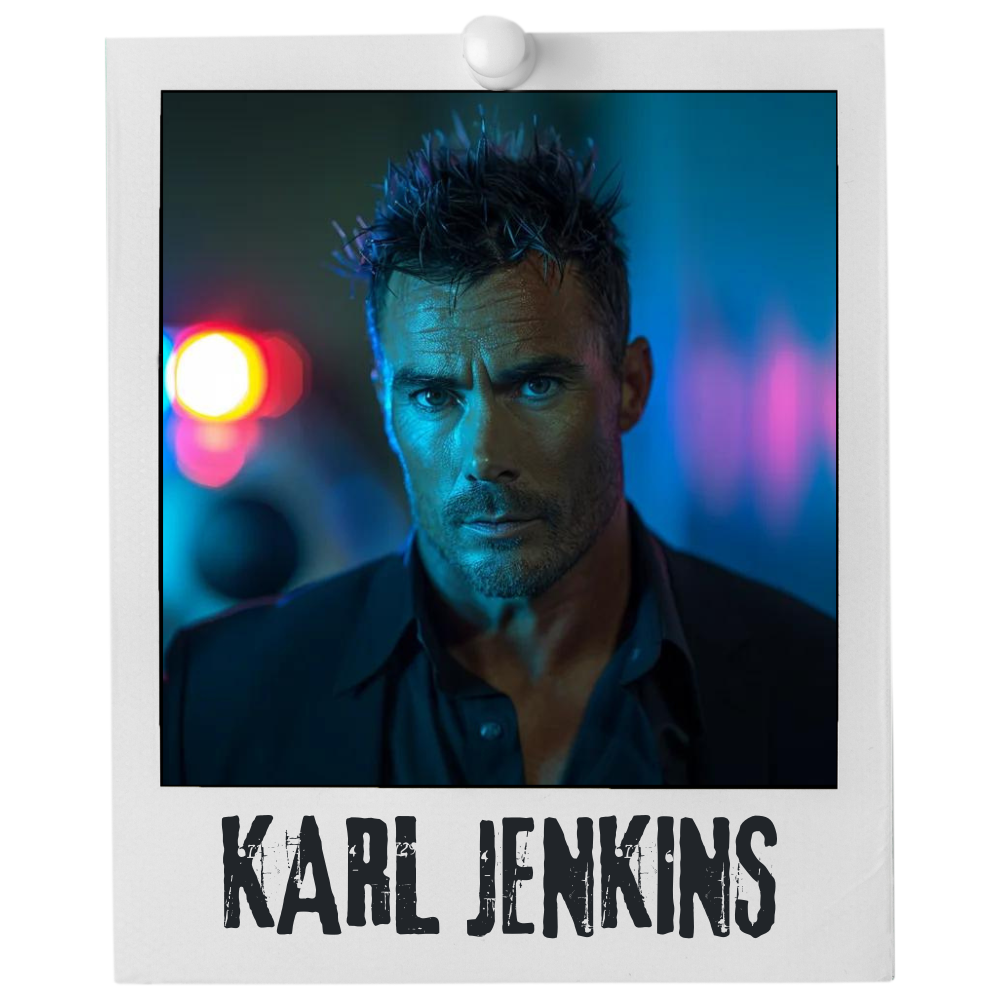
Detective Karl Jenkins, forty-two, vanished from a shed at Jeffries Manor on 2 August 2018 whilst arresting suspect Luke Smith. His partner heard a motorcycle. Two minutes later, the shed was empty — of everything. Within ten days, his partner was dead, his primary witness was murdered, his home was stripped by an unidentified woman, and his police dog was taken from a locked kennel. Every witness to his disappearance is now dead or missing.
Incident Overview
On 2 August 2018, Detective Karl Matthew Jenkins (Badge #2847) of Tasmania Police Southern Division disappeared from the grounds of Jeffries Manor, Granton, whilst responding to an emergency call. Jenkins, aged forty-two, had been the lead investigator on multiple missing persons cases subsequently consolidated under the Operation Vanished designation. He was the detective who identified the pattern connecting the disappearances. He was the detective who traced Luke Smith's involvement across every case in the cluster. And he was the detective who, on the afternoon of 2 August, walked into a shed at Jeffries Manor to arrest that suspect and was never seen again.
Detective Jenkins' disappearance represents the most institutionally devastating event in the Operation Vanished investigation. The officer who had driven the investigation — who had identified the common thread, traced the phone records, pursued the vehicles, interviewed the witnesses — became its sixth missing person. His loss removed the investigation's most experienced mind at its most critical juncture. What followed compounded the damage beyond recovery.
The case was assigned to Detective Sergeant Alexander Stout on 3 August. It remains unsolved.
The Missing Person
Karl Matthew Jenkins was born on 15 November 1975 in Adelaide, South Australia. He joined Tasmania Police after building a distinguished career across three Australian jurisdictions, earning recognition for exceptional investigative skill. By July 2018, he was a Senior Detective with nineteen years of exemplary service, assigned to Southern Division's Criminal Investigation Branch and partnered with Detective Sarah Lahey.
Karl's personal life was characterised by a dedication to work that colleagues described as both his greatest strength and his most pronounced vulnerability. He lived alone in Hobart with his police dog Jargus, a K-9 partner who was part of the pioneering 2017 detective-K9 partnership programme within the division. His parents, Thomas and Elizabeth Jenkins, his sister Jessica, and his brother Daniel were all contacted during the investigation and could provide no information regarding his recent state of mind or any indication of anticipated trouble.
Karl had no criminal record, no financial difficulties, no known personal conflicts, and no history of unexplained absence. He was, by every metric available to the institution that employed him, a model officer at the height of his investigative capability.
The Investigation Karl Was Running
To understand Karl Jenkins' disappearance, it is necessary to understand the investigation that consumed his final week.
Between 28 July and 2 August 2018, Karl Jenkins — working alongside Detective Sarah Lahey — had received, investigated, or contributed to five separate missing persons reports. Jamie Greyson, whose partner Luke Smith provided contradictory accounts of his whereabouts. Kain Jeffries, who went to check on Jamie and never returned. Nial Triffett, a fencing contractor who left to meet a client and vanished. Karen and Chris Owen, conservationists who disappeared from their remote Collinsvale property. Adrian Pafistis, a master builder who went to a client meeting in Collinsvale and was last associated with a vehicle that vanished from a sealed car park during an active police pursuit.
In each case, Luke Smith's name appeared in the evidentiary record. In each case, the missing person's vehicle disappeared without trace. In each case, the forensic landscape was barren — no bodies, no blood, no ransom, no communication.
Karl was the detective who recognised the pattern. He traced Luke Smith's phone number in Nial Triffett's call records. He attended the Owen property in Collinsvale on 30 July and later pursued two vehicles at high speed through the same area, watching one vanish from a location it could not have left. He interviewed Sharon Pafistis and heard Luke Smith's name spoken for the fourth time in four days.
By 1 August, Karl Jenkins understood more about the shape of the Operation Vanished cases than any other officer in Tasmania Police. He also understood, with increasing certainty, that conventional investigative frameworks could not account for what he was observing. Vehicles that vanished from sealed locations. People who ceased to exist without forensic trace. A suspect whose name appeared everywhere and whose person appeared nowhere.
On 2 August, that suspect appeared at Jeffries Manor.
The Events of 2 August 2018 — Jeffries Manor
At approximately 14:47, an emergency call was received from Louise Jeffries, wife of Thomas Jeffries and mother of missing person Kain Jeffries. Louise reported a disturbance at Jeffries Manor, the historic family estate in Granton. She stated that she had confined Luke Nathaniel Smith — the person of interest in her son's disappearance and her brother's disappearance — within a shed on the property. Louise also reported that Brianne Sitch, Kain's fiancée who had been residing at the Manor, had disappeared from the property approximately thirty minutes earlier.
Detectives Jenkins and Lahey responded. They arrived at approximately 15:02 to find Louise in a highly distressed state, wielding a knife. Detective Lahey took responsibility for securing Louise and escorted her inside the manor house. Inside, Lahey located Thelma Jeffries, the family matriarch aged ninety-two, on the upper floor. Thelma was confused but unharmed. Lahey secured both women inside the house.
Detective Jenkins proceeded alone across the grounds toward the shed — a large, green corrugated iron structure — to effect the arrest of Luke Smith.
At approximately 15:06, witnesses inside the manor house reported hearing the sound of a motorcycle engine.
Detective Lahey exited the house and proceeded to the shed within approximately two minutes. She found it completely empty. Detective Jenkins was not present. Luke Smith was not present. No motorcycle was present. No tools, no equipment, no personal belongings, no signs of struggle, and no indication of recent occupancy were found within the structure. The shed appeared as though it had been cleared long before anyone arrived that afternoon.
The Institutional Response
Sergeant Charlie Claiborne arrived on scene at 15:23 and immediately initiated a search operation. Multiple units were deployed across the fifty-acre Jeffries Manor estate. Teams led by Constables Mackenzie, Edwards, O'Neil, and Rogers searched the grounds systematically — the manicured lawns, the outbuildings, the surrounding bushland.
The search continued until darkness fell at approximately 18:45. No trace of Detective Jenkins or Luke Smith was found.
The scene yielded one piece of physical evidence: motorcycle tyre tracks in the vicinity of the shed, later identified as consistent with a Yamaha WR250R model. No motorcycle matching this description was registered to any person connected to the investigation. No motorcycle was found on the property or in the surrounding area.
During the search, information was received regarding a break-in at Luke Smith's Berriedale residence. Detective Lahey was urged by Sergeant Claiborne to stand down due to exhaustion. The Berriedale incident was attended by other officers and would develop into its own investigation — Case File 029-092 — involving the discovery of human remains, a civilian fatality, and forensic evidence that would subsequently implicate individuals connected to Karl Jenkins' disappearance.
The Investigator Becomes the Investigation
Detective Sergeant Alexander Stout was assigned as lead investigator at a 7:00 AM briefing on 3 August. The briefing took place at Hobart Police Station in an atmosphere that officers present described as unlike anything in their experience. A colleague — a senior detective with nineteen years of service — had vanished from a location where he had gone to arrest a suspect, under circumstances that defied physical explanation.
Stout's investigation proceeded along multiple lines of inquiry simultaneously.
3 August — Forensic Examination of Jeffries Manor:A Crime Scene Investigation team attended the Manor and conducted a detailed examination of the shed and surrounding grounds. The shed's interior was photographically documented, samples collected, and tyre tracks analysed. The shed yielded nothing beyond the motorcycle tracks. No fingerprints, no DNA, no fibres, no tool marks, no scuff marks, and no evidence of any mechanism by which two adult males could have exited the structure without being observed from the manor house approximately eighty metres away.
3 August — Thomas Jeffries:Thomas Jeffries, the property's owner, returned from an interstate business trip to discover police activity at his estate. Jeffries was hostile to the investigation's presence on his property. A confrontation between Jeffries and Detective Stout followed, during which Jeffries made explicit reference to his professional and political connections.
[SECTION REDACTED — INTERNAL AFFAIRS REFERENCE 2018-IA-0847]
Within fifteen minutes of Jeffries' intervention, Detective Stout received instructions from superior officers to cease police operations at Jeffries Manor. Stout withdrew his team under protest. The investigative implications of this withdrawal — occurring less than twenty-four hours after a serving detective disappeared from the property — were noted in Stout's operational log but are not reproduced in this file.
3 August — Interview of Detective Sarah Lahey:Stout conducted a formal interview with Detective Lahey regarding the events at the Manor. Lahey provided a detailed account of the afternoon's events: their arrival, Louise's condition, the decision to separate (Lahey securing the house, Jenkins approaching the shed), the motorcycle sound, and the discovery of the empty shed. Lahey's account was consistent, coherent, and offered no explanation for how Jenkins and Smith could have departed the shed without detection. She stated she did not see Luke Smith at the property at any point during their attendance.
3 August — Berriedale Residence Fire:On the night of 3 August, Luke Smith's Berriedale residence — the property that had yielded human remains and forensic evidence the previous evening — was destroyed by arson. The fire eliminated physical evidence connected to multiple investigations, including material potentially relevant to the Jenkins case.
4 August — Search of Karl Jenkins' Residence:A search warrant was executed at Karl's home address. The newspaper on the porch was untouched. Karl's personal vehicle was absent. His police dog Jargus was found at the property, anxious and alone, indicating Karl had not returned home since 2 August.
Officers recovered case files, research materials related to Jeffries Manor and Killerton Enterprises, and handwritten notes containing references to "hidden secrets" and "dark pasts." These materials confirmed the depth of Karl's investigation into the interconnected cases but did not indicate he had anticipated personal danger on the afternoon of his disappearance.
6 August — Disturbance at Karl's Residence:A second examination of Karl's residence revealed a significant development. Karl's personal belongings had been methodically removed from the property since the previous search. The removal was systematic rather than chaotic — this was not a ransacking but a deliberate clearing. Forensic examination identified fingerprints not matching Karl's, and long strands of silver hair inconsistent with his appearance. These findings constituted the first physical evidence of another person's presence in Karl's private life — a person whose identity was not yet known.
6 August — The Disappearance of Jargus:Karl's police dog Jargus vanished from the secure kennel facility at Hobart Police Station. Security footage captured a woman with distinctive silver hair accessing the kennels using Karl's own access card. The footage showed her entering the facility. It did not show Jargus leaving.
This was the third instance in the investigation of a disappearance from a contained space: a vehicle vanishing from a sealed car park at Myrtle Forest on 30 July, a detective vanishing from a shed on 2 August, and now a police dog vanishing from a secure kennel on 6 August. In each case, the physical constraints of the location made the disappearance logistically impossible by any conventional analysis.
7 August — Connecting the Cases:Stout conducted a comprehensive review of all the investigations Karl and Sarah had been running prior to 2 August. The review confirmed what Karl himself had already established: every missing person in the cluster had documented contact with Luke Smith immediately before their disappearance. Stout mapped the connections — Greyson, Jeffries, Triffett, Owen, Pafistis — and recognised the scope of the pattern Karl had been tracking.
7 August — The Jenkins Family:Karl's parents Thomas and Elizabeth, sister Jessica, and brother Daniel were contacted. None could provide information about Karl's recent activities beyond his acknowledged dedication to his caseload. The family described a man wholly consumed by his work — a characterisation that aligned with everything the investigation already knew.
7 August — Detective Lahey Becomes a Suspect:Forensic analysis from the Berriedale crime scene (Case File 029-092) identified Detective Sarah Lahey's blood on evidence recovered from the property — specifically, on the clothing of the deceased, Cody Jennings. The discovery that Karl Jenkins' own partner had a forensic connection to a crime scene discovered on the same evening as Karl's disappearance was profoundly destabilising for the investigation.
Stout placed Lahey under covert surveillance, hoping to gather additional evidence and determine whether her connection to the Berriedale scene extended to Karl's disappearance.
8 August — The Death of Detective Lahey:Six days after Karl Jenkins disappeared, his partner was dead.
The circumstances of Sarah Lahey's death fall within the scope of Case File 029-092 and are not reproduced in full here. In summary: a covert operation at Myrtle Forest, intended to observe a meeting between Lahey and Gladys Cramer, ended in violence. Lahey was fatally wounded during the encounter. Gladys Cramer was arrested and subsequently charged.
The loss of Sarah Lahey removed the only officer who had been present at Jeffries Manor when Karl disappeared. Her account of the events — documented in her 3 August interview — became the permanent record, unalterable and unverifiable. Whatever Sarah knew or suspected about the events of 2 August, whatever questions a subsequent interview might have answered, died with her in Myrtle Forest.
9 August — Gladys Cramer Interviewed:Stout interviewed Gladys Cramer regarding Karl Jenkins' disappearance. No connection between Gladys and Karl's disappearance could be established. Gladys remained in custody for Sarah Lahey's murder but provided no information relevant to the Jenkins case.
9 August — Beatrix Cramer:The evidence accumulated since 6 August — the fingerprints and silver hair at Karl's residence, the security footage of a silver-haired woman at the police kennels — converged on a single individual: Beatrix Cramer, Gladys's sister. Beatrix's fingerprints were confirmed in Karl's bedroom. She had used Karl's access card to enter the police station kennel facility. She had accessed Karl's home and systematically removed his belongings.
The nature of the relationship between Karl Jenkins and Beatrix Cramer was never established. Whether it was personal, operational, coercive, or something entirely outside the investigation's capacity to categorise remains unknown. An arrest warrant was issued for Beatrix Cramer. She has never been located.
11 August — The Jeffries Manor Massacre:Nine days after Karl Jenkins vanished from Jeffries Manor, the property became the site of a mass killing. Louise Jeffries and her two eldest daughters were found dead. Thelma Jeffries, aged ninety-two, and Louise's youngest daughter were missing from the property and have not been located. They are presumed dead.
The massacre was assigned its own investigation. But its impact on the Jenkins case was immediate and irreversible. Louise Jeffries had been the person who called Karl to the Manor on 2 August. She was the person who claimed to have trapped Luke Smith in the shed. She was, with Sarah Lahey, one of only two adults who could provide a first-hand account of the events immediately preceding Karl's disappearance.
Sarah Lahey was dead. Louise Jeffries was dead. Thelma Jeffries, the only other person in the house that afternoon, was missing and presumed dead.
Every witness to the events of 2 August 2018 at Jeffries Manor was gone.
Thomas Jeffries — the man who had used his influence to remove police from the Manor on 3 August — was subsequently confirmed to have died interstate. The circumstances of his death are documented separately.
Brianne Sitch
Louise Jeffries reported upon the detectives' arrival that Brianne Sitch — Kain Jeffries' fiancée, who had been living at the Manor — had disappeared from the property approximately thirty minutes before their arrival. Brianne was not found during the extensive search of the estate. She was not located during any subsequent investigation. Her disappearance added a seventh name to the Operation Vanished cluster — a person who vanished from the same property where, thirty minutes later, a detective would vanish under equally inexplicable circumstances.
Brianne Sitch has never been found.
The Pattern of Impossible Spaces
Karl Jenkins' disappearance from the Jeffries Manor shed was not an isolated anomaly within the Operation Vanished investigation. It was the second such event — and would not be the last.
On 30 July, a vehicle associated with the Pafistis investigation vanished from the Myrtle Forest Recreation Area car park during an active police pursuit. The car park had a single access road. A police car arrived within seconds. Air Wing had the location under aerial observation. The vehicle disappeared during seven seconds of reduced visibility and was never found. No thermal signature was detected. No exit route was identified.
On 2 August, Karl Jenkins and Luke Smith vanished from a shed at Jeffries Manor. The shed had one entrance. Detective Lahey reached the structure within two minutes of the last audible indication of activity (the motorcycle engine). The shed was not merely empty of the two men — it was empty of everything.
On 6 August, police dog Jargus vanished from a secure kennel at Hobart Police Station. Security footage captured a woman entering the facility. It did not capture the dog leaving. The kennel was secure. The dog was gone.
Three contained spaces. Three disappearances that the physical constraints of those spaces could not accommodate. The investigation documented each one with the methodical precision of an institution trained to record what it observes. What it could not do was explain any of them.
Current Status
The case remains active under the Operation Vanished cold case review framework, though it has been without viable leads since late 2018.
Luke Smith has not been located. Beatrix Cramer has not been located. Both remain persons of interest. The nature of Beatrix Cramer's relationship with Karl Jenkins has never been established. The mechanism by which Karl and Luke departed the Jeffries Manor shed has never been determined. The motorcycle whose engine was heard has never been identified or recovered.
The investigation into Karl Jenkins' disappearance cost the institution more than a detective. It cost the investigation its continuity. Within ten days of Karl's disappearance, every person who could have provided first-hand testimony about the events at Jeffries Manor was dead or missing. His partner, killed. His primary witness, murdered. The elderly resident, vanished. The suspect's fiancée, gone. The property owner who obstructed the investigation, dead interstate. The suspect himself, never found.
Detective Sergeant Alexander Stout inherited an investigation that was already unravelling and watched it lose every remaining thread. The Berriedale crime scene was destroyed by arson. The Manor became a massacre site. The prime suspect's partner was dead. The investigator's home was stripped by a woman nobody could find. His dog was taken from a place it could not have been taken from.
Karl Matthew Jenkins is classified as a missing person. He was forty-two years old. He had nineteen years of service. He was the detective who saw the pattern before anyone else — who understood that the disappearances weren't random, that Luke Smith was the common thread, that something was happening in greater Hobart that conventional policing could not contain. He walked into a shed on a Thursday afternoon to arrest the man at the centre of it all, and the shed swallowed both of them without leaving so much as a scuff mark on the floor.
His police dog Jargus, who waited at home for two days before anyone came to check, was taken from a locked kennel four days later by a woman with silver hair who walked in through the front door using Karl's own access card and left without the cameras ever showing the dog follow her out. Nobody has explained how. Nobody has explained any of it. The institution that trained Karl Jenkins, that relied on his judgment and his precision and his relentless pursuit of the truth, cannot explain what happened to him. It can only document the absence and maintain the file and hope that one day the pattern he identified will finally resolve into something the evidence can support.
It has been waiting since 2018.







