Brianne Elise Sitch
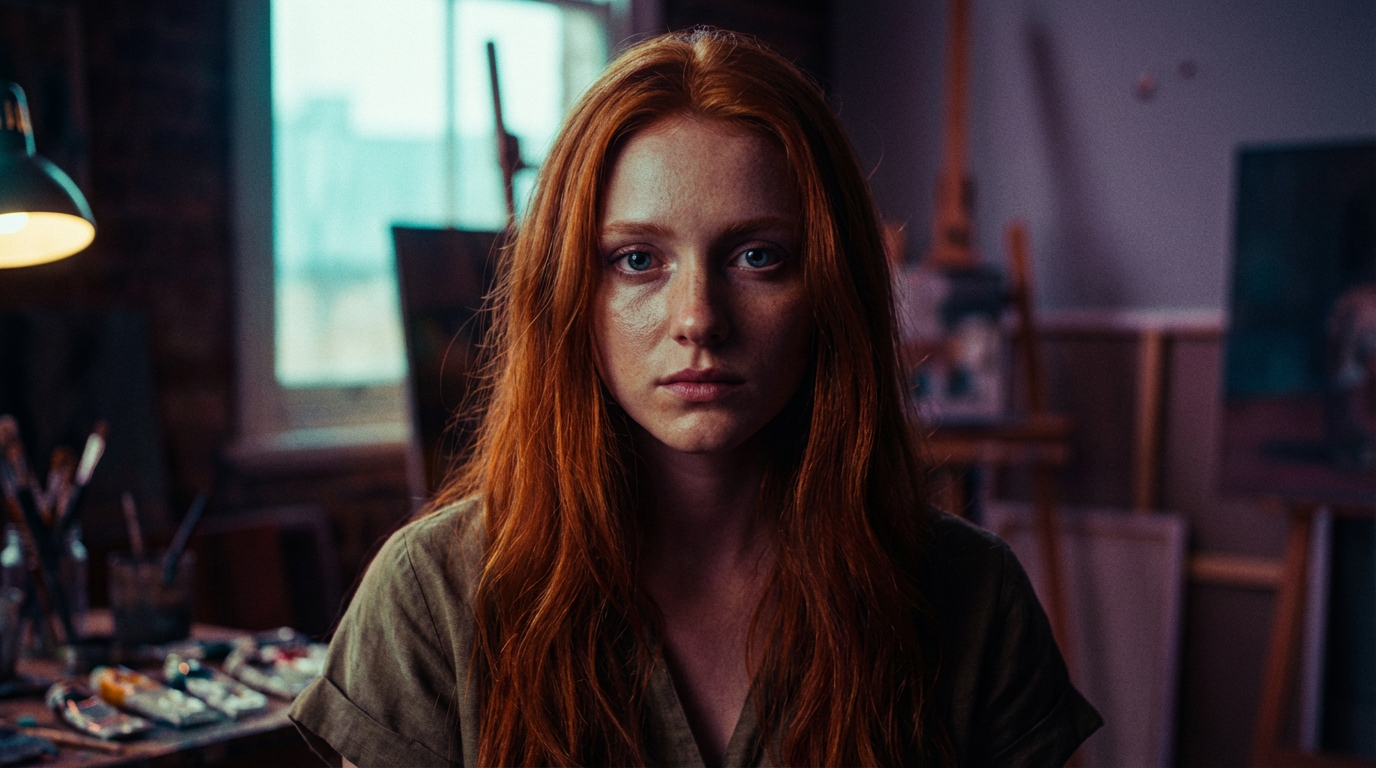
Brianne Elise Sitch lived twenty-two years painting emotional truths before tragedy transformed her from artist to dimensional refugee. Born into Hobart's creative community with fiery red hair and fiercer artistic vision, she built a promising career exploring love and loss through mixed media whilst nurturing life with Kain Jeffries, only to be thrust pregnant and terrified through a Portal into Clivilius, where the very mysteries she once painted on canvas became the impossible reality she now inhabits.
Tasmanian Roots and Artistic Awakening
Brianne Elise Sitch arrived on 12 September 1995 at Royal Hobart Hospital, entering the world as the youngest of three children born to Michael and Sarah Sitch. Her distinctive appearance—vivid red hair and expressive features that seemed to telegraph every emotion—marked her from birth as someone who would resist being overlooked or easily categorised. The Sitch household in Hobart's southern suburbs provided a nurturing environment where creativity flourished alongside the practical realities of middle-class family life. Michael, whose work in construction management demanded precision and pragmatism, nonetheless possessed an appreciation for beauty and craftsmanship that informed his approach to his profession. Sarah, a primary school teacher with particular passion for arts education, recognised creative potential in children and worked deliberately to cultivate it.
The family dynamic shaped Brianne profoundly. Her elder siblings—a brother eight years older and a sister five years her senior—had largely established their own interests and trajectories by the time Brianne developed conscious awareness of family patterns. This age gap meant she occupied a unique position: young enough to receive focused parental attention typically reserved for youngest children, yet old enough by the time she entered school to benefit from watching her siblings navigate their own educational and social challenges. The household valued both intellectual achievement and creative expression, maintaining that these pursuits complemented rather than competed with each other.
From her earliest years, Brianne gravitated towards visual expression with intensity that surprised even her artistically inclined mother. Where other toddlers scribbled randomly, Brianne seemed to possess innate understanding of composition and colour relationships. By age four, she was creating recognisable representations of people and places, her small hands wielding crayons and markers with remarkable control. Sarah, recognising genuine talent rather than merely typical childhood creativity, began providing proper art supplies—quality pencils, watercolours, sketchbooks—and introduced Brianne to basic techniques whilst carefully avoiding imposing adult structures that might stifle natural development.
The Tasmanian landscape itself became Brianne's first profound influence. The island's dramatic contrasts—rugged coastlines meeting dense forests, colonial architecture nestled amongst native wilderness, the ever-changing interplay of light across Mount Wellington's slopes—provided endless visual inspiration. Weekend family outings to Salamanca Market, where artists displayed their work amongst historic sandstone warehouses, revealed to young Brianne that creative work could exist as viable profession rather than merely pleasant hobby. She watched painters demonstrate techniques, studied how they interacted with potential buyers, absorbed the reality that people valued art enough to purchase it for their homes.
Her primary school years at Hobart Primary School confirmed what Sarah had recognised early: Brianne possessed exceptional visual intelligence. Teachers noted not just technical facility but conceptual sophistication beyond her years. Where classmates drew literal representations, Brianne explored emotional expression through colour and form. Her Year 5 art teacher, Mrs. Patricia Chen, later recalled: "Brianne created a series exploring loneliness using only shades of blue and isolated shapes. She was ten years old. The emotional maturity in that work was extraordinary."
Adolescence and Emerging Identity
Brianne's transition to Hobart High School in 2009 coincided with early adolescence's typical turbulence, yet her artistic identity provided grounding when social dynamics became overwhelming. The comprehensive public school, with its diverse student population and solid arts programme, offered both challenges and opportunities. Unlike some talented young artists who attended specialist arts schools, Brianne navigated the standard academic curriculum whilst pursuing her passion through elective classes and extracurricular activities. This integration with mainstream education proved valuable—she developed social skills and resilience that purely arts-focused environments might not have cultivated.
Her teenage years saw Brianne's artistic vision mature beyond technical proficiency into genuine emotional exploration. The paintings and drawings she created between ages thirteen and seventeen increasingly grappled with complex themes: the gap between external appearance and internal experience, the ways relationships shape identity, the simultaneous necessity and impossibility of authentic connection between people. These weren't typical teenage angst; Brianne's work demonstrated sophisticated understanding of human psychology and emotional nuance. She drew inspiration from varied sources—Renaissance portraiture, German Expressionism, contemporary Australian painters—synthesising influences into increasingly distinctive personal style.
Her physical appearance, particularly her striking red hair, became both asset and complication during high school years. In a culture that often prizes conformity, Brianne stood out unavoidably. She learned to navigate the attention this brought—sometimes positive, occasionally negative—developing the kind of self-possession that comes from accepting one cannot blend into backgrounds even if one wishes to. Her passionate nature, initially expressed through emotional volatility during early adolescence, gradually channelled into her artwork rather than interpersonal drama. Friends described her as intensely loyal, quick to defend those she cared about, occasionally impulsive but fundamentally thoughtful.
The Hobart High School art club became her primary social anchor. The small group of dedicated students who gathered after classes to work on projects, critique each other's pieces, and discuss artistic philosophy provided Brianne with genuine peer community. These relationships, forged through shared creative commitment rather than mere social convenience, proved remarkably enduring. Several of these fellow artists remained close friends throughout her university years and into early adulthood, forming a network of mutual support and creative inspiration.
Her participation in local art exhibitions during her teenage years built confidence whilst teaching practical realities of presenting work publicly. The Hobart Youth Arts Festival featured her paintings multiple years running. Local galleries occasionally included her pieces in group shows featuring emerging artists. These experiences taught Brianne how to discuss her work articulately, to accept constructive criticism whilst maintaining artistic integrity, and to navigate the vulnerable experience of having one's creative vision subjected to public judgment. The mixed responses she received—some viewers deeply moved, others puzzled or indifferent—reinforced understanding that meaningful art provokes genuine reactions rather than universal approval.
University Years and Creative Development
Brianne's enrolment at the University of Tasmania in 2013 to pursue a Bachelor of Fine Arts represented both natural progression and significant commitment. Whilst many students view university as exploration period before settling into careers, Brianne approached her degree with clear sense of vocation. She had already identified herself as an artist; university would provide technical training, theoretical grounding, and professional credentials that could support sustainable creative practice. The programme's emphasis on developing individual artistic voice whilst mastering various media aligned perfectly with her ambitions.
The university environment exposed Brianne to diverse influences that expanded her artistic horizons considerably. The faculty included practicing artists whose own work spanned traditional and contemporary approaches. Fellow students brought perspectives from across Australia and internationally, creating dynamic exchange of ideas and techniques. The coursework itself demanded both breadth and depth—foundation classes in drawing, painting, sculpture, and printmaking; theoretical studies in art history and criticism; specialised workshops in her chosen concentrations of oil painting, watercolour, and mixed media.
Her work during these years demonstrated remarkable evolution. The paintings from her first year showed technical competence but remained somewhat derivative, clearly influenced by artists she admired. By second year, distinctive style began emerging—bold colour choices combined with vulnerable emotional content, compositions that balanced classical principles with contemporary sensibility, figures and forms that suggested narrative without becoming literal illustration. Her third-year major project, a series exploring the complexities of family relationships through symbolic portraiture, earned recognition beyond the university, resulting in her first significant solo exhibition at a commercial gallery.
The themes that preoccupied Brianne throughout her degree work—love, loss, connection, isolation, the gap between hope and reality—reflected both personal experience and universal human concerns. She possessed rare ability to explore these subjects without descending into sentimentality or cliché. Her professors noted that her paintings managed to be simultaneously intimate and accessible, personal without being confessional, emotionally direct whilst maintaining aesthetic sophistication. These qualities would become hallmarks of her mature artistic practice.
During her second year at university in 2014-2015, Brianne experienced her first serious romantic relationship, a connection with a fellow arts student that consumed enormous emotional energy before ending painfully. The relationship's conclusion devastated her initially, yet the experience profoundly influenced her artistic development. The series of paintings she created in the aftermath—raw, honest explorations of heartbreak and resilience—demonstrated new depth in her work. Her tutor, Dr. Helen Morrison, observed: "Brianne transformed personal pain into universal statement about human vulnerability. That's the mark of a mature artist, and she achieved it at twenty."
The final year of her degree coincided with mounting pressure to consider post-graduation realities. Unlike students in more straightforwardly vocational programmes, arts graduates faced uncertain employment prospects. Brianne understood that very few artists could support themselves solely through artwork sales, particularly in Tasmania's relatively small market. Yet she remained determined to pursue her calling, accepting that she might need supplementary income whilst establishing her practice but refusing to abandon her artistic aspirations for conventional career security.
Her graduation exhibition in late 2017 represented culmination of four years' intensive development. The collection showcased her technical versatility—oil paintings demonstrating classical facility, watercolours exploring light and transparency, mixed media pieces combining found objects with painted elements—whilst maintaining thematic coherence. The exhibition's title, "Between States," referenced both Tasmania's island isolation and the emotional liminality her work explored. Critical reception was strongly positive, with local reviewers praising her mature vision and technical accomplishment. Several pieces sold to private collectors, providing both encouragement and modest financial cushion as she transitioned to independent artistic practice.
Meeting Kain and Building Partnership
Brianne's meeting with Kain Thomas Jeffries in early 2016 at a gallery opening occurred during a period when both were defining themselves independent of family expectations whilst remaining connected to Tasmanian roots. The event, showcasing emerging local artists at a Sandy Bay gallery, attracted the kind of eclectic crowd that characterised Hobart's tight-knit arts community—serious collectors, curious students, artists supporting peers, and the perpetually culture-curious who attended such functions regularly. Kain, recently returned from his European gap year and newly committed to his construction apprenticeship, had been dragged along by friends who promised excellent wine and interesting company. He expected to stay perhaps thirty minutes before escaping to more familiar territory.
Yet Brianne's paintings arrested him immediately. A particular piece—a large oil painting exploring the relationship between historical architecture and emotional memory—resonated with his developing fascination with the built environment. The work depicted a colonial-era building rendered in meticulous architectural detail, yet the structure seemed to shimmer and fragment at its edges, as though memories and emotions were literally dissolving its physical solidity. Kain stood before this painting for several minutes, genuinely moved in ways he hadn't anticipated art could achieve.
When Brianne approached to discuss the piece with this unusually engaged viewer, their conversation revealed unexpected compatibility. She explained her interest in how spaces hold emotional histories, how buildings become repositories of human experience beyond their functional purposes. He described his growing appreciation for architecture's power to shape human behaviour and feeling, how his construction training was teaching him to see structures not just as assemblages of materials but as interventions in physical and psychological space. Both recognised in the other someone grappling with similar questions about meaning, permanence, and the relationship between physical and emotional realities.
Their relationship developed with the intensity characteristic of young people discovering profound connection. Within weeks, they were spending most free time together—Brianne attending Kain's amateur football matches on weekends, Kain sitting in her studio for hours watching her work whilst reading or sketching architectural details he'd observed on job sites. They explored Tasmania's landscape through camping trips that combined Kain's love of physical adventure with Brianne's need for natural inspiration. Mount Field's waterfalls, Freycinet's beaches, Cradle Mountain's alpine wilderness—each location became setting for deepening emotional bond and artistic inspiration.
The relationship challenged both of them to grow beyond comfortable patterns. Brianne's passionate intensity occasionally overwhelmed Kain, whose more measured temperament preferred thoughtful consideration to emotional immediacy. Kain's tendency towards conflict avoidance frustrated Brianne, who valued direct communication even when uncomfortable. Yet these differences proved complementary rather than incompatible. She learned to moderate her responses, to create space for his processing style. He developed capacity for emotional directness, recognising that authentic connection required vulnerability even when scary.
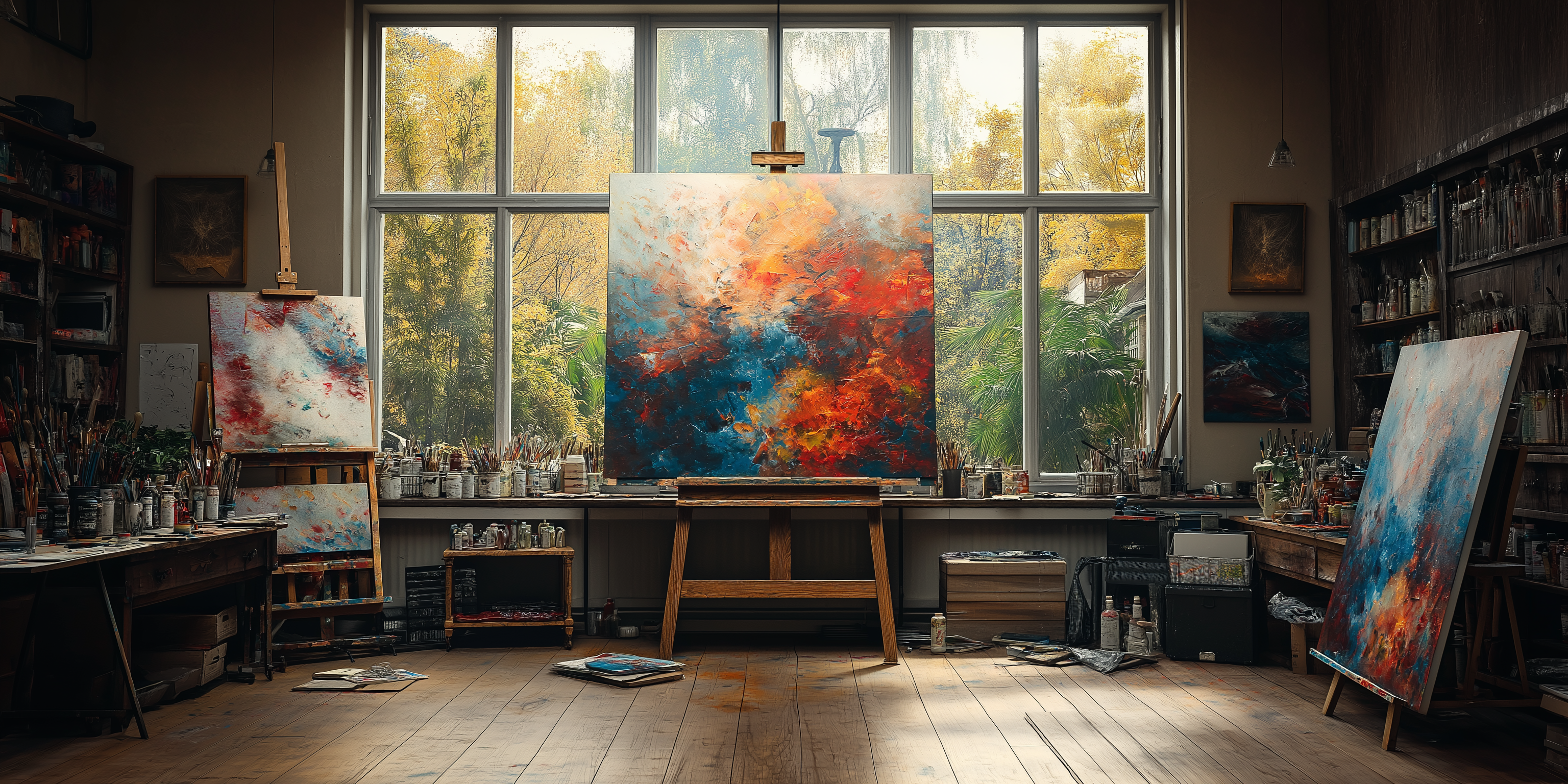
By early 2017, approximately a year into their relationship, they had moved in together at Jeffries Manor. The decision made practical sense—Kain was living there regardless, the grand old house offered abundant space, and Louise welcomed Brianne warmly. Yet the move also represented significant emotional commitment. Brianne established a studio in one of the manor's numerous unused rooms, transforming the space into her creative sanctuary. The room, with its high ceilings and large windows facing the garden, provided ideal working conditions. She filled it with her paintings, supplies, reference materials, and the productive chaos that accompanied her creative process.
Living at Jeffries Manor immersed Brianne in the family's complex dynamics and mysterious history. The grand sandstone building, with its two centuries of accumulated secrets and tragedies, fascinated her artistic imagination. She began creating a series of paintings exploring the manor's history—works that attempted to capture not just its architectural grandeur but the emotional weight of generations who had lived, loved, suffered, and vanished within its walls. The Jeffries family's notorious history of disappearances and whispered scandals provided rich material for her artistic exploration of themes like legacy, loss, and the gap between public facade and private truth.
Louise and Thomas accepted Brianne into their household with genuine warmth, recognising that she made Kain happy in ways they hadn't seen before. Louise particularly appreciated Brianne's independence and creative passion, seeing echoes of her own determination to forge her own path despite family complications. Thomas, whilst somewhat bemused by the young artist's unconventional approach to life, respected her dedication to her craft and her obvious devotion to his son. The various Jeffries siblings—Rebecca, Emily, and Katie—developed their own relationships with Brianne, each finding different aspects of her personality compatible with their own interests and temperaments.
Artistic Practice and Impending Motherhood
Following her university graduation in late 2017, Brianne committed to establishing herself as a full-time professional artist, a decision requiring both courage and practical strategy. Unlike graduates in fields with clear employment pipelines, artists faced the challenge of creating sustainable practice through combination of direct sales, commissions, teaching, grants, and supplementary employment. Brianne approached this challenge methodically, applying the organisational skills her teacher mother had modelled even whilst maintaining the creative spontaneity essential to her artistic vision.
Her studio at Jeffries Manor became the centre of intensive productivity. She established disciplined working routines—painting during optimal morning and afternoon light, using evenings for administrative tasks like documenting work, updating her website, managing social media presence, and corresponding with galleries and potential clients. The series exploring Jeffries Manor's history attracted significant local attention, resulting in exhibitions at several Hobart galleries. Her work caught the eye of private collectors and began generating modest but meaningful income.
Local art publications featured profiles of Brianne as an emerging talent worth watching. Her paintings appeared in group exhibitions alongside more established Tasmanian artists. She developed relationships with gallery owners who appreciated both her artistic vision and professional reliability. The combination of genuine talent, disciplined work ethic, and engaging personal presence positioned her well for long-term success in Tasmania's modest but supportive arts ecosystem.
The discovery of her pregnancy in early 2018 brought profound mixture of emotions. At twenty-two, Brianne hadn't planned to become a mother quite so soon—she envisioned several more years establishing her artistic practice, building financial stability, and simply enjoying her relationship with Kain before taking on parenting responsibilities. The news triggered initial panic: how would she maintain studio practice whilst caring for an infant? Would collectors and galleries take her less seriously as a pregnant woman and new mother? Could she and Kain manage the financial pressures of parenthood given his apprentice wages and her unpredictable artistic income?
Yet shock transformed relatively quickly into excited anticipation. Louise's example proved particularly encouraging—she had managed university completion, three children, and a demanding career simultaneously. If Louise had navigated early motherhood whilst building professional identity, surely Brianne could do the same. Kain's transformation from initially stunned to genuinely enthusiastic provided additional reassurance. His commitment to their growing family manifested through practical actions—taking extra shifts when available, beginning nursery preparations, attending prenatal appointments faithfully. The young couple began discussing their future with new seriousness, making concrete plans that balanced creative aspirations with parental responsibilities.
Brianne's studio work during her pregnancy demonstrated remarkable productivity. She found that pregnancy, rather than limiting her creative capacity, actually intensified it. The physical changes occurring in her body, the emotional complexity of impending motherhood, the mixture of joy and terror accompanying this life transition—all of it fed into her art with new depth. She began a series exploring themes of transformation, creation, and the simultaneous power and vulnerability of carrying new life. The paintings from this period possessed particular emotional resonance, combining technical mastery with raw honesty about the pregnancy experience.
Her relationship with the Jeffries family deepened during these months. Louise's maternal instincts extended naturally to the young woman carrying her grandchild. She offered practical advice about pregnancy, shared stories about her own experiences navigating early motherhood, and provided the kind of supportive presence that Brianne's own mother, living in a different part of Tasmania and absorbed with her own professional demands, couldn't quite manage. Katie, Kain's younger sister, became particularly close to Brianne during this period, fascinated by both her artistic practice and her pregnancy journey.
Disappearance, Deception, and Dimensional Crossing
The morning of 26 July 2018 began ordinarily—Brianne and Kain enjoying one of those rare, perfect moments of domestic intimacy that become increasingly precious as major life changes approach. At six months pregnant, Brianne's body had reached that stage where the reality of impending motherhood could no longer be dismissed as an abstract future event. The baby's movements, now frequent and vigorous, provided constant physical reminder of the life growing within her. She and Kain had been settling into comfortable patterns, their relationship deepened by shared anticipation of becoming parents, their plans for the future crystallising into concrete goals.
Louise's intrusion into their morning intimacy with an urgent request that Kain check on Uncle Jamie disrupted more than just that particular moment. The interruption represented the perpetual tension between personal desires and family obligations, between the young couple's emerging independence and their embeddedness within the Jeffries family system. Brianne's frustration at Louise's timing was obvious, yet Kain—characteristically conflict-avoidant and deeply loyal to his mother—agreed to the errand with promises to return quickly. He dressed, kissed Brianne's protests away, and departed, expecting to be gone perhaps an hour.
When Kain failed to return, Brianne's initial irritation transformed into concern, then mounting anxiety, and finally gut-wrenching terror. Hours stretched into a full day with no contact, no explanation, nothing but silence where her fiancé should have been. Louise's escalating panic proved contagious. The missing persons report filed with Detective Karl Jenkins on 28 July documented the beginning of a nightmare that would fundamentally alter Brianne's reality. She found herself thrust into a crisis she couldn't comprehend, carrying their child whilst Kain simply... vanished.
The days following Kain's disappearance blurred into surreal horror. Brianne existed in suspended animation, unable to fully process the situation whilst simultaneously being crushed by its weight. She continued mechanically through daily routines—eating because the baby required nourishment, sleeping fitfully when exhaustion overwhelmed anxiety, sitting in her studio unable to paint whilst surrounded by canvases exploring mysteries that suddenly seemed to have consumed the man she loved. Louise's desperate attempts to maintain household normality whilst clearly drowning in her own terror provided little comfort. The police investigation proceeded with professional efficiency that felt simultaneously reassuring and inadequate.
The morning of 2 August 2018 arrived with Brianne existing in that peculiar state of emotional exhaustion that follows sustained crisis. When Luke Smith—Jamie's partner, the man Louise had always viewed with unexplained suspicion—appeared at Jeffries Manor claiming to have messages from Kain, Brianne's desperate hope overwhelmed whatever caution she might ordinarily have exercised. Luke explained that Kain needed to see her, that circumstances prevented him from returning directly but that Luke could take her to him. In her vulnerable state, six months pregnant and emotionally devastated by her fiancé's unexplained absence, Brianne allowed herself to believe the impossible.
Brianne remembered Luke's reassuring words, his explanations that grew increasingly implausible yet which she accepted because the alternative—that Kain was simply gone—was unbearable. She remembered Louise's sudden appearance, knife in hand, shouting warnings that Brianne dismissed as paranoid overreaction born from the stress everyone was experiencing. And then everything fractured into chaos—Luke's grip on her arm tightening painfully, the world tilting sickeningly, colours bleeding into impossible swirls, a voice resonating through her consciousness with words that shouldn't be possible: "Welcome to Clivilius, Brianne Sitch."
The realisation of Luke's deception came too late. Her anguished cry—"You bastard!"—echoed across the threshold between dimensions as she was thrust through a Portal into a landscape that defied every assumption about reality she'd ever held. Tasmania vanished. The sandstone walls of Jeffries Manor, her studio, the familiar contours of her life—all of it replaced instantaneously by an alien world whose very existence should have been impossible.
Bixbus and Reluctant New Life
Brianne's arrival in Clivilius on 2 August 2018 thrust her into a settlement barely a month old, still raw and chaotic in its very early establishment stages. Bixbus, founded by Luke Smith in July, consisted of rudimentary infrastructure scattered across barren landscape—basic shelters, initial roads, power generation systems, and a community of displaced individuals trying to build something viable in an impossible place. The settlement's isolation, surrounded by rolling hills of dust and rock with no visible plant or animal life, reflected her internal desolation. Everything she had known, everything she had built, everyone she loved—all of it existed in another dimension she couldn't access.
The reunion with Kain should have brought relief, yet it arrived wrapped in layers of betrayal, confusion, and existential horror. He was alive, physically present, yet the circumstances of their separation and forced reunion through Luke's deception poisoned what might have been joyful. Both had been manipulated, thrust through dimensional thresholds against their will, and now faced the terrifying reality that they might never return to Earth. The life they'd been building—the plans they'd made, the future they'd envisioned—all of it rendered meaningless by Luke's actions, however well-intentioned he claimed them to be.
Brianne's pregnancy, already complicated by Kain's disappearance and the emotional trauma surrounding it, now became fraught with additional terrors. She would give birth in this alien world, in a settlement with minimal medical facilities, far from any support system beyond Kain and whatever resources this barely-established community could provide. The prenatal care she'd been receiving in Hobart, the hospital where she'd planned to deliver, the support network of family and friends she'd imagined surrounding this life transition—all of it lost. Instead, she faced impending motherhood in a hostile environment, with Kain traumatised by his own forced displacement, and absolutely no certainty about what their future might hold.
The months between her arrival in early August and Laura-Jane's birth on 26 October 2018 tested Brianne's resilience in ways no artistic training or life experience had prepared her for. She existed in a kind of suspended shock, her body continuing the biological process of nurturing new life whilst her mind struggled to accept the impossibility of her circumstances. Bixbus grew around her—more infrastructure, more displaced arrivals, the gradual transformation from desperate outpost to something resembling functional settlement—yet she remained emotionally apart, unable to fully engage with this reality she'd never chosen.
Kain, grappling with his own trauma and forced to confront the impossibility of their situation, tried to provide support whilst barely managing his own psychological survival. Their relationship, once characterised by genuine joy and compatible partnership, now carried the weight of circumstance neither had consented to. They clung to each other because they were all each other had in this alien world, yet both recognised that the foundation of their relationship—built in Hobart's familiar landscape, within the context of family and friends and known futures—had been irrevocably destroyed.
The birth of Laura-Jane Jeffries on 26 October 2018 represented both culmination and beginning. Brianne's daughter, the first child born in Bixbus, arrived healthy despite the primitive conditions and her mother's profound psychological distress. The infant's very existence forced Brianne into a kind of functional engagement with reality—whatever her own emotional state, this tiny human required care, feeding, protection. Motherhood, thrust upon her in circumstances she'd never imagined, demanded that she find resources within herself she hadn't known existed.







