
Brian Edward Jennings
Brian Edward Jennings, born on 3 September 1945 in Gawler, South Australia, was the eldest child of Edward and Margaret Jennings and heir to a farming legacy stretching back to 1889. A gifted mechanic and devoted agriculturalist, he modernised the Jennings Family Farm whilst raising seven children with his wife, Patricia Anne O'Connor. Brian's sudden death from a heart attack on 18 November 1997, aged fifty-two, left an enduring void in his family and community.
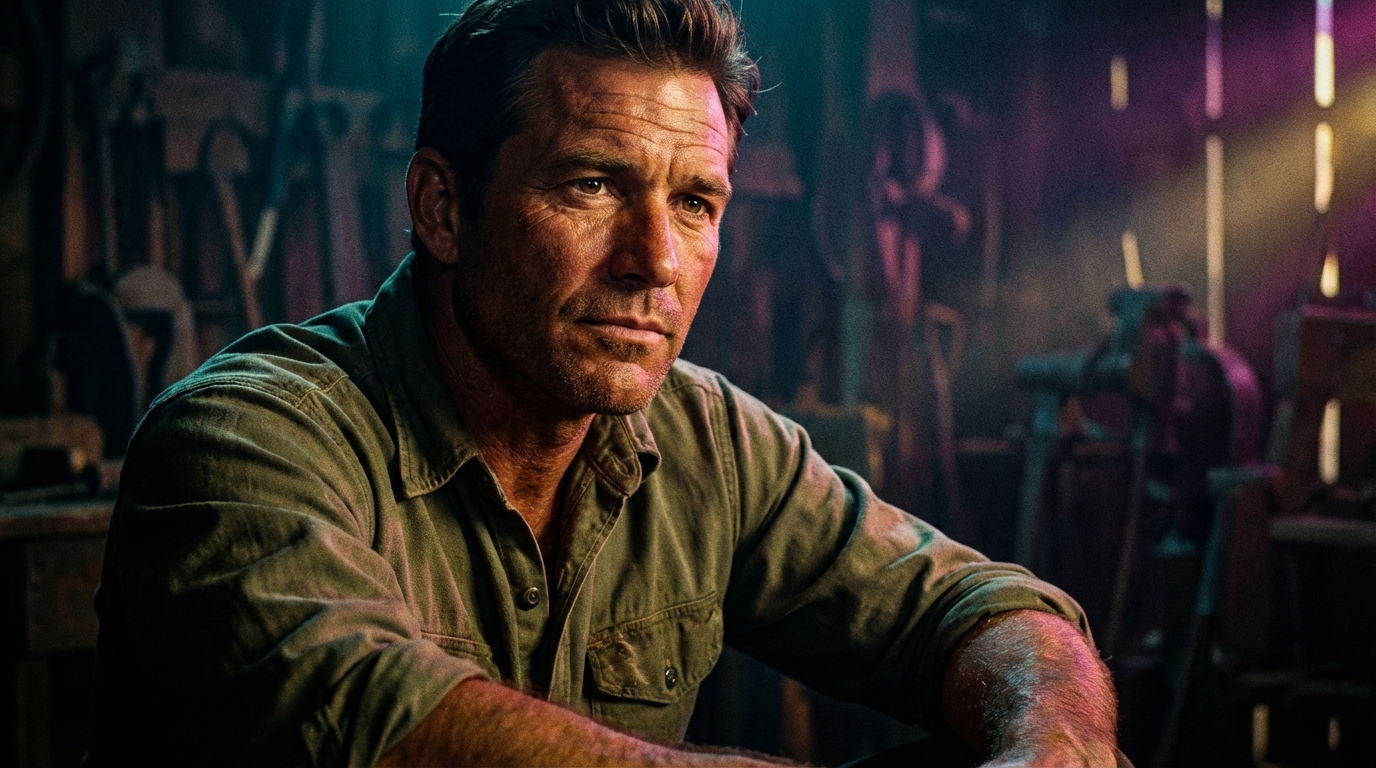
Early Life and a Farming Inheritance
Brian Edward Jennings was born on 3 September 1945 at the Gawler and District Hospital in Gawler, South Australia, the first child of Edward Charles Jennings, a farmer, and Margaret Fiona Jennings (née Sullivan), a homemaker with a sharp mind for domestic management and community affairs. He arrived into a family whose connection to the land ran deep—the Jennings Family Farm, situated on the outskirts of Gawler approximately forty kilometres north of Adelaide, had been established in 1889 by his paternal grandparents, William and Margaret Jennings, Irish immigrants from County Clare who had carved a working property from the scrubland bordering Stockwell's Scrub.
Brian's childhood was shaped by the rhythms of rural life and the exacting standards of his father. Edward, who had assumed management of the farm in the early 1940s after introducing barley rotations and expanding the property's acreage, ran the household with a blend of vision and inflexibility. He was a man of tradition who cherished family gatherings beneath the ancient eucalyptus trees that lined the property, yet he was also known for a formidable temper and standards that could feel impossible to meet. The relationship between father and eldest son was, from the beginning, complicated—characterised by mutual respect for the land but frequent tension over methods and temperament.
Brian's younger siblings, Sarah Louise (born 1948) and David Charles (born 1951), arrived in the years that followed, but it was Brian who bore the particular weight of being firstborn. Edward expected his eldest to inherit not merely the farm but the values of discipline and self-sufficiency that had sustained it through drought, depression, and two world wars. Brian absorbed these expectations with quiet intensity, shadowing his father through paddocks and sheds, learning the rhythms of planting and harvest before he could properly articulate what he was being taught.
From an early age, Brian displayed a fascination with mechanical things that went beyond the ordinary curiosity of a farm boy. Where other children might have been content to ride the tractor, Brian wanted to understand why it worked—what made the engine turn, how the gears meshed, what happened when something broke and needed mending. He spent countless hours in the farm's workshop, tinkering with engines and learning to repair equipment with a natural aptitude that his father, despite his reserved nature, quietly recognised and encouraged. Edward's garage became an informal classroom where Brian learnt that problems had solutions discoverable through patient, methodical analysis.
Family Tree
Schooling and the Pull of the Practical
Brian attended Gawler Primary School from 1951, where he was a steady if unremarkable student in most academic subjects. His teachers noted a boy who was well-mannered and reliable but who seemed to come alive only when given something to do with his hands. The transition to Gawler High School in the late 1950s confirmed this pattern. Brian excelled in woodworking and metalwork, displaying a precision and patience in practical tasks that belied his more modest performance in English and history. He could build a mortise-and-tenon joint with quiet confidence but struggled to find similar satisfaction in essay writing or the abstract demands of mathematics.
Despite his academic limitations, Brian was not unintelligent. He possessed a practical wisdom that expressed itself through problem-solving rather than book learning—an ability to assess a broken piece of machinery, diagnose its failure, and devise a repair with whatever materials were at hand. This was a form of intelligence highly valued in farming communities but rarely celebrated in school reports. Brian left Gawler High School at the end of his secondary education with solid marks in his preferred subjects and a certainty, held since childhood, that his future lay on the family farm rather than in any lecture hall or office.
The Gawler Agricultural Society and Community Roots
In his teenage years, Brian became an active member of the Gawler Agricultural Society, an institution that had served the region's farming community since the nineteenth century. He participated in local fairs and exhibitions, showcasing the family's produce and livestock with a pride that reflected both personal achievement and family legacy. These events were more than agricultural competitions—they were the social fabric of rural South Australia, places where farming families gathered, compared notes, celebrated good seasons, and commiserated over poor ones.
It was through the Agricultural Society that Brian developed his understanding of community as something that extended beyond one's own fenceline. He watched his father advocate for sustainable farming practices and community-centric policies at Society meetings, and he absorbed the principle that a farmer's obligations reached beyond his own paddocks. This sense of civic responsibility would remain with Brian throughout his life, eventually leading him to serve on the Gawler local council and volunteer with various charitable organisations in the district.
Patricia O'Connor and the Beginning of a Partnership
It was at the Gawler Agricultural Fair in the spring of 1965 that twenty-year-old Brian Jennings first caught sight of Patricia Anne O'Connor, an eighteen-year-old from Adelaide who was visiting the fair with friends. Patricia was the eldest daughter of Seamus and Eileen O'Connor, Irish immigrants who had built a modest but dignified life in Adelaide, where Seamus worked as a skilled carpenter and Eileen managed the household with fierce devotion to education and Catholic faith. Patricia had been studying education at the University of Adelaide, nurturing ambitions of becoming a teacher, when fate intervened in the form of a young farmer with calloused hands and an earnest manner.
Struck by Patricia's beauty, quick wit, and the lively intelligence that animated her conversation, Brian mustered the courage to introduce himself. The pair spent the remainder of the day exploring the fair together, discovering a shared appreciation for the simple satisfactions of rural life—an appreciation that, for Patricia, was perhaps more romantic than practical at that stage. Over the following year, their relationship blossomed through letters and occasional visits, the distance between Gawler and Adelaide navigated with the determination of two people who sensed they had found something worth pursuing. Patricia found herself drawn not only to Brian's warmth and authenticity but to the Jennings family itself and the tight-knit community that surrounded them.
In the summer of 1966, Brian proposed to Patricia during a picnic on the banks of the North Para River, a quiet stretch of water that wound through the countryside near the farm. Patricia accepted without hesitation. They were married on 14 January 1967 in a simple ceremony at St Peter's Anglican Church in Gawler, surrounded by family and friends from both the farming community and Patricia's Adelaide circle. The wedding was modest—flowers from the farm's garden, a reception in the church hall—but it marked the beginning of a partnership that would define both their lives.
Patricia's decision to leave the University of Adelaide and her teaching aspirations behind was not taken lightly, and it carried a quiet cost that she rarely discussed publicly. She joined Brian on the Jennings Family Farm and threw herself into the life of a farmer's wife with characteristic energy, learning the rhythms of rural domesticity whilst bringing her own intellectual curiosity and organisational skills to the household. Though she had set aside her formal education, Patricia never abandoned her love of learning, remaining an avid reader who stayed up late into the night with novels and history books long after the children were in bed.
Fatherhood and the Growing Family
Brian and Patricia's first child, Cody Brian Jennings, was born on 15 August 1968 at the Gawler and District Soldiers' Memorial Hospital. The arrival of a son and heir to the farming legacy carried particular significance for Brian, who experienced the transition from farmer to father with a mixture of pride and quiet wonder. His calloused hands, so accustomed to machinery and soil, now cradled something infinitely more delicate. Cody's birth marked not merely the beginning of parenthood but the continuation of a generational chain stretching back to William and Margaret Jennings's arrival from County Clare nearly eighty years earlier.
Anne Elizabeth followed on 22 November 1970, born at the Hutchinson Hospital in Gawler. Catherine arrived on 7 March 1973, delivered unexpectedly at the farmhouse itself with the assistance of a retired midwife neighbour—an event that became part of family lore, illustrative of the unpredictable nature of life on the land. Janice Marie was born on 12 September 1975, her arrival carrying a poignant symmetry for Brian, falling mere days after his own birthday in September. Kenneth Oliver came on 29 January 1978, born at the family farmhouse rather than the hospital, his first breaths drawn in the very rooms where generations of Jennings had lived and worked. Raymond followed on 3 June 1980 at the Hutchinson Hospital, and Tania, the youngest, completed the family on 18 December 1982, also at Hutchinson.
Seven children in fourteen years represented an enormous undertaking, and the Jennings household operated with the organised chaos common to large farming families. Brian instilled in each of his children the values of hard work, integrity, and community spirit that had guided his own upbringing, though he expressed these values through action rather than lecture. He taught them to drive the tractor, to mend fences, to understand the cycles of the land. Despite the relentless demands of running the farm, Brian made time for his family—attending school events, gathering everyone together for meals at the end of long days, and ensuring that the farmhouse dinner table remained the centre of family life.
Each child developed distinct temperaments and interests that would carry them in remarkably different directions. Cody inherited his father's physical connection to the land but also a restlessness that farm life could not entirely satisfy. Anne absorbed the practical agricultural knowledge that would later make her the farm's most capable steward. Catherine developed a passion for animals. Janice displayed a nurturing compassion that would lead her into nursing. Kenneth revealed an extraordinary musical talent from the age of three, eventually departing for the Sydney Conservatorium of Music at just eight years old—a separation that Brian found quietly painful, understanding that his son's genius could not be contained within farm boundaries. Raymond, like his father, gravitated towards mechanics and engines. Tania, the youngest, became the family storyteller, her imagination fed by the landscapes and rhythms of rural life.
Modernisation and the Stewardship of the Farm
As a young husband and father, Brian poured his considerable energy into modernising the Jennings Family Farm. Where Edward had been a traditionalist, resistant to change and suspicious of innovation, Brian embraced new methods with the same practical intelligence he had applied to machinery since boyhood. He was among the first farmers in the region to install sub-surface irrigation, a technique that improved water efficiency and crop yields significantly. After attending a Department of Agriculture workshop in Nuriootpa in the mid-1950s, he adopted soil monitoring techniques that allowed more precise management of the property's resources.
By the 1980s, Brian had expanded the landholding to over one hundred acres through gradual acquisitions of neighbouring parcels. The farm diversified beyond traditional wheat and barley into lucerne and, under Patricia's initiative, organic garlic, which she marketed directly at local produce stands. In 1980, Brian oversaw the installation of solar panels for shed operations—a forward-thinking decision that placed the Jennings farm ahead of many regional peers. He was known throughout the farming community as a fair and generous man, always ready to lend equipment, offer advice, or spend long hours helping neighbours in difficulty.
Yet Brian was not without his frustrations. A 1986 interview with the Gawler Herald captured his complaints about rising operating costs, what he termed "bureaucratic meddling" from government regulators, and declining rainfall patterns that were beginning to squeeze the margins of even well-managed properties. He carried the anxieties of his generation of farmers—men who had inherited viable operations but faced mounting pressures from market volatility, environmental change, and the creeping encroachment of regulation on practices their families had followed for decades.
The Ash Wednesday bushfires of February 1983 tested the family's resilience in terrifying fashion. Although the Jennings farm avoided direct destruction, embers scorched fencing and blackened paddocks across the property. Brian and five-year-old Kenneth spent fourteen hours assisting neighbours near One Tree Hill, battling spot fires and helping to move livestock from the path of the blaze. Their efforts were later acknowledged with a community bravery citation—a recognition Brian accepted with characteristic modesty, insisting he had done nothing any neighbour wouldn't do.
Private Passions and the Quieter Hours
In his rare moments of leisure, Brian pursued interests that reflected both his practical nature and a gentler sensibility that colleagues and neighbours sometimes glimpsed beneath the stoic exterior. He was an enthusiastic fisherman, spending weekend mornings along the North Para River with a patience that seemed at odds with the urgency of farm life. He tended a small vegetable garden with meticulous care, growing tomatoes and pumpkins that earned prizes at local shows—a quiet source of competitive satisfaction that amused his family.
Brian was also a talented woodworker who crafted furniture pieces for family and friends in his workshop during the quieter winter months. His pieces were solid rather than ornate, built with the same emphasis on function and durability that characterised his approach to farming. A bookshelf he made for Patricia, a toy chest for the children's shared bedroom, a rocking chair for his mother Margaret—these objects survived him by decades, their craftsmanship a tactile legacy of the man who made them.
The Father–Son Dynamic and Edward's Shadow
The relationship between Brian and his father Edward remained complex throughout their shared years on the farm. Edward's exacting standards and resistance to change created friction with a son who was, by temperament and conviction, an innovator. Brian's determination to modernise operations—the sub-surface irrigation, the soil monitoring, the solar panels—represented not rebellion but evolution, an effort to honour the farm's legacy by ensuring its survival in a changing world. Edward interpreted some of these changes as implicit criticism of his own methods, and their disagreements could be fierce, conducted with the restrained intensity of men who shared a deep bond but lacked the emotional vocabulary to express it.
In later years, a quiet reconciliation emerged. Edward, slowed by a heart condition diagnosed in 1993, gradually released his grip on the farm's daily management. The two men developed an unspoken understanding—a mutual respect for the land that transcended their differences in approach. Edward's passing on 15 August 1997, at the age of seventy-nine, affected Brian profoundly. The man who had taught him to work, to persist, to care for something larger than himself was gone, and the farm felt emptier for his absence.
Death and the Fracturing of a Legacy
Brian Edward Jennings survived his father by barely three months. On 18 November 1997, whilst working on the farm he had tended for over thirty years, Brian suffered a massive heart attack. He was fifty-two years old. The death was sudden and devastating—a man in the prime of his working life, seemingly robust despite the cumulative wear of decades of physical labour, felled without warning on the very soil he had cultivated since childhood.
The funeral was held at St Peter's Anglican Church, the same church where Brian and Patricia had married thirty years earlier. The Gawler community turned out in force to honour a man who had served on its council, volunteered with its organisations, and helped its members through drought, fire, and hardship. His son Cody, then twenty-nine and carrying burdens his family could not have imagined, attended the service but left abruptly afterwards, unable to reconcile the enormity of his grief with the secret responsibilities that consumed his life.
Brian's death shattered the family in ways that would take years to fully manifest. Patricia, devastated by the loss of her husband, carried on with the resilience she had shown throughout their marriage, holding the family together through the difficult years that followed. She would survive Brian by only five years, passing away on 5 September 2002 at the age of fifty-five after a courageous battle with cancer. Leadership of the farm eventually passed to Anne, the second eldest, who returned from research work in the Riverina to assume stewardship of the property her father had spent his life improving.







