
Brenda Elaine Harlow
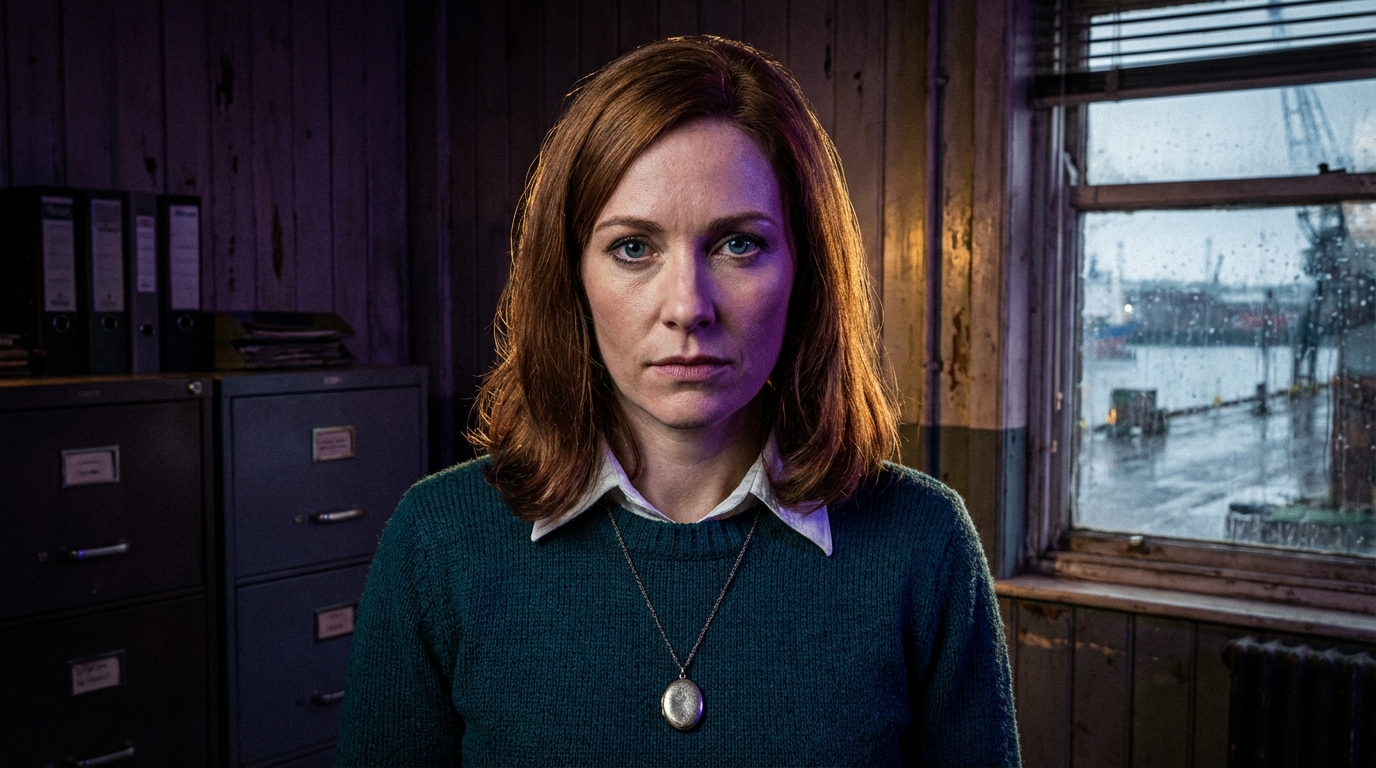
Brenda Elaine Harlow transformed personal tragedy into unwavering advocacy—a Newcastle nurse whose thirty-one years of devoted single motherhood became the foundation for a lifetime pursuit of justice. Born into dockyard resilience on 17 August 1936, she raised Sally alone through scandal and sacrifice, only to watch her daughter vanish into Silverton's mysteries in 1988. Now in her ninth decade, she remains an unyielding voice demanding answers the system refuses to provide.
Newcastle's Daughter (1936–1953)
The infant girl arrived at Royal Newcastle Hospital during the winter hours of Monday morning, 17 August 1936, emerging into a world balanced between economic depression and impending war. Her father Albert stood outside the delivery room with the rigid posture that defined his dockworker's discipline, whilst her mother Miriam endured labour with the same quiet strength she applied to every hardship. When Albert finally held his daughter, his weathered hands—permanently stained from years hauling cargo—trembled slightly before he steadied himself, a rare moment of vulnerability from a man who'd faced down industrial accidents without flinching.
The Harlow household on Stewart Avenue operated with the precision of a well-maintained ship. Albert rose before dawn for calisthenics before his shift, a ritual that measured out his days with metronomic regularity. Miriam managed the home with practised efficiency, balancing childcare, housework, and the constant stream of sewing repairs that supplemented Albert's wages. Brenda's earliest memories centred on the kitchen table—her mother's needle flying through fabric whilst her father's large hands sorted through the day's receipts, both parents working in companionable silence broken only by the scratch of thread and the occasional observation about weather or neighbours.
Being the eldest of three children shaped Brenda's character profoundly. When Samuel arrived on 22 March 1939, she assumed responsibility with the seriousness of a five-year-old determined to prove her worth. The addition of Edward on 18 November 1943 completed the family, transforming Brenda into a deputy parent who could change nappies, prepare bottles, and soothe crying infants before she'd finished primary school. This early apprenticeship in caregiving would define her professional trajectory, though at the time it simply felt like duty.
The war years brought particular intensity to the household. Albert remained in Newcastle, his dock work deemed essential for military logistics, but the absence of Miriam's brother Thomas—killed in action in 1942—cast a shadow that never quite lifted. Brenda watched her grandmother Margaret weep into her sewing, saw her mother's face harden with grief quickly suppressed to maintain household function. These lessons in managing emotion whilst maintaining duty became foundational to her understanding of strength.
Newcastle Girls' High School revealed Brenda's particular aptitudes. Whilst never brilliant academically, she excelled at subjects requiring both precision and human understanding—biology, chemistry, and particularly health studies. Her science teacher, Mrs Dorothy Reynolds, noted in her reports that "Brenda demonstrates exceptional ability to synthesise complex information whilst maintaining awareness of practical applications." This combination of analytical capability and practical orientation marked her as naturally suited for nursing, though the path to that profession would prove challenging.
The school environment also exposed Brenda to class divisions that her neighbourhood's working-class homogeneity had obscured. Girls whose fathers owned businesses or held professional positions treated those from dockworker families with subtle condescension that stung more than overt cruelty. Brenda responded not with resentment but with quiet determination to prove herself through excellence, a pattern that would characterise her approach to every challenge. She joined the science club, volunteered at the school's first aid station, and maintained grades sufficient to be considered for tertiary education—a possibility her parents discussed with mixture of pride and financial anxiety.
Yet the decision to pursue nursing wasn't merely pragmatic calculation. Brenda possessed genuine calling, evident in how she responded to injury or illness. When her brother Samuel fell from a fence at age seven, fracturing his arm, Brenda's calm assessment and immediate action impressed the attending physician enough that he mentioned her potential for medical work. The experience crystallised her understanding that she could handle crisis without panic, could maintain focus when others faltered—essential qualities for nursing's demands.
Training and Transformation (1954–1957)
Acceptance into the Royal Newcastle Hospital nursing programme in January 1954 represented triumph for the entire Harlow family. Albert's pride manifested in uncharacteristic demonstrations—he attended the orientation ceremony despite missing a day's wages, standing rigid in his only suit whilst his daughter received her uniform. Miriam's contribution was more tangible: she altered the regulation uniforms to fit Brenda's smaller frame, ensuring her daughter would present professionally despite the standard sizing's inadequacy.
The nursing programme's rigour suited Brenda's temperament perfectly. The long hours, the physical demands, the requirement for precision under pressure—these challenges energised rather than exhausted her. Her instructors noted her "exceptional composure during emergency procedures" and "ability to maintain patient focus whilst managing multiple responsibilities." Fellow students found her serious but not unfriendly, someone who'd help with difficult coursework but wouldn't participate in the social dramas that consumed spare moments.
Yet the training's intensity left little room for personal life, which made the summer of 1956 all the more disruptive. Daniel Price arrived in Newcastle like weather—a force that altered atmospheric pressure before anyone quite registered the change. His temporary contract with a geological survey firm brought him to the hospital for a minor injury consultation in June, where he encountered Brenda during her rotation through the emergency department. Their initial conversation, ostensibly about his injury, quickly shifted to broader topics—his work mapping underground structures, her interest in how bodies maintained structural integrity, the strange parallels between geological and biological systems.
The relationship that developed over the following weeks defied Brenda's careful life planning. Daniel represented everything her upbringing had taught her to avoid: rootless, financially unstable, emotionally unavailable. Yet his intellect engaged hers in ways that felt addictive. They'd meet at the harbour after her shifts, sitting on the docks whilst he explained geological time scales and she described cellular processes, both fascinated by how their fields intersected. For Brenda, who'd spent her life managing others' needs, Daniel's intensity felt like permission to explore her own desires.
The physical intimacy that followed carried risks Brenda understood intellectually but dismissed emotionally. The 1950s offered limited contraceptive options for unmarried women, and the social consequences of pregnancy outside marriage were severe. Yet Brenda, for perhaps the only time in her life, prioritised immediate experience over long-term consequence. The few weeks of their relationship felt like inhabiting an alternate version of herself—one who made choices based on desire rather than duty.
Daniel's disappearance in August came without warning or explanation. His hotel room was cleared, his work site abandoned, his colleagues claiming ignorance about his whereabouts. Brenda's attempts to locate him—through his employer, through mutual acquaintances—yielded only shrugs and suggestions that Daniel Price was someone who vanished regularly. The realisation that she'd been merely one stop on his wandering journey stung, but Brenda had little time to process rejection before a more pressing concern emerged.
The Scandal and the Choice (1956–1957)
The missed menstruation in September initially seemed stress-related—nursing training was demanding, and emotional upheaval could affect cycles. But by October, Brenda could no longer deny the physical evidence. The pregnancy test, conducted discreetly through a sympathetic colleague, confirmed what she'd begun to suspect. At twenty years old, unmarried, and three months pregnant, Brenda faced a crisis that would define the rest of her life.
The social stigma of unwed motherhood in 1956 Australia was brutal. Girls in her situation typically faced three options: hasty marriage (impossible without Daniel), adoption through one of the church-run maternity homes (requiring abandonment of the child), or social ostracism whilst attempting single parenthood. Brenda's nursing supervisors, upon discovering her condition, made clear that continuing in the programme would be difficult if not impossible—professional nursing maintained strict moral standards, and pregnant unmarried students undermined institutional reputation.
The conversations with her parents unfolded with painful slowness. Albert's initial reaction was silence—not anger but something worse, a disappointment that manifested in his inability to look directly at his daughter. Miriam's response was more complex: hurt that Brenda had been so reckless, fear for her future, but underneath, a fierce maternal protectiveness that would prove decisive. The three sat at the kitchen table where Brenda had done her homework as a child, and Miriam spoke the words that would sustain her daughter through the coming years: "Strength is doing what's right, even when it's hard. You'll keep this baby, and we'll manage."
The decision to continue the pregnancy and keep the child was radical by 1956 standards. It meant facing judgment from neighbours, colleagues, and extended family. It meant financial hardship—Brenda would lose her nursing position, and single mothers had limited employment options. It meant social isolation in a community where reputation mattered profoundly. Yet Brenda never seriously considered the alternatives. The child growing inside her was hers, and she would not be separated from it to satisfy others' comfort.
The months leading to Sally's birth tested every resource Brenda possessed. She moved through Newcastle avoiding familiar places, limiting social contact to those who wouldn't openly judge. She worked part-time as a filing clerk, hiding her expanding pregnancy beneath loose clothing until employers noticed and terminated her employment. She attended prenatal appointments at the hospital where she'd trained, enduring the awkwardness of being cared for by former instructors who maintained professional courtesy whilst clearly disapproving of her situation.
Yet this period also revealed unexpected sources of support. Her mother became her closest ally, attending appointments, providing practical assistance, and confronting neighbours whose gossip crossed into cruelty. Several of her nursing classmates maintained friendship despite institutional pressure to distance themselves. Most surprisingly, one of her former instructors—Sister Margaret O'Brien, who'd initially expressed disappointment—privately acknowledged that Brenda's choice required more courage than the socially sanctioned options.
Motherhood and Medicine (1957–1975)
Sally Louise Harlow's arrival on 3 May 1957 transformed abstract determination into concrete love. The labour lasted fourteen hours, with Miriam present throughout whilst Albert paced the hospital corridors. When the midwife finally placed the infant in Brenda's arms, the exhaustion and pain dissolved into fierce protectiveness. This child—dark-haired, surprisingly alert, with features that echoed Daniel's—was hers to protect, nurture, and raise regardless of societal judgment.
The practical challenges of single motherhood were immense. Brenda returned to the nursing programme only after intense negotiation with hospital administrators, her mother's willingness to provide childcare proving essential. The arrangement required brutal scheduling—Brenda worked night shifts when possible, allowing her to care for Sally during the day whilst Miriam slept, then reversing the pattern. The exhaustion was cumulative, building night after night until Brenda functioned in a permanent state of sleep deprivation that wouldn't fully resolve until Sally started school.
Yet Brenda approached motherhood with the same methodical excellence she'd applied to nursing. She maintained meticulous records of Sally's developmental milestones, ensured proper nutrition despite limited budget, created structured routines that provided stability. The small flat they rented on Stewart Avenue—three rooms barely adequate for two people—became a carefully organised space where everything had its place and purpose. Visitors commented on how clean, ordered, and calm the environment felt, unaware that this precision was Brenda's mechanism for maintaining control over circumstances that constantly threatened to overwhelm.
The question of Sally's father emerged early and persistently. Brenda's carefully rehearsed answer—"He had to leave before you were born, darling"—satisfied Sally's early curiosity but would prove insufficient as she matured. Brenda agonised over how much truth to share, when to share it, how to balance Sally's right to know her origins against the painful reality that Daniel Price had abandoned them both. The decision to maintain vagueness wasn't deception but protection, though it would ultimately backfire when Sally discovered the truth independently.
Professionally, Brenda excelled despite the obstacles. Her supervisors, having reluctantly allowed her continuation, found themselves impressed by her dedication and competence. She worked with particular effectiveness in paediatric care, bringing both technical skill and genuine empathy to treating ill children. By 1960, she'd secured a permanent position in the children's ward, and by 1965, she'd been promoted to senior nurse—an achievement that felt like vindication after years of judgment.
The financial situation remained precarious throughout Sally's childhood. Nursing wages barely covered rent, food, and childcare costs, leaving nothing for luxuries. Brenda became expert at making limited resources stretch impossibly far—buying secondhand clothes and repairing them, preparing cheap but nutritious meals, finding free entertainment options for Sally. Yet she refused to let poverty limit her daughter's opportunities. Sally attended good schools, received tutoring when needed, participated in activities that required fees Brenda paid through extra shifts and careful saving.
The relationship with Sally during these years was intensely close but complicated. Brenda's protectiveness sometimes manifested as overcontrol, her fear of her daughter facing similar judgment leading to restrictions that chafed. Sally's independent spirit—inherited from both parents—created friction as she pushed against boundaries Brenda had established for her safety. Yet underneath the conflicts lay profound mutual love and respect. Sally recognised her mother's sacrifices even when resenting the limitations they imposed.
The Loss and the Transformation (1988–1995)
The phone call on 13 September 1988 arrived during Brenda's shift at Royal Newcastle Hospital. The duty sergeant's carefully neutral tone conveyed terrible news: Sally had been reported missing from Silverton, last seen leaving a pub three days earlier. Brenda's nursing training allowed her to receive this information calmly, ask appropriate questions, and end the call with professional courtesy. Then she walked to the staff bathroom and vomited, her body releasing the terror her mind needed to suppress.
The nine days that followed represented a particular form of torture. Brenda travelled to Silverton immediately, confronting the town's desolate landscape and unhelpful police response with growing desperation. She distributed flyers, conducted her own interviews, pushed investigators to pursue leads they'd dismissed. The effort was frantic, exhausting, ultimately futile. On 22 September, her worst fears manifested when Sally's body was discovered outside the John Dynon Art Gallery, posed with theatrical cruelty that transformed murder into performance.
The identification of Sally's remains required Brenda to view her daughter's body in the Broken Hill morgue—a moment that would permanently divide her life into before and after. The woman who'd given birth to Sally thirty-one years earlier now witnessed the final evidence of her death, noting with horrible precision the ligature marks on her neck, the careful arrangement of her limbs, the violation that preceded her ending. Something fundamental broke in Brenda during those moments, though the fracture wouldn't become fully apparent until later.
The funeral in Newcastle drew unexpected attendance. Former classmates, distant relatives, people whose lives Sally had touched through her research—all gathering to acknowledge a life ended too soon. Brenda delivered the eulogy with visible effort at composure, her voice breaking only once when she referenced Sally's restless curiosity: "She wanted to find the truth. She deserved to live long enough to find peace. Neither happened, and I'll spend the rest of my life asking why."
The grief that followed wasn't the clean sorrow that eventually heals. Instead, Brenda experienced what would now be recognised as complicated grief combined with post-traumatic stress—intrusive thoughts about Sally's final days, rage at the system's failures, guilt over not preventing the journey to Silverton. Well-meaning colleagues suggested counselling, but Brenda rejected such interventions, channelling her emotional devastation into action rather than processing.
The Advocate (1995–Present)
The transformation of grief into advocacy began gradually. Initially, Brenda simply wanted answers—what exactly had happened to Sally, who was responsible, why investigations seemed inadequate. But as she engaged with other families of missing persons, she recognised systemic failures that transcended individual cases. Young women who vanished were too often dismissed as having "gone willingly," investigations were cursory, families were kept uninformed of progress or lack thereof.
Brenda's campaign started locally but expanded nationally. She wrote letters to politicians, organised support groups for families of the missing, spoke at community forums about the need for improved investigative protocols. Her nursing background provided credibility—she wasn't a hysterical mother but a healthcare professional who understood systems and how to reform them. Her arguments combined statistical evidence with personal testimony, making abstract policy recommendations viscerally compelling.
The resistance she encountered fuelled rather than discouraged her efforts. When police administrators suggested she was interfering with active investigations, she documented exactly how those investigations were failing. When politicians offered sympathy without action, she organised voters to demand accountability. When media attention waned, she provided new angles that kept stories alive. Brenda discovered that the skills she'd developed managing complex medical cases—attention to detail, persistence, strategic thinking—translated effectively to advocacy work.
Yet this single-minded focus extracted costs. Relationships with her brothers, already strained by geographical distance and the emotional difficulty of discussing Sally, became increasingly superficial. Her health declined—stress manifested in hypertension and insomnia that went largely untreated. Social connections narrowed to those related to advocacy work, creating an existence entirely defined by Sally's absence. Friends who suggested Brenda might benefit from broadening her focus were gently but firmly excluded.
The advocacy achieved tangible results. Several families credited Brenda's intervention with revitalising cold case investigations that had been effectively abandoned. Her documentation of procedural failures contributed to policy reforms regarding missing persons cases. The foundation established in Sally's name provided resources for families navigating the traumatic aftermath of disappearance. Yet none of these achievements provided the closure Brenda sought, because the fundamental question—who murdered Sally and why—remained unanswered.
The Unyielding Years (2000–Present)
Now in her late eighties, Brenda maintains her advocacy with the same intensity that's characterised the past three decades, though age has imposed certain limitations. She can no longer travel to meetings or coordinate protests, but she continues writing letters, consulting on cases, and maintaining the network of families she's supported over the years. Her modest Newcastle flat remains filled with filing cabinets containing documentation of Sally's case and dozens of others, organised with the same precision she applied to patient charts decades earlier.
The relationship with Sally's memory has evolved in complex ways. Brenda speaks of her daughter not as idealised victim but as complicated person—brilliant, obsessive, sometimes reckless, always driven. She's assembled Sally's research materials into an archive donated to the University of Newcastle, ensuring that the work Sally died pursuing isn't lost. She's contributed to articles and documentaries about the Silverton cases, always emphasising that victims were individuals with agency rather than passive recipients of violence.
Yet certain aspects of Sally's story remain painful to discuss. Brenda still struggles with the question of whether she should have forbidden the trip to Silverton, whether her encouragement of Sally's independence inadvertently enabled her death. The therapy she finally accepted in her seventies hasn't resolved this guilt, merely helped her function despite it. She dreams regularly of that final phone conversation on 10 September 1988, hearing Sally's excitement about "significant discoveries" and failing to recognise the danger implicit in those words.
The broader question of legacy preoccupies Brenda's thoughts increasingly. She's outlived most of her generation—Albert died in 1974, Miriam in 1992, her brothers Samuel in 2008 and Edward still living but distant. She exists now primarily in relationship to Sally's absence, her identity so thoroughly merged with advocacy that separating the two seems impossible. Yet she's determined that when she dies, the work will continue. She's established structures ensuring the foundation's survival, trained others in the advocacy methods she's developed, documented everything so future investigators will have resources she lacked.
The question of belief in eventual justice has become more nuanced. Brenda no longer expects to see Sally's murderer identified or prosecuted—too much time has passed, too much evidence was compromised or lost, too many leads have evaporated. Yet she maintains faith that truth has value independent of legal resolution, that documentation preserves meaning even when perpetrators escape consequences. This evolved understanding allows her to continue fighting without the crushing hope that once drove her efforts.
The Woman Behind the Cause
Visitors meeting Brenda for the first time often expect someone hardened by decades of grief and advocacy work. Instead, they encounter a woman who retains warmth despite her struggles, who asks about their lives before discussing cases, who offers tea and homemade biscuits alongside statistical evidence of investigative failures. This maintenance of humanity amidst trauma represents perhaps her greatest achievement—refusing to let loss transform her into mere instrument of rage.
Yet the toll is visible to those who look carefully. The lines on her face map decades of stress, the slight tremor in her hands reflects accumulated exhaustion, the moments when her attention drifts suggest a mind constantly reviewing what might have been prevented. She sleeps poorly still, often waking from dreams of Sally that feel more real than memory. The medications managing her blood pressure and heart condition are necessary consequences of stress-induced damage that accumulates invisibly.
The question of whether the advocacy work has been worth the personal cost is one Brenda won't answer directly. She doesn't deal in counterfactuals or alternative life paths. She did what needed doing, made choices that felt imperative, pursued justice with whatever resources she possessed. The outcomes—reforms achieved, families helped, attention maintained on forgotten cases—exist independently of her suffering. To weigh one against the other would be to suggest she had meaningful alternatives, which she doesn't believe was ever true.







