Berriedale, Tasmania, Australia
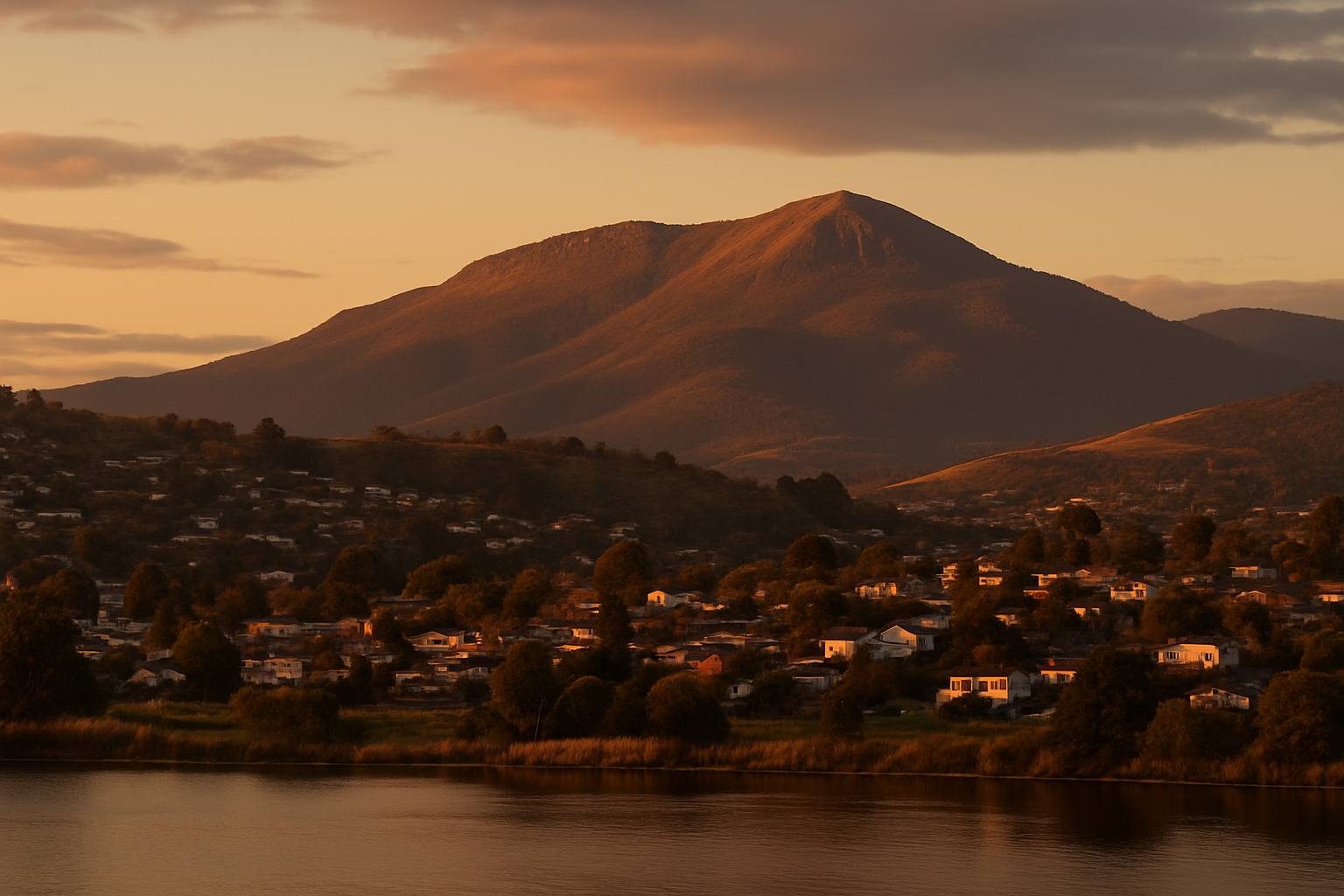
Berriedale, positioned along the Derwent River's eastern shore approximately fifteen kilometres north of Hobart, evolved from Palawa lands through early agricultural settlement to its current status as Tasmania's cultural epicentre. The suburb's transformation from Captain Merton's 1822 Georgian homestead to David Walsh's provocative Museum of Old and New Art epitomises Tasmania's capacity for reinvention. More recently, Berriedale became the unlikely stage for intersecting mysteries involving disappearances, police investigations, and inter-dimensional phenomena that would forever alter its quiet suburban narrative.
Before the Name
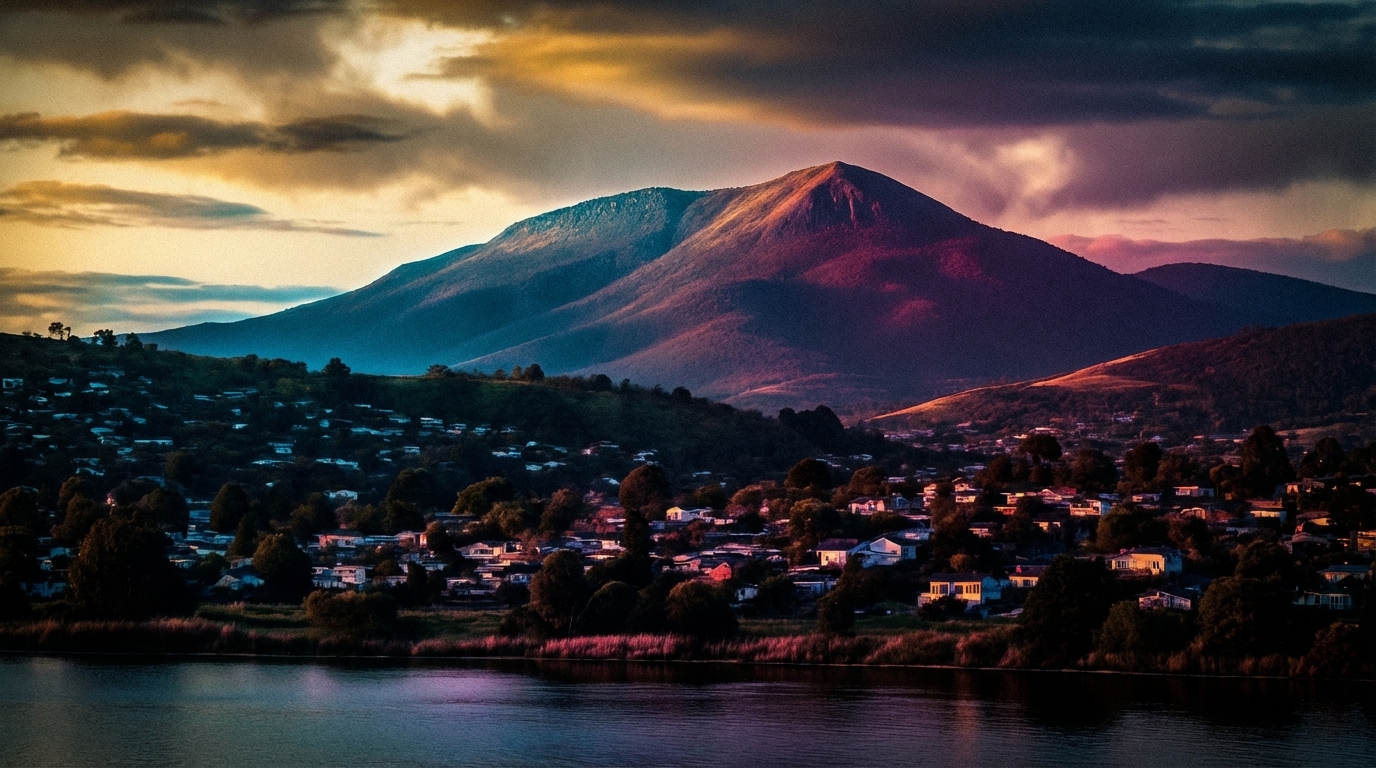
Long before European settlers arrived with their land grants and ambitions, the Derwent River's eastern shore sustained the Palawa people for thousands of years. The fertile riverbanks and surrounding bushland provided abundant resources—fish from the estuary, game from the forests, and seasonal plants that marked the passage of time in ways the colonists would never truly comprehend. The land that would become Berriedale offered natural shelter in the river's curve, protection from prevailing winds, and access to waterways that served as highways through the landscape.
The Palawa relationship with this place was not one of ownership but of custodianship, maintained through sophisticated land management practices including controlled burning and seasonal movement. When British colonial expansion reached these shores in the early nineteenth century, it brought not just new people but an entirely different philosophy of land use—one that would irrevocably transform the landscape and devastate its original inhabitants.
The tragedy of colonial settlement played out here as it did across Tasmania. The Palawa, who had maintained their culture and connection to country for millennia, faced diseases to which they had no immunity, violent conflict over land and resources, and systematic dispossession. By the time Berriedale received its European name and formal settlement patterns, the Indigenous population had been catastrophically reduced, their knowledge systems disrupted, and their presence largely erased from the colonial narrative being written across the landscape.
Captain Merton's Vision
The European story of Berriedale begins in 1822 when Captain Robert Merton, a retired naval officer, received a land grant along the Derwent's eastern shore. Merton had served the British Crown with distinction and, like many officers of his era, sought to establish himself as a gentleman landowner in the new colony. His Georgian homestead, built with the solid confidence of colonial ambition, became the architectural nucleus around which Berriedale would eventually develop.
Merton's property, which he named "Berriedale" after his Scottish ancestral lands, represented the colonial ideal: fertile soil, river access, and sufficient elevation to provide commanding views whilst offering protection from flooding. The homestead itself exemplified Georgian architectural principles—symmetrical facade, classical proportions, and an unmistakable statement of permanence and authority in a landscape the colonists were still learning to read.
The property thrived under Merton's stewardship, with agricultural production supplying both the growing Hobart settlement and occasionally provisions for passing vessels. Merton's success attracted other settlers to the surrounding area, gradually transforming the landscape from bushland to farmland, from Indigenous country to colonial property. The Berriedale Inn, established in 1834, became a crucial social venue and waystation for travellers moving between Hobart and the northern settlements, cementing the area's role as more than just another agricultural holding.
The name "Berriedale" itself—whether derived from Merton's Scottish connections or from the inn that bore the name—became permanently attached to this stretch of riverside land, marking it on colonial maps and in administrative records as a defined place with European identity and ownership. The homestead and its surrounding gardens represented not just agricultural productivity but colonial permanence, a declaration that this land now served British purposes and followed British patterns of organisation.
Agricultural Foundations
Throughout the nineteenth and early twentieth centuries, Berriedale developed primarily as an agricultural community, benefiting from its proximity to Hobart whilst maintaining the spaciousness and productivity of rural land. The Derwent River provided not only scenic beauty but practical advantages: transportation access, irrigation possibilities, and moderate temperatures influenced by the water's thermal mass.
Families such as the O'Connors established substantial orcharding operations, taking advantage of Tasmania's temperate climate and fertile soils to produce fruit for local markets. The agricultural character of Berriedale was reinforced by the construction of the Brooker Highway, which improved transportation links whilst simultaneously creating the geographical division between "East Berriedale" (closer to the river) and "West Berriedale" (extending towards the rural hinterland)—a distinction that persists in local nomenclature today.
The suburb also gained modest sporting fame in the 1920s as the finish line for Tasmania's amateur long-distance cycling race, the Campbell Town to Berriedale Race. This sporting connection brought periodic attention to the area, though it remained primarily known as a quiet agricultural settlement rather than a destination unto itself.
The early twentieth century saw gradual development of infrastructure that would support Berriedale's evolution from purely agricultural to residential-agricultural. Electric lighting reached the suburb in 1915, bringing the visible marker of modernity to streets and homes. Schools established in neighbouring communities like Claremont served Berriedale's children, fostering educational continuity without requiring the population density to sustain their own institutions.
Berriedale's Main Line railway connection provided passenger service until 1974, linking the community to Hobart's transport network and facilitating the gradual transition from agricultural production to suburban residential development. The cessation of rail services coincided with increasing automobile ownership and the Brooker Highway's growing importance as the primary artery connecting northern Hobart to the city centre.
Post-War Transformation
Tasmania's post-World War II housing boom profoundly affected Berriedale's character and demographics. Like many northern Hobart suburbs within the City of Glenorchy, Berriedale attracted returning servicemen and their families seeking affordable housing and spacious properties. The architectural legacy of this era remains visible in the suburb's streetscapes: predominantly single-storey homes constructed from weatherboard or brick, featuring generous yards and gardens that characterise mid-twentieth-century suburban Australian development.
This transformation from agricultural to residential changed more than just Berriedale's physical appearance. The community's demographic profile shifted from farming families with multi-generational connections to the land, to newer residents drawn by proximity to Hobart, affordability, and the semi-rural character that offered a compromise between city convenience and country spaciousness. The population growth was steady rather than explosive, maintaining a suburban rather than urban density whilst establishing Berriedale as a distinct residential community rather than merely a Hobart outskirt.
The suburb's infrastructure developed to support its changing population. Metro Tasmania's bus services along the Brooker Highway connected residents to employment and education centres in Glenorchy, Claremont, and central Hobart. Whilst Berriedale itself lacks schools, the established educational institutions in neighbouring suburbs provided accessible options for families. This pattern of relying on nearby communities for certain services whilst maintaining distinct residential character became a defining feature of Berriedale's identity.
By the late twentieth century, Berriedale had settled into a comfortable suburban existence—neither particularly fashionable nor particularly troubled, a working-class to middle-class community characterised by modest homes, river views, and the kind of neighbourhood stability that develops when property values remain accessible and turnover remains relatively low. The median weekly household income sat below national averages, reflecting the suburb's unpretentious character and attracting residents prioritising affordability over prestige.
The MONA Revolution
Everything changed when David Walsh built his museum.
David Walsh, a Hobart native who had grown up in the nearby suburb of Glenorchy, transformed his fortune—accumulated through professional gambling using sophisticated mathematical systems—into Tasmania's most audacious cultural project. In 2001, Walsh opened the modest Moorilla Museum of Antiquities on the Berriedale peninsula, housing his growing collection of ancient Egyptian artefacts. This initial venture, whilst interesting, attracted minimal attention and visitor numbers that Walsh himself described as disappointingly sparse.
Rather than admit defeat, Walsh interpreted this lack of interest as a challenge to think bigger, more provocatively, and with greater architectural and curatorial ambition. He closed the Moorilla Museum in 2006 to begin construction on something unprecedented in Australian museum culture: the Museum of Old and New Art (MONA), a seventy-five million dollar subterranean complex carved into the Berriedale peninsula's sandstone cliffs. Walsh's vision was nothing less than revolutionary—a "subversive adult Disneyland" that would challenge, provoke, and fundamentally alter visitors' expectations of what a museum could be.
MONA officially opened on 21 January 2011, coinciding with the third MOFO festival (Museum of Old and New Art: Festival of Music and Art). The timing was strategic, the ambition enormous, and the impact immediate. The museum's design by architect Nonda Katsalidis—mostly underground, accessed by spiral staircase or glass elevator, intentionally disorienting and atmospherically ominous—created an experience that divorced visitors from the everyday world before confronting them with Walsh's collection of ancient, modern, and contemporary art united by themes of sex and death.
MONA rejected conventional museum practices with deliberate intent. No wall labels identified artworks; instead, visitors used "The O," a custom digital device (later a smartphone app) providing multiple interpretive layers from academic "Art Wank" to Walsh's profane personal commentary. Works appeared in non-chronological order, grouped by emotional or philosophical resonance rather than historical progression. Controversial pieces like Wim Delvoye's Cloaca Professional—a machine replicating human digestion—pushed boundaries with gleeful provocation.
The impact on Berriedale, and indeed all of Tasmania, was transformative. Before MONA, Tasmania attracted approximately 700,000 visitors annually, primarily drawn by wilderness experiences and produce tourism. By 2023, visitor numbers exceeded 1.35 million, with thirty percent citing MONA as their primary motivation for visiting. The museum draws over 500,000 visitors annually to Berriedale specifically, generating approximately AUD$134 million in annual economic benefit for Tasmania and employing over 300 people directly or indirectly.
Berriedale's international profile exploded. Publications like The New York Times and Lonely Planet featured Hobart prominently, with Lonely Planet listing it among the Top 10 cities to visit in 2013—recognition almost entirely attributable to MONA's provocative presence. The quiet riverside suburb that had once been primarily known to Hobartians suddenly appeared on global cultural maps, attracting international art tourists, media attention, and the kind of cultural cachet that transforms communities.
The museum continued expanding: Pharos, a wing cantilevering over the River Derwent, opened in 2017, housing major works by light artist James Turrell. The Siloam tunnel, completed in 2019, provided additional connection between museum sections whilst serving as an artwork-filled passage. Walsh's ambitious plans include a luxury hotel, expanded library facilities, and continued acquisitions that ensure MONA remains dynamic rather than static.
For Berriedale's residential community, MONA's presence brought mixed blessings. Property values increased as the suburb's desirability grew. Tourism-related businesses proliferated, creating employment opportunities. Infrastructure improvements, partially driven by visitor traffic, benefited locals. Yet the quiet suburban character that had defined Berriedale faced pressure from tourist crowds, ferry traffic, and the inevitable gentrification accompanying cultural prominence.
The Museum of Old and New Art had accomplished something remarkable: it had taken a modest Tasmanian suburb and placed it at the centre of Australia's cultural conversation, proving that provocative vision combined with substantial resources could fundamentally alter not just a building or collection, but an entire community's trajectory and identity.
When Reality Fractured
Whilst MONA brought global attention through provocative art, a different kind of provocation unfolded in Berriedale's quiet residential streets during 2018—one that would prove far more disturbing than anything in Walsh's collection.
In July 2018, a cream brick house on the corner of Wallcrest Road and Berriedale Road became the epicentre of events that challenged fundamental assumptions about reality itself. Luke Smith and Jamie Greyson's modest three-bedroom residence, purchased in 2015 after attending an open home viewing that seemed entirely ordinary, contained something that should not exist: an inter-dimensional Portal connecting Earth to the world of Clivilius.
The Portal's presence in this suburban Berriedale home began manifesting stories that moved through the neighbourhood like tremors preceding an earthquake. On 24 July 2018, Gladys Cramer arrived at her friend Luke's house expecting nothing more complicated than tea and conversation. Instead, she witnessed the impossible: a shimmering threshold through which people could vanish and reappear, connecting her friend's spare bedroom to a frozen wilderness that obeyed entirely different physical laws.
The following days saw Berriedale's ordinariness systematically dismantled. Blood appeared in impossible quantities. Bodies arrived and departed through means that defied police procedures and forensic protocols. Cody Jennings, a man connected to the expanding web of impossibilities, died in circumstances that involved the Portal's proximity and the dangerous secrets it demanded those who knew about it protect at any cost.
On 29 July 2018, Detective Senior Constable Karl Jenkins and Detective Constable Sarah Lahey followed Gladys Cramer through Berriedale's streets in a pursuit that began as professional police work and ended with both detectives confronting phenomena their training had never anticipated. The quiet Sunday afternoon traffic stop on Berriedale Road became the moment when law enforcement intersected with mysteries that transcended jurisdiction, procedure, and ultimately, reality as they understood it.
Luke Smith's Berriedale residence became simultaneously a crime scene and a threshold, a place where suburban domesticity—the garden tools, the apricot tree, the carefully maintained lawn—coexisted with evidence of impossibility.
Berriedale's quiet streets, which had witnessed centuries of transformation from Indigenous lands to colonial settlement to suburban development to cultural destination, now bore witness to something unprecedented: murders and mysteries connected to worlds beyond human mapping, to portals that violated physics, to choices made in desperation that killed with brutal finality.
The house on Wallcrest Road stood afterwards as it had stood before—modest, unremarkable, surrounded by similar homes where similar lives unfolded. Yet it had become a site of profound significance, a place where the membrane between worlds proved permeable, where ordinary people made extraordinary choices, and where Berriedale's story intersected with narratives too strange for official records or police reports to fully capture.
Berriedale Today
In the years following the tumultuous events of 2018, Berriedale has continued its evolution, though the weight of recent history rests uneasily beneath its surface improvements. The suburb's population in 2023 stands at approximately 3,000 residents, distributed across 2.2 square kilometres with a density of roughly 1,228 people per square kilometre. The demographic profile reveals a community slightly more culturally diverse than Tasmania's average, with 5.2 percent identifying as Indigenous Australians (compared to the national average of 3.8 percent), whilst eighty percent of residents were born in Australia and 83.8 percent speak only English at home.
The median weekly household income remains below the national average, maintaining Berriedale's character as an accessible, working-class to middle-class suburb despite MONA's presence and the property value increases that inevitably followed. The suburb's religious profile reflects broader Australian trends towards secularisation, with 43.2 percent reporting no religion, followed by 18.2 percent Anglican and 16.8 percent Catholic.
MONA continues its dominant influence on Berriedale's identity and economy. The museum's ongoing development includes plans for a 172-room five-star hotel, expanded library facilities, additional performance spaces, and ever-evolving art installations that ensure the institution remains dynamic rather than static. The annual Dark Mofo festival transforms winter Hobart into a celebration of darkness, drawing tens of thousands of participants and positioning Berriedale's cultural offerings alongside major international arts events.
The Berriedale Peninsula masterplan, developed by Glenorchy City Council, attempts to balance community needs for open space and recreation with the economic and cultural opportunities afforded by MONA's proximity and patronage. Green spaces including Alroy Court Reserve, Chandos Drive Reserve, and the International Peace Forest along the Derwent River provide recreational opportunities for residents and visitors alike, whilst infrastructure upgrades continue improving connectivity and public amenities.
The Brooker Highway remains Berriedale's primary arterial connection, linking the suburb to Glenorchy, Claremont, and central Hobart whilst maintaining the geographical division between East and West Berriedale. Metro Tasmania's bus services provide regular public transport, though many residents rely primarily on private vehicles for daily transportation. The suburb's proximity to major highways including the Lyell and Midland makes it convenient for commuters whilst preserving the semi-rural character that initially attracted post-war settlement.
Educational services continue to be provided by institutions in neighbouring suburbs, with Claremont College serving years eleven and twelve, Montrose Bay High School in Rosetta, and various primary schools accessible via public transport or short drives. This pattern of relying on nearby communities for certain services whilst maintaining distinct residential character remains a defining feature of Berriedale's practical geography.
For those familiar with the events of 2018, Berriedale carries an additional layer of significance that coexists uncomfortably with its public narrative of cultural transformation and tourism-driven prosperity. The house on Wallcrest Road, where reality fractured and impossibilities became manifest, remains standing—occupied or vacant depending on circumstance, unremarkable from the street, yet permanently marked by what occurred within its walls. The families living in surrounding homes, unaware or partially aware of what transpired in their neighbourhood, continue their ordinary suburban lives whilst extraordinary secrets rest beneath the surface like geological formations invisible from above.
Detective Karl Jenkins remains officially listed as a missing person, his fate unknown to anyone in law enforcement beyond speculation and theories that cannot account for the impossible. Sarah Lahey's death has been officially classified, though debates continue about the precise circumstances and the motivations of those involved. Gladys Cramer vanished before ever serving a day of her sentence, disappearing as completely as those who stepped through the Portal she had witnessed.
Berriedale stands today as a suburb of profound contradictions: internationally celebrated for MONA's provocative art whilst harbouring secrets more provocative than anything in Walsh's collection; transformed from agricultural community to cultural destination whilst maintaining the modest suburban character that defines its residential streets; shaped by centuries of evolution from Indigenous lands through colonial settlement to contemporary tourism whilst marked by events in 2018 that existed entirely outside historical progression and conventional narrative.






