Benjamin Graham Crammond
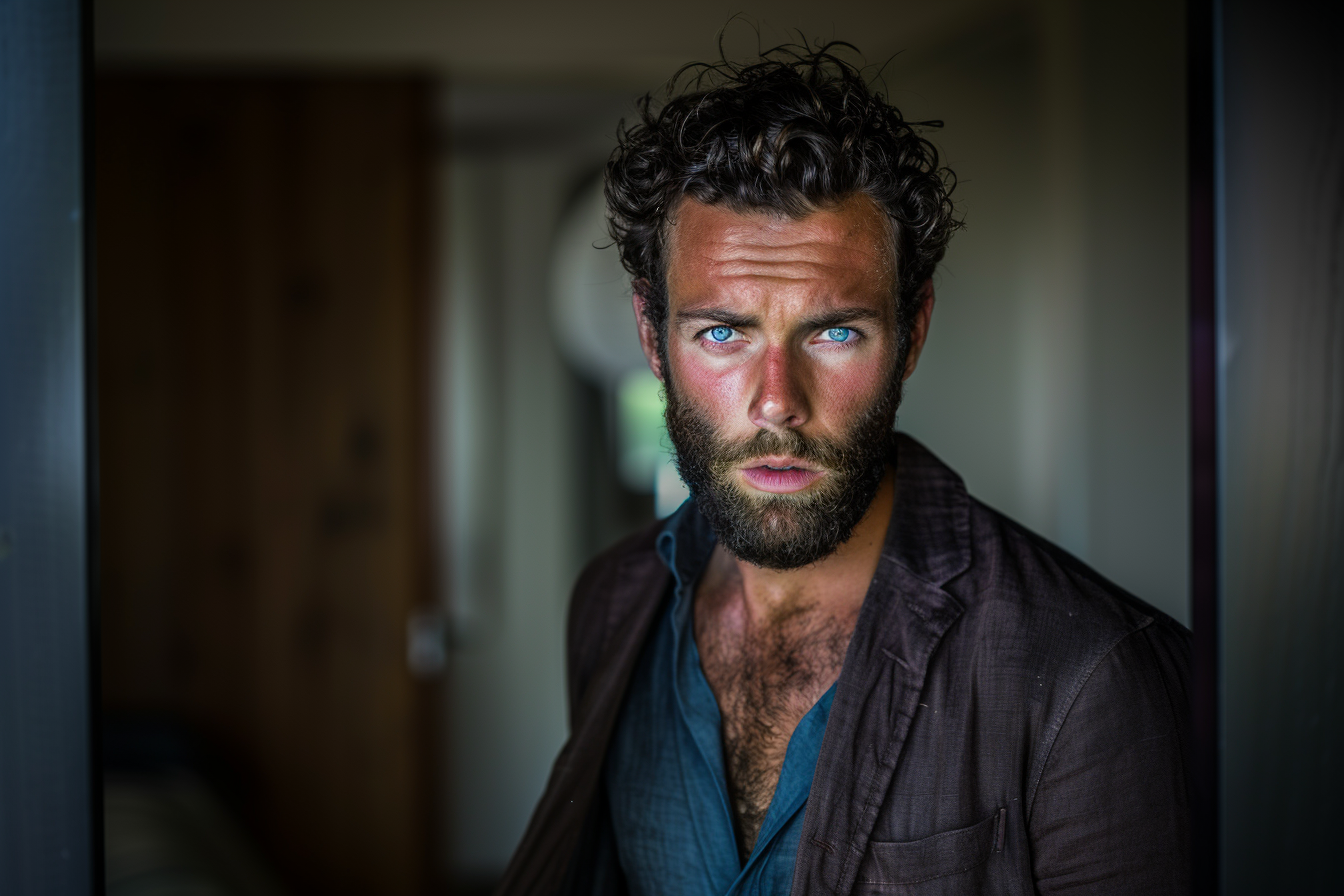
Benjamin Graham Crammond was born on 6th June 1982 in Sydney, the son of civil engineer Graham Crammond and English teacher Patricia Whitfield. Educated at the University of New South Wales and Macquarie University, he built an investigative career across Australia's leading newsrooms before relocating to Broken Hill in 2016 to join the Silver City Sentinel. His departure in 2018 led to the founding of the Outback Observer in 2020, establishing Broken Hill's second newspaper and a new voice in regional investigative journalism.
North of the Harbour
Benjamin Graham Crammond was born on 6th June 1982 at Royal North Shore Hospital in Sydney, the second child of Graham Arthur Crammond and Patricia Anne Crammond née Whitfield. Graham, a civil engineer whose career had progressed from site supervision to partnership at Northcott & Associates — a mid-tier consultancy specialising in transport infrastructure — approached life with the methodical pragmatism his profession demanded. Patricia, who had taught English at Willoughby Girls High School since 1978, brought to the household the literary sensibility and moral seriousness that her subject inspired in those who taught it well. Together they occupied a weatherboard house on Archer Street in Chatswood that Graham had purchased in 1980 with the confidence of a man who understood that Sydney's North Shore would always appreciate in value.
Catherine Elizabeth Crammond, born on 8th November 1979, had established the family's academic expectations by the time her brother arrived — diligent, precise, and capable in ways that teachers remembered and younger siblings were measured against. The dynamic between them was less rivalry than parallel ambition: Catherine excelled quietly and systematically, while Ben matched her results with a competitive intensity that revealed itself most clearly when he was told he could not or should not do something. Graham, whose own success had been built through discipline and incremental achievement, recognised in his son's combativeness a quality that could prove either asset or liability depending on how it was directed.
The Crammond household operated with the comfortable certainty of Sydney's professional North Shore — education was valued, effort was expected, and the assumption that both children would attend university and enter respectable careers was so deeply embedded that it functioned less as expectation than as atmospheric pressure. Dinner table conversation ranged across current affairs, Patricia's latest frustrations with curriculum changes, and Graham's accounts of infrastructure projects that were never quite as interesting as he believed them to be. Ben absorbed from these exchanges an early facility with argument and a conviction that information conferred power — that the person who knew the most controlled the conversation.
North Sydney Boys High School, where Ben enrolled in 1995, sharpened his competitive instincts into something approaching purpose. He excelled in English, history, and economics, represented the school in debating with a forensic precision that opposing teams found difficult to counter, and played rugby union with the determined physicality of someone who compensated for modest natural talent through relentless conditioning. His decision to pursue journalism crystallised during Year 11, when a guest speaker — a Sydney Morning Herald reporter whose career had included coverage of the East Timor crisis — described the experience of bearing witness to events that powerful people preferred unwitnessed. The encounter provided Ben with a vocabulary for the instinct he had been developing since childhood: that the gap between official narratives and observable reality constituted territory worth exploring.
The Climb
The University of New South Wales, where Ben enrolled in 2000 to study for a Bachelor of Communications, provided the academic foundation and metropolitan network that his ambitions required. He thrived in the structured environment — performing consistently across his subjects whilst directing his real energies toward the student newspaper, where his investigative pieces on university administration generated institutional discomfort of a kind that confirmed he had chosen the right field. He graduated in 2003 with a distinction average and the certainty that journalism was not merely a career but a professional identity.
The Master of Investigative Journalism at Macquarie University, which Ben commenced in 2004, elevated his craft from instinct to methodology. The programme's emphasis on forensic research techniques, legal frameworks for investigative reporting, and the ethics of source protection transformed raw talent into disciplined practice. His thesis — an investigation into procurement irregularities in New South Wales local government — was subsequently adapted for publication, providing his first byline in a metropolitan newspaper before he had formally entered the profession. He completed the Master's in 2006 and stepped into a job market that still, in those final years before digital disruption reshaped everything, offered recent graduates a plausible career path.
His appointment as Junior Reporter at The Daily Telegraph in 2006 introduced him to journalism's industrial realities. The Telegraph's tabloid culture — its emphasis on pace, impact, and readership above nuance — was not the journalism Ben had envisioned during his Master's, but it taught him to write under pressure, to find stories in places that broadsheet journalists overlooked, and to understand that reaching readers mattered as much as impressing editors. He filed on crime, community disputes, and local politics with an efficiency that his supervisors noted and a private dissatisfaction that he kept to himself.
The move to The Sydney Morning Herald in 2008 as Crime Reporter represented the transition from apprenticeship to serious journalism. The Herald's broadsheet culture suited Ben's temperament — its expectation that reporters would not merely report facts but contextualise them, that crime coverage required understanding of social systems rather than mere documentation of their failures. Over two years, he developed the source networks and investigative instincts that metropolitan crime reporting demanded, earning a reputation among police media officers as a journalist who could be trusted with sensitive information provided it served public interest rather than sensation.
His appointment to The Australian's investigative team in 2010 placed Ben where he had been aiming since university. The national broadsheet's resources, reach, and editorial ambition provided a platform commensurate with his abilities. Over three years, he pursued corporate misconduct, regulatory failure, and institutional corruption with a methodical tenacity that produced results — including a series on aged care facility negligence that contributed to a Senate inquiry and earned him the Kennedy Award for Outstanding Investigative Reporting in 2012. The recognition confirmed what his career trajectory had been demonstrating: that Ben Crammond was building, with deliberate and strategic precision, the kind of reputation that opened doors to the stories that mattered most.
The Gallery
The Canberra Times' offer of a Senior Investigative Reporter position in 2013 drew Ben into the peculiar ecosystem of Australia's political capital. Canberra's press gallery — that enclosed world where journalists and politicians maintained relationships whose professional boundaries were often more theoretical than actual — presented investigative challenges different from those he had encountered in Sydney. The stories were national in scope, the sources were more guarded, and the consequences of publication carried weight that reverberated through parliamentary corridors and ministerial offices.
Ben's Canberra work was distinguished by a systematic approach to political accountability that his colleagues respected and his subjects feared. His investigation into misuse of parliamentary travel entitlements — conducted over eight months through painstaking analysis of expense claims and flight records — resulted in three resignations and earned him the Walkley Award for Excellence in Journalism in 2015. The recognition placed him among Australia's most decorated investigative journalists before his thirty-third birthday.
Yet the award arrived at a moment when Ben's relationship with political journalism was curdling into something he had not anticipated. The press gallery's culture of proximity — the dinners, the background briefings, the unspoken agreements about what could and could not be reported — corroded his conviction that journalism and politics existed in genuinely adversarial relationship. He watched colleagues soften stories to preserve access, observed editors calibrate coverage to political alliances, and recognised in his own growing cynicism a professional dissatisfaction that no award could remedy.
His personal life during the Canberra years offered no counterweight to this disillusionment. A relationship with Laura Keating, a senior policy adviser in the Department of the Prime Minister and Cabinet, lasted eighteen months before collapsing under the weight of competing loyalties — Laura unable to reconcile her partner's profession with her own obligation to institutional discretion, Ben unable to accept that access to information should be constrained by domestic negotiation. They parted with the weary civility of two intelligent people who understood that neither was wrong but that rightness alone could not sustain what the situation demanded. Ben left Canberra in early 2016 with a Walkley on his shelf and a conviction that Australian journalism needed him somewhere other than the capital.
The Outsider
Margaret Thompson's advertisement for an investigative reporter at the Silver City Sentinel would have been easy to dismiss. Regional newspapers did not recruit Walkley winners; Walkley winners did not apply to regional newspapers. Yet Ben, whose disillusionment with metropolitan journalism had been deepening for months, recognised in the advertisement something that curiosity and restlessness demanded he explore. He rang Thompson, who had been editing the Sentinel since the 1970s and whose assessment of journalists carried the authority of five decades' observation. Their conversation lasted ninety minutes. He accepted the position a week later.
His arrival in Broken Hill in March 2016 coincided almost exactly with the return of Dexter Clark, who had left the Harbour City Herald in Sydney to rejoin the newspaper where he had begun his career a decade earlier. The coincidence placed two investigative journalists with substantial metropolitan credentials in a newsroom that had, until that point, relied on generalists. Thompson, whose strategic acumen her understated manner often concealed, had recruited both men with the intention of strengthening the Sentinel's investigative capacity before her own retirement — a succession plan whose specifics she kept characteristically to herself.
The relationship between Ben and Dexter developed with the cautious circling of two professionals assessing whether the territory could sustain them both. Their philosophies diverged in ways that initial mutual respect could not indefinitely conceal. Dexter's journalism was driven by emotional conviction — the instinctive outrage of a man whose father's lungs had been destroyed by the industry that employed him, whose connection to Broken Hill was visceral and personal. Ben's journalism was driven by systematic analysis — the methodical deconstruction of institutional failure by someone whose relationship with the community was professional rather than ancestral. Both approaches produced excellent work. Neither man fully respected the other's.
Broken Hill itself exerted an influence on Ben that he had not expected. The town's rawness, its physical isolation, the way community dynamics operated through the visibility that small populations imposed — these conditions created a journalism of consequence that Canberra's abstractions could not replicate. When he reported on water quality failures, the people affected were not statistics in a Senate submission but neighbours whose children drank the water. This proximity, which Dexter had known since childhood, struck Ben with the force of revelation.
It was in Broken Hill that he met Megan Louise Hartley, a ceramicist who had relocated from Melbourne in 2014 to join the artists' colony that the town's desert light and affordable studio space had been attracting since the 1980s. They met at the Palace Hotel in September 2016 — Megan attending an exhibition opening, Ben covering it for the Sentinel with the visible discomfort of a journalist required to write about art. Her directness and his disarming honesty about his own cultural limitations produced a connection that neither had sought. By early 2017 they were sharing the weatherboard cottage on Beryl Street that Megan had been renting since her arrival.
Margaret Thompson's retirement in 2018 forced the question that had been gathering since Ben and Dexter's simultaneous arrival. Dexter's appointment as Editor-in-Chief — grounded in his connection to the community, his understanding of Broken Hill's rhythms, and his willingness to rebuild the Sentinel around digital-first principles while maintaining its role as the town's essential chronicle — was defensible. Ben did not dispute Dexter's qualifications. He disputed his priorities. Ben believed the Sentinel's survival depended on building an investigative brand with national recognition — that regional journalism could only justify its existence by producing work that metropolitan outlets could not ignore. Dexter believed the Sentinel's purpose lay in deepening its relationship with the community it served. Both positions contained truth. Neither man possessed sufficient flexibility to accommodate the other's.
Ben resigned from the Sentinel in June 2018. The departure was handled with professional courtesy and private frustration on both sides — Dexter relieved that the newsroom's most persistent internal critic had removed himself, Ben convinced that the Sentinel under Dexter's editorship would retreat into parochialism. They shook hands in Thompson's old office and did not speak again for nearly a year.
A Second Voice
The two years of freelance work that followed Ben's departure from the Sentinel were not, as they appeared to casual observers, a period of professional drift. He contributed investigative pieces to The Saturday Paper, The Monthly, and The Guardian Australia, maintaining his byline's visibility while conducting the research, financial planning, and network-building that a new publication required. Megan, whose own artistic practice had taught her the economics of creative independence, supported the venture with the pragmatic encouragement of someone who understood what it meant to build something from nothing.
They married on 21st September 2019 at the Broken Hill Regional Art Gallery — a ceremony of twenty guests that reflected both their preference for privacy and the reality that Ben's social circle in Broken Hill remained narrower than a man who had lived there for three years might have expected. Graham and Patricia flew from Sydney with the carefully managed enthusiasm of people who had long since abandoned hope that their son's career choices would conform to their understanding of professional stability. Catherine, now a corporate lawyer in Melbourne, attended with her husband and offered the toast with the affectionate exasperation that Ben's decisions had been inspiring in his older sister since childhood.
The Outback Observer launched in January 2020 with a website, a weekly digital newsletter, and an ambition that the timing rendered almost immediately absurd. Within weeks, COVID-19 had begun its transformation of Australian public life, and by March, Broken Hill's geographic isolation had been repurposed as medical strategy. Border closures, movement restrictions, and economic disruption created exactly the conditions in which local journalism proved essential and exactly the conditions in which launching a new publication proved nearly impossible. Ben's response revealed the quality that distinguished him from less stubborn founders: he adapted without abandoning his vision. The Observer's digital-first model, conceived as strategic advantage, became survival necessity.
The Observer's relationship with the Sentinel evolved, during those pandemic months, from competition into something more complicated. Broken Hill could not sustain two newspapers in genuine rivalry, and the crisis demanded cooperation that professional pride would otherwise have prevented. Ben and Dexter's first conversation in over a year occurred in April 2020, when both recognised that duplicating coverage served neither publication nor community. The détente was fragile and unspoken — an informal division of focus rather than formal agreement — but it established a working relationship that, if never warm, achieved the functional respect that shared purpose sometimes produces.
The birth of Lily Patricia Crammond on 3rd February 2022 recalibrated Ben's relationship with both his work and his adopted town. Parenthood, which he had approached with the same strategic planning he applied to journalism, proved resistant to methodology. Lily's arrival transformed Broken Hill from the location of his professional ambitions into the place where his daughter would form her first memories, attend her first school, develop her first understanding of the world. The shift was not immediate — Ben remained, in temperament, a man whose identity was constructed primarily through work — but it was real, and its effects accumulated with the quiet persistence that characterised most genuine change.
Megan's ceramics practice, which had been producing work of increasing critical recognition since her arrival in Broken Hill, provided the household with a creative counterpoint to Ben's journalistic intensity. Her studio — a converted garage on Beryl Street whose kiln occasionally set off the smoke alarm and whose clay dust infiltrated every surface of their shared home — represented a mode of engaging with the world that Ben admired without fully understanding. Where his work sought to expose and correct, hers sought to shape and preserve. The marriage functioned through this complementarity, each partner's strengths compensating for the other's limitations, each partner's obsessions tolerated with the patience that genuine affection rather than perfect compatibility sustained.
By 2026, the Outback Observer had established itself as a genuine, if modest, presence in Broken Hill's media landscape. Its team remained small — Ben, two full-time reporters, a part-time digital editor, and a rotating roster of interns whose enthusiasm compensated for their inexperience. The publication's investigative output, while necessarily limited by resources, had produced work of sufficient quality to attract occasional national attention — a pattern that vindicated Ben's original conviction that regional journalism could generate impact beyond its geographic boundaries, even if the financial model required constant improvisation to sustain.
His relationship with the Sentinel had settled into the uneasy coexistence that small-town competitors eventually reach. He and Dexter exchanged professional courtesies at council meetings and press conferences, acknowledged each other's work when it warranted acknowledgement, and maintained the careful distance of two men who understood that their disagreement had been about principles rather than personalities. Graham and Patricia visited twice a year from Sydney. Catherine rang on Sundays. Lily attended preschool and displayed, at four, the argumentative confidence that both her parents recognised with a mixture of pride and apprehension. Ben remained, in the eyes of some Broken Hill residents, the Sydney journalist who had chosen their town without ever quite becoming of it — an outsider whose decade of residence had earned him acceptance without conferring the deeper belonging that birth and childhood provided. He was aware of this perception and had ceased to resent it, understanding that the distance between himself and the community he served constituted both his limitation and his advantage.







