
Bartholomew Ashford
Born on 14 August 1762 to a Portsmouth clergyman and his wife, Bartholomew Ashford rose to become one of Hampshire's most formidable prosecutors. His Oxford education and commanding courtroom presence secured convictions in cases others deemed unwinnable. Marriage to Eleanor Hughes in 1790 produced two children before her sudden death in 1811 devastated him. Known for meticulous preparation and unwavering belief in the law's necessity, he died on 22 November 1830, leaving a legacy both admired and questioned.
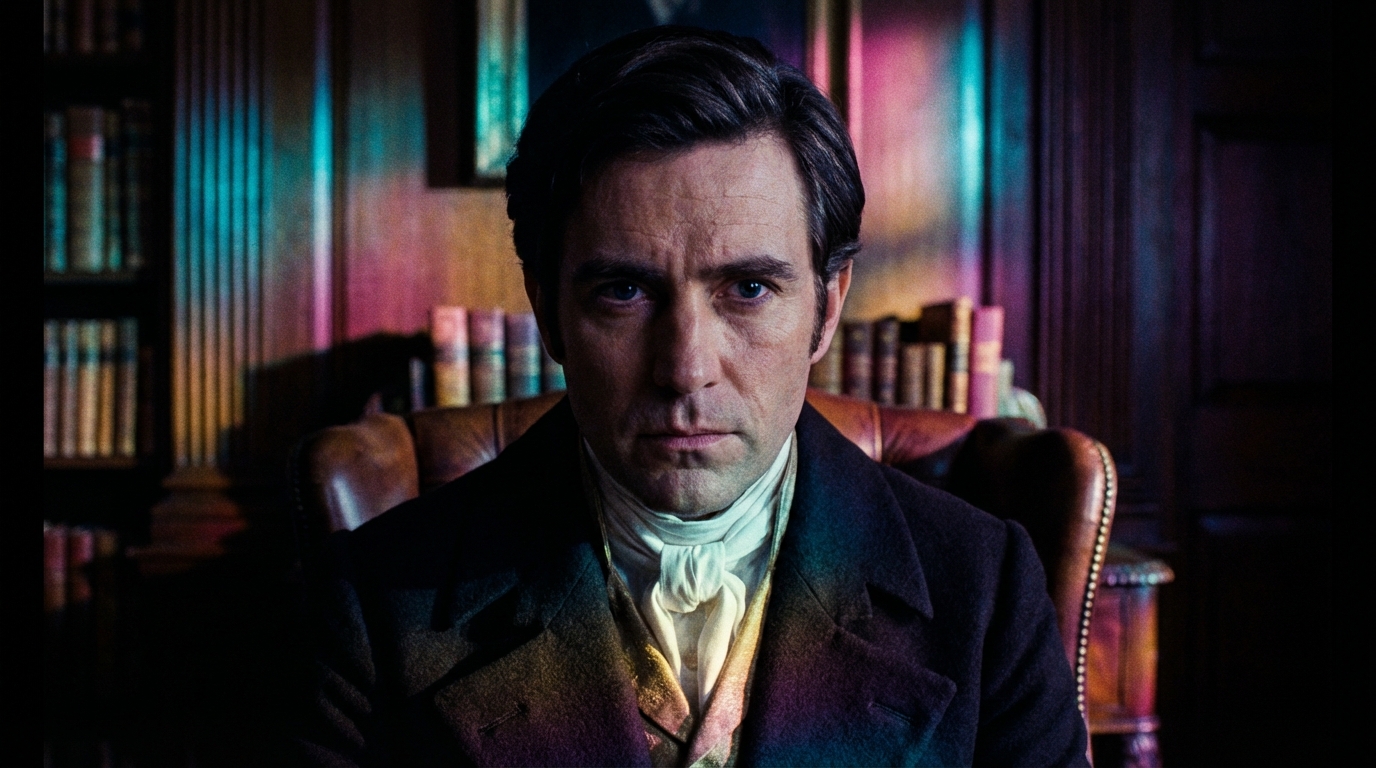
A Clergyman's Son
The rectory into which Bartholomew Ashford was born on 14 August 1762 stood adjacent to All Saints Church in Portsmouth's older quarter, its modest proportions reflecting the comfortable but unpretentious circumstances of Anglican clergy in Georgian England. His father, the Reverend Jonathan Ashford, had held the living for eight years by then, his sermons earning respect for their theological rigour if not their warmth. The household that welcomed the infant combined intellectual ambition with moral certainty in proportions that would profoundly shape the child's character.
Jonathan Ashford had arrived at his vocation through genuine conviction rather than family tradition or lack of alternatives. The son of a schoolmaster in Winchester, he had pursued ordination after studies at Cambridge, believing that the Church offered the best avenue for serving both God and community. His approach to ministry emphasised duty over sentiment, the obligations of faith rather than its consolations. Parishioners respected him without particularly loving him, recognising in their rector a man whose principles admitted no compromise.
Amelia Ashford, born Amelia Thornton before her marriage in 1759, brought to the household the practical competence that clerical wives required. She managed the rectory's domestic affairs, supervised the servants, maintained the social connections that parish life demanded, and ensured that her children received the moral instruction their father's position required. Her influence on Bartholomew proved as significant as Jonathan's, though expressed through different channels—the expectations she communicated, the standards she enforced, the example of tireless industry she provided.
Bartholomew was the couple's second child, an elder sister named Catherine having arrived in 1760. A younger brother, Thomas, followed in 1765, completing a family whose size reflected both the conventions of the era and the limitations of a clergyman's income. The children grew up in an atmosphere where learning was valued, idleness condemned, and moral seriousness pervaded even recreational moments. Family prayers bracketed each day; Sunday observance occupied the entire Sabbath; and the expectation of excellence attached to every endeavour.
Education and Formation
The Portsmouth Grammar School, where Bartholomew enrolled at seven years of age, served the sons of professional men and prosperous merchants whose ambitions for their children exceeded what ordinary schooling could provide. The curriculum emphasised classical languages, rhetoric, and the foundations of learning that university study would later build upon. Bartholomew proved an exceptional student, his facility with Latin and Greek marking him as someone destined for further education rather than immediate entry into trade or commerce.
What distinguished him from equally capable classmates was an argumentative temperament that teachers found both impressive and occasionally exhausting. He questioned assertions, demanded evidence for claims, and pursued logical inconsistencies with a tenacity that suggested either future brilliance or future difficulty. His father, observing these tendencies, recognised in them the makings of either a theologian or a lawyer—professions where such habits might find constructive expression rather than causing social friction.
The decision to pursue law rather than holy orders crystallised during Bartholomew's final years at the Grammar School. He had witnessed enough of clerical life to understand its limitations: the modest income, the dependence on patronage, the necessity of pleasing parishioners whose theological understanding rarely matched their certainty. The law offered scope for the argumentative abilities he possessed, income commensurate with success, and a role in maintaining the social order that his upbringing had taught him to value. Jonathan Ashford, though initially hoping his son might follow him into ministry, accepted the decision with the pragmatism that characterised his approach to most matters.
Oxford and Legal Studies
The University of Oxford, where Bartholomew matriculated in the autumn of 1779, offered intellectual horizons that Portsmouth could not match. He read law at Balliol College, immersing himself in the common law tradition whilst also engaging with the broader questions of jurisprudence that the university's scholars debated. His tutors recognised exceptional ability combined with exceptional diligence—a student who not only grasped complex legal concepts readily but pursued their implications with thoroughness that exceeded requirements.
The Oxford years shaped Bartholomew's understanding of law as more than a collection of rules and precedents. He came to see it as the framework upon which civilised society depended, the alternative to violence and chaos that allowed commerce, property, and personal security to exist. This conviction, once formed, never wavered. The law's majesty lay not in its perfection—he recognised readily enough that statutes could be unjust and procedures could fail—but in its systematic attempt to substitute reason for force, principle for caprice.
His professors noted a coldness in his analytical approach that some found admirable and others troubling. Bartholomew could dissect a case with devastating precision, identifying weaknesses in arguments that others had overlooked, constructing rebuttals that left opponents speechless. Yet this same precision seemed to exclude consideration of circumstances that pure logic might deem irrelevant but human sympathy might find compelling. He would make a formidable advocate, his tutors agreed; whether he would make a wise one remained to be seen.
He graduated with honours in 1783, his academic record ensuring that his entry into legal practice would proceed more smoothly than most young barristers could expect. The connections formed at Oxford—with fellow students destined for positions in law, government, and commerce—would prove valuable throughout his career, the networks of influence that university education provided being as important as the knowledge it imparted.
Return to Portsmouth
Bartholomew returned to Portsmouth in the autumn of 1783, establishing himself in chambers that his father's connections helped secure. The transition from academic study to practical advocacy challenged him in ways that Oxford had not anticipated. Courtroom work required skills beyond legal knowledge: the ability to read juries, to modulate voice and gesture for persuasive effect, to think on one's feet when unexpected developments disrupted prepared arguments. These abilities came less naturally to him than pure analysis, requiring conscious cultivation over months and years.
His early cases involved the routine matters that young barristers handled whilst building reputations: debt recovery, property disputes, minor criminal matters where the stakes were low enough that solicitors would risk entrusting them to inexperienced counsel. Bartholomew approached each with the thoroughness that would become his hallmark, preparing arguments with attention to detail that more experienced colleagues sometimes found excessive. He lost cases that better preparation might have won, learning through painful experience the gap between theoretical understanding and courtroom effectiveness.
The transformation from competent young barrister to sought-after prosecutor occurred gradually over the decade following his return. His analytical abilities, initially a limitation when they prevented the emotional appeals that swayed juries, became assets as he learned to channel them into devastating cross-examinations and irrefutable summations. Witnesses who thought themselves prepared found their certainties crumbling under his questioning; defence counsels who expected routine opposition discovered instead a prosecutor whose preparation exceeded their own.
By the late 1790s, Bartholomew had established himself as one of Hampshire's most formidable prosecutors, the counsel whom victims and authorities sought when convictions seemed essential but difficult. His reputation rested not on rhetoric—though his courtroom presence commanded attention—but on the meticulous construction of cases that left juries no reasonable alternative to guilty verdicts. He never promised outcomes he could not deliver, never accepted cases he did not believe he could win, and never lost cases through inadequate preparation.
Marriage and Domestic Life
The match between Bartholomew Ashford and Eleanor Hughes represented the sort of union that united professional and commercial families whilst providing genuine foundations for affection. Eleanor, born in 1768, was the daughter of Richard Hughes, a merchant whose trading connections made him one of Portsmouth's more prosperous citizens. She possessed the education appropriate to her station—music, literature, French, and the domestic skills expected of a future wife—but also a warmth of temperament that Bartholomew's colder nature found unexpectedly appealing.
They married on 23 September 1790 at St Thomas's Church, the ceremony attended by representatives of both families and numerous figures from Portsmouth's professional and commercial communities. Eleanor was twenty-two; Bartholomew twenty-eight. The wedding announced an alliance of legal and mercantile interests, though the marriage itself quickly developed into something more substantial than such calculations might have predicted.
Eleanor proved a capable manager of the household they established in Portsmouth's respectable quarter, but her contribution to the marriage extended beyond domestic competence. She provided the human warmth that Bartholomew's professional demeanour often lacked, softening social occasions that his intensity might otherwise have made uncomfortable. She understood his dedication to work without resenting it, supported his ambitions without subordinating her own identity to them, and created a home environment that offered respite from the courtroom's adversarial demands.
Children arrived at appropriate intervals: Jonathan in 1792, named for Bartholomew's father, and Margaret in 1795, honouring Eleanor's mother. The Ashford household operated according to principles that combined Bartholomew's expectations of discipline with Eleanor's gentler influence. The children received rigorous education and moral instruction, but also experienced an affection that their father's own upbringing had not emphasised. Eleanor ensured that intellectual achievement did not crowd out emotional development, that her children would possess capacities their father had never fully cultivated.
The Prosecutor's Craft
The Portsmouth Guildhall, built in 1780 and serving as the city's principal courthouse, became the stage upon which Bartholomew's professional reputation was established and maintained. The oak-panelled chamber, with its high windows admitting shafts of light that illuminated proceedings with almost theatrical effect, witnessed hundreds of his prosecutions over the decades of his career. He knew its acoustics intimately, understood how to position himself for maximum impact, had learned which jurors' seats offered clear sightlines and which required adjusted delivery.
His approach to prosecution combined systematic preparation with courtroom adaptability. Before any trial, he mastered every detail of the case: witness statements, physical evidence, precedents that might prove relevant, potential weaknesses that defence counsel might exploit. This preparation, consuming hours that other prosecutors considered excessive, meant that he rarely faced surprises during actual proceedings. When unexpected developments did occur, his thorough understanding of the case allowed rapid adjustment rather than confused improvisation.
The courtroom presence he developed complemented his analytical strengths. His voice, naturally deep, carried easily through the Guildhall's spaces; he had learned to modulate it for emphasis, dropping to near-whispers that forced juries to lean forward, rising to commanding declarations that filled the chamber. His black silk gown, impeccably maintained, and his silver-streaked wig, perfectly positioned, announced professional authority before he spoke a word. Even his movements seemed calculated—the measured pace, the deliberate gestures, the way his silver waistcoat buttons caught the light.
Critics observed that his prosecutorial zeal sometimes exceeded what justice required. He pursued convictions with an intensity that could seem disproportionate to the offences charged, treating petty thefts with the same thoroughness he applied to serious crimes. Defenders of his approach argued that consistent enforcement deterred future offences, that the law's authority depended on reliable application regardless of individual circumstances. Bartholomew himself saw no tension between rigour and justice; to him, they were synonymous.
The Weight of Prosecution
The cases that occupied Bartholomew's career ranged from the routine to the sensational, each receiving the same meticulous attention regardless of public interest. He prosecuted thieves and fraudsters, assailants and forgers, defendants whose circumstances ranged from desperate poverty to calculated malice. The variety of human failing that passed through Portsmouth's courts provided education that no university could offer, revealing the countless ways that individuals could transgress the boundaries society established.
Some cases troubled him more than others, though he rarely discussed such matters even with Eleanor. The defendants whose desperation was evident, whose crimes arose from circumstances that more fortunate individuals never faced, presented challenges that pure legal analysis could not resolve. Bartholomew believed in the law's necessity, believed that consistent enforcement served society's interests regardless of individual hardships, yet he was not entirely immune to the human dimensions of the cases he prosecuted.
His response to such discomfort was to focus more intensely on his professional obligations. The law existed for reasons; his role was to apply it, not to second-guess the wisdom of those who had framed it. If statutes seemed harsh, the remedy lay in legislative reform rather than prosecutorial discretion. If sentences seemed disproportionate, the fault lay with magistrates and judges rather than with prosecutors who merely presented evidence. These rationalisations, repeated often enough, became convictions that insulated him from doubts that might otherwise have proved corrosive.
The 1807 trial at the Guildhall proved one of his more notable prosecutions, attracting public attention that routine cases did not generate. The details of that proceeding, the witnesses he examined, the arguments he constructed—all received the thorough preparation that characterised his approach to every case. The verdict that resulted vindicated his methods, as verdicts usually did, adding another success to a record that few Hampshire prosecutors could match.
Tragedy and Its Aftermath
The autumn of 1811 brought catastrophe that no preparation could have anticipated. Eleanor, whose health had seemed robust throughout their marriage, contracted a fever in late September that resisted every treatment physicians could devise. She declined rapidly, her condition worsening despite the remedies applied, until she died on 17 October, leaving Bartholomew bereft of the partner who had sustained him through two decades of demanding professional life.
The grief that followed exceeded anything in his experience. He had prosecuted cases involving death, had witnessed the anguish of bereaved families, had observed mourning from the professional distance that courtroom proceedings imposed. None of this prepared him for the devastation of losing Eleanor, the emptiness that pervaded the household she had managed, the silence where her voice had provided warmth and comfort.
His children, Jonathan then nineteen and Margaret sixteen, required support that his emotional limitations made difficult to provide. He loved them, certainly, but had never developed the facility for expressing affection that Eleanor had possessed. The household that had operated smoothly under her management now seemed to function mechanically, the servants performing their duties without the guiding presence that had coordinated their efforts.
Bartholomew's response to grief followed the pattern his temperament dictated: he buried himself in work, accepting cases with an intensity that concerned colleagues who recognised the symptoms of avoidance. The courtroom offered escape from a home that reminded him constantly of what he had lost; the adversarial demands of prosecution required focus that excluded unwelcome emotions. Whether this strategy served his wellbeing remained questionable, but it preserved his professional functioning during months when collapse might otherwise have seemed inevitable.
Later Years and Reflection
The decades following Eleanor's death saw Bartholomew continue his prosecutorial career with undiminished rigour, his reputation if anything enhanced by the grey hair and weathered features that age brought. Younger barristers who faced him in court encountered a formidable opponent whose experience compensated for whatever physical vitality the years had diminished. His preparation remained meticulous, his courtroom presence commanding, his conviction rates as impressive as they had been during his prime.
Yet something had shifted, perceptible perhaps only to those who knew him well. The certainties that had characterised his earlier career seemed less absolute, the boundaries between justice and mercy less clearly defined. He never discussed such matters publicly—professional discretion forbade acknowledgment of doubt—but his private journals, maintained throughout his career, revealed a man increasingly troubled by questions his younger self would have dismissed.
The changing social climate contributed to this evolution. Calls for legal reform grew louder during the 1820s, challenging assumptions about punishment and deterrence that Bartholomew's generation had accepted without question. Transportation, which had seemed an appropriate response to theft when he had begun his career, now attracted criticism as disproportionate and ineffective. The certainties that had anchored his professional identity no longer commanded universal assent.
His children had established independent lives by then. Jonathan had pursued a career in commerce rather than law, perhaps recognising that his temperament suited trade better than adversarial advocacy. Margaret had married a naval officer whose postings took her away from Portsmouth for extended periods. Bartholomew saw them when circumstances permitted, maintaining relationships that distance and his emotional limitations made less intimate than he might have wished.
Final Days
The winter of 1830 found Bartholomew in declining health, the accumulated strains of decades of professional intensity manifesting in ailments that physicians could diagnose but not effectively treat. He continued attending court when his condition permitted, unwilling to acknowledge limitations that retirement would have made official. The Guildhall that had witnessed his greatest professional triumphs now received a prosecutor whose physical presence could no longer match his legal acumen.
He died on 22 November 1830, aged sixty-eight, in the Portsmouth residence where he had lived since Eleanor's death had made their former home unbearable. Jonathan was present at the end, having been summoned when his father's condition worsened. The passing was peaceful, Bartholomew slipping from consciousness without the dramatic final moments that his courtroom career might have suggested.
The funeral at St Thomas's Church drew mourners whose numbers testified to the professional esteem in which he had been held. Magistrates and barristers, solicitors and clerks, victims whose cases he had prosecuted and authorities whose interests he had served—all gathered to honour a man who had devoted his life to the law's enforcement. The vicar spoke of duty and dedication, of service to justice and community, of a life that had contributed to the order upon which civilised society depended.
They buried Bartholomew beside Eleanor in the churchyard, reuniting in death the partners who had been separated for nineteen years. The inscription on his gravestone, composed according to instructions he had left, captured something of his self-understanding: Servant of the Law, Guardian of Order. Whether that assessment fully encompassed his legacy remained, as such questions always do, for others to determine.







