Ava Louise Johnson
Ava Louise Johnson, born on 12 June 2007 in Melbourne, was the only child of Marcus Johnson, a history lecturer, and Claire Johnson, a graphic designer. The family relocated to Brisbane in 2015, and Ava attended Brisbane Grammar School before the bus crash of 5 August 2018 transported her to Clivilius, where a broken right arm forced her to draw left-handed during her first weeks. She became the settlement's visual documentarian and enrolled at the Clivilius National University in 2026.
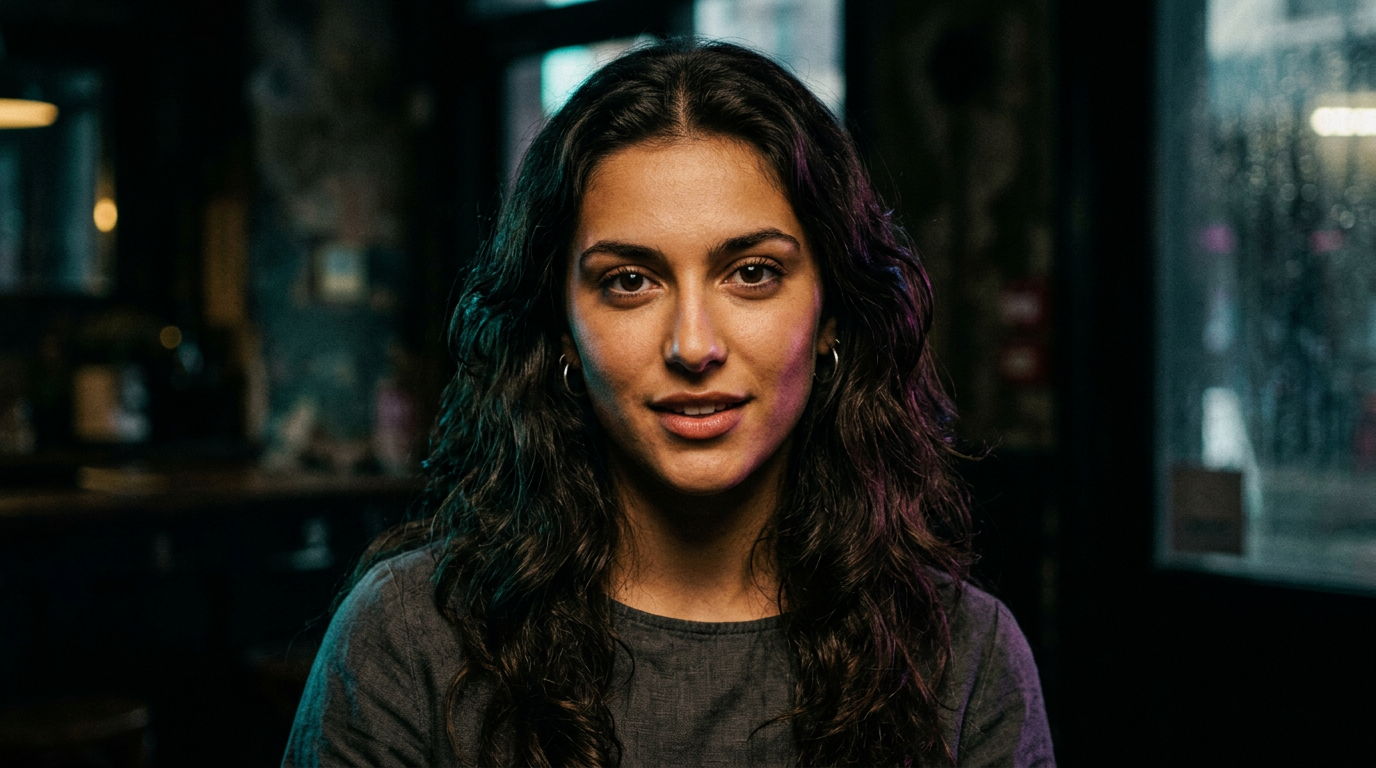
The Melbourne Girl
Ava Louise Johnson was born on 12 June 2007 at the Royal Women's Hospital in Parkville, Melbourne, the only child of Marcus Andrew Johnson, a history lecturer, and Claire Louise Johnson (née Marchetti), a graphic designer. The family lived in a narrow terrace house in Carlton, where the University of Melbourne's campus sprawled across the northern edge and the streets smelled of coffee and old brick.
Ava arrived into a household of two only children raising a third. Marcus was the sole son of Douglas Johnson, a retired secondary school teacher in Adelaide, and Patricia Johnson (née Kerr), who had worked in the archives at the State Library of South Australia. Claire was the only daughter of Roberto Marchetti, who ran a commercial printing business on Brunswick Street in Fitzroy, and Sandra Marchetti (née Collins), a primary school teacher in the inner north.
Marcus had grown up in the eastern suburbs of Adelaide, quiet and bookish, and had followed the predictable trajectory into academia. He studied history at the University of Adelaide, completed a PhD at the University of Melbourne on patterns of European settlement in southeastern Australia, and taken a lectureship in the history department, where he taught survey courses and published careful monographs that his colleagues respected and the public did not read.
Claire had grown up in Fitzroy, surrounded by ink and paper. Roberto's printing shop — a narrow premises wedged between a Vietnamese bakery and a secondhand bookstore — had been her playground, and the rhythms of commercial printing had shaped her childhood: the smell of fresh ink, the sound of the press, the satisfaction of a clean four-colour run. She had studied visual communication at RMIT University and built a freelance practice in graphic design, working from a studio in the terrace's back room where a drafting table and jars of brushes occupied every surface.
The terrace was small and full. Marcus's study occupied the front room, its shelves bowed under the weight of books he was forever reorganising and never reducing. Between the two workspaces, connected by a hallway whose walls displayed framed prints and Ava's earliest drawings in equal proportion, the house functioned as a kind of workshop for the production of things that were either written or drawn, and Ava absorbed both activities before she could distinguish between them.
She drew from the age she could hold a crayon. Not the aimless scribbling of most toddlers but purposeful attempts to capture specific things she had seen — the cat on the neighbour's fence, the pigeons in the Carlton Gardens, the pattern of tiles on the kitchen floor. Claire recognised the impulse because it was her own, transposed into a child's hands, and she provided materials with the generosity of a parent who understood that the difference between a crayon and a marker was not trivial to the person using them.
Marcus's contribution was different. He told stories — about explorers, about settlers, about the people who had lived in places before the maps were drawn — and Ava drew what he described. A ship arriving in a harbour. A campfire in the bush. The facade of a building that no longer existed. The habit was formative: it taught her to draw not only what was in front of her but what someone else had seen, to translate words into images, description into form. By the time she was five, the terrace walls were covered in her work, and the distinction between Claire's professional prints and Ava's childhood drawings had narrowed enough that visitors occasionally asked which was which.
She was talkative, sociable, confident — the particular confidence of a child who was the sole focus of two attentive adults who treated her as a participant in their interests rather than an audience for them. She had opinions about colour and preferences about paper weight. She corrected adults who called her drawings "pictures," because pictures were photographs and what she made was something else.
Paint Water and Pencil Shavings
Marcus was appointed to a senior lectureship in the School of Historical and Philosophical Inquiry at the University of Queensland in late 2014. The family sold the Carlton terrace in early 2015 and moved to Brisbane, settling in a timber Queenslander in Paddington, where the steep streets and the subtropical light were different enough from Melbourne to feel like a genuine relocation.
Ava was seven. She had completed Prep and Year 1 at a primary school in Carlton and transferred to a state school in Paddington for Years 2 and 3. The move was harder than her parents expected. She had left behind friends, a familiar city, and her grandfather Roberto's printing shop, which she had visited every Saturday and which had functioned as a second studio. She did not cry. She drew Melbourne from memory — the terrace, the Carlton Gardens, Roberto's shop — and the drawings were detailed enough that Claire recognised them as preservation rather than nostalgia.
She entered Brisbane Grammar School in Year 4 in 2017. The fees were managed through Marcus's university salary and Claire's freelance income, which had rebuilt quickly after the move — she worked for a design firm in Fortitude Valley three days a week and took her own clients from the studio she had set up in the Paddington house's front room. Ava adapted to the school with the social facility of a child who had already survived one major disruption and discovered that making friends was a skill she possessed and could deploy deliberately.
Her academic work was strong in English and history, competent in science, and middling in mathematics — a distribution that reflected her household and that her teachers noted without concern. Her art was exceptional. Not just technically — she drew well for her age — but observationally. She drew what she saw with a specificity that went beyond illustration into documentation. Her Year 5 teacher, after Ava had produced a series of drawings of the school's jacaranda trees at different stages of flowering, annotated with dates and colour descriptions, commented that the work belonged in a field journal rather than an art folder.
The habit had intensified in Brisbane, where the natural world was louder and more insistent than anything she had known in Carlton's tidy streets. She drew lorikeets, kookaburras, the ibis that wandered the school grounds with the proprietary confidence of animals who had decided humans were irrelevant. She drew insects and geckos and the shifting canopy of the Queenslander's backyard. The sketchbooks accumulated with the steady inevitability of a practice that was not a hobby but a way of being in the world.
She formed friendships easily — warm, quick to laugh, unguarded in a way that drew people to her — but the bonds were not deep in the way that years of shared history produce depth. She was the girl from Melbourne, and the newness persisted. She was liked. She was welcomed. She was not embedded.
The Sketchbook in the Wreckage
The field trip to D'Aguilar National Park was announced in July 2018 for the weekend of 4–5 August. Ava, in Year 5, packed a sketchbook, a tin of coloured pencils, and a set of fine-tipped pens that Claire had given her for her eleventh birthday the previous month. She intended to draw the park's birds — she had researched the species list and was particularly interested in the satin bowerbird, whose bower-building behaviour she found fascinating because it was, she told Marcus over the phone on the Friday evening, an animal that made art.
At D'Aguilar, she filled twelve pages in a single day. The canopy from below. Bark textures. Undergrowth species she could not name but captured in enough detail to identify later. She did not find a satin bowerbird. She found a bower — an arch of sticks decorated with blue objects — and drew it with the reverent attention of a person who had encountered evidence of a kindred intelligence. During the campfire evening, younger students asked her to draw things for them, and she obliged with the easy generosity of a child who understood that drawing was something you could give without losing anything.
The bus departed D'Aguilar on the morning of 5 August. Ava was seated in the middle section, her sketchbook open on the fold-down tray, adding colour to the bower drawing with the fine-tipped pens.
The bus passed through a Portal that opened across a road in the Brisbane suburbs and collided with vehicles on the far side, in the landscape of Clivilius. The impact threw Ava forward and sideways. Her right arm — the drawing arm — struck the metal bracket of the seat ahead with a force that broke the radius above the wrist. The pain was immediate and total, a wrongness that radiated from the break through her forearm and into her shoulder and that occupied her entire awareness for the minutes it took an adult to reach her. The sketchbook fell to the floor. The tin of coloured pencils burst open and scattered beneath the seats, beyond recovery.
She sat in the wreckage holding her right arm against her chest with her left hand, the forearm at an angle she could see was wrong, and she did not scream. She breathed the way she breathed when she was drawing something difficult — slow, deliberate, through the nose — and the rhythm held her together until an adult immobilised the arm with a splint fashioned from a piece of the broken seat frame and fabric torn from a bus curtain.
The sketchbook was recovered. The coloured pencils were not. She held the sketchbook in her left hand and looked through the cracked window at the landscape of Clivilius, and what she saw was a world that looked like nothing she had ever drawn, and the first coherent thought she had, after the pain and the fear, was that she needed to draw it and could not, because the arm that drew was broken.
Drawing What Had No Name
The arm healed in six weeks. A clean break, properly splinted, immobilised against her body with strips of fabric that served as a makeshift cast. The bones knitted and the wrist was stiff for weeks after the binding was removed, and she exercised it obsessively — flexing, extending, rotating — because the idea of losing the hand's precision was more frightening to her than anything the new world had presented.
She drew left-handed during the weeks of healing. The drawings were clumsy, uncertain, lacking the control she had built over years of practice, and she kept them — evidence of persistence, and evidence of the landscape in its earliest form, before the settlement had altered it. A line of hills in wobbly graphite. The texture of the barren soil. The colour of the sky, annotated in words because her left hand could not manage the gradation: "paler than home, almost white at the horizon, deeper blue straight up."
In the first weeks at the Bixbus settlement, Ava was watchful in a way that the other children were not. Some were frightened. Some were angry. Some turned inward. Ava looked outward, with the particular attention of a person whose primary mode of engaging with the world was visual and whose visual world had just been replaced entirely. She studied the landscape the way she had studied the jacaranda trees at school — not for beauty or meaning but for structure, for detail, for the specific qualities that made this place different from every place she had drawn before.
She entered the Learning Grove in September 2018, eleven years old, and Jenny Triffett placed her in an ability group near the top of her age cohort. Her reading was advanced — Marcus's household had been a house of books, and Ava read widely and quickly. Her writing was vivid when the subject engaged her, inclined toward description in a way that reflected a mind that processed the world visually before converting it to language. Her history was the best in the school. Her numeracy was adequate — not poor, not strong, the consistent middling of a child whose attention was allocated entirely on the basis of interest.
The afternoon practical sessions presented a problem that the other children's did not. Ava was not drawn to animals the way Lucas White and Mia Anderson were. She was not drawn to plants the way Jacob Thomas was. She was not drawn to construction or geology or mechanics or agriculture. She was drawn to looking, and the looking was not specific to any single site or discipline — it was a way of engaging with everything, and the Learning Grove's structure of placing children at partner sites did not easily accommodate a child whose skill was not tied to a particular kind of work but to a particular way of seeing.
She rotated through the sites in her first weeks. At the Haven of Wilds, she drew the animals. At the Verdant Nursery, she produced botanical illustrations that the supervisors found more useful than written descriptions, because the drawings showed structures that words failed to convey. At the construction sites, she drew elevation sketches that the builders consulted because they were clearer than anything verbal.
The pattern became apparent to the adults before it became apparent to Ava. She was not rotating because she was lost. She was rotating because every site needed what she could do, and what she could do was not a trade or a skill in the conventional sense — it was a capacity to see, to record, and to communicate through images what others struggled to express in words. The role formalised gradually. By the time the Learning Grove gave way to Bixbus School, Ava had become the settlement's de facto visual documentarian — the girl with the sketchbook who appeared at every site, drew what she found, and left behind images that the adults kept because they were useful.
The Settlement's Eye
Bixbus School gave Ava a permanent base and a permanent role. Her mornings were academic — English and history strong, science competent, mathematics still the grudging minimum — and her afternoons were spent wherever her sketchbook was needed, which was increasingly everywhere.
By thirteen, her work had divided into three strands that she maintained simultaneously. The first was scientific illustration — detailed, labelled drawings of flora and fauna produced in collaboration with the students and adults who studied them. She worked with Mia Anderson at the Haven of Wilds, translating Mia's behavioural observations into visual records that showed not just what the animals looked like but how they moved, how they held their bodies, the postures that indicated alarm or rest or readiness. She worked with Isabella Taylor at the Wildlife Sanctuary, producing botanical plates of the species Isabella was cultivating — leaves, root systems, flowering stages drawn with a precision that Isabella said was more useful than any written description.
The second strand was architectural and historical documentation. She drew the settlement as it grew — the shipping containers of the early months, the first permanent structures, the Arlington's towers rising against the Clivilius sky. The drawings were chronological, dated, annotated with notes about what had changed and why, and they constituted, by the time she was fifteen, the most complete visual record of Bixbus's transformation from encampment to city. Marcus's influence was visible in the method — the historian's instinct to preserve what would otherwise be forgotten, to record the process of change as it happened rather than reconstructing it from memory after the fact.
The third strand was portraiture. She drew people — not commissioned, not requested, simply because she wanted to. The drawings had the quality of observation that comes from a person who has spent her life looking carefully at things, and the faces were specific and recognisable and possessed of the kind of life that emerges from an artist who sees the person behind the expression. She kept the portraits in a separate sketchbook that she did not share freely — not because they were private but because they felt like a different kind of work, personal rather than functional, art rather than record.
She was not universally easy to work with. She had opinions about how things should be drawn, which meant she had opinions about how things should be seen, and those opinions were expressed with the forthright confidence of an only child who had grown up being listened to by adults. She told builders that their structures did not match their stated intentions, and the observation was usually correct and occasionally unwelcome. She had her mother's practical temperament and her father's analytical mind, and the combination produced a directness that some people found refreshing and others found abrasive.
Her social world was broader than most of the bus children's. The cross-site work meant she knew people in every part of the growing city, and her temperament meant she maintained friendships across communities that the more narrowly focused students did not. She was close to several of the bus children, though the closeness was filtered through the distance of a girl from Melbourne among Brisbane children, an only child among siblings, someone who processed the world through drawing rather than through the shared verbal currency of her peers.
She missed her parents with the concentrated intensity of an only child who had been the centre of a household and was now one face among many. She missed Marcus's stories, Claire's studio, the smell of ink, Roberto's shop on Brunswick Street. The losses were not diffused across siblings — they were hers alone, undiluted.
She carried them in the sketchbooks, where the back pages held drawings of the Carlton terrace and the Paddington Queenslander and the faces of her parents, rendered from memory with a fidelity that decreased as the years passed and that she corrected and re-corrected, refusing to let the images soften into abstraction.
Bixbus grew into a city around her. The dusty camp she had drawn in wobbly left-handed graphite at eleven was unrecognisable by the time she was sixteen — a metropolis with residential complexes climbing the hills above the river. The sketchbooks on her shelves contained every stage of the transformation.
Lines That Outlast the Hand
Ava enrolled at the Clivilius National University in 2026, at eighteen, in the Bachelor of Arts programme within the Faculty of Humanities, specialising in visual documentation and cultural heritage. The programme formalised the work she had been doing since she was eleven — the scientific illustration, the architectural recording, the systematic visual preservation of a civilisation building itself from nothing. The coursework gave her theoretical frameworks she had lacked: the history and methodology of scientific illustration, the principles of archival documentation, the relationship between image and historical record.
She walked into the faculty with eight years of sketchbooks — the earliest drawn left-handed while her right arm healed, the most recent produced with the confident precision of an artist whose technical skill had matured alongside the city she recorded. The lecturers treated the collection with the seriousness it warranted. It was not student work in any conventional sense. It was a primary source — the only continuous visual record of Bixbus from its earliest weeks to its present form, drawn by a hand that had been there from the beginning.







