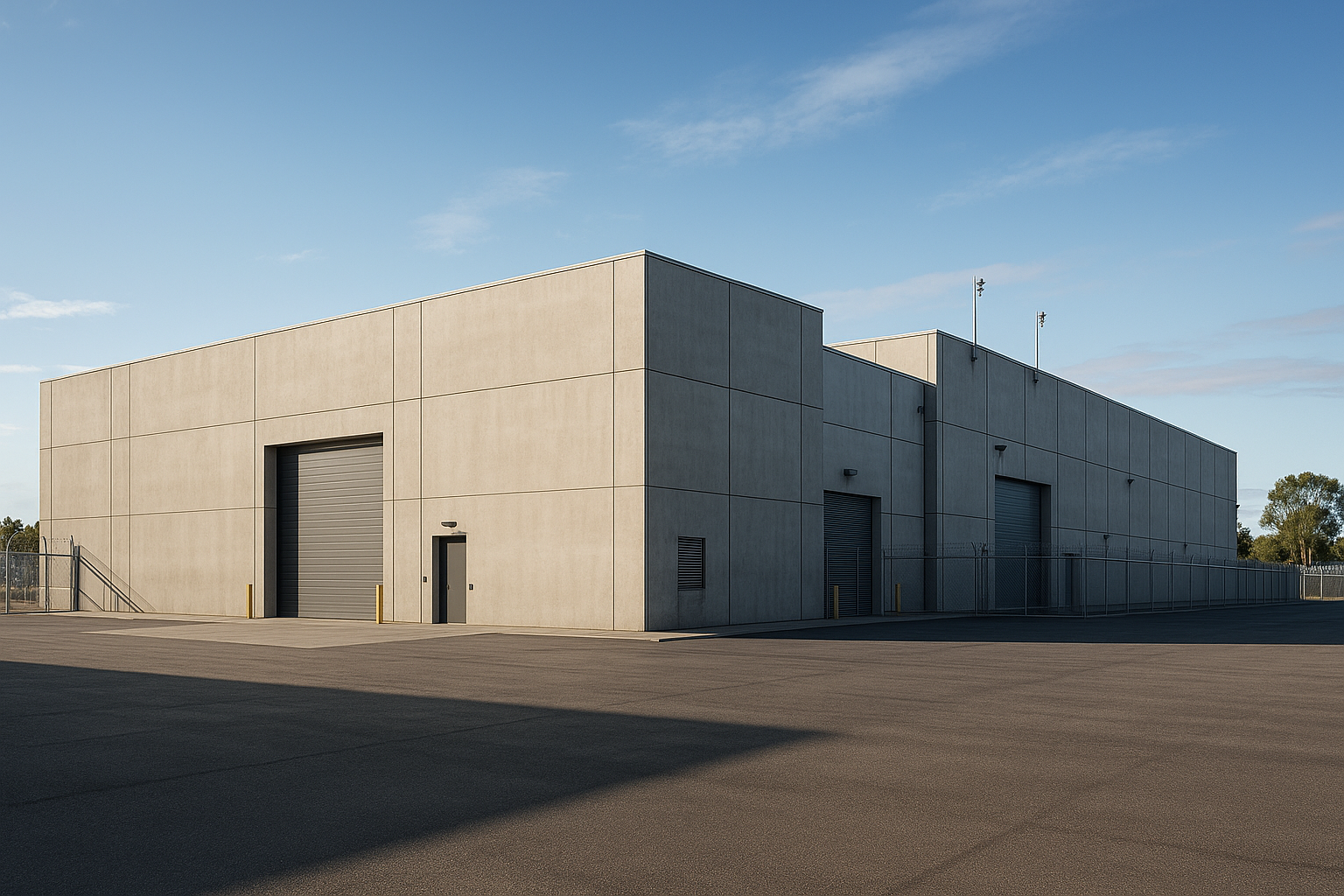
Art Secure Storage Facility, Mile End, South Australia
The Art Secure Storage Facility at 231 South Road, Mile End, represents the apex of cultural preservation infrastructure in the Southern Hemisphere—a fortress of climate control and surveillance that was meant to safeguard Teppo Jaskelain's "Mirage" but instead became a destination that the stolen sculpture would never reach. Built in the early 2000s as Adelaide's answer to international art storage standards, this facility embodies both the art world's increasing professionalisation and its vulnerability to crimes that occur before treasures reach its protective embrace.
Industrial Foundations (1975-2000)
The site at 231 South Road bore no hint of future cultural significance when the Consolidated Freight Company erected their warehouse complex in 1975. The three-hectare block, strategically positioned between Adelaide's port and rail infrastructure, served purely utilitarian purposes—storing automotive parts, agricultural equipment, and manufactured goods awaiting distribution across South Australia. The windowless concrete structure, designed by industrial architect Malcolm Pritchard, prioritised function over form, its reinforced walls and minimal openings creating naturally stable interior conditions that would later prove ideal for art storage.
For twenty-five years, the facility operated in profitable obscurity. Forklifts navigated its broad aisles, semi-trailers backed into loading bays, and shift workers punched time clocks without any awareness that they moved through spaces that would eventually house million-dollar masterpieces. The building's only distinction was its advanced fire suppression system, installed after a 1982 warehouse fire in Port Adelaide prompted industry-wide safety upgrades.
The economic rationalism of the 1990s brought consolidation to the freight industry. Consolidated Freight merged with National Logistics in 1998, redundancies eliminated half the workforce, and improved computer systems meant fewer facilities were needed. The Mile End warehouse, despite its excellent location and solid construction, was deemed surplus to requirements. By December 2000, the building stood empty, its vast interior spaces collecting dust whilst real estate agents struggled to find new tenants for such a large, specialised structure.
Transformation Vision (2001-2003)
The transformation began with a conversation at the Art Gallery of South Australia's 2001 fundraising gala. Property developer Anthony Marchetti overheard gallery director Christopher Menz lamenting the lack of proper storage for touring exhibitions. Insurance companies increasingly demanded climate-controlled environments, sophisticated security systems, and detailed handling protocols that Adelaide's existing facilities couldn't provide. Major international exhibitions were bypassing Adelaide simply because nowhere could guarantee the required conservation standards.
Marchetti, whose development company had profited from Adelaide's urban renewal, recognised opportunity in cultural infrastructure. His research revealed that Sydney and Melbourne's art storage facilities commanded premium rates whilst maintaining waiting lists. Adelaide's growing reputation as a festival city—bolstered by the Adelaide Festival, Fringe, and WOMADelaide—suggested similar demand would emerge locally. The Mile End warehouse, with its robust construction and strategic location, could be transformed into the facility Menz described.
The business plan, developed with cultural consultant Jennifer Rankine, projected profitability within five years. Initial clients would include the Art Gallery of South Australia, the South Australian Museum, and private collectors whose insurance required professional storage. The facility would also serve touring exhibitions, providing secure holding between venues. Revenue projections included storage fees, conservation services, and handling charges that could generate $2.8 million annually once fully operational.
Securing financing required navigating between commercial skepticism and cultural enthusiasm. Traditional banks questioned whether Adelaide's art market could support such specialised infrastructure. The breakthrough came through South Australia's Economic Development Board, which recognised the facility's potential to attract international exhibitions and enhance Adelaide's cultural reputation. A partnership between government grants, private investment, and cultural institution commitments provided the $12 million needed for transformation.
Technical Specifications (2003-2004)
The conversion from freight warehouse to art storage facility required complete internal reconstruction whilst maintaining the building's structural integrity. Project architect Sophia Konstantopoulos—a second-generation Greek-Australian who'd trained at the Städelschule in Frankfurt—understood that art storage demanded environmental precision that freight warehousing never contemplated.
Climate control became the primary engineering challenge. Adelaide's temperature extremes—from 45-degree summers to near-freezing winters—required systems capable of maintaining constant 20°C temperature and 50% relative humidity regardless of external conditions. The solution involved triple-redundant HVAC systems with backup generators ensuring uninterrupted operation during power failures. Each storage vault received independent climate zones, allowing different conditions for various media—paintings requiring different humidity than photographs or textiles.
Security infrastructure exceeded anything previously installed in South Australia. The perimeter fence, topped with razor wire and motion sensors, created the first barrier. CCTV cameras—128 in total—provided complete coverage with no blind spots. Biometric access controls meant only authorised personnel could enter storage areas, with every entry and exit logged digitally. Vibration sensors could detect attempted forced entry, whilst pressure pads identified unexpected weight changes that might indicate theft.
The storage systems themselves required careful design. Mobile racking maximised space whilst allowing each artwork individual accessibility. Painting racks accommodated works up to four metres tall. Sculpture plinths could support weights up to five tonnes. A separate vault for works on paper included specialised drawers maintaining darkness between viewings. Every surface that might contact artwork received museum-quality padding or inert coatings preventing chemical interaction.
Fire suppression presented particular challenges. Traditional sprinkler systems would destroy artworks whilst saving the building. The solution—a gaseous suppression system using FM-200—could extinguish fires without water damage. The system's installation required hermetically sealing storage areas and installing emergency breathing apparatus for any staff caught inside during discharge. The cost—$800,000 for the suppression system alone—reflected the facility's commitment to preservation over economy.
Operational Protocols (2004-2010)
The Art Secure Storage Facility opened quietly in September 2004 with a single client—the Art Gallery of South Australia transferring overflow from their overcrowded basement storage. The first artwork to enter was Arthur Boyd's "Shoalhaven Landscape," its arrival documented with procedures that would become standard protocol—photographic documentation, condition reporting, and climate acclimatisation before storage placement.
Building clientele required demonstrating competence beyond infrastructure. Facility director Margaret Whitlam, recruited from the National Gallery of Victoria, established handling protocols that exceeded international standards. Every artwork movement required two trained handlers minimum. Condition reports documented existing damage to protect against liability claims. Custom packaging was designed for each piece's specific requirements. The facility's reputation grew through flawless execution rather than marketing campaigns.
The staff, initially just six people, required specialised training. Art handlers completed courses in conservation, understanding how different materials responded to temperature, humidity, and handling. Security personnel learned to recognise genuine researchers from potential threats, balancing accessibility with protection. Administrative staff mastered the complex documentation that traced every artwork's movement, creating paper trails that satisfied insurers, customs officials, and estate lawyers.
Major exhibitions tested and proved the facility's capabilities. The 2006 Turner Prize exhibition at the Art Gallery of South Australia required storing works valued at £12 million. The 2008 Adelaide Biennial brought installations requiring unusual storage solutions—video art needing server maintenance, sound sculptures requiring periodic testing, and performance documentation needing special preservation protocols. Each challenge expanded the facility's expertise and reputation.
Private collectors gradually recognised the facility's value. Adelaide's wealthy families—particularly those with significant Indigenous art collections—appreciated professional storage that preserved both monetary and cultural value. The facility's discretion attracted collectors who preferred their holdings remain private. By 2010, private storage generated sixty percent of revenue, subsidising lower rates for public institutions.
The International Circuit (2010-2020)
The facility's second decade brought international recognition that transformed it from regional service provider to global player in art logistics. The 2012 partnership with Christie's auction house meant artworks could be stored in Adelaide whilst being marketed globally. The 2014 agreement with UNESCO for emergency cultural preservation established protocols for protecting artworks during conflicts or natural disasters.
Technology integration modernised operations without compromising security. Radio-frequency identification (RFID) tags allowed instant inventory verification. Database integration meant clients could review their holdings remotely. Digital imaging created virtual condition reports that could be examined without handling originals. These innovations positioned the facility at the forefront of art storage technology.
The Indigenous art boom particularly benefited the facility. As Aboriginal artworks achieved record prices internationally, proper storage became essential for preservation and authentication. The facility developed specific protocols for ochre paintings, understanding that traditional materials required different conservation approaches than European oil paintings. Partnerships with Aboriginal art centres brought cultural sensitivity to handling sacred or restricted works.
International exhibitions increasingly routed through Adelaide, using the facility as Southern Hemisphere hub. The 2018 "Impressionists in Australia" exhibition stored works by Monet, Renoir, and Pissarro between Melbourne and Sydney venues. The successful handling of such irreplaceable masterpieces—including emergency climate control repairs completed without moving the artworks—enhanced the facility's global reputation.
The Mirage Assignment (January 2023)
The agreement to store Teppo Jaskelain's "Mirage" following its Silverton unveiling represented routine high-value acquisition that the facility had handled hundreds of times. The sculpture, valued at $500,000, would require the large object storage vault with capacity for its unusual dimensions and weight. Climate specifications were standard—20°C, 50% humidity—though the opal elements embedded in resin might benefit from slightly lower temperatures to prevent expansion.
Preparations began weeks before the sculpture's scheduled arrival. The storage space was cleared and cleaned to museum standards. Custom supports were fabricated based on detailed specifications provided by Jaskelain's studio. Security protocols were reviewed, with additional cameras positioned to monitor the designated storage area. Insurance documentation confirmed coverage from the moment the sculpture entered facility custody.
Transport arrangements involved KC Art Logistics, the facility's preferred courier for high-value items. The climate-controlled truck would depart Silverton immediately after the 13th January unveiling, arriving at Mile End by early morning on the 14th. Two facility handlers would supervise unloading, with the sculpture remaining in its custom crate for 24-hour acclimatisation before uncrating and positioning.
The facility's night supervisor, David Nguyen, logged his shift on 13th January as routine. Security monitors showed normal perimeter activity—occasional passing vehicles, a cat triggering motion sensors, nothing suggesting awareness that "Mirage" would never arrive. The climate control systems maintained perfect stability. The empty space designated for the sculpture waited in pristine readiness.
The Morning That Changed Everything
The first indication of catastrophe came at 8:15 AM on 14th January when KC Art Logistics called to confirm pickup details. The confusion when Silverton contacts couldn't be reached initially seemed like communication breakdown. By 9:00 AM, when news of Naomi Simmons' murder reached Adelaide, the facility shifted from routine preparation to crisis management.
Margaret Whitlam immediately initiated emergency protocols. All facility entrances were secured, with nobody permitted entry or exit without documentation. The designated storage area for "Mirage" was photographed and sealed, preserving it as potential evidence should the sculpture somehow arrive through unofficial channels. Staff members were instructed to document any unusual inquiries about the sculpture or attempts to access the facility.
Contact with law enforcement began proactively. Whitlam called South Australia Police, offering cooperation with any investigation. The facility's security footage from the previous 48 hours was duplicated and prepared for review. Staff employment records were compiled in case investigators needed to verify alibis or connections to Silverton events.
The art world network activated immediately. Calls came from insurers seeking confirmation that "Mirage" hadn't somehow reached the facility. Other galleries inquired whether similar sculptures were in storage, fearing broader theft conspiracy. International art crime databases were checked for similar incidents. The facility became intelligence hub for an investigation centred five hundred kilometres away.
Investigation Support (January-March 2023)
Detective Inspector Jeremy Harding's investigation team arrived on 17th January, seeking to understand what should have happened to "Mirage" after its theft. The facility provided complete cooperation, opening records that revealed the sophisticated planning behind the sculpture's intended storage.
Documentation showed Julia Novak had made inquiries about storing a "large sculpture" in November 2022, though she'd never confirmed details or provided specifics. Her questions about security protocols, access procedures, and viewing arrangements now seemed reconnaissance rather than legitimate interest. The facility's refusal to provide detailed information without confirmed booking possibly prevented her from planning theft from storage rather than exhibition.
The facility's expertise proved valuable in understanding the theft's logistics. Based on "Mirage's" specifications, facility handlers calculated that moving the sculpture required minimum three people, specialised equipment, and a vehicle with at least two-tonne capacity. The absence of such equipment at the crime scene suggested either exceptional planning or methods investigators weren't considering.
Security footage review revealed no unusual activity at the facility before, during, or after the theft. However, analysts discovered that someone had researched the facility's Google Street View repeatedly in December 2022, studying approaches and sight lines. IP address tracking proved inconclusive, routed through VPNs that suggested criminal sophistication.
Reputation Management (2023-2024)
The facility faced unprecedented reputational challenges despite never actually handling "Mirage." Questions arose about whether security protocols were adequate for such valuable works. Some clients inquired about moving their collections to facilities that hadn't been associated with major crimes, even peripherally.
Whitlam's response balanced transparency with confidence. A public statement emphasised that the facility's security had never been breached, that "Mirage" had been stolen before entering their custody, and that their cooperation with investigators demonstrated commitment to art protection. Private communications with clients provided additional reassurances, including offers of security audits and protocol reviews.
New procedures were implemented despite the facility's non-involvement in the actual crime. Transportation protocols were enhanced, requiring GPS tracking and regular check-ins during transit. Agreements with couriers now included provisions for armed escorts for works valued over $250,000. Insurance requirements were strengthened, protecting both facility and clients against crimes occurring outside facility control.
The international art community largely supported the facility. Letters from major museums acknowledged that the crime could have happened anywhere, that the facility's preparations had been exemplary, and that their continued cooperation with investigators demonstrated professionalism. Several institutions actually increased their storage contracts, recognising that the facility's heightened security consciousness made it safer than less scrutinised alternatives.
Evolving Mission (2024-2025)
The "Mirage" incident catalysed fundamental reconsideration of the facility's role in art preservation. Beyond simple storage, it became clear that facilities like theirs needed to actively participate in art crime prevention, collector education, and industry-wide security improvements.
New services emerged from this recognition. The facility began offering pre-acquisition assessments, helping collectors verify provenance before purchase. Conservation consultations educated clients about preservation requirements for different media. Security seminars brought together collectors, galleries, and law enforcement to share knowledge about art crime prevention.
Collaboration with academic institutions expanded the facility's influence. University of Adelaide students undertook internships learning conservation techniques. TAFE courses in art handling used the facility for practical training. Research projects investigated new preservation technologies, with the facility serving as testing ground for innovations that might reshape global conservation practices.
The Indigenous art focus deepened through partnerships with Aboriginal communities. Recognising that storage facilities had historically served colonial institutions, the facility actively sought to support Indigenous cultural preservation. Subsidised storage for art centres, culturally appropriate handling protocols developed with traditional owners, and employment programmes for Indigenous youth demonstrated commitment to reconciliation through action.
The Shadow of Absence
"Mirage's" absence paradoxically increased the facility's significance. The empty space prepared for the sculpture became symbol of art crime's impact—not just stolen objects but disrupted plans, unfulfilled intentions, and protective systems that couldn't prevent crimes occurring elsewhere.
Staff members reported strange psychological effects from preparing for an arrival that never occurred. The custom supports built for "Mirage" remained in storage, too specific for other use but too expensive to discard. The documentation file for the sculpture grew despite its absence—insurance correspondence, investigation updates, media coverage creating archive of void.
Some suggested the facility should create memorial to "Mirage," acknowledging its intended destination if not actual presence. Others argued this would commercialise tragedy. The compromise—a small plaque in the administrative area reading "In memory of Naomi Simmons and all those who dedicate their lives to preserving beauty"—honoured human cost without exploiting sensational aspects.
The sculpture's ghost haunted international exhibitions passing through Adelaide. Curators specifically noted "Mirage's" absence when discussing security. Insurance premiums reflected increased risk awareness. Transport companies referenced the theft when explaining enhanced protocols. The facility had become inadvertent memorial to artwork it never possessed.
Current Operations
The Art Secure Storage Facility continues operating at full capacity, its 15,000 square metres housing artworks valued collectively at over $500 million. The 42 staff members maintain standards that remain among the world's strictest. The waiting list for private storage extends eighteen months. Yet consciousness of vulnerability persists despite—or perhaps because of—impeccable security.
Daily operations proceed with heightened awareness. Morning security briefings reference global art crimes. Handling protocols assume every movement might be last before theft. Documentation imagines future investigators requiring evidence trails. The facility operates in permanent state of productive paranoia, understanding that perfect security remains impossible.
The "Mirage" case file remains open in the director's office, updated whenever investigation develops. Staff members follow news coverage, hoping for breakthrough that might bring closure. Some believe the sculpture will eventually surface in private collection or underground market. Others think it was destroyed to eliminate evidence. The not knowing creates persistent unease.
Educational programmes now include case studies of the "Mirage" theft, teaching next generation about art crime's complexity. Students learn that security extends beyond physical protection to include provenance verification, market analysis, and understanding collector psychology. The facility has become classroom where theoretical knowledge meets practical consequence.
Technological Evolution
Investment in emerging technologies positions the facility at conservation's cutting edge. Artificial intelligence algorithms analyse climate data, predicting maintenance needs before problems develop. Blockchain technology creates immutable provenance records. Virtual reality allows remote condition assessments without handling originals.
These innovations attract international attention. Delegations from new facilities in Asia and Middle East study the Mile End model. Consulting contracts provide additional revenue whilst spreading best practices globally. The facility has evolved from service provider to knowledge creator, influencing how art storage develops worldwide.
Yet technology cannot eliminate human elements that enable crimes like the "Mirage" theft. No algorithm predicted Julia Novak's obsession. No surveillance system prevented murder at Silverton. No protocol anticipated artwork vanishing between exhibition and storage. Technology enhances but cannot replace human judgment about trust, beauty, and value.







