Archer Matthew Donovan
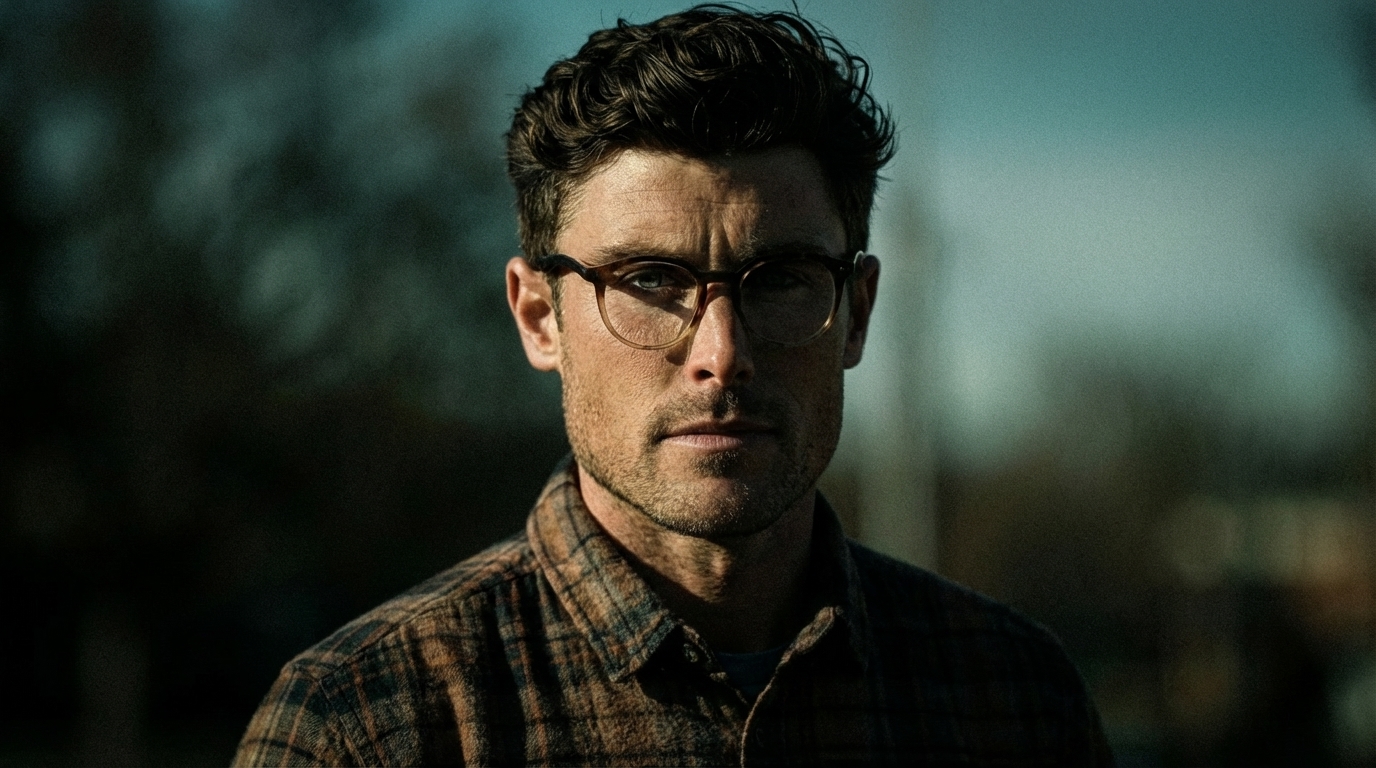
Born in Hobart on 22 February 1983, Archer Matthew Donovan emerged from a household steeped in scientific inquiry to become one of Tasmania's most respected forensic scientists. His expertise in trace evidence analysis, honed across Victoria and his home state, reached its most significant test in August 2018 when he processed evidence from Detective Sarah Lahey's death at Myrtle Forest. A devoted husband and father, Archer balances professional precision with a quiet passion for Tasmania's wilderness.
Early Life and the Formation of an Observer
The morning of 22 February 1983 brought steady rain to Hobart's Royal Hobart Hospital, where Eliza Donovan delivered her second child—a boy she and her husband Peter would name Archer Matthew. The Donovan family had established themselves in Battery Point, occupying a modest Federation cottage that Peter had purchased three years earlier when he'd accepted a lectureship in marine biology at the University of Tasmania. The house sat close enough to the waterfront that young Archer would grow up with the sound of the Derwent River as his constant companion.
Peter Richard Donovan, born in 1951, had arrived in Tasmania from Sydney a decade earlier, drawn by the island's relatively unexplored marine ecosystems and the university's growing research programmes. His work focused on the invertebrate populations of Tasmania's southern coastline, and his methodical approach to specimen collection would prove an inadvertent template for his son's future career. Eliza Margaret Donovan, née Harding, born in 1954, had grown up in the Huon Valley and trained as a primary school teacher at the Tasmanian College of Advanced Education. Her approach to education emphasised observation and documentation—skills she encouraged in all her children but which found their most receptive student in Archer.
The Donovan household already contained one child when Archer arrived: his sister Olivia Catherine, born in 1980, a serious girl who would eventually channel her father's analytical temperament into environmental law. Four years after Archer's birth, in February 1987, the family welcomed Ethan James, completing a household where scientific discussion around the dinner table was as common as conversation about weather.
Archer's childhood unfolded against the backdrop of Peter's research expeditions and Eliza's classroom innovations. Weekend mornings often found the family at Blackmans Bay or Kingston Beach, where Peter collected samples whilst Eliza supervised the children's own collecting efforts. Archer took to this ritual with unusual intensity—not content merely to gather shells or seaweed, he insisted on recording what he found, creating detailed inventories in notebooks his mother provided. By the age of seven, these notebooks had evolved into genuine specimen logs, complete with dates, locations, and crude sketches that demonstrated more patience than artistic talent.
The cottage in Battery Point contained a small study that served as Peter's home office, its walls lined with journals and reference texts, its surfaces cluttered with labelled samples awaiting analysis. Archer spent countless hours in this space, initially as a curious child seeking his father's attention, eventually as a genuine assistant capable of cataloguing specimens according to the systems Peter employed. The orderliness of scientific classification appealed to something fundamental in his character—the satisfaction of knowing that everything had its place, that chaos could be organised into comprehensible patterns.
Education and the Crystallisation of Purpose
Archer commenced his formal education at Hobart Primary School in 1988, entering a classroom supervised by teachers who quickly recognised both his capabilities and his limitations. He excelled in subjects requiring systematic thinking—mathematics, science, any discipline where clear answers rewarded careful methodology. Creative writing and art proved more challenging; his imagination seemed constrained by an insistence on accuracy that made fiction feel dishonest.
The move to Hobart High School in 1995 coincided with an awakening of genuine intellectual passion. Two teachers proved particularly influential. James Whitaker, who taught chemistry, introduced Archer to the elegant precision of molecular analysis—the way substances revealed their secrets when subjected to appropriate tests. Alice Fenton, his biology instructor, demonstrated that living systems operated according to patterns as predictable as chemical reactions, that the apparent chaos of nature concealed underlying order accessible to those patient enough to observe.
It was Fenton who first suggested forensic science as a career pathway. During a unit on genetics in Year 11, she brought newspaper clippings describing DNA evidence used in criminal trials—stories of solved cases, exonerated innocents, and mysteries unravelled through laboratory analysis. Archer read these accounts with the same intensity he'd once devoted to his specimen notebooks, recognising in forensic work a discipline that combined scientific rigour with practical consequence. Unlike marine biology, which documented life's patterns without necessarily affecting human affairs, forensic science applied observation toward justice. Evidence spoke for victims who could no longer speak for themselves.
His final years at Hobart High School (1997-1999) demonstrated increasing focus. He enrolled in every available science course, maintained an extracurricular job at a pharmacy to fund university applications, and began researching undergraduate programmes that might lead toward forensic work. His school-leaving certificate in November 1999 recorded strong results across scientific subjects—not exceptional enough for academic scholarships, but sufficient for entry to competitive programmes.
University Years: Tasmania and Melbourne
In February 2001, Archer enrolled in the Bachelor of Forensic Science programme at the University of Tasmania, returning to the Sandy Bay campus where his father still conducted research. The programme was demanding—chemistry, biology, statistics, law, and practical laboratory work combined into a curriculum designed to produce graduates capable of bridging scientific analysis and legal requirements.
His undergraduate years revealed both strengths and weaknesses. Laboratory work proved exceptional; Archer possessed what instructors called "good hands"—the physical precision and patience required for procedures where contamination meant compromised evidence. His written reports demonstrated thorough methodology and careful conclusions, never claiming more than evidence supported. Examinations proved more challenging, particularly those requiring quick synthesis under time pressure. Archer's systematic approach, excellent for extended analysis, sometimes struggled with the compressed demands of examination conditions.
The honours thesis that occupied his final year (2005-2006) examined fibre evidence in historical cases—specifically, several cold cases from Tasmania's archives where textile analysis might yield new insights. His paper, "The Role of Fibre Analysis in Solving Cold Cases," earned strong marks and, more importantly, attracted attention from forensic practitioners who appreciated his willingness to engage with practical casework rather than purely theoretical concerns.
Graduation in late 2006 presented a choice: seek employment immediately or pursue postgraduate study that might enhance career prospects. His professors encouraged the latter, and in early 2007, Archer accepted an offer from the University of Melbourne's forensic science programme.
Melbourne represented Archer's first extended period away from Tasmania. He found lodgings in Carlton, close enough to the university for daily walks to campus, and settled into the demanding rhythm of postgraduate research. His dissertation focused on trace DNA analysis—the techniques required to extract genetic information from minimal biological samples, the kind of evidence that often proved decisive in complex investigations. The work brought him into contact with Victoria Police Forensic Services, where he completed practical placements that demonstrated his laboratory skills to potential employers.
During these Melbourne years, Archer formed professional friendships that would endure beyond graduation. One colleague, Marcus Chen, would later establish himself in Queensland's forensic services. Another, Victoria Shepherd, eventually joined the Australian Federal Police. These connections created a network that extended beyond Tasmania's borders, proving valuable throughout Archer's subsequent career when complex cases required interstate consultation.
Victoria Police and the Forging of Professional Identity
In March 2008, with his Melbourne degree completed, Archer accepted a position as Junior Forensic Scientist with the Victoria Police Forensic Services Department. The role provided immersion in active casework—processing evidence from scenes that ranged from property crimes to serious assaults, preparing reports that would face scrutiny in courtrooms, and developing the habits of documentation and chain-of-custody maintenance that distinguished professional forensic work from amateur enthusiasm.
His supervisor during these formative years was Dr. Harold Mercer, a veteran forensic specialist whose career stretched back to the 1980s. Mercer embodied the old school of forensic science—thorough, cautious, and deeply sceptical of conclusions that outpaced evidence. Under his guidance, Archer learnt that forensic work demanded humility as much as expertise. Laboratories could reveal what samples contained; they could not always reveal what that content meant. The gap between scientific finding and investigative conclusion required interpretation, and interpretation could err.
Victoria's caseload exposed Archer to work more varied than Tasmania could offer. Drug-related crimes, organised violence, property offences, and occasional homicides crossed his workbench in steady succession. He developed particular expertise in trace evidence—the fibres, glass fragments, paint samples, and other minute deposits that crime scenes yielded to patient collection. This focus suited his temperament; trace evidence required the meticulous attention he'd demonstrated since childhood, the same patience he'd once applied to cataloguing beach specimens now directed toward cataloguing fragments of criminal activity.
By early 2010, Archer had established sufficient reputation to consider his next career move. Tasmania's Forensic Science Service had expanded its capabilities and was recruiting experienced practitioners willing to return to the island. The opportunity aligned with personal circumstances—his relationship with Emma Cartwright, an environmental engineer he'd met through friends in late 2009, had progressed toward seriousness, and Emma's work could transfer to Tasmania more easily than to Victoria's crowded professional market.
Return to Tasmania and the Rise Through FSST
Archer joined the Forensic Science Service Tasmania in July 2010, accepting a position as Forensic Scientist in the Trace Evidence Unit. The appointment represented a homecoming of sorts—his parents still occupied the Battery Point cottage, his sister had established a legal practice in Hobart, and the landscape that had shaped his childhood remained unchanged despite the years of absence.
The FSST laboratory operated from facilities in Hobart's northern suburbs, a modern building equipped with instruments that matched national standards. Archer's trace evidence work resumed the focus he'd developed in Victoria, but now with greater autonomy and increased responsibility. His unit handled fibre analysis, glass examination, paint comparison, and the varied debris that crime scenes generated—work that required both technical skill and interpretive judgment.
In 2011, whilst establishing his FSST career, Archer completed a Graduate Certificate in Forensic Anthropology through Flinders University's distance programme. The coursework covered human identification and post-mortem interval estimation—skills that extended his capabilities beyond trace evidence into broader death investigation contexts. That same year, in October, he married Emma Cartwright at a small ceremony in the Hobart Botanic Gardens. The couple purchased a home in Lenah Valley, close enough to Archer's parents for regular visits but distant enough to establish their own household rhythms.
The years between 2010 and 2014 consolidated Archer's professional standing. He developed protocols for fibre analysis that improved processing efficiency without sacrificing thoroughness. He trained junior scientists, discovering an aptitude for instruction that surprised him—his systematic approach, sometimes limiting in other contexts, proved valuable when communicating complex procedures to newcomers. His casework contributions accumulated steadily: evidence processed, reports prepared, testimony delivered, investigations supported with findings that prosecutors could present with confidence.
Promotion to Senior Forensic Scientist arrived in early 2014, recognising both accumulated expertise and leadership capability. The new role brought supervisory responsibilities—oversight of junior staff, quality assurance duties, and involvement in complex cases that required experienced judgment. By now, Archer and Emma had welcomed their first child, Sophie Elizabeth, born in August 2013, and were expecting their second.
Professional Maturity and the Weight of Expertise
The mid-2010s established Archer as one of FSST's most reliable senior practitioners. His specialisation in trace evidence meant involvement in cases ranging from burglaries to homicides, from road accidents to suspicious deaths. Each case demanded the same meticulous approach—evidence collected according to protocol, samples processed without contamination, findings documented in language that courts could comprehend. The routine could feel monotonous, but monotony in forensic work meant consistency, and consistency meant reliability. Courts trusted experts who produced the same quality regardless of case profile or media attention.
In 2015, Archer completed advanced training in forensic fibre analysis at the National Forensic Science Technology Center in Florida, one of few international opportunities his budget permitted. The programme exposed him to techniques employed by American laboratories and created connections with forensic practitioners from multiple countries. He returned to Tasmania with enhanced skills and renewed perspective on the field's evolving standards.
The following year brought his son Noah William, born in April 2016. The family adjusted to the chaos of two young children, finding equilibrium in the hiking expeditions Emma organised through Tasmania's national parks. These wilderness trips became essential to Archer's wellbeing—respite from laboratory confinement, opportunities to reconnect with the natural world that had first sparked his curiosity, and family time that his demanding career otherwise threatened.
In 2017, Archer presented research at the International Symposium on Forensic Science, his paper on trace DNA collection techniques earning respectful attention from international peers. The presentation represented his most significant public contribution to the field, demonstrating expertise that extended beyond routine casework into genuine methodological innovation. By now, his professional reputation reached beyond Tasmania's borders; interstate colleagues occasionally sought his consultation on trace evidence matters, and prosecutors requested his testimony with confidence.
July 2018: The State Theatre Scene
The morning of 20 July 2018 began routinely. A call from Tasmania Police reported a body discovered at Hobart's State Theatre—an apparent unattended death requiring forensic processing. Archer assembled his team: Constable Mackenzie for logging and perimeter duties, and MacDougall, a junior technician whose precise tripod work he'd observed with approval during recent callouts.
The theatre scene presented immediate complexity. A male victim, late thirties or early forties, occupied one of the front-row seats with almost theatrical arrangement—positioned, observers later noted, as though watching a performance that would never begin. No identification accompanied the body. The discovery by theatre staff in the early morning hours, combined with the victim's unusual positioning, suggested circumstances beyond natural death.
Detective Sergeant Charlie Claiborne met them at the scene. Claiborne's reputation preceded him—a career spanning decades, investigative instincts refined through countless cases, and the weary authority of someone who'd witnessed more death than anyone should accommodate. Their interaction was professional, economical: handover of preliminary observations, confirmation of scene integrity, the understood transition from detective's domain to forensic team's territory.
Archer processed the scene with characteristic thoroughness, directing MacDougall's photography whilst personally supervising evidence collection. The body would eventually yield information through autopsy; his task involved the surrounding environment—the seats, the carpet, the doors through which someone had entered and departed, the thousand surfaces that might retain trace deposits from whoever had placed the victim there. Hours of careful collection followed, each sample bagged and labelled according to protocols he could execute in his sleep.
What he couldn't know, documenting that strange tableau in the empty theatre, was how the threads of this case would eventually tangle with investigations far more complex—disappearances, violence, and deaths that would consume Tasmania Police resources throughout August 2018.
August 2018: The Lahey Investigation
The death of Detective Sarah Lahey on 8 August 2018 brought Archer's expertise to its most significant test. Myrtle Forest, the location where Lahey fell, presented a challenging crime scene—outdoor environment, weather exposure, and the investigative complications that attended any officer death. Archer led the forensic response, coordinating evidence collection with the awareness that his findings would face intense scrutiny from police, media, and courts.
The scene yielded its secrets reluctantly. Blood spatter on a shattered wine bottle. Fingerprints that processing would eventually identify. Environmental samples from surrounding vegetation. Each fragment of evidence demanded collection according to protocols that assumed hostile scrutiny—defence attorneys who would seek any processing error to discredit findings, media commentators eager to identify institutional failures, and fellow officers whose colleague's death required explanation.
Subsequent analysis extended beyond Myrtle Forest. Blood evidence from the Berriedale residence of Luke Smith and Jamie Greyson proved particularly significant. Working alongside Hazel Lockhart, his FSST colleague whose DNA expertise complemented his trace evidence specialisation, Archer processed samples that revealed stunning connections: blood matching missing persons Beatrix Cramer and Sarah Lahey herself, recovered from locations that placed them at scenes contradicting official accounts.
The laboratory hours accumulated. Evidence bags became case files became testimony. Archer's analysis contributed to investigations that sprawled across Tasmania, touching the Jeffries family, the Greyson disappearance, and questions about Lahey's final days that investigators struggled to resolve. His findings spoke through the neutral language of forensic reports—concentrations measured, matches confirmed, timelines estimated—whilst investigators wrestled with implications that extended far beyond what science alone could determine.
Personal Life and the Balance of Priorities
Away from the laboratory, Archer constructed a life deliberate in its quietude. The Lenah Valley house that he and Emma shared accommodated their growing family whilst providing the garden space Emma's environmental conscience required. Sophie and Noah attended local schools, absorbing their parents' passion for the natural world through camping trips that became family tradition.
Emma's career in environmental engineering complemented Archer's forensic work in unexpected ways. Both professions demanded evidence-based reasoning; both required translating technical findings into language accessible to decision-makers. Their dinner conversations often traced parallel concerns—chain of custody here, environmental baseline data there, the shared challenge of maintaining scientific integrity against practical pressures.
Archer's hobbies reflected the quieter aspects of his character. Historical novels provided escape from casework's intensity—he particularly favoured accounts of exploration and discovery, stories where patient observation revealed what impatience missed. Amateur photography evolved from crime scene documentation into genuine artistic pursuit; his images of Tasmania's wilderness captured the detailed textures that his forensic eye naturally sought. The piano lessons his mother had provided during childhood matured into genuine competence, and evening practice sessions became his method of transitioning from work's demands to domestic life's calmer rhythms.
The relationship with his parents remained close despite the independence that marriage and parenthood established. Peter Donovan, now retired from the university, maintained his marine research as an emeritus pursuit; Archer occasionally accompanied his father on specimen-collecting expeditions, recapturing rhythms that had shaped his childhood whilst introducing Sophie and Noah to the same scientific traditions. Eliza, whose teaching career had concluded with her own retirement, devoted herself to grandparental duties that Archer and Emma gratefully accepted.
His siblings occupied different orbits. Olivia's environmental law practice brought occasional professional intersection—cases where forensic evidence touched environmental crime, regulatory prosecutions requiring scientific testimony. Ethan had established himself in marine conservation work that echoed their father's career, though based in Sydney rather than Tasmania. Family gatherings, when geography permitted, revived dynamics established in the Battery Point cottage decades earlier: Olivia's analytical intensity, Ethan's more relaxed approach, Archer positioned between them as he'd been positioned since childhood.
Professional Standing and Continuing Service
By 2020, Archer's career had accumulated the markers of professional maturity. His publication in the Journal of Forensic Sciences—"Improving the Accuracy of Trace Evidence Analysis Through Enhanced Collection Techniques"—documented methodological innovations that fellow practitioners adopted. His membership in the Australian and New Zealand Forensic Science Society and affiliation with the International Association of Forensic Sciences connected him to professional networks extending well beyond Tasmania.
The cases continued arriving. Each demanded the same systematic attention that Archer had developed since childhood—the patience to collect without assumption, the precision to process without error, the discipline to document without embellishment. Forensic science offered no dramatic revelations, despite what television procedurals suggested. It offered instead the steady accumulation of evidence, fragment by fragment, until patterns emerged from chaos and truth became demonstrable rather than merely suspected.
Archer Matthew Donovan, Senior Forensic Scientist, continued this work from the FSST laboratory in Hobart's northern suburbs—processing samples, preparing reports, training the next generation of forensic practitioners who would eventually inherit responsibilities he'd carried for over a decade. The boy who'd catalogued beach specimens had become the man who catalogued evidence of human violence and deception. The methodology remained constant even as the stakes had grown immeasurably higher. Observation, documentation, analysis, and the patient conviction that truth revealed itself to those willing to look carefully enough.







