Anne Woolley (née Shepherd)
Anne Woolley lived a life of quiet competence that bridged the gap between colonial struggle and established prosperity, transforming from a motherless girl managing her siblings' needs into a matriarch whose practical wisdom shaped three successful sons and established patterns of stability that would elevate future Woolley generations. Born into Hobart's first wave of native-born colonials, she understood both the opportunities and limitations of her position, accepting a pragmatic marriage proposal that offered security over passion and building from that foundation a household remarkable for its steady advancement and absence of the chaos that had marked previous Woolley generations.
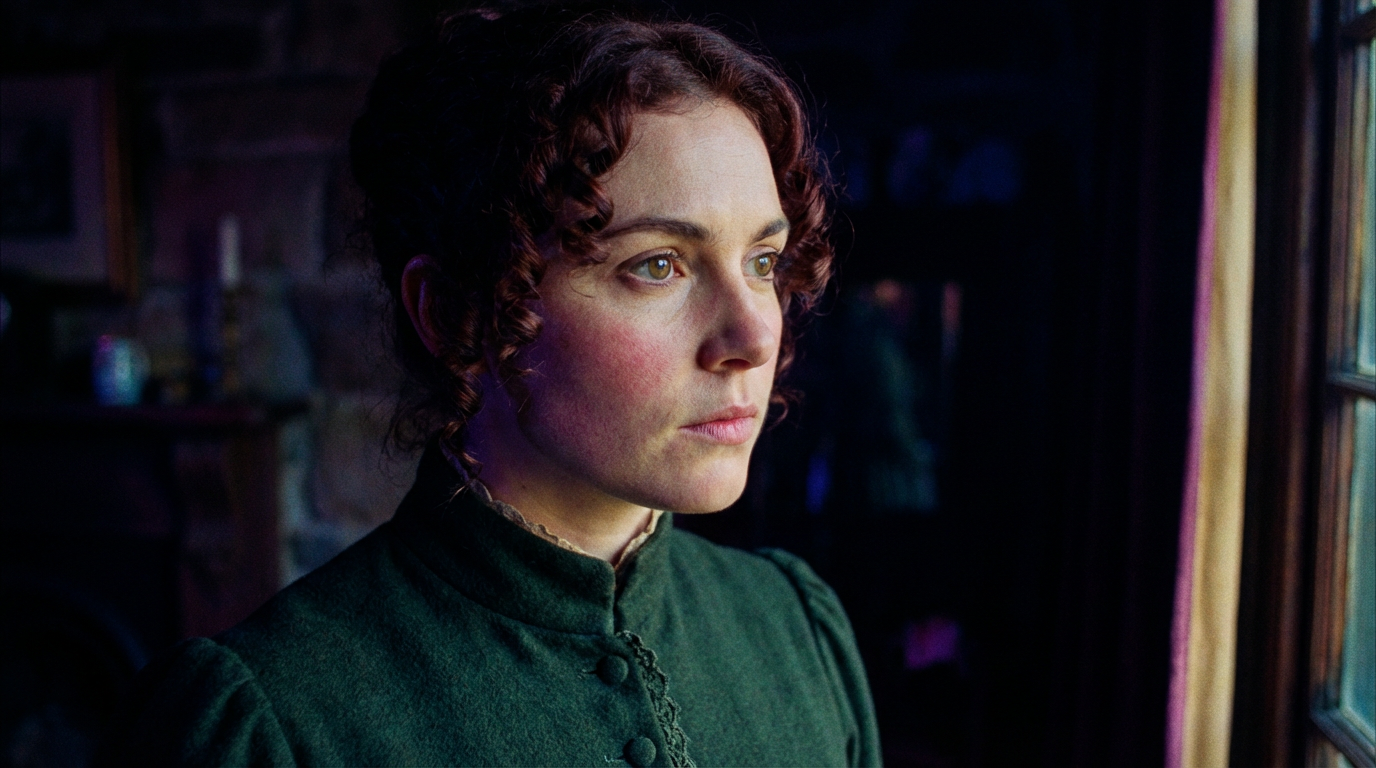
Early Years in Colonial Hobart (1814–1830)
Anne Shepherd entered the world on 21st November 1814 in Hobart Town, amongst the first generation of children born to free settlers in Van Diemen's Land. Her parents, William and Margaret Shepherd, had arrived in 1810 with modest capital and grand ambitions, establishing a small holding that provided respectability without wealth. The cottage near the Derwent River was solid but cramped, housing what would eventually become seven children in three rooms that smelled perpetually of damp wool and boiling potatoes.
Her mother Margaret died in childbirth when Anne was eight, leaving her abruptly responsible for four younger siblings whilst her father struggled to maintain the holding. At an age when other girls were learning their letters, Anne was learning to stretch mutton into seven portions, to mend clothes in candlelight after the little ones slept, to recognise which coughs required attention and which would resolve themselves. The weight of premature responsibility shaped her spine into permanent straightness, her hands into tools that never quite learned to rest.
William Shepherd, overwhelmed by grief and the practical demands of single parenthood, retreated into his agricultural work, leaving Anne to manage the domestic sphere entirely. He wasn't cruel, merely absent — present at meals but not conversations, providing money for necessities but not guidance for decisions. Anne learned to forge his signature on school documents, to handle tradesmen who assumed a child couldn't possibly be in charge, to project authority she didn't feel whilst managing siblings who remembered their mother and resented her replacement.
The small holding struggled without Margaret's contributions — she had maintained a kitchen garden that provided both food and modest income through sales at Hobart's market. Anne attempted to continue this work but lacked her mother's knowledge of which herbs treated which ailments, which vegetables grew in Tasmania's unfamiliar climate. The garden gradually failed, adding financial pressure to an already strained household. By twelve, Anne had abandoned formal education entirely, her days consumed by washing, cooking, mending, and preventing her siblings from the kinds of accidents that poverty made more likely.
The Burden of Respectability (1830–1837)
As Anne entered her late teens, the household dynamics shifted uncomfortably. Her siblings, growing older and more independent, resented the authority she had assumed by necessity. Her brother Robert, two years younger but convinced of his masculine superiority, challenged her decisions constantly, whilst her sister Catherine, pretty and spirited at fourteen, chafed against Anne's insistence on propriety. The younger children — twins Margaret and James — simply grew wild, escaping Anne's supervision whenever possible to run with the rough children near the docks.
Her father's appointment as an overseer with the Van Diemen's Land Company in 1832 brought modest financial relief but also new social pressures. The position elevated them slightly above their neighbours but not enough to mix with Hobart's established families. Anne found herself managing a household that needed to appear more prosperous than it was, maintaining standards they could barely afford, wearing dresses turned and mended so often the original fabric was largely theoretical.
The company picnics and church socials she was now expected to attend became exercises in careful performance. Anne learned to hold teacups that threatened to rattle against saucers, to contribute appropriate responses to conversations about topics she had never studied, to project the easy confidence of someone who belonged whilst knowing she emphatically didn't. Her plain features and practical manner attracted little attention from the young men who attended these events, seeking prettier or wealthier prospects.
By twenty, Anne watched her peers marry whilst she remained at home, trapped by obligations no one acknowledged. Catherine had married at sixteen, escaping to Launceston with a wool merchant who had been charmed by her vivacity. Robert had apprenticed to a carpenter, contributing nothing to the household whilst living there free. The twins required constant supervision, though at twelve they were old enough to resent it. Her father, approaching sixty, showed signs of the confusion that would later consume him entirely — forgetting conversations, losing track of money, depending on Anne to maintain the fiction of his competence.
Thomas's Proposal (1837–1838)
Thomas Woolley first appeared in Anne's peripheral vision at a Van Diemen's Land Company picnic in December 1837, though "appeared" suggests more impact than he actually made. He was simply there — neat, quiet, occupying space without claiming it, rather like Anne herself. She noticed him because he didn't pursue the prettier girls, didn't drink heavily with the other clerks, didn't seem to require anything from anyone. His self-sufficiency attracted her in ways she couldn't quite articulate.
Their courtship consisted mainly of being present in the same spaces — church, company events, market days when he'd tip his hat and she'd nod acknowledgement. They exchanged perhaps a dozen direct sentences over six months, both understanding that something was being negotiated through proximity rather than conversation. Thomas would position himself where she could see him but not where he'd have to speak, whilst Anne would ensure she was accessible but not obviously available.
The proposal came on a Sunday afternoon in March 1838, delivered with the matter-of-fact tone of a business transaction. Thomas explained his position as senior clerk, his savings of forty-seven pounds, his rental of a cottage in New Norfolk with attached land suitable for cultivation. He outlined his plans for gradual improvement, his expectations of domestic economy, his ability to provide adequately if not generously. The proposal contained no mention of affection, attraction, or emotional attachment — merely a systematic listing of practical advantages.
Anne accepted immediately, surprising them both. At twenty-three, she understood her options were narrowing daily. Her father's increasing confusion would soon become undeniable, the twins would need placing somewhere, and she'd be left with nothing but responsibility for a failing household. Thomas offered escape disguised as duty, independence masquerading as marriage. They shook hands to seal the arrangement, both relieved to avoid the embarrassment of attempted affection.
Establishing the New Norfolk Household (1838–1845)
The wedding at St David's Church on 15th June 1838 was modest to the point of invisibility. Her father attended but seemed confused about the proceedings, whilst Thomas's parents were notably absent — his father Thomas Sr claiming illness everyone knew was displeasure at his namesake's assertion of independence. Agnes Woolley, Thomas's mother, attended despite her husband's objections, bringing a practical gift of household linens and an expression suggesting resignation rather than celebration. Anne recognised in Agnes a woman who understood duty's particular exhaustions — the midwife who had spent decades managing her husband's dark moods whilst delivering other women's children — and felt an instinctive kinship they would never articulate in the years that followed.
The cottage in New Norfolk represented the first space Anne had ever controlled completely. Two bedrooms, a kitchen, a small parlour, and three acres of land that Thomas had already begun cultivating with mathematical precision. After years of managing chaos, the cottage's order felt almost miraculous. Thomas had arranged everything systematically — tools in graduated sizes, preserved foods organised by type and date, even the cleaning supplies stored according to frequency of use.
The early months of marriage established patterns that would persist for decades. Thomas left for work at precisely seven, returned at six, spent evenings working the garden or studying agricultural texts. Anne maintained the household with an efficiency that finally had an appreciative audience, even if that appreciation was expressed through absence of complaint rather than active praise. They shared a bed but little conversation, both finding comfort in routine that required no negotiation.
James's arrival on 5th June 1840 disrupted this careful equilibrium. The pregnancy had been uncomfortable but not discussed — Anne suffering morning sickness in private, Thomas pretending not to notice her changing shape until acknowledgement became unavoidable. The birth, attended by New Norfolk's midwife rather than Agnes — the twenty-mile distance providing convenient excuse — was prolonged but uncomplicated. Thomas, banished to the garden, planted an entire row of potatoes during the twelve-hour labour, returning to find himself a father to a son who would carry on the Woolley name.
Motherhood and Miscarriage (1840–1850)
Anne discovered in motherhood capacities she hadn't suspected. Unlike the resentful duty of raising siblings, caring for James activated genuine tenderness. She documented his first smile, his first tooth, his first word — "more," practical like his parents — finding in these small achievements a satisfaction that surprised her. Thomas, observing from his customary distance, seemed pleased but uncertain how to engage with this small creature who disrupted schedules and destroyed careful order.
Charles arrived on 9th September 1842, his birth easier but his temperament more challenging. Where James had been placid, Charles was demanding — crying without clear cause, refusing routines, requiring attention Thomas couldn't provide and Anne struggled to maintain whilst managing a toddler. The cottage, perfectly sized for a careful couple, became cramped with two children and their accumulating necessities.
The first miscarriage came in 1844, a violent expulsion of possibilities that left Anne bedridden for a week whilst Thomas managed children and household with mechanical competence but no comfort. They never discussed the loss directly, though Thomas planted a rose bush in the garden — an unusual deviation from his purely practical cultivation that said more than either of them could manage in words. The second miscarriage in 1845 was quieter but somehow worse, a gradual fading that Anne recognised but couldn't prevent. This time Thomas planted nothing, and they moved through their days with careful distance, as if proximity might cause further damage.
Thomas Jr's successful arrival on 15th March 1846 felt like vindication and conclusion simultaneously. Three sons seemed sufficient — enough to ensure continuation without overwhelming resources. Anne, exhausted from the pregnancies and losses, felt relief when Thomas began spending nights in the small room he had fitted out as a study. They maintained marriage's appearance whilst retreating into parallel lives that intersected at meals and household decisions but nowhere else.
Building Modest Prosperity (1850–1870)
The 1850s brought unexpected stability. Thomas's continued employment with the Van Diemen's Land Company coincided with successful expansion of their agricultural experiments. The family moved to a proper house on New Norfolk's outskirts, with five acres that Thomas transformed into a model of small-scale intensive farming. Anne, freed from the cramped cottage, developed her own domains — a kitchen garden that became locally famous, a henhouse that produced eggs for sale, a small dairy operation that provided butter for Hobart markets.
Thomas Sr's death on 22nd May 1853 drew Thomas back to Hobart for a funeral that left him quieter than usual for weeks. Anne had met her father-in-law only a handful of times and found him difficult to read — a man whose silences contained currents she couldn't navigate. His death affected Thomas in ways she observed but could not address, the loss of a father he had never understood settling into him like damp into stone. Agnes's death two years later, on 9th August 1855, registered differently. Anne attended that funeral and stood beside the grave of the woman who had handed her household linens seventeen years earlier, feeling the particular grief of losing someone she might have known better if geography and temperament hadn't conspired against intimacy.
The boys developed distinct personalities within this environment of careful prosperity. James, eldest and most responsible, absorbed his father's methodical approach whilst showing unexpected warmth. Charles, mechanical and restless, forever took things apart to understand their operation, driving Anne to distraction with dismantled experiments scattered across the kitchen table. Young Thomas, the baby, showed academic promise that delighted his father and worried his mother, who understood that education created expectations their class couldn't always meet.
Anne's role evolved from household manager to small business operator. Her butter, marketed as "Mrs Woolley's Best," commanded premium prices for its consistent quality. Her eggs were reserved by Hobart's better hotels weeks in advance. The income, carefully saved, funded the boys' education — proper schooling rather than the sporadic attendance that had marked Thomas's childhood. She kept these accounts separate from the household ledger, understanding instinctively that independence required resources men couldn't control.
The relationship with Thomas settled into comfortable routine. They communicated through practical matters — children's needs, household repairs, agricultural plans — without ever addressing their own relationship directly. Anne understood that Thomas loved her in his limited way, expressed through reliable provision and absence of cruelty. She reciprocated with efficient household management and no demands for emotional engagement he couldn't provide. If neither was particularly happy, both were adequately content — which was, Anne sometimes reflected, more than most marriages managed.
The Sons' Marriages (1862–1874)
James's marriage to Emma Reid in 1862 pleased Anne more than she had expected. Emma, from Launceston, brought warmth that complemented James's steadiness. Their courtship, conducted through letters that Anne secretly read, revealed romantic depths in her eldest son she hadn't suspected. The wedding was proper — not lavish but respectable, with guests from across Tasmania acknowledging the Woolleys' risen status. Neither Thomas Sr nor Agnes could attend, both having died years earlier, and their absence lent the occasion a bittersweet quality that Anne felt more keenly than she showed.
The arrival of grandchildren activated something in Anne that motherhood hadn't fully accessed. Perhaps because responsibility wasn't solely hers, she could enjoy these children purely. She kept notes that included observations about personality, preferences, small jokes that revealed a lighter spirit than her own children had experienced — the tenderness of a woman who had finally been relieved of the weight that had shaped her since she was eight years old.
Charles's marriage to Sarah Hutchins in 1868 was more strategic — Sarah's father owned adjacent land, and the union promised future consolidation of holdings. Anne recognised in Sarah a similar practical competence to her own, though expressed with more confidence. They developed a careful friendship based on shared understanding of what marriage to Woolley men required — patience with their obsessive focus, acceptance of emotional limitation, appreciation for reliable provision.
Thomas Jr's love match with Elizabeth Johnson on 12th April 1874 surprised everyone. Elizabeth, daughter of New Norfolk's schoolmaster Richard Johnson, was educated, refined, and inexplicably besotted with quiet Thomas. Their wedding was the season's social event, elevating the Woolleys into circles Anne had only observed from careful distance. She watched Elizabeth bring a dowry of books rather than linen, overheard her discussing political economy with guests who expected nothing more than domestic pleasantries, and felt something she couldn't immediately identify. It took weeks to recognise it as envy — not for Elizabeth's education specifically, but for the fact that a world existed where a woman's intelligence could be offered openly rather than hidden behind butter-making and account books.
The Shepherd Inheritance and Late Independence (1870–1885)
William Shepherd's death in 1870 brought unexpected inheritance — fifty acres of marginal land adjoining their property, and memories Anne had carefully suppressed. Her father's final years had been marked by the confusion she had first noticed decades earlier, a gradual unravelling that everyone politely ignored whilst Anne managed his affairs entirely. The land was his only valuable asset, preserved through her careful management of his declining competence.
Thomas received the inheritance as transformative opportunity, immediately planning improvements that would integrate it into their existing operations. Anne saw it differently — vindication for years of thankless care, resources that were legally Thomas's but morally hers. She didn't contest his control but established her own projects on the expanded property: medicinal herb gardens, an expanded dairy operation, preservation facilities that allowed year-round sales.
This period marked Anne's greatest independence. At fifty-six, with sons established and Thomas absorbed in agricultural experiments, she developed interests beyond household management. She began documenting herbal remedies learned through decades of trial and error, sharing knowledge with neighbouring women who sought her advice for ailments and household challenges. Her kitchen became an informal consultation space where women discussed problems they couldn't mention to husbands or doctors — a quiet revolution conducted over tea and dried lavender.
Frederick Woolley's death on 5th January 1870 — Thomas's older brother, the Hobart postmaster — barely registered in Anne's daily life, though she noticed Thomas's particular solemnity after the funeral. The siblings she had married into remained largely unfamiliar to her even after decades; the Woolley family's emotional distances extended beyond individual marriages into a broader pattern of connection without closeness that she recognised from her own upbringing but could not remedy.
Anne's seventieth birthday on 21st November 1884 was celebrated with a gathering that surprised her — three sons with their families, grandchildren ranging from infants to young adults, neighbours who had benefited from her knowledge, even representatives from businesses that purchased her products. The speeches, carefully prepared, acknowledged her contributions to the family's success. Thomas, speaking publicly for perhaps the first time in their forty-six years together, called her "the foundation upon which all else was built" — the closest to a declaration of love he had ever managed, delivered with the same careful precision he brought to his agricultural journals, as though the words had been measured and weighed before being committed to the air.
Thomas's Death and the Final Years (1885–1890)
Thomas's death on 8th April 1885 was characteristically systematic — discovered in his study, slumped over agricultural journals, pen still in hand, mid-sentence about optimal planting depths for winter vegetables. Anne found him during her morning rounds, recognising immediately that his orderly life had reached its orderly conclusion. She sat with him for an hour before summoning others, saying goodbye to a man she had lived with for forty-seven years without ever fully knowing — and understanding, in the silence of that hour, that the not-knowing had been a form of respect rather than failure.
The funeral drew unexpected crowds — testament to Thomas's quiet influence throughout the Derwent Valley. Anne, dressed in widow's weeds that would define her remaining years, received condolences with the same practical grace she had brought to everything. The estate, carefully documented in Thomas's methodical hand, passed smoothly to the three sons with provision for Anne's comfortable maintenance.
Her final five years were spent in the house Thomas had built, surrounded by the evidence of their shared life's work. She maintained correspondence with all three daughters-in-law — Emma, Sarah, Elizabeth — offering advice when requested, support when needed, careful distance when appropriate. Elizabeth, Thomas Jr's wife, proved the most interesting correspondent; her letters contained literary references and political observations that Anne couldn't always follow but always enjoyed, recognising in her daughter-in-law's intellectual restlessness the same hunger she had channelled into butter-making and herb gardens for want of any other outlet.
Her grandchildren visited regularly, drawn by her quiet wisdom and surprising humour — observations about local personalities that revealed sharp wit beneath propriety's surface. She became the family's memory keeper, the one who knew which uncle had drinking problems, which cousin had married beneath them, which grandchild showed promise that needed nurturing. From Thomas Jr's family alone she watched George Alfred grow into a steady young man of fifteen, Harriet Louisa develop her mother Elizabeth's intelligence at twelve, Dick inherit his father's quietness at eight, Frederick James display artistic sensibilities at five, and little Charlotte May, just three when Anne died, already showing the family beauty.
She spent her final months documenting knowledge that would otherwise die with her. Recipe books filled with marginal notes about variations and failures. Remedy collections that included warnings about dangers as well as benefits. Family stories that provided context for names and dates, revealing personalities behind genealogical facts. These notebooks, discovered after her death, showed a woman more complex than her quiet life had suggested — and more aware of what she had sacrificed than anyone had guessed.
Death (1890)
Anne Woolley died on 30th March 1890, at seventy-five, surrounded by sons and grandchildren who had gathered as her decline became apparent. In her final days, her mind wandered between decades — she called Thomas Jr by his father's name, as though the two had become indistinguishable, and asked after her own mother Margaret, dead for nearly seventy years. Her last coherent words, recorded by Thomas Jr, were characteristically practical: "The autumn preserves will need checking next week."
The funeral filled New Norfolk's church, with mourners overflowing into the churchyard. The eulogies spoke of her contributions to the community, her role in the family's rise from assisted emigrants to established colonists, her quiet wisdom that had guided so many through difficulties. What they couldn't capture was the interior life she had never revealed — the dreams suppressed for duty, the intelligence channelled into commerce rather than books, the woman who might have been if circumstances had allowed.
Her estate, modest but carefully managed, included surprises. Small bequests to women she had helped through difficulties. Money set aside specifically for granddaughters' education — a provision that seemed merely thoughtful in 1890 but would prove prophetic. The recipe and remedy books were left to the New Norfolk Women's Association, ensuring her knowledge would survive. Even in death she planned for others' needs, understanding that her true legacy lay not in memory but in the stability she had created.
Seven months later, on 3rd November 1890, Thomas Jr's wife Elizabeth would give birth to their sixth child — a girl named Grace Matilda, who would grow to marry into the Jeffries banking dynasty and become Tasmania's most unlikely matriarch. Anne never knew her, never held her, never added her name to the careful lists in those remedy notebooks. Yet the granddaughters' education fund she had established, the patterns of female competence she had modelled, the quiet insistence that women's intelligence deserved expression even when the world provided no obvious venue for it — all of this flowed through Elizabeth and into Grace, who would finally live the life Anne might have imagined if imagination had been something she could afford.







