Anne Elizabeth Evans (née Jennings)
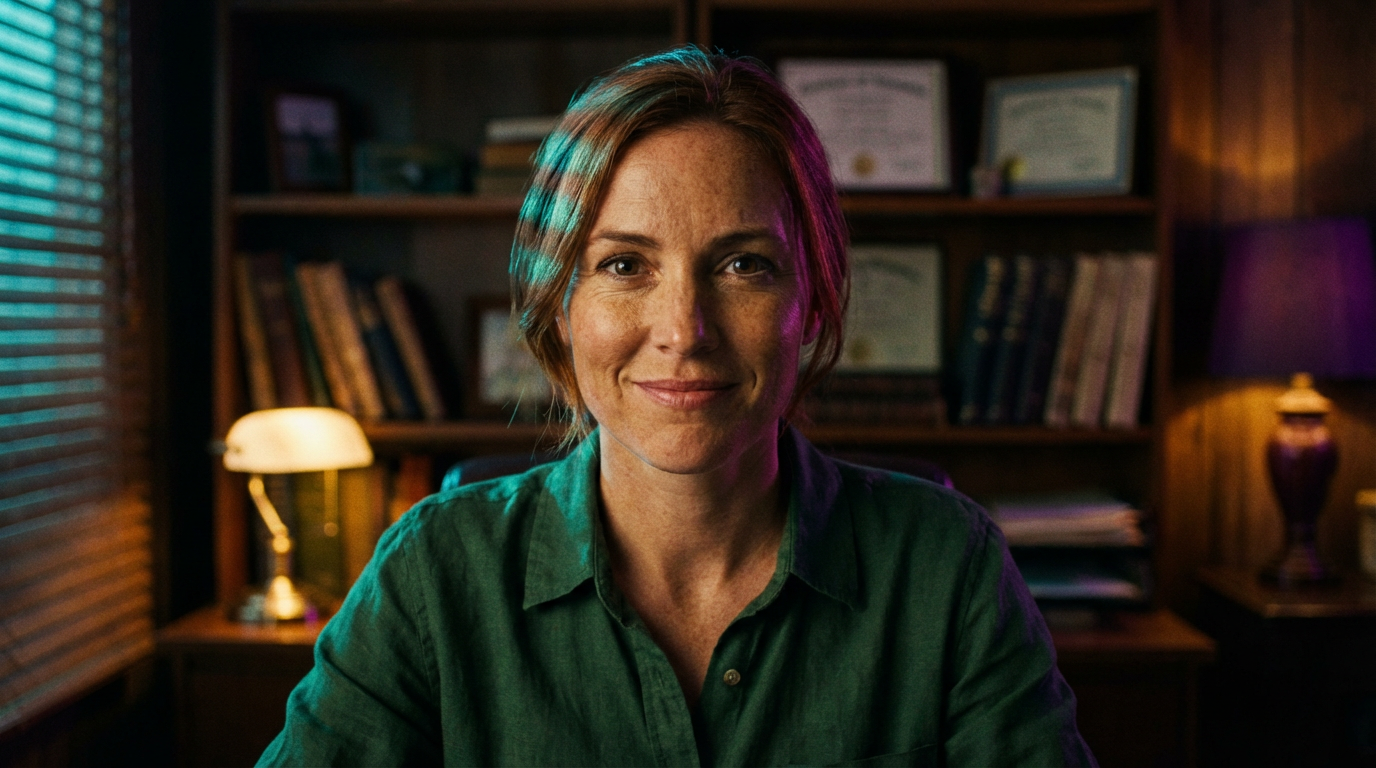
Anne Elizabeth Evans (née Jennings), born on 22 November 1970 at the Hutchinson Hospital in Gawler, South Australia, is the second child of Brian Edward Jennings and Patricia Anne Jennings (née O'Connor). A qualified agronomist who studied at the University of Adelaide, she returned to the Jennings Family Farm following her father's sudden death in 1997 and has served as the property's primary steward through decades of family loss, agricultural change, and community evolution.
Early Life on the Jennings Family Farm
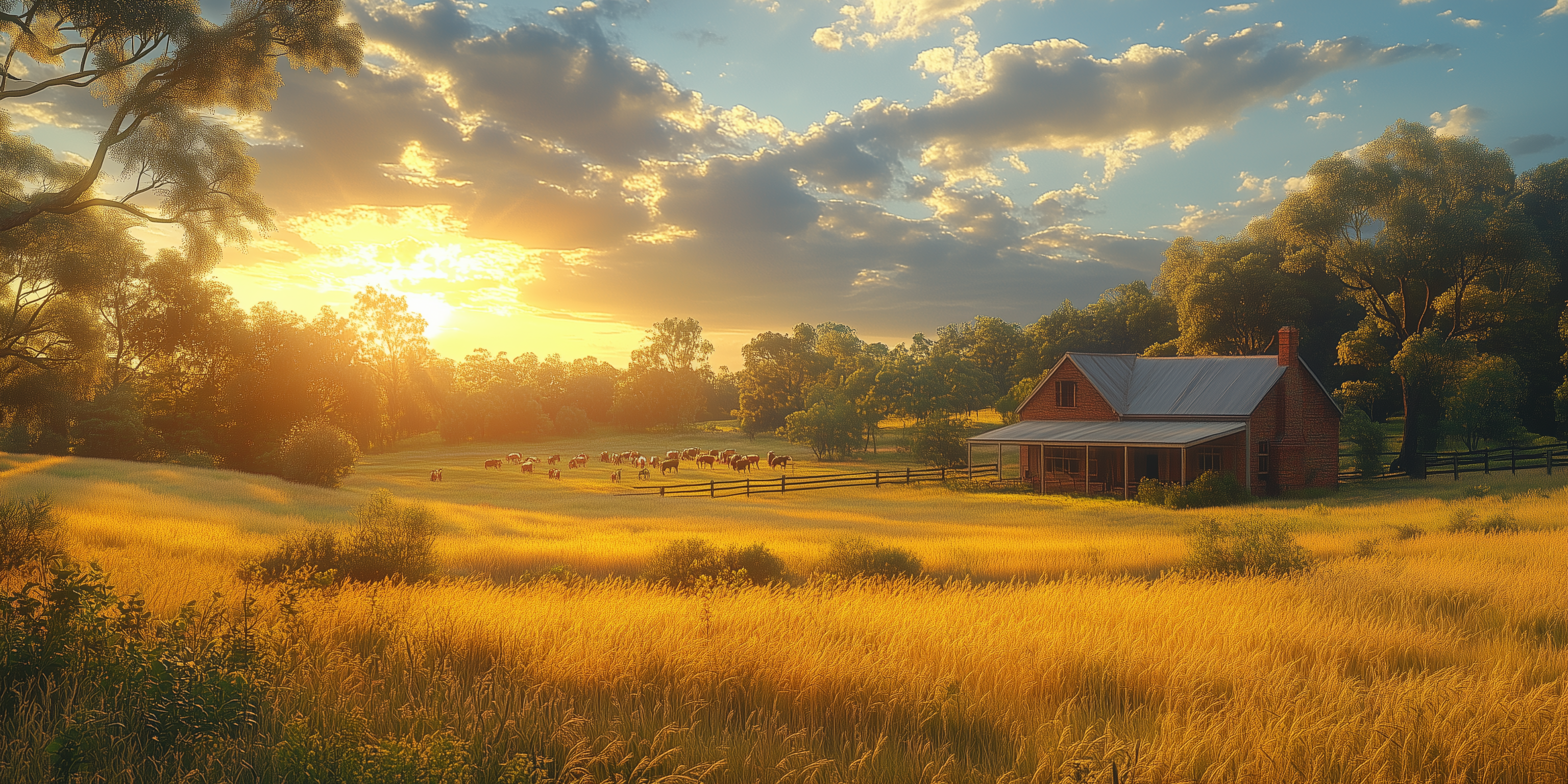
Anne Elizabeth Jennings was born on 22 November 1970 at the Hutchinson Hospital in Gawler, South Australia, the second of seven children born to Brian Edward Jennings, a farmer, and Patricia Anne Jennings (née O'Connor), a former education student turned farmhouse matriarch. She arrived into a household already shaped by the presence of her older brother, Cody Brian Jennings, who was two years old at the time of her birth, and into a farming property whose history stretched back to 1889, when her great-great-grandparents William and Margaret Jennings had established the original holding after emigrating from County Clare in Ireland.
From the earliest age, Anne displayed the temperament that would define her adult life—a blend of her father's practical competence and her mother's intellectual curiosity, tempered by a natural warmth and an instinct for bringing people together. She was a compassionate child, attentive to the needs of those around her, and quickly developed a sense of responsibility that extended beyond what might reasonably be expected of a young girl growing up on a busy working farm. As the eldest daughter in a household that would eventually include seven children—Cody (1968), Anne (1970), Catherine (1973), Janice (1975), Kenneth (1978), Raymond (1980), and Tania (1982)—she occupied a particular position in the family structure, serving as a bridge between her parents and younger siblings in ways that were sometimes maternal and always quietly indispensable.
The Jennings Family Farm provided Anne with an education that no classroom could replicate. She absorbed the rhythms of agricultural life—the cycles of planting and harvest, the unpredictability of weather and markets, the patient labour of maintaining livestock and machinery—alongside the more formal lessons of school and homework. Her father Brian, who was in the process of modernising the farm with sub-surface irrigation and soil monitoring techniques, modelled a progressive approach to agriculture that valued innovation without abandoning the traditions that had sustained the property through generations. Her mother Patricia, an avid reader who had sacrificed her own university education to marry into farming life, ensured that the Jennings children were exposed to books and ideas alongside the practical demands of the land.
Education and the Agricultural Club
Anne attended Gawler Primary School, where her teachers noted her ability to bring classmates together and her steady, diligent approach to study. She was neither the most academically brilliant student in her year nor the most conspicuously talented, but she possessed a consistency and dependability that set her apart. She performed well across subjects, demonstrating a balanced intelligence that favoured no single discipline at the expense of others.
At Gawler High School, Anne's interests began to crystallise. She excelled in science and geography, subjects that connected the theoretical with the observable in ways that resonated with her farming upbringing. She became actively involved in the school's agricultural club, where she gained early exposure to concepts of land management, crop science, and sustainable farming practice that would later form the foundation of her professional career. She also joined the debate team, developing the capacity for structured argument and public speaking that would serve her well in later community roles. Her teachers praised her diligence and her ability to work productively with others—qualities that, in retrospect, clearly foreshadowed the leadership she would eventually assume.
The departure of her younger brother Kenneth for the Sydney Conservatorium of Music in 1986, when Anne was fifteen, marked an early experience of family separation that affected her deeply. Kenneth's extraordinary musical talent required nurture that Gawler could not provide, and the family's decision to send him to live with Patricia's siblings, Thomas and Margaret O'Connor, in Sydney was both necessary and painful. For Anne, who had always been attuned to the emotional currents of the household, Kenneth's absence reinforced a conviction that family bonds required active maintenance—that proximity should never be taken for granted and that love expressed itself most meaningfully through consistent presence and care.
University of Adelaide and Michael Evans
After graduating from Gawler High School in 1988, Anne enrolled at the University of Adelaide to study Agricultural Science. The decision surprised nobody who knew her; it was the natural extension of a childhood spent absorbing the principles and practices of farming from a father who approached the land with both reverence and innovation. At university, Anne thrived in an environment that combined rigorous scientific methodology with practical application, studying soil chemistry, crop physiology, and sustainable land management with the same steady diligence she had demonstrated throughout her schooling.
It was during her time at the University of Adelaide that Anne met Michael Evans, a Veterinary Science student whose quiet competence and love of animals complemented her own orientation towards the land. Their courtship developed with the measured pace of two people who recognised in each other a shared set of values—a commitment to rural life, an understanding of its demands and satisfactions, and a temperament suited to the long-term work of building something together. Michael's veterinary training would prove a practical asset to the Jennings farm, but the foundation of their relationship was personal rather than strategic. They were, quite simply, well matched.
Anne graduated from the University of Adelaide with her degree in Agricultural Science and returned to the Jennings Family Farm, bringing with her a wealth of knowledge and a determination to apply modern agricultural research to the property her family had worked for over a century. She worked alongside her father Brian and several of her siblings, introducing ideas and techniques that represented the next evolution of the farm's ongoing modernisation. Brian, who had himself been an innovator in his generation, welcomed Anne's contributions with a pride that reflected both paternal affection and genuine respect for her expertise.
Anne and Michael Evans married in 1994 in a ceremony held on the Jennings Family Farm itself, surrounded by family and friends from both the farming community and their university circles. The decision to marry on the property rather than in a church or function centre was characteristic of Anne's deep attachment to the land and her understanding that the farm was not merely a workplace but the emotional centre of the Jennings family.
Motherhood and the Early Years of Stewardship
Anne and Michael's first child, Naomi, was born in 1996, followed by twins Darren and Lily in 1999. Motherhood arrived alongside an intensifying period of responsibility on the farm, and Anne navigated both with the organisational competence and emotional steadiness that had always characterised her approach to life. She was a devoted mother who sought to instil in her children the same values of hard work, integrity, and community engagement that Brian and Patricia had passed to their own seven children—values she regarded not as abstract principles but as practical guides to a meaningful life.
The year 1997 brought devastating loss. Anne's grandfather, Edward Charles Jennings, died on 15 August at the age of seventy-nine, and barely three months later, on 18 November, her father Brian suffered a fatal heart attack whilst working on the farm. He was fifty-two years old. The double blow within a single season shattered the family's sense of stability. Brian had been the farm's driving force—its mechanic, its innovator, its public face in the Gawler community—and his sudden death at such a relatively young age created both an emotional void and a practical crisis of leadership.
Anne, then twenty-seven and the mother of an infant daughter, stepped into the breach with a resolve that surprised even those who knew her well. She assumed a greater leadership role on the farm, working to honour her father's legacy whilst supporting her mother Patricia and her siblings through the upheaval of their grief. Cody, the eldest sibling, attended Brian's funeral but departed abruptly afterwards—part of a pattern of unexplained absences and emotional distance that had worried the family for years without anyone understanding its cause. The burden of holding the family together fell disproportionately on Anne, a responsibility she accepted without complaint but not without cost.
Taking the Reins
Patricia's death from cancer on 5 September 2002, five years after Brian's passing, left the Jennings siblings orphaned in adulthood and forced a more formal reckoning with the farm's future. Although all seven siblings maintained equal shares in the property, it was Anne and Michael who made the decision to live on the farm and oversee its daily operations. The choice was both practical and emotional—Anne was the sibling with the agricultural qualifications, the on-site presence, and the temperament suited to long-term stewardship, and the farm was, in the deepest sense, her home.
Anne brought to the role the scientific rigour of her university training combined with an intuitive understanding of the property that came from a lifetime of living on its soil. She had spent time conducting research work in the Riverina region of New South Wales before her father's death, and the experience had exposed her to farming methods and environmental management practices that she was eager to implement at home. Under her stewardship, the Jennings Family Farm underwent a thoughtful transformation. She introduced no-till farming techniques that reduced soil erosion and improved moisture retention. She initiated community composting trials that connected the farm to broader sustainability networks in the Gawler region. She enrolled the property in a sustainable water use certification programme, positioning it as an example of responsible land management in an era of increasing environmental awareness.
These reforms were not universally welcomed within the family. Raymond, the sixth sibling, who had established himself as a diesel mechanic with strong views on traditional farming methods, publicly questioned the cost-effectiveness of some of Anne's innovations during a 2009 council agriculture forum. The disagreement was sharp enough to attract local attention, though both siblings maintained a respectful working relationship beneath the surface tension. Anne understood that Raymond's objections stemmed from genuine concern rather than spite, and she possessed the patience to allow her results to speak for themselves over time.
The Disappearance of Cody and Further Loss
The events of July 2018 inflicted a wound on the family that remains unhealed. Cody, whose unexplained absences and emotional distance had been a source of quiet anxiety for decades, disappeared entirely on 31 July 2018 under circumstances that defied rational explanation. His death—though the family would not learn the true nature of it—was followed by a silence that gradually hardened into a mystery none of the surviving siblings could resolve. For Anne, who had spent her adult life holding the family together through one loss after another, Cody's disappearance carried a particular anguish. He was her older brother, the firstborn, the one who had been there before any of the others, and his absence left a gap in the family structure that no amount of practical competence could fill.
The losses continued. Janice Marie Jennings, the fourth sibling and a Clinical Nurse Specialist at the Royal Adelaide Hospital, died on 8 November 2019 at the age of forty-four after contracting a rare and aggressive form of meningitis. Janice had been closely involved in the farm's school tours and native garden programme, and her death deprived both the family and the Gawler community of a woman whose compassion and earthy humour had touched countless lives. The Janice Jennings Nursing Scholarship was established at the University of South Australia in her memory.
On 14 February 2023, Raymond was killed in a car accident caused by a drunk driver. He was forty-two years old. His death was yet another devastating blow to a family that had already endured more than its share of loss. Anne, by now accustomed to the terrible role of rallying the surviving siblings through grief, supported Raymond's wife Emily and their children, Levi and Amelia, with the same quiet steadfastness she had shown after every preceding tragedy.
The Farm in the Present Day
The Jennings Family Farm remained operational under Anne's stewardship, though its focus shifted from the broad-acre cropping of earlier generations to a more diversified, smaller-scale model. The property produced boutique garlic, bush tomatoes, and maintained a two-acre heritage orchard that connected the present operation to the fruit-growing tradition established by Anne's great-grandmother Lillian Jennings in the 1920s. Seasonal workshops on seed-saving, beekeeping, and rainwater harvesting were run by Anne and her niece Sophie, a TAFE horticulture student whose involvement represented the next generation's engagement with the land.
The original farmhouse, carefully maintained through more than a century of occupation, came to feature a small exhibition room chronicling the property's history, curated in part by the Gawler Historical Society. Anne was instrumental in preserving and cataloguing the farm's documentary heritage, understanding that the property's value extended beyond its agricultural output to encompass the story of a family and a community intertwined across generations.
Anne continued to serve on the Gawler Council, a role that connected her to the civic tradition established by her grandfather Edward and continued by her father Brian. She volunteered with local charitable organisations and maintained the networks of community support that had always been central to the Jennings family's identity in the region. Her children—Naomi, Darren, and Lily—grew into adulthood, and whilst their paths took them in various directions, the farm remained a gathering point for the extended family, its kitchen table still serving the function it had served since the property's earliest days: a place where people came together, shared meals, and sustained the bonds that loss and distance might otherwise erode.
In her spare time, Anne tended a vegetable garden that echoed her father's prize-winning efforts, baked with a skill inherited from her mother, and hosted regular book club meetings with friends and neighbours—a quiet tribute to Patricia's lifelong love of reading. She was an avid reader herself, favouring historical fiction and agricultural journals in roughly equal measure.
Of the seven Jennings siblings born between 1968 and 1982, four survived. Cody was gone, presumed dead. Janice and Raymond were buried in the Gawler cemetery. Kenneth performed internationally from his base in Melbourne. Catherine ran the Gawler Wildlife Haven. Tania wrote novels from the Adelaide Hills. And Anne remained on the farm, the constant around which the family orbited—steady, present, and unwilling to let go of the land that had held her family for more than a century.







