4084.77 · March 17, 1764 AD
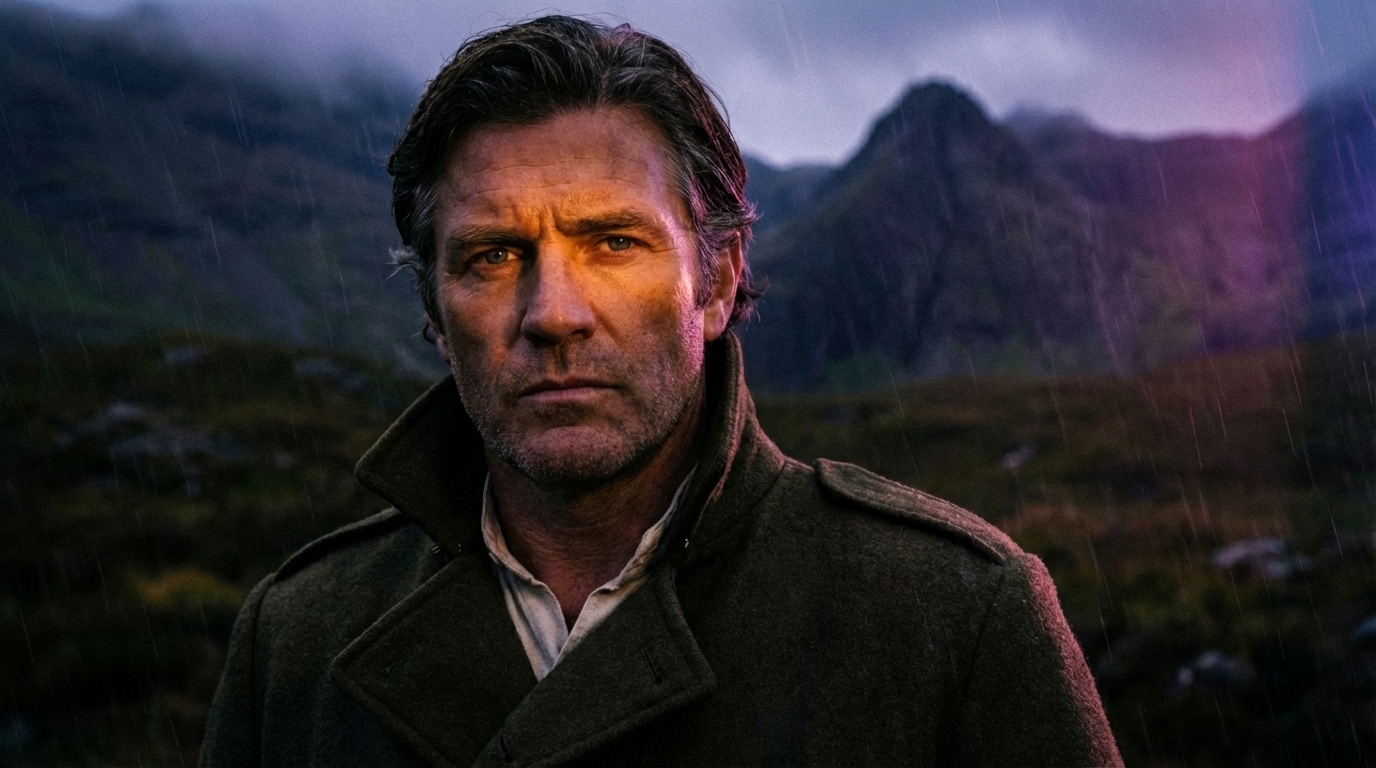
Angus Gregor MacTavish
Captain Angus Gregor MacTavish (14 September 1731, Inverness – 8 November 1799, Chewbathia) was a veteran British Army officer and co-founder of the Chewbathian Hunters. After sixteen years of military service including campaigns in Flanders and North America during the Seven Years' War, MacTavish arrived in New Edinburgh on 17 March 1764 at the invitation of his close friend William Brodie. Working alongside Elspeth Stewart, he transformed twelve volunteers into the nucleus of an elite force that would protect Caledonia's settlements for centuries. His training manual, tactical principles, and the traditions he established remain foundational to Hunter operations over 250 years after his death. He married Moira Jean Douglas in 1772, and their son Gregor Angus MacTavish founded the family dynasty that continues to serve in the Hunters to this day.
Early Life and Family Background
Angus Gregor MacTavish was born on 14 September 1731 in Inverness, in the Scottish Highlands, the second child of Gregor Iain MacTavish (b. 7 March 1698, Inverness – d. 23 October 1758, Fort Ticonderoga, North America) and Margaret Anne MacTavish (née Cameron) (b. 19 June 1705, Fort William – d. 4 December 1772, Inverness). His father served as a sergeant in the British Army, a career soldier whose service in the War of Austrian Succession would profoundly shape his son's understanding of military discipline and tactical thinking.
Angus was the second of three children. His elder brother, Iain Gregor MacTavish (b. 2 February 1728, Inverness – d. 16 April 1746, Culloden), served as a private in the government forces at the Battle of Culloden, where he fell during the brutal fighting that ended the Jacobite Rising. Iain's death at just eighteen years old left Angus, then fourteen, as the only surviving son—a responsibility that would shape his character and fuel his determination to honour his brother's memory through service. His younger sister, Catherine Margaret MacTavish (b. 11 November 1734, Inverness – d. 28 September 1812, Inverness), never married and remained in Scotland throughout her life, maintaining correspondence with Angus until communication became impossible after his departure to Clivilius.
The MacTavish family home stood on Church Street in Inverness, a modest stone dwelling that reflected their respectable but not wealthy station. Gregor MacTavish's frequent absences on military service meant that Margaret raised the children largely alone, instilling in them the Presbyterian values and Highland traditions that would define Angus's character. Young Angus attended the Inverness Royal Academy, where he excelled in mathematics and geography—skills that would later prove invaluable in military surveying and tactical planning.
Military Career on Earth
Angus enlisted in the British Army on 3 May 1748, three weeks before his seventeenth birthday, joining the 42nd Regiment of Foot—the legendary Black Watch. His father's reputation and his brother's sacrifice at Culloden opened doors that might otherwise have remained closed to a young Highlander in the years following the Rising. He was assigned to the regiment's 3rd Company under Captain Robert Murray and shipped to Flanders within months of his enlistment, arriving in time for the final campaigns of the War of Austrian Succession.
The young soldier distinguished himself through discipline and initiative, earning promotion to Corporal on 12 August 1752 following a skirmish near Maastricht where his quick thinking prevented an ambush from becoming a rout. His commanding officers noted his unusual combination of physical courage and tactical awareness—qualities that marked him for advancement.
The Seven Years' War (1756–1763) transformed MacTavish from a capable soldier into an exceptional one. He served in the North American theatre, participating in some of the most brutal fighting the British Army encountered during the conflict. He was present at the disastrous assault on Fort Ticonderoga on 8 July 1758, where his father—serving in the same regiment—was killed leading a charge against the French fortifications. Sergeant Gregor MacTavish died in his son's arms, his final words urging Angus to "serve with honour and remember those who fall."
The loss of his father, combined with the tactical failures he witnessed at Ticonderoga, shaped MacTavish's approach to warfare. He became a fierce advocate for proper reconnaissance, adequate preparation, and the preservation of soldiers' lives—principles he would later embed in Hunter doctrine. His conduct during the retreat from Ticonderoga earned him promotion to Sergeant on 19 August 1758.
MacTavish participated in the successful siege of Fort Niagara (1759) and the Battle of Quebec (13 September 1759), where he commanded a platoon during the assault on the Plains of Abraham. His conspicuous bravery during the scaling of the cliffs earned him a battlefield commission to Ensign on 4 October 1759—a rare honour for a man without family connections or purchased commission.
Promoted to Lieutenant on 22 March 1762, MacTavish was assigned to recruitment duties in Edinburgh, where his path crossed with that of William Brodie. The two men met at a gathering hosted by the Royal Company of Archers on 15 June 1761, discovering a shared interest in military history and tactical innovation. Despite their age difference—Brodie was ten years MacTavish's junior—they formed a friendship built on mutual respect and intellectual compatibility. When Brodie became a Guardian in July 1762 and departed for Clivilius, MacTavish was among the few people on Earth who knew the truth of his friend's destination.
MacTavish achieved the rank of Captain on 7 January 1764, following distinguished service in the final campaigns of the Seven Years' War. Six weeks later, he resigned his commission and disappeared from the British Army's records—having accepted William Brodie's invitation to join him in building something unprecedented in a world beyond Earth.
Arrival in Clivilius
Captain Angus MacTavish arrived in New Edinburgh on 17 March 1764, passing through the portal at the Stewart sisters' Edinburgh property at 14 George Square. He was thirty-two years old, carrying with him sixteen years of professional military experience and the accumulated wisdom of campaigns across two continents. His arrival had been planned for months—Brodie had petitioned Elspeth Stewart extensively, arguing that the settlement's military development required expertise that no one currently in Clivilius possessed.
Elspeth's initial reservations about bringing another Earth-born military man into the settlement dissolved within weeks of MacTavish's arrival. His assessment of Chewbathia's defensive potential was thorough and insightful, identifying weaknesses in the existing plans while proposing solutions that demonstrated both tactical sophistication and practical understanding of available resources. More importantly, he approached the settlers not as raw material to be shaped but as partners whose knowledge of Clivilean conditions complemented his military expertise.
His mandate was clear: transform the willing but untrained settlers of Chewbathia into a military force capable of defending New Edinburgh against threats both animal and human. Within three months of his arrival, MacTavish had established training programmes, organised the settlers into coherent military units, and begun the systematic documentation of Clivilean tactical conditions that would inform all his subsequent work.
Building the Chewbathian Military
The outpost of Chewbathia was still under construction when MacTavish arrived, its stone walls rising on the plateau that overlooked New Edinburgh. William Brodie had selected the site for its defensive advantages—high ground with clear sightlines, difficult to approach unseen, positioned to provide warning of any threat approaching the main settlement below. MacTavish recognised these advantages immediately and began incorporating them into the training programmes he developed.
His first task was establishing the Regular Garrison—a conventional military force trained in the tactics and disciplines of European warfare. These men would form the backbone of Chewbathia's defence, capable of manning walls, coordinating defensive fires, and meeting any human enemy in organised combat. MacTavish drew on his extensive experience to develop training programmes adapted to Clivilean conditions, modifying European military doctrine to account for the unique challenges the dimension presented.
The completion of Chewbathia on 11 June 1765 represented the culmination of three years' work. At the ceremony led by Elspeth Stewart, MacTavish stood as the military authority whose efforts had transformed a construction site into a functioning garrison. The outpost was now home to trained soldiers, established defensive positions, and the infrastructure necessary to project military force throughout the region.
But MacTavish understood that conventional forces, however well-trained, could not address all the threats that Clivilius presented. The shadow panthers that hunted in absolute darkness required a different approach entirely—one that no European military tradition had ever developed.
Co-Founding the Chewbathian Hunters
The concept of the Hunters emerged from conversations between MacTavish and Elspeth Stewart during the years following Chewbathia's completion. Elspeth had gathered accounts from across Clivilius of settlements destroyed by shadow panther attacks, identifying patterns in how the creatures hunted and the failures that had allowed them to devastate human communities. MacTavish contributed his tactical expertise, analysing how the principles of irregular warfare might be adapted to combat predators that operated in conditions where conventional forces were helpless.
Together, they envisioned something unprecedented: a unit of warriors trained not for the formations and siegecraft of European warfare, but for the stalking patience of Highland hunters and the absolute darkness of Clivilius nights. These men would learn to fight as the shadow panthers fought—in small groups, using stealth and coordination rather than massed force, turning the predators' own advantages against them.
On 7 October 1767, in a ceremony held at Chewbathia's parade ground, twelve men stepped forward to become the first Hunters. MacTavish had spent months selecting them, observing every soldier in the garrison, noting those whose instincts aligned with what he sought. Working with Elspeth, he had compiled a list of candidates—men whose courage was tempered by caution, whose aggression was governed by patience, whose eyes saw what others missed in the landscapes around them.
The First Twelve comprised:
- Hamish Duncan Buchanan (b. 12 May 1733, Perthshire – d. 3 February 1794, Chewbathia): Former Highland gamekeeper, aged 34 at selection. Senior tracker.
- Callum Iain Fraser (b. 28 August 1747, Inverness – d. 19 September 1814, New Edinburgh): Aged 20 at selection, already scarred from a panther encounter. Would become the longest-serving of the First Twelve.
- Domnhall Angus MacLeod (b. 4 January 1742, Isle of Skye – d. 14 March 1768, Northern Hills): Father died at Culloden. Killed in the first engagement.
- Iain Robert Murray (b. 17 September 1739, Edinburgh – d. 14 March 1768, Northern Hills): Former British Army, deserted to avoid Clearance duties. Killed in the first engagement.
- Ewan James Cameron (b. 22 March 1745, Lochaber – d. 7 July 1770, Battle of Chewbathia): Delivered the killing blow on the first panther. Died defending the plateau.
- Seumas William Grant (b. 9 November 1740, Strathspey – d. 28 April 1789, Chewbathia): Weapons specialist.
- Lachlan Donald Ross (b. 15 June 1744, Easter Ross – d. 12 August 1801, New Edinburgh): Scout and pathfinder.
- Robert Alexander Sinclair (b. 3 December 1749, Caithness – d. 14 November 1823, Chewbathia): Youngest of the Twelve at 17, exceptional marksman.
- Kenneth George MacKay (b. 27 July 1741, Sutherland – d. 2 September 1769, Wilderness): Killed during fourth panther operation.
- Malcolm James Stewart (b. 8 February 1743, Edinburgh – d. 30 May 1798, Chewbathia): Distant cousin of the Guardian sisters.
- Duncan Alasdair MacPherson (b. 19 October 1746, Badenoch – d. 21 December 1809, New Edinburgh): Survival specialist.
- Finlay Thomas Sutherland (b. 24 April 1744, Sutherland – d. 6 July 1770, Battle of Chewbathia): Died in the Theopolitan assault.
MacTavish presented each man with a length of the tartan he had designed with the settlement's weavers—dark tones that would blend with shadow, incorporating the colours of the settlements they would protect. The Hunter tartan would become one of the most recognisable symbols in Caledonian military tradition, worn by generations of warriors who followed the path these twelve men had pioneered.
Training the First Twelve
The training programme MacTavish developed for the Hunters bore little resemblance to conventional military instruction. Physical conditioning was pushed beyond anything the Regular Garrison experienced, building the endurance that extended operations in hostile territory would demand. Weapons practice was adapted for lightless conditions—shooting by sound and spatial memory, fighting with blades when the darkness made ranged weapons impractical.
But the most critical training addressed the psychological challenges of shadow panther operations. The Hunters learned to remain motionless for hours while predators moved nearby, their breathing controlled, their fear managed through discipline rather than suppressed through denial. They developed communication systems that functioned without sound or sight—subtle signals, spatial awareness, the ability to track their companions' positions through senses other than vision.
MacTavish led by example, accompanying his men on training exercises that took them into territory where shadow panthers were known to hunt. He demonstrated the patience he demanded, the discipline he expected, the calm assessment of risk that separated survivors from victims. His presence during these exercises earned his men's respect in ways that rank alone could never have achieved.
The First Engagement
Five months of training faced its first true test on 14 March 1768. Reports had reached Chewbathia of a lone shadow panther—a young male, recently displaced from its birth pack—hunting livestock in the northern hills. MacTavish assessed the situation and determined that this was as close to a controlled test as actual combat would ever offer.
The hunting party departed at dusk—all twelve of the First Hunters, accompanied by MacTavish himself. They moved in the formation they had practised, their footfalls silent on terrain they had learned to read through their boots rather than their eyes. Hamish Buchanan tracked the panther to a shallow cave where it had established temporary territory.
The Hunters settled into positions around the outcrop and waited. Hours passed in absolute stillness before the panther returned from its hunt. The engagement that followed lasted mere seconds but would be analysed for years afterward.
Iain Murray's arrow struck first, wounding but not disabling the creature. The panther's counterattack killed Murray before he could loose a second shot. Domnhall MacLeod broke formation to help his fallen comrade—a decision that cost him his life when the wounded panther's claws found his throat. Two of the First Twelve, dead in heartbeats.
MacTavish's command cut through the chaos. His voice carried the authority of decades of military experience, directing the remaining Hunters to regroup and finish what they had started. Ewan Cameron delivered the killing blow—a blade to the spine at the base of the skull, the technique they had practised on carcasses now applied to living flesh.
The survivors carried their dead back to Chewbathia as dawn lightened the sky, the panther's body dragged behind them as proof of what they had accomplished. The celebration was muted by the cost—two graves to be dug, two names to be added to the rolls of the fallen. But the Hunters had proven that their methods worked. One shadow panther lay dead, killed by men who had learned to fight on its own terms.
Formalising the Methods
The eighteen months following the first engagement saw four more panther kills and the hard lessons each one taught. Kenneth MacKay was killed on 2 September 1769 during the fourth operation—a tactical error that MacTavish documented meticulously so that it would never be repeated. New recruits replaced the fallen, tactics were refined, and the Hunters evolved from experimental unit to proven capability.
On 2 September 1769, MacTavish gathered the full complement of Hunters—the nine survivors of the First Twelve and nine new members—to formalise what experience had proven. The training hall at Chewbathia held eighteen men that morning, their attention fixed on MacTavish as he stood before a wall where five shadow panther skulls had been mounted.
MacTavish began with the failures. Murray had died because his shot revealed his position without disabling the target. MacLeod had died because he had broken formation to help a man already beyond saving. MacKay had died because the squad had moved too quickly through unfamiliar terrain. Three deaths, three preventable errors, three lessons now encoded in doctrine.
The principles he established that day would govern Hunter operations for centuries:
- First Principle: Never shoot unless the shot will kill or cripple. A wounded panther is more dangerous than an undetected one.
- Second Principle: Never break formation for the fallen. The mission and the living take precedence.
- Third Principle: Never sacrifice preparation for speed. Know the terrain before you hunt in it.
- Fourth Principle: Document everything. The dead teach lessons that must never be forgotten.
The training manual MacTavish produced—Methods and Practices for Operations Against Shadow Predators—would be copied and recopied over the centuries that followed, its core principles remaining valid even as specific tactics evolved.
The Battle of Chewbathia
The true test of everything MacTavish had built came on 6-7 July 1770, when Theopolis sent an army of two thousand men to destroy New Edinburgh. Hunter scouts under Callum Fraser had tracked the approaching force for three days, providing the intelligence that allowed Chewbathia's defenders to prepare.
The odds were staggering—New Edinburgh's defenders numbered fewer than two hundred against more than two thousand. But MacTavish had spent six years preparing for exactly this contingency. The defences of Chewbathia, the training of its garrison, the tactics developed through years of shadow panther operations—all converged in the desperate hours that followed.
The Hunters played a critical role in the battle's outcome. Operating in the darkness before dawn, they harried the Theopolitan army's flanks, disrupting formations, sowing confusion, preventing the enemy from achieving the coordinated assault their numbers should have guaranteed. When the main assault came at first light, Chewbathia's defenders were ready—positioned behind obstacles designed to disrupt phalanx formations, supported by the fire trenches that would transform the plateau's approaches into an inferno.
The phrase that would become Caledonia's anthem emerged from that battle. "Light the fire. Share the light." Spoken by William Brodie as the signal to ignite the oil trenches, it became something more as the defenders realised they would survive—a declaration of shared purpose, of community forged through crisis, of light held against encroaching darkness.
The Theopolitan army fled. But two more of the First Twelve fell that day—Ewan Cameron, who had delivered the killing blow on the first panther, and Finlay Sutherland, cut down defending the eastern approach. And darkness brought the shadow panthers, drawn by the blood that battle had spilled across the plateau. The Hunters faced one more assault before the battle was truly finished, defending exhausted and wounded soldiers against predators that saw opportunity in human weakness. The alpha of the pack died on Callum Fraser's blade as dawn broke on 7 July—the final proof that MacTavish's training had created something capable of meeting any threat Clivilius could present.
Marriage and Family
On 18 June 1772, at the age of forty, Angus MacTavish married Moira Jean Douglas (b. 3 April 1745, Edinburgh – d. 12 February 1821, Chewbathia) at St Andrew's Kirk in New Edinburgh. Moira was the daughter of James Robert Douglas (b. 1718 – d. 1769) and Eleanor Margaret Douglas (née Campbell) (b. 1722 – d. 1798), early settlers who had arrived in Clivilius in 1763. She had served as a nurse during the Battle of Chewbathia, tending to wounded Hunters including Callum Fraser, whose injuries would have proven fatal without her intervention.
Their courtship had been brief but profound—two people who had witnessed the worst that Clivilius could offer and found in each other a reason to believe in its future. Moira's practical intelligence and emotional steadiness complemented MacTavish's tactical brilliance and military precision. Their marriage became a model for the community, demonstrating that warriors could build families without abandoning their duty to protect others.
The couple had three children:
- Gregor Angus MacTavish (b. 4 March 1773, New Edinburgh – d. 19 August 1847, Chewbathia): Named for both his grandfathers. Inducted into the Hunters in 1794, served for forty-three years, and established the MacTavish family's reputation for Hunter excellence that would continue for generations.
- Margaret Moira MacTavish (b. 17 August 1775, New Edinburgh – d. 3 December 1851, New Edinburgh): Married Lieutenant Colonel Robert James Fraser (Callum Fraser's nephew) in 1796, producing a line that would intertwine the MacTavish and Fraser families for generations.
- Iain William MacTavish (b. 22 November 1778, New Edinburgh – d. 7 April 1862, Chewbathia): Named for MacTavish's fallen brother and his friend William Brodie. Served in the Regular Garrison rather than the Hunters, rising to command the garrison in 1835.
MacTavish proved a devoted father despite his responsibilities, insisting that his children understand both the privileges and obligations of their heritage. He taught Gregor to track before the boy could read, ensured Margaret received the same education as her brothers, and instilled in all three children the principle that had governed his life: "Those who can protect must protect."
Later Years and Death
The years following the Battle of Chewbathia saw MacTavish transition from active field command to training and advisory roles. He continued to refine Hunter methods, incorporating lessons from each engagement, adapting tactics as the Hunters' operational scope expanded beyond shadow panther operations to include reconnaissance, settlement protection, and the full range of missions their unique capabilities enabled.
His quarters at Chewbathia—a stone building on the garrison's eastern edge that he shared with Moira and their children—became a centre of military scholarship. MacTavish documented every engagement, every tactic that succeeded or failed, every innovation that emerged from field operations. Officers from the Regular Garrison and young Hunters alike sought his counsel, and he gave it freely, understanding that his greatest contribution was not the battles he had fought but the knowledge he could transmit to those who would fight after he was gone.
He maintained close friendships with the surviving members of the First Twelve, particularly Callum Fraser and Robert Sinclair, meeting weekly when duties permitted to discuss tactics, share memories, and plan for the Hunters' future. When Hamish Buchanan died on 3 February 1794—the first of the First Twelve to fall to age rather than violence—MacTavish delivered the eulogy, speaking of the gamekeeper's tracking skills and the lives his expertise had saved.
Captain Angus Gregor MacTavish died on 8 November 1799, at his home in Chewbathia, surrounded by his wife, children, and the surviving members of the First Twelve. He was sixty-eight years old. His final words, recorded by his son Gregor, were addressed to Callum Fraser: "Keep them alive, Callum. That's all that ever mattered."
He was buried in the Hunters' Cemetery at Chewbathia with full military honours, his grave marked by a stone bearing the Hunter tartan he had designed. The inscription, chosen by Moira from the many phrases her husband had written, reads: "In darkness, discipline. In danger, duty. In death, remembered."







