
Amelia Violet Drayton (née Clift)
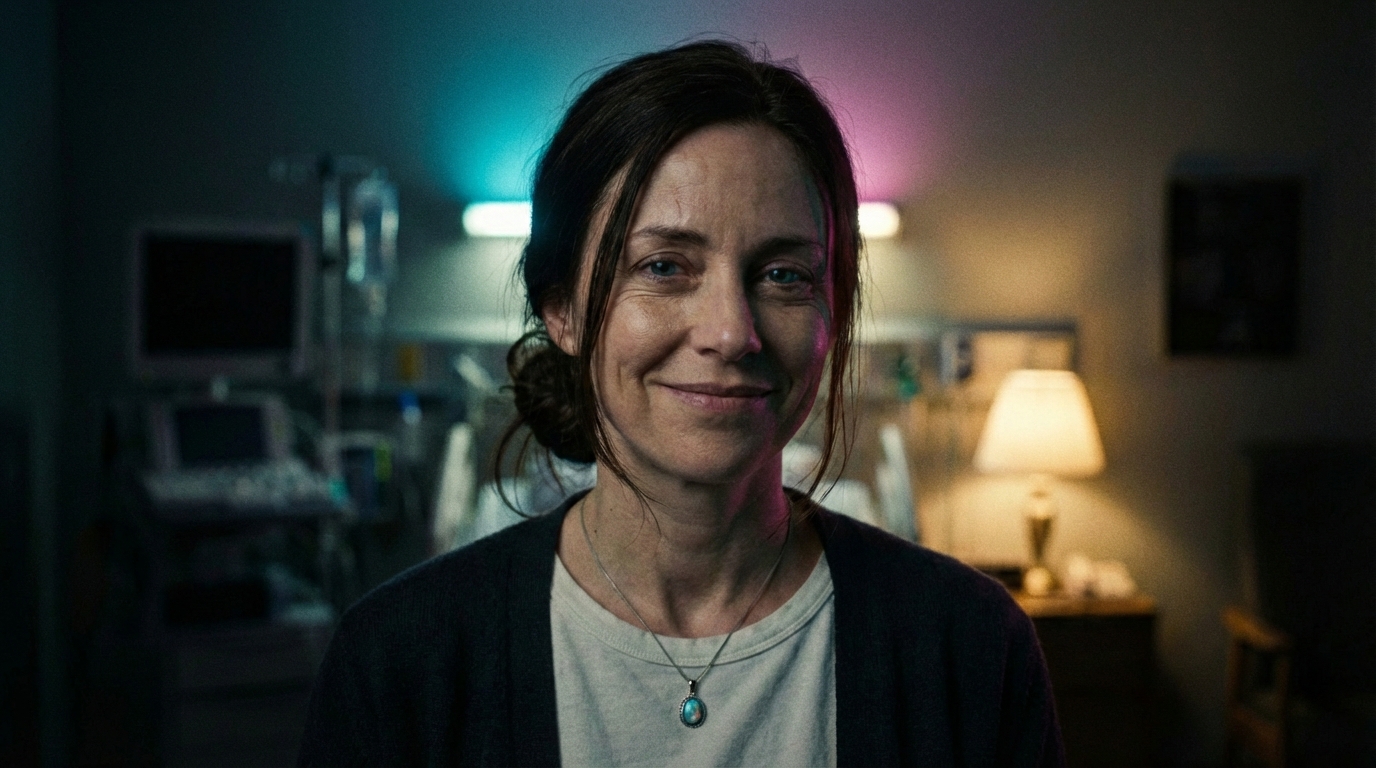
Amelia Violet Drayton (née Clift), born 5 October 1986 in Broken Hill, New South Wales, is a midwife at Townsville General Hospital whose grounded pragmatism masks complex emotional depths. Married to environmental scientist Alastair Duncan Drayton with two children, Leif and Astrid, she navigates professional demands whilst managing the tensions of a marriage where her stability anchors his restlessness. Her relationship with her sister Claire reveals both fierce loyalty and the capacity for mutual destruction.
Born Into the Shadow
Amelia Violet Clift entered the world on 5 October 1986 at the Broken Hill Base Hospital in far western New South Wales, arriving four and a half years after her elder sister Claire Elizabeth. The gap between them was sufficient to ensure that Amelia's earliest memories were coloured by Claire's already established presence—the vibrant older sister who commanded attention with natural grace, whose dance performances drew applause, whose personality filled rooms before Amelia learned to navigate them herself.
The Clift household at 86 Wills Street operated with the rhythm particular to working families in regional Australia. Gregory Alan Clift, an automotive mechanic whose skilled hands coaxed life from broken engines, provided steady income whilst Dawn Elizabeth Clift (née Parker), a preschool teacher with boundless energy and exacting standards, managed the domestic sphere with precision that sometimes bordered on rigidity. Into this ordered world, Amelia arrived as the second daughter—cherished certainly, but never quite possessing the novelty that had accompanied Claire's birth.
Broken Hill in the late 1980s remained what it had always been: a mining town of stark contrasts, where brutal summer heat alternated with bitter winter cold, where red earth met endless sky, where working-class pragmatism competed with artistic aspiration. The town's distinctive character—shaped by generations of mining families and an unexpected artistic community drawn to the outback's dramatic landscapes—would profoundly influence both Clift daughters, though in markedly different ways.
Where Claire gravitated towards dance and creative expression, young Amelia demonstrated interest in understanding how things worked. She observed rather than performed, questioned rather than assumed, approached the world with the analytical temperament that would later serve her well in medical contexts. Yet this intellectual curiosity existed alongside genuine empathy—she noticed when others hurt, felt compelled to help, possessed instinctive understanding of vulnerability that extended beyond mere sympathy into active compassion.
The four-year age gap between the sisters created dynamics that would persist into adulthood. Amelia grew up watching Claire navigate childhood first—observing her sister's triumphs and struggles, learning lessons secondhand, always slightly removed from being the primary focus of parental attention. This position as perpetual observer fostered both independence and a certain wariness about claiming centre stage. Where Claire commanded rooms, Amelia learned to read them.
The Quieter Sister
Amelia's childhood unfolded in Claire's considerable shadow, though she adapted to this reality with the pragmatism that would characterise her adult life. Whilst Claire took dance lessons and performed in recitals, Amelia developed interests that required less public display—reading voraciously, helping Dawn in the preschool during school holidays, accompanying Greg to his automotive workshop where she watched him diagnose mechanical problems with methodical precision.
The relationship between the sisters during childhood was marked by genuine affection complicated by inevitable comparison. Claire was expressive, artistic, comfortable with vulnerability. Amelia was measured, analytical, uncomfortable with emotional display. Claire thrived on attention; Amelia found it somewhat burdensome. Yet beneath these differences lay deep loyalty—they were sisters, bound by shared history and mutual understanding that transcended their contrasting temperaments.
Dawn and Greg treated their daughters equitably but differently, recognising that what worked for Claire might not suit Amelia. Where Claire needed encouragement to think practically, Amelia required permission to express emotions less intellectually. Greg's quiet presence resonated particularly with his younger daughter—his model of love expressed through deeds rather than words, his pragmatic approach to problem-solving, his steady reliability all reflected qualities Amelia would embody in her own life.
Amelia's primary and secondary education at Broken Hill High (1999-2004) revealed academic strengths particularly in science and biology. Teachers noted her diligence, her ability to remain composed under pressure, her talent for breaking complex concepts into comprehensible components. She participated in community volunteer programmes, including first-aid training that sparked initial interest in healthcare. Whilst Claire pursued artistic development, Amelia quietly built competence in areas that suggested future career in medicine or allied health.
The teenage years brought their own complexities. As Claire navigated romance with Paul Smith and prepared for life beyond Broken Hill, Amelia watched her sister make choices that seemed simultaneously romantic and impractical. She observed the Mormon family dynamics that Claire was entering, noted the compromises her sister accepted, registered concerns she didn't always voice. This habit of observing rather than intervening would persist—Amelia often saw problems before others acknowledged them, yet hesitated to speak unless asked directly.
Finding Purpose Beyond Broken Hill
Following her graduation from Broken Hill High in 2004, Amelia confronted the central question facing ambitious young people in regional Australia: whether to remain in familiar territory or pursue opportunities elsewhere. Unlike Claire, whose artistic ambitions were tempered by financial realities and attachment to place, Amelia recognised that proper midwifery training required relocation to a metropolitan centre with comprehensive medical education facilities.
The decision to attend James Cook University in Townsville represented both practical choice and symbolic departure. Townsville offered respected Bachelor of Midwifery programme, coastal Queensland's dramatically different environment from Broken Hill's desert landscape, and sufficient distance from family to establish independent identity whilst remaining within reasonable reach for visits. At eighteen, Amelia left the red earth of her childhood for Queensland's tropical humidity, trading mining town familiarity for university town possibilities.
James Cook University (2004-2008) proved transformative. The academic rigour suited Amelia's analytical temperament, whilst clinical placements revealed gifts she hadn't fully recognised—the ability to remain calm during medical emergencies, to provide reassurance amidst chaos, to balance technical competence with genuine compassion. Her instructors noted her exceptional composure during high-pressure situations, her capacity to make swift decisions without appearing flustered, her talent for explaining complex medical information in terms that anxious patients could grasp.
It was during her second year that Amelia met Alastair Duncan Drayton, a third-year Environmental Science student whose passion for sustainability and conservation matched her own commitment to healthcare. Their attraction developed with the intensity particular to university relationships—late-night study sessions that became conversations about life philosophy, shared commitment to careers focused on service rather than profit, complementary personalities that suggested potential for genuine partnership.
Alastair came from rural Queensland himself—Atherton, in the lush Tablelands—with farming family background that gave him practical understanding of regional life. His sandy-blond hair, bright blue eyes, and lean build suggested someone comfortable in outdoor environments. More importantly, his idealism about environmental protection resonated with Amelia's own sense that meaningful work involved improving the world rather than merely extracting profit from it.
Their courtship unfolded against the backdrop of demanding academic programmes—Amelia's clinical placements and Alastair's field research often conflicting with desires for time together. Yet this very tension seemed to strengthen their connection. They understood professional dedication, supported each other's ambitions, recognised that building lives of purpose required sacrifices. By Amelia's final year, marriage seemed not just probable but inevitable—they would build something together, combining her healing work with his environmental advocacy, creating family whilst pursuing vocations that mattered.
Building Professional Identity
Amelia graduated from James Cook University with distinction in 2008, her Bachelor of Midwifery completed with clinical experience that had already demonstrated exceptional competence. Townsville General Hospital, where she'd completed her final-year placement, offered her a position in their maternity ward. At twenty-one, she was beginning a career that would define the next phase of her life.
The early years at Townsville General revealed both Amelia's strengths and the emotional challenges inherent in midwifery. She excelled technically—managing complicated deliveries with composure, collaborating effectively with obstetricians, anticipating problems before they became crises. Her ability to remain calm whilst others panicked proved invaluable in the delivery room, where split-second decisions could mean the difference between tragedy and triumph.
Yet the work exacted emotional tolls that pure technical competence couldn't mitigate. Every stillbirth, every maternal complication, every family crisis witnessed in the delivery room accumulated in ways that Amelia struggled to process. She learned to maintain professional boundaries whilst remaining genuinely present for patients—a delicate balance between emotional involvement and self-protection. The composure that colleagues admired often masked internal struggles with the weight of witnessing both life's beginnings and its heartbreaks.
Amelia married Alastair Duncan Drayton on 25 October 2009 in a modest ceremony at Townsville's Strand Park, combining their lives officially as they'd been doing practically since university. The marriage represented partnership between two professionals committed to meaningful work—she delivering new life into the world, he working to protect the environment that would sustain those lives. They purchased a modest home in Townsville's northern suburbs, establishing themselves as a young couple balancing demanding careers with building domestic life together.
The early years of marriage revealed both the strengths and stresses of their partnership. Alastair's environmental work increasingly required extended field trips, leaving Amelia to manage household responsibilities alone whilst juggling her own demanding hospital shifts. His idealism—initially attractive—sometimes manifested as impractical expectations about what they could reasonably accomplish. Her pragmatism—equally valued—could shade into controlling behaviour when she felt overwhelmed by managing too much independently.
Yet beneath these tensions lay genuine affection and shared values. They believed in the work they were doing, supported each other's professional development, found satisfaction in building something worthwhile together. When disagreements arose, they generally resolved them through direct conversation rather than festering resentment—a pattern established early that would serve them reasonably well through subsequent challenges.
The Complexity of Motherhood
The arrival of Leif Edward Drayton on 14 March 2011 transformed Amelia from someone who helped others become parents into a mother herself. The pregnancy had been planned—they'd waited until both felt professionally established before adding parenting to already demanding lives. Yet nothing about professional experience delivering babies fully prepared Amelia for the reality of her own motherhood.
Leif was spirited and adventurous from infancy, gravitating towards his father's love of nature and outdoor exploration. Amelia delighted in him whilst also recognising how her professional life complicated motherhood. The hospital shifts that required her presence during other women's deliveries meant arranging childcare, missing Leif's own milestones, experiencing the particular guilt of mothers who work outside the home. Yet she never seriously considered abandoning her career—midwifery wasn't merely employment but calling, identity, the expression of who she fundamentally was.
The birth of Astrid Maeve Drayton on 28 December 2013 completed what Amelia and Alastair had envisioned as their family. Astrid proved markedly different from her brother—imaginative where he was practical, drawn to stories and art where Leif preferred science and nature. Amelia found herself parenting two distinct personalities, each requiring different approaches, each bringing unique joys and challenges.
Balancing career and family required constant negotiation. Alastair's environmental work still demanded extended absences, placing disproportionate childcare burden on Amelia. She managed through meticulous organisation—coordinating schedules, arranging backup plans, maintaining systems that allowed her to meet both professional and maternal obligations. Yet the emotional cost of constant juggling sometimes manifested as frustration that her marriage wasn't providing the partnership she'd expected.
The tensions weren't severe enough to threaten the marriage seriously, yet they created undercurrents of resentment. Amelia's desire to "fix" situations—so valuable professionally—sometimes translated domestically into controlling behaviour that Alastair experienced as criticism. His tendency to become absorbed in environmental projects meant missing family moments that Amelia had to manage alone. Neither was deliberately difficult, yet their individual coping mechanisms occasionally created friction that required conscious effort to navigate constructively.
The Weight of Sisterhood
Throughout Amelia's adult life, her relationship with Claire remained both deep and complicated. Geographic distance—Townsville to Broken Hill, later to Adelaide—prevented daily interaction, yet regular phone calls and occasional visits maintained connection. The sisters understood each other with the particular intimacy of shared childhood, yet their contrasting temperaments meant conversations could be either profoundly supportive or subtly toxic.
When Claire faced challenges in her marriage with Paul Smith, Amelia became a primary confidante. Claire's need to process emotions verbally met Amelia's analytical approach to problem-solving, creating dynamic where Amelia offered practical advice whilst Claire sought emotional validation. The mismatch wasn't always apparent—often Amelia's pragmatic responses provided exactly what Claire needed. Yet at other times, particularly when Claire was most vulnerable, Amelia's tendency to diagnose problems and propose solutions felt like dismissal of legitimate feelings.
The phone call on 23 July 2018, following Paul's dramatic escape through the bedroom window, exemplified both the depth of their bond and its potentially destructive aspects. Claire, in crisis, reached instinctively for Amelia's voice—seeking the grounded perspective that might make sense of chaos. Amelia responded with characteristic directness, her words offered validation Claire desperately needed, yet they also fed escalating fury that would contribute to subsequent catastrophic choices.
Amelia's role in that conversation revealed complex aspects of her character. She genuinely wanted to help her sister, to provide the emotional support Claire needed. Yet her advice—offered with surgical precision—transformed Paul from flawed husband into irredeemable villain. The tendency to "fix" problems by clearly identifying their sources became, in this context, amplification of Claire's worst instincts rather than moderating influence. The sisters fed each other's anger, creating feedback loop where reasonable grievances became absolute condemnations.
The Unbearable Aftermath
Claire's disappearance on 5 August 2018, following Rose's abduction and Claire's desperate pursuit, shattered Amelia's pragmatic worldview. The midwife who delivered life into the world confronted its inexplicable absence—her sister, nephew, and niece vanished from Brisbane as though they'd never existed. Every call to Claire's mobile went to voicemail. Every inquiry to authorities produced no answers. The rational explanations Amelia's mind sought didn't exist for circumstances that defied rational comprehension.
The months following Claire's disappearance revealed aspects of Amelia's character that professional competence had previously masked. The composed midwife who managed medical emergencies with calm authority became someone barely holding together. The pragmatic problem-solver discovered problems that had no solutions. The sister who'd offered advice found herself unable to process realities that exceeded understanding.
The impact on Amelia's marriage was significant. Alastair, whose environmental work had always created tensions, found his wife fundamentally altered by Claire's disappearance. The grounded woman he'd married seemed untethered, struggling with grief and guilt that no amount of practical support could address. He tried to help whilst recognising his limitations—environmental problems had solutions, but this situation exceeded any framework he understood.
Amelia's work at Townsville General continued, yet something fundamental had shifted. She still delivered babies with technical competence, still provided compassionate care to labouring mothers, still mentored junior midwives. Yet the easy certainty about life's goodness, about the fundamental rightness of bringing children into the world, had been complicated by knowledge of how completely and inexplicably families could be destroyed.
The Ongoing Questions
Years after Claire's disappearance, Amelia continues navigating life marked by unresolved loss. She maintains her career at Townsville General, raises Leif and Astrid, sustains her marriage with Alastair through conscious effort and mutual commitment. To external observers, she appears to have recovered—the composed professional whose personal tragedy doesn't prevent her from fulfilling responsibilities.
Yet internally, Amelia carries weight that never fully lifts. The question of whether her advice to Claire contributed to subsequent catastrophe haunts her in ways she rarely articulates. The pragmatic counsel she'd offered—validating Claire's grievances, reinforcing perceptions of Paul's inadequacy—seemed helpful in the moment. Yet did it feed Claire's fury in ways that led to desperate choices? Would different advice have produced different outcomes?
The guilt isn't entirely rational—Amelia recognises intellectually that Claire made her own decisions, that Paul's actions created the crisis, that the impossible circumstances exceeded anyone's control. Yet emotional certainty proves more elusive than intellectual understanding. The sister who'd tried to help wonders whether her help ultimately proved destructive, whether her tendency to "fix" problems actually made them worse.
Amelia's relationship with Alastair has weathered the crisis, though not without permanent alteration. The experience revealed vulnerabilities in both partners—her need for control when faced with chaos, his tendency to retreat into work when confronted with emotional complexity. They've learned to navigate these patterns with greater awareness, yet the marriage requires conscious maintenance in ways it hadn't previously. The partnership remains intact, sustained by genuine affection and shared commitment to their children, yet marked by knowledge of how quickly certainty can crumble.
Physically, Amelia retains the striking presence that marked her younger years—rich auburn hair streaked with golden highlights from Queensland sun, jade-green eyes that betray thoughts even when words remain measured, the grounded presence that puts patients and colleagues at ease. Yet close observers might notice weariness that wasn't there before, wariness about embracing joy too completely, awareness that catastrophe can intrude on ordinary life without warning or justification.







