
Amelia Rose Claiborne
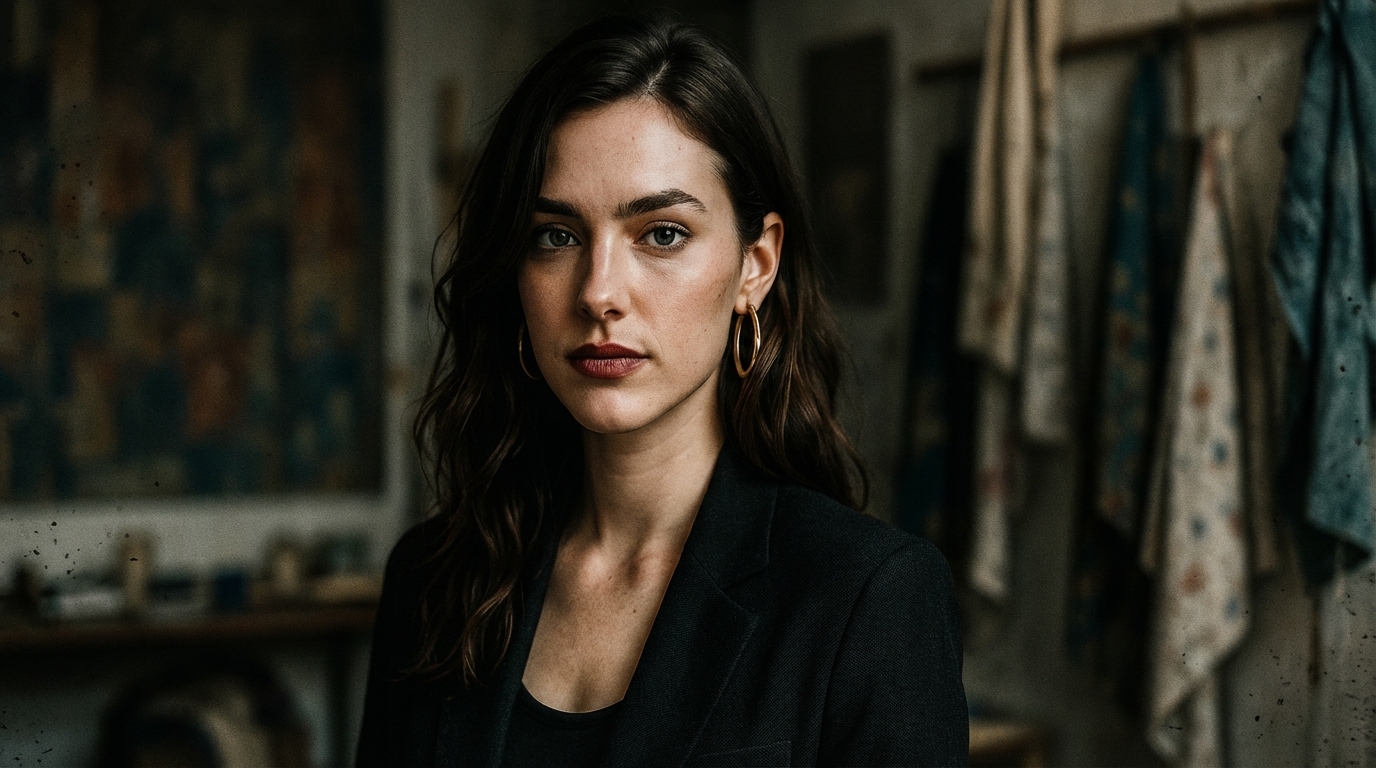
Amelia Rose Claiborne embodies the complex inheritance of artistic sensibility colliding with institutional duty—a young woman whose chestnut waves and hazel eyes mask a fierce intelligence sharpened by growing up in the crossfire between her father's deteriorating psyche and her mother's aesthetic containment. Born into Hobart's cultural establishment yet raised in the shadow of police work's darker truths, she has fashioned defiance into armour, wielding teenage rebellion with the precision of someone who learned early that silence and compliance are different forms of suffocation.
Birth and the Promise of Ease
Amelia Rose Claiborne arrived at 2:47 PM on 15 March 2003 at the Royal Hobart Hospital, a Saturday afternoon when autumn light slanted gold across the Derwent. Unlike her brother's traumatic entrance two years earlier, Amelia's birth unfolded with unexpected grace—a straightforward delivery that Sandra would later describe as "Amelia's courtesy to a tired mother." The ease seemed almost compensatory, as though the universe recognised the family had already paid its toll with Liam's breech birth and Sandra's subsequent haemorrhage.
Charlie, this time prepared and present from the first contraction, held Sandra's hand throughout, whispering Irish lullabies his mother had sung in Coburg kitchens. The delivery suite nurses noted his transformation from the panicked father of 2001—now he moved with practiced calm, fetching ice chips, adjusting pillows, reading Sandra's needs before she voiced them. When Amelia emerged, pink and breathing steadily, her first cry was strong but brief, as though she'd made her point and saw no need to belabour it.
The name came from Sandra's grandmother, Amelia Whitfield, a suffragette who'd chained herself to Parliament House gates in 1915, whilst Rose honoured Charlie's mother, Margaret Rose O'Shea Claiborne, then in her final months in Melbourne. The child seemed to understand the weight of these namesakes, her infant gaze unusually focused, tracking movement with an intensity that made visitors uncomfortable. "She sees everything," Sandra's mother observed during that first hospital visit, a prediction that would prove unnervingly accurate.
Those early months revealed a temperament entirely different from Liam's colicky struggle. Amelia slept through nights from six weeks, nursed without difficulty, and seemed content observing the world from her bouncer whilst Sandra painted in the converted garden studio. The baby would watch for hours as brushstrokes accumulated into landscapes, her silence so complete that Sandra sometimes forgot she wasn't alone. This early capacity for sustained attention would later manifest as an almost preternatural ability to absorb adult tensions, reading the emotional weather of rooms before she could properly walk.
Early Childhood in a House of Careful Choreography
The Battery Point cottage that housed Amelia's first years had been transformed by Sandra into what she called "emotional weather"—walls painted in colours that shifted with light, creating moods that changed throughout the day. Amelia's nursery, painted in pale sea-green that turned silver in moonlight, became her first aesthetic education. She would lie awake watching shadows from the plane trees outside create moving patterns across the ceiling, developing an early sensitivity to visual rhythm that would later inform her artistic sensibilities.
Liam, at two and a half, appointed himself her protector with touching solemnity. He dragged his small mattress to sleep beside her cot during thunderstorms, shared his Vegemite soldiers when she began solids, and developed an uncanny ability to interpret her pre-verbal communications. "Melia wants the blue one," he'd announce with certainty, and invariably he was correct. This early alliance between siblings would prove crucial as family dynamics grew increasingly complex.
Charlie's promotion to Detective Senior Constable in 2004 brought more predictable hours but also darker cases. He would return from shifts investigating child abuse and domestic violence with a thousand-yard stare that even eighteen-month-old Amelia recognised as requiring distance. She learned to approach him obliquely after such days, offering her favourite stuffed wombat without words, understanding already that comfort sometimes meant not demanding reciprocal engagement.
Sandra managed this period through rigid compartmentalisation. Mornings were for family—breakfast rituals, playground visits, finger-painting sessions that left Amelia covered in colour and delight. Afternoons, whilst the children napped or attended daycare, became sacred studio time. Evenings required careful navigation around Charlie's moods, Sandra teaching her children through example how to read their father's emotional barometer and adjust accordingly.
The Weight of Witnessing
The 2010 hostage crisis that triggered Charlie's PTSD coincided with Amelia's seventh birthday. The party—carefully planned with fairy lights in the garden and a cake shaped like a butterfly—was interrupted when Charlie received the call. He left mid-celebration, Sandra maintaining festive momentum whilst guests pretended not to notice his absence. Amelia blew out candles alone, her wish unspoken but obvious in how her eyes tracked the door, waiting for a return that wouldn't come for six hours.
What came back wasn't the father who'd left. Charlie's hypervigilance manifested in ways that particularly affected Amelia—checking her room multiple times nightly, forbidding sleepovers, accompanying school trips as an unofficial shadow. She endured this protective suffocation with a patience that worried Sandra more than rebellion would have. At seven, Amelia had already learned that loving damaged people required surrendering parts of yourself to their damage.
During Charlie's intensive therapy, the household operated in careful shifts. Sandra managed logistics with military precision whilst Liam assumed responsibility for Amelia's emotional needs. He invented elaborate games to distract from their father's absence—treasure hunts through the cottage, backyard camping expeditions, cooking competitions judged by stuffed animals. Amelia participated with the focused intensity of someone aware they were performing childhood for others' benefit, already conscious that her happiness served as currency in the family's emotional economy.
The return of a functional Charlie in 2012 didn't restore what had been lost. Instead, it established new patterns—cautious engagement, managed expectations, the understanding that Daddy's "bad days" were weather to be endured rather than problems to be solved. Amelia adapted by developing parallel personalities: the bright, accomplished child for public consumption, and the watchful, careful girl who existed at home.
St. Michael's Collegiate and the Performance of Excellence
Amelia entered St. Michael's Collegiate School's junior division in 2009, following her mother's educational footsteps into the Anglican institution where Hobart's establishment groomed their daughters. The sandstone buildings and Latin mottos might have intimidated another child, but Amelia moved through them with inherited confidence, understanding instinctively that belonging was partly performance, partly birthright.
Academically, she demonstrated the kind of capability that teachers describe as "effortless," though Sandra recognised the effort's careful concealment. Amelia's notebooks were meticulously organised, colour-coded with a system she'd developed at age eight. Her handwriting, unlike Liam's illegible scrawl, possessed an artistic quality that made even mathematics homework aesthetically pleasing. Teachers praised her consistency, her reliability, her mature approach to learning—never recognising these as symptoms of a child who'd learned that perfection was the price of peace.
Dance became Amelia's primary outlet, beginning with ballet at age five with Madame Petrova, the same instructor who'd taught Sandra. But where Sandra had found expression through classical form, Amelia gravitated toward contemporary dance, drawn to its allowance for disruption within structure. By age ten, she was competing nationally, her performances noted for their emotional maturity—judges commenting on the "haunting quality" of her movement, unaware they were witnessing a child processing trauma through choreographed gesture.
The dance team provided Amelia's first taste of chosen family. Charlotte Winters, whose mother was going through a vicious divorce, understood the exhaustion of managing parental emotions. Ruby Chen, whose father's gambling addiction created comparable household instability, shared Amelia's skill at maintaining surface perfection whilst privately fragmenting. Together, they created a support network based on unspoken recognition, their friendship conducted in glances across dance studios and squeeze-handed solidarity before performances.
Adolescent Rebellion as Artistic Statement
The transition to senior school in 2016 marked Amelia's evolution from compliant daughter to deliberate provocateur. The first sign came when she returned from summer holidays with her hair cut short, the chestnut waves Sandra loved shorn into an angular bob that emphasised her sharp cheekbones and rendered her beauty aggressive rather than soft. Charlie's explosion—"You look like a boy!"—met with Amelia's cool response: "Good. Boys get taken seriously."
Her fashion experiments began subtly—regulation uniforms adjusted with rolled sleeves, shortened hems, unexpected accessories that technically didn't violate dress codes but clearly challenged them. She studied fashion blogs with academic intensity, teaching herself the language of subcultural style, understanding that clothing could be armour, weapon, and declaration simultaneously. Her weekend outfits became increasingly provocative—vintage military jackets over delicate dresses, Doc Martens paired with her grandmother's pearl earrings, combinations that suggested both reverence for and rebellion against her heritage.
The school noticed but struggled to articulate violations. Amelia had inherited Sandra's gift for walking lines—never quite crossing into punishable territory whilst making clear her contempt for arbitrary authority. When Year 9 coordinator Mrs. Pemberton suggested Amelia's style was "distracting," Amelia submitted a three-page essay on the history of dress codes as tools of gender oppression, complete with footnotes and bibliography. The matter was dropped.
Her academic performance remained strong but became selective. Subjects that interested her—art history, literature, drama—received total commitment. Mathematics and sciences were completed to minimum acceptable standards, Amelia understanding exactly how much effort was required for university entrance without excess. This strategic deployment of capability frustrated teachers who sensed untapped potential, but Amelia had learned from watching Charlie that giving everything to an institution led to having nothing left for yourself.
The Architecture of Anger
By 2018, fifteen-year-old Amelia had developed what Sandra privately called "architectural anger"—rage structured into productive form. The household tensions around Charlie's deteriorating mental state and the Derek Simmons investigation became raw material for artistic expression. Her paintings, dark abstracts that seemed to writhe with suppressed violence, covered her bedroom walls. Sandra recognised her own younger self in these works but also something harder, more uncompromising.
The school fundraiser incident that Charlie observed—when Amelia threw her name badge at the volunteer coordinator—represented not childish tantrum but calculated rebellion. Mrs. Davidson had suggested Amelia smile more, "be prettier" to encourage donations. The thrown badge, aimed with precision at the woman's feet rather than her person, made clear Amelia's position on performing for institutional benefit. The subsequent forced apology, delivered in monotone whilst maintaining unblinking eye contact, was perhaps more insulting than the original offence.
Her relationship with Charlie during this period became a careful dance of provocation and withdrawal. She would leave art materials in his study—charcoal drawings of surveillance cameras, paintings of houses with too many eyes—that suggested she knew more about his paranoid behaviours than he realised. When he installed recording equipment without family consent, Amelia began conducting loud, theatrical phone conversations about "feeling watched" and "privacy violations," performing for the microphones she suspected but couldn't locate.
With Sandra, the dynamic was different but equally complex. Amelia recognised her mother's aesthetic coping mechanisms—the way Sandra made everything beautiful to avoid confronting ugliness—and deliberately introduced disorder. She would leave clothes strewn across carefully decorated rooms, play music that clashed with Sandra's curated atmosphere, invite friends whose rough edges disrupted the household's controlled grace. Yet she also attended every gallery opening, participated in Sandra's charity events, understanding that public support was the currency that purchased private rebellion.
Current Complexities
At twenty-two in 2025, Amelia Rose Claiborne has evolved from angry teenager into formidable young woman. Standing 5'6" with the lean build of a dancer who still trains despite no longer competing, she moves through space with intentional presence. Her hair, grown long again, falls in waves she sometimes pins severely back, other times allows to cascade with studied casualness. The hazel eyes, inherited from both parents, carry Charlie's observational intensity filtered through Sandra's aesthetic sensibility, creating a gaze that seems to catalogue and dismiss simultaneously.
Her studies at the University of Tasmania—a Bachelor of Fine Arts with focus on textile design and fashion marketing—represent compromise between artistic ambition and practical consideration. The course allows exploration of fashion as cultural commentary whilst providing employable skills that satisfy Charlie's concerns about financial security. Her final year project, a collection exploring surveillance culture through garments embedded with reflective materials and signal-blocking fabrics, has attracted attention from mainland designers and privacy advocates alike.
The relationship with Charlie remains fraught with unprocessed history. His December 2022 retirement removed the immediate danger of his work consuming him but replaced it with the slower horror of watching him dissolve into absence. She observes his aimless walks, his vacant presence at family dinners, with a mixture of pity and rage that finds expression in increasingly dark artistic work. A recent series of photographs—family portraits with faces obscured by black bars—sold well at a Salamanca gallery but caused Sandra to weep privately in her studio.
With Sandra, Amelia has developed what might generously be called professional respect. They collaborate on arts events, Amelia's contemporary edge complementing Sandra's establishment connections. But personal intimacy remains elusive, both women recognising in the other the same tendency toward aesthetic deflection, the same use of beauty as barrier. Their conversations operate on multiple levels—surface cooperation underlaid with unspoken challenge, each waiting for the other to drop the performance first.
Romantic Patterns and Intimate Rebellions
Amelia's romantic history reflects her broader pattern of provocation and withdrawal. Her first serious relationship, with Felix Morrison at seventeen, ended when she discovered herself unconsciously replicating Sandra's emotional management strategies—smoothing conflicts, maintaining beauty, prioritising his comfort over her authenticity. The recognition horrified her enough to end things immediately, though Felix never understood the sudden severance.
University brought more experimental connections—a series of brief, intense entanglements with people who matched her aesthetic rebellion. Jamie, the non-binary sculptor who introduced her to Berlin's underground fashion scene via Instagram. Margot, the poet whose words about family trauma resonated until Amelia realised she was being mined for material. David, the law student whose initial stability attracted her until she recognised Charlie's rigid compartmentalisation reproduced in younger form.
Currently, she maintains what she calls "intimate distance" with Oliver Huang, a filmmaker documenting Tasmania's underground arts scene. Their relationship operates more as creative collaboration than conventional romance—sharing studio space, critiquing each other's work with brutal honesty, occasional physical intimacy that neither demands nor promises permanence. Oliver understands Amelia's need for boundaries, having his own complex family history involving immigrant parents and cultural expectations he's spent years deconstructing.
Artistic Evolution and Professional Emergence
Amelia's artistic practice has evolved from teenage rage into sophisticated commentary on surveillance, identity, and institutional control. Her recent exhibition at the Contemporary Art Tasmania, titled "Inherited Architectures," featured installations combining textile work with sound design—fabric structures that whispered family secrets when approached, garments that revealed hidden text under ultraviolet light, a wedding dress constructed entirely from police evidence bags.
The critical response was positive if uncomfortable. Reviews praised her technical skill whilst noting the work's "confrontational intimacy" and "refusal to offer redemption." One critic described her aesthetic as "beauty weaponised against itself," which Amelia took as the highest compliment. Sales were strong, particularly among mainland collectors interested in Tasmania's emerging artists, though several pieces were purchased by anonymous buyers whose identities Amelia suspects but doesn't investigate.
Her fashion work operates in parallel, less conceptually aggressive but equally sophisticated. The label she's developing—"ARCHIVE"—focuses on garments that adapt to different contexts, clothes that transform based on how they're styled. A jacket that reads corporate in one configuration, punk in another. Dresses with removable elements that shift from conservative to revelatory. The concept appeals to young professionals navigating between multiple identities, understanding clothes as tools for survival rather than mere decoration.
Family Dynamics in Decline
The current Claiborne family operates through careful distance. Sunday dinners continue at the Battery Point cottage, all four members present in body whilst absent in spirit. Amelia attends from obligation and residual hope that somewhere beneath the accumulated damage, the family she remembers from early childhood might resurface. She watches Liam manage their parents with exhausting competence, Charlie drift through conversations he can't follow, Sandra maintain surface beauty whilst foundation cracks deepen.
Her relationship with Liam has evolved into something resembling wartime alliance. They communicate in glances across dinner tables, text messages that say everything in what they don't say, occasional coffee meetings where they discuss anything except family. She recognises his burden as emotional caretaker and occasionally tries to relieve it, though her attempts often manifest as confrontation that creates more problems than it solves. When she recently suggested Charlie needed psychiatric intervention, Liam's response—"I know, Melia. I know."—carried such exhaustion that she didn't raise it again.
The question of inheritance haunts her—not financial, but psychological. She sees Charlie's paranoia in her own hypervigilance, Sandra's aesthetic deflection in her own use of art as armour. The fear that patterns are destiny drives her rebellion, yet rebellion itself might be the family pattern, each generation defining themselves against the previous whilst unconsciously reproducing core dynamics. Her great-grandmother chained herself to Parliament House; Amelia chains herself to different protests but with similar determination.
Future Trajectories and Uncertain Freedom
Amelia's pathway forward remains deliberately multiple, options held open like escape routes. The fashion label could develop into full-time business, several boutiques expressing interest in stocking her designs. The artistic practice attracts enough attention to suggest international exhibition possibilities, perhaps residencies in Berlin or New York where her aesthetic would find ready audience. Academic positions have been suggested—tutoring at the art school, eventually lecturing—though the institution's constraints trigger her inherited suspicion of organisational loyalty.
The question of leaving Tasmania grows increasingly urgent. Melbourne offers fashion industry infrastructure Tasmania lacks. Sydney provides distance from family whilst remaining accessible. International possibilities multiply—London's Central Saint Martins has expressed interest in her postgraduate applications, Berlin's underground scene actively courts her participation. Yet something keeps her tethered to the island, whether obligation or obsession she can't determine.
Her relationship with Oliver exists in productive uncertainty. Neither demands definition or progression, understanding that conventional structures might destroy what works in unconventional form. They've discussed collaborative projects—a film about surveillance culture using her garments, an installation combining his documentary footage with her textile work. Whether this creative partnership could sustain real intimacy remains unexplored, both perhaps fearing that examination might collapse the superposition.
Therapy, suggested repeatedly by Sandra and occasionally by Liam, remains unexplored territory. Amelia argues she processes through art, that her work serves as public therapy, that paying someone to listen to what she already expresses seems redundant. The truth, which she admits only in pre-dawn journal entries, is terror that examining her foundations might reveal them irreparably damaged, that the anger sustaining her might dissipate, leaving nothing but the exhaustion she sees in Liam's eyes.







