Amelia Jade Harris
Amelia Jade Harris, born on 15 March 2011 in Brisbane, was the daughter of Michael Harris, a school bus driver, and Laura Fielding, a freshwater biology research assistant. She was seven when the bus her father was driving passed through a Portal into Clivilius in August 2018, making her the only child on board whose parent came through with her. Inheriting her mother's attentiveness to water, Amelia became Bixbus's water quality monitor, observing the settlement's creeks and reservoirs with the discipline Laura had applied to south-east Queensland's streams.
Her Father's Bus
Amelia Jade Harris was born on 15 March 2011 at the Royal Brisbane and Women's Hospital, the only child of Michael Jonathan Harris, a school bus driver, and Laura Kate Fielding, a research assistant in the School of Biological Sciences at the University of Queensland. Michael and Laura were not married. They had met in 2009 at a trivia night in Red Hill, dated for two years, and separated six months after Amelia was born, the dissolution of their relationship conducted with the weary civility of two people who had liked each other well enough to conceive a child but not well enough to raise one under the same roof.
Michael was from Toowoomba, the youngest of three children of Graham Harris, a carpenter, and Evelyn Harris, a homemaker. His older siblings, Angela and David, had both stayed on the Darling Downs — Angela running a hairdressing salon in Oakey, David working for an agricultural supplies company in Gatton. Michael had moved to Brisbane in his mid-twenties, drawn by the city and by the bus-driving work that suited his temperament: regular hours, human contact, and the particular satisfaction of a job that required him to deliver people safely from one place to another. He was a large, calm man who laughed easily and worried quietly, and he had driven school buses in Brisbane's northern suburbs for twelve years before the morning that ended his career on Earth.
Laura was from Nambour, on the Sunshine Coast, the younger of two daughters of Keith and Margaret Fielding — Keith a cane farmer, Margaret a primary school teacher. Laura had studied biology at the University of Queensland and stayed on as a research assistant, working in a lab that studied freshwater invertebrates in south-east Queensland's creek systems. She was precise, private, and more comfortable with data than with people, qualities that had attracted Michael initially and frustrated him eventually. After the separation, she rented a small cottage in Red Hill, five minutes' walk from the café where she and Michael had had their first date, and the proximity was coincidental rather than sentimental.
Amelia lived with Laura. Michael had her every second weekend and Wednesday evenings, an arrangement that functioned because both parents were reliable and because Amelia, from the age of two, accepted the routine of two houses with the pragmatism of a child who had never known anything different. Michael's flat was in Kelvin Grove, on the ground floor of a brick walk-up that smelled of other people's cooking. Laura's cottage had a garden that backed onto a creek, and the creek was where Amelia's life began in earnest.
Laura's work with freshwater invertebrates was not glamorous. It involved hours in the field collecting samples from creeks and rivers, hours in the lab sorting and identifying specimens under a microscope, and the production of reports that were read by water quality managers and nobody else. But the work took her outdoors, and it took her to water, and when Amelia was old enough to walk beside her, Laura brought her along on weekend sampling trips — not because she was a demonstrative mother who believed in enrichment activities, but because childcare on a Saturday was expensive and the creek was free.
Amelia, at three, sat on the bank and watched her mother wade into the shallows with a net. At four, she waded in herself. By five, she could identify a mayfly nymph from a stonefly nymph by the shape of its gills, a distinction that most adults could not make and that Amelia absorbed not through instruction but through proximity — sitting beside her mother at the sorting tray, watching the tiny creatures flicker in the water, learning to see what was there because her mother saw it and because children learn to look at what the people they love look at.
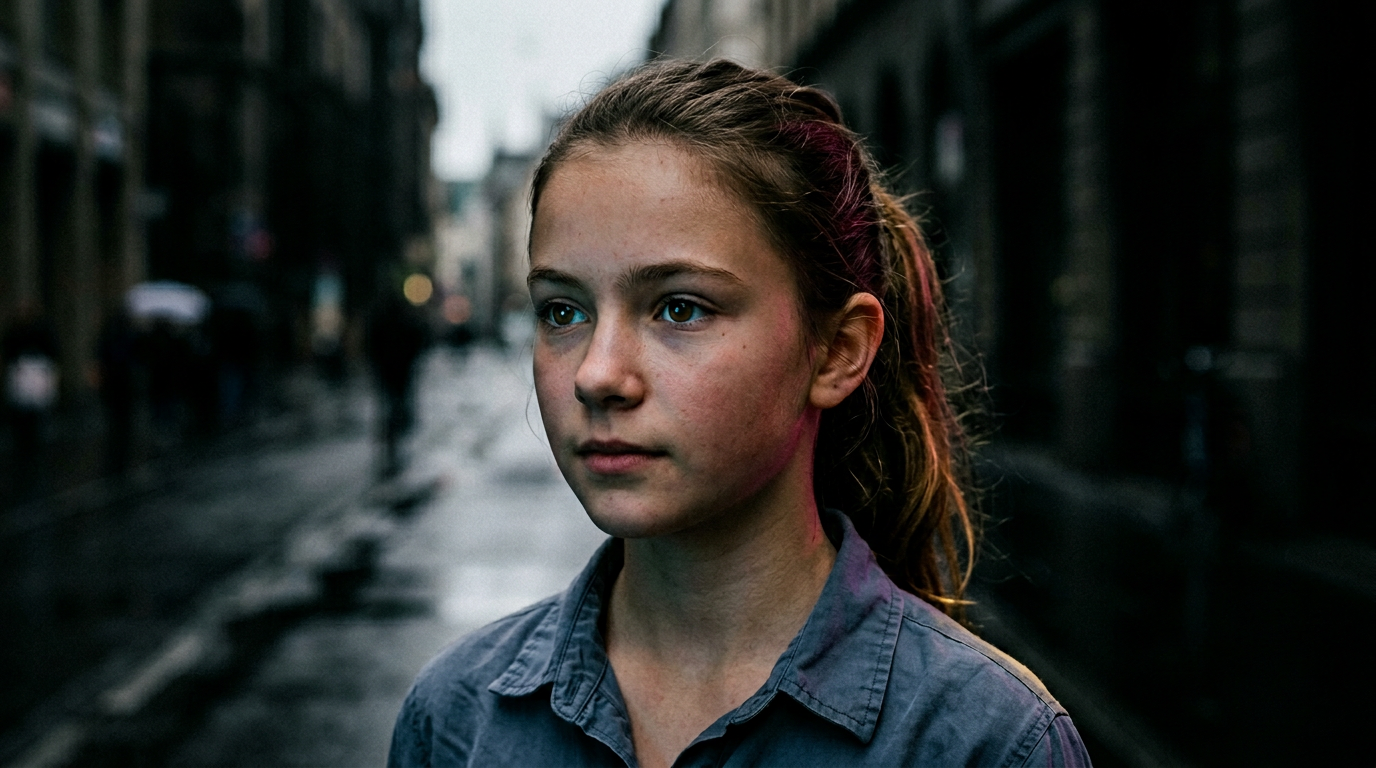
She was a careful child. Not cautious — she climbed trees and scraped her knees and once fell into a creek near Mount Nebo and emerged laughing with mud in her hair — but careful in her observations, in the way she handled small things, in the attention she gave to anything that moved in water. Her brown eyes, which Laura's colleagues described as focused, were the eyes of a child who had learned that the interesting things in the world were often small and easily missed and that the person who saw them first understood something the others did not.
She entered Brisbane Grammar School in Year 1 in 2017. Laura had not planned on Grammar — the fees were beyond a research assistant's salary — but Michael, who drove the school's bus routes and had watched the outdoor education programme from the driver's seat for years, had suggested it, and the bursary brought it within reach. The enrolment was one of the few decisions Michael and Laura made jointly after their separation, and the ease of the agreement surprised them both.
Michael drove Amelia to school every morning in the bus he would later drive to D'Aguilar. He did not advertise the relationship. The other children knew Mr Harris as the driver — cheerful, patient, with a habit of greeting each child by name as they boarded — and Amelia did not correct them. She called him Dad at home and Mr Harris on the bus, and the distinction was not confusing to her because she had always understood that her father occupied different roles in different contexts, and the bus was his context, not hers.
Through the Same Door
The overnight field trip to D'Aguilar National Park departed from Brisbane Grammar School on the morning of Saturday, 4 August 2018. Michael drove. Amelia sat in the middle of the bus, not near the front where her father could see her, because she was seven and because sitting near the driver when the driver was your father was a social liability she had learned to avoid. Laura had packed her bag and included a pair of gumboots, because Laura understood that any trip Amelia took would eventually involve water, and had not included a raincoat, because Laura, whose scientific precision did not extend to weather forecasting, had checked the wrong day's forecast.
At D'Aguilar, Amelia waded into the creek while other children threw stones from the bank. She crouched in the shallows and turned over rocks with the practised gentleness of someone who had been taught that the creatures beneath them were worth finding and worth not crushing. She found caddisfly larvae in their stone cases, mayfly nymphs clinging to the undersides of pebbles, and a freshwater shrimp that she cupped in her hands and showed to Susan Clarke with the quiet satisfaction of a child presenting evidence. Clarke was impressed. Clarke was also unsure what to do with a seven-year-old who knew more about freshwater invertebrates than most of the adults on the trip.
The bus departed D'Aguilar on the morning of 5 August for the return to Brisbane. Michael was driving. Amelia was in the middle section, her gumboots still damp from the creek.
The bus passed through a Portal opened across a road in the Brisbane suburbs and collided with vehicles on the far side, in the landscape of Clivilius. The impact was catastrophic from the driver's seat. Michael's arm fractured where it struck the steering column, and his ribs cracked against the seatbelt restraint. The bus slewed sideways and came to rest at an angle that left the rear section elevated and the front section crushed against the wreckage of other vehicles.
In the middle of the bus, Amelia was thrown forward into the seat back. Her head struck the headrest and a deep bruise spread across her forehead and left temple. Her right knee hit the seat base, producing a sharp pain that subsided into a dull, persistent ache. She did not lose consciousness, but the blow to her head left her vision blurred and her thoughts slow for several minutes — a mild concussion that was assessed later and monitored carefully.
She heard her father before she saw him. His voice, from the front of the bus, calling out instructions to the adults in the seats behind him — steady, controlled, professional, the voice of a man who was injured and knew it and was choosing to function before he dealt with the injury. Amelia recognised the voice. It was not the voice he used at home, when he was Dad. It was the voice he used on the bus, when he was Mr Harris, and the distinction — the same distinction she had maintained since she was old enough to ride the bus — held, even now, even in the wreckage, even as the sky outside the shattered windows turned wrong and the world stopped making sense.
She did not call out to him. She was seven, and she was concussed, and the rules she had built around the separation of Dad and Mr Harris were strong enough to hold even in crisis. She sat in her seat and pressed her hand to her forehead where it throbbed and waited for someone to tell her what to do, because Amelia had always trusted that the adults would know, and the fact that the adults were bleeding and frightened did not, in those first minutes, override the trust.
The Girl Whose Father Stayed
The concussion resolved within a week. The forehead bruise yellowed and faded. The knee, which had swollen to the size of a grapefruit by the first evening, was ice-packed and rested and healed without permanent damage, though it remained stiff in the mornings for several months. Amelia's head was monitored by the adults with medical training — headaches reported, vision checked, sleep patterns noted — and by Michael, who watched her with the particular vigilance of a father who had been driving the vehicle that hurt his child and who could not separate the two roles he had spent years keeping apart.
Amelia was the only child on the bus whose parent had come through the Portal with her. The fact was obvious and its implications were complex. She had what the other children did not: a father who was present, who slept in the same settlement, who could hold her when the nights were dark and the strangeness of Clivilius pressed in. The other children — Mason Clarke, Oliver Smith, Charlotte Davis, all of them — had lost every adult who had ever belonged to them. Amelia had not. She had Michael.
The guilt she felt about this advantage was not immediate. It arrived gradually, over the first year, as she watched the other children construct lives without parents and understood that she occupied a category they could not enter. She did not mention Michael in conversations about families. She did not talk about having a father when the other children were talking about missing theirs. The silence was not strategic in the way Emily Martin's silences were strategic. It was protective — of the other children's feelings, and of her own unease at possessing something she had not earned and could not share.
Michael, for his part, struggled with the same asymmetry from the other side. He had survived the crash. He had his daughter. He had not lost what the parents on the other side of the Portal — Laura, the mothers and fathers of fifteen other children — had lost. The guilt was enormous and it was quiet, and he channelled it into work at what would become Dustwind Depot and into a careful, deliberate effort to be present for all the bus children, not just Amelia. He organised the first communal meals. He helped build sleeping shelters. He carried injured children who were not his and spoke to frightened children who were not his with the same steady patience he used with Amelia, and the effort was genuine and it was also penance.
Amelia lived with Michael in their quarters in Bixbus — not in the shared quarters where most of the bus children slept, but in the small space Michael had built for the two of them. The arrangement was practical and isolating in equal measure. She had a father. She had a home. She also had a separation from the other children's shared experience that no amount of kindness could bridge, because the shared experience of the bus children was loss, and Amelia's loss — of Laura, of the cottage in Red Hill, of the creek and the sorting trays and the gumboots — was real but partial, and partial loss in a community of total loss made her feel fraudulent in her grief.
She attended the Learning Grove from September 2018. Jenny Triffett placed her in an ability group slightly above her age — her reading was strong, her writing was observational and detailed, and her numeracy was competent. She was quiet in class but not withdrawn, attentive but not eager, the kind of student who produced consistently good work without drawing attention to either the work or herself. The afternoon practical sessions revealed what would become her defining interest.
At the settlement's water points — the river that ran past Bixbus, the reservoirs constructed for storage, the irrigation channels that fed the Verdant Nursery — Amelia found the familiar in the foreign. Water in Clivilius behaved the way water behaved everywhere. It flowed downhill. It pooled in depressions. It supported life at its edges — different life, unfamiliar species, creatures she had no names for — but life whose patterns she could observe with the same attention her mother had taught her to apply to the creeks near Mount Nebo.
The transition to Bixbus School in late 2019 gave Amelia a formal channel. Her mornings were spent in academic classes where her science work was consistently the strongest and where her written observations — precise, factual, unadorned — drew the kind of quiet approval that her personality invited. Her afternoons settled at the water systems that served the settlement: the creek, the reservoirs, the irrigation infrastructure that connected the Verdant Nursery and the Orchard of Abundance to their water supply. She was not an engineer. She did not design or build the systems. She monitored them. She watched what the water did, what lived in it, how its quality changed with season and usage, and she reported her findings to the adults who managed the settlement's water supply with the same factual tone her mother had used in lab reports.
By twelve, Amelia could assess water quality by observation alone — the colour, the clarity, the presence or absence of certain organisms that indicated contamination or nutrient loading. By fourteen, the adults who maintained the irrigation system consulted her before making changes, because Amelia's monitoring had caught problems — a blocked intake, a contamination source upstream — before they became crises, and the catches had saved crops and effort enough times that her competence was no longer questioned.
Her social life was shaped by the gap her father's presence created. She had friends — steady, reliable friendships built over years of shared schooling and shared work — but the friendships carried a distance she could not close, because the other children's central experience was one she did not share. She compensated by being useful, by being present, by never mentioning the advantage she had, and the compensation worked well enough that most people forgot she was different. But Amelia did not forget, and Michael did not forget, and the two of them carried the knowledge between them like a weight distributed across four shoulders that would have been lighter on two.







