
Amber Louise Styles (née Hargreaves)
Amber Louise Styles (14 April 1987 – 1 April 2019) was an environmental scientist and founding Guardian of Saint Phillis. Born in Bath to an academic family, Amber's early brilliance led her to Cambridge and a promising research career—until a brief marriage in her mid-twenties ended in betrayal that shattered her faith in institutions and the people who wielded power within them. She emerged from that period harder, warier, and fiercely protective of anyone who earned her trust. Her partnership with Saul Carter and her role in the Guardian Group represented a second chance at belonging. Her death in London, warning the others to run with her final breath, saved the people she had learned to love.
Bath
Amber Louise Hargreaves was born on 14 April 1987 at the Royal United Hospital in Bath, Somerset, the third child and only daughter of Richard Glanville Hargreaves, a professor of environmental sciences at the University of Bath, and Margaret Floris Hargreaves (née Beaumont), a botanical illustrator whose watercolours had appeared in academic publications and gardening catalogues across Britain. The family lived in a Georgian townhouse in Widcombe, its rear garden an ongoing experiment in native species cultivation that served as both Margaret's studio and Richard's weekend laboratory.
Her brothers arrived first: Benjamin in 1982 and Edward in 1984. By the time Amber came along, the Hargreaves household had established its particular rhythms—intellectual rigour tempered by artistic sensibility, high expectations delivered with genuine warmth, the assumption that children would be curious because curiosity was simply what one did. Benjamin gravitated toward his father's academic path; Edward discovered music and eventually settled into orchestral management. Amber, the youngest by three years, absorbed everything and carved her own territory.
She was, from early childhood, the one who noticed things others missed. On family walks through the Somerset countryside, she would stop to examine the patterns of lichen on stone walls, the particular way water moved through soil after rain, the micro-ecosystems that formed in tree hollows and drainage ditches. Where Benjamin collected specimens and Edward composed melodies inspired by birdsong, Amber asked questions—not the simple curiosity of childhood but the persistent, systematic inquiry that would later define her scientific work.
Richard recognised his daughter's aptitude and encouraged it with the particular enthusiasm of a parent who sees their own passions reflected in new form. He took her on field studies during school holidays, taught her to keep observation notebooks, introduced her to colleagues who treated her questions seriously despite her age. By twelve, Amber could identify most British plant species by sight and had developed theories about soil composition that her father's graduate students found uncomfortably insightful.
Margaret provided counterbalance. Where Richard emphasised data and methodology, Margaret insisted on beauty—the aesthetic dimension of the natural world that couldn't be reduced to measurements and classifications. Amber learned to sketch plant specimens with scientific precision and artistic grace, developing visual thinking that would later prove essential in understanding complex environmental systems. The combination of her parents' approaches—rigorous analysis and intuitive appreciation—became the foundation of her intellectual identity.
The Hargreaves household was not without pressure. Richard's academic standing created expectations that shadowed all three children, the implicit understanding that excellence was baseline rather than achievement. Benjamin had navigated this by pursuing his father's exact path, eventually securing a lectureship at Bristol. Edward had escaped into music, where different metrics applied. Amber, the youngest and most visibly gifted, felt the weight most acutely—the sense that her potential was both celebrated and claimed, that her future had been mapped before she'd had opportunity to explore alternatives.
She loved her parents. She also, in ways she rarely articulated, resented the assumptions that came with their love.
Cambridge and the Discovery of Brilliance
The scholarship to Cambridge in 2005 represented both validation and escape. Amber had earned it through genuinely exceptional performance—A-Levels in Chemistry, Biology, Geography, and Mathematics that placed her among the top candidates nationally—but she also recognised the offer as passage to territory where she could define herself outside her father's considerable shadow.
The Earth Sciences programme at Cambridge proved more challenging than her secondary education had suggested. Here, for the first time, Amber encountered peers whose capabilities matched or exceeded her own, whose questions pushed into territories she hadn't considered, whose competitive intelligence forced her to work harder than natural aptitude had previously required. The experience was simultaneously humbling and exhilarating—the discovery that brilliance was a starting point rather than a destination.
Her undergraduate years (2005–2008) coincided with growing public awareness of climate change, environmental degradation, and the urgent need for solutions that matched the scale of emerging crises. Amber found herself drawn not just to understanding natural systems but to intervening in them—the engineering dimension that transformed observation into action. Her final-year dissertation on adaptive ecosystems in extreme environments, examining how life persisted in conditions that should have been inhospitable, earned distinction and caught the attention of researchers working on problems most scientists considered intractable.
The PhD that followed (2008–2012) allowed Amber to pursue these questions systematically. Her doctoral research on environmental engineering in marginal landscapes—deserts, post-industrial wastelands, contaminated sites—developed frameworks for restoration that challenged conventional assumptions about what was possible. She learned to think in systems, to recognise how interventions in one domain cascaded through connected networks, to design solutions that worked with natural processes rather than against them.
By twenty-five, Amber Hargreaves had established herself as one of the most promising environmental scientists of her generation. Her publications drew citation; her conference presentations attracted attention; her future seemed assured within the academic structures her father had navigated so successfully.
Then she met David Styles, and everything changed.
The Marriage
David Emery Styles was a senior researcher at the Environmental Systems Institute in Cambridge, twelve years Amber's senior and possessed of the particular confidence that came from early success and institutional favour. They met at a departmental function in autumn 2012, shortly after Amber completed her doctorate. The attraction was immediate—David was brilliant, charming, and seemed to see in Amber not just potential but already-realised excellence. He treated her as an equal in ways that more established figures often failed to manage, discussing her research with genuine engagement rather than patronising approval.
The relationship developed quickly. By spring 2013, they were living together; by summer, engaged; by October, married in a small ceremony that Amber's parents attended with barely concealed reservations. Richard and Margaret said little directly—their daughter was an adult, capable of her own decisions—but their hesitation registered. Amber dismissed it as protectiveness, perhaps jealousy that she had found partnership outside the family's carefully cultivated networks.
She was twenty-six. She was in love. She was certain she understood what she was doing.
The first year of marriage revealed cracks that courtship had concealed. David's confidence, so attractive initially, proved inseparable from a need for control that extended into every domain of their shared life. He had opinions about Amber's research directions, her professional relationships, her time allocation, her appearance at departmental functions. These opinions were delivered as suggestions, as caring guidance from someone with more experience, but the cumulative effect was a gradual constriction of the autonomy Amber had fought to establish.
More troubling were the irregularities she began to notice in David's own work. Research data that didn't quite align. Collaborative relationships that seemed to involve more taking than sharing. Younger researchers whose contributions appeared in David's publications without adequate acknowledgment. Amber initially dismissed these observations as misunderstanding—she was new to the institutional politics of senior research, unfamiliar with how credit and blame were allocated in complex projects.
But she was the daughter of Richard Hargreaves, trained from childhood to observe carefully and trust what she saw. The patterns accumulated until they couldn't be ignored.
The confrontation, when it came, was worse than Amber had anticipated. David didn't deny the irregularities—he contextualised them, explained them as standard practice, suggested that Amber's inexperience made her naive about how science actually worked at senior levels. When she pushed further, his tone shifted. She was being ungrateful for his mentorship. She was jeopardising his career with unfounded accusations. She was, perhaps, not quite as brilliant as everyone had believed if she couldn't understand these basic realities.
The marriage ended in early 2015, eighteen months after it began. The divorce was quiet—David had too much to protect to allow public conflict—but the professional consequences were severe. Amber found herself subtly excluded from networks that had previously embraced her, her research proposals mysteriously unsuccessful, her references lukewarm where they had once been enthusiastic. David Styles had the institutional power to make her career difficult without ever being seen to act directly, and he used it with the same careful calculation he applied to everything else.
She kept his name. Partly because her published work appeared under it, making a change professionally complicated. Partly because returning to Hargreaves felt like admitting defeat, crawling back to her father's shadow after failing to establish her own identity. Partly, perhaps, as a reminder—a scar she chose to display rather than conceal.
She never spoke about the marriage afterward. Not to her family, who knew only that it had ended badly. Not to colleagues, who learned quickly that the subject was closed. Not, years later, to Saul, who understood that some wounds required silence rather than excavation.
What Amber took from those eighteen months was simpler than explanation could capture: she had learned that institutions protected their own, that brilliant men could be monstrous in private, that trusting the wrong person could cost everything she'd built. She had learned to watch for the signs she'd missed with David—the subtle assertions of control, the pattern of taking credit, the charm that masked calculation.
She had learned, in ways that would later save lives, how to see danger before it announced itself.
Cardiff and Reconstruction
The position at the Environmental Research Institute in Cardiff represented strategic retreat. It was a good post—respectable funding, genuine research freedom, distance from Cambridge's poisoned networks—but it was also, unmistakably, a step down from the trajectory Amber's early career had promised. She accepted it because the alternatives were worse, because Cardiff offered space to rebuild without the constant pressure of institutional politics she'd learned to distrust.
The work itself proved unexpectedly fulfilling. Freed from the competitive dynamics of elite academia, Amber pursued research directions that interested her rather than those that would maximise citation metrics or attract prestigious funding. Her focus shifted toward practical applications—how environmental engineering principles could address real problems in real communities, rather than theoretical frameworks that existed primarily in academic journals.
It was at Cardiff, in late 2017, that she encountered Saul Morgan Carter.
Their introduction came through professional channels—mutual contacts who recognised complementary research interests—but recognition was immediate. Saul saw things. Not the way David had seen things, calculating advantage and positioning, but clearly, honestly, with the particular perception of someone who had learned to watch because watching was survival. Within their first conversation, Amber understood that Saul operated on levels most people couldn't access, that his measured exterior concealed depths that matched her own.
More importantly, she understood that he wasn't trying to hide these depths from her. He was, cautiously and deliberately, allowing her to see them.
The relationship developed through encrypted communications and meetings in cities neither officially visited, through gradual revelation of investigations that each had been conducting independently. Amber had her own reasons for questioning official narratives—the marriage had taught her how thoroughly institutions could corrupt the people within them, how easily brilliant work could be stolen or suppressed. Saul's systematic approach to understanding hidden systems complemented her intuitive recognition of patterns that didn't fit.
By early 2018, they were partners in every sense. The trust Amber had learned to withhold after David, the vulnerability she had carefully reconstructed into guardedness, found expression with Saul in ways that surprised her. He didn't try to control or claim her work. He didn't need to be the brilliant one in the room. He saw her clearly—including the parts she preferred to conceal—and what he saw made him want to stay.
For the first time since her marriage ended, Amber allowed herself to believe that she might have found someone worthy of the risk.
Guardian
The invitation from Nathan Cowdrey in April 2018 arrived through intermediaries who knew exactly which research to reference and which questions to ask. The claims should have triggered every sceptical instinct Amber possessed—other dimensions, hidden settlements, technology that defied known physics. But Saul's careful verification methods confirmed what shouldn't have been possible, and Amber's own observations of anomalies in environmental data found sudden explanation in frameworks she hadn't imagined existed.
She joined the Guardians of Saint Phillis alongside Saul, bringing expertise that proved immediately essential. Clivilius operated according to environmental principles that paralleled Earth's while differing in crucial ways; Amber's training in adaptive ecosystems and extreme environment engineering translated directly into understanding how the settlement might sustain itself. Her work on Saint Phillis's early agricultural systems—the first successful cultivation in that barren territory—drew on everything she had learned, transformed by context into something unprecedented.
Within the Guardian Group, Amber occupied a particular role. Nathan provided vision; Josh provided technical infrastructure; Verity provided logistical precision; Saul provided strategic architecture. Amber provided connection—the warmth that bound individuals into community, the intuitive understanding of what people needed beyond what they said they wanted. Her instincts, sharpened by the marriage and its aftermath, allowed her to read situations before they crystallised, to sense tensions that hadn't yet erupted, to know when someone was hiding something that mattered.
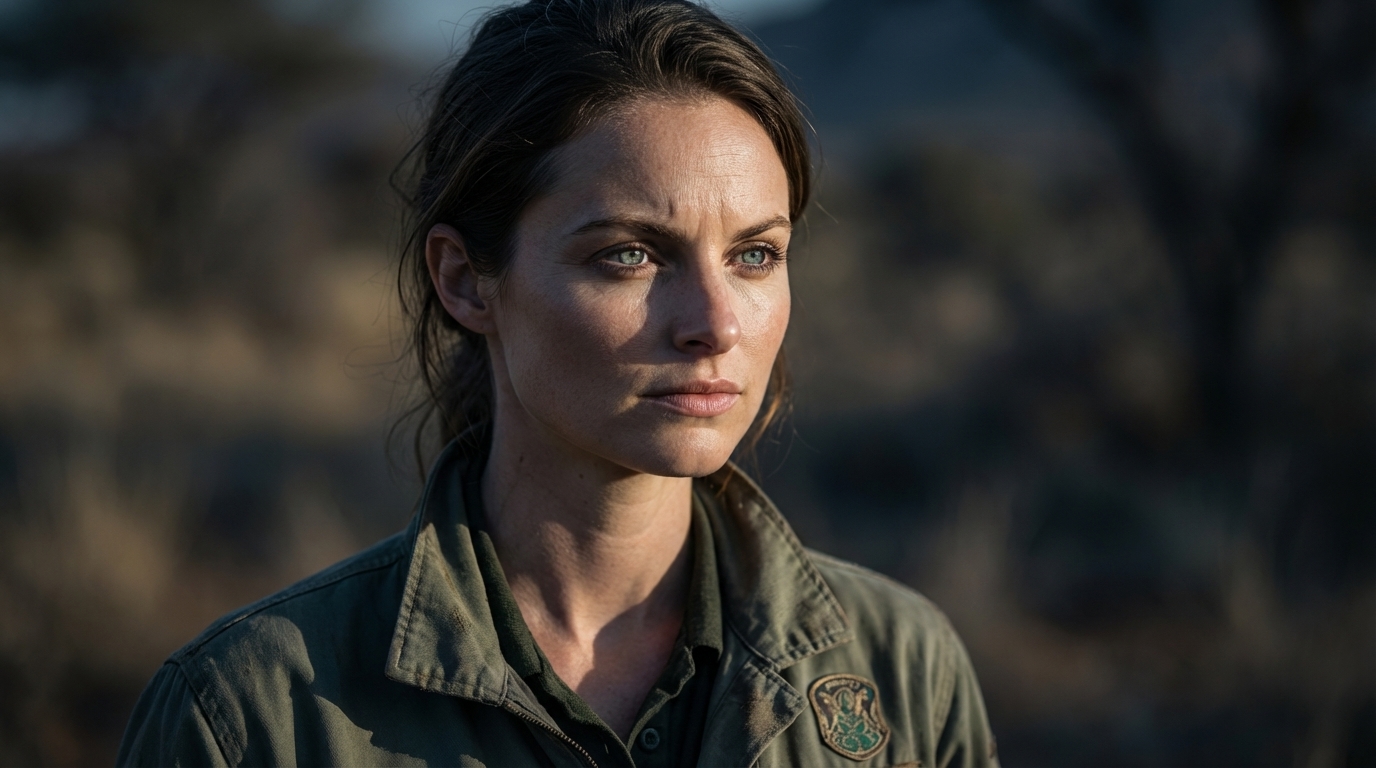
The freckles across her nose, the no-nonsense set of her mouth when she was focused, the way she would touch someone's arm to emphasise a point—these physical details stayed with the others long after she was gone. She had a gift for presence, for making people feel seen and valued, that her guardedness with strangers made more precious to those who earned her trust.
Her relationship with each Guardian developed distinctly. Nathan she treated as visionary and occasional liability, someone whose instincts she trusted even when his plans seemed reckless. Josh she respected for methodical competence that required no performance. Verity she understood perhaps best of all—recognising in the forensic accountant's careful reserve a kindred wariness about letting people too close. And Saul—Saul was home, the person with whom she could finally be fully known without fear of what that knowing might cost.
The London penthouse became, for a brief period, the closest thing to family Amber had experienced since leaving Bath. Five people building something that mattered, united by shared purpose and growing trust. She allowed herself, against her better judgment, to believe it might last.
London, April 2019
The operation that brought the Guardians together in London represented their most ambitious undertaking—coordinated intelligence gathering on organisations that threatened everything they were building. Amber's role involved reconnaissance that took her away from the penthouse, following leads that required her particular combination of scientific credibility and hard-won instinct for danger.
What she discovered in those final days remains partially classified, known only to those with direct need for the information. What can be said is that Amber recognised threat before the others did, that her instincts—trained by a marriage that taught her to see manipulation before it revealed itself—registered patterns that demanded immediate action.
She was thorough. She was always thorough. But thoroughness takes time, and time was precisely what she didn't have.
The specifics of what happened in those final hours are not fully documented. What is known: Amber arrived at the penthouse with blood spreading across her chest, her face slack with shock but her eyes burning with urgent purpose. She found each of her fellow Guardians in turn—Nathan, Josh, Saul, Verity—and spoke a single word with every remaining ounce of strength.
"Run!"
It was not a request. It was a command, delivered by someone who understood that argument would waste seconds none of them could afford. It was also, in its way, a gift—the final expression of the protective instinct that had defined her since the marriage taught her what betrayal cost, the absolute prioritisation of her people's survival over her own.
Saul reached her as she fell. The others scattered as protocol demanded, Portal Keys activating in desperate sequence, the penthouse dissolving into rainbow light as they fled to separate safeties. What passed between Amber and Saul in those final moments was theirs alone—a private exchange that Saul has never shared and no one has asked him to reveal.
Amber Louise Styles died 1 April 2019. She was thirty-one years old.
What Remained
The memorial garden in Saint Phillis, planted with the first crops Amber helped cultivate, stands as official tribute to her contributions. But her legacy persists in less visible forms: the agricultural systems that continue to sustain the settlement, the environmental frameworks that guide its expansion, the particular quality of community she helped create in those early years.
More than this, she persists in the people she loved and who loved her. In Nathan's heightened caution about operational security, born from understanding what insufficient vigilance had cost. In Verity's frozen second of paralysis, the guilt she carries for hesitating when Amber's warning demanded immediate response. In Josh's infrastructure designs, which now include redundancies against the specific vulnerabilities that killed her. In Saul's chess set, frozen in a position from a game they never finished, and in the particular quality of grief that transformed a calculating strategist into something harder and more determined.
She had learned, in her brief marriage, how thoroughly institutions could fail the people within them. She had rebuilt herself into someone who could see danger before it arrived, who protected fiercely those she trusted, who understood that love required vulnerability and offered it anyway to those who proved worthy.
In the end, she proved worthy of her own standards. She saw the danger. She gave the warning. She saved them.
Some legacies are measured in systems built and knowledge preserved. Amber's legacy included these things, but it was finally simpler than institutional contribution could capture.
She loved them. She died so they could live. And they have not forgotten.







