Agnes Fraser
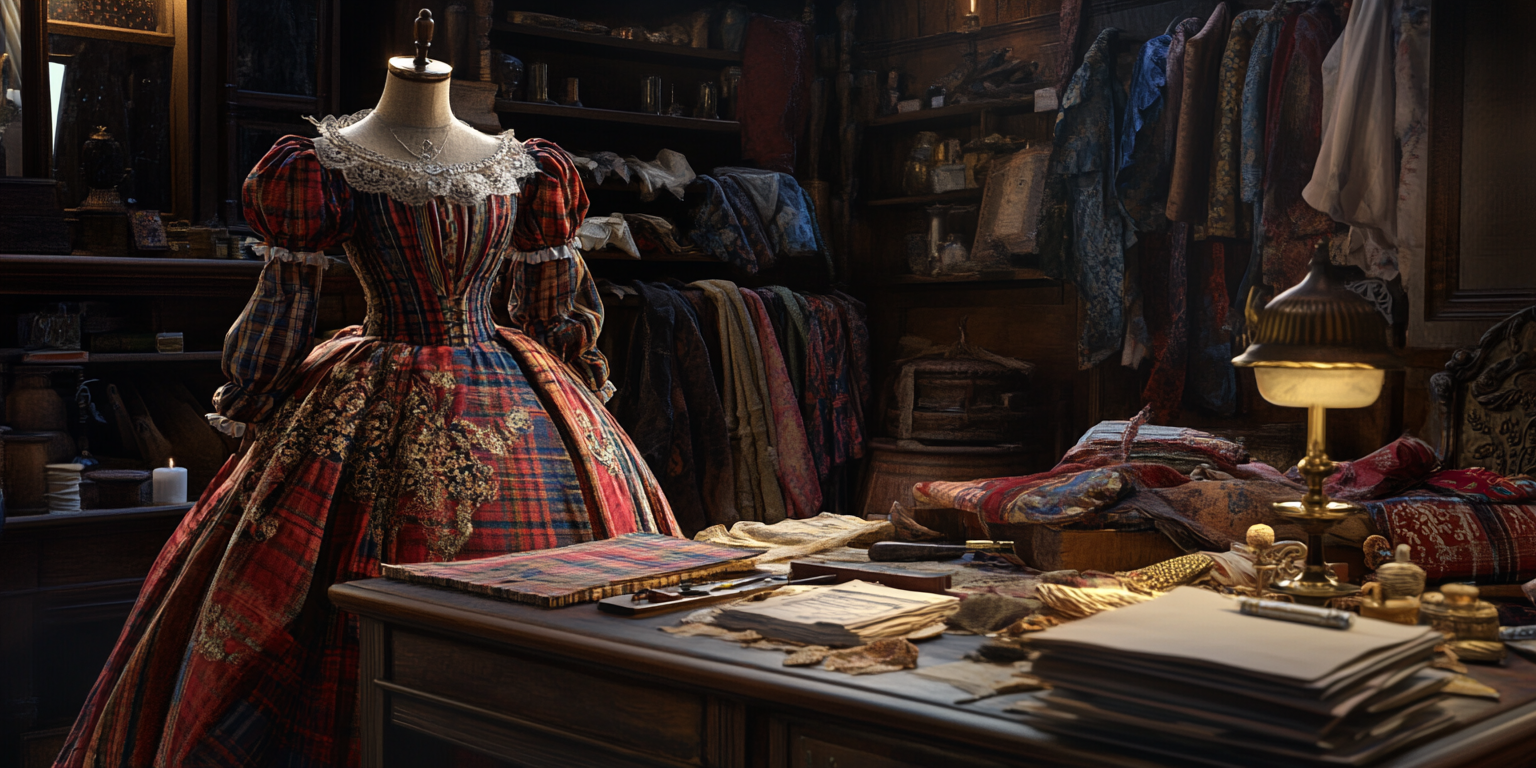
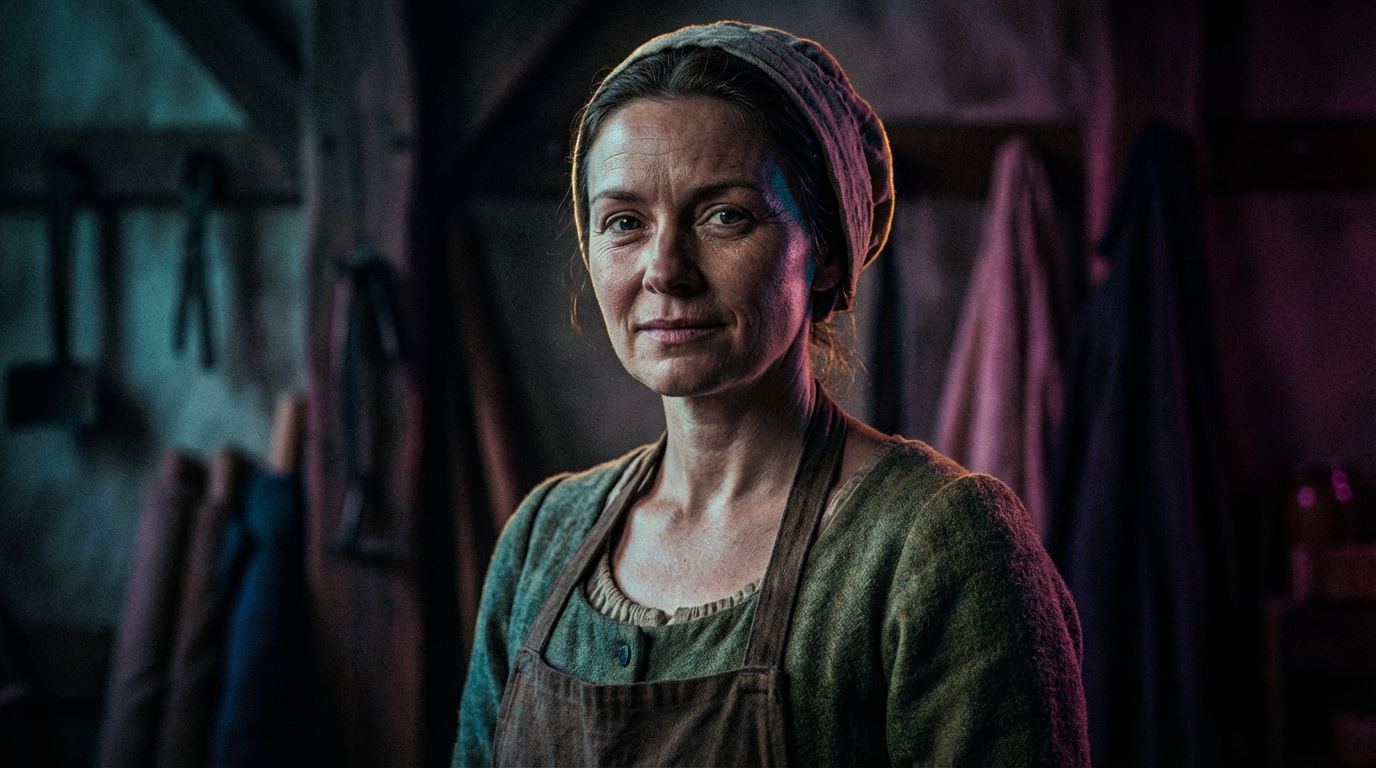
Born in Edinburgh's Old Town to a master carpenter and a skilled weaver, Agnes Fraser joined Madame Élisabeth Rochefort's dressmaking workshop in 1734, where she met the young Highland seamstress who would become her lifelong partner in enterprise. When Moira MacKenzie took over the establishment in 1740, Agnes remained at her side—the steady counterweight to Moira's visionary ambition. Through Jacobite upheaval and decades of change, she maintained the practical discipline that kept the Emporium functioning whilst Moira pursued grander designs. She mentored Elspeth Stewart, managed the workroom through political intrigue, and after Moira's death in 1780, ensured the establishment's legacy continued until her own passing in 1790.
An Artisan's Daughter
Agnes Fraser was born on 17 April 1720 in Edinburgh's Old Town, into a household where skilled hands were the measure of worth. Her father, Hamish Fraser, was a master carpenter whose reputation for precise joinery had earned him commissions from merchants and minor gentry throughout the city. Her mother, Ailsa MacLaren Fraser, came from a family of weavers and brought those skills into the Fraser household, producing fine linens and woolens that supplemented the family income.
The Frasers were artisans rather than gentry—respectable but not wealthy, their standing in Edinburgh society determined by the quality of their work rather than the accident of birth. They lived in the crowded tenements of the Old Town, where the sounds of commerce and craft filled the narrow wynds from dawn until dusk. It was a world of practical skills and practical values, where children learned early that survival depended on what one could make with one's hands.
Agnes was the eldest of two children. Her brother Ewan, born in 1725, would follow their father into carpentry, eventually establishing his own reputation in the trade. But Agnes's path led in a different direction. From her mother, she learned the fundamentals of textile work—how to read the quality of wool and linen, how thread responded to different tensions, how patterns emerged from the patient repetition of simple motions. By the time she was ten, her fingers had developed the steadiness and precision that would define her life's work.
Her mother assumed Agnes would continue in the family weaving tradition, perhaps eventually taking over the loom that had belonged to her grandmother. But Agnes found herself drawn to something more refined than household textiles. The dresses worn by Edinburgh's wealthy women fascinated her—the way fabric could be transformed into something that changed how a person moved through the world, the artistry that elevated mere cloth into statements of identity and status. She began to dream of work that went beyond practical production into the realm of creation.
Madame Rochefort's Workshop
In 1734, at the age of fourteen, Agnes secured an apprenticeship at the workshop of Madame Élisabeth Rochefort, a French modiste who had established herself in Edinburgh's fashionable New Town. The position represented a significant step up from her family's artisan background—Madame Rochefort's establishment catered to Edinburgh's elite, producing garments for women who could afford the finest Continental fashions.
The workshop was a revelation. Here, Agnes encountered fabrics she had never touched before: silks imported from France and Italy, delicate laces that seemed to have been spun from spider-web, cottons so fine they felt like whispered promises against the skin. She learned techniques her mother's practical weaving had never encompassed: the precise cutting that transformed flat cloth into three-dimensional garments, the invisible stitches that held seams together without betraying their presence, the art of fitting that made each creation unique to its wearer.
She also encountered Moira MacKenzie.
The young Highland woman was four years Agnes's senior, already established as one of Madame Rochefort's most promising seamstresses despite having arrived in Edinburgh only two years before. Moira possessed a quality that Agnes recognised immediately—the particular intensity of someone who had come from nothing and was determined to become something. There was steel beneath her pleasant manner, ambition behind her careful work, a hunger that the workshop's comfortable routines could never fully satisfy.
Their partnership began simply enough. Moira, increasingly responsible for training new workers, took the young apprentice under her supervision. She taught Agnes the advanced techniques that Madame Rochefort demanded, pushed her to develop the precision that would eventually become her defining characteristic, corrected her mistakes with a directness that could sting but always served to improve. In return, Agnes provided something Moira had not known she needed: a steady presence, a practical mind that could translate visionary ideas into workable reality, a loyalty that asked nothing except the opportunity to do good work.
The friendship that developed between them transcended their difference in temperament. Where Moira was bold and restless, Agnes was patient and methodical. Where Moira saw possibilities, Agnes saw practicalities. The combination proved remarkably effective, each woman's strengths complementing the other's limitations. By the time Madame Rochefort began contemplating retirement in the late 1730s, the partnership between her two best seamstresses had become the workshop's most valuable asset.
The Emporium
When Madame Rochefort announced in 1740 that she was returning to France and naming Moira MacKenzie as her successor, Agnes faced a choice. She could seek employment elsewhere—her skills were now sufficient to command good wages at any establishment in the city. Or she could remain with Moira, trusting that the ambitious Highland woman's vision would prove worthy of her continued loyalty.
She stayed.
The workshop's transformation into Moira MacKenzie's Emporium of Fashion changed everything and nothing. The location remained the same, the clientele largely continued, the work of creating beautiful garments for wealthy women went on as before. But the atmosphere shifted. Moira's ambition, no longer constrained by working under someone else's direction, expanded to fill every corner of the establishment. She invested in the premises, cultivated new clients, developed the signature style that would make the Emporium famous—blending Scottish textile traditions with Continental elegance in ways no one had attempted before.
Agnes became the practical foundation upon which Moira's vision was built. She managed the day-to-day operations that Moira found tedious: ensuring supplies were ordered, schedules were maintained, junior seamstresses were properly trained and supervised. She handled the demanding clients whose temperaments tried everyone's patience, her calm demeanour and unfailing courtesy smoothing over conflicts that might otherwise have damaged the Emporium's reputation. She kept the workroom functioning efficiently while Moira pursued the grander designs that brought fame and fortune.
The arrangement suited both women. Moira needed someone she could trust absolutely to manage the details while she focused on strategy and artistry. Agnes needed meaningful work that challenged her abilities without requiring the kind of risk-taking that Moira embraced so readily. They were partners in all but name, their collaboration invisible to clients who saw only the elegant façade of the Emporium and the striking figure of its proprietress.
The '45
The Jacobite Rising of 1745 tested the Emporium in ways neither woman had anticipated. When Prince Charles Edward Stuart raised his standard and the Highland clans rallied to his cause, Edinburgh became a battleground of competing loyalties. The city changed hands, occupying armies came and went, and the careful neutrality that businesses required to survive became increasingly difficult to maintain.
Agnes observed the transformation of the Emporium during these months with a mixture of concern and careful detachment. She was not blind to what was happening—the coded conversations conducted under pretence of dress fittings, the deliveries that seemed to contain more than fabric, the clients whose visits served purposes beyond commissioning new gowns. She knew that Moira's sympathies lay with the Stuart cause, that the Emporium had become something more than a dressmaking establishment during these dangerous months.
But Agnes chose not to know too much. Her pragmatism, which had served her so well in managing the business's daily operations, extended to managing her own awareness. She focused on the work—ensuring that garments were completed on schedule, that the quality of workmanship remained high, that the Emporium's reputation for excellence survived regardless of what else might be happening within its walls. When clients requested gowns in Stuart colours, she recorded the orders without comment. When nervous aristocratic women exchanged whispered conversations, she busied herself with measurements and adjustments.
This deliberate neutrality served the Emporium well. After Culloden, when the government's retribution swept through Scotland seeking those who had supported the rebellion, Agnes's careful distance provided cover. The senior seamstress who had managed the workroom throughout the upheaval appeared to be exactly what she claimed: a skilled craftswoman focused on her trade, innocent of political involvement, concerned only with the proper fall of fabric and the precision of her stitches. Her apparent obliviousness helped protect Moira and the networks she had built, providing plausible deniability that might not have existed if Agnes had been more openly aware.
Senior Seamstress
By 1752, Agnes had become the Emporium's senior seamstress and de facto manager, a position she would hold for the next three decades. At thirty-two, she had developed a reputation among Edinburgh's elite for unflappable competence and absolute discretion. Clients who found Moira's intensity overwhelming often preferred to work with Agnes, whose honey-warm manner and practical approach made the fitting process less fraught with unspoken judgments.
Her responsibilities encompassed nearly everything except the creative vision that remained Moira's domain. She supervised the junior seamstresses, ensuring their work met the Emporium's exacting standards. She managed inventory, maintained relationships with fabric suppliers, and handled the financial accounting that kept the business solvent. She served as the buffer between Moira's ambitions and the practical constraints of running a successful establishment, translating the impossible into the merely difficult.
The work suited her temperament. Agnes had never craved recognition or sought to place herself at the centre of attention. She found satisfaction in competence itself, in the quiet knowledge that her contributions made everything else possible. When the Emporium received praise for its creations, she felt no resentment that the credit went to Moira. The gowns that emerged from their workroom were collaborative achievements, even if only those within the walls understood how much Agnes's steady hand had contributed to their perfection.
She never married. The question arose periodically—she was not without suitors in her younger years, and her settled position at the Emporium made her an attractive prospect for men seeking capable wives. But she declined every offer, whether from lack of interest in the men themselves or unwillingness to sacrifice the life she had built. Her family remained her brother Ewan and his children, whom she visited regularly and supported financially when circumstances required. The Emporium was her home, its workroom her domain, its success her legacy.
Elspeth
In April 1755, a seventeen-year-old girl arrived at the Emporium seeking an apprenticeship. Her name was Elspeth Stewart, and she came with little to recommend her beyond obvious talent and desperate need—a blacksmith's daughter in a threadbare cloak, hoping to learn a trade that might support her widowed mother and younger sisters.
Agnes recognised something in the girl immediately. It was not merely skill with needle and thread, though that was evident from her first attempts at the work. It was something harder to name: a quality of determination that reminded Agnes of herself at the same age, combined with a spark of something else that seemed to promise more than ordinary accomplishment. Moira clearly saw it too—the attention she paid to the new apprentice went beyond what any previous hire had received.
Agnes became Elspeth's primary instructor in the practical aspects of the trade. Where Moira offered lessons in observation and discretion, Agnes taught the fundamentals: how to thread a needle efficiently, how to maintain the tension that produced even stitches, how to press fabric without scorching, how to cut cloth to minimise waste. These were not glamorous skills, but they were essential—the foundation upon which all the Emporium's artistry ultimately rested.
The relationship that developed between them combined elements of mentorship and maternal care. Agnes saw in Elspeth the daughter she had never had, a young woman whose potential deserved nurturing guidance. She provided the stability that balanced Moira's more demanding tutelage, offering encouragement when the work became overwhelming, practical advice when problems seemed insurmountable. In the hierarchy of the Emporium, she became Elspeth's closest ally—the person who could be trusted to provide honest assessment without harsh judgment.
She watched Elspeth's rapid advancement with a mixture of pride and something that might have been recognition. The girl was being prepared for more than ordinary seamstress work—that much became clear as the years passed and Moira's attention intensified. Whatever destiny awaited Elspeth Stewart, Agnes sensed it extended beyond the Emporium's walls. She did not ask questions. She had learned long ago that some knowledge was better left unpursued. Instead, she focused on ensuring that whatever challenges lay ahead, Elspeth would face them with the skills Agnes could provide.
After Moira
When Moira MacKenzie died on 17 August 1780, Agnes was sixty years old and had spent more than four decades at the establishment they had built together. The loss was profound—not merely the death of an employer, but the ending of a partnership that had defined both their lives. They had grown old together in service of something neither could have created alone, their friendship one of the few constants in a world shaped by secrecy and change.
Agnes never formally claimed ownership of the Emporium. The legal arrangements Moira had made were complex, designed to protect her illegitimate daughter Janet's interests while ensuring the business continued. What Agnes claimed instead was responsibility—the quiet authority of someone who knew every aspect of the operation and could be trusted to maintain its standards. She continued managing the workroom as she always had, training seamstresses, serving clients, ensuring that the reputation Moira had built did not diminish with its founder's passing.
The Emporium in these final years was a different place than it had been during its glory days. The Jacobite networks had long since dispersed, the political intrigues that had once given the establishment its dangerous edge fading into memory. What remained was the core of what they had always been: a workshop where skilled women created beautiful garments for those who could afford them. Agnes found this simpler version of the Emporium suited her well. She had never sought the excitement that Moira had courted, and she did not miss it now that it was gone.
Elspeth returned occasionally, visiting the woman who had helped shape her into whoever she had become. The nature of that becoming remained obscure to Agnes—she understood that Elspeth and her sisters had embarked on some extraordinary journey, that their lives had taken paths no ordinary seamstress could follow. But the details were hidden from her, and she did not press for revelations. What mattered was that Elspeth remembered, that she came back to the workroom where she had learned her first stitches, that the bond between mentor and protégé survived whatever transformations destiny had wrought.
Final Years
By the late 1780s, the work that had sustained Agnes for half a century began to exact its toll. Decades of painstaking labour with delicate materials had damaged her eyesight; arthritis made the precise movements of needlework increasingly painful. She continued as long as she could, unwilling to abandon the establishment that had been her life's purpose, but the limitations of age could not be indefinitely denied.
She retired gradually, handing responsibilities to the younger seamstresses she had trained, remaining available for consultation but no longer attempting the fine work that had once been her specialty. The transition was managed with the same quiet competence she had brought to everything—no drama, no public acknowledgment of what was being lost, simply a gradual transfer of duties that allowed the Emporium to continue functioning smoothly.
Her brother Ewan had died in 1788, leaving Agnes as the last of her immediate family. She maintained close relationships with his children, ensuring they understood the values their grandfather Hamish had instilled: that skilled work was worthy of respect, that reliability mattered more than brilliance, that the measure of a life was found in what one contributed rather than what one claimed. These were the lessons Edinburgh's artisan class had always taught, and Agnes saw no reason to abandon them simply because circumstances had carried her into more rarefied circles.
Death
Agnes Fraser died on 12 September 1790. She was seventy years old and had spent fifty-six of those years mastering and practising her craft. The seamstresses she had trained continued the work she had taught them, and the Emporium—though diminished from its peak—survived her as it had survived Moira.
She was buried in Greyfriars Kirkyard, her grave marked with a simple stone bearing her name and the Fraser clan motto: "Je suis prest"—I am ready. The inscription captured something essential about the woman who lay beneath it. Agnes Fraser had always been ready: for the next task, the next challenge, the next demand that life or work might place upon her. That readiness had been her defining quality, more valuable in its way than the ambition that drove others to seek fame or the brilliance that produced works of individual genius.







