Aemilia Fabia Astigitana
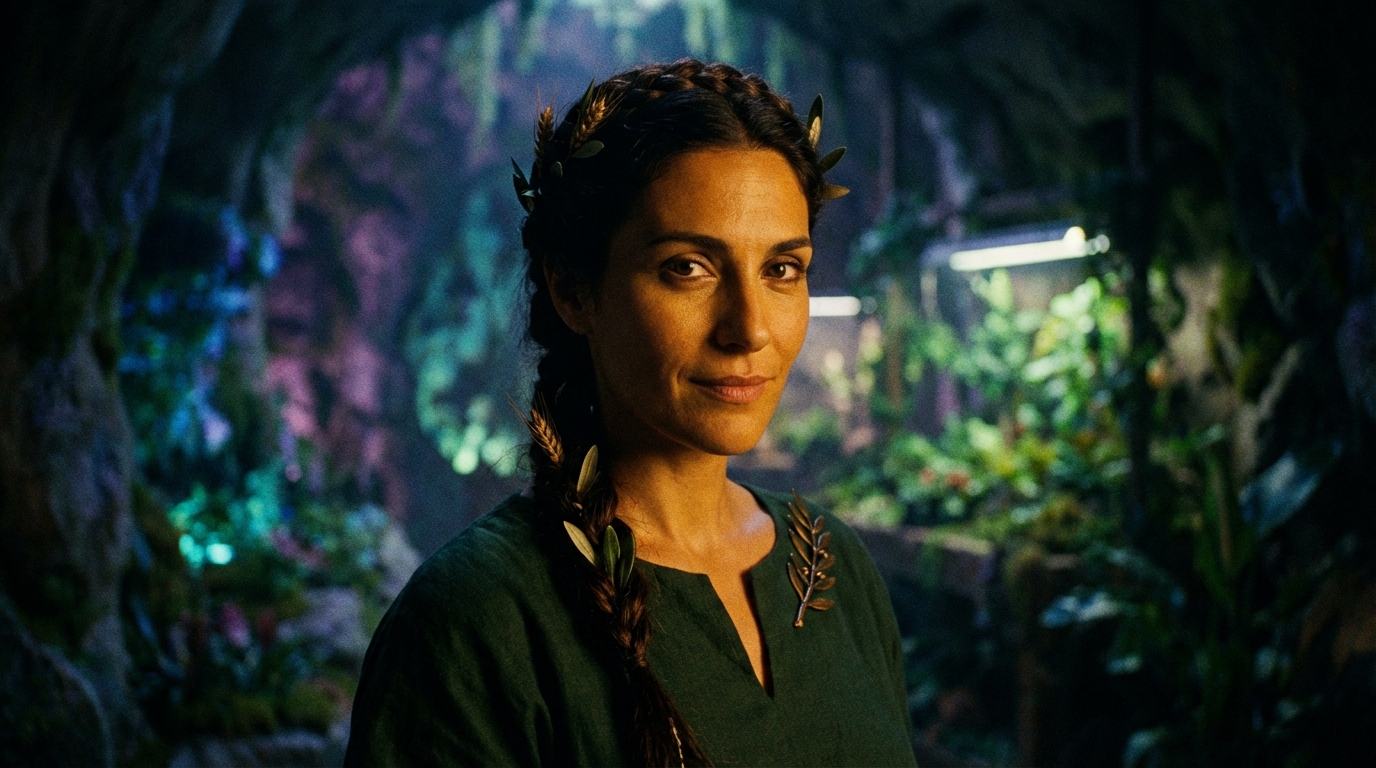
A widow and estate manager from Astigi who became one of five Guardians—and the only woman—to found Colonia Hesperidum in 89 BCE. Aemilia had managed her late husband's agricultural estates for fifteen years, developing a reputation for innovation and efficiency that caught Adherbal bar-Hamilcar's attention. At forty-five, she accepted a Portal Key with the observation that she had been waiting for something worthy of her abilities. She transformed cave agriculture from desperate improvisation into systematic cultivation, creating the food production systems that sustained the settlement for generations.
Early Life
Aemilia Fabia Astigitana was born on September 12, 134 BCE, in Astigi, a prosperous agricultural town in the Baetis River valley of Hispania Ulterior.
Her father, Quintus Fabius Astigitanus, owned extensive olive groves and grain fields east of the town—estates that had been in his family for three generations, expanded through careful acquisition and strategic marriage. Her mother, Aemilia Laelia, came from a Corduba merchant family that had diversified into landowning, bringing connections to urban markets that complemented the Fabii's agricultural production. Aemilia was the eldest of three children, with two younger brothers, Quintus Minor and Lucius.
The Fabii were wealthy but not prestigious. They lacked the ancient lineages that commanded automatic respect in Roman society, and their wealth came from the unglamorous work of farming rather than the more respectable pursuits of commerce or public service. Aemilia's father compensated for this by ensuring his children received educations beyond their station—tutors in Greek and Latin, training in rhetoric and mathematics, exposure to the philosophical traditions that respectable Romans were expected to know.
Aemilia proved the most capable of the three children. Her brothers were competent but uninspired, content to learn what was required and no more. Aemilia absorbed everything her tutors offered and demanded more, displaying an intellectual appetite that her father found both gratifying and slightly alarming. Educated women were not unknown in Roman society, but they were unusual, and unusual attracted attention that could be dangerous.
Marriage
On March 15, 119 BCE, Aemilia married Gaius Aemilius Rusticus, a landowner from the region south of Astigi whose estates bordered her father's.
The marriage was arranged for the usual reasons—consolidation of landholdings, connection of families, the production of heirs who would inherit the combined properties. Aemilia was fifteen; Gaius was thirty-two. The age difference was typical for such arrangements, though it meant Aemilia entered marriage more as a ward than a partner.
Gaius Aemilius Rusticus proved to be neither the worst nor the best of husbands. He was not cruel, not unfaithful, not given to the excesses that made some Roman marriages miserable. He was also not particularly interested in his young wife beyond her utility as a household manager and potential mother. He had his estates to run, his male friends to entertain, his comfortable routines that had been established long before Aemilia arrived. She was expected to fit into his life, not to shape it.
They tried for children for years without success. Aemilia suffered one miscarriage in 116 BCE but otherwise simply failed to conceive. Gaius brought physicians, consulted priests, tried remedies that ranged from the medical to the absurd. Nothing helped. By 110 BCE, both had accepted that the marriage would produce no heirs.
This failure, paradoxically, improved Aemilia's position. A wife who produced children could expect to be occupied with their raising; a wife who did not needed other occupation. Gaius, increasingly absorbed in disputes with neighbouring landowners, began delegating estate management tasks to Aemilia. She proved so competent that he delegated more. By 108 BCE, she was effectively running the household and the home estates while he focused on legal battles and social obligations.
Widowhood
Gaius Aemilius Rusticus died on October 3, 104 BCE, thrown from a horse during a hunting expedition. He was forty-seven years old. Aemilia was thirty.
Roman law and custom did not favour widows. The estates should have passed to Gaius's nearest male relative—a nephew in Hispalis who had never visited the properties and had no interest in agriculture. Aemilia should have returned to her father's household or remarried as quickly as a suitable match could be arranged.
Instead, she negotiated.
The nephew wanted income, not responsibility. Aemilia offered to manage the estates on his behalf, sending regular payments while handling all operational matters herself. Her father, still living, provided the legal standing that a woman alone could not command in Roman courts. The arrangement was irregular but not unprecedented, and it worked well enough that no one bothered to challenge it.
For fifteen years, Aemilia Fabia Astigitana managed estates that were not technically hers with a competence that made the legal niceties irrelevant.
She introduced innovations that her neighbours watched with skepticism and then quietly copied. Irrigation systems that extended the growing season. Crop rotation patterns that maintained soil fertility. Labour management practices that increased productivity while reducing the brutal exploitation common on other estates. Her olive oil commanded premium prices in Corduba's markets; her grain yields exceeded regional averages by margins that seemed impossible.
She also developed a reputation for negotiation that bordered on legendary. Merchants who came to her estates expecting to deal with a woman they could easily manipulate left having agreed to terms that favoured Aemilia. Neighbouring landowners who attempted to encroach on her boundaries found themselves outmaneuvered legally and socially. The nephew in Hispalis received his payments and asked no questions.
By 90 BCE, Aemilia was forty-five years old, wealthy in all but legal title, and thoroughly bored.
The Offer
Adherbal bar-Hamilcar came to Astigi in the winter of 91 BCE to negotiate a grain contract.
The negotiation itself was unremarkable—Adherbal needed grain for shipment, Aemilia had grain to sell, and terms were reached that satisfied both parties. What was remarkable was what happened after.
Adherbal lingered. He asked questions about the estate's operations that went beyond commercial interest. He observed how Aemilia managed her workers, how she tracked her inventory, how she made decisions under uncertainty. He watched her negotiate a separate contract with a merchant from Corduba, and afterwards he sat in silence for a long moment before speaking.
"I have an offer," he said, "that you will find strange."
Aemilia listened. She asked questions—practical questions about resources, challenges, logistics. She did not ask for proof of the impossible things Adherbal described; she was more interested in understanding what skills the mission would require.
When Adherbal explained that he was recruiting people to build a settlement in an unknown world, that he needed someone who understood agriculture and administration, that he had watched her work and believed she was capable of things greater than managing estates she could not legally own, Aemilia's response was immediate:
"I have been waiting," she said, "for something worthy of my abilities."
The Founding
Aemilia Fabia Astigitana transformed cave agriculture from desperate improvisation into systematic cultivation.
The settlers who arrived in 89 BCE knew nothing about growing food underground. They had brought seeds from Earth, but seeds required soil, water, light—conditions that cave systems did not naturally provide. The first attempts at cultivation failed. Plants withered in the darkness, rotted in poorly drained chambers, or simply refused to germinate.
Aemilia approached the problem as she had approached every challenge on her estates: systematically. She experimented with different chambers, testing which offered the temperature and humidity that various crops required. She developed techniques for creating growing beds from cave sediment enriched with organic material. She identified the Lumineux pools as potential light sources and worked with the Oryim, after their discovery in 88 BCE, to understand how their ancestors had cultivated food in darkness.
The breakthrough came when she recognised that cave agriculture could not simply replicate surface methods—it required entirely new approaches suited to the environment. Some Earth crops would never thrive underground; others adapted surprisingly well. Fungi, which required no light, became staples. Root vegetables tolerated the dim conditions better than grain crops. The Lumineux themselves, she discovered, could be positioned to provide the specific light wavelengths that certain plants needed.
Within five years, Colonia Hesperidum was feeding itself. Within a decade, it was producing surpluses. The systems Aemilia designed—crop selection, chamber allocation, cultivation techniques—became the foundation of cave agriculture that would sustain communities in this region for two thousand years.
Later Years
Aemilia lived longer than any of the founders except Lucius, dying on August 3, 19 BCE, at the age of 115.
Her later years were devoted to teaching. The systems she had developed required knowledge to maintain, and Aemilia was determined that this knowledge would not die with her. She trained successors, documented techniques, established the protocols that would govern cave cultivation for generations.
She also served on the councils that governed the settlement, her voice carrying weight in decisions that extended far beyond agriculture. She had opinions about everything—trade relationships, defensive preparations, the integration of the Oryim, the establishment of L'Establum—and she expressed them with the same directness that had characterised her management of the Astigi estates.
She never remarried. The settlement contained men who might have been suitable partners, but Aemilia had spent fifteen years managing her own affairs and had no interest in returning to a subordinate role. She had companions when she wanted them and solitude when she preferred it, answering to no one but herself.
Her death came peacefully, in the cultivation chambers she had designed. She was still issuing instructions about crop rotation when her heart stopped, still thinking about next season's planting as her breath ceased. They found her sitting upright, a slate of notes in her lap, a faint smile on her face.
Her Portal Key went dark. The fourth of the five founders was gone.






