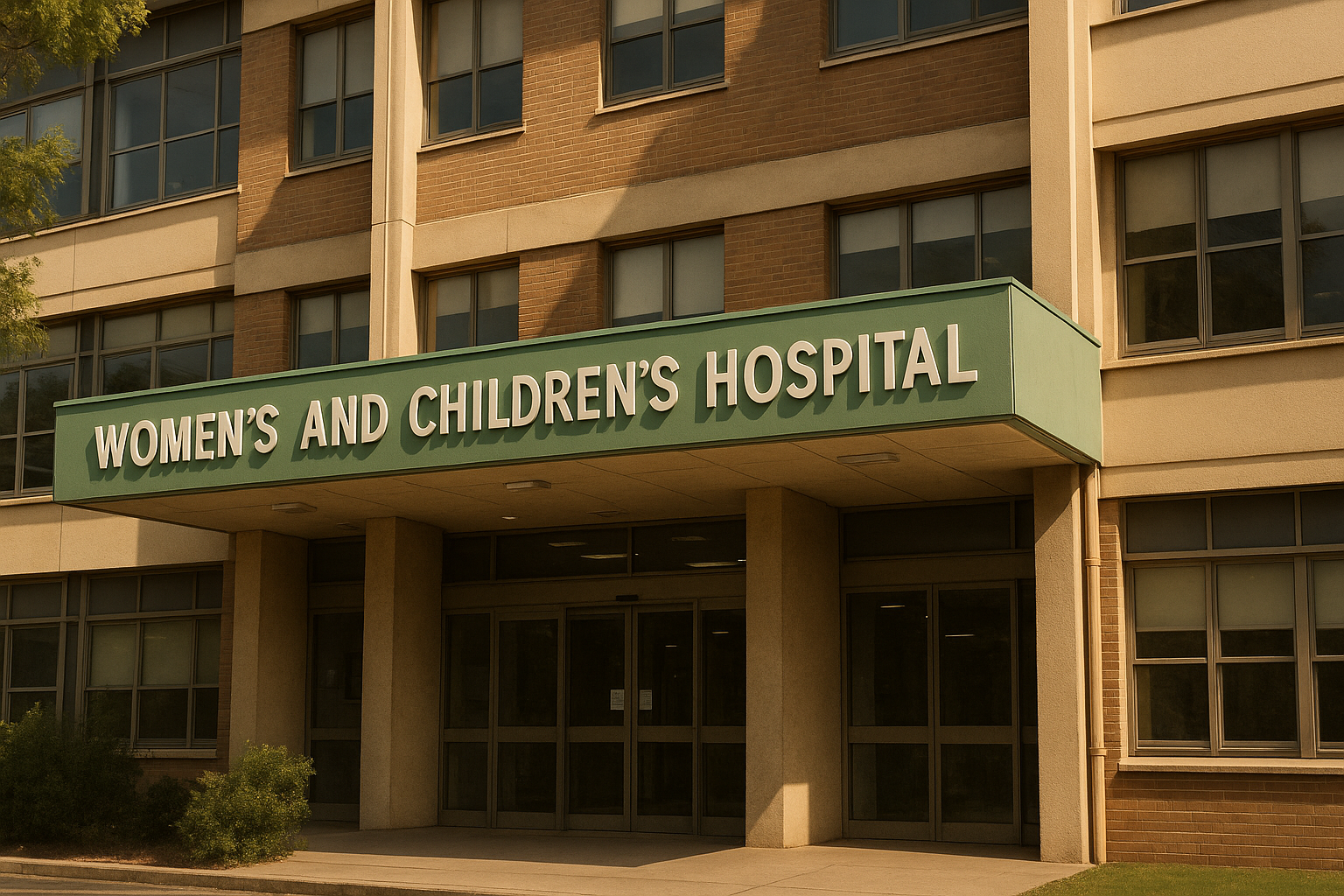
Adelaide Women's and Children's Hospital, South Australia
The Adelaide Women's and Children's Hospital stands as South Australia's principal specialist institution for paediatric and perinatal healthcare, a place where the state's most vulnerable citizens—newborns, children, adolescents, and expectant mothers—receive care that ranges from routine to life-saving. Established in 1989 through the merger of two historic institutions, the hospital occupies a sprawling site on King William Road in North Adelaide, its heritage sandstone facades blending with modern clinical facilities in an architectural expression of continuity and progress. For generations of South Australian families, the hospital has served as the backdrop to life's most profound moments: the first breath of a newborn, the anxious vigil beside a sick child's bed, the quiet grief of loss, and the tentative hope of recovery. It is simultaneously a centre of clinical excellence, a teaching institution that shapes future healthcare professionals, and a repository of collective memory that holds significance far beyond its medical functions.
Location and Setting
The Adelaide Women's and Children's Hospital occupies a prominent position on King William Road in North Adelaide, its grounds extending across several hectares of land that have been dedicated to healthcare since the nineteenth century. The site sits adjacent to the Adelaide Parklands—the green belt that Colonel William Light incorporated into his 1836 plan for the city—and this proximity to open space has always been considered therapeutically significant, offering patients and families views of trees and grass rather than urban density.
The hospital's physical presence reflects its layered history. Heritage-listed sandstone buildings dating from the Victorian era stand alongside twentieth-century additions in brick and concrete, while more recent construction has introduced contemporary materials and design principles emphasising natural light, accessibility, and child-friendly aesthetics. The result is a campus that feels simultaneously historic and modern, its architecture telling the story of healthcare's evolution over more than a century.
Internally, the hospital organises itself around the particular needs of its patient populations. Paediatric wards occupy spaces designed with children in mind: bright colours, artwork at child height, play areas equipped with toys and books, and room configurations that accommodate parents who wish to stay overnight with their hospitalised children. Maternity and neonatal services cluster together, allowing seamless transitions between birthing suites and intensive care when complications arise. Administrative offices, research facilities, and teaching spaces occupy less prominent locations, supporting the clinical mission without intruding upon it.
The sensory experience of moving through the hospital is distinctive. The corridors carry the mingled scents of disinfectant, institutional food, and the indefinable smell of illness that no amount of cleaning entirely eliminates. Soft voices and the occasional cry of a child punctuate the constant background hum of climate control and monitoring equipment. Toy-filled waiting rooms offer distraction for anxious families, while memorial gardens and quiet spaces provide refuge for those processing grief or seeking moments of private reflection. The atmosphere balances calm and urgency in proportions that shift throughout the day, the night hours bringing a particular stillness broken only by the movements of staff and the sounds of machines keeping watch over sleeping patients.
Founding and Institutional Origins
The Adelaide Women's and Children's Hospital in its current form dates from 1989, but its institutional roots extend much deeper into South Australian history. The hospital emerged from the merger of two venerable institutions—the Adelaide Children's Hospital and the Queen Victoria Hospital—each of which had served the state's population for generations before administrative logic brought them together.
The Adelaide Children's Hospital traced its origins to 1876, when a group of concerned citizens established a facility dedicated to the medical care of children at a time when paediatric medicine was only beginning to emerge as a distinct specialty. Throughout the late nineteenth and early twentieth centuries, the hospital expanded its services and facilities, developing expertise in childhood diseases that claimed lives in numbers difficult for later generations to comprehend. Diphtheria, scarlet fever, polio, and the various complications of malnutrition and poverty passed through its wards, and the institution accumulated knowledge and capability that made it an essential component of South Australia's healthcare infrastructure.
The Queen Victoria Hospital arrived somewhat later, established in 1902 to address the particular healthcare needs of women. Obstetric and gynaecological services formed its core mission, and generations of South Australian women gave birth within its walls or received treatment for conditions that earlier eras had left largely unaddressed. The hospital developed particular expertise in complicated pregnancies and difficult deliveries, becoming the referral destination for cases that exceeded the capabilities of smaller facilities throughout the state and beyond.
By the 1980s, both institutions faced challenges common to healthcare facilities throughout Australia: aging infrastructure, escalating costs, and the recognition that modern medicine increasingly required integration rather than specialisation in isolation. The merger announced in the late 1980s and formalised in 1989 reflected broader shifts in healthcare delivery philosophy, combining the paediatric expertise of one institution with the women's health focus of the other to create a facility capable of providing comprehensive care across the continuum from conception through adolescence.
The transition was not without difficulties. Staff from both predecessor institutions brought distinct cultures and practices that required reconciliation. Physical integration of services across a campus that had grown organically over decades demanded careful planning and significant investment. Some mourned the loss of institutional identities that had developed over more than a century. But the merged hospital gradually established its own character, drawing on the strengths of both traditions while developing new capabilities that neither predecessor could have achieved alone.
Clinical Services and Patient Care
The Adelaide Women's and Children's Hospital provides the full spectrum of healthcare services required by its patient populations, from routine preventive care through the most complex and specialised interventions available in contemporary medicine. As South Australia's only dedicated paediatric and women's hospital, it serves not merely the Adelaide metropolitan area but the entire state and significant portions of the Northern Territory, receiving referrals from rural and remote communities that lack the specialist capabilities concentrated in the capital.
The Neonatal Intensive Care Unit represents one of the hospital's most critical services, providing life support and specialised treatment for premature infants and newborns with serious medical conditions. The unit that opened in 1995 significantly enhanced the hospital's capabilities in this area, incorporating technologies and treatment protocols that improved survival outcomes for infants born at the margins of viability. Parents of babies in the NICU experience some of the most intense emotional journeys the hospital witnesses—weeks or months of uncertainty, hope alternating with despair, the gradual accumulation of small victories that eventually allow a fragile infant to go home.
The Paediatric Intensive Care Unit serves older children whose conditions require the highest level of monitoring and intervention. Serious infections, traumatic injuries, complications from surgery, and acute exacerbations of chronic conditions bring young patients to its beds, where teams of specialists work to stabilise and heal while families wait in nearby spaces designed to accommodate their vigil.
General paediatric wards handle the broader range of childhood illness and injury: the infections that require intravenous antibiotics, the fractures that need setting and observation, the mysterious symptoms that demand investigation, and the chronic conditions that periodically overwhelm outpatient management. Long-term patients—children with cancer undergoing chemotherapy, those with complex genetic conditions, young people managing autoimmune diseases—become familiar presences on these wards, their repeated admissions creating relationships with staff that extend over months or years.
Maternity services continue the tradition established by the Queen Victoria Hospital, supporting women through pregnancy, delivery, and the postpartum period. Birthing suites accommodate both straightforward deliveries and complicated cases requiring surgical intervention. The close integration with neonatal services ensures that babies requiring immediate medical attention can receive it without the delays that transfer to a separate facility would entail.
The hospital also provides adolescent mental health services, recognising that the transition from childhood to adulthood brings psychological challenges that sometimes exceed young people's coping resources. Eating disorders, depression, anxiety, self-harm, and the first manifestations of serious mental illness bring adolescents to a unit specifically designed for their needs, separate from adult psychiatric facilities and staffed by professionals trained in the particular dynamics of adolescent psychology.
Outpatient clinics extend the hospital's reach beyond its inpatient wards, providing ongoing management for chronic conditions, follow-up care after hospitalisations, and specialist consultations for children whose primary care occurs elsewhere. Surgical services address the full range of paediatric surgical needs, from routine procedures through complex operations requiring teams of specialists working in coordination.
Teaching and Research
The Adelaide Women's and Children's Hospital functions as a major teaching institution, its clinical activities intertwined with the educational missions of the University of Adelaide and other tertiary providers. Medical students rotate through its wards and clinics, learning to examine children whose cooperation cannot be assumed and whose symptoms may present differently than in adults. Nursing students develop skills in paediatric and neonatal care under the supervision of experienced practitioners. Midwifery students attend births and provide antenatal care, accumulating the experience that will prepare them for independent practice.
Beyond undergraduate education, the hospital supports specialty training programs that produce the next generation of paediatric physicians, neonatal specialists, paediatric surgeons, and other advanced practitioners. Fellows and registrars work alongside consultants, gradually assuming greater responsibility as their competence develops, eventually emerging qualified to provide the specialised care that the hospital offers.
Research activities complement the teaching mission, with investigators pursuing questions in neonatology, adolescent health, paediatric oncology, maternal outcomes, and numerous other fields. The Women's and Children's Health Network supports these efforts through infrastructure, funding, and collaborative relationships with academic institutions and research bodies both nationally and internationally. Clinical trials offer patients access to experimental treatments while generating evidence that advances medical knowledge. Observational studies document outcomes and identify factors that influence health and illness in the populations the hospital serves.
The accumulation of clinical experience over decades has made the hospital a repository of institutional knowledge that transcends formal research. Patterns that emerge across thousands of cases, approaches refined through trial and observation, and the tacit understanding that experienced practitioners develop—all of this constitutes a form of expertise that shapes care even when it cannot be reduced to published protocols or evidence-based guidelines.
Child Protection and Safeguarding
The establishment of the Child Protection Service within the Women's and Children's Health Network in 2004 formalised a function that healthcare workers at the hospital had long performed informally: the identification of children whose injuries or conditions suggested abuse or neglect, and the coordination of responses intended to ensure their safety. The service brought together medical expertise, social work capability, and connections to statutory child protection agencies, creating a structured approach to cases that had previously been handled in more ad hoc fashion.
Healthcare settings occupy a unique position in child protection. Children pass through hospitals for reasons unrelated to abuse, creating opportunities to observe their physical condition and behaviour that might not otherwise arise. Injuries inconsistent with the explanations offered, patterns of presentation suggesting fabricated or induced illness, behavioural signs of trauma or fear—all of these can become visible to healthcare workers whose training has prepared them to notice what others might miss.
The hospital's child protection work operates in tension with its primary therapeutic mission. Healthcare depends on trust, and the possibility that disclosures to medical staff might trigger investigations and interventions can inhibit the openness on which effective care relies. Navigating this tension requires judgment, discretion, and the recognition that protecting children sometimes demands actions that feel like betrayals of the families who have sought help. Staff members who suspect abuse face difficult decisions about when and how to act, aware that both action and inaction carry risks of harm.
The physical environment of the hospital—designed to comfort and heal—can become something more complex when child protection concerns arise. The same spaces that offer refuge to frightened children can also witness their silencing when loyalty or fear prevents disclosure. The institution's mission to protect the vulnerable sometimes fails, not through negligence but through the inherent difficulty of seeing what families work to conceal.
Cultural and Emotional Significance
For South Australians, the Adelaide Women's and Children's Hospital holds meaning that extends far beyond its clinical functions. The hospital is etched into the collective memory of the state as the site where generations have experienced some of life's most profound moments: the joy of successful births, the relief of children recovering from serious illness, the grief of losses that no medical intervention could prevent, and the complex emotions of families navigating uncertainty about their children's futures.
Memorial gardens within the hospital grounds provide spaces for the commemoration of children who have died, their brief lives acknowledged through plantings and plaques that families can visit in the years that follow. These spaces recognise that the hospital's relationship with families does not end when a patient dies—that grief continues and that the institution where a child's final days unfolded retains significance for those left behind.
Family accommodation allows parents to remain close to hospitalised children, recognising that separation adds unnecessary distress to already difficult situations. The provision of these spaces reflects an understanding that healing involves more than medical treatment, that the presence of loved ones matters in ways that clinical metrics cannot capture.
Child-friendly art installations throughout the hospital attempt to soften the institutional environment, transforming corridors and waiting areas into spaces that acknowledge the humanity of the young patients who pass through them. Murals, sculptures, and interactive elements offer distraction from anxiety and create opportunities for play even within a setting dominated by illness and treatment.
The hospital's significance also derives from its role in community identity and generational continuity. Families whose grandparents were born within its walls, whose parents were treated there as children, and whose own children now receive care create chains of connection that bind the institution to the broader social fabric. The hospital becomes not merely a healthcare facility but a landmark in the personal geographies of countless South Australians, a place associated with the turning points that define individual and family histories.
The Hospital in the Early 1990s
The period immediately following the 1989 merger represented a time of transition and consolidation for the newly formed institution. Staff from the predecessor hospitals were learning to work together, administrative systems were being integrated, and the physical campus was adapting to serve its expanded mission. The paediatric wards that would later be designated as part of Ward 3 East were establishing the routines and cultures that would characterise them for years to come.
It was during this period that the hospital became the setting for events that would later acquire significance beyond their immediate medical context. Long-term paediatric patients—children with chronic conditions requiring extended or repeated hospitalisation—formed communities within the wards, their relationships with each other and with staff creating social worlds that existed parallel to the clinical purposes the institution officially served. Friendships formed between children whose illnesses brought them together, some of these bonds persisting through recovery while others ended with the death of one party.
Staff members who worked through this period accumulated experiences that shaped their understanding of paediatric care and their relationships with the children and families they served. Some would later describe particular cases that had affected them deeply, patients whose struggles or deaths had left marks on their professional and personal lives. The hospital in these years was developing the institutional character it would carry into subsequent decades, its culture emerging from countless interactions between staff, patients, and families.
Architecture and Atmosphere
The physical environment of the Adelaide Women's and Children's Hospital reflects its complex history and multiple functions. Heritage sandstone buildings dating from the Victorian and Edwardian eras establish visual continuity with the institution's nineteenth-century origins, their solid facades suggesting permanence and reliability. These older structures have been adapted over decades to accommodate changing medical requirements, their interiors renovated repeatedly while their exteriors retain the character that heritage protections mandate.
More recent construction introduces contemporary architectural language—glass, steel, and materials that prioritise function over historical reference. These newer wings provide the specialised environments that modern medicine requires: operating theatres with precise climate control, intensive care units bristling with monitoring equipment, imaging facilities housing machines that did not exist when the older buildings were erected.
The juxtaposition of old and new creates an environment that can feel disorienting to those unfamiliar with its geography. Corridors connect buildings from different eras, floor levels do not always align, and the logic of the campus layout reflects accumulated decisions rather than unified planning. Staff navigate this complexity with practiced ease, while families new to the hospital may find themselves lost in spaces that seem to shift and rearrange with each visit.
The sensory qualities of the hospital environment affect everyone who enters. The characteristic smell of healthcare facilities—disinfectant, institutional food, the indefinable odour of illness—pervades the spaces, familiar and vaguely unsettling in equal measure. Sounds layer over each other: the hum of ventilation systems, the beeping of monitors, conversations conducted in the hushed tones appropriate to medical settings, and occasionally the cry of a child in pain or fear. Light varies from the harsh fluorescence of clinical areas to the softer illumination of spaces designed for comfort and waiting.
For children who spend extended periods within the hospital, these sensory qualities become the background of daily life, as familiar as the sounds and smells of home to children whose lives unfold in more ordinary settings. The hospital becomes their world, its rhythms structuring their days, its spaces defining the boundaries of their experience.
Future Developments
The Adelaide Women's and Children's Hospital faces a future that will likely involve significant change. Plans announced in the 2020s envision the eventual relocation of services to a new, purpose-built facility on the site of the former Royal Adelaide Hospital, with phased transitions expected to occur throughout the early 2030s. These plans remain subject to government review and the uncertainties that attend major infrastructure projects, but they reflect recognition that the current campus—despite ongoing renovations—cannot indefinitely accommodate the evolving requirements of contemporary healthcare.
A new facility would offer opportunities to design spaces specifically for current and anticipated needs, free from the constraints imposed by adapting heritage buildings and working within a campus that grew organically over more than a century. Modern construction could incorporate the latest understanding of how physical environments affect health outcomes, patient experience, and staff wellbeing. Integration with other healthcare facilities on the new site could enable efficiencies and collaborations that the current location makes difficult.
Yet relocation would also mean leaving behind a site that has accumulated meaning through generations of use. The heritage buildings, the memorial gardens, the physical spaces where countless South Australians have experienced pivotal moments in their lives—all of this would be abandoned to whatever purposes the vacated campus might subsequently serve. The new facility would need to develop its own character and significance, a process that cannot be accelerated regardless of how thoughtfully its spaces are designed.
For now, the Adelaide Women's and Children's Hospital continues to serve its patients and their families from the North Adelaide site it has occupied for well over a century. Its future form remains uncertain, but its present function—providing the specialised care that South Australia's women and children require—continues with the steady purpose that has characterised the institution throughout its long history.







