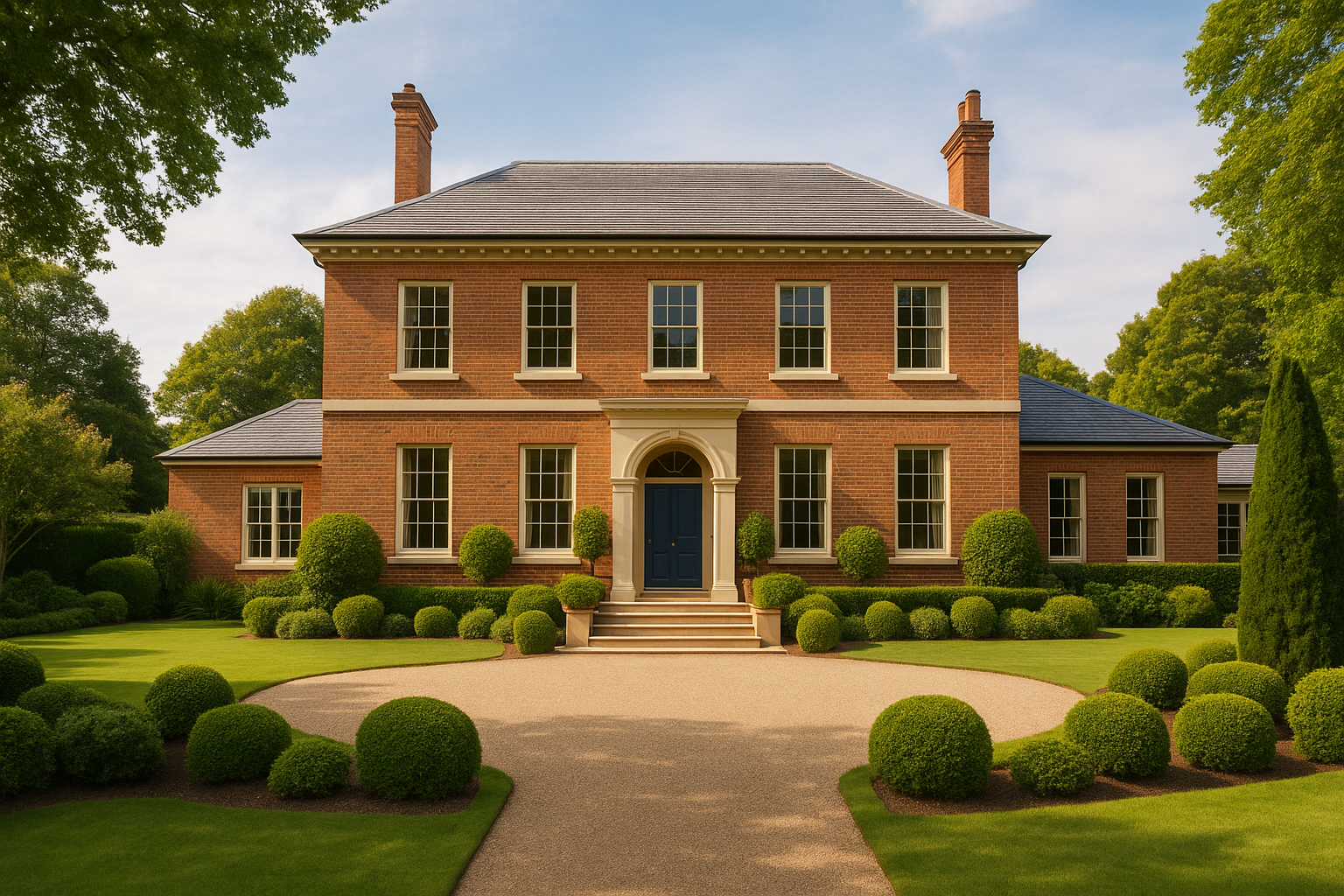
Vaucluse Nursing Home, Lindisfarne
Established in 1947 in Lindisfarne, Tasmania, Vaucluse Nursing Home has served as a tranquil refuge for elderly residents for over seven decades. Renowned for its landscaped gardens and River Derwent views, the facility has evolved from a post-war rest home into a comprehensive centre for geriatric and palliative services. Owned by the mysterious Obsidian Healthcare Group, it carries whispers of wartime secrecy and the unresolved events of 2018.
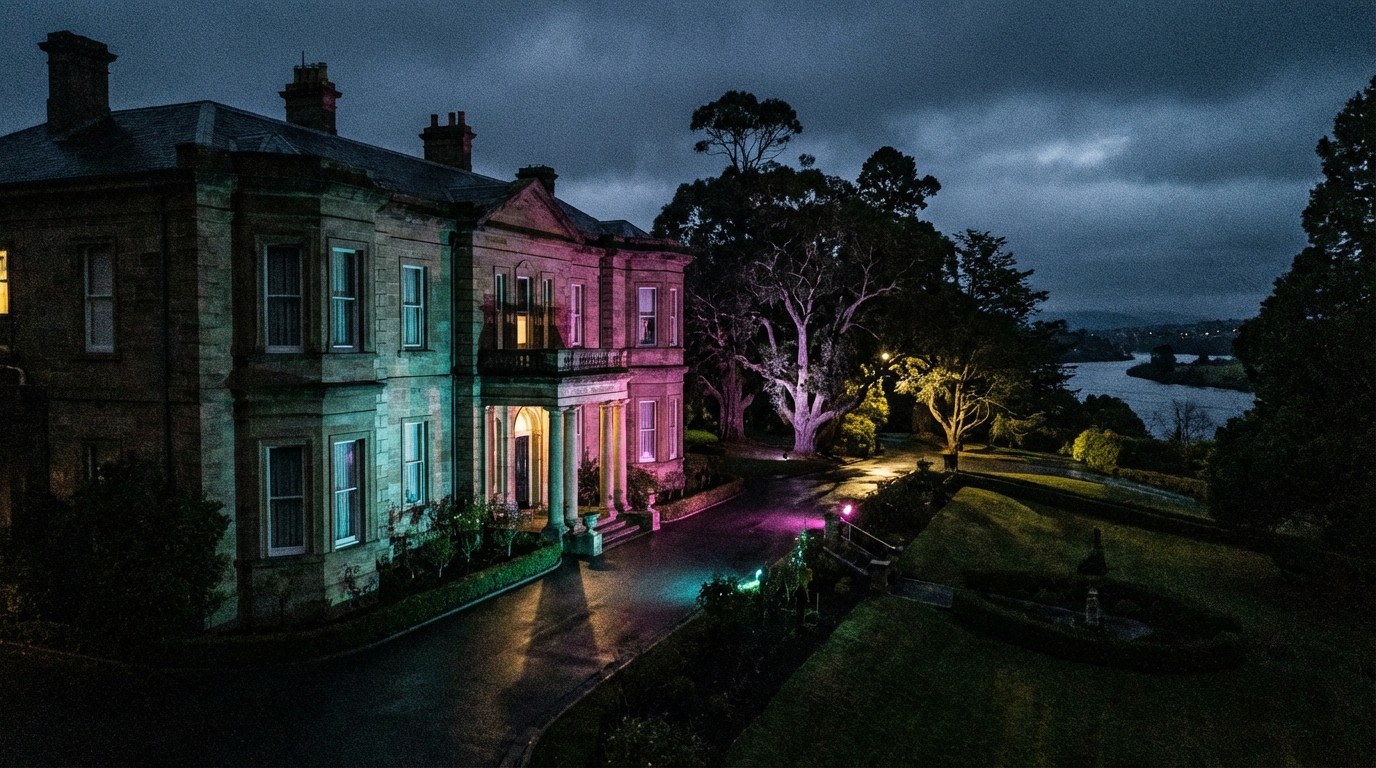
Origins and the Post-War Vision
In the quiet eastern suburbs of Hobart, where the River Derwent curves gently past Lindisfarne's tree-lined streets, there stands a Georgian-style building that has watched over Tasmania's elderly for more than seven decades. Vaucluse Nursing Home opened its doors on 17 March 1947, born from the ashes of a world war and the vision of a man whose ambitions stretched far beyond conventional eldercare.
The land on which Vaucluse now stands was once part of the sprawling Wellesley Estate, held by the Rowntree family since the 1880s. Following the death of Ernest Rowntree in 1945, the estate was quietly broken up and sold, with the central homestead acquired by a newly formed medical organisation called the Obsidian Healthcare Group. The timing was opportune: Australia faced a mounting elder care crisis as returning soldiers discovered their ageing parents in need of professional support, and Tasmania—geographically isolated yet strategically positioned—offered both privacy and promise.
The facility's founder, Alastair Prometheus Blackwood, was a Hobart-born industrialist with private wealth, scientific leanings, and a stated belief in decentralised medical research. His personal connection to Tasmania likely influenced the selection of the site, though fragments of local memory suggest the building's original purpose may have been dual-use. A now-lost 1946 council notice lists the address under "restricted industrial designation," and testimonies collected in the 1970s refer to military vehicles accessing the grounds during blackout conditions. Whatever its initial use, the structure underwent formal conversion in early 1947, led by architect Llewellyn Archer, known for combining Georgian symmetry with institutional rigour.
From its first day, Vaucluse balanced two identities: one public, one perhaps less so. The facility opened under the supervision of its first matron, Miss Hilda Bramwell, a stern and stoic World War I veteran known for her precision, devotion to duty, and rigorous moral code. To this day, no comprehensive blueprint of its original basement structure has ever been released.
The Obsidian Connection
Unlike most aged care facilities in Tasmania, which emerged from church-based charities or local community initiatives, Vaucluse has always been owned and operated by the Obsidian Healthcare Group—a privately held medical conglomerate whose origins are as murky as they are ambitious. Founded in 1938, Obsidian was established by Alastair Blackwood with a singular operational goal: to control the full continuum of human care—birth, treatment, ageing, and death—under one vertically integrated structure.
This corporate parentage has afforded Vaucluse certain advantages: stable funding, access to experimental technologies, and institutional protection from the vicissitudes that have plagued other aged care providers. Yet it has also made the facility subject to the cloud of secrecy that surrounds the Blackwood family's healthcare empire. Internal policies often include mandatory biometric identification systems, "integrity clauses" that prevent whistleblowing even post-employment, and segmented departmental access that limits the flow of inter-role communication.
Rumours of Obsidian's involvement in covert research programmes—particularly those involving memory degradation and identity mapping—have circulated since the 1990s. Vaucluse's participation, if any, has never been proven, but the frequent presence of anonymous "consultants" on-site has been noted in several internal journals. Former employees have spoken anonymously of surveillance paranoia, subtle isolation of dissenting voices, and unexplained internal transfers. One retired facility manager described his final months as "working in a glass corridor—visible, functional, and entirely watched."
What remains undeniable is that Vaucluse operates under protocols uncommon in standard aged care. Certain residents are designated as "Legacy Priority," a classification whose precise meaning has never been publicly explained, and whose files are maintained separately from the main patient database. The existence of such categories—hinted at in leaked correspondence and acknowledged obliquely by former staff—suggests that Vaucluse serves purposes beyond mere eldercare.
Evolution Through the Decades
In its first three decades, Vaucluse functioned primarily as a convalescent home for war widows and retired civil servants. It built a reputation for discipline, respectability, and discretion. Under the stewardship of Dr Edwin Hartley, resident physician from 1953 to 1976, the facility introduced pioneering treatments for arthritis and chronic fatigue, and its library of classical music recordings was considered exceptional.
The 1950s and 1960s saw modest expansions: the original sandstone structure was supplemented with red-brick additions in 1958 and 1966, including the Launceston Wing and the installation of Hobart's first hydrotherapy room for elder care. During this period, the home quietly became a pillar of the Lindisfarne community, hosting open garden days and annual fêtes that drew families from across the eastern shore.
The 1970s brought questions. It was during this era that murmurings began to circulate about the site's prior use during wartime—as either a radio transmission station or a holding site for undisclosed military purposes. Though no conclusive evidence has surfaced, several anomalies in the basement layout and the discovery of sealed maintenance tunnels in the early 1970s have kept speculation alive.
The 1980s and 1990s were marked by modernisation under the leadership of administrator Sister Moira Cleary, a former Mercy Health missionary who served from 1982 to 1999. During her tenure, the home shifted from a traditional dormitory structure to private-room accommodation. In 1989, the now-renowned River Garden Pavilion was inaugurated, overlooking the Derwent, designed to encourage mobility and sunlight exposure for residents. Sister Cleary was instrumental in forging a partnership with the University of Tasmania's School of Nursing, which remains in place today.
The 2003 Renovation and the Derwent Suite
A significant transformation occurred in 2003 under then-facility manager Malcolm "Mac" Penrose, who championed the creation of a specialised dementia ward known as the Derwent Suite. The renovation represented both a clinical advancement and, to some observers, a deepening of the facility's enigmatic character.
Funding was supplemented through Obsidian Healthcare's research arm, raising eyebrows due to vague disclosures and unusually high security during construction. Staff at the time were required to sign revised confidentiality agreements, a move that sparked quiet dissent among long-term personnel. The project was overseen by a team that included Obsidian internal security, and the construction site was subjected to multiple non-disclosure protocols that exceeded standard aged care requirements.
The resulting Derwent Suite introduced innovations that were praised by some families but troubled others. Behavioural care specialists developed programmes incorporating quiet zones, aromatherapeutic corridors, and memory pathing—a controversial approach blending environmental design with routine conditioning. The methodology aimed to reduce confusion and anxiety among dementia patients through carefully controlled sensory environments, though critics found the atmosphere strangely impersonal and clinical.
What occurred beneath the visible construction remains subject to speculation. Workers reported encountering unexpected structural elements during excavation, and at least two contractors departed mid-project without explanation. When the Derwent Suite opened in August 2003, it was celebrated as a state-of-the-art facility. The questions it raised, however, have never been satisfactorily answered.
The Facility and Its Grounds
The current Vaucluse campus presents a carefully cultivated image of Georgian respectability softened by natural beauty. The main building's symmetrical façade, rendered in sandstone and red brick, overlooks landscaped gardens that cascade gently toward views of the River Derwent. Eucalyptus and English oak provide dappled shade, whilst established rose gardens and a small orchard offer sensory stimulation for ambulatory residents.
The facility consists of three primary wings: the Hartley Wing, comprising the original building and now housing long-term residents; the Derwent Suite, the 2003 dementia ward extension; and the River Garden Pavilion, the 1989 common space and wellness area. Together, they accommodate up to seventy-four residents, including both permanent aged care patients and short-term respite clients.
Hidden beneath these structures is a service sublevel accessible only to maintenance staff and certain senior personnel. While officially designated for utility access and storage, some employees—particularly in the early 2000s—reportedly voiced discomfort with its "odd symmetry" and the presence of permanently locked steel doors with no known keys. Local historian Dr Miriam Keane, who briefly served as a consultant on a Tasmanian Aged Heritage project in 2011, noted that portions of the foundation were inconsistent with typical 1940s construction. She was quietly dismissed from the consultancy before her final report could be published.
The west wing, where Room 7 was once located, has attracted particular attention. Though officially sealed off during a 1997 plumbing reconfiguration, it features in multiple journal entries and oral histories. Staff have occasionally reported equipment failures or distorted intercom messages in that corridor, though no technical cause has been confirmed.
Care Philosophy and Services
Despite the shadows that linger in institutional memory, Vaucluse Nursing Home has maintained a genuine commitment to compassionate care. The facility provides comprehensive services across the spectrum of elderly needs: general geriatric care, specialised dementia support, and palliative services for those approaching life's end.
The home operates on a seven-day rotating care roster, with primary staff grouped into three pods: River, Orchard, and East Hill. Each pod covers both residential and clinical responsibilities for its assigned group of residents, with continuity of care a guiding principle. The facility uses a hybrid charting system: while most records are digitised via the MedStitch framework provided under an Obsidian licence, certain palliative cases are still documented in hard copy, a practice preserved for ethical oversight and ease of family access.
Meals are prepared in-house with seasonal Tasmanian produce, and the home maintains a small greenhouse for therapeutic gardening projects. Residents participate in daily scheduled activities ranging from music therapy to memory workshops, many overseen by Recreation Coordinator Lysandra Cove, a spirited former drama teacher who once ran an in-house production of The Importance of Being Earnest using an entirely elderly cast.
The therapeutic gardens have become a particular point of pride. Designed to stimulate memory and provide gentle physical activity, they incorporate raised beds accessible to wheelchair users, sensory planting schemes featuring fragrant herbs and textured foliage, and quiet alcoves for reflection. The gardens were a favourite of the late Jane Lahey, who reportedly insisted on growing rhubarb even when too frail to stand unaided.
Notable Residents
Among Vaucluse's many residents over the decades, several names are recalled with a blend of affection and intrigue. Their stories illuminate both the facility's role as a sanctuary for the elderly and the peculiar circumstances that have occasionally touched those within its walls.
Jane Elisabeth Lahey, née Lewis, resided at Vaucluse during the final weeks of her life in 2018. Born in 1926, she had been a schoolteacher and the matriarch of a prominent Tasmanian family. Her dignified decline due to pancreatic cancer, and the presence of her granddaughter Detective Sarah Lahey during her final weeks, cast renewed attention on Vaucluse's palliative capabilities and its staff's emotional resilience. Jane's nightmares about Killerton Enterprises, reported on 31 July 2018, remain unexplained. She died on 4 August 2018.
Robert Hugh Gangley, known universally as Bob, was a cantankerous retired postal clerk known for his caustic wit and unfiltered complaints. Born in 1924, he had arrived at Vaucluse following complications from a stroke. His unexpected death on 7 August 2018—just three days after Jane Lahey—raised quiet questions among staff, particularly in light of minor procedural irregularities and his muttered references to "keys that don't unlock anything real."
Thelma Jeffries, née Rose, a longtime friend of Jane and another central figure of the west wing, left behind a journal containing cryptic references to Room 7 and a sealed key drawer beneath the garden chapel. Her writings, later found by a staff nurse, have never been fully explained.
Constance Addleton, née Trenowyth, was a former psychiatric nurse with connections to Obsidian Healthcare's early operations. Her detailed journal entries described Vaucluse as "a place of great peace... and great secrets." These writings have been donated to the State Library's Folklore Archive, where they are studied for their narrative symbolism and implied warnings.
Staff and Leadership
Leadership at Vaucluse has reflected broader shifts in Australian aged care—from post-war charity models to modern healthcare governance. The current Executive Director, Virginia Collins, assumed her role in 2020 after fifteen years as Operations Manager. A native of Deloraine and former nurse educator, Collins is widely respected for her calm, collaborative style and her emphasis on restorative care. She played a pivotal role in integrating dementia-friendly design standards and digital patient tracking into Vaucluse's infrastructure.
Virginia is supported by Deputy Clinical Director Dr Irfan Qureshi, a Karachi-born neurologist with training in aged psychogeriatrics, and Facilities Coordinator Alan Byfleet, a former construction foreman with a reputation for quiet efficiency and dry humour. Together, they oversee a staff whose turnover in the night shift remains a persistent challenge due to the emotional toll of palliative work.
Among the staff whose tenure has attracted retrospective attention was Benjamin Sang-Hoon Almond, an enigmatic and disciplined care worker whose deeply introspective presence earned both admiration and unease. A quiet observer of detail and behaviour, Almond was often assigned to patients with complex emotional needs. His tenure from 2015 to 2019 overlapped with the disappearance of Jamie Greyson and raised retrospective questions about workplace dynamics—though no formal accusations were ever made.
Jamie Nigel Greyson himself worked at Vaucluse as a part-time administrative assistant and carer while supporting his uncle Kain Jeffries. His disappearance in July 2018 from the facility's premises remains one of the most enduring mysteries associated with Vaucluse, a case that drew Detective Sarah Lahey into an investigation that touched her own family.
The Events of July-August 2018
The summer of 2018 marked a pivotal and troubled period in Vaucluse's history, when the threads of individual lives became entangled in circumstances that remain incompletely understood. Within the span of a few weeks, the facility witnessed disappearance, death, and revelations that blurred the boundaries between personal tragedy and institutional secrecy.
On 23 July 2018, Bob Gangley filed one of his characteristic complaints at the reception desk—an encounter with Jamie Greyson that would prove to be one of Jamie's last documented interactions at the facility. That same day, Jamie experienced an unsettling encounter with Ben Almond in the staff bathroom, an incident that set the stage for escalating tension.
Jamie Greyson vanished shortly thereafter under circumstances that have never been resolved. He was last seen on the Vaucluse premises, where he had been caring for his uncle. Detective Sarah Lahey, connected to the facility through her grandmother Jane, became enmeshed in the investigation. An anonymous tip submitted to authorities referenced "irregular shifts" and "access logs overwritten after midnight." An internal audit by Obsidian was conducted, but its findings were never publicly released.
On 31 July, Jane Lahey experienced severe distress following nightmares involving Killerton Enterprises—a name that would recur in the broader investigation into dimensional phenomena. Sarah received an urgent call and rushed to the nursing home, where her grandmother's revelations exposed family secrets and connections to the missing Jamie Greyson.
Jane Lahey died on 4 August 2018. Bob Gangley followed three days later. While their deaths were recorded as natural, the timing led some to speculate about possible sedative interactions or external influence. Nursing logs for that weekend were notably incomplete. A junior carer, who left the role shortly after, later described the facility's atmosphere as "eerily quiet, like the place was holding its breath."
Whispers and Mysteries
Several persistent rumours have clung to Vaucluse since at least the late 1960s, accumulating into a folklore that runs parallel to the facility's official history. Whether these whispers contain truth, embellishment, or merely the projections of an anxious imagination, they have shaped how Vaucluse is perceived within Hobart's collective memory.
The wartime intelligence facility allegations remain the most durable speculation. Some assert the site was repurposed during World War II as a covert intelligence outpost or holding site for internally classified detainees, given Tasmania's relative isolation and strategic proximity to southern shipping lanes. A 1981 exploratory dig by a local youth archaeology group, later stopped by council order, unearthed a fragment of a Royal Australian Navy uniform clasp dated 1943.
Room 7 and the whispering corridor have become central to the facility's internal mythology. Residents and former staff have spoken quietly of strange acoustics, of hearing voices repeated back through walls, of equipment malfunctions concentrated in the oldest wing. Thelma Jeffries described the phenomenon in her journal; others have corroborated similar experiences without explanation.
The missing key drawer—referenced in a now-lost letter written by Jane Lahey shortly before her death—allegedly exists in the garden chapel's rear cabinet. Renovations in 2005 revealed a recess in the chapel floorboards, but no drawer or key was recovered. What it might have unlocked, if it ever existed, remains a matter of conjecture.
Access logs and records have been subject to unexplained gaps. Multiple witnesses have reported instances where documentation that should exist simply does not—overwritten, removed, or perhaps never created. Whether this reflects administrative negligence or deliberate concealment, it has contributed to an atmosphere of institutional opacity that visitors and staff alike have noted.
Community Integration
For all its peculiarities, Vaucluse Nursing Home remains woven into the civic fabric of Lindisfarne. The facility hosts annual garden fêtes that draw families from across the eastern shore, Remembrance Day services that honour the military heritage of its earliest residents, and regular visits from Lindisfarne Primary School students participating in intergenerational programmes.
Executive Director Virginia Collins has championed a recently launched storytelling partnership that pairs students with residents for memoir transcription—a programme that serves both educational and therapeutic purposes. "Our strength," she once told ABC Radio Hobart, "is not in pretending we're spotless. It's in knowing we carry stories not just of care, but of consequence."
The facility's waiting list exceeds eighteen months, an indicator of its enduring reputation despite the murmurs and mysteries. Families often praise Vaucluse for its scenic outlook and emotional warmth, and testimonials frequently mention the attentiveness of staff and the peaceful atmosphere, particularly in the Derwent Suite's palliative rooms, many of which face the water and are adorned with local art donated by the Eastside Artists' Cooperative.
In Hobart's wider cultural memory, Vaucluse has become something of a symbol: of both care and concealment. It features in several local ghost tours, is mentioned obliquely in at least two episodes of the Dark Mofo Radio Hour, and served as inspiration for a subplot in Margot Brixton's 2021 novel The Still Hours, which fictionalises the facility as a place where "the past is tucked into bedsheets and whispered to through pipes."
Legacy and Ongoing Questions
Now entering its eighth decade of operation, Vaucluse Nursing Home stands as both an anchor and an anomaly in Tasmania's aged care landscape. It consistently receives above-average inspection scores from the Tasmanian Health Accreditation Authority and holds a Gold Standard Certificate in Residential Care from the Australian Council on Healthcare Standards. Yet the home's image has never been entirely uncomplicated.
Under Virginia Collins's leadership, Vaucluse has increased its focus on trauma-informed care, staff mental health, and intergenerational programmes. She has resisted overt attempts to sanitise the facility's complex past, opting instead to weave it into staff training modules and local history displays in the River Garden Pavilion. This approach acknowledges that Vaucluse carries institutional memory—both the kind that heals and the kind that haunts.
The paradox of Vaucluse is perhaps the paradox of all institutions that persist long enough to accumulate secrets: it is simultaneously a place of genuine sanctuary and a repository of unresolved questions. The events of July-August 2018 remain incompletely explained. The sealed basement doors have never been opened for public inspection. The relationship between Vaucluse and Obsidian Healthcare's broader research interests has never been fully disclosed.
For all its conjecture and concealed corners, Vaucluse Nursing Home remains a vital thread in the social fabric of Hobart—a microcosm of ageing, memory, care, and the quiet persistence of lives lived away from the spotlight. Residents arrive here at the edge of life; some find peace, others answers, a few perhaps only more questions. It is the kind of place that rarely makes headlines, except when it does—and then only cryptically. A brief police visit. An abrupt retirement. A resident who speaks a forgotten dialect for the first time in years. A flicker caught on the security feed.
As former nurse Samuel Durrant, who worked night shifts in the early 2000s, once remarked: "There are places in the home where it feels like the air itself remembers things." Whether viewed as an essential civic institution, a site of speculative intrigue, or simply as the last address of so many Tasmanians, Vaucluse endures with an ambiguous dignity—flawed, perhaps, but undeniably human.

