Thomas Woolley Jr
Thomas Woolley Jr lived his seventy-eight years as the perpetual son of a perpetual son — a man doubly diminished by nomenclature, who carried not only his father's name but his father's burden of being forever overshadowed by more successful siblings. Born into the middle of a sprawling Victorian family where resources and attention were spread thin, he built a modest prosperity through dogged persistence rather than brilliance, creating stability that would allow his youngest daughter to vault into Tasmania's elite whilst he remained contentedly invisible behind his shop counter.
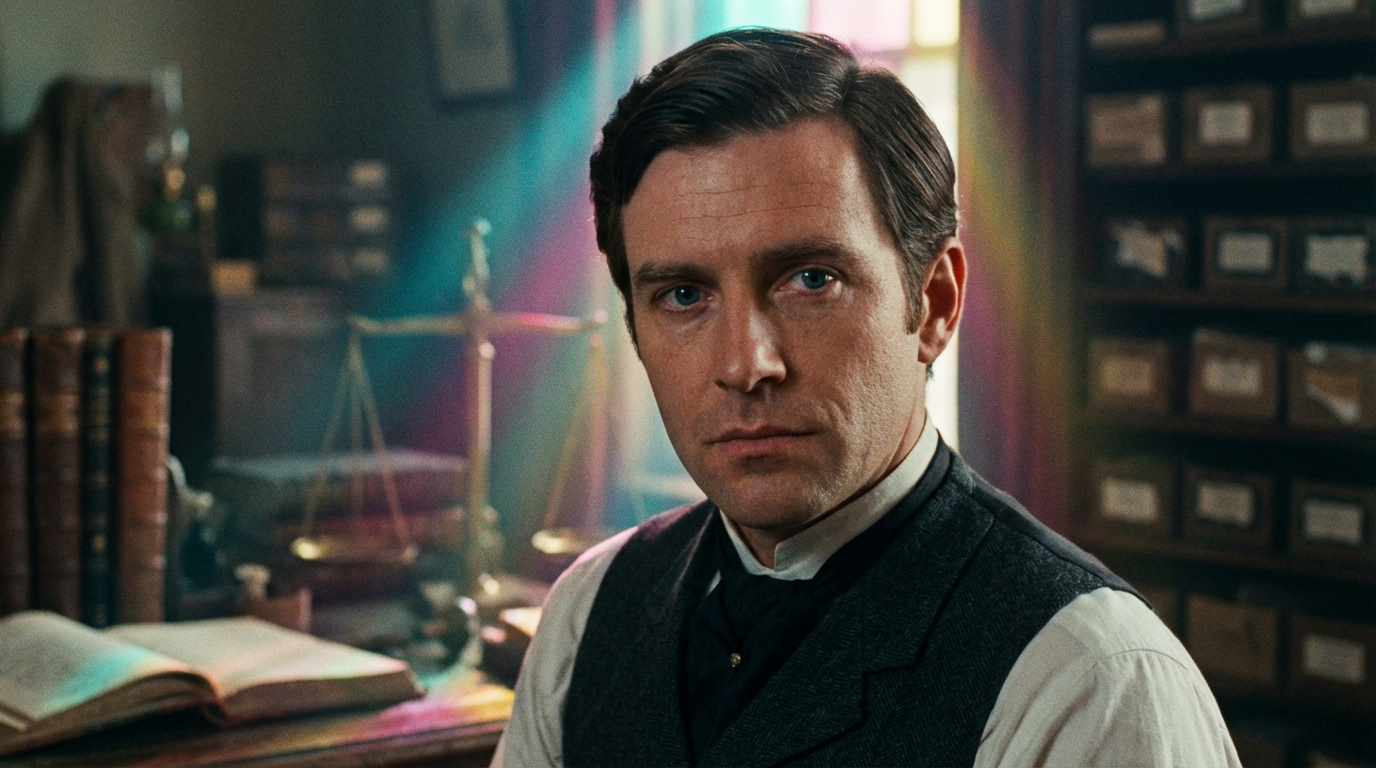
Birth and Early Childhood (1846–1854)
Thomas entered the world on 15th March 1846, arriving after two miscarriages that had created a careful distance between his parents. His birth in the New Norfolk cottage came during an autumn that his mother Anne would later remember for its unusual stillness — no storms, no drama, just the quiet arrival of a third son who seemed to understand from birth that excitement belonged to others. The gap of four years since Charles's birth meant the household had settled into routines that his arrival barely disrupted.
As the youngest of three boys, Thomas inherited hand-me-downs not just of clothing but of expectations. James, at six, was already his father's agricultural apprentice. Charles, at four, had established himself as the household's creative destroyer. Thomas's role appeared to be simply existing without causing trouble, a task he accomplished with such success that family letters from the period rarely mention him except in lists of children present.
His earliest memory, later recounted to his own children, was of sitting under the kitchen table whilst his mother worked above, feeling safe in the enclosed space where no one expected anything from him. This preference for bounded, defined spaces would persist throughout his life — the corner of the schoolroom, the back of the church, the space behind shop counters where transactions had clear rules and limited duration.
The move to the larger house in 1850 coincided with his growing awareness of family dynamics. At four, he understood that James received pride, Charles received exasperated affection, whilst he received what remained — not neglect exactly, but a kind of benign assumption that he would manage. He learned to read earlier than his brothers, teaching himself from agricultural manuals his father left lying about, discovering that knowledge could be acquired without instruction if one paid attention.
School Years and Finding His Place (1854–1869)
Thomas started school already reading fluently, surprising Mr Henderson who had taught both older brothers. Where James had been dutiful and Charles disruptive, Thomas was simply present — absorbing everything, participating minimally, achieving excellence without drawing attention. His compositions showed unexpected depth, his mathematics revealed intuitive understanding, yet he never volunteered answers or sought praise.
His friendship with William Johnson, son of the schoolmaster Richard Johnson, provided his first experience of being chosen rather than included by default. William, two years older but intellectually matched, recognised in Thomas a similar appetite for knowledge combined with social reticence. They spent recesses discussing books rather than playing, finding in shared quietness a companionship that required no performance.
The household economics of the 1850s meant Thomas received advantages his brothers hadn't — proper textbooks, adequate clothing, time for study rather than labour. His father, increasingly successful in his agricultural experiments, could afford to let his youngest son pursue education whilst older boys handled practical matters. This privilege came with its own burden; Thomas understood he was expected to achieve something with these advantages, though what remained undefined.
At twelve, he won New Norfolk's academic prize, competing against students three years older. The achievement should have brought recognition, but his brothers' reactions — James's polite incomprehension, Charles's complete disinterest — taught him that intellectual success meant little in a world that valued practical results. He began hiding his abilities, deliberately making occasional errors to avoid standing out, finding comfort in competent invisibility.
Love and Marriage (1869–1874)
The introduction to Elizabeth Johnson came through her brother William, Thomas's school friend, during Christmas dinner 1869. At nineteen, Elizabeth possessed the kind of educated refinement that should have intimidated Thomas but instead activated something unexpected — not passion exactly, but recognition of a kindred spirit who understood that intelligence could be a burden in colonial society.
Elizabeth had spent years being too clever for New Norfolk's young men, who found her knowledge of literature and mathematics unseemly in a woman. At twenty-three, Thomas offered something different — genuine interest in her thoughts, conversations that ranged beyond domestic arrangements, acceptance of intelligence without requiring its suppression. Their courtship consisted mainly of walks where they discussed books, ideas, possibilities that transcended colonial limitations.
Her father, Richard Johnson, New Norfolk's schoolmaster, approved the match despite Thomas's modest prospects. He recognised in his potential son-in-law the intellectual capacity he had hoped to find, even if it came without ambition. The engagement, announced in 1873, surprised New Norfolk society — the shopkeeper's assistant and the schoolmaster's daughter seemed mismatched socially, though those who knew them recognised deeper compatibility.
The wedding on 12th April 1874 was modest but meaningful. Thomas had saved carefully for three years, accumulating enough to rent a small house and establish the beginning of his own shop. Elizabeth brought a dowry of books — her father's gift of an entire library that would become the foundation of their children's education. James attended with Emma, offering awkward congratulations. Charles arrived late, having forgotten the date whilst working on an invention.
Establishing the Shop and Growing Family (1874–1890)
The shop Thomas established on New Norfolk's main street was deliberately modest — household goods, fabric, basic provisions — nothing that would compete with established merchants. He had learned from watching his father that survival came through finding gaps others overlooked. His customers were working families who needed credit terms, servants buying for households, people who felt uncomfortable in grander establishments.
Elizabeth transformed the shop's back room into an unofficial lending library, allowing customers to borrow books with purchases. This innovation, initially viewed with suspicion, gradually built loyalty among New Norfolk's aspiring working class who wanted education for their children but couldn't afford books. The shop became a gathering place for quiet advancement, where knowledge circulated alongside commerce.
Their first child, George Alfred, arrived on 11th January 1875 after a relatively easy labour that Elizabeth managed with characteristic composure. Thomas, banished to the shop during delivery, spent the hours arranging and rearranging inventory with obsessive precision, finding comfort in organisation whilst awaiting news. Harriet Louisa followed on 6th March 1878 during a particularly difficult economic period — the Tasmanian economy had contracted, credit extended to customers went unpaid, and competitors with deeper pockets undercut prices. Thomas considered closing the shop, perhaps seeking employment with his successful brother James, but Elizabeth's fierce pride prevented retreat. They would succeed or fail on their own terms.
Thomas Richard — whom everyone called Dick to distinguish from his father — arrived on 24th August 1881, coinciding with a modest inheritance from Elizabeth's maiden aunt that cleared debts and established firmer financial footing. Frederick James followed on 19th April 1884, Charlotte May on 8th February 1887, each birth adding pressure to already strained resources. The house above the shop, adequate for a couple, became increasingly cramped with five children. Thomas constructed makeshift partitions, creating private spaces from single rooms, learning the architecture of poverty that maximises dignity within minimum space.
His father's death on 8th April 1885 brought modest inheritance but also unexpected grief. Despite their different paths, Thomas had maintained quiet affection for the man who had given him opportunities, even if neither quite understood the other. At the funeral, standing between successful James and eccentric Charles, Thomas felt his characteristic invisibility — the third son whom everyone forgot to mention. His mother Anne's death five years later, on 30th March 1890, came with the particular sting of unfinished business. She had been declining for months, her memory fading, sometimes calling Thomas by his father's name as though the two had become indistinguishable in her mind. He buried her beside his father in the New Norfolk cemetery, the last of a generation that had bridged convict origins and colonial respectability.
Grace's Birth and the Complete Family (1890–1900)
Seven months after Anne's death, Grace Matilda arrived on 3rd November 1890, when Elizabeth was forty and Thomas forty-four — late for a sixth child, particularly after three years since Charlotte. The pregnancy had been difficult, Elizabeth confined to bed for the final months whilst Thomas managed both shop and household with help from twelve-year-old Harriet. Grace's safe arrival felt like a gift they hadn't dared expect.
The 1890s brought gradual prosperity as New Norfolk expanded and Thomas's reputation for fair dealing attracted customers from surrounding districts. He never became wealthy but achieved respectability — the shop profitable enough to employ an assistant, the family able to rent a separate house whilst maintaining the shop residence for storage. This small elevation meant everything to Elizabeth, who had married below her station and spent sixteen years proving the choice worthwhile.
Albert Henry's birth on 14th July 1893 should have been concerning — Elizabeth was forty-three, the pregnancy unexpected — but somehow felt like completion rather than excess. Eleanor Rose on 9th October 1896 and Joseph Edward on 27th June 1899 rounded out nine children spanning twenty-four years, a Victorian family of impressive size even by colonial standards. Thomas, now fifty-three with an infant son, felt simultaneously exhausted and oddly vindicated — he had built something substantial despite lacking brilliance.
The children developed distinct personalities within the shop's confined world. George showed his grandfather's mechanical aptitude without the obsession. Harriet possessed Elizabeth's intelligence with greater social grace. Dick inherited Thomas's quiet persistence. Frederick displayed unexpected artistic sensitivity. Charlotte became the family beauty. Grace showed early signs of exceptional intelligence that unsettled Thomas, who recognised in her the academic gifts he had spent a lifetime learning to hide. The younger three were still forming, though Albert's charm, Eleanor's practicality, and Joseph's contentment were already evident.
The New Century and Departures (1900–1910)
The twentieth century brought changes Thomas hadn't anticipated. George, at twenty-five, married Mary Ellen Simpson in 1900 and established his own household, the first child to leave. Harriet's marriage to John Arthur Perkins in 1902 took her to Launceston, removing Elizabeth's primary domestic help. The shop, once cramped with family, began feeling empty despite six children still at home.
Grace's intelligence increasingly demanded attention. At ten, she had exhausted New Norfolk's educational resources, reading everything available, asking questions neither parent could answer. Elizabeth insisted she continue studying despite Thomas's concerns about creating expectations they couldn't fulfil. They compromised by allowing her to assist in the shop whilst reading between customers — education disguised as commerce.
James Woolley's death on 14th December 1903, at sixty-three, was the first loss among the three brothers. Thomas attended the funeral feeling the particular loneliness of middle children — not the grief of losing a close confidant, but the unsettling awareness that the family hierarchy above him had thinned. James had been successful, substantial, the brother who validated their father's methods. Without him, Thomas and Charles occupied an unfamiliar equality, two very different men with nothing left between them but shared blood and incompatible temperaments.
Dick's marriage in 1905 to Elizabeth Jane Barwick was so modest that some customers didn't realise it had occurred. They moved to Hobart, where Dick established his own small shop, replicating his father's model with similar modest success. Frederick's marriage to Margaret Ellen Davis in 1910 happened quickly — she was a teacher, respectable without pretension. Charlotte's marriage to Robert Henry Caldwell in 1912 brought a son-in-law Thomas actually liked, a carpenter who understood building things through patient work.
The economic prosperity of the decade's middle years finally allowed Thomas to expand the shop, adding a second room and more diverse inventory. At sixty, he had achieved what he had dreamed at thirty — solid establishment without spectacular success. Elizabeth, freed from constant pregnancy and infant care, returned to intellectual pursuits, organising reading groups that Grace attended despite being decades younger than other members.
Grace's Marriage and Social Elevation (1910)
The appearance of William Jeffries IV in the shop in early 1910 changed everything. The heir to Tasmania's most powerful dynasty claimed to be seeking a particular book, but his repeated returns suggested different interests. Grace, now nineteen, possessed striking intelligence rather than conventional beauty, yet William seemed captivated by her ability to discuss literature, politics, and philosophy with genuine understanding.
Thomas watched this courtship with deep ambivalence. The social gulf between a shopkeeper's daughter and the banking heir was vast, potentially humiliating. Yet William's interest appeared genuine, his manner respectful rather than predatory. Elizabeth, more ambitious for Grace than Thomas dared to be, encouraged the association whilst warning against expecting too much. The engagement announcement in May shocked colonial society — dynasties didn't marry shopkeepers' daughters.
The wedding on 12th June 1910 at Jeffries Manor was the social event of the decade, though Thomas felt profoundly uncomfortable throughout. Surrounded by Tasmania's elite, he was acutely aware of his worn formal clothes, his calloused hands, his lack of sophisticated conversation. Yet watching Grace navigate this world with calm intelligence, he felt pride that transcended social anxiety — his youngest daughter had achieved what generations of Woolleys couldn't imagine. Overwhelmed by expensive champagne, he made a rambling speech about "our Gracie moving up in the world" that caused William's siblings to exchange horrified glances, a humiliation that Elizabeth would mention to him for the rest of his life.
The transformation in the family's status was immediate but awkward. Customers who had previously patronised the shop now felt uncertain — were they still serving the elite's relatives? Thomas insisted nothing change, but everyone knew everything was different.
Grandchildren and Later Years (1910–1924)
The decade following Grace's marriage brought surprising contentment. With younger children establishing themselves and the shop providing steady income, Thomas could finally relax slightly. The arrival of grandchildren activated unexpected tenderness in him. Where he had been anxiously responsible with his own children, he could be purely affectionate with grandchildren. He built toy boats that actually sailed, told stories about colonial days that may have been partially true, slipped them sweets their parents forbade. The shop's back room became a grandchildren's domain where quiet play was encouraged whilst adults conducted business.
Grace's daughters provided a particular source of wonder. Eleanor Jane, born in 1911, was the first grandchild to carry the Jeffries name, and Thomas held her with the careful reverence of a man who understood exactly how far a shopkeeper's blood had travelled in a single generation. Amelia Catherine followed in 1913, Charlotte Grace in 1916. He would bring them boiled sweets wrapped in brown paper whenever Grace visited, the same paper he used for shop parcels — the materials of his ordinary life repurposed as gifts for children who lived in a manor house.
Albert's marriage to Edith Margaret Sullivan in 1915 during wartime brought subdued celebration. The war that had seemed impossibly distant suddenly threatened as young men disappeared to European battlefields. Thomas was grateful his sons were either too old or too young for service, though he felt guilty relief whilst other fathers grieved. The shop became a place where worried families gathered for news, where Elizabeth organised packages for soldiers, where war's reality infiltrated colonial distance.
Eleanor's marriage to Harold Ernest Pritchard in 1920 was the last Thomas would attend as father of the bride. At seventy-four, he was increasingly frail, though still opening the shop each morning with mechanical precision. Harold, a bank clerk who had met Eleanor through Grace's connections, represented the solid respectability Thomas had always sought — not wealthy but stable, not brilliant but reliable.
Charles Woolley's death on 11th March 1921 left Thomas as the last of the three brothers — an unfamiliar position for a man who had spent his entire life occupying the middle ground. The eccentric inventor who had arrived late to Thomas's wedding, who had never quite understood why anyone would choose shopkeeping over tinkering, was gone. Thomas attended the funeral and returned to his counter without comment, though Elizabeth noticed he was gentler with customers that week, as though proximity to loss had softened edges she hadn't realised were there.
William V's birth on 9th March 1923 was the last grandchild Thomas would know from Grace's family. At seventy-seven, he held the infant with trembling hands, this boy who carried the Jeffries dynasty on his small shoulders, and marvelled quietly that his own blood — the blood of shopkeepers and clerks and unremarkable men — now ran through the veins of Tasmania's most powerful family. He was too old and too tired to make much of the thought, but it settled into him like warmth, a vindication that required no words.
Death and Legacy (1924)
Thomas's health had been declining for two years, his heart weakening in ways that Dr Morrison could monitor but not reverse. He continued opening the shop each morning with the mechanical devotion of a man who had done the same thing for fifty years and could not imagine stopping. Joseph, still unmarried at twenty-five, managed most of the daily operations whilst Thomas occupied his customary position behind the counter, available for customers who preferred dealing with the proprietor rather than his son.
Death came on 23rd June 1924, appropriately quiet for a man who had lived without fanfare. Joseph found him at the shop counter where he had apparently gone during the night, ledger open, pen in hand, attempting to balance accounts that no longer mattered. His expression suggested concentration rather than distress — dying as he had lived, attempting to maintain order, to make numbers align, to fulfil obligations no one else remembered.
The funeral on 26th June drew a crowd that would have horrified Thomas with its size. The Jeffries family attended in force, their presence elevating the shopkeeper's funeral into a social event. Grace brought Eleanor Jane, Amelia Catherine, and Charlotte Grace — three granddaughters in their fine clothes, aged thirteen, eleven, and eight, standing solemnly beside Woolley cousins who looked at them with undisguised fascination. William V, just fifteen months old, remained at the manor with his nurse. Reverend Patterson, who had known Thomas for forty years, struggled to eulogise a man whose life had been defined by what he wasn't rather than what he was, finally settling on a simple truth: that Thomas Woolley had given more people more chances than anyone in New Norfolk, one small credit extension at a time.
The shop's closure after fifty years marked the end of an era. Joseph initially attempted to maintain operations but lacked his father's patience for small transactions and careful credit. Within six months, he had sold the property to a syndicate that would demolish it for a modern department store. The books Elizabeth had lent, the corner where children chose their first primers, the careful order Thomas had maintained — all disappeared into colonial memory.
The estate, when settled, revealed surprising accumulation. Thomas had saved compulsively, never trusting prosperity, always expecting reversal. The amount, divided among nine children, provided modest legacies that acknowledged each equally — no favouritism for Grace's elevation or penalty for others' ordinary lives. This final fairness, mathematical in its precision, was perhaps the most characteristic act of a man who had found safety in balanced ledgers.
Elizabeth would outlive him by nine years, dying on 18th August 1933. In the intervening years, she would watch Grace's sons grow, witness the family fractures that William IV's inheritance decision would create, and maintain the lending library tradition from her daughter's sitting room until her mind began its final retreat. But Thomas knew none of this. He died as he had lived — quietly, in his proper place, the accounts balanced, the door unlocked for morning.







