Thomas Frederick Gilchrist
Thomas Frederick Gilchrist carved his place in Van Diemen's Land's earliest colonial history through an intimate understanding of both the wilderness and the civilised world it reluctantly hosted. As gamekeeper of the Jeffries estate from its establishment in 1817, he became the essential bridge between the untamed bush and the fragile order of colonial society, a position that would ultimately place him at the centre of one of the colony's most enduring mysteries.
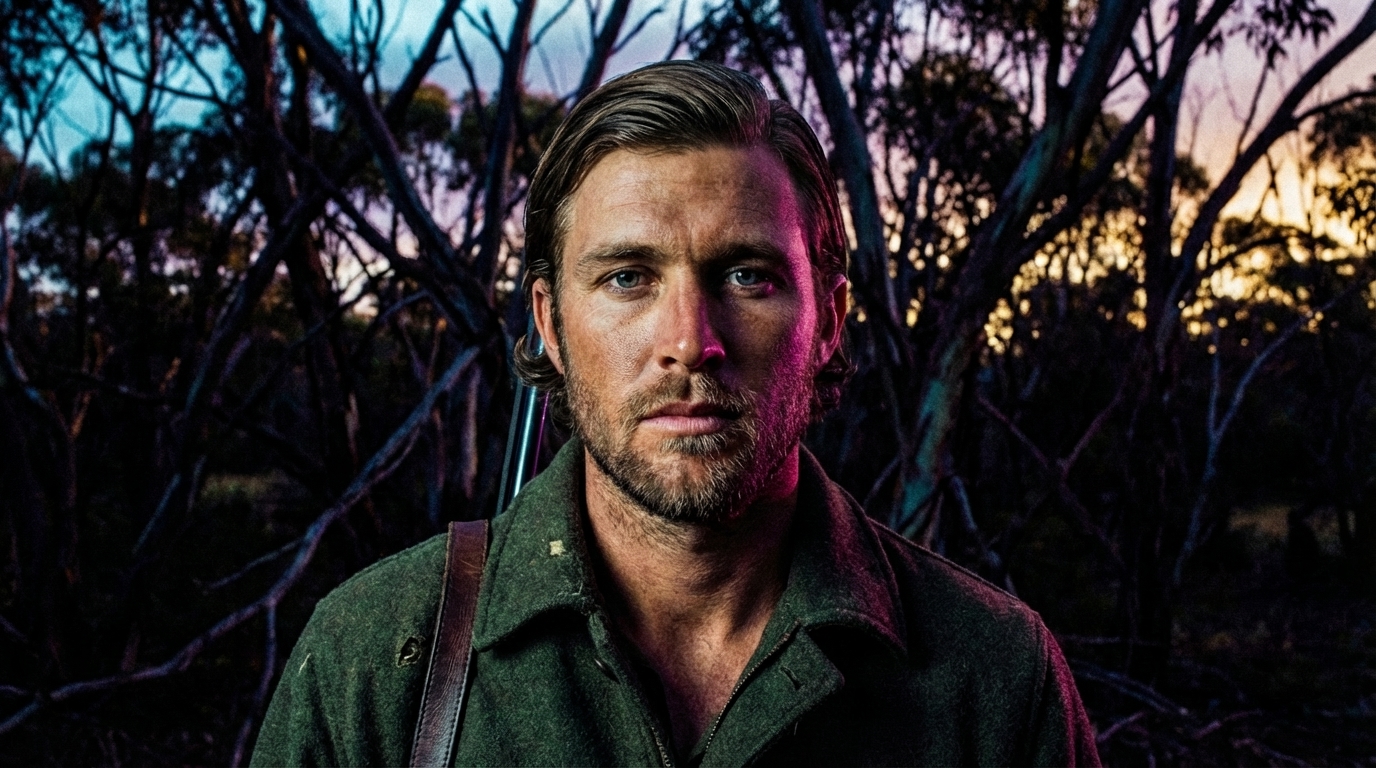
Early Life and Highland Origins (1774-1809)
Born on 18th October 1774 in the parish of Kincardine, Ross-shire, Thomas Frederick Gilchrist entered a Scotland still reeling from the aftermath of Culloden and the systematic destruction of Highland culture. His father, Malcolm Gilchrist, worked as under-keeper on the estates of Mackenzie of Seaforth, whilst his mother, Isabel née Fraser, descended from a line of proud though impoverished Highland gentry who had lost their lands in the Stuart cause.
The Gilchrist cottage stood at the edge of civilisation, where the managed deer forests of the estate met the wild Highlands beyond. Young Thomas absorbed both worlds from infancy—learning to read the weather in cloud formations over distant peaks, to track red deer through heather and bracken, to understand the delicate balance between preservation and harvest that sustainable estate management required.
At seven, he began accompanying his father on rounds, small legs struggling to match the elder Gilchrist's ground-eating stride. Malcolm taught through observation rather than words, pointing out the subtle signs that distinguished a healthy forest from one under stress—the browse lines that indicated overpopulation, the wallows that marked territorial boundaries, the barely visible paths that revealed centuries of animal movement.
Education came sporadically through the parish school when estate duties permitted. Thomas learned his letters and numbers, could recite Presbyterian catechism, and developed a precise copperplate hand that would later prove invaluable in maintaining estate records. Yet his true education occurred in the field, where he absorbed the accumulated wisdom of generations of Highland gamekeepers.
At fourteen, a defining incident shaped his future path. Poachers from a neighbouring clan had been taking deer from Seaforth lands, threatening the delicate population balance Malcolm had spent years establishing. During a night pursuit, Thomas demonstrated remarkable tracking abilities, following signs invisible to others and predicting the poachers' likely routes based on wind patterns and terrain. His success earned him appointment as assistant keeper, unprecedented for one so young.
The clearances that swept the Highlands in the early 1800s destroyed the world Thomas knew. The Seaforth estates were sold, broken up for sheep runs that required no gamekeepers. Malcolm died in 1808, whether from illness or despair his son never determined. Isabel followed within months, leaving Thomas adrift in a homeland that no longer had a place for men of his skills.
The King's Service and Transportation (1809-1816)
With few options remaining, Thomas enlisted in the 78th Regiment of Foot, the Ross-shire Buffs, in March 1809. The Highland regiments offered refuge for displaced men like himself—a continuation of martial tradition even as their civilian culture crumbled. His tracking skills and disciplined nature quickly earned him appointment as the regiment's chief scout.
The Peninsular Campaign provided brutal education in survival beyond Highland parameters. In Spain's arid mountains, Thomas learned to read entirely different landscapes, to find water where none seemed to exist, to track French patrols through terrain that bore no resemblance to Scottish moorland. The skills translated, though the cost in Highland blood ran high. At Badajoz, at Salamanca, at Vitoria, Thomas watched fellow Scots fall in foreign soil, their Gaelic death songs echoing off alien hills.
The incident that ended his military career occurred in January 1816, after the regiment had returned to garrison duty in Ireland. A dispute over requisitioned supplies escalated when Thomas struck an English officer who had been systematically stealing rations meant for Highland troops. The officer, Lieutenant Charles Worthington, had powerful connections. Despite testimony regarding provocation and Thomas's exemplary service record, the court-martial found him guilty of striking a superior officer.
The sentence—death, commuted to transportation for fourteen years—reflected both the seriousness of the offence and recognition of mitigating circumstances. Thomas accepted the verdict with Highland stoicism, though witnesses reported his eyes held murder when Worthington smirked at the sentence's pronouncement.
Transportation and Assignment (1816-1817)
The convict transport Neptune departed Cork on 15th May 1816, carrying Thomas and 199 other prisoners to Van Diemen's Land. Unlike many transportees, Thomas adapted quickly to shipboard life. His military experience had taught him to endure hardship, to find structure within confinement, to maintain dignity despite degradation.
During the voyage, his behaviour attracted the attention of Surgeon-Superintendent James Brennan, who recognised education and ability beneath the convict's chains. Brennan employed Thomas as an assistant, teaching him basic medical knowledge that would later prove invaluable in the isolated colonial bush. The surgeon's journal noted: "Gilchrist possesses that rarest combination—intelligence wedded to practical capability. His understanding of natural systems, whether Highland forest or human body, demonstrates remarkable systematic thinking."
The Neptune reached Hobart Town on 28th September 1816. Thomas's first glimpse of Van Diemen's Land revealed a landscape that simultaneously echoed and contradicted his Highland home—mountains certainly, but clothed in alien eucalyptus rather than familiar pine; forests yes, but filled with creatures that defied European categorisation.
His skills and Brennan's recommendation earned Thomas immediate assignment to government service rather than a road gang. Lieutenant-Governor Davey, struggling to establish order in the chaotic colony, had ordered the creation of proper game reserves to provide fresh meat for government tables. Thomas's experience made him invaluable for this project.
The Jeffries Assignment (1817-1821)
William Jeffries's arrival in Van Diemen's Land in early 1817 brought opportunity that would define Thomas's colonial existence. The entrepreneur had acquired a substantial land grant north of Hobart Town, intending to establish an estate that would rival anything in the home counties. Such ambition required a gamekeeper who understood both traditional management and colonial adaptation.
Through Silas Croft, the land agent managing the initial development, Thomas received conditional assignment to the Jeffries estate. The arrangement suited all parties—Jeffries obtained skilled labour at minimal cost, the government transferred a convict's maintenance to private hands, and Thomas escaped the degradation of public works for something resembling his former profession.
The land that would become the Jeffries estate presented unique challenges. Van Diemen's Land's native fauna followed no European patterns. The kangaroos and wallabies that provided meat moved unlike any deer; the carnivorous devils and tigers that threatened stock behaved unlike wolves or foxes. Thomas spent his first months learning this new language of landscape, translating Highland principles to antipodean realities.
He established systematic surveys of the property, mapping water sources, documenting native animal populations, identifying the complex relationships between indigenous species and introduced stock. His detailed journals from this period, written in precise copperplate, provided some of the earliest scientific observations of Tasmanian ecology, though they would remain undiscovered in estate archives for decades.
The relationship with Jeffries himself proved complex. The entrepreneur appreciated competence and largely left Thomas to manage the estate's wild portions independently. Yet there was something in Jeffries's manner—a watchfulness, a tendency toward unexplained absences—that triggered Thomas's finely honed instincts for danger. He began maintaining private notes about unusual occurrences, a habit that would prove prescient.
The Estate's Evolution (1817-1821)
Under Thomas's management, the estate's game resources flourished. He introduced controlled burning practices adapted from observations of Aboriginal land management, creating the mosaic of habitats that maximised both native and introduced species. His selective culling programmes maintained healthy populations whilst providing consistent meat supplies for the manor's tables.
Beyond game management, Thomas became the estate's unofficial security officer. His military experience and intimidating physical presence—he stood over six feet tall, with the lean strength of a man who spent his days walking rough country—discouraged potential thieves and poachers. The assigned convicts working the estate's farms learned quickly that nothing escaped the gamekeeper's notice.
He established a network of hides and observation points throughout the property, allowing him to monitor activities without being seen. This surveillance system, ostensibly for game management, revealed patterns of movement that didn't match official estate business. Late-night visitors who never appeared in the manor's guest book, packages delivered to remote corners of the property, Jeffries himself sometimes departing through the bush rather than the main drive.
Thomas's relationship with the estate's other workers remained professionally distant. His Scottish reserve and convict status created barriers, though his competence earned respect. With Philip Pyke, the blacksmith whose forge served the district, he developed something approaching friendship. The two men, both skilled craftsmen displaced from their homelands, found common ground in their dedication to excellence despite circumstances.
The Aboriginal people who still moved through the estate's margins presented a different challenge. Unlike many colonists, Thomas recognised their profound understanding of the land. Through careful observation and occasional carefully negotiated exchanges, he learned to read signs that had initially seemed meaningless—which plants indicated permanent water, how smoke signals conveyed information across vast distances, why certain areas remained undisturbed despite abundant game.
The Disappearance (August 1821)
The events surrounding William Jeffries's disappearance on the night of 9th August 1821 would define the remainder of Thomas's life. That evening had seemed routine—Thomas had completed his rounds, noted nothing unusual in his daily log, and retired to his cottage on the estate's edge. The winter night was clear but cold, frost already forming on the grass despite the early hour.
He was awakened at dawn by Philip Pyke pounding on his door. Jeffries was missing from his bed, his wife distraught, the household in chaos. Thomas dressed quickly, his mind already calculating possibilities. In August's cold, an injured man wouldn't survive long in the bush. If Jeffries had ventured out voluntarily, he would have followed known paths. If taken against his will, there would be signs of struggle, a trail to follow.
The initial search revealed troubling anomalies. Thomas found no tracks leading from the house despite frost that should have preserved any footprints. The doors remained locked from within, the windows secured. His examination of the bedroom showed no signs of violence, yet Jeffries's outdoor clothing was missing—suggesting voluntary departure, though how he had left remained inexplicable.
Leading the search party through the bush he knew intimately, Thomas employed every tracking skill acquired across forty-seven years. He divided the searchers systematically, assigned areas based on probability, marked territories covered to prevent redundancy. Yet as hours passed without discovery, a cold certainty settled in his chest—William Jeffries had not simply wandered into the bush and become lost.
The bloodstains discovered near the estate's boundary presented a puzzle. The marks on nearby stones suggested impact from a heavy tool, possibly a hammer. Thomas examined these carefully, noting their pattern and age—fresh enough to be relevant, old enough that any trail had been obscured. His report to Constable Broadmoor was carefully factual, though privately he harboured darker suspicions.
The Investigation (1821-1822)
As the investigation progressed, Thomas found himself in an uncomfortable position. His intimate knowledge of the estate made him invaluable to Broadmoor, yet that same knowledge had revealed irregularities he was reluctant to fully disclose. The late-night visitors, the unexplained deliveries, Jeffries's mysterious absences—all suggested activities that, if revealed, might destroy the estate and leave Thomas without position or purpose.
He chose a middle path, providing Broadmoor with technical assistance whilst withholding certain observations. When the constable inquired about unusual occurrences, Thomas mentioned only "occasional poachers" and "the usual colonial irregularities." The private notes he had maintained were hidden, insurance against future need rather than immediate evidence.
The discovery of a locked chest in his cottage during the investigation caused considerable embarrassment. The chest contained surveying equipment and old correspondence from his military days—nothing incriminating, yet the mere fact of concealment raised suspicions. Thomas explained he kept valuable equipment secured against theft, a reasonable precaution that Broadmoor accepted whilst clearly harbouring doubts.
After the Mystery (1822-1830)
When the investigation officially suspended in early 1822, Thomas remained on the estate through inertia rather than purpose. Madelyn retained him, perhaps from inability to imagine alternatives, perhaps from fear that dismissing him might suggest guilty knowledge. He continued his duties—maintaining game populations, preventing poaching, submitting regular reports that Madelyn likely never read.
Yet the estate had fundamentally changed. The sense of building something significant had vanished with Jeffries. Thomas went through the motions of management whilst watching the slow decline of everything he had worked to establish. The introduced deer population, without proper culling, began destroying native vegetation. Poachers, emboldened by perceived weakness, took what they pleased despite his efforts.
In 1823, Thomas received his ticket-of-leave, granting conditional freedom within the district. He might have left the estate then, sought position elsewhere, yet something held him. Perhaps loyalty to the land itself rather than its owners, perhaps simple recognition that, at forty-nine, his options were limited. He remained, a guardian of declining domain, maintaining standards that fewer people seemed to value.
His journals from this period reveal a man grappling with purposelessness. The detailed ecological observations continued, but increasingly interspersed with philosophical musings on duty, loyalty, and the nature of truth. One entry from October 1825 proves particularly revealing: "I guard an estate whose master has vanished, serving a mistress who fears me, maintaining order that no longer has meaning. Yet the land endures, indifferent to human drama. Perhaps that is sufficient purpose—to serve the land rather than its temporary possessors."
The Final Years (1830-1842)
Thomas received his conditional pardon in 1830, fourteen years after the Neptune had delivered him to Van Diemen's Land. Full freedom came too late for new beginnings. At fifty-six, his body bore the accumulated wear of Highland winters, Spanish campaigns, and colonial hardship. The rheumatism that had begun in the Peninsula now made walking increasingly painful. The keen eyes that could spot a deer at five hundred yards now required spectacles for reading.
He remained on the estate, now as a free employee rather than assigned convict, though the distinction seemed largely semantic. His wages were minimal and frequently delayed, yet he had nowhere else to go, no family to return to, no homeland that would recognise him. The estate had become his only world.
Young William Jeffries Jr., growing up fatherless, developed an unexpected attachment to the gruff gamekeeper. Thomas taught the boy woodcraft, though careful to avoid the estate's darker corners. He showed him how to read weather, track animals, understand the bush's dangerous beauty. In the boy, Thomas perhaps saw opportunity for redemption—ensuring that at least one Jeffries would understand the land honestly.
The relationship with Philip Pyke deepened during these years. The two ageing men, both shaped by transportation and survival, met weekly at Pyke's forge or Thomas's cottage. They rarely discussed the Jeffries disappearance directly, yet it shadowed every conversation. Both men knew more than they had revealed, both carried guilt for that concealment, yet neither could bring himself to break the silence that had calcified over years.
Thomas's health declined sharply in 1841. The winter brought pneumonia that his scarred lungs couldn't resist. Dr Fielding, called from Hobart Town, could offer only palliative care. Thomas spent his final months teaching young William everything he could, passing on knowledge that extended far beyond game management to encompass survival, observation, and the crucial ability to see what others missed.
Death and Mystery (1842)
Thomas Frederick Gilchrist died on 3rd March 1842, aged sixty-seven. His final words, recorded by Philip Pyke who sat with him at the end, were: "The land knows. The land always knew." Whether this referred to the Jeffries mystery or represented mere delirium remains debated by those few historians who remember his existence.
His funeral, attended by a surprising number given his solitary life, was conducted at St Mark's Church in Granton. Madelyn Jeffries, dressed in the black she had worn since her husband's disappearance, stood apart from other mourners. Young William Jr., now twenty-one, served as a pallbearer alongside Philip Pyke and other estate workers.
Thomas was buried in the churchyard's convict section, his headstone bearing only name and dates—no mention of his Highland origins, his military service, or his crucial role in the colony's most enduring mystery. Yet Philip Pyke, with characteristic precision, carved a small thistle at the stone's base, ensuring that something of Scotland marked this colonial grave.
Among his few possessions, executors found journals spanning twenty-five years of careful observation. Most contained ecological data that would later prove valuable to natural historians. But one journal, hidden beneath floorboards in his cottage, contained different observations—notes about the Jeffries estate's true business, documented irregularities, theories about the disappearance that he had never dared voice.
This journal disappeared shortly after discovery, its contents never officially recorded. Madelyn Jeffries claimed it contained only "gamekeeping memoranda of no consequence," though witnesses reported her hands trembling as she burned the pages. Philip Pyke, who had glimpsed certain entries, would only say that "Thomas knew the cost of truth in a colony built on secrets."







