4344.40 · February 9, 2024 AD
The Same Hand
You learn someone's handwriting the way you learn a voice—not from any single word but from the whole of it. The spacing. The pressure. The particular angle where stylus meets clay. Mira has spent three weeks memorising every detail of the Kisura contract. She knows how Azariel formed his signs the way you know a friend's voice on the phone before they say their name. When Tariq's photographs finally arrive from Cairo, her hands start trembling before her mind catches up.
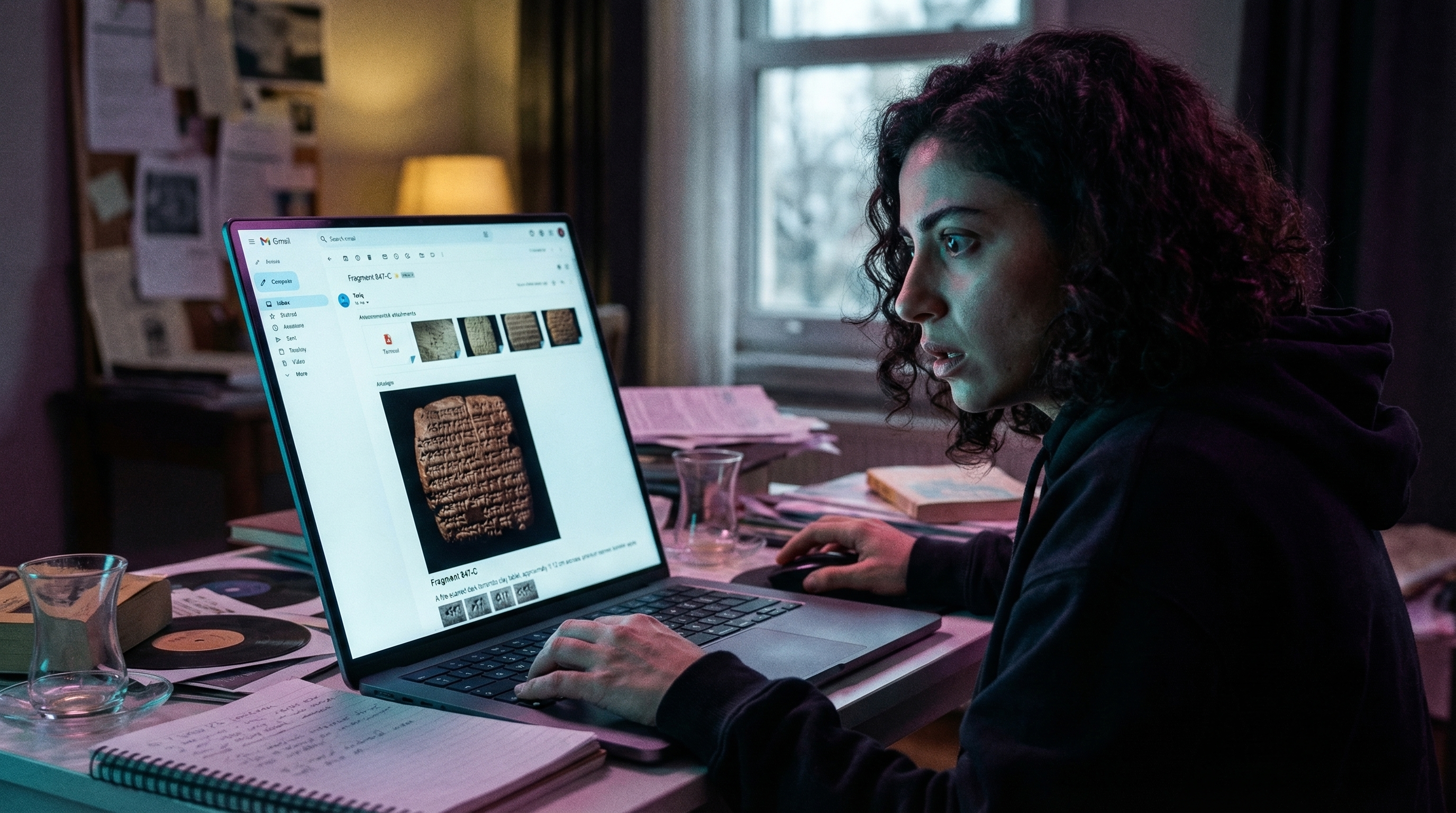
Six days of checking. Open, nothing, close, repeat. The rhythm has become its own form of work—inbox refreshes between Ottoman letters, during tea breaks, in the small pauses between one photograph and the next. Deniz notices without saying anything directly. She comments on duplicate images, on careless handling, on the particular distraction of someone waiting for a door to open.
On Friday morning, the door opens.
Tariq's email contains six attachments. Fragment 847-C appears on Mira's screen—twelve centimetres of damaged clay, fire-scarred, centuries of uncontrolled storage written into its surface. The central text is degraded. The seller identification is lost. But the footer section survived.
Four cuneiform signs. Partially damaged but legible. The same distinctive angle. The same depth. The same slight leftward drift on horizontal strokes.
The same hand.
Azariel recorded grain storage in Kisura. And somewhere during those same wandering years, he stood in a Larsa marketplace and documented the sale of human beings. Watched people purchased like pottery. Pressed his stylus into clay. Witnessed slavery—then walked away and built a city where it didn't exist.







