4338.205 · July 24, 2018 AD
The Bottle Knew First
When Beatrix answers her sister's cryptic summons, she expects emotional drama—not a confrontation with a word she didn't know her sister knew: Clivilius. Inside Gladys’s too-perfect house, a storm breaks over wine, whispers, and a discarded water bottle carrying truths no one should ever have read.
"Some messages arrive disguised as rubbish. The smart ones know to check the bin."
What does Gladys want now?
The thought echoed, sharp-edged and persistent, threading itself through the fog of my fatigue. It came laced with the usual cocktail: a dash of irritation, a measure of concern, and the sour aftertaste of obligation. I sighed—loud enough to startle the dust motes, a small, audible collapse of patience I hadn’t realised was still intact.
Gladys’s voice on the phone had carried a weight to it—a strained urgency that made my spine straighten before my brain had even caught up. And yet, maddeningly, she’d been vague. Hints and half-statements, the verbal equivalent of breadcrumbs through a forest I didn’t ask to enter. Whatever she wanted, it wasn’t simple. It never was.
Still, at least she was alive. That much I could hold onto. And by extension, so were our parents—presumably still rooted to the sofa, eyes glazed by the soft, hypnotic glow of reality TV. Their rituals were unshakable. Not even a Category Five Gladys could disrupt their nightly devotion to game shows and talent competitions.
It was jarring, the contrast. In one corner of the world: banal domestic tranquillity, tea mugs and warm socks. In mine: a slow-spinning storm, gaining speed with every unanswered question. The disconnect made everything feel even more surreal.
But Gladys wouldn’t have called like that without reason. She knew better. She knew I had no time for false alarms or cryptic dramatics—not anymore. If she said she needed me, she meant it. I hated that she’d earned that credibility.
She’d offered to come pick me up—her voice oddly formal, rehearsed, like she already expected me to say no. And she was right. I declined without pause. The thought of sitting in her car, forced into small talk while my brain sprinted ahead, was intolerable. I needed air. I needed silence. I needed the walk.
The distance between our parents’ house and hers wasn’t far—fifteen, maybe ten minutes if I didn’t dawdle. Just long enough to inhale cold air, feel the night wrap around me, and try to make sense of the static building in my chest.
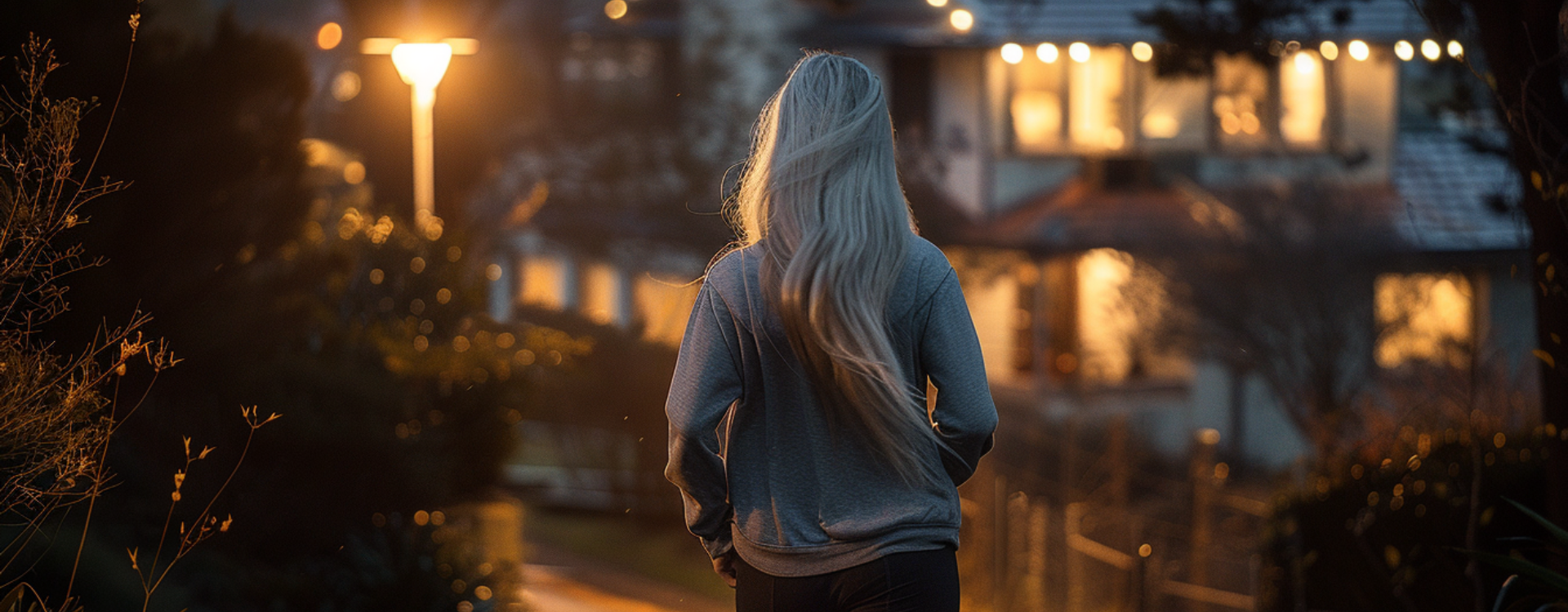
I slipped into my grey trackies and pink joggers—hardly glamorous, but comfort trumped vanity. The fabric was worn soft from years of loyalty, the waistband slightly frayed, the soles of the joggers scuffed from too many last-minute dashes to the corner shop. Still, they offered a kind of armour. Familiar. Unquestioning.
"Don’t wait up for me," I called out as I passed the lounge room, voice measured, footsteps brisk.
I didn’t stop to check if they’d heard. Didn’t want to. The flickering TV light pulsed against the hallway walls, shadows dancing like bored spectators. I kept my gaze straight ahead. One glance in their direction and I’d be trapped—forced to field questions, invent answers. I wasn’t in the mood for small lies or big explanations.
No. Best to just walk. Let the night take me.
The evening’s breath pressed cool against my skin, a hush of whispers and shifting leaves. The world felt lighter at this hour—thinned out, unarmoured—its usual noise traded for rustling branches and the soft crunch of footfall on damp pavement. It was the sort of night that made you feel watched, but not threatened. As though the trees were old friends, quietly gossiping as you passed.
I slipped easily from a walk into a jog, my body following the rhythm of my mind rather than the other way round. The motion was grounding—lungs drawing in the sharp night air, arms swinging in quiet syncopation. I wasn’t running from anything, exactly, but there was a kind of urgency in the movement. Like if I kept going, I might catch up with the meaning of Gladys’s call before I arrived at her doorstep.
The world around me blurred, shadows congealing into hedges, lamp-lit fences, the occasional glow of a lounge room window casting domestic tableaux in amber and blue. Dogs barked once, then thought better of it.
Less than a kilometre on, the street curved gently, and there it was—Gladys’s house.
Its silhouette rose like a Victorian moral lesson: solid, unyielding, slightly smug. A sharp contrast to the modest sprawl of our childhood home with its squeaky screen door and carpet that never quite lay flat. Hers was all clean lines and symmetry, the kind of place you imagined had labelled spice jars and no dust behind the skirting boards.
I slowed to a walk, crossing onto the footpath opposite. From here, I could take it all in.
There was something almost theatrical about it, this carefully calibrated assertion of self-control. The perfectly trimmed hedges, the pale sandstone façade, the porch light left on—of course. Not for warmth, but visibility. Presentation. Gladys would never be caught unprepared.
It struck me, not for the first time, how odd the place felt for her. So large, so deliberate, and yet occupied only by her and those two disdainful cats with names like minor Greek deities. She used to joke—probably still did—that they were better company than most people. I’d once teased her that she was halfway to becoming the mad cat spinster local children warned each other about. She’d just smirked and said she hoped the myth included good bone structure.
The memory teased at the corners of my mouth. Not quite a smile, but something adjacent. A reminder that despite everything—despite the weight between us—we’d always known how to find each other in the dark, eventually.
But as I drew closer, that flicker of amusement evaporated. The air had gone still and expectant, the way a room quiets when everyone in it already knows the news.
Each step towards the front door landed louder than seemed reasonable. I wasn’t breathless from the jog. It was the same cold that had found me on the phone, back again and settling in to stay.
Before I could gather my thoughts or brace myself for whatever fresh madness awaited, the door burst open—as if the house itself had been listening in on my anxiety and decided to match it with theatrical flair.
Then: hands. Firm, uninvited, and unrelenting.
They clamped around my arm, the grip urgent enough to bypass manners altogether. One sharp tug and I was pulled forward, my feet stumbling slightly on the threshold tiles as the door slammed shut behind me with the kind of echo that suggested it wasn’t planning on opening again any time soon.
"Shit, Beatrix. What took you so long?" Gladys’s voice cracked through the stillness like a whip. Impatient, yes—but undercut with something else. Relief, perhaps. Or fear, cleverly dressed up in exasperation.
Her hand still gripped my arm. Hard. Too hard. There was strength there—surprising for someone who typically handled everything with surgical control. Whatever this was, it had clearly rattled her.
"Don’t ‘shit’ me," I snapped back, though the bite in my words was half-chewed. My voice, far from defiant, carried the automatic cadence of our oldest quarrels—blunt, familiar, and softened by history.
I tried to wriggle free with all the grace of a reluctant sack of potatoes, but her fingers tightened in response, refusing to let go. The gesture was less about restraint now, more about grounding—like if she let go of me, she might float off or come undone. It was that kind of grip. Quietly desperate.
And oddly, comfort bloomed in that moment of resistance. Not warmth, exactly, but something close. The friction between us was familiar—like picking up a book you’ve read a hundred times and still finding your own scrawl in the margins.
The house was warm, but the air inside had the same tension. We’d crossed into more than her foyer, and both of us knew it.
As we stumbled into the kitchen—Gladys half-dragging, me half-complying—the scene that greeted me was nothing short of a controlled dystopia.
The countertops were strewn with culinary carnage: an open jar of olives on its side, red wine pooling near the base like it had been offered in sacrifice; a chopping board littered with cucumber rounds and three uneven carrot sticks, one of which had rolled off onto the floor, presumably rejected. The air held a tang of balsamic vinegar and something faintly burnt. A lone saucepan sat abandoned on the stove, handle skewed like it had given up mid-sentence.
It had all the hallmarks of what I could only describe as a mid-level panic cook—when the body insists on motion just to drown out the mind.
"Here," Gladys declared, thrusting her arm out—part hostess, part harried stage actor delivering her final line. A large glass of red was pressed into my hand, sloshing alarmingly near the rim.
The gesture was a little too brisk, the smile that accompanied it a little too taut. I took the glass without protest. The wine—deep, velvety, and unapologetically over-poured—felt reassuringly solid. Heavy. Real. It anchored me in the moment more than her words ever could.
My gaze drifted to her own glass, which she held limply in her other hand. It was nearly empty, the last mouthful catching the fluorescent light in a blood-hued gleam. She didn’t seem to notice it tipping slightly as she leaned against the bench, eyes not quite meeting mine.
The fine lines around her eyes were sharper tonight, her posture a little more brittle. And the glaze in her stare—subtle but telling—confirmed what I already suspected: this was not her first pour. Possibly not even her third.
"Looks like the crazy has really come out tonight," I quipped, the words flying out before I’d thought them through. They landed with a bit more volume than intended, bouncing off the tiled splashback and hanging in the air like a faintly inappropriate chandelier.
"Beatrix, stop it! You know I hate that word," she snapped back, the sentence spilling over itself in irritation, with just enough fray in the edges to betray how tired she really was.
It was our usual choreography—me lobbing sardonic grenades, her batting them back with disapproval tinged by fatigue. But it was familiar. A rhythm as old as our DNA. I took strange comfort in it, as one might in the creak of a worn floorboard or the hiss of a leaky kettle—annoying, yes, but part of the house you grew up in.
I couldn’t suppress the laugh that rose, unbidden. It escaped, rough around the edges, flecked with irony and something warmer beneath. Cynicism, yes—but the affectionate kind. The kind you reserve for people who’ve seen you ugly-cry and still bothered to pass the tissues.
Because whatever else we were—disagreeable, incompatible, polar opposites—we were still tethered. Not always neatly. Not always kindly. But irrevocably.
I took a gulp of the red, letting the warmth of it go down like a curtain drawing shut. Rich, vaguely medicinal—cheap solace in a glass. It dulled the edges just enough to buy a few seconds of composure, a liquid pause before the inevitable plunge.
"So, what is it that you have summoned me here for so desperately, my dear sister?" I asked, trying to lace my voice with a note of ironic civility. It came out softer than I expected—less performative, more weighted. There was something underneath it now. Concern, maybe. Or readiness. I could feel the sarcastic scaffolding wobble, ready to give way if the moment asked for it.
Gladys didn’t answer straight away. Her mouth trembled, lips twitching with whatever hurricane she was holding back.
"Jamie is gone!" she blurted, the words tearing out of her like a rupture. Her voice cracked midway—panic folding into rawness—and the sound cut through the kitchen like breaking crockery. Sharp. Irreversible.
"Gone?" I echoed, my brow pulling together so tightly I could feel the pinch between my eyes. The word tasted wrong. Off. "What do you mean, gone?"
Her face twisted in disbelief that I didn’t already understand—like I should’ve picked up on some psychic clue the moment I walked through the door.
"He’s gone. He’s in Clivilius and he can’t get back out," she shrieked, her voice rising into that particular frequency that bypasses logic and goes straight to the nerves. It hit the ceiling and ricocheted, filling the kitchen with something primal. Fear. Not the tidy kind that comes with locked doors and broken routines—but the kind that knows no shape, only threat.
I blinked. Once. Twice.
"Clivilius?" The name left my lips slowly, as if saying it aloud might grant it weight or clarity. It didn’t. Instead, it struck like a cold coin flipping through my stomach. That word. That place. Not here. Not her.
A frown settled deep and stayed. That name—Clivilius—was not one spoken lightly. Not by someone like Gladys.
How the hell does Gladys know about Clivilius? The question burst through like a fire alarm. Loud. Inescapable.
"Yes! Clivilius," she sobbed, voice shattering on the syllables. "He went in there with Luke and Paul, and now Clivilius has them!" Her words unravelled in a frenzied tumble, desperation dragging each one down into chaos. It was all hysteria now, her hands trembling around her empty wine glass like it might hold her to this reality.
"You sound like you’ve got Clivilius," I mocked, too quietly to carry conviction. The joke fell flat the second it left me, hollow and brittle. A flimsy deflection.
I wanted to diffuse the panic, to push her hysteria back behind the curtain where it belonged. But my own calm was fraying. Because that name—that place—didn’t just stir up bad memories. It unearthed something deeper.
A truth I’d buried beneath sarcasm, wine, and the comforting hum of denial.
And now it was clawing its way back to the surface.
In response, Gladys’s hand snapped out like a trap. She seized an empty plastic water bottle from the cluttered counter and, without warning, hurled it at me with a force that seemed wildly disproportionate to its weight. The motion was jagged, panicked—less about violence, more about demand. A flailing attempt to be understood.
"What the hell, Gladys!" I yelled, flinching instinctively as the bottle clipped the bench and hit the floor with a hollow, disgruntled thud. My wine glass sloshed in my hand, a rogue wave nearly breaching the rim. I steadied it reflexively, more annoyed by the near spill than the projectile itself.
The bottle rolled across the tiles, bumping to a stop beneath the edge of the dishwasher—mute, harmless, and absurd. The kind of domestic object that should’ve stayed in the recycling bin, not been conscripted into a nervous breakdown.
"Read it," Gladys said. Flat, stripped of invitation. Just raw, wired insistence. Her tone carried the kind of urgency usually reserved for ambulances and final warnings.
"Read what?" I asked, annoyance losing ground to bafflement. My brow furrowed, the line between rational and ridiculous beginning to blur. It was just a water bottle. A mass-produced, disposable fragment of modern life. I’d probably thrown out three just like it this week. Nothing about it hinted at mystery or meaning.
"Just read it," she pressed, every syllable pulled tight. Her eyes—wide, glassy, unblinking—locked onto mine with such intensity it made my skin itch. There was a silent scream behind her gaze, a kind of desperation that cut deeper than her words.
With a resigned exhale, I set my wine glass down on the kitchen bench. The liquid stilled, dark and reflective, mirroring the tension hanging between us. I crouched, knees creaking slightly in protest, and picked up the bottle.
It felt like nothing. Light. Empty. Harmless.
I rolled it slowly between my hands, its surface cool and crinkled. There was a brief, almost calming monotony in the action. Something to do with my fingers while my mind tried to make sense of whatever spiral Gladys had descended into.
The label was exactly what I expected—blue and white, cheap design, the logo of some locally sourced spring meant to sound pure and untouched, probably bottled in a warehouse next to a car park. Same standard font, same meaningless claims about minerals and sustainability.
Just a water bottle. Ordinary. Disposable. Familiar.
So why, then, was my pulse starting to race?
And then I saw it.
There, embedded in the mundane plastic curves and scuffed branding, was a message. Subtle enough to be missed. Terrifying enough to never unsee.
The words weren’t part of the official label—they didn’t belong. Someone, somewhere, had used this vessel of casual hydration to smuggle meaning past the eyes of the indifferent. And it worked.
The numbness started in my fingers and worked inward. My breath snagged high in my chest and stayed there. I looked up at Gladys—really looked—and the bottle slipped from my grip and knocked against the tiles.
"What the hell, Gladys? Is this some sort of cruel joke?" I demanded, and heard my own voice give at the edges. My words came sharp, fuelled by a rising tide of anger that I didn’t entirely know what to do with. The kind of fury born not just of fear, but of betrayal—because this? This crossed a line.
She didn’t meet my gaze straight away. Her eyes had lost their manic gleam, replaced by something worse: resignation. A terrible, quiet knowing. "I almost wish it were," she murmured, her voice a faint echo of the hysteria that had possessed her earlier. Whatever strength she’d had was ebbing away, swallowed by the weight of what she clearly already knew. She looked… smaller. Folded inward. Not defeated, but close.
And then I was reaching for it again.
Not because I wanted to. It was involuntary, like pressing a bruise to be sure the pain is still real. I picked the bottle up off the tiles, turned it to the light, and started to read the words aloud—because some part of me needed to hear them spoken, even in my own voice, before I could believe the plastic had really been made to carry them.
"Brody’s death wasn’t…"
The words caught in my throat, strange and leaden. The air in the room drew tight.
"Beatrix, don’t!" The words came out of Gladys with enough force that I flinched, recoiling before I’d decided to.
"Never say those words aloud," she snapped, eyes huge and panicked, holding mine until I couldn’t move. Her tone wasn’t dramatic—it was terrified. Desperate. As if the walls themselves might be listening.
I stood frozen, a hard lump rising in my throat, thick and bitter. Confusion, fear, disbelief—they swirled inside me like sediment stirred from the bottom of a long-undisturbed lake. I couldn’t tell what part of me wanted to scream and what part wanted to run.
But curiosity—cold and stubborn—held me in place.
Because whatever abyss we were staring into, I couldn’t look away.
So I read the rest. Getting the words out was a performance—a delicate act stitched together with breath and willpower, the kind you rehearse through gritted teeth. My voice dropped to a whisper, and I read them exactly as they’d been printed on the label, letter for letter, half reverence and half self-defence.
"Brody’s death wasn’t an accident. I know why he was murdered. And so does Beatrix!"
The words hovered in the air like a curse, charged with something I couldn’t name. Not just accusation. Not just revelation. It was heavier than that—like a verdict. One that had been waiting far too long to be spoken aloud.
My eyes closed, instinctively—an old reflex, like ducking from a blow. Not that it helped. The past doesn’t need permission to surface.
And there it was: the cascade.
The day Brody died, refracted in jagged images. Jamie’s voice—frantic, tight with fear—telling me to leave, to hide, his warning almost swallowed by the static of his panic. The man who came later: calm in the way that predators are. Polished shoes, a tailored jacket, and eyes that didn’t blink. The blade he held had caught the light just enough to make my skin crawl. He didn’t need to raise it—his words did all the damage. Each threat was wrapped in civility, which somehow made it worse. Violence spoken with a smile leaves deeper cuts.
And then Gladys’s arrival, that dreadful announcement tearing the fabric of the world we’d built.
The memories pressed in, and still I kept my eyes shut. Maybe I was afraid the kitchen would look different. That something in the room had shifted to reflect what now lived between us.
A tear slipped free. Just one. It traced a path down my cheek, slow and deliberate, as if it too were in no hurry. I let it fall. No shame. Just proof that something inside me hadn’t calcified completely.
The silence that followed was thick, padded with a thousand things unsaid. The kitchen held us there, suspended between memory and revelation. It was both refuge and cage. Familiar, but no longer safe.
"I think we’d better sit and talk," I said, surprising myself with the calm in my voice. It came out level. Controlled. Almost clinical. But underneath it, something had shifted. A slow, simmering resolve beginning to take shape in the furnace of shock.
The room tilted imperceptibly, as if the house itself had registered the change. The water bottle seemed to stare back at me. The label wasn’t just plastic anymore. It was evidence. It was warning. It was a goddamn herald.
Gladys, either numb or clinging to ritual, reached for the wine bottle again. Her movements were smooth, practised. Habitual. She poured with the detached grace of someone refilling after a wake. The glug-glug-glug of red cascading into glass was almost absurdly ordinary.
I hadn’t even finished the sip I’d taken earlier, but as she filled her own, I found my hand lifting in silent synchrony—glass extended without a word.
An old ritual. A small act of solidarity. Two sisters, holding wine like lifelines, bracing for the next truth.







