4338.209 · July 28, 2018 AD
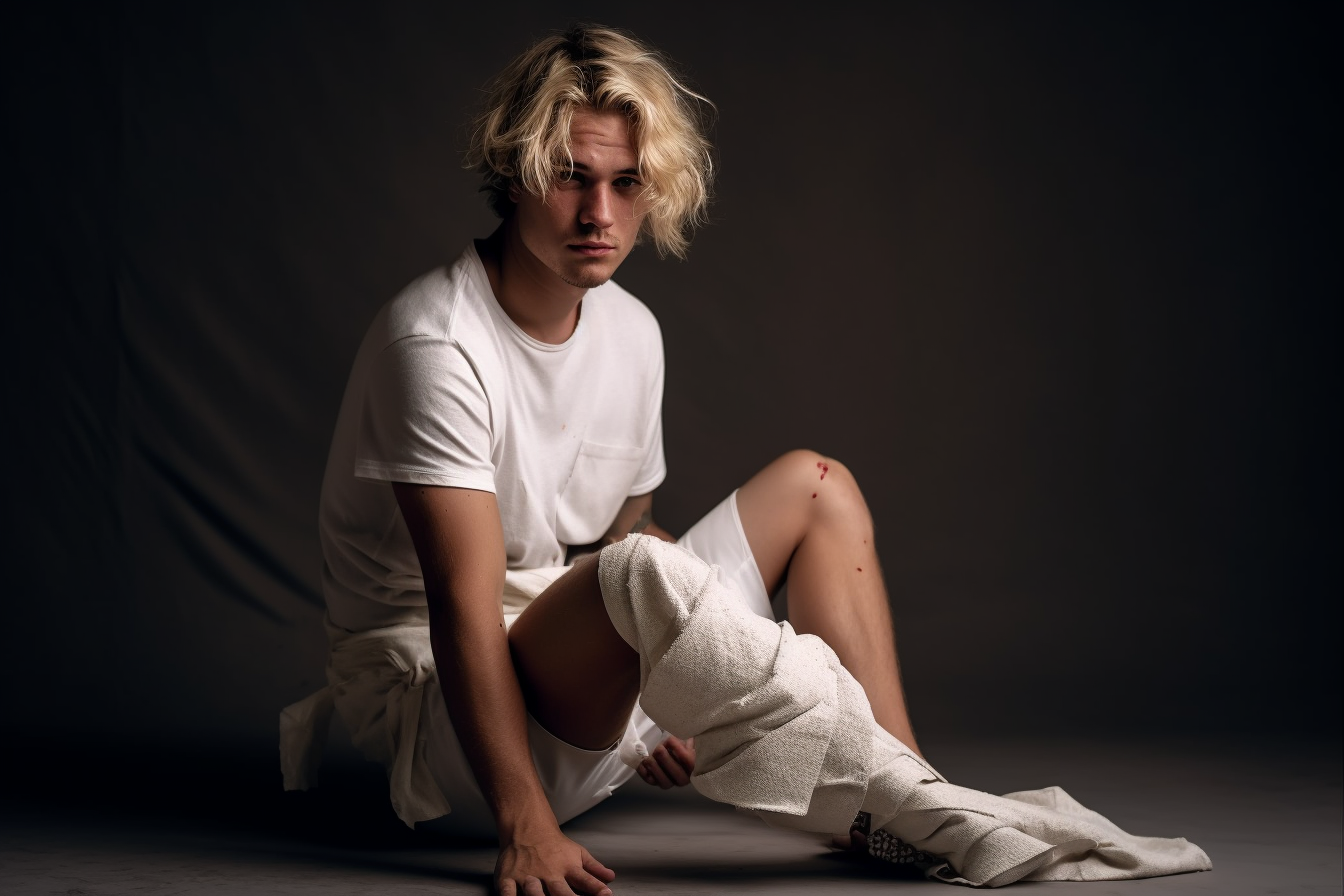
Save A Leg
With Kain's condition deteriorating and time slipping away, Glenda scrambles to stabilise the damage and make a near-impossible decision. As morning light creeps across the camp and support from unlikely allies forms around her, the urgency to reach the lagoon becomes more than just medical—it’s personal, tactical, and terrifyingly final.
“There’s a moment when you realise you’re not just fighting for someone’s life—you’re fighting for the shape of who they’ll be if they survive.”
As dawn’s early light began to paint the sky with strokes of pink and orange, the world around me stirred gently to life. The sharp edges of the night’s fears were softened by the delicate hues stretching across the horizon, a quiet promise of reprieve whispered in colour. The breeze that tugged at the fabric of the tent was light, almost playful—an unsettling contrast to the grim press of the hours before. The canvas fluttered gently, like a breath held and slowly released, and I found myself hesitating at the entrance.
My approach was awkward, hesitant, as though the quiet beauty of the morning had made me a stranger to the chaos of the night. And then, absurdly, I reached out and knocked on the canvas wall. The action, so rooted in my past life—a world of doorbells and corridor conversations—felt laughably out of place in this stitched-together wilderness. The absurdity struck me like a slap, and embarrassment flooded me. I could feel the heat rising in my cheeks, a completely inappropriate flush considering everything we’d just endured.
“Psst, Chris. Are you awake?” I whispered, though my whisper betrayed me, growing too sharp, too loud—like a hiss that echoed against the silence rather than blending with it.
Before I could chide myself for the misstep, Karen’s unmistakably shrill voice rang out from inside the tent: "Chris! Get up!" It split the gentle quiet of the morning like a cracked plate, jarring yet weirdly steadying. The mental image it conjured—Karen, half-covered in a rumpled blanket, elbowing her husband with all the fury of someone far too tired to be polite—brought with it a small, unbidden smile. It was a spark of humour, fragile and fleeting, but real. A flicker of humanity. A sliver of the old world, intact.
The smile barely had time to settle on my lips before I found myself still hovering, still half-caught between apology and urgency. Chris was awake now—there was no need to call again. But the immediacy of my purpose surged back in like the tide, washing away the momentary amusement.
"Chris, I need your urgent help," I whispered again, leaning closer, my voice low but now edged with steel. There was no room for preamble. The air, still tinged with the sweetness of dawn, seemed to brace itself around my words.
From within, Karen’s voice answered once more, her tone like a spoon clinking irritably against the edge of a cup. "Get up, would you?" she snapped. Beneath the annoyance, though, I caught it—the frayed thread of worry woven through her irritation. It mirrored my own state. We were all on edge, clinging to old rhythms in a world that no longer made room for them.
As the sleeping bags inside the tent rustled with the promise of activity, I stood just beyond the flap, every muscle taut, held in a liminal space between urgency and restraint. The cool morning air brushed against my cheeks, crisp and clear, a stark contrast to the fevered anxiety that simmered beneath my skin. My breath puffed faintly in the dawn chill, shallow with anticipation. Every second mattered.
Then, at last, movement—a faint zip, the soft shuffling of limbs negotiating tangled fabric—and the tent flap parted. Chris's head emerged, a comical yet poignant vision of grogginess. His eyes blinked blearily against the golden wash of early light. For the briefest moment, we simply looked at one another, our gazes locking in a silent exchange—a recognition of shared fatigue, of burdens carried through a night that had spared none of us.
"I need you to help me get Kain to the lagoon. We need to hurry," I said, the words tumbling from my mouth in a rush that barely masked the fear behind them. Though the world around us had softened in hue, dipped in pastel shades of orange and rose, the tension hadn't eased. The pain in Kain's leg hadn’t diminished. And time—time remained our most relentless adversary.
"Of course," Chris mumbled, his voice coated in sleep. He rubbed at his face with the heel of one hand, his movements slow and clumsy. I could see his mind lagging behind, still tangled in whatever scraps of uneasy dreams he’d been pulled from.
Then came the sharp crack of Karen's voice: "Put some blinkin' pants on!" The bluntness of it was jarring, and for a fleeting instant, the absurdity of our lives—caught somewhere between survivalist urgency and domestic comedy—hit me.
Chris’s face froze mid-motion. He looked down at himself, blinked in dumb realisation, and then gave a sheepish glance in my direction. His mouth opened, some half-hearted apology forming and promptly dissolving in the air between us.
"I'll meet you at the medical tent," I said quickly, turning away, sparing him further embarrassment. It wasn’t the time for modesty or decorum, yet I understood the need for dignity, even in its most tattered form. We all clung to our rituals, no matter how trivial they seemed in the face of danger—it was how we held onto our humanity.
As Chris disappeared back into the tent, urgency overtook me, pushing my limbs forward before my thoughts could catch up. The early light was beginning to stretch itself thin across the sand, brushing the camp in hues of fragile gold. Everything looked softer by morning—less monstrous, less maddening—but that gentleness was a lie.
The campfire lay ahead of me, reduced now to a quiet smoulder, the last vestiges of its heat curling upward in ghostly wisps. Its dying embers glowed like watchful eyes in the earth. As I passed it, my steps faltered. I told myself not to look. I willed my gaze away.
But my eyes betrayed me.
Drawn by some grotesque magnetism, they flicked to the carcass sprawled beside the fire—where the blood had dried to rust, the flesh darkened and sunken in the still air. It hadn’t been moved. A part of me—primitive, deeply human—had hoped it might have vanished, carried off in the night by some force stranger and crueller than us. But it remained. Proof. Reminder. Warning.
A cool shiver threaded its way beneath my collar, slipping along the back of my neck like the ghost of a touch. It was more than fear—it was exposure. Vulnerability. The raw, disorienting knowledge that we had faced something utterly fierce… and survived, though only just.
How many had there been?
The thought snagged at me. Not just what we’d fought, but how many. One beast explained Kain’s wound, perhaps. But not the growls from different directions, not Lois’s sustained distress, not the sense—primal and unprovable—that we were being circled in the dark.
No time. There’d been no time to count, to question, to make sense of what we’d faced. The adrenaline had made clarity impossible, tunnelled our vision to one thing only: get out alive.
I told myself I would speak to Paul. And Charity. Later. They must have seen something more. Felt it. Fought it. But those conversations would have to wait—strategy and answers were luxuries of the unbleeding.
Kain couldn’t afford delay.
Still, even as I moved towards the medical tent with purpose, dread crept at my heels. What if this wasn't over? What if last night had only been the first knock on the door? I could feel the questions piling in the back of my mind like storm clouds, unvoiced but heavy, waiting.
We would need to regroup. Share knowledge. Build defences. Find patterns. Hope had become a flickering thing, but it was still there, still burning.
I clung to that flame like it was all we had.
As I quietly navigated my way into the medical tent, the early morning light cast a gentle, ethereal glow through the fabric, illuminating the space with a soft radiance that seemed too delicate for the grim memories still fresh in my mind. The tent walls, once oppressive in their darkness, now felt lighter, imbued with the fragile promise of a new day. But even in this muted calm, the echo of urgency remained—a ghost trailing my every movement.
My steps were purposeful, each one driven by the residual adrenaline of the night and the knowledge that this respite could be fleeting. Kain lay in the right wing of the tent, his figure still beneath the thin blanket we’d thrown over him in haste. He looked peaceful—too peaceful—and the sight unnerved me. I hadn’t yet allowed myself to believe he was safe. Not fully. Not until I saw him open his eyes and speak with clarity.
The memory of his injury flared unbidden in my mind—the exposed muscle, the blood-soaked fabric, the way his voice had wavered between pain and panic. I pushed the image aside and focused on preparing a fresh syringe of antibiotics. The action was familiar, muscle memory taking over as I clicked open the vial, drew the liquid, tapped away the air bubbles with the flat side of a fingernail. It was a ritual I had performed hundreds of times, yet here, now, it felt as though everything depended on this one dose.
Kneeling beside him, the chill of the ground seeped through my trousers, sharp and real. “Kain,” I whispered, leaning closer, my breath brushing the side of his face. His features were slack with sleep, but not troubled—almost childlike in their softness. That, in itself, felt cruel. He didn’t yet know the full scope of his condition. I dreaded being the one to pull him from that dreamless shelter.
A smile curved faintly across his lips, fleeting and strangely innocent. Relief fluttered in my chest, a fragile thing, held loosely.
“Kain,” I tried again, this time prodding him gently in the ribs. The kind of prod reserved for old friends, a nudge between familiarity and insistence. His eyelids fluttered—hesitant, like moth wings brushing against the edge of dawn. Then slowly, he opened them.
"Good, you're awake," I said, a wide grin blooming across my face, more from exhaustion than amusement—but genuine all the same. That smile, as weary as it was, felt like the first real release I'd allowed myself since darkness fell.
Tearing open the alcohol swab, I steadied my hands and focused. The sharp scent of disinfectant filled the tent, settling me in the clinical, in the known. It was oddly comforting—the certainty of process in the midst of so much uncertainty.
“Try and hold still,” I murmured, voice gentle but firm as I guided the needle into his arm. It slid in with familiar ease, the medicine flowing into him like a quiet promise.
Then came the sharp turn.
"I can't feel my leg," Kain gasped suddenly, each word escaping on a ragged breath, thin and frightened. His voice broke through the fragile calm like a stone through glass.
I froze. My hands instinctively paused mid-motion, but my mind surged forward in high gear.
"Are you certain?" The words slipped from me without thought, the clinical part of me rising like a shield. But beneath that detached tone, my heart began to race.
I looked to his face, watching every muscle twitch, every flicker of his eyes. Was he panicking? Was it shock? Or was this real—nerve damage, tissue death, something far worse than we’d anticipated?
"Am I going to lose it?" His question, fragile yet heavy with dread, landed like a blow. It wasn’t just about the leg—not really. It was about autonomy, identity, the terror of becoming a different version of oneself. The glistening in his eyes wasn’t just moisture—it was panic searching for a place to settle. Sympathy tightened in me, the familiar ache of knowing someone was looking to me for an answer I couldn’t give with certainty.
Remain calm, Glenda. The mantra marched through my thoughts like a steady drumbeat, a command drilled into me from countless field situations—some medical, others more harrowing still. I seized the empty syringe with what I hoped passed for assurance, my fingers steady even as my mind churned with possibilities I didn’t want to name. Without preamble, I thrust the needle into the arch of his foot—a clean, decisive action born more of necessity than mercy.
Kain cried out, his voice ragged and hoarse. "What the fuck was that for!?" The betrayal hit like a slap, and I winced, though I kept my expression neutral, my tone softening.
"Your leg still has feeling." I tried to offer a smile—gentle, almost apologetic—as if that might buffer the sting of what I’d done. The words were my offering, a thread of hope I wanted us both to grasp. But relief didn’t take root.
“No!" His voice cracked as he scrubbed angrily at the tears streaming down his cheeks. “I meant the other leg.”
The breath caught in my throat. My moment of control slipped through my fingers like water. The other leg…? A hollow pressure formed in my gut, dread blooming fast. "That doesn't make any sense," I murmured, the words barely audible as my mind raced for an explanation—bruising? swelling? nerve impingement? Something reversible?
"Close your eyes," I instructed, quietly, gently. He obeyed with the obedience of someone too afraid not to. His sniffle cut through the silence, a heartbreakingly human sound that lodged itself deep in me.
My touch moved slowly down his calf, pressing, probing, assessing—every inch an unanswered question. The skin was warm. But unresponsive.
“Do you not feel anything?” My voice cracked on the question, quieter than I’d meant it to be.
His eyes met mine. Wide. Empty. “No,” he replied. "Should I?"
A pause. Just a beat. But in that breath of stillness, I felt the scaffolding of my composure begin to collapse.
"You're going to be just fine." The words spilled from my mouth like a lifeline. But they were hollow. A fragile lie wrapped in a doctor's cadence. A lie I needed to believe almost as much as he did.
Inside, the trained professional in me was already drawing conclusions I didn't want to voice. But the human in me—the part still fuelled by hope and desperation—refused to let go of the possibility that this was temporary, that nerves could recover, that miracles happened.
Because sometimes, they had to.
The tent’s fabric whispered a soft protest as Chris made his entrance, its faint rustle like a held breath in the close morning air. His expression was tight with purpose, the shadows of sleep still clinging faintly to his features but rapidly chased away by the urgency reflected in his eyes.
“We need to get Kain to the lagoon, now!” The words burst from my mouth before I had time to temper them, propelled by a volatile mix of desperation and determination. I clung to the idea of the lagoon like a lifeline, the only tangible hope in a sea of uncertainty. Its reputation for healing—part science, part myth—offered the one thing I needed most right now: possibility.
Kain stirred weakly as I turned to him. His gaze locked with mine, and in that moment, a flash of something raw and childlike passed between us—fear, stripped of pride. "Not the lagoon," he whispered, the breath of his words brushing the still air with a chill that went deeper than the cold.
His refusal struck me with unexpected force. The lagoon, our next logical move, was suddenly a point of resistance. I blinked, momentarily unbalanced. "Why not?" My voice softened, coaxing. I crouched a little closer, trying to see past the pain in his eyes to the truth behind his fear. But Kain only shook his head again—slow, unyielding, silent. There was no clarity in his refusal, only the firm wall of dread.
Chris, trying to soothe where I had failed, offered his own comfort. "It's okay. The beast has been killed." His voice was gentle, even hopeful, but it hung in the air without effect. Whatever Kain feared, it wasn’t just the creature.
"Help me lift him," I said, snapping back to the now. Time was bleeding away with each moment. There was no space left for speculation.
Chris stepped beside me without hesitation, his frame shifting easily into place, a posture that communicated quiet readiness. Together, we began the awkward task of manoeuvring Kain upright. Chris’s arm slid beneath Kain’s shoulders with gentle care, but the real challenge came in trying to accommodate a body that no longer moved with its own symmetry.
The result was inevitable. As soon as we attempted to bear his weight, Kain’s body folded in on itself like a marionette with severed strings. The three of us collapsed in a graceless heap, the dull thud of their fall thudding in my chest as much as my ears.
The silence that followed was sharp with frustration and dread. I stared at the floor for half a second too long before my eyes met Chris’s. His unspoken understanding mirrored my own. We were outmatched—by injury, by time, by the fragility of the human form.
"I’ll get Karen," I breathed, already half-rising to act.
But the tent flap lifted before I could reach it.
"No need," came Karen’s voice—steadier than I had expected, her entrance brisk and no-nonsense. She stood framed by the weak morning light, hands already clenched as though prepared for action. There was something almost preternatural in her timing, the way she appeared just as the problem began to feel unbearable.
"I figured you might need some more help." Her tone was matter-of-fact, but it carried the kind of calm urgency that only surfaces in those who’ve weathered a long night and are prepared for whatever comes next.
"What do you need?" she asked.
"We need to carry Kain to the lagoon," I told her, meeting her gaze directly so she’d read what I wasn’t saying aloud. "He currently has no use of his legs."
Karen’s eyes widened, a flicker of alarm breaking through her mask—but only briefly. She recovered in an instant, giving me a single, resolute nod. That was all it took. No questions. No hesitation. Just action.
"I’ll take the bulk of his weight," Chris said, already reassessing his approach. He turned slightly, signalling to Karen with a quiet confidence that had become increasingly rare.
"Can you support his waist and legs?"
"Of course," she replied, her voice firm. She gave Chris’s shoulder a brief squeeze, a simple gesture of unity before crouching into position beside him.
As they readied themselves to lift, a chorus of effort—grunts, winces, the rustle of movement—filled the space.
Seizing the moment, I knelt again to inspect the crude bandage wrapped around Kain’s leg. The fabric was too tight, the blood soaking through far too fresh. The stitches I’d placed in the dark now looked rushed, uneven. Functional, yes. But ugly.
That really doesn’t look good. I winced inwardly, the guilt a needle of its own, sharper than anything I’d sewn him with. I’d done what I had to, but that truth did little to silence the gnawing self-criticism.
We needed to move. Fast.
