Sarah Lahey Residence, Glenorchy
Sarah Lahey's weatherboard cottage at 23 Anfield Street in Glenorchy served as the detective's modest sanctuary where domestic chaos coexisted with obsessive casework. The walls witnessed late-night investigations, Karl Jenkins' awkward visits, and tears following his rejection.
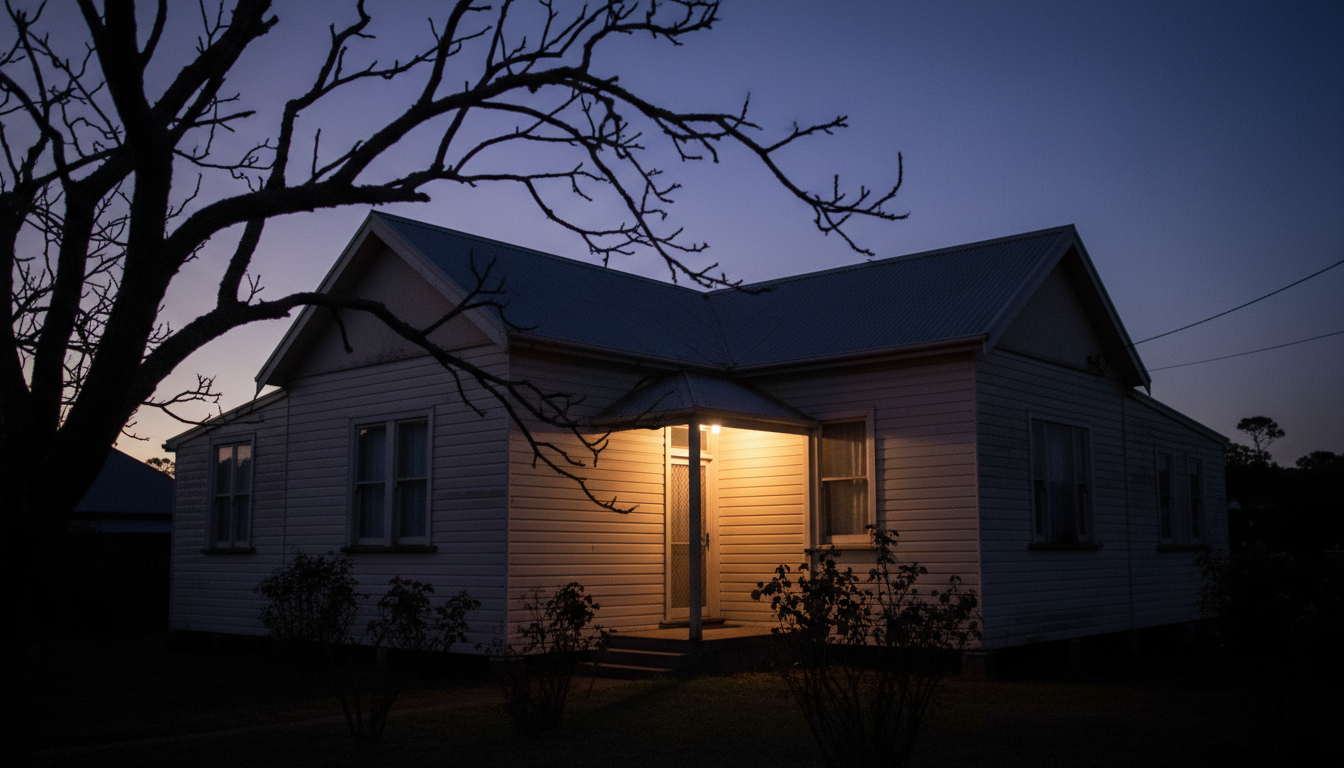
The Modest Weatherboard on Anfield Street
At 23 Anfield Street in Glenorchy, roughly fifteen minutes' walk from the Derwent Entertainment Centre, stood an unremarkable weatherboard cottage built sometime in the 1960s. Faded cream paint, corrugated iron roof weathered to dull grey-brown, a small front garden more weeds than landscaping, a concrete driveway cracked by tree roots and decades of Tasmanian winters—the dwelling possessed no distinguishing features that would draw attention from anyone passing on the street.
Sarah Jane Lahey had acquired the property in 2016 following her detective promotion, the salary increase finally providing means for independent living beyond the share-house arrangements that had characterised her constable years. The location offered practical advantages for someone whose work consumed most waking hours—Glenorchy Police Station stood nearby, the Brooker Highway permitted rapid transit to headquarters on Liverpool Street, and the neighbourhood's unpretentious character suited someone who'd grown up in rural Tasmania with no aspirations towards prestigious addresses.
The house's floor plan followed standard weatherboard configuration—front door opening into a small entrance hall, lounge room extending to the left, dining area flowing into the kitchen at the rear, two bedrooms and a bathroom accessed via a narrow hallway. The spaces were compact by contemporary standards, ceilings low, windows modest. But Sarah lived alone, and single-occupant needs demanded little beyond functional basics.
The Interior Geography of Solitary Life
Stepping through the front door revealed the peculiar order of someone intelligent and focused yet perpetually overwhelmed by life's practical demands. The entrance hall served primarily as a dumping ground—work bag dropped immediately upon arrival, shoes kicked off and left wherever they landed, keys hung on hooks that represented Sarah's single concession to deliberate organisation.
The lounge room contained furniture salvaged from various sources—a second-hand sofa showing wear in the cushions, a television atop a stand inherited from Jane's downsizing, a coffee table accumulating remote controls, coffee mugs, magazines, and inevitably, case-related materials that migrated home despite official protocols. The space functioned less as a carefully maintained room than as somewhere to exist between more demanding locations.
But the dining table represented Sarah's true operational centre—the surface where the professional and the personal intersected most visibly, where investigations consuming her thoughts during working hours extended into evening obsession. Photocopied witness statements, printed research about investigative leads pursued beyond official channels, handwritten notes connecting patterns she couldn't stop analysing—the table accumulated layers of material that shouldn't have existed in a private residence but somehow arrived regardless.
The chairs surrounding that table rarely remained clear—one held folded laundry awaiting the ironing that occurred sporadically, another supported shopping bags from errands half-completed. Only one chair remained consistently available, positioned where Sarah could work with her laptop open and papers spread, transforming the domestic dining space into an impromptu investigation centre operating according to rhythms divorced from normal meal schedules.
The kitchen revealed someone whose relationship with domesticity remained fundamentally compromised by an obsessive focus on work. Dishes accumulated in the sink until running out of clean options forced washing, the counters bore layers of accumulated detritus, and the bin typically reached overflow before Sarah remembered to take the rubbish out. The cupboards contained mismatched dishes collected across various phases of independent living. The refrigerator held bachelor staples—milk often approaching its expiration date, cheese, bread, condiments, and occasional prepared meals consumed standing rather than properly plated.
Sarah's bedroom occupied the rear of the house, positioned away from the street noise. A bed rarely made, a bedside table supporting a lamp and charging phone, a wardrobe holding work clothes and casual options in disorganised profusion. The bathroom reflected similar functional minimalism—necessary toiletries, towels in various stages of needing replacement, cleaning supplies used irregularly.
The second bedroom served primarily as storage—boxes never properly unpacked from various moves, childhood items salvaged from New Norfolk after Jane's move to nursing care, accumulated possessions Sarah couldn't quite discard despite having no current use.
The Space Between Professional and Personal
Through late July 2018, the modest cottage at Anfield Street absorbed Sarah's escalating crisis. The walls witnessed her poring over stolen documents at the dining table, researching connections that should have remained outside her purview. Karl Jenkins had visited occasionally—awkward presences where their partnership's undefined nature created tension between professional distance and the personal intimacy neither could fully acknowledge.
The surveillance team monitoring Sarah in early August had documented her movements to and from Anfield Street—noting the departure times, tracking her vehicle's GPS signal, observing her meeting Gladys Cramer at various locations. But the surveillance couldn't penetrate the walls, couldn't document the conversations occurring within the private residence.
On the evening of 2 August 2018, the modest dwelling transformed from simple residence into the site where Sarah's remaining ethical boundaries dissolved. Gladys Cramer arrived desperate and fleeing, and Sarah brought her into the home rather than managing the situation through official channels—already a professional compromise that would escalate into something far worse.
Within that lounge room, Gladys demonstrated a Portal Key, colours swirling across the wall as reality fractured briefly. The modest room that had contained only mundane domesticity suddenly became a threshold to impossible territories. And there, within those familiar walls, Sarah agreed to help cremate Cody Jennings' body in exchange for Gladys's help finding Karl—a bargain that sealed her fate six days before Myrtle Forest.
After
Following Sarah's death on 8 August 2018, the residence entered administrative limbo. Oscar Lahey, Sarah's brother, inherited responsibility for the property whilst grieving his sister's loss. Internal Affairs investigators examined the premises, documenting the case files that shouldn't have existed outside headquarters, photographing the dining table's accumulated materials.
The house eventually sold, new occupants moving into the space that had contained Sarah's brief independence. The modest weatherboard cottage returned to anonymity—just another Glenorchy property changing hands, an unremarkable dwelling in a quiet residential street. The new residents knew nothing of the previous occupant's tragedy, occupied the rooms without understanding what had unfolded within them.
But buildings retain memory in ways beyond occupants' awareness. The walls that had absorbed Sarah's tears and desperate research, the floors that had supported her trembling body after rejection and her determined stance whilst making terrible bargains—those physical structures persisted whilst Sarah's presence faded into history, into police records marked restricted access, into the grief carried by a brother who'd already lost his parents.

