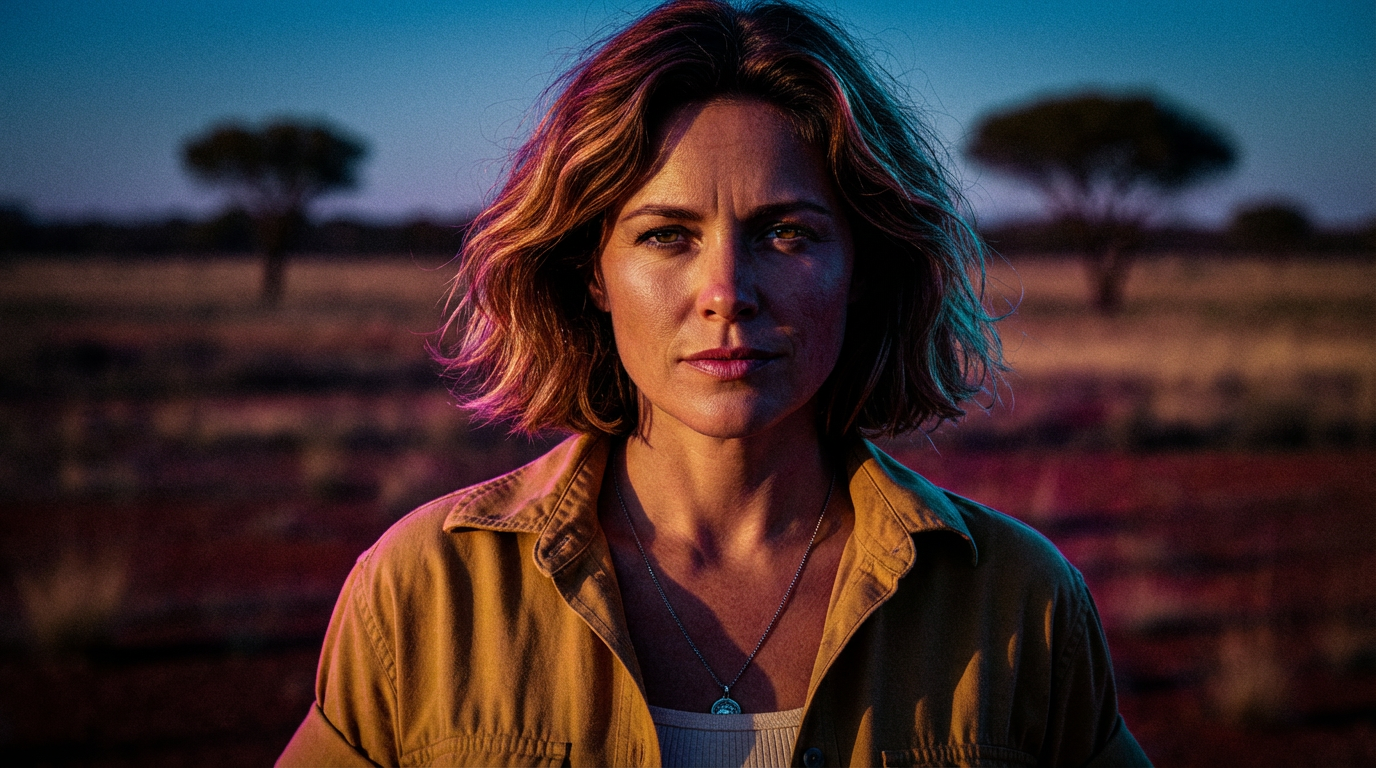
Sally Louise Harlow
Sally Louise Harlow embodied the restless spirit of a generation unwilling to accept surface truths—a free-spirited historian and traveller whose pursuit of forgotten mysteries led her into the Australian Outback's darkest secrets. Born into Newcastle's working-class resilience on 3 May 1957, she spent thirty-one years seeking hidden histories before becoming one herself, murdered and theatrically displayed in Silverton on 21 September 1988, a final riddle she could never solve.
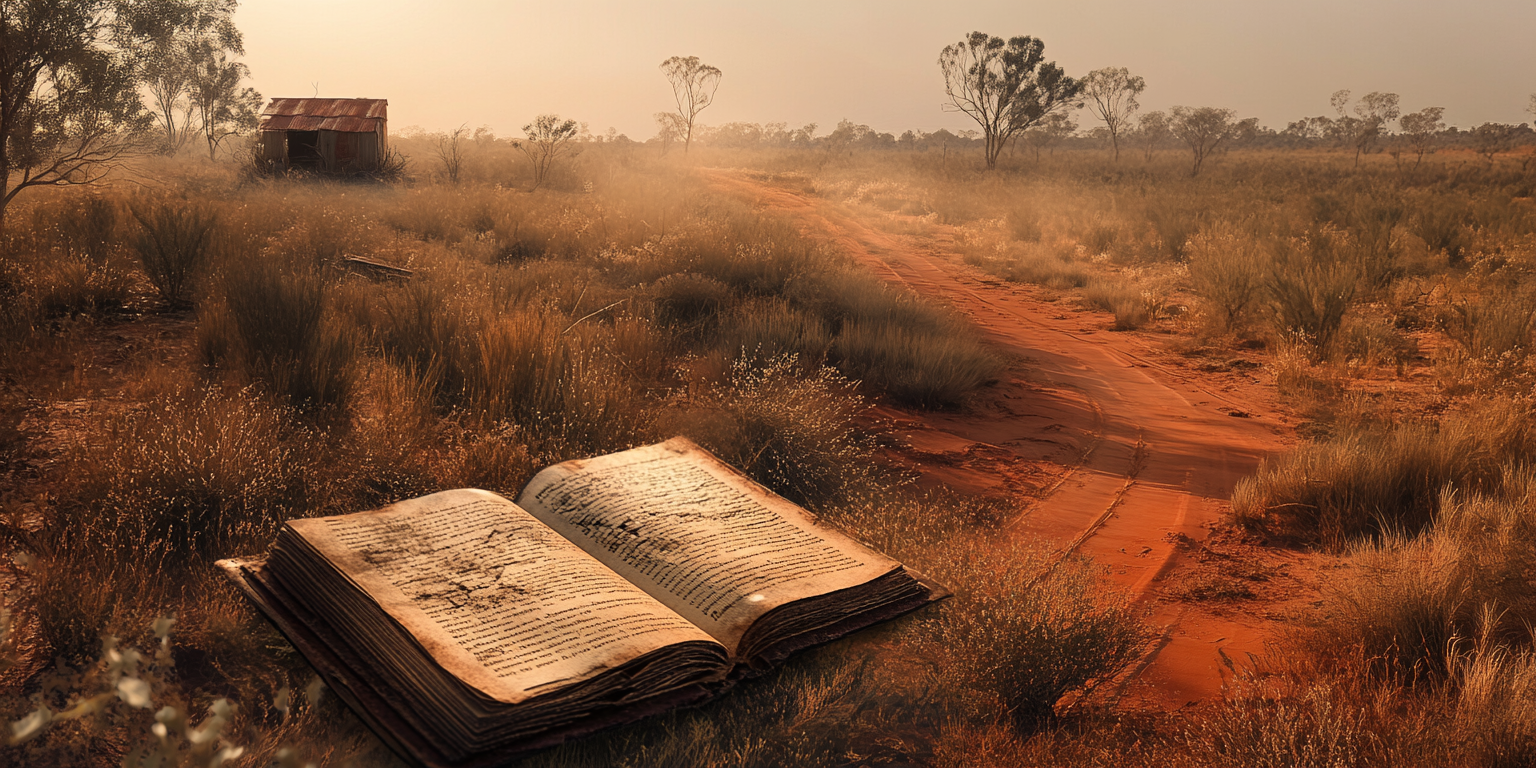
The Daughter of Secrets (1957–1970s)
The infant girl who entered the world at Royal Newcastle Hospital on that autumn Friday carried mysteries in her blood before she drew her first breath. Brenda Harlow, twenty years old and exhausted from fourteen hours of labour, held her daughter with a mixture of fierce determination and quiet grief. The child's dark hair and inquisitive eyes—traits inherited from a father who would never meet her—would become defining features that strangers would later remark upon, unaware of the ghost they referenced.
Sally's early childhood unfolded in a modest terrace house on Stewart Avenue, where Brenda worked night shifts at the hospital to afford daycare and school supplies. The neighbourhood teemed with dockworkers' families, where absent fathers were common enough that young Sally never felt particularly singled out. Yet something in her nature demanded explanations. At four years old, she asked why other children had fathers at sports day. Brenda's carefully rehearsed answer—"He had to go away before you were born, darling"—satisfied her temporarily, though the question would resurface with increasing insistence as Sally matured.
The house operated on Brenda's hospital schedule, with grandmother Miriam Evans often staying to mind Sally during night shifts. Miriam's presence brought warmth and stories—tales of ancestors who'd sailed from England seeking better lives, of hardships overcome through determination, of women who'd raised families alone during wars and economic depressions. These narratives planted seeds in Sally's imagination, a fascination with how people survived adversity and how their stories persisted against time's erasure.
Primary school at Merewether Public revealed Sally's particular gifts. Teachers noted her exceptional memory for dates and events, her ability to recall details from stories weeks after hearing them. Reading became an obsession; the school librarian, Mrs Dorothy Chapman, recalled Sally as the only student who'd borrowed every history book in the collection by the age of nine. "She wanted to understand how things connected," Mrs Chapman later told investigators. "Not just what happened, but why people made the choices they did."
The Newcastle of Sally's childhood was a city in transition, its mining and steel heritage giving way to uncertain futures. She witnessed redundancies that destroyed families, watched neighbours leave for Sydney or Perth seeking work that no longer existed locally. These observations shaped her understanding that places held memories, that landscapes bore witness to human struggles even after the people themselves had vanished.
At twelve, Sally discovered her grandmother's collection of newspaper clippings documenting local disappearances and unsolved cases dating back to the 1920s. Miriam had kept them obsessively, claiming that "someone needs to remember these people." Sally spent countless hours poring over yellowed articles, constructing timelines, noting patterns. When Brenda discovered this macabre hobby, her reaction was visceral—the clippings were destroyed, the conversation shut down with uncharacteristic firmness. This prohibition only intensified Sally's curiosity about what her mother feared.
The truth about Daniel Price emerged through fragments rather than revelation. At sixteen, Sally was helping Brenda sort through storage when she found a photograph—a young man in surveyor's gear standing beside geological equipment, his features unmistakably mirrored in Sally's own face. Brenda's carefully constructed fiction crumbled under questioning. The full story arrived in pieces: Daniel's brief presence in Newcastle, his disappearance, the decision to raise Sally alone. What Brenda didn't mention—couldn't mention without confronting her own fears—was Daniel's obsession with outback mysteries and his own unexplained vanishing.
The revelation of her father's disappearance transformed Sally's interest in missing persons from intellectual curiosity to personal compulsion. She began researching Daniel Price, discovering fragments of his geological surveys, cryptic journal entries that suggested he'd been searching for something beyond conventional mineral deposits. This inheritance of unanswered questions would define the trajectory of her remaining years.
Education and the Call Beyond (1973–1980)
Sally's enrolment at the University of Sydney in 1975 represented Brenda's triumph—her daughter would have opportunities she'd been denied. The history and archaeology programme attracted idealistic students convinced they could reconstruct the past through rigorous methodology. Sally excelled at research techniques and archival work but chafed against academic constraints. Her tutors praised her "intuitive understanding of how people think across historical contexts" whilst noting her "tendency to pursue unconventional sources and theories dismissed by mainstream scholarship."
The university environment exposed Sally to broader intellectual currents. She attended lectures by visiting scholars on Indigenous oral histories, colonial violence, and the contested nature of historical truth. These ideas resonated with her growing conviction that official narratives obscured as much as they revealed. Her honours thesis proposal—examining patterns in unsolved disappearances across remote Australian settlements from 1850–1950—was rejected as too ambitious and methodologically unsound. The rejection crystallised her decision to abandon formal academia.
The months following her departure from university in 1977 brought a mixture of liberation and uncertainty. Brenda's disappointment was palpable though largely unexpressed. Sally worked temporary jobs—library assistant, museum guide, archive clerk—whilst planning her escape from Newcastle's familiar confines. She saved obsessively, living in shared houses with other young people similarly poised between possibility and precariousness.
Her first overseas journey commenced in January 1978, funded by eighteen months of meticulous saving. The destination was Southeast Asia, following routes established by generations of Australian backpackers. Yet Sally's approach differed fundamentally from her travelling companions' hedonistic tourism. In Thailand, she sought out hill tribe communities and documented their oral histories. In Vietnam, she explored sites of colonial and military significance, interviewing local guides about what foreign textbooks omitted. Her letters home detailed these experiences with anthropological precision, causing Brenda equal parts pride and concern.
The travelling lifestyle suited Sally's temperament perfectly. She possessed the requisite flexibility to adapt to unfamiliar circumstances, the resourcefulness to solve logistical challenges, and the social intelligence to navigate diverse cultural contexts. Fellow travellers remembered her as someone who asked questions that revealed genuine interest rather than superficial curiosity. "She wanted to understand the underneath parts of places," recalled Martin Hendricks, whom Sally met in Bangkok and travelled with intermittently for three months. "Most tourists photograph temples. Sally photographed the forgotten corners where history got messy."
South America followed in 1980—Peru, Bolivia, Ecuador. She worked as an occasional tour guide for English-speaking travellers, her historical knowledge and storytelling ability making her popular despite lacking official qualifications. The ancient sites fascinated her less than the living communities maintaining connection to pre-Columbian heritage. Her photographs from this period show not ruins but people—elderly women in traditional dress, children playing amongst archaeological sites, families whose presence attested to historical continuity despite colonialism's devastations.
Yet these travels never quite satisfied the deeper compulsion driving her. Each journey ended with return to Australia, each homecoming reinforced that the mysteries she sought existed in her own country's contested spaces. By 1982, Sally had reached a pivotal realisation: the questions haunting her required turning attention to Australian landscapes, particularly the remote regions where people vanished with disturbing regularity.
The Researcher Returns (1982–1988)
Sally's return to Australia marked a shift from aimless exploration to focused investigation. She established herself in Sydney, working freelance as a researcher and writer for publications willing to commission pieces on historical mysteries and unsolved cases. Her articles combined rigorous archival research with on-the-ground investigation, interviewing descendants of missing persons, reviewing century-old police files, visiting locations where people had last been seen.
The work barely paid survival wages but provided purpose. She developed a network of contacts—retired police officers, local historians, Indigenous elders willing to share knowledge about places where bad things happened. Her filing system expanded to fill her small Darlinghurst flat, walls covered with timelines and maps marking disappearances across rural Australia. Housemates found the display unsettling, but Sally insisted she was seeing patterns that others missed.
Relationships during this period were transient. Several brief romances foundered against Sally's obsessive work habits and emotional unavailability. "She was always half somewhere else," recalled David Morrison, with whom she maintained an on-off relationship throughout 1984–1985. "Even when present, part of her was processing some case, making connections, planning the next investigation." The relationship ended when Sally cancelled a planned holiday together to pursue a lead on a 1920s disappearance in Western Australia.
Brenda watched her daughter's trajectory with mounting concern. Their weekly phone conversations revealed Sally's deepening immersion in dark subject matter. When Brenda suggested therapy or at least diversification of interests, Sally responded with frustration: "Someone needs to remember these people, Mum. Someone needs to keep asking questions." The echo of her grandmother Miriam's words was not lost on Brenda, who recognised the familial tendency towards obsessive documentation of tragedy.
The professional breakthrough arrived in 1987 when the Sydney Morning Herald published Sally's extensive investigation into the 1892 disappearance of Emily Sullivan from Silverton. The piece combined historical research with contemporary interviews, revealing how Indigenous community members had maintained oral histories about the area's dangerous reputation—knowledge systematically dismissed by colonial authorities. The article attracted significant attention, particularly amongst true crime enthusiasts and amateur investigators.
This success emboldened Sally to pursue a more ambitious project: a comprehensive study of disappearances around Silverton spanning 1880–1980. She secured a modest advance from an independent publisher for a book-length treatment. The research would require extended time in the region, interviewing locals, accessing historical records, and physically visiting relevant sites. Brenda's objections intensified—the project seemed dangerous, morbid, unhealthily consuming. But Sally was determined. This would be her definitive work, the culmination of years spent chasing fragments.
The Final Journey (August–September 1988)
Sally arrived in Broken Hill on 17 August 1988, settling into modest accommodation and establishing herself at the local library's historical collection. The librarian, Mrs Elizabeth Fowler, would later recall her as polite and focused, spending full days reviewing old newspapers and council records. Sally's research methodology was systematic: she constructed detailed chronologies, cross-referenced accounts, identified witnesses still living who might provide additional information.
The investigation took her repeatedly to Silverton, that haunted remnant of mining optimism transformed into tourist curiosity. She photographed the abandoned buildings, interviewed the handful of permanent residents, and explored the surrounding landscape. Her journal entries from this period reveal growing fascination with the town's atmospheric desolation: "There's something about the emptiness here—not absence, but presence of absence. The land remembers what happened, even if people choose to forget."
Local contacts proved essential. Sally befriended Jack Harrison, an elderly prospector who'd lived in the area since the 1930s. He introduced her to others, including Indigenous elders who shared stories about the land's spiritual significance and its capacity for malevolence when approached disrespectfully. These conversations deepened Sally's understanding that the disappearances couldn't be comprehended through Western rationalist frameworks alone.
Her research uncovered disturbing patterns: multiple cases where official investigations had been cursory, evidence overlooked, Indigenous testimony dismissed. She began forming theories about systemic failures that had allowed perpetrators to operate with impunity across decades. These findings went beyond her original book proposal, suggesting ongoing dangers rather than merely historical curiosities.
The entries in Sally's journal grew increasingly urgent during early September. She referenced "significant discoveries" that would "change the narrative completely" but provided few specifics. Friends she phoned reported her sounding excited and distracted. Brenda, concerned by her daughter's manic energy during their last conversation on 10 September, asked when she'd return to Sydney. Sally's response was vague: "Soon, Mum. Once I verify a few more things."
On the evening of 13 September, Sally was seen at the Silverton Hotel, speaking animatedly with several locals about her research. The bartender, Thomas Reilly, recalled her mentioning plans to visit a location outside town the following day—somewhere connected to Emily Sullivan's disappearance. She left around 9:30 p.m., declining offers of company, insisting she preferred working alone.
That was the last confirmed sighting of Sally Louise Harlow as a free person.
The Nine Days (13–21 September 1988)
What transpired during Sally's captivity remains largely unknown, constructed from forensic evidence rather than testimony. The autopsy would later establish that she'd been alive until mere hours before her body's discovery, suggesting nine days of imprisonment. The psychological horror of that duration—the awareness of her situation, the failed attempts at escape or negotiation—can only be imagined.
The investigation theorised that Sally had stumbled upon something or someone connected to the pattern of disappearances she'd been researching. Whether she confronted a perpetrator directly or inadvertently revealed knowledge that marked her as dangerous remains unclear. What's certain is that her death was not random opportunistic violence but deliberate elimination following extended captivity.
The Staged Discovery (22 September 1988)
The discovery of Sally's body outside in Silverton at approximately 6:45 a.m. represented a grotesque performance. Unlike other victims of the suspected Silverton Strangler, Sally wasn't hidden but displayed. Her positioning—arms extended, head tilted, clothing adjusted with theatrical precision—suggested the killer viewed her death as artistic statement rather than merely criminal act.
Sergeant Barry Glasson, arriving at the scene within thirty minutes, recognised immediately that this case differed from standard homicides. The staging indicated a killer who wanted attention, who perhaps viewed Sally's investigative work as challenge requiring response. The message seemed clear: those who sought the truth about Silverton's secrets did so at mortal peril.
The forensic evidence was frustratingly minimal. Strangulation left few traces beyond the ligature marks. The killer had been careful, leaving no fingerprints, no biological evidence, nothing that could identify him beyond the psychological profile suggested by the staging itself. Sally's possessions—including her crucial research notes and journal—were missing, perhaps destroyed, perhaps kept as trophies.
Aftermath and Unfinished Legacy
Brenda Harlow received the news at Royal Newcastle Hospital, where she'd been working a shift when Detective Collins arrived. The institutional setting where she'd trained, where she'd given birth to Sally, now became the location of her worst moment. Colleagues described her as eerily calm initially, then completely undone once the initial shock subsided. She requested leave and travelled to Silverton, determined to understand where and how her daughter's life had ended.
The funeral in Newcastle drew an unexpectedly large crowd—not just family but fellow travellers, research subjects, people whose stories Sally had documented and preserved. The eulogies painted a picture of someone driven by compassion disguised as curiosity, who'd channelled her own grief over her father's disappearance into refusing to let others be forgotten. Brenda's eulogy was brief: "She wanted to find the truth. She deserved to live long enough to find peace. Neither happened, and I'll spend the rest of my life asking why."
The book Sally had been writing was never completed. The publisher, after consulting with Brenda, released the partial manuscript as "Silverton: The Land That Remembers," acknowledging its fragmentary nature whilst preserving Sally's meticulous research. The royalties went to a foundation supporting families of missing persons, a gesture Sally would have appreciated.
The connection to Violet Dallow's case, discovered only later, added another layer of tragedy. Violet had been following Sally's investigation, had perhaps drawn inspiration from her courage in confronting difficult truths. That both young women met similar fates suggested either the same perpetrator or the same dangerous determination to silence those who asked the wrong questions.
Brenda Harlow's subsequent advocacy work became her way of ensuring Sally's death meant something beyond personal tragedy. She pushed for better resources for missing persons investigations, criticised police procedures that dismissed young women's disappearances as lifestyle choices, demanded accountability from systems that had failed multiple victims. Her campaign, whilst never identifying Sally's killer, ensured that no one could dismiss the Silverton cases as mere historical curiosities.
Sally's photographs and research materials, preserved in archives, constitute an alternative history of Australia's remote communities—one focused on violence, disappearance, and the deliberate forgetting that allows such patterns to persist. Researchers consulting these materials encounter not just data but the presence of their compiler: someone who believed that documentation constituted resistance against erasure, that naming the missing was its own form of justice.







