Robert Hugh Gangley
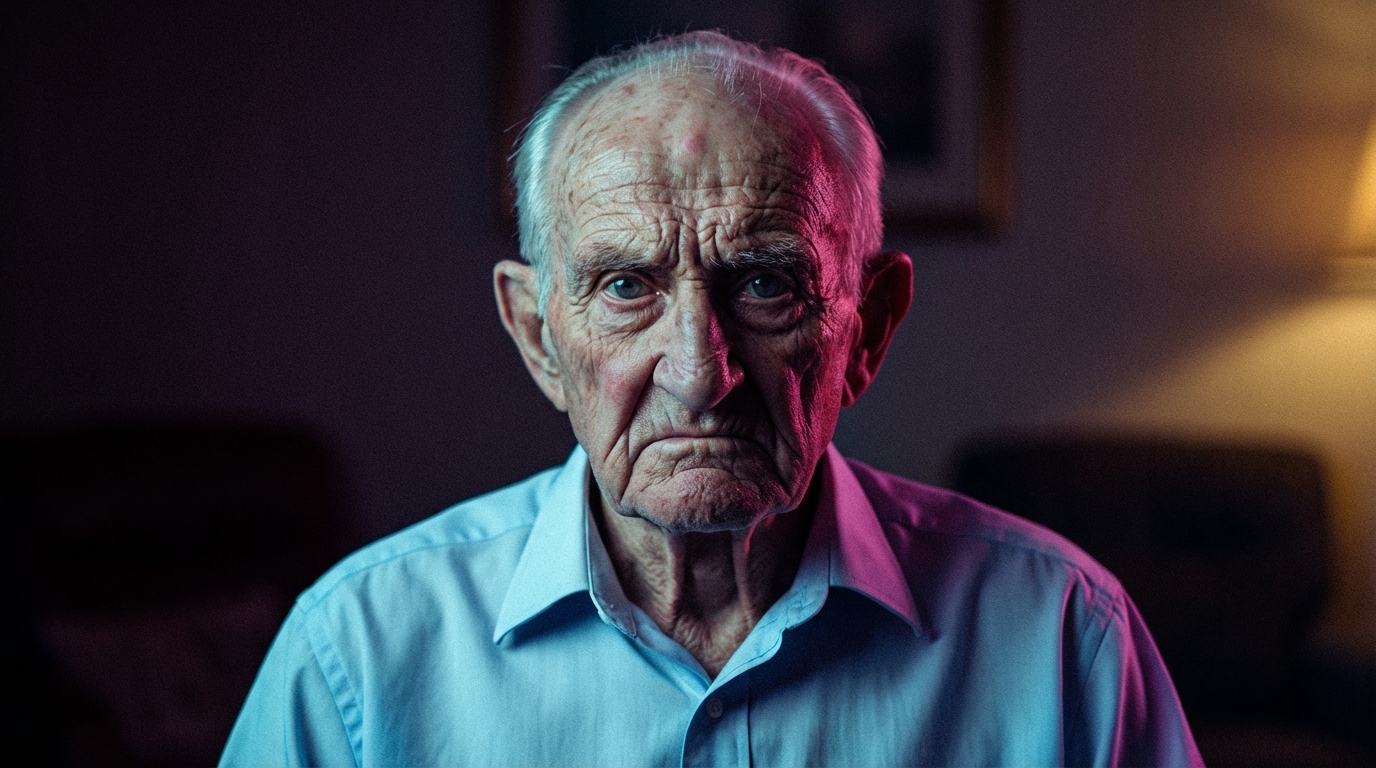
Born in Burnie, Tasmania, in 1924, Robert "Bob" Hugh Gangley was a retired postal clerk whose ninety-four years encompassed Depression-era hardship, wartime grief, and four decades of meticulous public service. His final years at Vaucluse Nursing Home were marked by cantankerous wit, fierce devotion to friends Jane Lahey and Thelma Jeffries, and an observer's keen eye for detail. He died on 7 August 2018, just days after Jane, under quietly discussed circumstances.
Early Years and the Gangley Household
Robert Hugh Gangley was born on 13 February 1924 in a modest weatherboard cottage on the outskirts of Burnie, a coastal town on Tasmania's northwest shore where the mountains meet the Bass Strait in a landscape both beautiful and uncompromising. He arrived as the second of four children to Edward Thomas Gangley and Margaret Ellen Gangley (née O'Shaughnessy), entering a household where working-class pragmatism collided daily with religious piety, and where the distant clang of shunting railway engines provided a constant rhythm to family life.
The house backed onto scrubland thick with bracken and bluegum, a squat, slate-roofed structure tucked near the rail siding where Edward worked as a train signalman at Burnie Junction. Inside, the home was crowded but clean, ruled by Margaret's stern routines and warmed by a coal stove that served as both hearth and battleground for opinion. Edward, a staunch union delegate and lifelong member of the Australian Labor Party, filled the evening hours with political debates and readings from The Mercury, whilst Margaret sat quietly at the table darning socks or praying the rosary, occasionally interrupting with barbed asides about "godless nonsense" and boys being raised to become men rather than pamphlets.
The 1930s were lean years for the Gangley family, as they were for most Australians. Bob learned early how to make things last—shoes resoled twice, hand-me-down coats let out at the seams, books borrowed but never bought. His father's union meetings often spilled into the kitchen after hours, filling the space with arguments about wage freezes and the rise of fascism across Europe. These conversations left their mark, instilling in Bob a lifelong interest in politics and a healthy scepticism of authority that would manifest in his legendary complaints about institutional incompetence.
Despite the noise of a crowded household, Bob was a quiet child. Watchful. He learned to listen before he spoke—a habit he kept well into old age, though he later honed it into a sharpened weapon. He found solace in routine: feeding the chickens, oiling the gate hinge so it wouldn't squeal, sweeping the cinders from under the stovetop. His siblings—particularly Patrick, bold and golden—overshadowed him in most respects, but Bob never seemed to mind. He observed, memorised, stored.
Parents and Family Background
Edward Thomas Gangley was born on 16 March 1891 in Launceston, the son of railway workers whose lives were measured in timetables and track maintenance. He followed his father onto the Tasmanian railways, eventually becoming a respected train signalman stationed at Burnie Junction. Edward was known for his unwavering commitment to workers' rights and his soft-spoken, principled manner. He spent his evenings reading The Mercury cover to cover and quoting Jack Lang speeches over tea, his political convictions as immovable as the mountains surrounding their coastal home. Though outwardly reserved, he commanded a quiet respect both at work and in the home—though his political rigidity often clashed with his wife's religious convictions. Edward died on 22 September 1962, having spent over four decades in service to the Tasmanian railways.
Margaret Ellen Gangley (née O'Shaughnessy) was born on 4 December 1895 in Stanley on Tasmania's northwest tip, the third of six children from a devout Irish Catholic family. Trained as a seamstress from age twelve, she was known in Burnie for her intricate needlework and strong opinions. A regular churchgoer and volunteer at the Sacred Heart Parish, she upheld a strict moral code and instilled in her children a sense of duty and decorum—often at odds with her husband's leftist leanings. Margaret ruled the household with what Bob later described as "a lace-gloved iron hand," and she could "summon God and guilt in equal measure with one look." She outlived her husband by sixteen years, dying on 19 April 1978.
Siblings and the Shadow of War
Kathleen Mary Gangley, the eldest of the children, was born on 21 May 1920. She trained as a nurse during the Second World War and worked at the Royal Hobart Hospital before emigrating to Wellington, New Zealand, in 1952. There, she joined the Sisters of Compassion and served in remote Māori communities until her retirement, dedicating her life to public health and missionary outreach. She never married, and Bob, whilst admiring her resolve, considered her "exhaustingly saintly." Kathleen died on 3 January 2002.
Patrick Daniel Gangley, born on 2 September 1926, was the golden boy of the family—handsome, confident, and possessed of the easy charm that Bob lacked. He enlisted in the Australian Army at just seventeen, falsifying his age to do so, and served with the 2/12th Infantry Battalion in the Pacific theatre. Patrick was killed in action near Balikpapan, Borneo, on 10 July 1945, during the closing weeks of the war against Japan. He was nineteen years old.
Patrick's death left a permanent wound in the Gangley household. Bob later said, "Mum never lit a candle again without saying his name. And Dad never forgave the brass for sending boys to do men's work." The loss shaped Bob's worldview profoundly, contributing to his lifelong distrust of authority and institutions that demanded sacrifice without accepting responsibility. He kept Patrick's service medal in a drawer for decades, rarely speaking of his brother but never forgetting him.
Elsie June Gangley, the youngest of the four, was born on 11 November 1930. She became a primary school teacher in Devonport, known for her love of poetry and a fondness for pink lipstick that she maintained well into her sixties. She married briefly in 1956 but separated soon after and never remarried. Bob and Elsie remained close throughout their lives, sharing a dry humour and mutual disdain for "anything too modern." She died from a stroke in her sleep on 14 August 1985 and was buried in Mersey Vale alongside her dog, Tuppence.
Childhood and Education
Bob began his education at Parklands Primary School, walking the mile there and back each day regardless of weather, often with a crust of bread in his satchel and a rolled-up copy of The Mercury tucked under one arm. He was a diligent student, unremarkable in most respects but possessing an unusual capacity for memorisation that teachers noted with approval. In 1936, he won a place at Burnie High School, where he excelled in penmanship and arithmetic whilst developing a lifelong aversion to group sports, which he dismissed as "an exercise in pointless collision."
School provided structure and purpose, but Bob's true education occurred beyond the classroom. He absorbed his father's political arguments, his mother's moral certainties, and the landscape's harsh beauty with equal attention. By adolescence, he had developed the observational precision that would later define both his career and his cantankerous observations of institutional life.
Bob left school in December 1939 at the age of fifteen, not out of failure but necessity. War loomed across Europe, and the family needed income. He secured a position as a clerk's assistant at the Burnie Post Office—the same building where he would eventually spend over three decades of his working life. At first, he sorted letters and swept the floors, but he quickly earned a reputation for accuracy and an encyclopaedic recall of street names and box numbers.
Though he never pursued formal tertiary study, Bob remained a self-educator throughout his life. He read the newspaper daily, followed political debates with keen interest, and took considerable pride in correcting other people's grammar well into his nineties.
The Formative Friendship
The summer of 1942 marked a pivotal transformation in Bob's life. At eighteen, he encountered Jane Lewis and Thelma Rose during a church youth expedition to the Tasmanian rainforest. Jane, sixteen years old and already possessed of the quiet determination that would define her, was the daughter of a timber mill foreman. Thelma, seventeen and adventurous in ways that complemented Jane's reserve, came from the nearby town of New Norfolk. The three teenagers formed an unlikely alliance amongst ancient ferns and towering eucalypts.
Their friendship transcended typical adolescent bonds. They created elaborate maps of secret trails, discovered hidden waterfalls, and shared dreams that seemed impossibly grand for three working-class Tasmanian teenagers. Bob, already showing signs of the curmudgeonly wit that would define him, completed their trio with his acerbic observations and territorial loyalty. These bushland expeditions became formative experiences, teaching all three how to read landscapes both physical and emotional, how to navigate shadows, and how to keep secrets.
The friendship would endure for over seven decades, surviving marriages, deaths, geographical separations, and the accumulation of shared knowledge that bound the three together in ways outsiders never fully understood. Even as Bob's characteristic grumpiness intensified in old age, Jane and Thelma remained the exceptions to his general misanthropy—people whose company he not only tolerated but actively sought.
Career at the Tasmanian Postal Service
Bob's working life began at the Burnie Post Office during the final months of 1939, when he was just fifteen. Initially taken on as a junior assistant, he swept floors, sorted telegrams, and emptied coin boxes from public telephone booths. Despite the menial nature of these tasks, he approached the job with a seriousness that suggested someone twice his age. To Bob, work was identity—not merely income.
By 1943, after several years of near-military punctuality and no sick days, Bob was formally inducted into the Tasmanian Department of Postal Services, receiving his first uniformed position as a mail sorter. His neat block-letter handwriting and uncanny ability to memorise postcodes made him a natural for the sorting floor, where he worked early morning shifts in the cold concrete belly of the Burnie exchange.
In 1948, Bob was transferred to the Hobart Central Post Office, a move he initially resented. The capital city felt foreign after Burnie's intimate scale. But Hobart grew on him slowly, and his efficiency and intolerance for shortcut-taking soon caught the eye of senior supervisors. By 1951, he was promoted to counter clerk, serving the general public in a front-facing role that tested his patience but sharpened his wit.
He became known throughout the Hobart postal service for three things. First, his handwriting—so precise that it was used as the model in staff training materials for addressing envelopes and recording telegraphs. Second, his rulebook loyalty, which bordered on the theological. Bob never waived a late fee, never bent a regulation, and famously once made a retired judge return with a properly completed parcel declaration before allowing dispatch. Third, his disdain for modernisation, particularly decimalisation, which he called "a national betrayal of perfectly good shillings."
Whilst he was respected by his long-serving peers, newer recruits found him intimidating. He once reduced a trainee to tears for addressing a widow as "Miss" on a condolence telegram. He later apologised—in writing—but never changed his ways. Behind the counter, Bob was a minor institution: dry, exacting, and fiercely territorial over "his" workspace. He corrected forms, barked at queue jumpers, and refused to use the electric letter scale when the brass ones were "still perfectly bloody accurate."
In 1975, Bob suffered a minor stroke while on shift. He collapsed behind the parcel register and was found by a colleague still muttering about someone filling out a customs form in blue pen. Though he recovered well, his mobility and stamina never fully returned. Against his better judgement, and under quiet pressure from management, Bob retired in 1976 at the age of fifty-two. He kept the service pin they gave him in a drawer for twenty years before finally wearing it once—to a funeral.
Personal Life and Solitude
Bob never married. He often claimed he was "not the settling type," deflecting enquiries with the gruff dismissiveness that became his trademark. Yet there were whispers of a long friendship with a woman named Lorna Caves, a widowed librarian, during the 1960s. Whatever passed between them remained private, and Bob never spoke of her publicly.
He had no children, once joking that "Australia Post was my only offspring—and I fed it better than it deserved." The absence of family obligations allowed him to maintain his routines with monastic precision: morning walks, afternoon newspaper reading, evening television news, and weekly card games with whatever friends remained.
His closest relationships were always with Jane and Thelma. When Thelma married James Jeffries III in 1947, Bob maintained his connection to both women, becoming a peripheral but loyal presence in their expanding social circles. He attended christenings, birthday parties, and funerals with equal reluctance and punctuality, his gruff exterior concealing genuine attachment to the families his friends had built.
Later Years and Vaucluse Residency
In 2010, following several falls and the onset of mild vascular dementia, Bob moved into Vaucluse Nursing Home in the quiet eastern suburbs of Hobart. The facility, with its landscaped gardens and sweeping views of the River Derwent, became his final institutional home—a place that matched his temperament surprisingly well.
The retired postal clerk, with his encyclopaedic memory and territorial nature, became a fixture amongst Vaucluse's sandstone corridors. Here, his complaints found fresh targets in modern equipment and loose protocols. He filed grievances about smudged windows, improperly addressed correspondence, and what he deemed inadequate moral standards amongst staff. His obsession with a child's handprint obscuring his view of the garden roses became legendary—a weekly complaint delivered with the same theological precision that had once governed postal regulations.
Yet beneath the cantankerous exterior, Bob's loyalty deepened through daily rituals with Jane and Thelma. The three old friends took tea together at 3 PM, their conversations ranging from shared memories to current events, though certain topics remained deliberately unmentioned. They shared sherry in tea cups, played cards in the west wing common room, and maintained the fierce disdain for modern etiquette that had bound them since their rainforest expeditions decades earlier.
Staff at Vaucluse learned to navigate Bob's moods. Some found his observations about their conduct—delivered with "unnerving accuracy," as one carer noted—deeply uncomfortable. Others recognised the ritual beneath the grievance: an old man fighting to matter before time ran out, maintaining dignity through the only means left to him. Jamie Greyson, a receptionist who encountered Bob's daily complaints, understood the peculiar intimacy of their mutual exasperation—two souls connected by the strange bonds that form in institutional settings.
The Final Days of July 2018
The events of July 2018 cast long shadows across Vaucluse Nursing Home, and Bob's watchful nature—honed through decades of postal precision—positioned him as an unwitting witness to unfolding mysteries. On 23 July, he shuffled to the reception desk to report what he termed "the hanky-panky type" of mischief amongst staff, his rigid moral certainties colliding with workplace realities he found distasteful. His complaint, delivered with characteristic bluntness, unwittingly exposed tensions that ran deeper than institutional decorum.
Bob's keen observations extended to his friend Jane, whose recurring nightmares about "Killerton" he had noted with quiet concern. When Detective Sarah Lahey—Jane's granddaughter—arrived at Vaucluse on 31 July to comfort her grandmother, Bob's gruff certainty pierced through well-meaning deflections. His matter-of-fact declaration that the nightmares happened "again" forced uncomfortable truths into daylight, his stubborn honesty cutting through protective facades with surgical accuracy.
The same meticulous attention that once sorted mail now catalogued patterns others missed. Bob observed Jamie Greyson's mysterious absence, noted the irregular shifts and access logs that would later concern investigators, and maintained his daily vigil over Jane's declining health. His watchful presence in the west wing, observing comings and goings with unsettling accuracy, suggested he glimpsed fragments of truths that would only emerge after his death.
Death and Its Mysteries
Jane Elisabeth Lahey died on 4 August 2018, her ninety-two years concluding in the Vaucluse room where she had spent her final months. Bob attended her funeral on 7 August at New Norfolk's Anglican Church, one of the last survivors of their original rainforest trio. Thelma Jeffries, despite her own declining health, delivered a eulogy that hinted at depths few understood.
That same day—7 August 2018—Robert Hugh Gangley died at Vaucluse Nursing Home. The official cause was recorded as heart failure, though some staff noted a strange calm that preceded his passing, following a private conversation with fellow resident Constance Addleton. It was as if he had been waiting to ensure his old friend was properly farewelled before allowing himself to follow.
The timing of Bob's death, so soon after Jane's, surprised no one who had witnessed their seven-decade friendship. Nursing logs for that period were notably incomplete, and minor procedural irregularities raised quiet questions that were never formally investigated. A junior carer, who left her position shortly after, later described the facility's atmosphere during those days as "eerily quiet, like the place was holding its breath."
Bob was ninety-four years old. He had outlived all his siblings, most of his contemporaries, and the woman whose friendship had anchored his emotional life since 1942. Whatever secrets he carried—about Jane, about Thelma, about the mysterious activities that had bound the three friends across decades—died with him.
In the end, that may be legacy enough.

