Robert Cornelius Blackwood
Robert Cornelius Blackwood (1845–1923) was the eldest son of Thomas Erasmus and Emily Eleanor Blackwood, and the managing partner who sustained Blackwood and Associates through its transition from founder-led practice to established Tasmanian institution. Born in Hobart and educated at Hutchins School, Winchester College, and the University of Sydney, he inherited a firm built on his father's vision and spent five decades proving — to himself as much as to anyone — that he was capable of maintaining it.
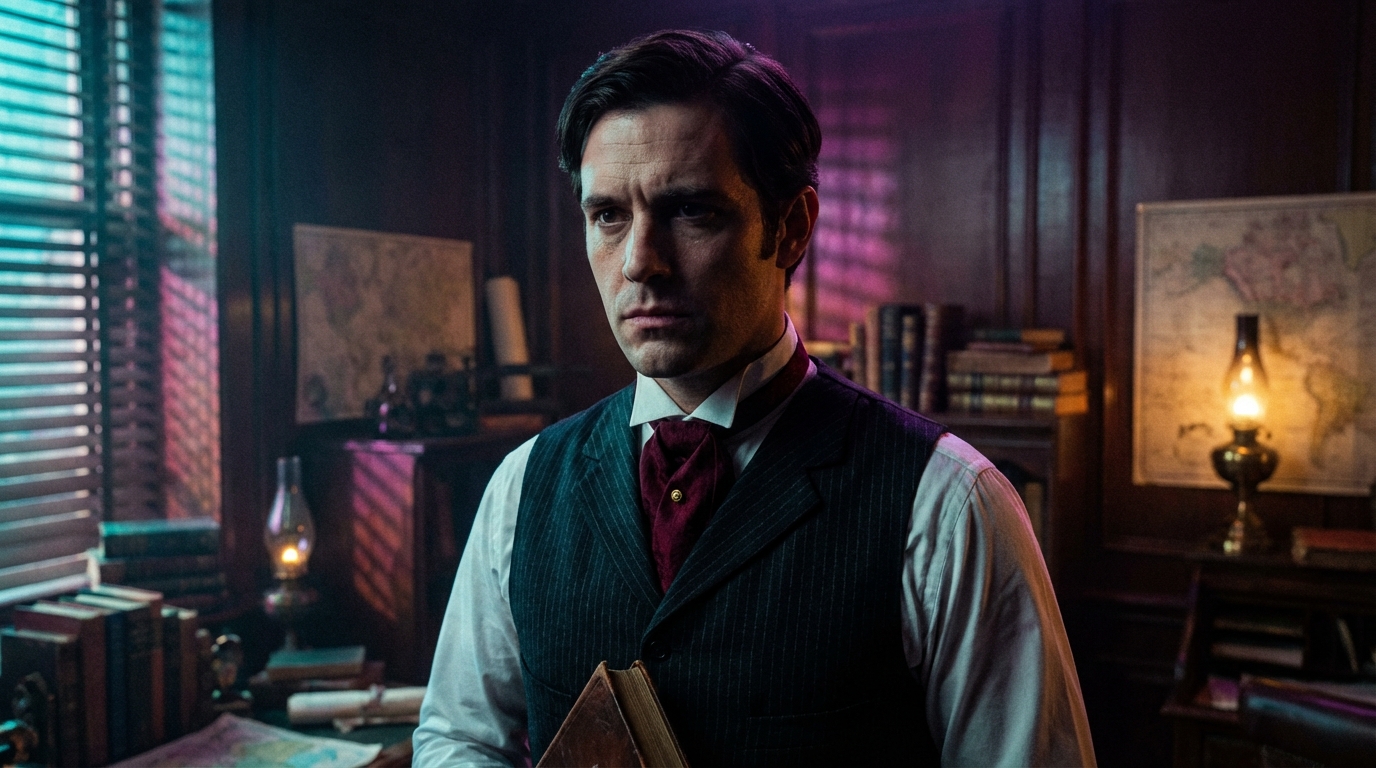
Early Life and Family
Robert Cornelius Blackwood was born on 10 March 1845 in Hobart, Tasmania, the first child of Thomas Erasmus Blackwood and Emily Eleanor Blackwood, née Harrington. His birth in Hobart rather than at the family seat of Rosebank Estate in Parramatta reflected his father's expanding commercial interests in Tasmania, where the Blackwood name carried associations dating back to grandfather Erasmus Percival's early colonial ventures. Emily had travelled south during the final months of her pregnancy, and Robert entered the world in lodgings overlooking the Derwent River — a temporary arrangement that nevertheless established his lifelong connection to the island colony where his most significant professional achievements would unfold.
Robert was the eldest of four children. His sister Eliza Margaret followed on 5 February 1848, his brother Henry Jonathan on 15 July 1852, and his sister Miriam, the youngest, completed the family. The household he inhabited as a child was shaped by contrasting parental influences: his father's analytical rigour and commercial pragmatism on one side, his mother's intellectual warmth and philanthropic energy on the other. Robert absorbed more of Thomas's temperament than Emily's — a fact that both parents recognised early and that Emily, whose relationship with her eldest son was affectionate but never intimate, accepted with the pragmatism she brought to most aspects of family life. Robert was his father's child, oriented toward the law and toward systems of order, and the alignment created a bond between father and son that was professionally productive and emotionally constrained in roughly equal measure.
The family's primary residence during Robert's childhood was Rosebank Estate in Parramatta, the Georgian homestead that Thomas had acquired in 1839 and that Emily had transformed into a centre of intellectual and philanthropic life. Robert grew up amidst the salon evenings, the reform-minded conversations, and the procession of visitors that his mother's social programme attracted, absorbing from this environment an understanding of how professional reputation and social engagement reinforced each other — a lesson that would prove more useful in his legal career than any textbook.
Education
Robert's early education began at Hutchins School in Hobart, where he was enrolled during one of the family's extended visits to Tasmania. The school, founded in 1832, provided an education grounded in classical studies and Anglican moral instruction that suited both the Blackwood family's social position and Thomas's expectations for his eldest son's intellectual development. Robert excelled in Latin and Greek, demonstrated a natural aptitude for mathematics, and discovered in the school's debating society an arena that rewarded the structured argumentation his father's dinner-table conversations had already taught him to practise. He was a competent cricketer and a determined oarsman, though his sporting achievements reflected diligence rather than natural athleticism — a pattern that would characterise his approach to most endeavours throughout his life.
In 1861, at the age of sixteen, Robert was sent to Winchester College in Hampshire, continuing a family tradition of English public school education that his father Thomas and uncle Henry had both observed. Winchester provided broader academic exposure — philosophy, literature, economics — alongside the social formation that English public schools considered their primary function. Robert adapted to the institution with the steady competence that would become his professional signature, performing well enough to satisfy his tutors without displaying the intellectual brilliance that might have distinguished him from his peers. He was well-liked, reasonably popular, and entirely aware that his capabilities, though genuine, occupied the upper middle range rather than the pinnacle — an assessment that he carried with him into adulthood and that coloured his professional self-regard in ways that alternated between healthy realism and corrosive self-doubt.
Robert returned to Australia in 1865 and enrolled at the University of Sydney to pursue a Bachelor of Laws. The university years were formative in ways that Winchester had not been — the Australian legal curriculum engaged Robert's practical temperament more effectively than English classical education, and he developed a facility for commercial and maritime law that reflected both genuine aptitude and the awareness that these were the practice areas in which his father's firm would eventually require his expertise. He graduated with distinction in 1869, having earned a reputation among his lecturers for methodical preparation, sound judgement, and a reluctance to speculate beyond the evidence — qualities that made him an excellent legal practitioner and a somewhat limited legal thinker.
Joining Blackwood and Associates
In 1870, Robert joined Blackwood and Associates in Hobart, the firm his father had founded four years earlier. The appointment was expected by everyone, desired by Thomas, and accepted by Robert with a mixture of genuine enthusiasm and the particular anxiety of a son who understands that the role he is entering has been designed around capabilities that may or may not prove to be his own. He began as a junior partner, handling commercial disputes and maritime claims whose complexity tested his legal training and whose successful resolution demonstrated that the distinction his university lecturers had awarded was not merely academic.
The early years at the firm were defined by Robert's relationship with his father, who remained managing partner and whose presence in chambers created a dynamic that oscillated between mentorship and supervision. Thomas was a demanding teacher whose standards derived from his own formidable capabilities, and the gap between what the father could do instinctively and what the son achieved through careful effort was visible to both of them. Robert worked long hours, prepared cases with meticulous thoroughness, and compensated for what he lacked in Thomas's intuitive legal brilliance with a capacity for sustained, detailed work that his father respected without always recognising as a different form of the same professional commitment.
The tension between them was productive but personally costly. Robert wanted his father's approval with an intensity that he expressed through performance rather than petition, taking on difficult cases, producing exhaustive briefs, and maintaining a standard of professional conduct whose rigour sometimes bewildered colleagues who did not understand that every memorandum Robert drafted was, in some sense, a communication addressed to a man one office away whose good opinion constituted the currency in which Robert measured his own worth.
Marriage to Clara Winifred Johnson
In 1870, the same year he joined the firm, Robert married Clara Winifred Johnson, born on 8 May 1847 in Launceston, Tasmania. Clara was the daughter of a Launceston merchant whose trading interests in the northern districts connected the Johnson family to the commercial networks that Blackwood and Associates increasingly served. The marriage was arranged through the social connections that Hobart's professional class maintained with the northern Tasmanian gentry, and it combined personal compatibility with the strategic advantages that professional families in small colonies routinely sought through matrimonial alliance.
Clara proved a more formidable partner than the modest circumstances of her upbringing might have predicted. She possessed a social intelligence that Robert lacked — an ability to read rooms, manage personalities, and navigate the interpersonal dimensions of professional life that the law itself did not teach. She managed their Hobart household with an efficiency that freed Robert to devote his evenings to the case preparation that his professional standards demanded, and she hosted the social gatherings whose importance to the firm's client relationships Robert understood in theory but struggled to execute with the warmth that successful hospitality required. Their marriage was not romantic in the demonstrative sense, but it was effective, companionable, and grounded in the mutual recognition that each partner provided what the other needed without requiring what the other could not give.
The couple had three children, though only two survived infancy. Thomas Alastair Blackwood was born on 15 July 1871 in Hobart — named, inevitably, for his grandfather, the choice carrying an expectation that the boy would feel before he could understand it. A second child, a girl, was born in the autumn of 1872 but died within her first week from a respiratory illness that the Hobart winter's damp air had aggravated beyond what her undeveloped lungs could withstand. Clara's grief was sharp and private; Robert's was characteristically expressed through increased absorption in work, a response that Clara understood without forgiving. Their daughter Evelyn Rose Blackwood arrived on 2 December 1873, her safe delivery restoring to the household a stability that the loss of the previous year had disrupted.
Rising Through the Firm
Robert's ascent within Blackwood and Associates followed the trajectory that his father's succession planning had intended. He was promoted to senior partner in 1876, the year of his mother Emily's death — a loss that affected Robert less visibly than it affected his siblings, though whether this reflected genuine emotional distance or merely the characteristic Blackwood male habit of processing grief through institutional engagement rather than personal expression, those around him could not determine. His father's death in October 1880 left Robert, at thirty-five, as the firm's principal figure — a position he had been preparing for throughout his professional life and that he assumed with the combination of competence and unease that would characterise his tenure.
By 1886, Robert had consolidated his position as managing partner, implementing changes that reflected his own strengths rather than attempting to replicate his father's methods. Where Thomas had operated through personal relationships and intuitive commercial judgement, Robert built systems — standardised filing procedures, regularised billing practices, structured training programmes for junior lawyers whose professional development he supervised with a care that reflected his own experience of being mentored by a man whose standards he had struggled to meet. The institutionalisation of what Thomas had created personally was Robert's most significant contribution to the firm, and it ensured that Blackwood and Associates could survive the eventual departure of any single individual — including Robert himself — in ways that a practice dependent upon one man's brilliance could not.
He expanded the firm's practice areas to include property law and estate planning, responding to the changing legal needs of a Tasmanian community whose wealth was transitioning from pastoral and maritime commerce toward the more diversified economy that the approaching twentieth century would demand. The expansion was cautious, methodical, and entirely characteristic of Robert's approach to professional risk — he moved only when the evidence supported movement, advanced only into territory he had thoroughly surveyed, and achieved growth through accumulation rather than through the speculative leaps that had distinguished his father's more adventurous career.
The Weight of Inheritance
The question that shadowed Robert's professional life — whether he had sustained Blackwood and Associates through his own abilities or merely maintained the momentum that Thomas's founding vision had created — was one that he returned to more frequently than his public confidence suggested. He was honest enough to recognise that the firm he managed in the 1890s owed its reputation and client base primarily to his father's work, and realistic enough to understand that his own contributions, though genuine, were consolidating rather than transformative. The distinction troubled him. He wanted to have built something, not merely preserved it, and the awareness that preservation was both more difficult and less celebrated than creation provided limited consolation.
His relationship with his own son, Thomas Alastair, replicated uncomfortable aspects of the dynamic he had experienced with his father. Robert groomed his son for succession with the same methodical attention that Thomas had applied to him, and the awareness that he was reproducing a pattern whose personal costs he understood intimately did not prevent him from repeating it. Thomas Alastair joined the firm in the early 1890s, and the relationship between father and son in chambers carried the same mixture of mentorship, expectation, and suppressed anxiety that had characterised Robert's own apprenticeship — a generational inheritance of professional competence and emotional limitation that proved as durable as the legal dynasty it sustained.
Clara's Death
Clara Winifred Blackwood died on 14 August 1918 in Hobart, at the age of seventy-one. The influenza pandemic that swept the world in the final months of the Great War reached Tasmania with the particular cruelty of a disease that struck without warning and killed without regard for the social distinctions that colonial society considered fundamental. Clara developed symptoms on a Monday, was confined to bed by Wednesday, and was dead by the following Thursday — the speed of her deterioration leaving Robert and the family no time to adjust to the possibility of loss before loss itself arrived.
Robert was seventy-three years old. Clara's death removed the partner who had managed the domestic dimensions of his life for forty-eight years, whose social intelligence had compensated for his own interpersonal limitations, and whose steady presence had provided the stability against which he measured the fluctuations of his professional anxieties. The household that her death emptied of its organising intelligence required adjustments that Robert managed with his characteristic competence and characteristic inability to acknowledge the emotional dimensions of what he was managing. He engaged a housekeeper, maintained his routines, continued attending the office, and processed his grief through the same absorption in work that had served — or failed to serve — every Blackwood man who had faced loss since Erasmus Percival had converted the death of his mother into commercial energy a century earlier.
Final Years
The years between Clara's death and his own were marked by a gradual withdrawal from the firm's daily operations that Robert resisted and his colleagues encouraged. He reduced his caseload, delegated administrative responsibilities to Thomas Alastair, and occupied an increasingly ceremonial role whose dignity he maintained through habit rather than conviction. He continued to mentor junior lawyers with the detailed attention that his own early career had taught him to value, and he maintained an interest in the firm's strategic direction that expressed itself through advice that was sometimes welcomed and sometimes endured.
His health declined without drama during the early 1920s — a sequence of minor ailments whose cumulative effect reduced his stamina and his range of movement without producing any single crisis that might have forced a decisive break from the professional routine he had maintained for over fifty years. He walked to the office most mornings until the final autumn of his life, arriving later and leaving earlier than he once had, but present — the presence itself having become, for Robert, a form of meaning that the work it facilitated could no longer entirely provide.
Death
Robert Cornelius Blackwood died on 15 November 1923 in Hobart, at the age of seventy-eight. He had retired to bed the previous evening complaining of chest pains that he attributed to indigestion and that his physician, summoned the following morning, identified too late as the coronary event they had been. He died in his own bed, in the house he had shared with Clara, with Thomas Alastair at his side and the morning's edition of the Mercury unread on the hall table.
He was survived by his son Thomas Alastair and his daughter Evelyn Rose. The firm he had led for over four decades continued under Thomas Alastair's management, its institutional structures — the filing systems, the training programmes, the billing practices, the professional culture of meticulous preparation and cautious expansion — bearing the imprint of Robert's administrative temperament far more visibly than any single case or legal argument he had conducted.







