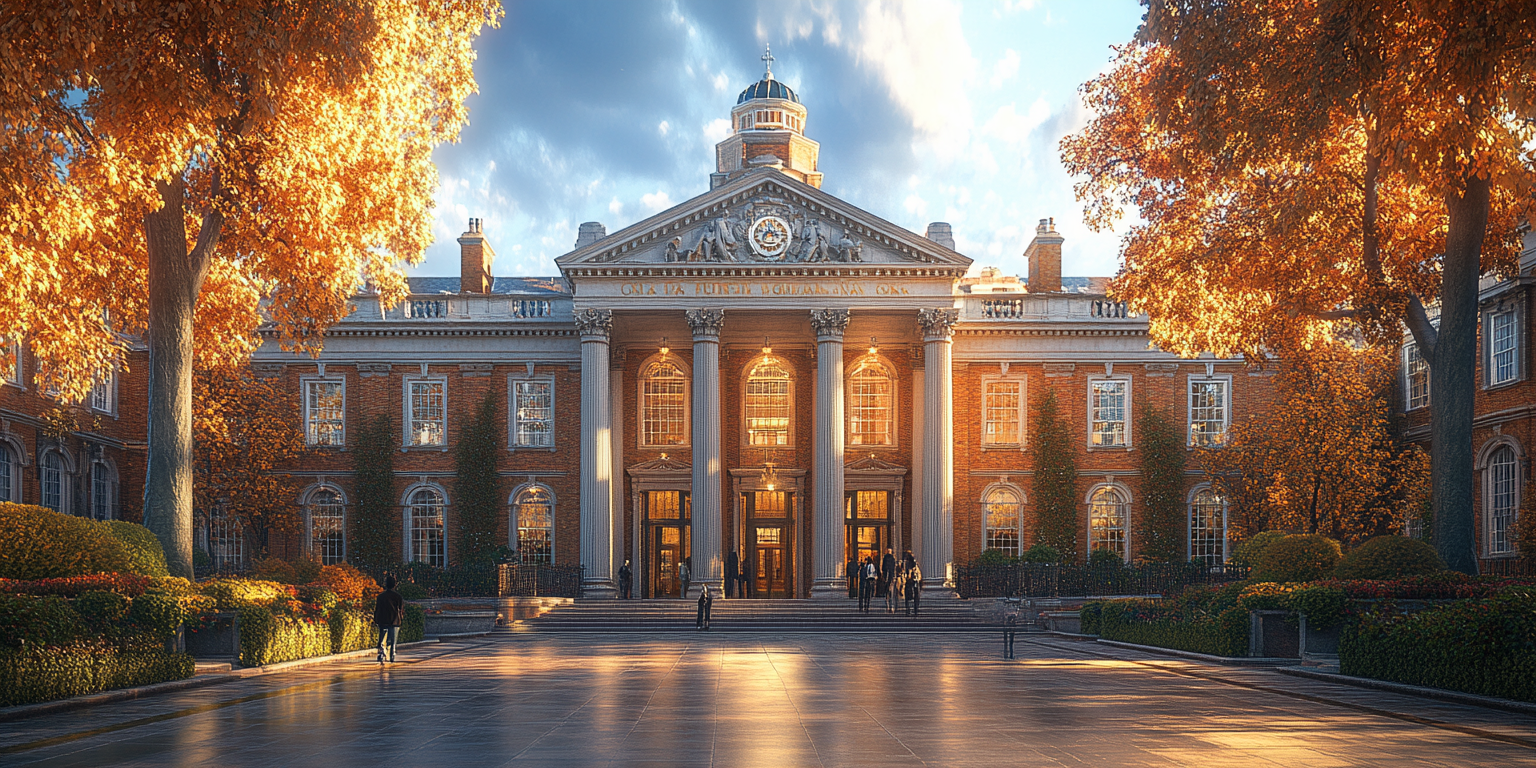
Portsmouth Guildhall (also known as Portsmouth Courthouse)
The Portsmouth Town Hall stood in the middle of High Street from the sixteenth century until its demolition in 1837, a building that served simultaneously as council chamber, courthouse, and civic centrepiece across three centuries of continuous use. Rebuilt at least twice — once in 1739 on foundations laid by Mayor John Vining, and again in 1795 when a chamber supported by Corinthian columns was added at the first-floor level — it was the venue for the borough's quarter sessions, its court of record, and the countless petty and criminal trials through which the law imposed itself upon the lives of Portsmouth's inhabitants. It was here, on 15 April 1807, that William Jeffries stood trial for the theft of Josiah Blackwell's pocket watch, and it was here that Magistrate Cornelius Blackwood sentenced him to seven years' transportation — a verdict delivered beneath a ceiling that had absorbed the pleas and protests of the accused for nearly seventy years, and would continue to do so for thirty more.
Carpenter's House and the Shambles
The origins of civic government on Portsmouth's High Street reach back to at least the fifteenth century, when the area that would later accommodate the Town Hall was already established as a place of public commerce. A shambles — the open stalls where butchers displayed and sold their wares — occupied the middle of the High Street from as early as 1458, creating a commercial thoroughfare that doubled as the civic heart of the old town. It was into this crowded, pungent landscape that John Carpenter, a wealthy citizen who served as mayor of Portsmouth between 1531 and 1537, built the structure that would become the borough's first purpose-built seat of government.
The antiquary John Leland, travelling through Portsmouth during his Itinerary of 1538–45, recorded that "One Carpenter a riche man made of late tyme in the mydle of the high streate of the toune a toune house." Carpenter's House was almost certainly a timber structure, though little is known of its precise dimensions or internal arrangement. Records indicate that it housed a court or council chamber and that rooms within the building were occupied by the senior Sergeant at Mace — the civic officer responsible for enforcing the mayor's authority and maintaining order during proceedings. The building stood in the middle of the street itself, flanked by the shambles, creating the peculiar arrangement that would persist for centuries: the seat of justice and the stink of raw meat coexisting in an intimacy that no later age would tolerate.
For nearly two hundred years, Carpenter's House served as the venue for the borough's courts and council meetings, though its condition deteriorated steadily as the centuries passed. By 1736, the building had fallen into such a state of disrepair that most official business was conducted instead at "the Great Roome at Goddes House" — more precisely Government House — a pragmatic relocation that acknowledged what everyone could see: the old Town House was no longer fit for the dignity its functions demanded.
The Town Hall of 1739
The mayor and aldermen resolved to build a new hall on the same site as its predecessor, the cost to be defrayed partly by subscription and partly by loan. The first stone of the new structure was laid by Mayor John Vining on 14 March 1739, and the building that rose over the following months was plainly intended as a significant improvement on the timber shell it replaced. The new Town Hall incorporated stucco work on its exterior, vases mounted above the pilasters of the portico, and — with a solemnity that speaks to the aspirations of the borough's governing class — a carpet for the council table and cushions for the councillors. These were not extravagances by the standards of the age, but they marked a deliberate elevation of civic life from the informality of Carpenter's House to something approaching the dignity of a proper municipal institution.
The building continued to stand in the middle of the High Street, the shambles still ranged along the thoroughfare on either side. The arrangement that had seemed unremarkable in the sixteenth century was becoming increasingly inconvenient by the eighteenth, as both the town's population and the volume of traffic through its principal street grew. But the Town Hall remained where it was, immovable by custom if not by engineering, and the citizens of Portsmouth continued to navigate around it as they had always done — a daily reminder that civic authority occupied the centre of their lives in the most literal sense imaginable.
The building's judicial function was grounded in the royal charter of 1627, which established the borough's right to hold its own courts. The quarter sessions — the periodic sittings at which the borough's magistrates tried criminal cases and conducted the administrative business of local government — had been held in Portsmouth since at least the mid-seventeenth century, with records surviving from 1652 onward. By the later eighteenth century, sessions were held three times a week, while the court of record, instituted under Charles I to hear civil cases within the borough, sat every Tuesday. The Town Hall accommodated both, its chamber serving as the venue where the fates of defendants were decided by men who lived among them, knew their families, and sometimes owed them money.
The Rebuild of 1795 and the Courthouse on the Eve of War
By 1795, the facilities were once again deemed inadequate. The Town Hall was partially rebuilt to incorporate a chamber at the first-floor level, supported by Corinthian columns and accessed by steps fitted with iron balustrades — an architectural gesture that announced the building's judicial authority with a formality that the 1739 structure had lacked. The ground floor continued to serve its commercial function, the market that had always been associated with the site remaining an important source of income for the council, with rents amounting to twenty-seven pounds, nine shillings, and one penny by 1836. Above, the first-floor chamber became the principal venue for the borough's quarter sessions and the trials that gave the building its alternative name: the Portsmouth Courthouse.
It was this building — the 1795 rebuild, with its columns and iron balustrades, its gallery overlooking the chamber, and its proximity to the White House gaol barely two hundred yards to the south — that served as the courthouse during the period of the Napoleonic Wars. The borough's magistrates presided over a caseload that reflected the pressures of a city at war: desertion and drunkenness among the swelling military population, theft driven by the poverty that accompanied every conflict, and the ordinary violence that was endemic to a port city whose economy depended on men trained in the application of force.
The passage between the Town Hall and the White House gaol — the underground route along which prisoners were escorted from their cells to the dock — connected the two institutions in a geography of punishment that was as practical as it was symbolic. A man held in the gaol's fetid cells could be brought to trial without being paraded through the streets, a convenience that served the dignity of the court rather than the comfort of the accused. The distance was short. The walk, for those who made it, must have felt interminable.
A Verdict Beneath the Storm
On the morning of 15 April 1807, the gallery of the Portsmouth Courthouse was full. The borough had come to watch the trial of William Jeffries, a twenty-two-year-old dockworker charged with the theft of a pocket watch belonging to the merchant Josiah Blackwell. Elizabeth and Edward Jeffries, William's parents, sat among neighbours who had once been friends, their Sunday clothes worn on a Wednesday morning in a gesture of respectability that fooled no one and consoled no one but themselves. In the gallery above, the whispered certainties of those who had already decided the verdict competed with quieter doubts about what had really happened.
Bartholomew Ashford, the prosecutor — Oxford-educated, meticulous, possessed of a courtroom presence that lesser barristers could imitate but never replicate — laid his case before the magistrate with the unhurried confidence of a man who had rarely been contradicted and did not expect to begin now. Constable Silas Greaves took the stand and delivered his testimony with the careful precision of an officer who had spent four decades measuring his words before speaking them. Jack Hawley, whose presence in the gallery would later take on a significance that the court could not then appreciate, watched proceedings with a carelessness that might have been bravado or might have been something else entirely.
The defence fell to Nehemiah Blaylock, a young barrister whose threadbare robe and evident inexperience placed him at every conceivable disadvantage against Ashford's polished rhetoric. Blaylock's cross-examination of Blackwell drew flickers of uncertainty from the public gallery, moments when the narrative briefly trembled before resettling into the shape the prosecution had prepared for it. His closing statement, delivered as thunder gathered over Portsmouth, carried an earnest conviction that briefly swayed the room — or at least that portion of it still capable of being swayed.
Magistrate Cornelius Blackwood delivered the sentence with the brevity that characterised his conduct of proceedings: seven years' transportation to New South Wales. The storm that broke over the courthouse as the verdict was read lent the moment a dramatic punctuation that no one present required and no one who was absent would have believed. William Jeffries was led back through the passage to the gaol. The gallery emptied. The chamber absorbed the silence that followed and held it, as it had held every verdict before and would hold every verdict after, until the building itself was torn down and its stones scattered to purposes no one recorded.
Demolition and the New Guildhall
The Butchers' Shambles were finally removed from the High Street by 1827, eliminating the obstruction that had defined the thoroughfare since the fifteenth century. But the Town Hall itself continued to impede traffic, and by 1836 the decision had been taken to demolish it and erect a replacement. The process proved more complicated than anticipated. The market that occupied the ground floor was not merely a convenience but a source of revenue, and any new building would need to accommodate it. A committee under Alderman Williams identified properties at numbers 42 and 43 High Street as the site for the new structure, and invited plans from three men: Benjamin Bramble, Thomas Ellis Owen, and Augustus Livesay.
Bramble was a town councillor, a member of the committee itself, and a builder by trade rather than a trained architect — a combination of circumstances that raised eyebrows then and would raise more now. Owen and Livesay were both respected architects. The council voted to adopt Bramble's design, allocated two thousand pounds for demolition and construction, and the old Town Hall — the building that had stood in the centre of the High Street in one form or another since the 1530s — was pulled down. The foundation stone of the Market House and Guildhall was laid on 24 May 1837, and the new building opened on 28 June 1838, its ground floor given over to the market and its upper rooms to the council chamber and committee rooms that civic business required.
This replacement served the borough for half a century before it too was superseded. The present Guildhall, built in 1890 in Guildhall Square — a location removed from the old town entirely — marked Portsmouth's transition from a compact borough centred on its medieval High Street to a city whose civic ambitions demanded grander premises and a more prominent address. The old Market House on High Street survived as a museum until the Blitz of 1941 destroyed it, along with much of the surrounding area. The site where Carpenter's House once stood, where Mayor Vining laid his stone in 1739, where the Corinthian columns of the 1795 rebuild framed the proceedings that sent William Jeffries to the far side of the world, is now occupied by buildings that bear no trace of what was decided there, or what it cost the people who stood before its bench and heard the law pronounced upon them.







