Portsmouth Dockyard, Portsmouth
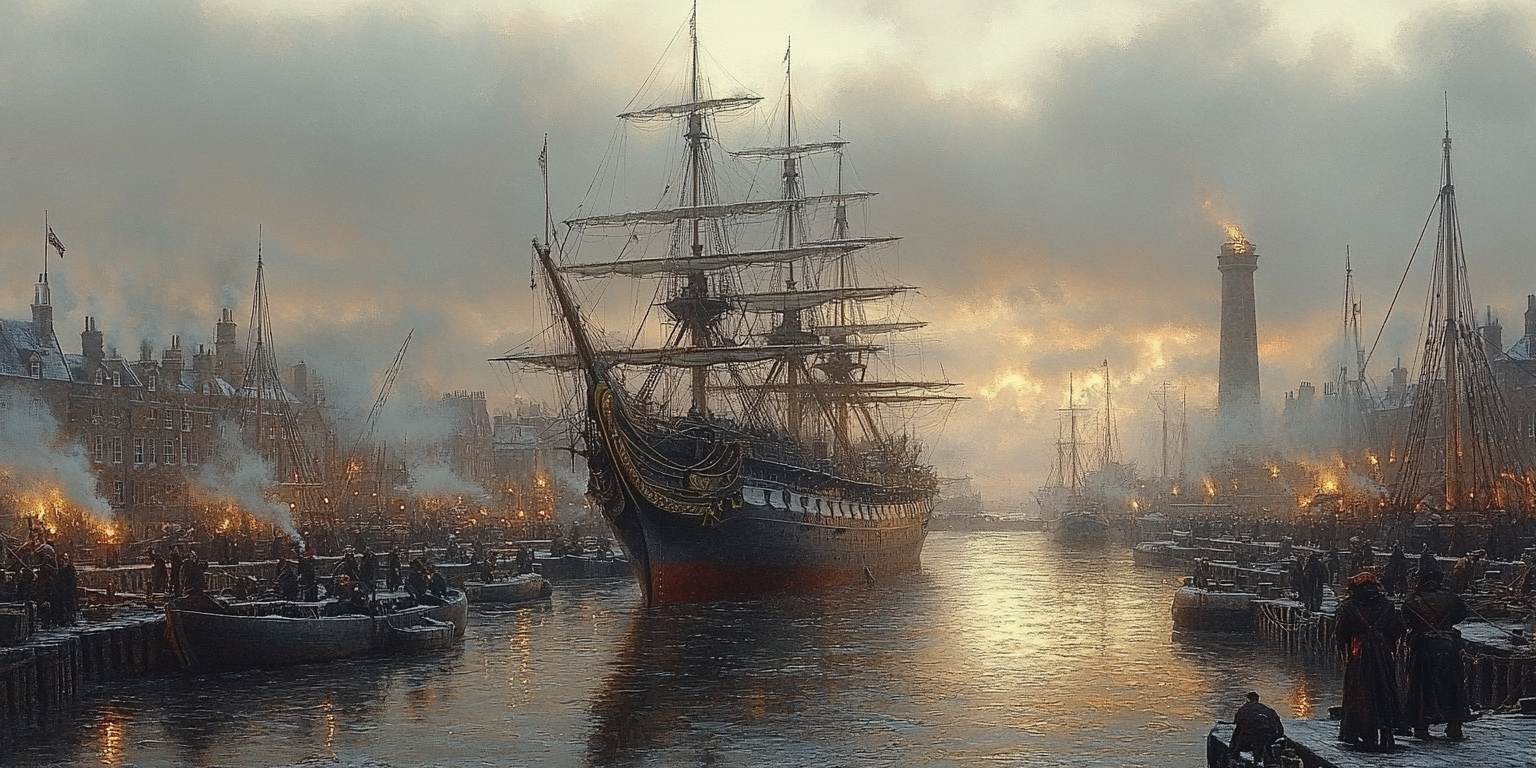
Portsmouth Dockyard, established 1495 under Henry VII, transformed a natural harbour into Britain's naval heart for over five centuries. From building Henry VIII's fleet to launching Nelson's Victory in 1805, the dockyard drove maritime innovation through Brunel's Block Mills and countless technological advances. It weathered Napoleonic Wars, both World Wars, and post-war decline before becoming Portsmouth Historic Dockyard in the late twentieth century, preserving Britain's naval legacy as museum and cultural attraction.
Tudor Foundation and Strategic Vision
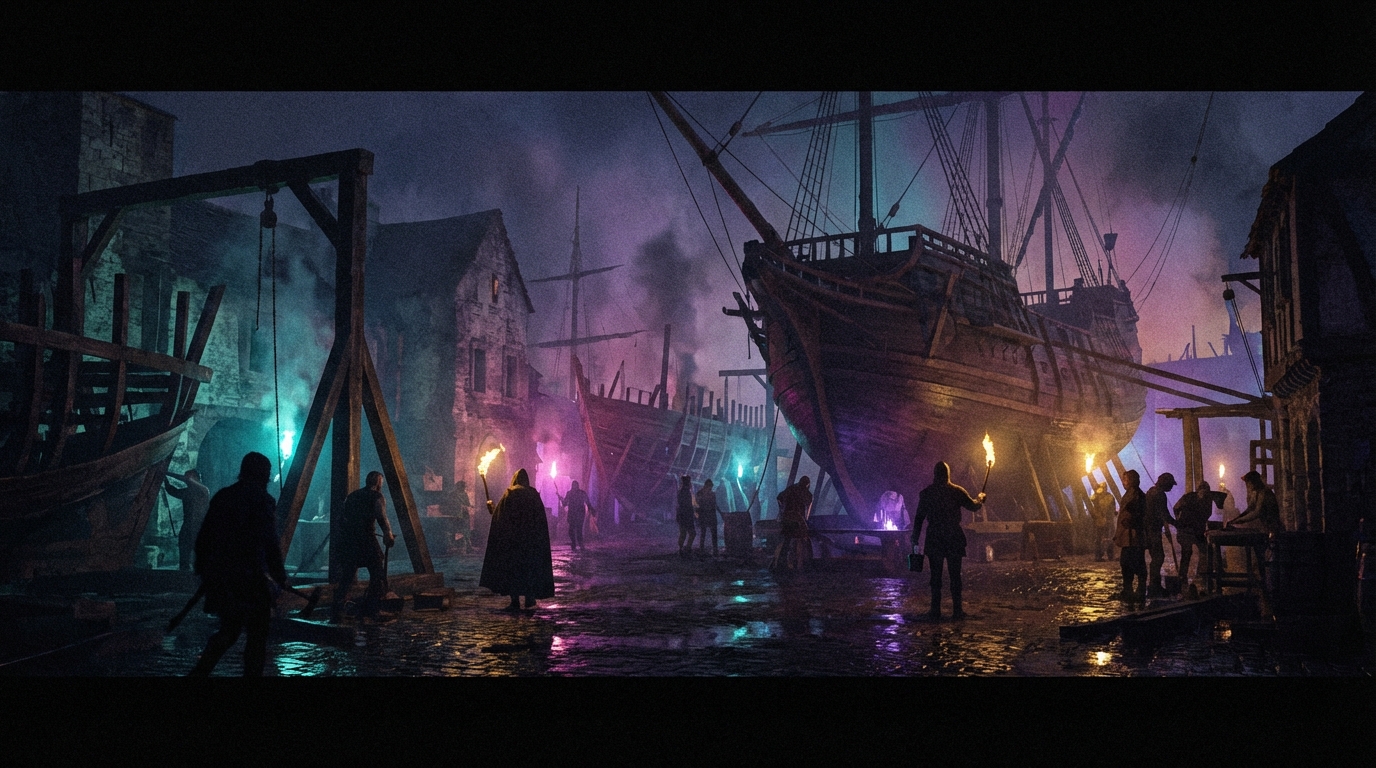
Portsmouth Dockyard came into official existence in 1495 when Henry VII recognized the strategic potential of Portsmouth's natural harbour on England's southern coast. The sheltered anchorage and deep-water access provided ideal conditions for a naval base positioned to defend against continental threats whilst facilitating maritime commerce. The initial establishment consisted of modest structures—timber warehouses, basic repair facilities, and administrative buildings that processed the Royal Navy's growing logistical requirements.
Henry VIII expanded his father's vision dramatically. Recognising that naval power would determine England's future, he invested heavily in Portsmouth's infrastructure during the 1540s. The construction of Southsea Castle in 1544 formed part of a coastal defence network protecting the dockyard and harbour from seaborne attack. New dry docks allowed larger vessels to undergo repairs that previously required beaching on tidal flats.
The dockyard's workforce during these early decades consisted primarily of shipwrights, rope-makers, sailmakers, and labourers whose skills passed from father to son across generations. These craftsmen developed expertise that made Portsmouth synonymous with quality shipbuilding. The timber for vessels came from forests throughout southern England, floated down rivers to Portsmouth where skilled workers transformed raw logs into warships capable of projecting English power across European waters.
The tragic sinking of the Mary Rose in 1545 during battle against the French fleet demonstrated both the dockyard's capabilities and the risks inherent in naval warfare. The vessel, built and fitted at Portsmouth, represented state-of-the-art naval architecture for its era. Its loss—visible from Portsmouth's shores—reminded the growing community that their livelihoods depended upon vessels designed to face mortal danger.
Elizabethan Expansion and Global Reach
The Elizabethan era brought unprecedented growth to Portsmouth Dockyard as England's maritime ambitions expanded from European waters to global exploration and trade. The dockyard serviced vessels returning from expeditions to the Americas, maintained warships that harassed Spanish treasure fleets, and repaired trading ships that opened new commercial routes to distant ports.
The workforce expanded to meet these demands. Shipwrights, whose numbers had been counted in dozens during Henry VIII's reign, now numbered in the hundreds. Specialist craftsmen—block-makers who created the pulleys essential to sailing ships, caulkers who sealed hulls against the sea, ropemakers whose miles of cordage held vessels together—all found steady employment at Portsmouth. The surrounding community grew accordingly, with lodging houses, taverns, and market stalls catering to dockyard workers and sailors awaiting deployment.
The dockyard developed its own culture during these years—a mixture of Royal Navy discipline and civilian pragmatism that would persist for centuries. Foremen managed teams of craftsmen with authority derived from technical expertise rather than aristocratic birth. Pay came irregularly, dependent on government finances strained by constant warfare. Yet the work continued because these men possessed skills unavailable elsewhere, because their families had worked the dockyard for generations, because Portsmouth had become inseparable from Britain's naval identity.
Civil War, Restoration, and the Dutch Wars
The seventeenth century tested Portsmouth Dockyard through political upheaval and military conflict. During the English Civil War, Portsmouth's strategic position made control of the dockyard essential to both Royalist and Parliamentary forces. The facility changed hands twice during the conflict, with whichever side controlled Portsmouth gaining significant naval advantages.
The Restoration brought renewed investment. Charles II, understanding that naval power had preserved his father's legacy where land forces had failed, poured resources into expanding Portsmouth's capabilities. New basins allowed more vessels to undergo simultaneous maintenance. Improved fortifications protected against the Dutch fleet that threatened England's maritime supremacy during three wars spanning 1652 to 1674.
The Anglo-Dutch Wars revealed technological limitations that Portsmouth's craftsmen worked to address. Dutch shipbuilding techniques produced vessels more manoeuvrable than English equivalents. Portsmouth's shipwrights studied captured Dutch vessels, incorporating design innovations whilst maintaining the robust construction that characterized English naval architecture. These incremental improvements, developed through practical experience rather than theoretical study, gradually restored England's naval advantages.
The dockyard workforce during this period faced constant pressure. Wartime demanded rapid construction and repairs whilst peacetime brought reduced funding and workforce reductions. Workers developed strategies for weathering these cycles—maintaining multiple skills to increase employment prospects, forming mutual aid societies to support families during unemployment, cultivating relationships with foremen who controlled hiring decisions.
Georgian Innovation and Napoleonic Triumph
The eighteenth century brought Portsmouth Dockyard to its zenith as Britain's primary naval facility. The expansion accelerated as conflicts with France—the War of Spanish Succession, the Seven Years' War, and eventually the Napoleonic Wars—demanded unprecedented naval power. The dockyard's physical plant expanded to accommodate this growth, with new docks, expanded workshops, and warehouses holding supplies for fleets operating across global waters.
The construction of the Portsmouth Block Mills in 1802 represented the pinnacle of Industrial Revolution innovation applied to naval logistics. Designed by engineer Marc Isambard Brunel, the mills pioneered mechanised production techniques that revolutionised block manufacturing. Previously, skilled craftsmen produced each block individually—a labour-intensive process that created bottlenecks in ship construction and repair. Brunel's machines, powered by steam engines, produced standardised blocks with unprecedented speed and consistency. A single mill operator could now produce more blocks in a day than a skilled craftsman could create in a week.
The Block Mills' significance extended beyond immediate production gains. They demonstrated that mechanisation could enhance rather than replace skilled labour, that industrial methods could maintain quality standards whilst increasing output, that British engineering ingenuity could solve logistical problems as effectively as British seamanship won battles. The mills operated continuously throughout the Napoleonic Wars, supplying the blocks essential to maintaining the Royal Navy's overwhelming numerical superiority over French and allied fleets.
Admiral Horatio Nelson's departure from Portsmouth aboard HMS Victory before the Battle of Trafalgar on 14 September 1805 crystallized the dockyard's role in Britain's naval mythology. The Victory, built at Chatham but extensively refitted at Portsmouth, embodied decades of accumulated naval architecture expertise. Nelson's farewell to Portsmouth—his final time on English soil—linked the dockyard forever with Britain's greatest naval victory. The Victory's return after Trafalgar, bearing Nelson's body preserved in brandy, completed the connection between Portsmouth and the triumph that secured British naval supremacy for a century.
The dockyard workforce during the Napoleonic Wars expanded to over 3,000 workers. Thomas Pritchard and Edward Jeffries numbered amongst the dock labourers whose strength hauled cargo and materials essential to maintaining the fleet. These men worked twelve-hour days during wartime, their wages barely sufficient to support families crammed into Portsmouth's increasingly crowded working-class districts. Injuries were common—crushed limbs from shifting cargo, falls from scaffolding, backs damaged by years of heavy lifting. There was no compensation for injured workers, no system beyond community charity to support widows and orphans when accidents proved fatal.
Victorian Prosperity and Industrial Maturity
The Victorian era brought continued growth despite the reduced urgency following Napoleon's defeat. The expansion of the railway network during the 1840s revolutionised the dockyard's logistics. Previously, materials arrived by wagon along muddy roads or by coastal vessel subject to weather delays. Railways provided reliable, weather-independent transportation that integrated Portsmouth more completely into Britain's industrial infrastructure.
The dockyard adapted to technological changes transforming naval warfare. Steam power supplemented and eventually replaced sail, requiring new workshops for engine maintenance and coal storage facilities. Iron and later steel construction replaced timber, demanding different craftsmen with different skills. The transition occurred gradually over decades, with the dockyard maintaining capability to service both traditional sailing vessels and modern steam-powered warships during the extended period when both types operated simultaneously.
The workforce composition evolved accordingly. Traditional shipwright families found their hereditary positions challenged by engineers and metalworkers whose skills derived from industrial experience rather than generational transmission. Tensions emerged between craftsmen proud of traditional methods and newcomers advocating industrial efficiency. The dockyard management navigated these conflicts pragmatically, recognizing that naval effectiveness required both types of expertise.
Portsmouth's civilian community prospered alongside the dockyard's continued importance. Philanthropists and industrialists invested in schools, hospitals, and cultural institutions supporting dockyard workers and their families. These investments reflected both genuine concern for working-class welfare and practical recognition that skilled workers required stable communities to maintain the expertise essential to naval power.
World Wars and Ultimate Test
World War I transformed Portsmouth Dockyard into a logistics centre supporting naval operations across global theatres. The Grand Fleet maintained at Scapa Flow required constant supply and periodic refits that Portsmouth provided. Merchant vessels received defensive armament and naval escorts organized from Portsmouth's facilities. The workforce expanded dramatically, including women employed in roles previously restricted to men as military conscription depleted available male labour.
The interwar years brought contraction and uncertainty. Naval disarmament treaties limited fleet size, reducing the dockyard's workload. Economic depression during the 1930s meant reduced government spending on naval infrastructure. Yet the dockyard persisted, maintaining core capabilities that would prove essential when war returned.
World War II tested Portsmouth more severely than any previous conflict. The dockyard's strategic importance made it a primary target for German bombing. Air raids during 1940 and 1941 killed hundreds of civilian workers and caused extensive damage to facilities. Yet the dockyard continued operating throughout the Blitz, with repairs conducted at night and work resuming each morning despite ongoing danger.
The D-Day landings in June 1944, orchestrated partly from Portsmouth, represented the dockyard's greatest contribution to Allied victory. Vessels assembled, supplied, and maintained at Portsmouth carried invasion forces across the English Channel. The successful landing, which ultimately led to Nazi Germany's defeat, vindicated centuries of investment in Portsmouth's naval infrastructure.
Post-War Decline and Heritage Preservation
The post-war decades brought challenges that proved more difficult than wartime bombing. Britain's diminished global role meant reduced naval requirements. The Royal Navy contracted dramatically from its wartime size, requiring fewer facilities for maintenance and repair. Portsmouth competed with other dockyards for a shrinking pool of work.
Modernisation efforts during the 1950s and 1960s, led by officials recognizing that traditional methods could not compete with newer facilities elsewhere, brought some reprieve. New dry docks capable of handling aircraft carriers temporarily secured Portsmouth's relevance. Yet the underlying trend was irreversible—Britain no longer maintained the global naval presence that had justified Portsmouth's extensive infrastructure.
The dockyard's evolution into Portsmouth Historic Dockyard during the late twentieth century represented adaptation to new realities. The preservation of HMS Victory, HMS Warrior, and the salvaged Mary Rose as museum ships transformed Portsmouth from active naval facility into heritage attraction celebrating Britain's maritime past. The Spinnaker Tower, completed in 2005, symbolised this transformation—a modern architectural statement looking forward whilst surrounded by preserved vessels embodying centuries of naval tradition.







