Philip Andrew Pyke
Philip Andrew Pyke emerged as one of Van Diemen's Land's earliest and most essential civilian craftsmen during the colony's harsh foundational years, when the settlement struggled to establish permanence on the edge of the known world. As the blacksmith serving the scattered settlements near Hobart Town in the 1820s, his life embodied both the brutal realities and the tentative hopes of this remote penal colony.
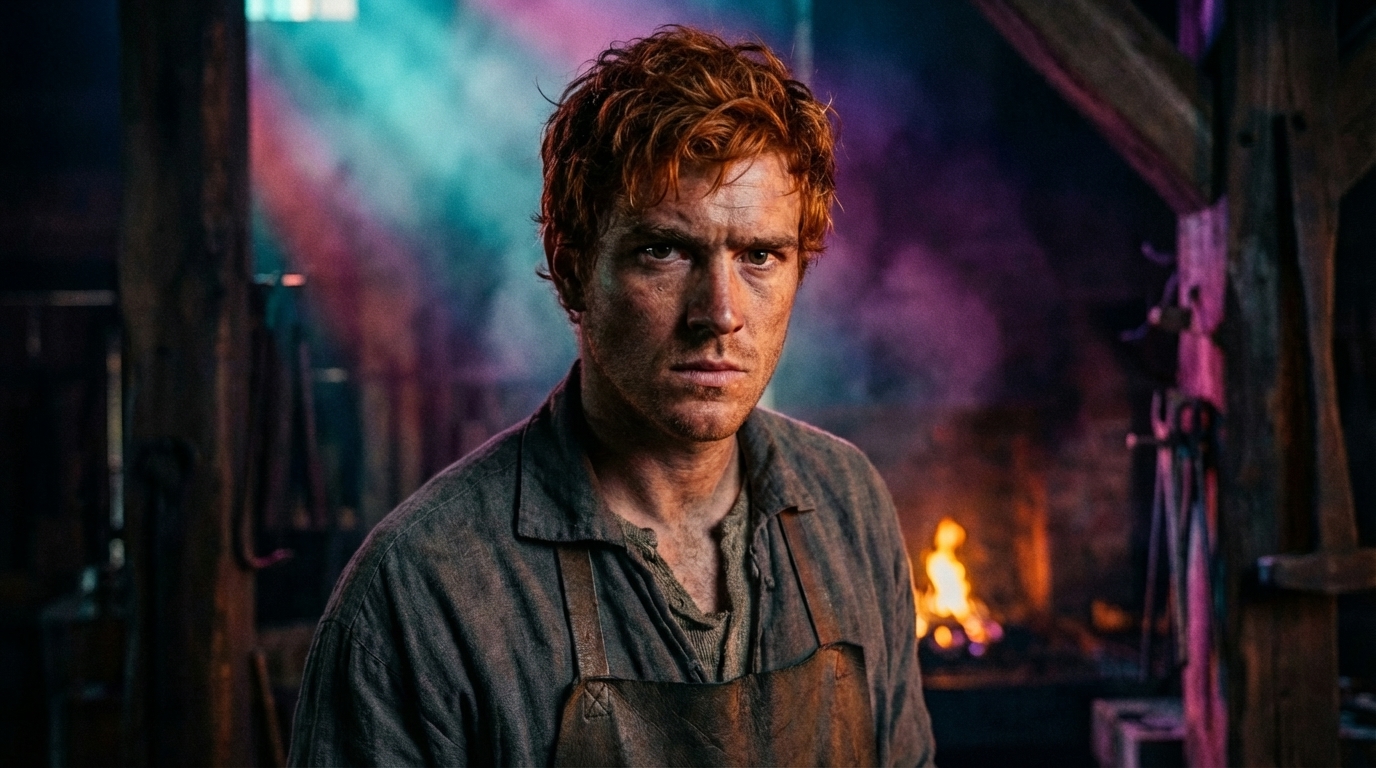
Early Life and Transportation (1785-1812)
Born on 23rd November 1785 in Sheffield's industrial sprawl, Philip Andrew Pyke entered the world as the second son of Thomas Pyke and Ellen née Bradshaw. His father operated a small forge on Bramall Lane, specialising in agricultural implements for the surrounding Yorkshire farms. The Pyke family had worked metal since before memory, though always at subsistence level, their skills keeping them barely above poverty.
Young Philip showed early promise at the forge. By age eight, he could maintain steady bellows rhythm whilst his older brother James struggled with basic tasks. His hands seemed to understand metal instinctively—how it moved, when it would crack, the precise moment to strike. His father, recognising this gift despite their strained means, began training Philip seriously at ten, earlier than tradition dictated.
At fourteen, Philip was formally apprenticed to Master Smith Robert Henley, whose workshop near Sheffield Cathedral served the city's merchant class. Under Henley's exacting instruction, Philip mastered both functional smithing and finer decorative work—the delicate scrollwork and careful joinery that elevated mere ironwork to artistry. He learned to read, to cipher accounts, to conduct himself amongst his betters when delivering commissioned pieces.
The incident that changed everything occurred on 15th March 1812. Philip, now twenty-six and an established journeyman, became entangled in a dispute over wages owed by merchant Samuel Crowe. When Crowe refused payment for completed work—ornate gates that had taken two months to craft—Philip made the catastrophic decision to reclaim them. Breaking into Crowe's property at night to remove the gates he considered rightfully his, Philip was apprehended by watchmen. Crowe, influential and vindictive, pressed charges of burglary and destruction of property.
The trial at Yorkshire Assizes in July 1812 was swift and merciless. Despite character witnesses testifying to Philip's previous good conduct and the provocative circumstances, the jury found him guilty. Judge Harrison, known for harsh sentences, condemned Philip to death, later commuted to transportation for life to Van Diemen's Land. His mother collapsed in the gallery; his father stood silent, fists clenched, unable to protect his talented son from the machinery of justice.
The Voyage and Arrival (1812-1813)
Philip departed Portsmouth aboard the convict transport Minstrel on 2nd December 1812, ironed in the hold with 197 other condemned men. The six-month voyage tested human endurance beyond previous imagining. Men died from typhus, from despair, from the simple accumulation of miseries. Philip survived through stubborn determination and unexpected fortune—the ship's blacksmith died three weeks into the voyage, and Philip's skills proved necessary for essential repairs.
Working under guard on deck, Philip repaired chains, hinges, and cooking equipment, earning marginally better rations and occasional fresh air. More importantly, he caught the attention of Lieutenant James Morrison, the military officer commanding the guard detail. Morrison, an educated Scot with engineering interests, recognised Philip's intelligence beneath the convict's filth and desperation. During calmer passages, Morrison allowed Philip to read from his small library, introducing him to principles of mechanics and natural philosophy that would later prove invaluable.
The Minstrel reached Hobart Town on 3rd June 1813. Philip's first glimpse of Van Diemen's Land revealed a settlement clinging precariously to civilisation's edge—wooden buildings scattered along the cove, chain gangs labouring on roads that disappeared into untamed bush, the omnipresent threat of the unknown pressing from all sides. The June winter was harsher than Yorkshire's, with winds that cut through threadbare convict slops like ice-water.
Assignment and Early Colonial Years (1813-1820)
Philip's smithing skills saved him from the road gangs' brutal labour. Within a week of arrival, he was assigned to government service at the colonial forge, working under overseer Thomas Garrett. The forge served all government needs—shackles and chains certainly, but also tools, nails, horseshoes, and the thousand metal necessities of expanding settlement.
Garrett, a former convict himself who'd earned his ticket-of-leave, proved a complex master. Harsh when drinking, which was often, he nevertheless recognised and respected skill. Philip learned to navigate Garrett's moods whilst absorbing crucial colonial adaptations—how the different climate affected metal tempering, how to work with inferior local coal, how to improvise when proper materials weren't available.
The work was relentless. Twelve-hour days at the forge, seven days a week, with punishment for any perceived slacking. Philip's hands, already calloused from Yorkshire, developed new patterns of scars from burns and cuts treated without proper medical attention. Yet he persevered, driven by the promise that skilled behaviour might eventually earn freedom's fragments—a ticket-of-leave, perhaps even conditional pardon.
In 1815, Philip received permission to undertake private work during Sundays, with earnings split between himself and the government. This concession, granted for exceptional conduct and crucial skills, marked the beginning of his transformation from convict to colonist. He repaired tools for free settlers, crafted decorative pieces for officers' wives, slowly building reputation and modest savings.
The relationship with William Jeffries began in 1819, when the entrepreneur arrived in Van Diemen's Land with capital and ambition. Jeffries required extensive ironwork for his expanding enterprises—reinforced locks for warehouses, fittings for his ships, security for his various properties. Philip, still under assignment but permitted private work, executed these commissions with particular attention, recognising both the prestige and the opportunity Jeffries represented.
Freedom and Establishment (1820-1821)
Philip received his ticket-of-leave on 15th January 1820, recognition for seven years of skilled labour and exemplary conduct. The document, signed by Lieutenant-Governor Sorell himself, permitted Philip to work for wages within the Hobart district, though he remained subject to musters and restrictions. Freedom, even partial, tasted sweeter than any Yorkshire ale remembered from his former life.
He immediately established an independent forge on the outskirts of Hobart Town, near what would later become Granton. The structure was primitive—walls of rough-hewn timber, a roof that leaked in heavy rain, equipment salvaged or crafted from scraps. Yet it was his, built by his own hands, representing possibilities unimaginable in the dock at Yorkshire Assizes.
The colonial forge's location proved strategic. Close enough to Hobart for government contracts, yet positioned along the northern road where expanding estates required services. Free settlers, former convicts with conditional pardons, and the occasional military officer sought Philip's skills. His reputation for honest work and fair dealing spread quickly in the small colonial community where reliability meant survival.
By early 1821, Philip employed an assigned convict assistant, young Timothy Walsh, sentenced for poaching but showing aptitude for metalwork. Philip taught the boy not merely to swing hammers but to understand the craft's principles, remembering his own transition from condemned man to skilled tradesman. This mentoring would become Philip's pattern—training other convicts in skills that might spare them from brutality and despair.
The Jeffries Disappearance (August 1821)
The events of August 1821 would entangle Philip in Van Diemen's Land's earliest unsolved mystery. When William Jeffries Sr. vanished from his property on the night of 9th August, the colonial authorities immediately suspected foul play. Jeffries had accumulated enemies through his rapid rise—competing merchants, dismissed employees, convicts who'd suffered under his harsh management.
Constable John Broadmoor, recently appointed to maintain order in the expanding district, recognised Philip's unique position. As the man who'd crafted and maintained much of Jeffries's ironwork, Philip understood the physical security of the properties involved. Moreover, his conditional freedom and established reputation made him trustworthy enough to assist the investigation whilst understanding the consequences of any misconduct.
On 10th August, Philip joined the search party scouring the bush surrounding Jeffries's estate. His powerful frame, hardened by years at the forge, enabled him to push through undergrowth that exhausted others. His systematic mind approached the search methodically, dividing terrain into sections, noting details others overlooked. Yet as hours passed without discovery, even Philip's determined optimism began to fade.
The bloodstains discovered near the estate's boundary presented a puzzle Philip helped investigate. The marks on nearby stones suggested impact from a heavy tool—possibly a hammer. Philip examined these marks with professional expertise, noting their angle and depth, though he carefully stated they could have been made by any number of implements. His diplomatic assessment avoided implicating specific individuals whilst providing Broadmoor with crucial technical information.
Thomas Gilchrist, the estate's gamekeeper, worked alongside Philip during the search. The Scotsman's knowledge of the land complemented Philip's systematic approach. Together, they covered more ground than any other pairing, though their efforts proved ultimately fruitless. The bush had swallowed William Jeffries as completely as the ocean swallows a stone.
The Investigation's Aftermath (1821-1822)
As days became weeks without resolution, Philip found himself increasingly drawn into the investigation's orbit. His workshop became an informal meeting place where Broadmoor could speak privately with various witnesses. Philip's presence—solid, unthreatening, yet commanding respect—often encouraged revelations that might not have emerged in formal questioning.
The investigation revealed the colony's underlying tensions. Jeffries's disappearance exposed networks of debt, obligation, and resentment that threaded through Van Diemen's Land's small population. Philip, maintaining careful neutrality, observed how quickly civilisation's veneer cracked when pressure was applied. Former convicts suspected free settlers, settlers suspected convicts, and everyone wondered what authorities might uncover if they looked too closely.
Philip's journal from this period, begun at Broadmoor's suggestion to document observations, reveals a thoughtful mind grappling with colonial reality. His entry for 25th August 1821 proves particularly insightful: "In this place where men come to disappear from their former lives, perhaps it is not so strange that one might disappear again. Jeffries was a man of secrets—we all knew this though none spoke it plainly. Perhaps the land itself, resentful of our intrusions, has reclaimed him."
The investigation's suspension in September 1821, with no body discovered and no conclusive evidence of crime, left Philip curiously affected. His orderly mind struggled with the irresolution. He continued discussing theories with Broadmoor during their occasional meetings, each man sensing answers just beyond reach, like heat shimmer in the bush that vanishes when approached directly.
Building a Life (1822-1835)
Following the Jeffries matter, Philip focused on establishing himself within the colony's expanding economy. His conditional pardon, granted in 1823, removed most restrictions on his movement and enterprise. He expanded his forge, adding a second hearth and taking on additional assigned servants as assistants. The business grew steadily, serving the district's increasing population of free settlers and emancipists.
In 1825, Philip made a decision that surprised many—he married. Sarah Clarke, widow of a former marine, brought two young children to the union. Sarah, transported in 1818 for receiving stolen goods, understood the complexities of reinvention that colonial life demanded. Their marriage, built on pragmatic foundations, developed into genuine affection. Sarah managed the forge's accounts whilst Philip worked, her quick mind for figures complementing his technical skills.
Their own children followed—Ellen Mary in 1826, Thomas William in 1828, and Margaret Jane in 1831. Philip approached fatherhood with the same methodical dedication he brought to smithing. He taught his children to read using technical manuals, showed them how to judge metal's temperature by colour, insisted they understand both the practical and theoretical aspects of any task they undertook.
The forge's reputation extended throughout the district. Philip's ornamental work began appearing on Hobart's public buildings—the intricate gates of St David's Church, the decorative railings at Government House. Each piece demonstrated technical mastery whilst incorporating subtle elements reflecting Van Diemen's Land's unique character—native plant motifs, suggestions of mountain silhouettes, patterns that captured the colony's particular quality of light.
Middle Years and Colonial Development (1835-1850)
As Van Diemen's Land evolved from penal settlement toward civil society, Philip's position solidified into respectability. The stigma of convict origins faded, though never entirely disappeared, as the colony required skilled men regardless of their past. Philip served on the district road board, contributed to the Mechanics' Institute establishment, and helped organise the Benevolent Society for distressed emigrants.
His workshop became a training ground for the colony's next generation of metalworkers. Philip took particular satisfaction in training former convicts, understanding intimately the redemption that mastering a craft could provide. His apprentices spread throughout the colony, carrying his methods and standards to distant settlements. Several achieved significant success, always crediting "Master Pyke" for their foundation.
The 1840s brought technological challenges as steam power and industrial methods reached the colony. Philip adapted pragmatically, incorporating new techniques whilst maintaining traditional skills. He recognised that understanding fundamental principles remained essential regardless of technological advancement. His workshop balanced innovation with tradition, using steam hammers alongside hand-forging techniques.
Sarah's death from consumption in 1847 devastated Philip. Her steady presence had anchored him through the colony's turbulent changes. He threw himself into work with renewed intensity, accepting commissions that pushed his skills' boundaries. The gates he created during this period of grief display a poignant quality—strength intertwined with delicacy, suggesting losses that strengthened rather than broke.
Final Years (1850-1858)
As Philip entered his seventh decade, years of forge work had taken their toll. His hands, once so steady, developed tremors. His lungs, damaged by decades of coal smoke and metal fumes, struggled in Tasmania's winter dampness. Yet he continued working, driven by habit and the fear of idle hands that had sustained him since transportation.
In 1854, he began documenting his techniques in detail, creating illustrated manuals that would preserve hard-won colonial adaptations. These documents, now held in Tasmania's state archives, provide invaluable insights into early colonial craftsmanship. His drawings show not just technical specifications but the accumulated wisdom of creating civilisation's infrastructure from nothing.
Philip's final commission, completed in early 1858, was restoration work on the very gates he'd created for Jeffries's estate nearly forty years earlier. Age had weathered but not weakened them, testament to his skill. Standing before these gates, Philip reportedly told his son Thomas: "I outlasted him after all. The metal endures when men vanish."
On 14th June 1858, Philip Andrew Pyke died peacefully in his sleep, aged seventy-two. His funeral drew hundreds—former convicts and free settlers, apprentices and clients, all acknowledging a man who'd forged himself anew in Van Diemen's Land's unforgiving crucible. The governor himself attended, noting Philip's contribution to the colony's transformation.







