
Patricia Anne Jennings (née O'Connor)
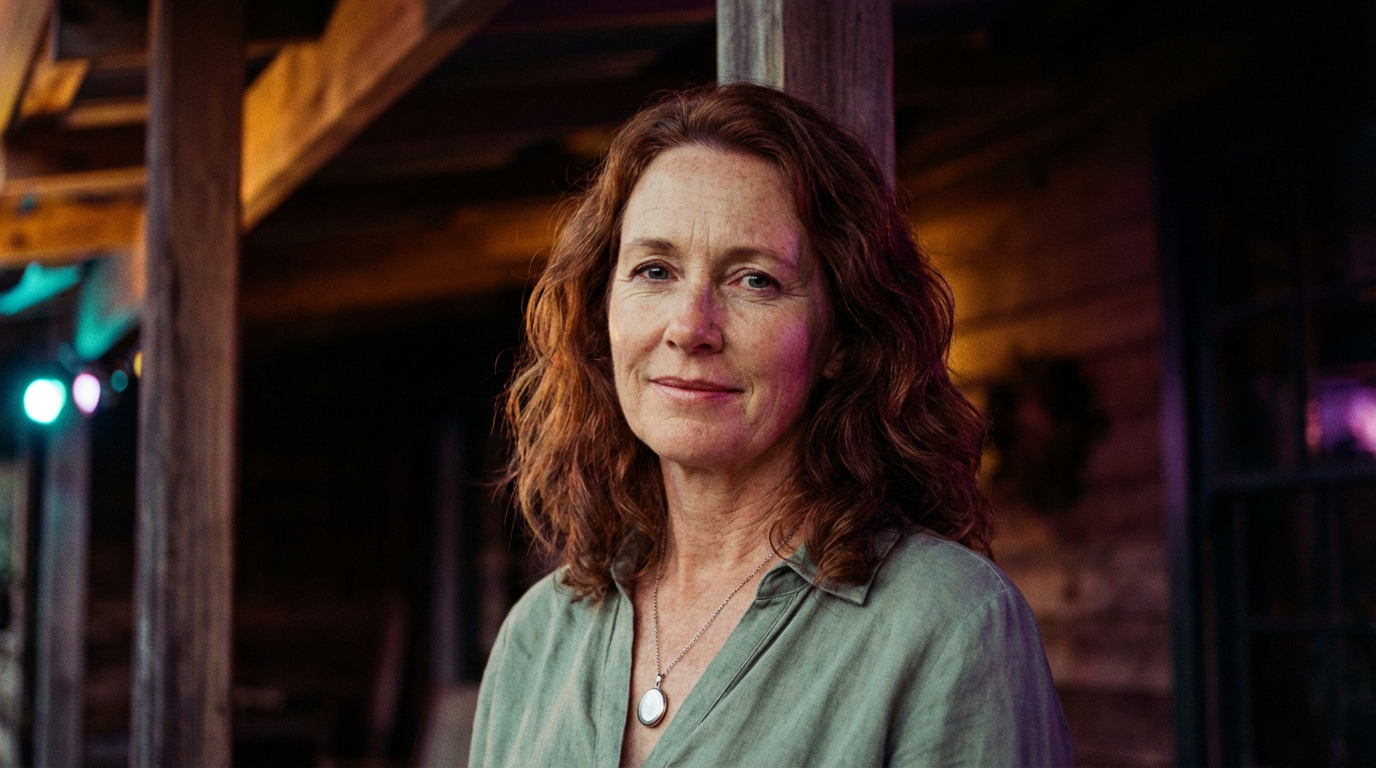
Patricia Anne Jennings (née O'Connor), born on 28 April 1947 in Adelaide, South Australia, was the eldest daughter of Irish immigrants Seamus and Eileen O'Connor. A gifted student who sacrificed her teaching ambitions to marry farmer Brian Edward Jennings in 1967, she became the matriarch of a family of seven children on the Jennings Family Farm in Gawler. Patricia died on 5 September 2002, aged fifty-five, following a battle with cancer.
Early Life and an Irish-Australian Upbringing
Patricia Anne O'Connor was born on 28 April 1947 in Adelaide, South Australia, the eldest of three children born to Seamus O'Connor, a skilled carpenter, and Eileen O'Connor (née Doyle), a homemaker whose fierce devotion to education and Catholic faith shaped the household in equal measure. The O'Connor family occupied a modest but well-kept home in Adelaide's inner suburbs, where Seamus's steady carpentry income provided a respectable if unremarkable standard of living. Patricia's younger brother, Thomas, arrived in 1950, followed by her sister, Margaret, in 1953.
Seamus and Eileen had emigrated from Ireland in the early 1940s, part of a wave of Irish families seeking stability and opportunity in post-war Australia. They carried with them the values of their upbringing—hard work, communal responsibility, and an almost reverential regard for learning—but also the particular anxieties of immigrants determined that their children would never know the economic precariousness they had left behind. Eileen, who had completed secondary education in Ireland at a time when many women did not, insisted that all three of her children would be educated to the highest standard the family could afford.
Patricia thrived under this expectation. She was a bright, earnest child with a natural curiosity about the world and a capacity for sustained concentration that her teachers remarked upon from an early age. Enrolled at St Mary's Catholic Primary School, she excelled across subjects but showed particular aptitude for reading and composition, filling notebooks with stories and observations that revealed a mind already attuned to the textures of language. Her Catholic schooling reinforced the faith that Eileen modelled at home, and Patricia became an active participant in parish life—singing in the church choir, volunteering at the parish library, and absorbing the rhythms of a community centred on worship and mutual aid.
St Aloysius College and the Dream of Teaching
Patricia's secondary education at St Aloysius College confirmed her academic promise and broadened her intellectual horizons. She developed a particular passion for literature and history, subjects that engaged both her analytical mind and her imaginative sensibility. Her teachers praised her diligence and her ability to inspire classmates—qualities they noted would serve her well in the teaching career she had begun to envision for herself. She was not merely a good student but a purposeful one, someone who understood education not as obligation but as opportunity, a conviction inherited directly from Eileen's insistence that learning was the surest path to a meaningful life.
Outside the classroom, Patricia discovered a talent for writing that went beyond academic competence. In her spare time, she composed short stories and poems, working through exercises in narrative and voice that she shared with nobody except, occasionally, her sister Margaret. The writing was earnest rather than exceptional—Patricia herself would have been the first to acknowledge this—but it represented a private creative life that existed alongside her more public academic achievements. She harboured quiet ambitions of becoming a teacher, hoping to inspire young minds in the way her own had been shaped by the women who taught her at St Aloysius.
After graduating from St Aloysius College in 1965, Patricia enrolled at the University of Adelaide to pursue a degree in education. She was eighteen years old, the first member of the O'Connor family to attend university, and the weight of that distinction was not lost on her. Seamus and Eileen regarded her enrolment with a pride that bordered on reverence—this was precisely the outcome their emigration had been designed to achieve.
The Gawler Agricultural Fair and Brian Jennings
Patricia's carefully plotted trajectory took an unexpected turn in the spring of 1965 when she attended the Gawler Agricultural Fair with friends. It was an excursion undertaken on a whim—a break from the pressures of her first university term, a chance to see something of the rural world beyond Adelaide's suburban boundaries. She had no particular interest in agriculture and no connection to Gawler, a town she knew only vaguely as a farming settlement north of the city.
At the fair, she caught the eye of Brian Edward Jennings, a twenty-year-old farmer who was showcasing his family's produce at one of the exhibition stalls. Brian was not the sort of man Patricia might have imagined for herself—he was practical where she was intellectual, reserved where she was articulate, rooted in soil and machinery where she was oriented towards books and ideas. Yet something in his manner drew her attention: a warmth beneath the weathered exterior, an earnestness that felt unperformed, a quality of steadiness that suggested depths not immediately visible. Brian, for his part, was struck by Patricia's quick wit and the lively intelligence that animated her conversation. He mustered the courage to introduce himself, and the pair spent the remainder of the day together.
Over the following year, their courtship unfolded through letters and visits that bridged the forty-kilometre distance between Adelaide and Gawler. Patricia found herself increasingly drawn not only to Brian but to the Jennings family itself—to Edward and Margaret's hospitality, to the rhythms of farm life, to the tight-knit Gawler community that seemed to operate on principles of mutual support she recognised from her own Irish Catholic upbringing. The parallels were not exact, but they were sufficient to make the unfamiliar feel navigable.
In the summer of 1966, Brian proposed during a picnic on the banks of the North Para River, a quiet stretch of water that wound through the countryside near the farm. Patricia accepted. The decision to marry Brian meant leaving the University of Adelaide before completing her education degree—a sacrifice that was not taken lightly and that carried a cost Patricia rarely discussed publicly. She understood what she was giving up, and she chose to give it up anyway, trusting that the life she was choosing offered its own forms of fulfilment.
Marriage and Adaptation
Patricia Anne O'Connor married Brian Edward Jennings on 14 January 1967 in a simple ceremony at St Peter's Anglican Church in Gawler, surrounded by family and friends from both the farming community and Patricia's Adelaide circle. The wedding was modest—flowers from the farm's garden, a reception in the church hall—but it marked the beginning of a partnership that would define both their lives for the next three decades.
The transition from university student in Adelaide to farmer's wife in Gawler required adaptation of a fundamental kind. Patricia had grown up in suburban comfort with access to libraries, churches, schools, and the cultural amenities of a city. The Jennings Family Farm offered a different world entirely—one governed by weather and seasons, by the demands of livestock and machinery, by the isolation of a property situated on the outskirts of a small country town. She arrived into a household presided over by Brian's parents, Edward and Margaret Jennings, whose presence added a further layer of complexity to the adjustment. Edward, a man of tradition and exacting standards, was not always easy to please, and Margaret, though warm, had her own established ways of running the domestic side of farm life.
Patricia adapted with characteristic determination. She learned the routines of the farm, supported Brian in his work, and began to establish her own role within the household and the broader Gawler community. Her education and organisational skills, though no longer directed towards a classroom, found expression in the management of a growing family and an increasingly active community life. She brought to the farmhouse an intellectual energy that the property had not previously known—books accumulated on shelves, conversations at the dinner table ranged beyond agricultural concerns, and the children who would soon arrive were raised in an environment where curiosity was valued alongside practical competence.
Seven Children and the Architecture of Family Life
Patricia's first child, Cody Brian Jennings, was born on 15 August 1968 at the Gawler and District Soldiers' Memorial Hospital. The arrival of a son barely eighteen months into the marriage transformed Patricia from newlywed to mother with a swiftness that left little time for the gradual adjustment she might have preferred. Anne Elizabeth followed on 22 November 1970 at the Hutchinson Hospital in Gawler. Catherine arrived on 7 March 1973, delivered unexpectedly at the farmhouse itself with the assistance of a retired midwife neighbour—an event that underscored the unpredictability of life on the land. Janice Marie was born on 12 September 1975 at Hutchinson Hospital. Kenneth Oliver came on 29 January 1978, born at the family farmhouse. Raymond followed on 3 June 1980 at Hutchinson Hospital, and Tania, the youngest, completed the family on 18 December 1982, also at Hutchinson.
Seven children in fourteen years demanded an extraordinary capacity for organisation, patience, and physical endurance. Patricia managed the household with a blend of warmth and discipline that reflected both her Catholic upbringing and her natural temperament. She fostered an environment where each child's individual character was recognised and encouraged, even as the collective demands of a large family required compromise and shared sacrifice. Meals were communal events, homework was supervised with the attentiveness of the teacher she had once aspired to become, and the values of kindness, integrity, and perseverance were communicated through daily practice rather than formal instruction.
Patricia was particularly attuned to the varied gifts her children displayed. When Kenneth, her fifth child, began demonstrating extraordinary musical talent on the family's old upright piano from the age of three, it was Patricia who recognised that his abilities required nurture beyond what Gawler could provide. The decision to send eight-year-old Kenneth to the Sydney Conservatorium of Music in 1986 was wrenching for both parents, but Patricia orchestrated the arrangement with her characteristic practicality, placing Kenneth in the care of her own siblings—her brother Thomas and sister Margaret O'Connor—who were living in Sydney. The separation was painful, but Patricia understood that genuine love sometimes required releasing a child towards a future that could not be contained within the boundaries of the family farm.
Community, Faith, and the Life of the Mind
Despite the consuming demands of raising seven children on a working farm, Patricia maintained an active presence in the Gawler community that reflected her deep-seated belief in civic responsibility. She volunteered at the Gawler Public Library, where she organised children's reading programmes and assisted with community events—work that allowed her to exercise, however informally, the educational instincts she had carried since her St Aloysius days. She served on the Parent-Teacher Association at her children's schools, advocating tirelessly for improved educational resources and opportunities in what was, by metropolitan standards, an underserved regional area.
Her Catholic faith, though necessarily adapted after her marriage in an Anglican church, remained a quiet anchor throughout her life. Patricia was not ostentatious in her devotions, but the principles she had absorbed at St Mary's and St Aloysius—compassion for others, service to community, the dignity of every person—informed her daily conduct in ways that those around her recognised even if they could not always articulate. She was the sort of woman who appeared at a neighbour's door with a casserole before anyone had thought to ask, who remembered birthdays and anniversaries, who noticed when someone was struggling and found unobtrusive ways to help.
Patricia never entirely relinquished her intellectual life. She was an avid reader throughout her years on the farm, consuming novels and history books with an appetite that the demands of her days could constrain but not extinguish. She stayed up late after the children were in bed, reading by lamplight in the quiet farmhouse, maintaining a private relationship with literature and ideas that connected her to the young woman she had been at university. In time, she shared this love with her children—particularly with Tania, the youngest, who inherited her mother's facility with language and would eventually pursue a career as a novelist.
The Welcome at the Farmhouse Door
One evening in late October 1987, Patricia's instinct for hospitality was tested in a way that would carry consequences she could never have anticipated. Nineteen-year-old Cody brought home a stranger he had met at the Kingsford Smith pub—a man named Jeremiah Atkins who seemed to carry with him the air of distant places and experiences beyond the ordinary. Despite the late hour, Patricia welcomed Jeremiah into the farmhouse with the unhesitating warmth that was her hallmark. A bed was made up, supper was offered, and the stranger was absorbed into the household with the ease of a family accustomed to making room.
Patricia could not have known that Jeremiah's presence would fundamentally alter the trajectory of her eldest son's life, drawing him into responsibilities and a secret existence that would eventually estrange him from the family she had built with such care. What she offered that evening was simply what she had always offered—welcome, warmth, the extension of family bonds beyond blood—and it remained one of the defining expressions of the values she had lived by since childhood.
Widowhood and the Weight of Loss
The death of Brian's father, Edward Charles Jennings, on 15 August 1997, at the age of seventy-nine, marked the beginning of a period of devastating loss for the family. Brian, who had maintained a complex but ultimately loving relationship with his father, was deeply affected. Barely three months later, on 18 November 1997, Brian himself suffered a fatal heart attack whilst working on the farm. He was fifty-two years old.
Patricia's grief was immense and private. She had spent thirty years building a life alongside Brian—raising seven children, modernising a farm, navigating the tensions and satisfactions of a partnership forged between two people of fundamentally different temperaments who had nonetheless found in each other something essential. His death at such a relatively young age robbed her of the companionship she had expected to sustain her into old age and left her as the sole emotional anchor for a family reeling from the loss of its patriarch.
She bore the weight with a resilience that those around her found both inspiring and slightly heartbreaking. Patricia continued to live on the farm, maintaining the household and providing stability for those children still at home whilst Tania, the youngest, was only fourteen. She guided the family through the practical and emotional upheaval of Brian's death with the same quiet determination she had brought to every challenge since leaving Adelaide as a young bride three decades earlier. Cody, then twenty-nine, attended his father's funeral but departed abruptly afterwards—a pattern of unexplained absences and emotional distance that had worried Patricia for years without her ever understanding its true cause.
Illness and Death
In the years following Brian's death, Patricia found solace in her faith, in her growing number of grandchildren, and in the community that had supported her throughout her married life. She continued to volunteer, to read, to maintain the connections that gave her days structure and meaning. But her health, which had been robust throughout the demanding years of child-rearing and farm work, began to decline.
Patricia was diagnosed with cancer in the early 2000s. She faced the illness with courage and a characteristic reluctance to burden others with her suffering. Her children rallied around her—Anne, who had assumed stewardship of the farm following Brian's death, was particularly present—but Patricia's decline was steady and, ultimately, irreversible.
Patricia Anne Jennings died on 5 September 2002 at the age of fifty-five. The funeral was held at St Peter's Anglican Church in Gawler, the same church where she had married Brian thirty-five years earlier. Her passing, coming just five years after Brian's death, left the Jennings siblings orphaned in adulthood and marked the definitive end of an era for the family. Cody, carrying secrets and responsibilities his siblings could not have imagined, sent a final letter expressing his love and his need to distance himself—instructions, strange and painful, that his brothers and sisters honoured without fully understanding.







