Nathaniel Stephen Blackwood
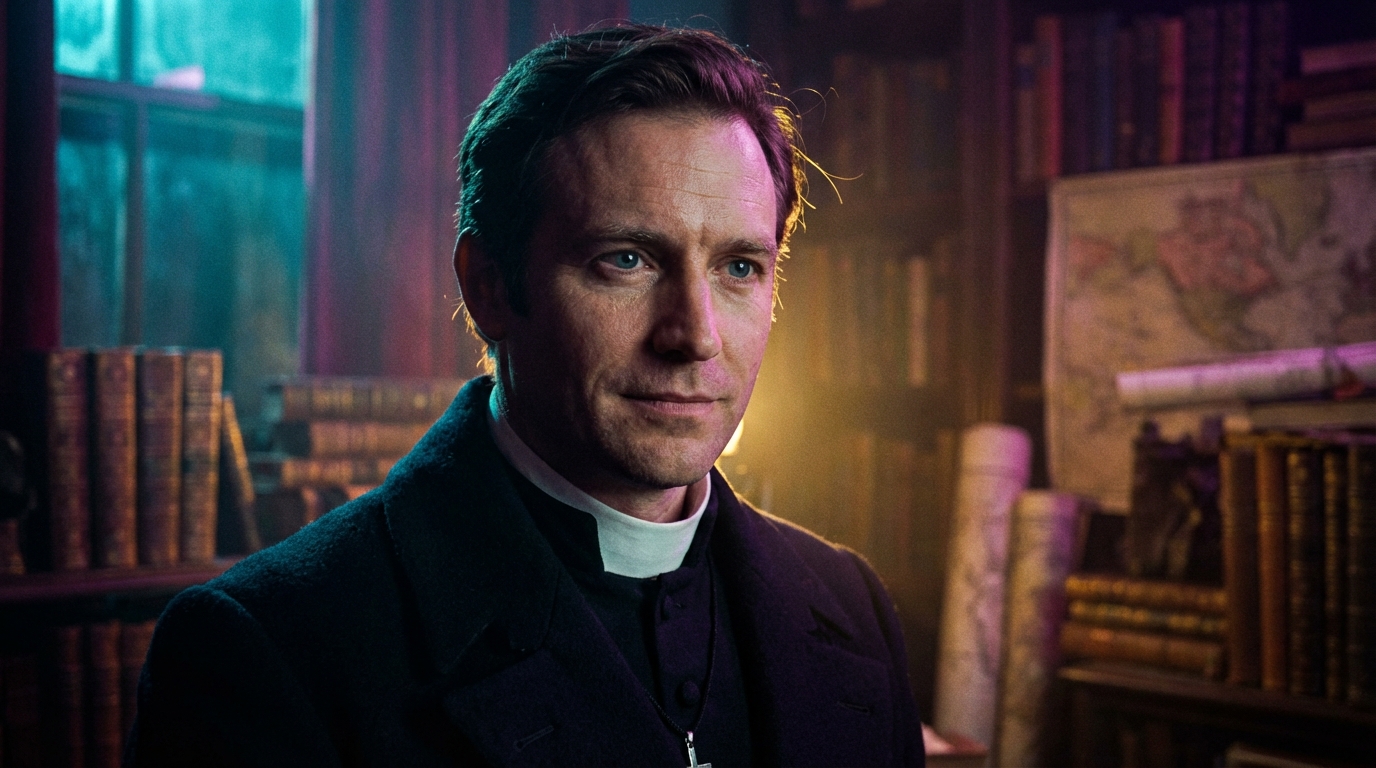
Nathaniel Stephen Blackwood, born 17 February 1740 in Portsmouth, served as parish priest at St. Thomas' Church for thirty-four years. The shipwright's son studied divinity at Oxford's Christ Church College before returning to shepherd his community through eloquent sermons and tireless charity work. He blessed newborn William Jeffries on 22 April 1785. Margaret's 1791 death devastated him, yet he continued serving Portsmouth's poor until his own death on 10 November 1798, buried beside her with the inscription "A Shepherd to His Flock."
Shipwright's Son and Portsmouth Childhood
Nathaniel Stephen Blackwood was born on 17 February 1740 in a modest home near Portsmouth Dockyard, where the sounds of maritime commerce—hammering, sawing, sailors' calls—provided constant backdrop to daily life. His father Jonathan worked as a shipwright, one of the skilled craftsmen who transformed timber into vessels for the Royal Navy. His mother Catherine managed their household with the resourcefulness required of working families whose income depended upon irregular contracts and seasonal demand.
The Blackwood home sat close enough to the dockyard that young Nathaniel absorbed the rhythms of Portsmouth's naval identity from earliest memory. He watched his father depart before dawn to reach the dockyard gates when work was available, observed ships being built or repaired in the dry docks, listened to his father's evening tales about the vessels he helped construct. These experiences instilled in Nathaniel a deep connection to Portsmouth's maritime community—he understood the precariousness of dockyard wages, the dangers that claimed workers' lives, the pride craftsmen took in ships that would carry Britain's naval power across global waters.
Catherine ensured Nathaniel received education beyond what most working-class children accessed. She had learned to read from her own mother, and she taught Nathaniel his letters before he reached school age. This foundation, combined with Jonathan's ability to pay the modest fees required for grammar school attendance, opened opportunities that transformed Nathaniel's trajectory. He began attending Portsmouth Grammar School at age seven, walking the narrow streets each morning with a slate and primer under his arm.
Grammar school revealed Nathaniel's intellectual capabilities. He excelled in Latin, mastering declensions and conjugations with ease that surprised his masters. Rhetoric, theology, and classical texts captivated him in ways that practical subjects like mathematics or navigation never could. His schoolmaster, recognizing exceptional talent, encouraged Nathaniel toward university education—an extraordinary prospect for a shipwright's son in 1750s Portsmouth.
The local parish priest, Father Matthew Harding, became Nathaniel's mentor during these formative years. Father Harding, a learned man who maintained an extensive personal library, invited Nathaniel to his rectory for theological discussions that stretched long into evenings. These conversations, conducted in Latin and ranging across church history and doctrine, awakened in Nathaniel a sense of calling. By age sixteen, he knew he would enter holy orders.
Oxford Years and Ordination
Nathaniel departed Portsmouth for Oxford in autumn 1758, at eighteen years of age. His father had saved diligently for years to fund university education, understanding that his son's gifts demanded opportunities beyond the dockyard. The journey from Portsmouth to Oxford took three days by coach, carrying Nathaniel from the familiar maritime world of his childhood into the ancient academic realm that would shape his ministry.
Christ Church College accepted Nathaniel as a commoner—a student who paid his own fees rather than holding a scholarship. The distinction marked social status, but Nathaniel's intelligence and dedication quickly earned respect from tutors and fellow students regardless of his working-class origins. He rose before dawn to study by candlelight, attended lectures and disputations throughout the day, and spent evenings in the college library absorbing theological texts.
The four years at Oxford demanded rigorous intellectual engagement. Nathaniel studied patristic writings, medieval scholasticism, Reformation theology, and contemporary religious controversies. He learned to construct logical arguments, defend positions through oral disputation, and write scholarly essays in Latin. The experience expanded his intellectual horizons whilst deepening his faith—academic theology complemented rather than challenged his devotional life.
Yet Oxford also revealed class divisions that Nathaniel had not fully appreciated in Portsmouth. His fellow students from gentry and aristocratic families possessed ease and privilege that Nathaniel, despite his intelligence, could never claim. They had tutors, family connections, expectations of comfortable livings in prosperous parishes. Nathaniel knew he would return to Portsmouth, would serve the working families whose circumstances resembled his own, would never achieve the preferment that family influence could secure for others.
He graduated in 1762, returning to Portsmouth with a Bachelor of Arts degree in divinity. The qualification marked extraordinary achievement for a shipwright's son, yet Nathaniel carried it with humility rather than pride. He had gone to Oxford not to escape his origins but to better serve the community that had shaped him.
Early Ministry at St. Thomas' Church
Nathaniel's ordination occurred in 1764 at Portsmouth Cathedral. Bishop Edmund Keene laid hands upon his head whilst Nathaniel knelt, consecrating him to lifelong service in the Church of England. The moment represented the culmination of years of preparation and the beginning of his true vocation. He was assigned to St. Thomas' Church in Portsmouth's working-class district near the dockyard—precisely where he had hoped to serve.
St. Thomas' Church, built in the early seventeenth century, served the families of dockyard workers, sailors, and artisans. The congregation consisted of people like Nathaniel's own parents—hardworking, often struggling, maintaining respectability through faith and community bonds despite material poverty. Nathaniel understood their lives intimately, spoke their language, knew their fears and hopes because they mirrored his own family's experience.
His sermons quickly attracted attention. Nathaniel possessed the rare combination of theological learning and genuine understanding of his parishioners' daily struggles. He could discuss doctrine with sophistication whilst illustrating points through examples his congregation immediately grasped. His voice, trained through Oxford disputations, carried clearly through the church without shouting. His delivery conveyed genuine conviction rather than rehearsed performance.
The parish work extended far beyond Sunday sermons. Nathaniel visited the sick, comforted the dying, counselled couples facing marital difficulties, and mediated disputes between neighbours. He conducted baptisms, marriages, and funerals—marking the significant transitions in his parishioners' lives with ritual and prayer that provided structure and meaning. He kept parish registers meticulously, documenting births, deaths, and marriages that constituted the only official records of most working-class people's existence.
Marriage to Margaret Hastings
In 1767, Nathaniel married Margaret Hastings, daughter of a Portsmouth merchant whose shop supplied provisions to naval vessels. Margaret, twenty-three years old at marriage, brought to the union both material resources beyond what Nathaniel's modest clerical income provided and, more importantly, a temperament perfectly suited to a clergyman's wife. She shared Nathaniel's commitment to serving others, possessed practical skills in household management, and demonstrated genuine warmth toward the poor families who comprised St. Thomas' congregation.
Their courtship had proceeded with propriety—chaperoned walks along Portsmouth's harbour wall, attendance at parish events, carefully supervised visits in the Hastings home. Margaret's father, initially uncertain about his daughter marrying a clergyman with limited financial prospects, eventually recognized Nathaniel's character and intelligence. The marriage, conducted at St. Thomas' Church by Father Harding, united two people whose shared values and complementary strengths created a genuine partnership.
The Blackwood home, established in a modest rectory near St. Thomas', became known for hospitality that transcended mere social courtesy. Margaret welcomed parishioners who needed counsel, provided meals for families facing crisis, organized charitable collections amongst better-off congregants to assist the destitute. She attended births when midwives needed extra hands, sat with the dying when families were exhausted, and somehow maintained a household that felt warm and welcoming despite constant demands on its resources.
Their first child, Jonathan, arrived in 1769. Catherine followed in 1772. The children grew up in an environment where parish duties and family life intermingled seamlessly. They learned early that their father's time belonged to his congregation, that strangers might appear at their door at any hour, that their home existed to serve others as much as to shelter the family. Yet Nathaniel and Margaret ensured the children knew they were loved, that family meals provided sacred time together, that their own needs mattered even as they learned the importance of serving others.
The Blessing of William Jeffries
The afternoon of 22 April 1785 brought Nathaniel to the modest home of Edward and Elizabeth Jeffries on Hanover Street. Word had reached him that Elizabeth, after a difficult labour, had safely delivered a son. Such news normally meant Nathaniel would arrange a baptism for the following Sunday, but Edward Jeffries had requested the priest's immediate presence—to bless the child, to acknowledge God's hand in the safe delivery, to mark the moment with prayer.
Nathaniel arrived to find the small dwelling crowded with well-wishers. The front room, barely large enough for the Jeffries family alone, now held neighbours who had come to celebrate the birth and offer practical support. The air was thick with the mingled scents of Abigail Pritchard's meat pie, fresh bread, and the lingering traces of childbirth. Yet amidst the crowding and the noise, Nathaniel's black cassock and clerical collar commanded immediate respect. The assembled neighbours fell silent as he entered.
Elizabeth lay exhausted but peaceful in the bedroom, the newborn William swaddled and sleeping in her arms. Edward stood beside the bed, his weathered dockworker's hands trembling slightly with a mixture of joy and overwhelming responsibility. Nathaniel recognized in Edward's face the same expression his own father had likely worn at his birth—pride mingled with fear at the enormous task of providing for a child in a world that offered working men little security.
Nathaniel stood beside the bed, his hands outstretched over the infant William. The gesture, ancient and filled with meaning, drew the attention of everyone present. In the cramped bedroom and spilling into the doorway, neighbours pressed close to witness the blessing. Nathaniel's voice, trained to carry through St. Thomas' Church, took on a resonant quality as he spoke the traditional words.
"May the Lord bless this child and keep him. May He make His face to shine upon him and be gracious unto him. May He lift up His countenance upon him and give him peace."
The words, familiar to all present yet never diminished by repetition, seemed to fill the small room with significance beyond their literal meaning. Nathaniel continued, his gaze moving from the sleeping infant to the parents whose lives had just been transformed.
"Remember," he said, his voice now gentle and paternal rather than ceremonial, "raising a child is a sacred duty. Bring him up in the ways of the Lord, and He will guide your steps."
Edward and Elizabeth nodded solemnly, absorbing the weight of responsibility that Nathaniel's words acknowledged and sanctified. In that moment, the blessing connected this particular birth to centuries of Christian tradition, placed the Jeffries family's private joy within the broader context of God's care for His people, and reminded everyone present that even in Portsmouth's working-class streets, divine grace touched ordinary lives.
Margaret's Death and Enduring Grief
The year 1791 brought personal tragedy that nearly destroyed Nathaniel's faith and capacity for ministry. Margaret, who had been his partner for twenty-four years, fell ill in early autumn. What began as a persistent cough developed into a fever that nothing could break. The physician bled her, administered purges, prescribed tonics—none brought improvement. Within three weeks of the illness's onset, Margaret was dead.
Nathaniel, who had comforted countless families through similar losses, found himself unable to accept his own. He had prayed ceaselessly for Margaret's recovery, had begged God to spare her, had offered his own life in exchange. Her death felt like divine abandonment—or worse, divine cruelty. How could a loving God take a woman who had devoted herself so completely to serving others?
The funeral at St. Thomas' Church filled every pew. Margaret had touched so many lives through her kindness and practical charity that the congregation mourned her as one of their own. Nathaniel conducted the service himself, his voice breaking as he spoke words he had recited dozens of times for other families. Yet this time, the prayers felt hollow, the assurances of resurrection and eternal life seemed like empty comfort rather than theological truth.
The months following Margaret's death tested Nathaniel's vocation more severely than any previous challenge. He continued his duties mechanically—conducting services, visiting the sick, performing baptisms and weddings. Yet the joy had drained from his ministry. He went through motions without the conviction that had once animated every action. His sermons, whilst still eloquent, lacked the warmth and genuine comfort they had previously offered.
Jonathan and Catherine, now adults with their own lives, worried about their father. They recognized that grief had wounded him in ways that might never fully heal. Yet gradually, through their patient presence and through the continued demands of his parish, Nathaniel found his way back to faith. Not the easy, unquestioned faith of his youth, but a harder, more tested faith that acknowledged suffering's reality whilst still affirming God's ultimate goodness.
Final Years and Charitable Legacy
The seven years between Margaret's death and Nathaniel's own passing in 1798 saw him channel grief into intensified service. If he could not save Margaret, he would honour her memory by continuing and expanding the charitable work they had undertaken together. He organised food collections for Portsmouth's poorest families, established a small clinic where physicians volunteered to treat those who could not afford medical care, and created an educational fund for children whose families lacked resources for schooling.
These initiatives required practical organising skills as much as spiritual leadership. Nathaniel solicited contributions from wealthier parishioners, coordinated volunteer efforts, maintained careful records of distributions and expenditures. The work exhausted him—his health, never robust, deteriorated under the constant demands. Yet he persisted, driven by conviction that practical charity mattered as much as theological correctness.
His sermons during these years took on a quality that parishioners found deeply moving. Nathaniel spoke with authority earned through suffering, offered comfort rooted in genuine understanding of pain, and insisted that faith must express itself through concrete acts of love rather than merely correct doctrine. He had become, through loss and struggle, the shepherd his gravestone would eventually proclaim him to be.
Young parishioners who showed academic promise received particular attention. Nathaniel, remembering how Father Harding had mentored him, provided personal tutoring to children whose intelligence deserved cultivation. He taught Latin grammar by candlelight after full days of parish work, corrected essays on theological topics, encouraged dreams that poverty might otherwise have killed. Several of these students eventually attended university, achieving opportunities their parents had never imagined.
Death and Enduring Memory
Nathaniel Stephen Blackwood died on 10 November 1798, at age fifty-eight. The final illness came suddenly—a fever that developed over three days and carried him away before anyone could summon adequate medical help. He died in the rectory where he had lived with Margaret, his children at his bedside, having received the sacraments from a fellow clergyman.
His funeral at St. Thomas' Church drew hundreds of mourners. The building could not accommodate everyone who wished to pay respects, so people stood outside in the cold November air, listening through open doors to the service within. Former parishioners returned from distant places, families whose children Nathaniel had tutored came to honour the man who had changed their futures, and countless ordinary working people whose lives Nathaniel had touched through four decades of ministry gathered to mourn a genuine shepherd.
He was buried beside Margaret in St. Thomas' churchyard. The gravestone, funded by parish subscription, bore the simple inscription: "A Shepherd to His Flock." The words captured what mattered most about Nathaniel's life—not his Oxford education or theological learning, but his faithful, loving service to the community that had shaped him and to which he had devoted his entire ministry.







