Mary Elizabeth Ashcroft (née Doyle)
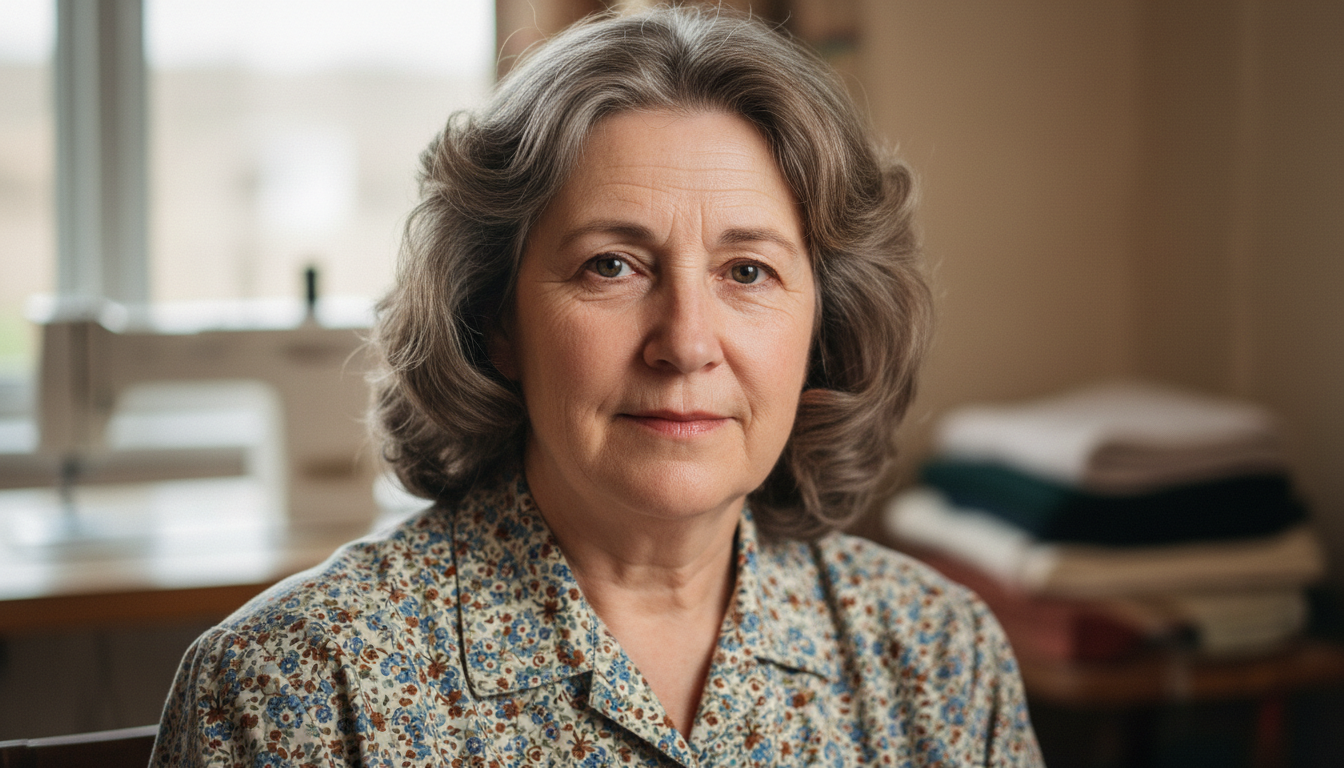
Mary Elizabeth Ashcroft, born on 22 August 1918 in Broken Hill, transformed Irish-Catholic compassion and domestic skill into a lifetime of community service. From learning seamstress craft during the Depression to building a home sewing business that clothed working-class families, she embodied resilience through profound losses—her brother Paddy in war, her son Andrew in accident, her husband Thomas to stroke. Through needle and thread, Mary mended both fabric and hearts until her death in 1996.
Birth into the Irish-Australian Working Class
Mary Elizabeth Doyle was born on 22 August 1918 in Broken Hill, New South Wales, arriving into a world recently transformed by the First World War's conclusion and the devastating Spanish influenza pandemic that would claim millions globally. Her birth occurred within the tight-knit Irish-Australian Catholic community that formed a distinctive subculture in Broken Hill's industrial landscape, where mining prosperity and harsh outback conditions created particular forms of working-class solidarity.
Her father, Patrick Joseph Doyle, had been born on St. Patrick's Day 1885 in County Clare, Ireland, migrating to Australia as a young man seeking escape from poverty and limited prospects. He found work as a labourer in Broken Hill's mines, joining the thousands of men who descended daily into the earth to extract the silver, lead, and zinc that brought industrial wealth whilst exacting terrible human costs through accidents, dust-related diseases, and the slow degradation of bodies subjected to decades of hard physical labour.
Her mother, Catherine Flannery Doyle, born in Adelaide in 1889 to Irish immigrant parents, possessed skills that provided both income and community standing. Catherine worked as a domestic cleaner for wealthier Broken Hill families, but more significantly, she served as an unofficial midwife, attending births for working-class women who couldn't afford hospital deliveries or preferred the familiar comfort of home with an experienced woman's assistance. This work exposed Mary from childhood to the realities of working-class women's lives—the dangers of childbirth without adequate medical care, the economic pressures that shaped family decisions, and the networks of mutual support through which women survived circumstances that might otherwise have overwhelmed them.
Mary grew up as the third of six children in a modest weatherboard cottage where space was perpetually insufficient and privacy virtually nonexistent. Her older sister Bridget, born in 1912, would eventually take religious vows and join the Sisters of Mercy in Adelaide, channelling the family's Catholic devotion into formal religious life. Her older brother Patrick, called Paddy by everyone, born in 1914, possessed the easy charm and physical strength that made him popular amongst peers, though his future would be tragically cut short by war. Mary's younger siblings—John born in 1921, Eileen in 1924, and Michael in 1927—completed the family that represented typical working-class Irish-Australian demographic patterns, where large families provided both labour power and insurance against the uncertain mortality rates that characterised the era.
The Doyle household existed within overlapping circles of community—the parish of Sacred Heart Catholic Church, the networks of mining families, and the broader Irish-Australian community that maintained distinct identity through shared faith, cultural traditions, and collective memory of famine and oppression that had driven ancestors from Ireland. Mary absorbed these influences through osmosis, learning that survival required cooperation, that faith provided framework for understanding suffering, and that women's work—though often invisible and unpaid—sustained family and community life as surely as men's wage labour.
Childhood, Education, and Learning Domestic Skills
Mary attended St. Joseph's Catholic School, where the Sisters of Mercy provided basic education alongside moral instruction emphasising duty, obedience, and service. The school's curriculum reflected prevailing assumptions about gender—boys received more extensive academic training whilst girls' education emphasised domestic skills, needlework, and preparation for their expected futures as wives and mothers. Mary proved a capable student, particularly skilled at arithmetic and needlework, the latter taught through exacting standards that demanded precision and patience.
The Great Depression struck when Mary was eleven years old, transforming Australian economic and social life with devastating swiftness. Unemployment reached unprecedented levels, wages were slashed, and families that had maintained precarious respectability found themselves dependent on charity or government relief that provided bare subsistence whilst stripping recipients of dignity. The Doyle household weathered the Depression through combination of Patrick's continued mining employment—the industry suffered but didn't collapse entirely—Catherine's midwifery income, and the family garden that supplemented their diet with vegetables coaxed from Broken Hill's challenging soil.
Mary left school at fourteen in 1932, the minimum leaving age that saw most working-class children exit education to seek employment or contribute unpaid labour to family survival. She found work as a domestic helper for wealthier Broken Hill families, performing the cleaning, cooking, and washing that middle-class households required but increasingly struggled to afford as the Depression reduced even comfortable families' discretionary spending. The work was physically demanding and poorly paid, but it provided income whilst teaching Mary household management skills that would serve her throughout life.
More significantly, Mary began developing the seamstress skills that would become both trade and identity. Her mother taught her basic sewing, mending, and pattern-work, but Mary's real education came through apprenticeship with Mrs. Eleanor O'Brien, an established seamstress who took in alterations and made clothing for Broken Hill families. Mrs. O'Brien possessed the exacting standards and comprehensive knowledge that distinguished true craftsmanship from mere competence—she taught Mary how fabric's grain affected draping, how different stitches served different purposes, how patterns could be adapted to individual measurements, and how skilled work commanded respect even in contexts where women's labour was generally undervalued.
By her late teens, Mary had developed sufficient skill to take commissions independently, working from the Doyle cottage to supplement family income whilst building reputation for reliable work at fair prices. Her specialities emerged organically—wedding dress alterations that required both technical skill and emotional intelligence for dealing with brides and their mothers, uniform repairs for miners and railway workers whose clothing endured harsh conditions, and the creation of children's garments from recycled fabric that allowed poor families to clothe their children with dignity despite economic hardship.
Courtship, Marriage, and Establishing a Household
Mary met Thomas Edward Ashcroft at a parish dance in 1938, both of them participating in the Catholic social activities that provided respectable venues for young working-class people to meet potential marriage partners. Thomas, twenty-two years old and working as a railway fitter, came from similar working-class Irish-English background, his own father having died in a railway accident when Thomas was twelve. This shared experience of childhood shaped by loss and economic struggle created immediate understanding between them—both knew what it meant to watch parents struggle, to leave school early to help support families, and to build lives within the constraints that working-class circumstances imposed.
Their courtship unfolded through the rituals that Catholic working-class propriety demanded—chaperoned outings, Sunday walks after Mass, attendance at parish socials where community observation ensured appropriate behaviour. Thomas proved steady and serious, his union activism revealing commitment to principles beyond self-interest, whilst Mary's practical capabilities and quiet strength suggested she would be capable partner for navigating the challenges that working-class marriage inevitably entailed. Both understood that romantic love was pleasant but insufficient—successful marriage required compatible values, complementary skills, and shared determination to build security despite economic uncertainties.
They married on 18 March 1940 at Sacred Heart Church, the ceremony modest but dignified, attended by family members and railway colleagues who contributed to a reception held in the parish hall. Mary wore a dress she had sewn herself, demonstrating the craftsmanship that was already establishing her reputation, whilst Thomas wore his best suit, carefully cleaned and pressed for the occasion. The wedding occurred as war engulfed Europe and Australia's involvement seemed increasingly inevitable, casting shadow over celebrations that marked new beginnings whilst recognising that the future remained profoundly uncertain.
The newlyweds established their first home in a small railway worker's cottage allocated through Thomas's employment—modest accommodation but secure, a crucial consideration as war-time mobilisation began. Mary set about transforming the cottage into a home, her domestic skills deployed to create comfort from limited resources. She sewed curtains from salvaged fabric, maintained a vegetable garden in the small yard, and began taking in alterations and sewing commissions to supplement Thomas's wages whilst establishing her own small business that would eventually support the family through multiple economic challenges.
War Years and Building a Family
The Second World War shaped Mary's early married years profoundly, though Thomas's railway work meant he remained in Broken Hill rather than enlisting for overseas service. The designation of railway labour as reserved occupation essential to the war effort spared Thomas from military service but meant long shifts maintaining infrastructure as the rail network strained to meet war-time demands. Mary found employment in a uniform factory that had been established to meet military requirements, her needlework skills suddenly valuable as the nation mobilised.
The war brought both opportunity and anxiety. The uniform factory provided income that allowed Mary and Thomas to save towards the future family they both desired, whilst war-time wage controls and rationing meant that even increased earnings didn't translate into significantly improved living standards. More painfully, the war claimed Mary's brother Paddy, killed in action in Papua New Guinea in 1943 whilst serving with the Australian Imperial Force. His death at twenty-nine devastated the Doyle family, transforming abstract news about distant battles into intimate loss that left permanent void. For Mary, Paddy's death represented her first adult encounter with grief that couldn't be resolved or overcome—merely endured and slowly incorporated into continuing life.
The war's end in 1945 brought relief mixed with uncertainty about how demobilisation would affect employment and whether the prosperity of war-time production would continue or collapse as it had following the First World War. Mary and Thomas navigated these uncertainties by maintaining their dual-income strategy whilst saving what they could, preparing for the family they hoped to build once post-war conditions stabilised.
Their eldest child, Evelyn Margaret, was born on 17 April 1950, arriving five years after war's end when Mary was thirty-one and Thomas thirty-four. The delay reflected typical patterns for working-class couples who postponed childbearing until they had accumulated sufficient resources to support children without falling into poverty. Evelyn's birth transformed Mary's identity from wage earner to mother, though economic necessity meant she couldn't abandon income-generating work entirely. She established a pattern that would characterise the next decade—caring for children whilst operating her sewing business from home, her needlework performed during naps, evenings, and stolen moments between the endless tasks that domestic life demanded.
Ronald, called Ron, followed in 1952, then Colleen in 1955, and finally Andrew in 1958. Four children in eight years created the large working-class family that both Mary and Thomas had known in their own childhoods, where children contributed labour to household functioning and parents hoped that multiple offspring provided insurance that at least some would survive to adulthood and support aging parents. The railway cottage became increasingly crowded, privacy disappeared entirely, and Mary's life revolved around the relentless rhythms of cooking, cleaning, washing, mending, and the emotional labour of managing children's conflicts, fears, and needs.
The Home Sewing Business and Community Service
Throughout the 1950s and 1960s, Mary's home sewing business grew from supplementary income into substantial enterprise that became well-known throughout Broken Hill. Her reputation rested on several foundations—technical skill that ensured garments fit properly and withstood wear, fair pricing that made her services accessible to working-class families, and reliable completion of commissions within promised timeframes. Word-of-mouth recommendations brought steady stream of customers seeking wedding dress alterations, uniform repairs, children's clothing, and the myriad sewing tasks that characterised household management before cheap ready-made clothing became universally available.
Mary's sewing room, carved from the cottage's limited space, contained her prized Singer treadle sewing machine, cutting table, and the organized chaos of fabric remnants, thread spools, and patterns accumulated over years. She worked with characteristic efficiency, her hands moving with the automatic precision that came from decades of practice, whilst her mind often wandered to family concerns, parish activities, or the broader community issues that engaged her attention. The work was simultaneously solitary and social—hours spent alone with needle and thread punctuated by fittings where clients shared their lives, creating intimacy that transcended mere commercial transaction.
Her involvement in Catholic charitable activities deepened correspondingly. Mary volunteered with the St. Vincent de Paul Society, which provided material assistance to struggling families, and with the Catholic Women's League, which organised social events and community support activities. Her sewing skills proved particularly valuable—she taught young girls basic needlework, repaired donated clothing for distribution to poor families, and created simple garments for children whose parents couldn't afford even modest clothing expenses.
This community service emerged from multiple motivations. Catholic social teaching emphasised obligation to serve those less fortunate, providing religious framework for charitable work. Mary's own childhood memories of Depression-era hardship created empathy for families facing economic crisis. More practically, community service built social capital and reputation within the tight-knit networks that sustained working-class life, where being known as generous and reliable person brought intangible benefits that money couldn't purchase.
The Tragedies That Defined Her Later Years
On 23 August 1972, Mary experienced the devastation that would fundamentally alter her remaining years—her youngest son Andrew, aged fourteen, died in a motorbike accident. The loss of a child represents grief that defies adequate expression, violating the natural order that assumes parents predecease their children. Andrew had been her baby, energetic and cheerful, his adolescence just beginning when the accident extinguished all his potential futures in a moment of metal and physics.
The grief transformed Mary, the practical woman who had weathered Depression, war, and countless smaller crises finding herself unmoved by devastation too profound for resilience to overcome. She continued functioning—maintaining household, completing sewing commissions, attending Mass—but something fundamental had broken. Friends and family noted her increasing withdrawal, the way joy seemed to have drained from activities that once brought pleasure, the permanent sadness that settled over features once animated by warmth and humour.
Thomas withdrew similarly, the outspoken union man becoming quieter and more detached. The marriage itself became silent partnership, both parents locked in private grief they couldn't adequately share or resolve. They maintained routines, fulfilled obligations, and presented functioning facade to the world, but the light had dimmed, replaced by heavy knowledge that some losses leave permanent absence that time doesn't heal but merely makes familiar.
The 1970s and early 1980s brought additional challenges as economic restructuring affected Broken Hill's industrial base. Mary's sewing business faced increasing competition from cheap imported clothing and changing consumer preferences. She adapted by focusing on alterations and repairs rather than garment creation, whilst expanding her charitable work to fill hours that paid commissions no longer occupied.
On 17 June 1983, Thomas suffered a massive stroke and died before medical help arrived. For Mary, aged sixty-four, Thomas's death represented loss of the partner who had shared forty-three years of marriage, who had weathered Depression, war, child-rearing, and devastating grief alongside her. Widowhood brought practical challenges—managing on reduced pension income, maintaining the cottage alone, navigating social contexts structured around couples—but more fundamentally, it represented final confirmation that life's trajectory led inexorably towards loss and diminishment.
Widowhood and Final Years
Mary's widowhood years unfolded within increasingly constricted circles. She continued living in the railway cottage, now haunted by memories of the family life that had filled it with noise and activity. Her sewing work declined as age reduced manual dexterity and eyesight weakened, making the precise work increasingly difficult. She focused instead on grandchildren, particularly Evelyn's daughters, finding some consolation in the continuing life that represented family's persistence despite losses.
Her involvement in church activities intensified, regular Mass attendance supplemented by rosary groups, parish committees, and the social networks that Catholic community provided. Faith offered framework for understanding suffering, suggesting that earthly losses were temporary and that eventual reunion awaited in heaven. Whether Mary genuinely found comfort in these beliefs or simply performed them from habit and social expectation remained ambiguous, but the routines provided structure and community connection that prevented complete isolation.
She maintained particularly close relationship with Evelyn, their shared love of sewing creating bond that survived even the devastating loss of Evelyn's daughter Violet in 1988. The murder of her granddaughter represented yet another incomprehensible tragedy in a life that seemed to accumulate losses beyond any reasonable share. Mary provided what support she could, her own experience of grief making her capable of sitting with Evelyn's devastation without offering false comfort or empty platitudes.
Mary's health declined through her seventies, decades of physical labour and the accumulated stress of multiple losses taking their toll. She developed heart disease, requiring medication and lifestyle modifications that reduced her already limited activities. She accepted these limitations with characteristic stoicism, adapting to increasing physical constraints whilst maintaining the dignity and independence that had characterised her throughout life.
On 14 June 1996, Mary Elizabeth Ashcroft died of heart failure at age seventy-seven. Her funeral at Sacred Heart Church drew substantial attendance—family members, former sewing clients, fellow parishioners, and elderly friends who remembered her from decades of community involvement. She was buried beside Thomas in Broken Hill Cemetery, the red earth covering the coffin, the headstone eventually listing her dates and her identity: "Devoted Wife, Mother, and Friend."







