Marnie Louise Tillett
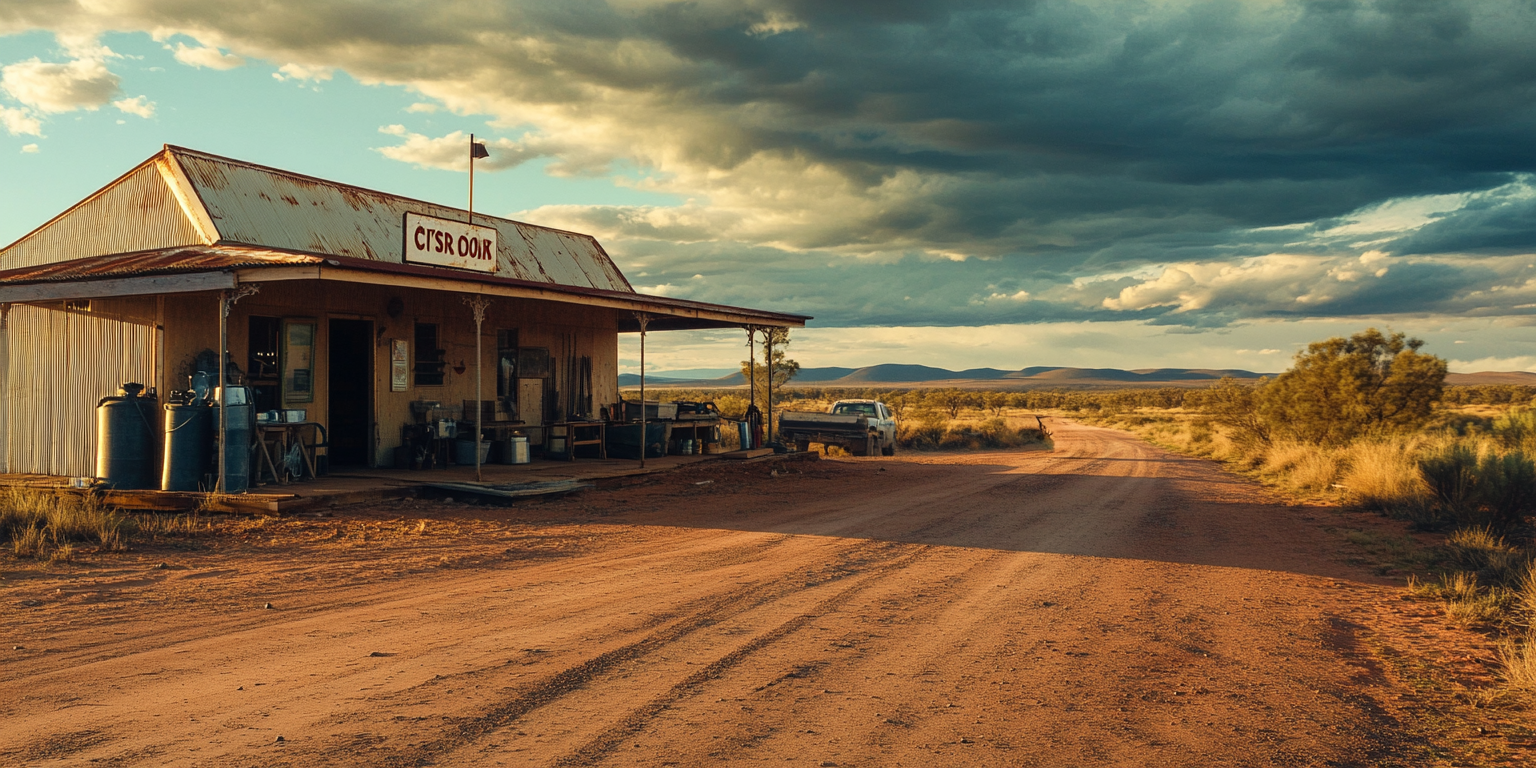
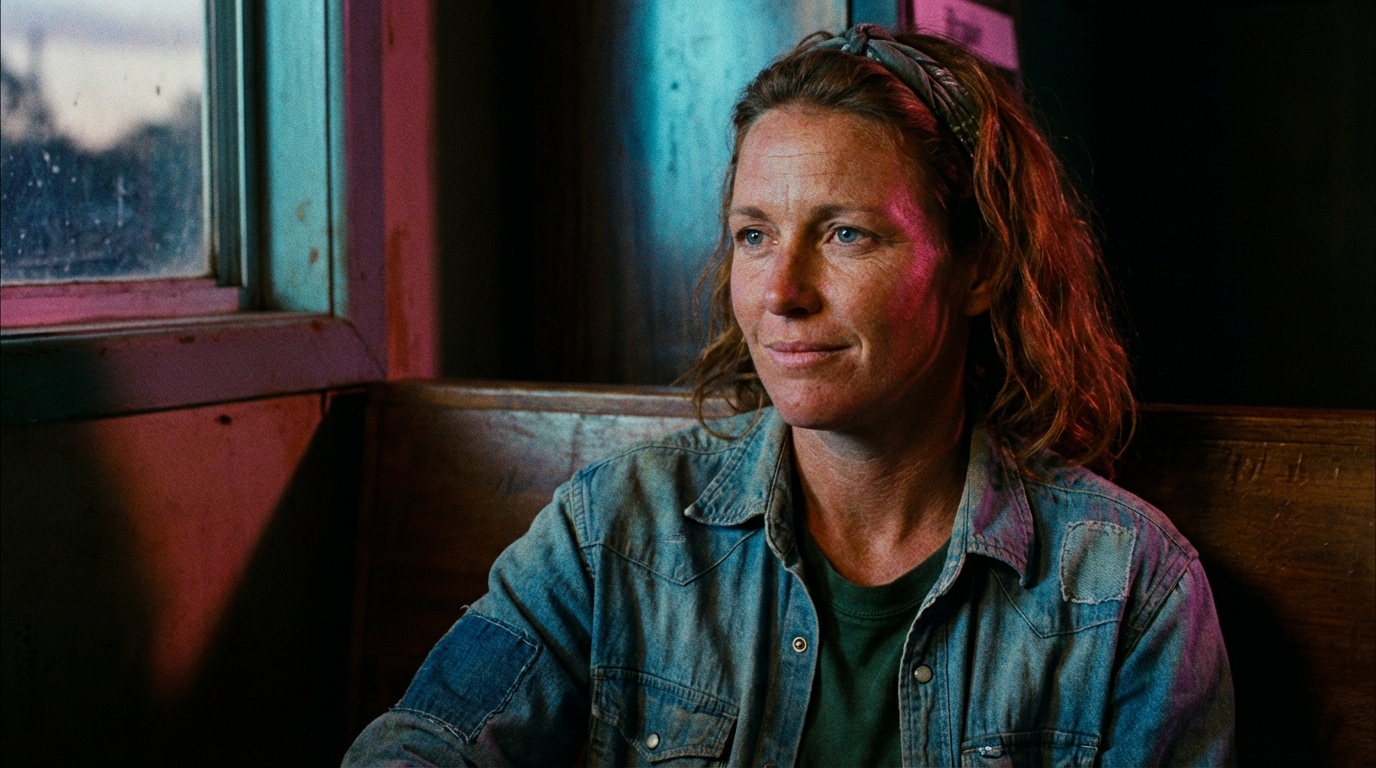
Marnie Louise Tillett, born 3 March 1966 at Peterborough District Hospital, embodies the quiet resilience sustaining South Australia's remote communities. The second of four children raised in Yunta's harsh outback, she inherited her father's mechanical aptitude and her mother's devotion to service. Divorced with two grown children, she has managed the Outback Crossroads Roadhouse since 2007, becoming the unofficial lifeline for travellers navigating between Adelaide and Broken Hill.
Birth and Early Childhood
On 3 March 1966, beneath a sky streaked with dust and heat, Marnie Louise Tillett drew her first breath at Peterborough District Hospital—the only functioning maternity facility within one hundred kilometres of her family's home near Yunta. The journey from Yunta had demanded the same pragmatic endurance that would characterise her entire life: a rough roadside drive, a mid-labour detour for petrol, and a delivery guided by the steady hand of Dr Allen Grieve, the sole GP regularly servicing that vast stretch of the Barrier Highway.
Her parents, Franklin Dean Tillett and Rosemary Ellen Tillett née Jarrett, had established their family in Yunta six years earlier following their marriage in March 1960. They occupied a fibro-cement house with corrugated iron roofing on Eyre Street, near the town's disused railway siding—a dwelling built in the early 1950s by the state housing trust that possessed no air conditioning, a single telephone line shared with the post office exchange, and rainwater tanks that frequently ran dry by January.
Marnie was the second of four children. Her older brother Graham Francis Tillett had arrived in 1963 and would later become a rail maintenance supervisor in Port Pirie. Her younger sister Rebecca Jane Tillett, born in 1968, would become a schoolteacher and relocate to Mildura. The youngest, Dean Thomas Tillett, arrived in 1972 and would die tragically young. Marnie shared a room with Rebecca until she was fifteen, sleeping on beds handed down from cousins in Orroroo, learning early the art of accommodation and making do.
Childhood in Yunta was marked by dust storms, power outages, and the rhythmic passing of livestock road trains. The children played along the dry creek beds behind the town or explored the wrecked railway yards where copper wire and old tools could be scavenged. Marnie's earliest memories include helping her father bleed diesel lines on a stranded tractor at Lake Frome and watching her mother mend uniforms under the light of a hissing Tilley lamp. By age ten, she could start the family's old Holden ute on a cold morning and had learned to shoot a rabbit cleanly with her brother's .22 rifle.
Parents and Family Influences
Franklin Dean Tillett, known throughout the district as "Frank the Fixer," worked as a diesel mechanic and field technician for Grainger & Sons Agricultural Machinery, based in Port Augusta. His work required frequent travel across remote stations—from Moolawatana in the north to Oodla Wirra in the south—often gone for a week or more at a time, carrying out repairs on broken-down generators, bore pumps, and heavy farming equipment. A chain-smoker who rarely spoke more than he needed to, Franklin was one of the few men in the region who could reliably coax an ageing Massey Ferguson back to life with nothing but a socket set and a length of fencing wire.
His mechanical aptitude passed directly to his daughter. Under his patient guidance during those occasions when he was home, Marnie learned the fundamentals of engine maintenance, basic carpentry, and the diagnostic thinking that distinguishes competent mechanics from merely adequate ones. By the time she was twenty, she could change a head gasket, replace a section of corroded guttering, and operate a petrol generator without supervision—skills that would prove invaluable throughout her working life.
Rosemary Tillett, originally from the railway town of Quorn, brought different but equally essential qualities to her daughter's formation. A practical woman with a talent for sewing and preserves, she worked part-time as a cleaner and classroom assistant at Yunta Primary School for twenty-two years, from 1962 to 1984. Her role evolved from basic maintenance to unofficial counsellor for generations of outback children, whilst her leadership of the South Australian Country Women's Association produced the legendary "March Scones & Stationery Drive" that supported isolated families whose children were studying via the School of the Air.
From her mother, Marnie absorbed the understanding that service to community requires no formal recognition, that showing up consistently matters more than grand gestures, and that the women who sustain remote communities often do so without acknowledgement or reward. These lessons would shape every aspect of her adult life.
Education
Marnie began her formal education at Yunta Primary School in 1971, joining fewer than twenty students in a small weatherboard building equipped with a wood-fired heater in winter and louvred windows flung wide through the searing summer. Her first teacher, Miss Judith Harland, was a long-serving educator known for her firm but nurturing approach and her emphasis on practical skills alongside conventional academics.
Under Miss Harland's guidance, Marnie showed early aptitude for hands-on tasks, often volunteering to help fix broken equipment in the school shed or assist the groundskeeper, Mr Colin Rutherglen, with basic maintenance. The school's ethos of bushcraft and life skills shaped her character as surely as the dust storms that occasionally interrupted lessons, forging the unflappable competence that would define her adult life.
After completing Year 7 in 1978, Marnie faced the challenge common to remote students: no local secondary school existed. She boarded weekly with a family friend in Peterborough to attend Peterborough High School, travelling by Ghan motorcoach on Monday mornings and returning Friday afternoons. This rhythm of departure and homecoming—the weekly separation from Yunta that paradoxically prepared her to become its most dependable anchor—continued from 1979 to 1982 as she completed Years 8 through 11.
Though not academically outstanding, Marnie was competent across core subjects and consistently passed English, Science, and Social Studies. Her strongest performance came in Technical Studies, particularly woodwork and metalwork, under Mr Barry Fiennes, who described her in school reports as "mechanically minded and precise—not afraid of physical effort." The practical focus of Peterborough High's curriculum, shaped by its working-class population of rail workers' children and station hands' offspring, suited her temperament perfectly.
She declined to pursue Year 12, opting instead to return to Yunta and begin casual work. While she never enrolled in tertiary education, her learning continued through informal apprenticeships—particularly under her father's guidance in mechanical repair—and later through formal certification when circumstances required it. In 2003, recognising the need for credentials to advance her work at the Outback Crossroads Roadhouse, Marnie enrolled in a Certificate II in Hospitality Operations through TAFE SA's Port Augusta Campus, delivered via remote study with quarterly intensive sessions in person. She completed the course in mid-2004, her assessor noting her "practical intelligence, independence, and no-nonsense attitude to both theory and application."
Early Working Life
Marnie's employment history reflects the patchwork of opportunities available in remote communities, each role adding skills that would eventually coalesce into comprehensive capability. Her first paid position came in 1983 as a stockyard assistant at Pearce's Station, where she worked during lambing season, assisting with mustering, branding, and tagging, often rising before dawn to prepare yards or feed injured ewes.
In 1985, she found casual employment at the Yunta Railway Depot, which at that time still operated for freight loading and maintenance. As a clerical aide, she logged cargo manifests by hand, prepared telegraph communications under supervision, and occasionally coordinated livestock transfers in conjunction with nearby Orroroo Station. The role taught her the administrative disciplines that would later prove essential: accurate record-keeping, communication protocols, and the patience required for bureaucratic processes.
From 1987 to 1995, Marnie worked part-time at the Yunta Post Office, initially as a relief counter clerk and later as a postal and telegraph assistant. Her duties included sorting incoming mail sacks from Port Augusta, handling pensions and postal orders, and occasionally facilitating telegram dispatches for remote communities—one of the last generations to do so before electronic communication supplanted those services. During this period, she also handled emergency radio calls when phone lines were down, especially during summer blackouts, developing the crisis management skills that would become central to her later role.
In 1996, amid staff shortages, she took up a position at Yunta Area School as a grounds assistant and casual administrative support. Though officially part-time, her responsibilities were diverse—from repairing storm-damaged shade cloths to setting up audio equipment for school assemblies. She developed a reputation as a dependable "fix-it" presence around town, someone who could be called in when something simply needed to work.
Marriage and Family
In March 1988, at the age of twenty-two, Marnie married David Kenneth Renshaw, a shearer from Olary, South Australia. They had met two years earlier at the Quorn Agricultural Show, where David was working on a shearing demonstration and Marnie had travelled with friends from Yunta. Their courtship was brief, marked by handwritten letters and weekend visits, culminating in a modest ceremony at the Peterborough Town Hall, officiated by Pastor Neil Forwood of the local Uniting Church.
David was known for his easy charm and hard work, but the demands of seasonal shearing—long stints away on stations in the Flinders Ranges and up through Marree and Leigh Creek—took their toll on the relationship. Marnie, juggling casual jobs and two young children, often found herself alone and financially stretched. Their son Zane Franklin Renshaw arrived on 14 April 1990, followed by daughter Kaitlin Marie Renshaw on 22 September 1993.
By the late 1990s, David's alcohol use had worsened, and the household became strained by tension and unpredictability. In 2002, after a particularly volatile summer during which David failed to return home for three weeks and was later hospitalised in Broken Hill for alcohol-related complications, Marnie filed for divorce. The separation was formalised in mid-2003, with custody of both children remaining informally with Marnie, though both were nearing adolescence and made their own decisions about visitation.
Zane now works as a diesel fitter in Adelaide's northern suburbs—his choice of career echoing his grandfather Franklin's mechanical legacy. Kaitlin is employed as an aged care administrator in Glenelg. Both visit once or twice a year, maintaining connection through phone calls and the occasional handwritten letter. Marnie maintains cordial but emotionally limited contact with David, who now resides in Broken Hill in supported accommodation near Chappel Street Clinic. They exchange phone calls during major holidays, though the relationship remains fragile and uneven.
Loss and Resilience
The loss of her younger brother Dean in 1989 left a quiet scar on the Tillett family that never fully healed. Dean Thomas Tillett, just seventeen years old, was killed in a vehicle rollover whilst working as a station hand near Arkaroola. The tragedy struck Marnie particularly hard—she was twenty-three, recently separated from her husband, and already struggling to maintain equilibrium. She returned to live in Yunta with her mother for several months during this period, the two women supporting each other through grief that neither fully articulated.
Rosemary withdrew somewhat from public activities following Dean's death, the loss testing her resilience in ways that previous hardships had not. Franklin's decline began in the years following, the chain-smoking mechanic growing quieter and more distant until his death in 2004. These accumulated losses—brother, father, marriage—might have broken someone less formed by the outback's unforgiving landscape. Instead, they reinforced Marnie's understanding that endurance requires neither explanation nor recognition, that survival is its own justification.
The Roadhouse Years
Marnie's most defining chapter began in 2007, when she accepted a part-time position at the Outback Crossroads Roadhouse on the eastern approach to Yunta. The roadhouse, operated at that time by the Willerton family, was struggling to retain staff due to irregular hours and harsh working conditions. Marnie began on the morning shift, preparing breakfast, refilling stock, and logging fuel usage in handwritten ledgers.
As staff turnover increased and the Willertons' commitment wavered, her role expanded by default rather than design. She assumed additional shifts, learned additional systems, accepted additional responsibilities because someone had to and she remained while others left. By the time the Willertons formally departed around 2010, Marnie had become indispensable—the repository of operational knowledge, the familiar face that travellers expected, the person who simply knew how everything worked.
Though never formally titled as manager, she assumed complete responsibility for day-to-day operations by 2012: ordering supplies from Port Augusta Fresh Distributors, coordinating LPG deliveries, handling basic maintenance of ageing infrastructure. She maintains handwritten records documenting patterns invisible to casual observation—trucker routines and vehicle descriptions, customer preferences accumulated over repeated visits, informal credit arrangements that help regulars through difficult periods between pay cycles.
Her approach to running the roadhouse reflects temperament forged through decades of outback living. Problems are identified, solutions implemented, complications managed without excessive deliberation or emotional investment. Her manner with customers balances efficiency with minimal warmth; she is not unfriendly, merely focused on the work that each interaction represents. Meals are simple and hot, the coffee strong and black, and conversations short unless prompted otherwise.
Community Role and Connections
Beyond commercial function, Marnie has become Yunta's unofficial emergency coordinator. A locked cabinet near the coolroom contains equipment accumulated through years of responding to traveller crises: jumper leads, a tyre repair kit, a satellite radio, and a laminated copy of the Royal Flying Doctor Service first-aid flowchart. During the 2019 dust storm that disabled mobile infrastructure for over eighteen hours, she coordinated multiple calls for assistance, including one that led to a successful airlift from Mount Victor Station.
Her closest friend is Irene Polkinghorne, a retired remote area nurse who previously worked with the Royal Flying Doctor Service. The two women share a pragmatic, unsentimental view of the world, often sitting together at the roadhouse during late shifts or working jointly on the annual RFDS fundraiser held in the Yunta Hall. Another notable relationship is with Jarrad "Jaz" Nulty, Yunta's part-time mechanic and amateur historian. Though two decades her junior, Jaz and Marnie share dry intellectual humour and mutual interest in local railway history.
Marnie also maintains informal mentorships with younger community members. Tahlia Moore, a local girl who worked part-time at the roadhouse between 2022 and 2024 whilst studying for her TAFE Certificate III in Hospitality, received guidance in navigating customer service challenges, and Marnie quietly paid for Tahlia's exam re-entry fee after she failed her first round.
Personality and Character
Those who know Marnie describe her as unflappable, grounded, and matter-of-fact. She does not embellish stories or tolerate nonsense, and locals often say "Marnie's seen worse" when a visitor complains about heat or isolation. While not openly warm, she is dependable and observant, often noticing small changes in behaviour that signal someone is struggling. Her dry humour and subtle compassion have earned deep respect, even among rough-edged truckers and isolated farmers.
She is not religious, but she attends town meetings and supports community events in a quiet, background capacity. Since her divorce, she has shown little interest in dating. When asked directly, she has replied: "I've had my share of drama. These days, I just want my tea hot and my nights quiet." Her emotional world is largely private, but those close to her describe her as quietly loyal, deeply perceptive, and capable of unexpected generosity.







