Margaret Ellen Reynolds (née Penrose)
Margaret Ellen Penrose was born 18 June 1942 in Penzance, Cornwall, fourth of seven children in a dockworker's household where resilience and resourcefulness were survival requirements. Her transformation from waitress to successful tearoom proprietor embodied post-war Cornwall's entrepreneurial spirit, creating The Rose Harbour Tearooms that became St Ives's beloved community gathering place. Her marriage to fisherman Edward Reynolds balanced maritime uncertainty with hospitality's warmth, whilst her three children inherited her practical creativity and determination to build meaningful lives despite modest beginnings.
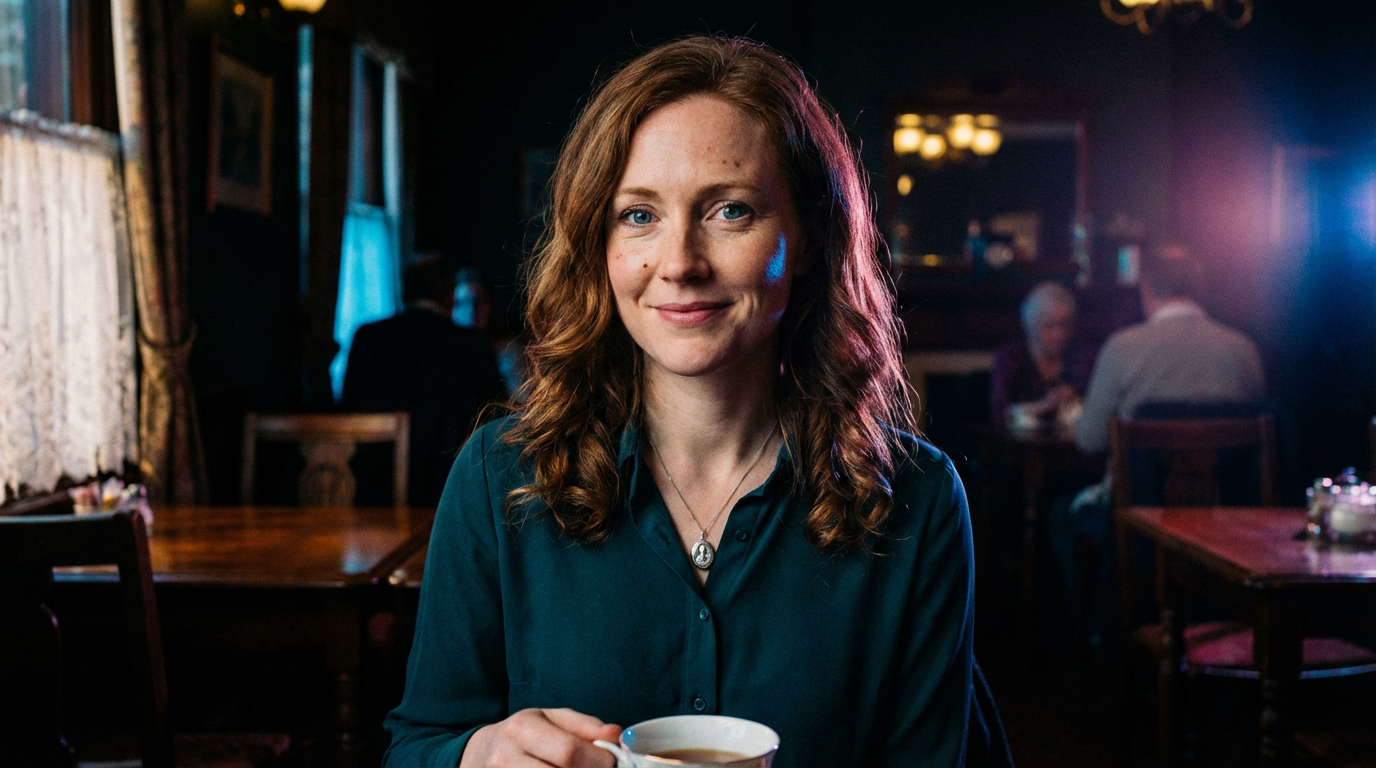
Penzance Origins: A Crowded Childhood
Margaret Ellen Penrose was born on 18 June 1942 at Penzance's West Cornwall Hospital, arriving as the fourth of what would eventually be seven children born to Harold George Penrose (born 1914) and Violet May Penrose (née Tregenza) (born 1916). Her birth occurred during the darkest period of the Second World War, when Cornwall experienced genuine food shortages, blackout restrictions, constant anxiety about German bombing raids, and the presence of evacuee children from London creating both strain and strange cosmopolitanism in traditionally insular communities.
The Penrose family resided in a cramped stone terraced house on Clarence Street in Penzance, modest accommodation struggling to contain growing family. Harold worked at Penzance's docks, primarily loading and unloading cargo from vessels serving Cornwall's coastal trade and fishing industries. The work was physically demanding, irregularly scheduled depending on ship arrivals, and paid modest wages that required careful household budgeting to support family that would eventually include seven children across thirteen years.
Violet Penrose, before marriage and children, had worked in domestic service for wealthy family in Truro—experience teaching her cooking, household management, and the social distinctions separating working-class labour from middle-class consumption. After marriage, she managed household with remarkable efficiency despite limited resources, transforming cheap ingredients into substantial meals, repairing and remaking children's clothing, maintaining standards of cleanliness and order that middle-class observers might have considered impossible in such crowded circumstances.
Margaret grew up surrounded by siblings whose diverse personalities and paths would shape her understanding of family dynamics and individual possibility. The seven Penrose children, born between 1938 and 1951, included:
Kenneth Harold Penrose (born 1938), the eldest, who would serve in the Merchant Navy before settling in Plymouth as a warehouse supervisor. His early departure for sea service when Margaret was still young meant she knew him primarily through letters and occasional shore leave visits rather than daily sibling interaction.
Patricia Jean Penrose (born 1940), who would work in various shop assistant positions throughout Penzance before marrying a bus driver and raising four children. Patricia's proximity—both geographically and in conventional life choices—meant she remained Margaret's closest sister throughout adulthood, providing childcare support and practical assistance during crises.
David George Penrose (born 1941), who would become an electrician's apprentice before dying in a workplace accident in 1963 at age twenty-two—a tragedy that devastated the family and created enduring grief that Margaret carried throughout her life.
Margaret Ellen Penrose (born 1942), whose story this is.
Robert Arthur Penrose (born 1945), who would emigrate to Canada in 1968, establishing himself as a building contractor in Toronto. His departure represented both family loss and exciting evidence that Penrose children could transcend Cornwall's geographical limitations.
Susan Mary Penrose (born 1948), who would train as a hairdresser in Plymouth before moving to Bristol, where she eventually owned a small salon. Susan's career path—independent businesswoman in beauty services—prefigured aspects of granddaughter Sharon's later trajectory.
Michael James Penrose (born 1951), the youngest, who would pursue higher education at University of Exeter, becoming a teacher—the first Penrose family member to attend university, representing educational mobility previously unimaginable in Harold and Violet's generation.
Childhood in Post-War Cornwall
Margaret's childhood during the late 1940s and early 1950s was shaped by post-war austerity, working-class Cornwall's limited opportunities, and the complex dynamics of large family in small space. The Clarence Street house was perpetually crowded—children sharing beds, privacy virtually non-existent, every possession contested by multiple users, meals requiring military-precision planning to ensure everyone received adequate portions.
Yet the household was also characterised by warmth and mutual support that poverty and crowding couldn't entirely diminish. Older siblings helped raise younger ones, children entertained each other through elaborate imaginative games requiring no purchased toys, the extended Penrose and Tregenza family networks meant that crises could be weathered through communal assistance. Margaret learned early that survival required both cooperation and assertion—helping others whilst also claiming her own space and needs, contributing to family function whilst also maintaining individual identity.
Her formal education began at Penzance's Alverton Primary School in 1947, where she proved a capable student particularly strong in reading and arithmetic. Teachers noted her helpfulness toward younger children, her reliable completion of assignments despite chaotic home circumstances, her particular facility with domestic subjects—cooking, sewing, household management—that were still emphasised in girls' education during this period. Yet teachers also recognised academic potential that extended beyond preparation for domestic labour, occasionally suggesting that Margaret might benefit from extended education beyond the minimum leaving age.
Her childhood was punctuated by family routines and community rituals that structured working-class Cornish life. Sunday attendance at Penzance's Methodist Chapel provided moral instruction and social connection beyond immediate family. Summer holidays meant day trips to nearby beaches—Marazion, Praa Sands—where children played freely whilst adults socialised. Christmas meant elaborate preparations despite limited means, Violet somehow producing gifts and special meals through months of saving and careful planning.
Margaret was particularly close to her mother Violet, observing how competent household management could transform limited resources into comfortable existence, how attention to small details—properly set table, clean curtains, flowers from hedgerows—could create beauty despite poverty, how genuine hospitality required warmth rather than wealth. These lessons, absorbed through observation rather than explicit instruction, would later underpin Margaret's tearoom business and her approach to domestic life.
The death of her brother David in 1963, when Margaret was twenty-one, was the family's defining tragedy. David's death in an electrical accident at a Penzance construction site—sudden, preventable had safety protocols been followed properly, occurring just as he was establishing independent adult life—devastated the family. Harold became more withdrawn and bitter. Violet aged visibly within months. The surviving siblings grappled with survivor's guilt and renewed awareness of working-class life's precariousness. Margaret, helping her mother through grief whilst managing her own, developed emotional resilience and practical capability in crisis that would characterise her adult life.
Adolescence and Emerging Ambition
Margaret left school at age fifteen in 1957, the minimum leaving age, and immediately sought employment to contribute to family finances. She secured position as shop assistant at a draper's on Market Jew Street in Penzance, learning retail skills whilst also encountering middle-class customers whose lives differed dramatically from her own experience. The work was tedious but provided introduction to commercial transactions, customer service, the subtle performances required when serving people whose social position exceeded one's own.
In 1958, at age sixteen, Margaret transitioned to waitressing at The Dolphin Tavern near Penzance harbour, work that paid slightly better and provided opportunities for tips supplementing base wages. The position meant evening and weekend hours serving fishermen, dockworkers, tourists, local businessmen—diverse clientele teaching her to read people quickly, adapt service style to different customers, manage difficult situations with grace rather than confrontation.
She was a naturally gifted waitress—efficient without seeming rushed, friendly without inappropriate familiarity, remembering regular customers' preferences, anticipating needs before customers articulated them. The Dolphin's owner, Mrs Patricia Treloar, recognised Margaret's capabilities and gradually increased her responsibilities, eventually making her head waitress overseeing other servers. This early management experience provided foundation Margaret would later build upon, understanding that effective leadership required clarity, fairness, and genuine respect for those being managed.
Throughout her late teens and early twenties, Margaret also began developing entrepreneurial aspirations. She observed how The Dolphin functioned, how Mrs Treloar managed finances and staff, how successful hospitality businesses balanced quality service with financial viability. She saved assiduously from her wages and tips, maintaining careful records of income and expenditure, developing business literacy through practical observation and self-education rather than formal training.
Her ambition to establish her own tearoom or café was unusual for working-class women of her generation, when female business ownership was rare and female ambition often viewed suspiciously. Yet Margaret's family background—watching her mother manage household with remarkable efficiency, seeing sister Susan pursue hairdressing independence—provided models suggesting that women's capabilities extended beyond domestic service and factory work. The post-war period was also creating new opportunities as Cornwall's tourism industry expanded, as middle-class expectations around leisure and consumption increased, as traditional gender constraints began loosening slightly.
Meeting Edward and Establishing Partnership
Margaret met Edward James Reynolds in 1960 at a church social in Penzance, an event bringing together young people from the town's various working-class communities. Edward, born in 1940 in neighbouring Newlyn, came from fishing stock—his father captained a fishing vessel, Edward himself worked as crew member whilst saving toward his own boat. The attraction was initially unlikely—Margaret was outgoing and verbally expressive, Edward quiet and reserved; she was entrepreneurial and ambitious, he was traditional and risk-averse; she came from crowded household of siblings and constant activity, he from fishing family where solitary maritime work was norm.
Yet they shared fundamental compatibility beneath surface differences. Both were practically intelligent without academic pretension. Both valued work ethic and competence over education or social position. Both understood that modest backgrounds needn't preclude building decent lives. Both possessed quiet determination to exceed their parents' limited circumstances whilst honouring the resilience that had enabled family survival.
Their courtship followed conventional patterns—evening walks along Penzance's seafront, attendance at cinema, Sunday dinners with respective families, the gradual building of relationship within frameworks that community understood and approved. Edward appreciated Margaret's warmth and capability, her clear-eyed ambition balanced by practical understanding of what was achievable. Margaret appreciated Edward's reliability and competence, his maritime skills that provided steady if uncertain income, his quiet strength that complemented rather than competed with her own verbal facility.
They married in June 1962 at St Peter's Church in Newlyn, ceremony attended by over one hundred guests from both extended families and broader fishing and dockworking communities. The wedding reflected working-class Cornish patterns—generous celebration despite limited means, extensive family networks providing practical support, recognition that marriage created economic and social bonds extending far beyond romantic couple.
The Rose Harbour Tearooms: Building an Enterprise
Following marriage, Margaret and Edward initially lived in rented rooms whilst saving toward property and Margaret's business aspirations. Margaret continued waitressing at The Dolphin whilst Edward worked fishing crews, both contributing to joint savings account earmarked for tearoom establishment. This saving period—financially disciplined, requiring postponed gratification—tested their partnership but ultimately strengthened it, demonstrating that they could work toward shared goals despite different temperaments.
In 1966, Margaret achieved her ambition of opening The Rose Harbour Tearooms on Fore Street in St Ives, the picturesque coastal town where the couple had relocated after purchasing modest terraced cottage on Back Road West. The tearoom occupied ground floor premises in historic building near the harbour, with large windows providing sea views that would become one of the establishment's attractions. The location was strategic—central enough for tourist traffic, close enough to residential areas for local custom, in building with reasonable rent reflecting its slightly shabby condition requiring renovation work that Edward could provide.
The Rose Harbour opened with modest offerings—tea, coffee, homemade scones, simple sandwiches, cakes that Margaret baked early each morning before opening. Her approach emphasised quality over variety, reliable excellence over elaborate pretension. The scones, made from her mother Violet's recipe modified through experimentation, became locally famous—perfectly risen, properly textured, served with clotted cream and preserves that Margaret sourced from local suppliers.
The tearoom's success emerged gradually rather than immediately. Initial months were financially precarious, requiring Margaret to work exhausting hours whilst also managing household and supporting Edward's fishing career. Yet positive word-of-mouth gradually built reputation, repeat customers became regular customers, tourists learned about The Rose Harbour through hotel recommendations and guidebook mentions. Within two years, the tearoom was financially viable; within five years, it was genuinely profitable.
Margaret's management style reflected lessons learned from watching her mother manage large household and from her own waitressing experience. She emphasised cleanliness and presentation—the tearoom was spotless, tables were properly set, fresh flowers appeared regularly despite their expense. She insisted on genuine hospitality rather than mere service—customers were greeted warmly, their preferences remembered, their comfort prioritised. She maintained rigorous quality control—ingredients were fresh, baking was done properly, nothing substandard ever reached customers.
She also proved adept at managing staff, eventually employing two part-time waitresses and a kitchen assistant as business expanded. She treated employees fairly, paid slightly above market rates, provided clear expectations and constructive feedback, created workplace where staff felt valued rather than exploited. This approach generated loyalty and low turnover, meaning The Rose Harbour developed reputation for consistent service that many competing establishments lacked.
Motherhood and Balancing Enterprise with Family
The birth of Thomas Edward Reynolds in 1967 required Margaret to balance tearoom management with motherhood—challenging given that childcare facilities were limited and traditional expectations meant primary childcare responsibility fell to mothers regardless of employment. She managed through combination of family support—particularly her sister Patricia, who provided regular childcare—and creative business adjustments, sometimes bringing infant Thomas to the tearoom during slower hours, closing one day weekly when children were young, employing trustworthy staff who could manage brief periods when she needed to address family matters.
Emily Grace Reynolds, born in 1970, intensified these challenges whilst also bringing joy and deepening Margaret's understanding of herself as mother beyond merely business proprietor. Sharon Louise Reynolds, born in 1975, completed the family. Three children meant Margaret's life from ages twenty-five to forty-three was perpetual negotiation between competing demands—tearoom requiring attention and physical presence, children needing care and emotional engagement, husband needing partnership and household management, extended family expecting participation in communal obligations.
Yet Margaret managed remarkably well through combination of exceptional organisation, willingness to work exhausting hours, strategic deployment of family networks, and genuine capacity to find satisfaction in both professional achievement and family relationships. The Rose Harbour became not merely her business but family enterprise—children spent time in the tearoom learning hospitality and work ethic, Edward contributed building maintenance and occasional customer service, the business provided not just income but family identity and community status.
Her parenting philosophy emphasised practical competence, genuine affection, and high but achievable expectations. She was warmer and more verbally expressive than many working-class parents of her generation, regularly telling children she loved them, praising achievements, providing physical affection. Yet she also maintained clear behavioural expectations, insisted on respect for others, taught that privilege required responsibility. Her children learned that work was dignified regardless of social status, that creating beauty and comfort for others was valuable service, that entrepreneurial success required sustained effort rather than luck or exploitation.
Later Years and Continued Enterprise
Throughout the 1980s and 1990s, Margaret continued operating The Rose Harbour whilst watching her children establish independent adult lives. Thomas's career with the Royal Fleet Auxiliary meant long deployments and infrequent visits, though he maintained connection through letters and occasional phone calls. Emily's teaching career in Falmouth allowed more regular contact, and Margaret took quiet pride in her daughter's professional achievements and dedication to young children's development.
Sharon's emigration to Australia in 1998 represented the most significant geographic rupture. Yet Margaret accepted her daughter's choice with characteristic pragmatism, understanding that opportunities exceeded those available in Cornwall, that migration for love and career advancement reflected contemporary possibilities rather than rejection of family or heritage. She maintained contact through regular letters, expensive but cherished phone calls, and photographs documenting Sharon's Australian life.
Final Years and Passing
Margaret continued The Rose Harbour until 2008, when at age sixty-six she finally sold the business to a younger couple from Plymouth who promised to maintain its character and quality. The sale closed a chapter spanning over forty years, ending her daily presence in the enterprise that had defined her adult identity, provided family income, and contributed to St Ives's community life. The decision was bittersweet—relief at escaping relentless demands balanced by grief at relinquishing work that had given her purpose and identity beyond domestic roles.
Following the sale, Margaret and Edward moved to more manageable assisted accommodation in St Ives, their Back Road West cottage sold to fund the transition. She maintained close relationship with her sister Patricia, whose own advancing age meant they now supported each other through health challenges and losses inevitable in old age. She filled her days with reading, gardening in the facility's communal spaces, and participation in residents' activities, though she never quite adjusted to not having The Rose Harbour requiring her attention.
In early 2015, Margaret was diagnosed with advanced pancreatic cancer. The disease progressed rapidly despite treatment attempts, and she died on 3 April 2015 at Royal Cornwall Hospital in Truro, with Edward and Patricia at her bedside. Emily travelled from Falmouth to be present during the final days. Thomas, deployed with the Royal Fleet Auxiliary, was unable to return in time but spoke with his mother by phone hours before she lost consciousness. Sharon, in Australia with young daughters and professional obligations, was devastated by the geographic distance that prevented her from being present during her mother's final illness and death.







